- Season
- Year-round. Steaks for grilling sell most from spring to late summer.
- Price
- Low
Calories and nutrition per 100 g
- 186 kcal
- 17.4 g protein
- 12.4 g fat
- 0 g carbs
Pork Neck
Pork neck (also pork collar, Czech krkovice) is a marbled cut from the neck and upper shoulder, between the head and the loin. The fat running through the meat keeps it juicy, which is why it is the favourite for grilled steaks, whole roasts and smoking.
Keep raw pork neck out of the fridge only as long as you must, and never more than 2 hours. Marinate it in the fridge, not on the counter.
Store raw pork neck wrapped on the bottom shelf at 0–4 °C. Use packaged meat by the date on the pack and butcher's meat within 2–3 days. Grill marinated neck ideally within 1–2 days. Keep smoked neck as the label says and use it within a few days of opening. Eat roast neck within 3–4 days.
Wrap raw pork neck, whole or sliced, airtight or vacuum-seal it. At −18 °C it keeps best for 4–6 months. Interleave steaks with paper so you can take them out one at a time. Thaw overnight in the fridge.
Look for pale to deep pink meat with fine white marbling rather than thick bands of fat. It should be firm and moist but not wet, with no off smell. For the grill, buy steaks 1.5–2 cm thick; thinner ones dry out fast. For roasting, pick a piece of even thickness so it cooks evenly. With smoked pork neck, read the label: "for cooking" means raw, "cooked" means ready to eat, even cold.
Pork shoulder, ideally the upper part (Boston butt). It has a similar amount of fat and connective tissue and roasts and braises the same way, with a coarser grain and slightly drier meat.
Pork belly when you want juiciness and fat, or bone-in chops for quick grilling. Lean leg or tenderloin will not stand in: cooked the same way, they dry out.
Take the meat out of the fridge about 30 minutes before cooking so it cooks evenly. You can lightly pound steaks, but for grilling it is better just to nick the edges so they do not curl. Pat them dry before searing. Watch salt and sugary marinades with honey: sugar burns quickly over high heat. Tie a whole roast with string so it holds its shape.
Pour off the roasting juices, let them set and lift off the fat. The jelly underneath seasons a sauce or soup. Slice leftover roast neck into potato bakes or beans, or onto bread with mustard and onion. Simmer the bones from bone-in neck for stock.
Roughly what one measure weighs, scooped the way you normally would in the kitchen.
Grill steaks 1.5–2 cm thick over direct, medium-high heat for about 4–6 minutes per side until they reach 63–70 °C inside, then rest them for 3–5 minutes. In a pan, sear them 3–4 minutes per side. Roast a whole neck at 160–180 °C, covered with a little water or beer, and uncover it at the end to brown. A 1 kg piece takes roughly 1.5–2 hours and is done at 70 °C inside. For pulled pork, roast it slowly at 120–130 °C for 6–8 hours until it reaches 90–95 °C inside. It also braises well and suits goulash soup.
Pork neck (also pork collar, Czech krkovice) is a marbled cut from the neck and upper shoulder, between the head and the loin. The fat running through the meat keeps it juicy, which is why it is the favourite for grilled steaks, whole roasts and smoking. The neck muscle does a lot of work and is laced with fat and connective tissue, so it handles long roasting and fierce grill heat without drying out as easily as lean leg or tenderloin. It is sold whole and boneless, bone-in, sliced into steaks, marinated and smoked.
Full, juicy pork flavour, stronger than lean cuts. The fat melts as it cooks and bastes the meat from inside, and on the grill the edges caramelise and crisp. It takes marinades well: garlic, mustard, caraway, beer and honey, but also soy sauce and ginger.
Seasonal baking plans, tested recipes and kitchen tricks that save you time. Unsubscribe in one click.
3 min read
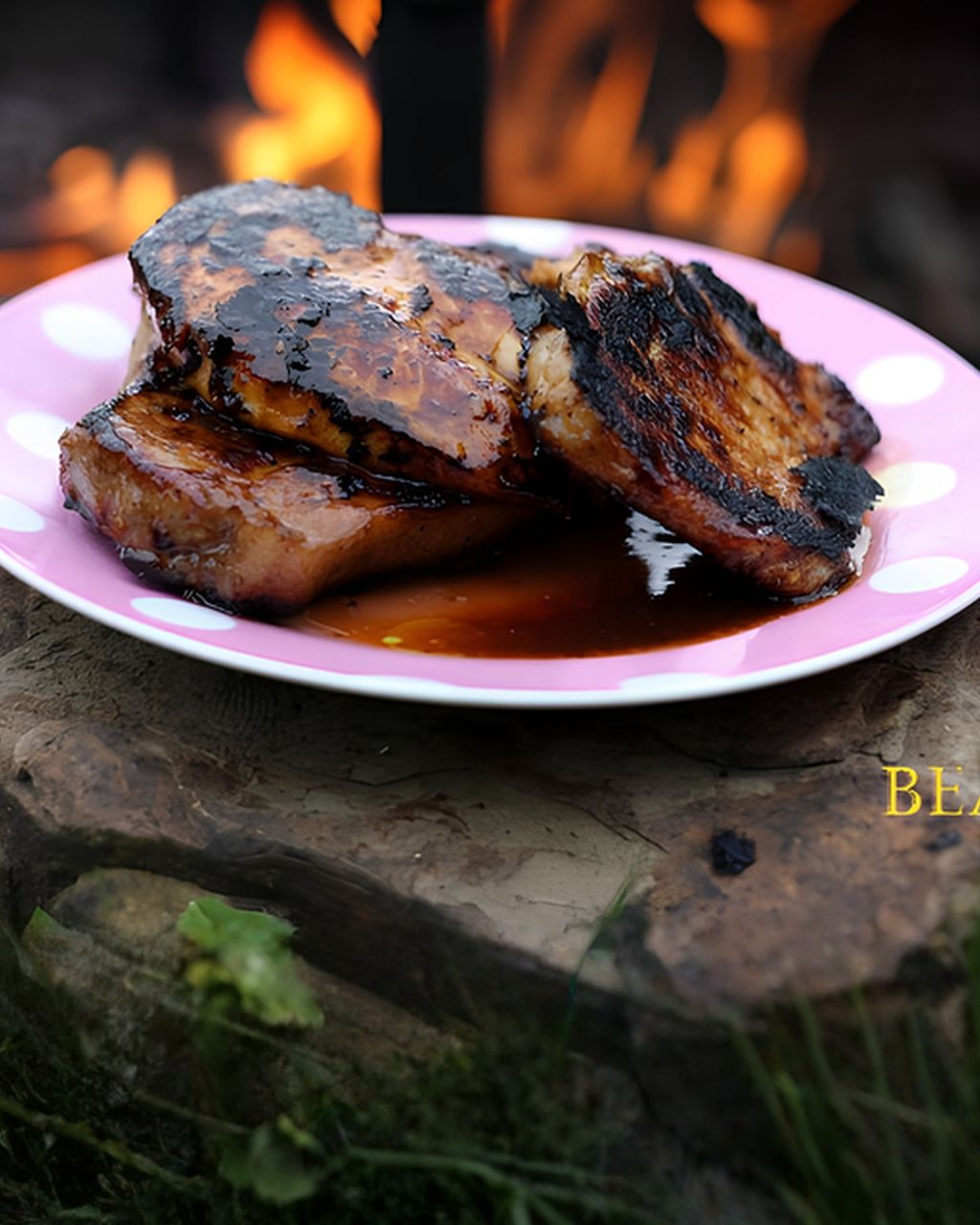
Pork neck is the most forgiving cut for the grill. The fat buys you a few extra minutes without drying it out, which is why it is the Czech summer favourite for steaks and marinated slices.
How to: let steaks 1.5–2 cm thick sit out for 30 minutes, pat them dry and lay them over direct heat on a hot grate. Grill 4–6 minutes per side, turning only once or twice. They are done at 63 °C inside with a 3-minute rest, or fully cooked through at 70 °C. If fat drips and flares up, move them to indirect heat for a moment.
Marinate in oil, garlic, mustard, caraway or beer in the fridge for at least 2 hours, ideally overnight. Brush on sweet glazes with honey or juice only at the end, or they will burn. Try our grilled orange pork neck with fiery chilli.
Roast a whole pork neck at 160–180 °C, first covered in a tin with 1–2 cm of water or beer, then uncovered for the last 20–30 minutes to brown. A piece of about 1 kg takes roughly 1.5–2 hours, but the thermometer decides: 70 °C inside for slicing. USDA tables for upper shoulder give about 100 minutes per kilogram at 177 °C. Temperatures for other cuts are in our guide to what temperature to roast pork at.
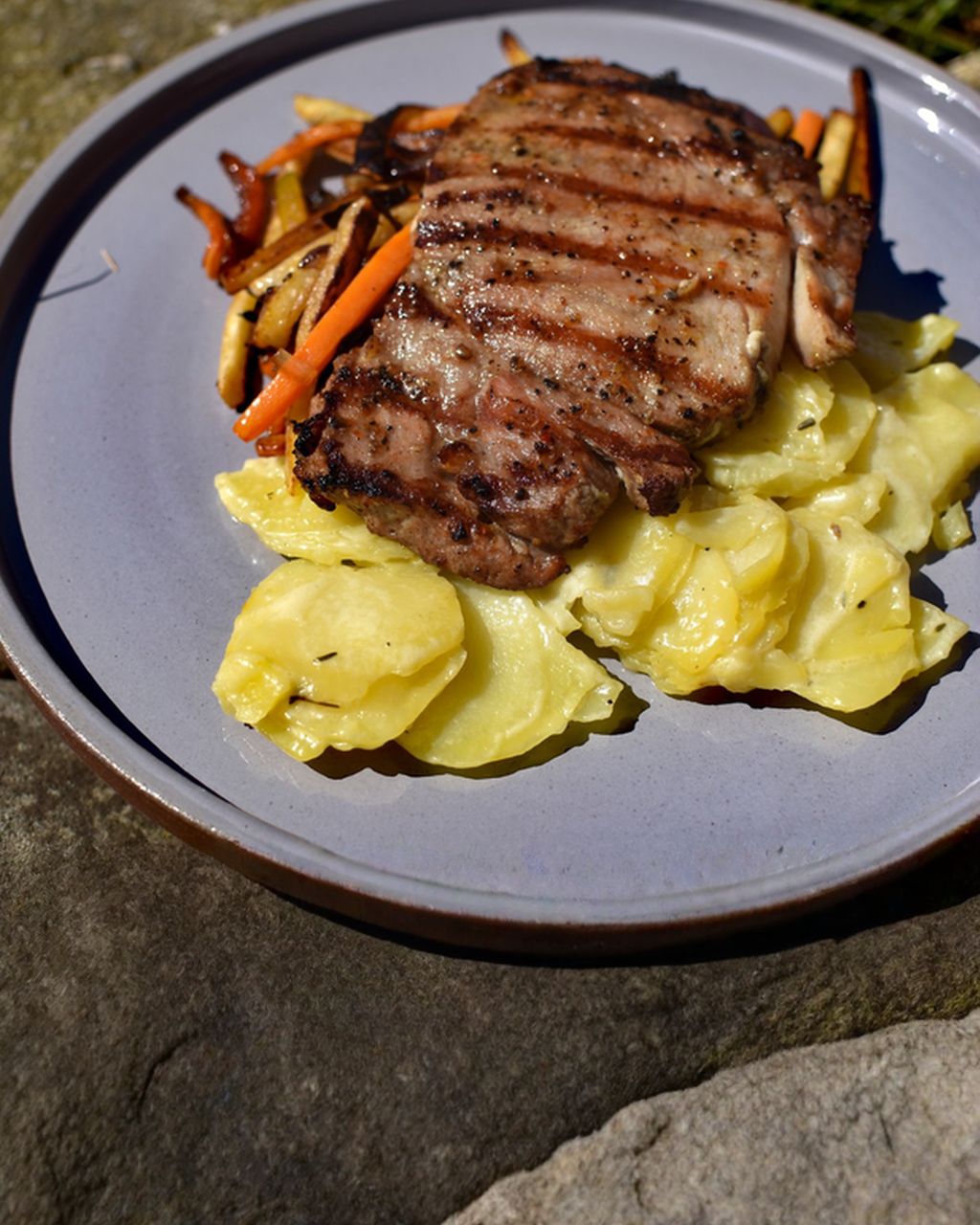
For a quicker weeknight version, try pork neck in mustard marinade with pan-roasted root vegetables.
Smoked pork neck comes in two kinds, and each is cooked differently. Always check the label first.
A product labelled "for cooking" is raw and must reach 70 °C in the centre. Put a piece of about 1 kg into cold water and simmer gently for roughly 1–1.5 hours until it reaches 70 °C inside and is tender, or roast it covered at 165 °C. Very salty neck can be soaked first in cold water in the fridge. Times by cut are in our guide to boiling and roasting smoked pork.
Cooked smoked neck can be eaten cold on bread. If you are pregnant, older or have weakened immunity, eat it only heated through, because of the risk of listeria. To serve it hot, just heat it through in hot water or in the oven, about 20–30 minutes depending on size, until it reaches at least 70 °C inside. Long boiling only dries it out and leaches the flavour.
A whole cut of pork is safe at 63 °C inside followed by a 3-minute rest (USDA FSIS). Czech practice and the UK Food Standards Agency use 70 °C for 2 minutes, the safe choice for pregnant women and older people too. Thanks to its fat, pork neck stays juicy at either. Pulled pork that falls apart is usually at 90–95 °C inside. You cannot judge doneness by colour; use a thermometer in the thickest part.
The neck sits above the shoulder blade and runs into the loin; the shoulder lies below it and includes the front leg. Neck is more finely marbled and juicier, shoulder has a coarser grain. In the UK it is sold as pork collar or neck end; in the US it is usually part of the Boston butt (upper shoulder). Italian coppa (capocollo) comes from the same place but is salted and dried and eaten raw in thin slices. Where each cut sits and what to cook from it is in our guide to cuts of pork.