- Season
- Year-round.
- Price
- Low
Calories and nutrition
per 100 g
17 kcal
Calories
0.7 g
Protein
0.7 g
Carbs
0.2 g
Fat
Celery
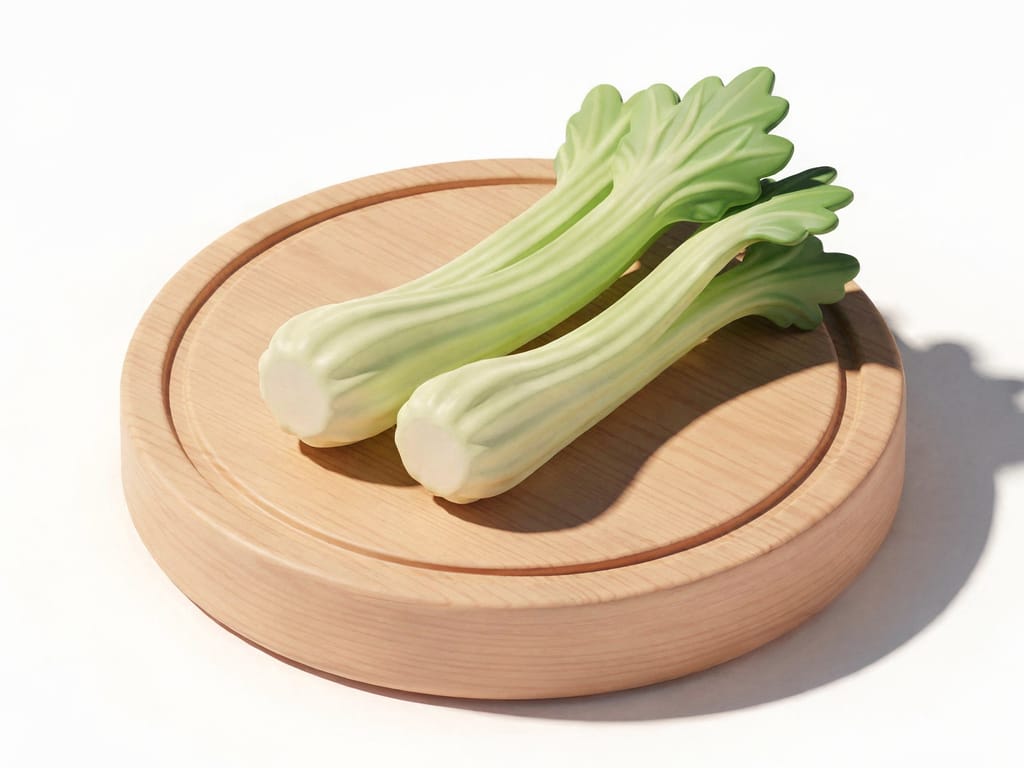
Celery is a vegetable grown for its long, juicy, crunchy stalks, eaten raw or cooked, with leaves used as a herb. It keeps 1–2 weeks in the fridge, can be blanched and frozen for cooking, and celery in any form is one of the allergens that must be declared under EU Regulation 1169/2011.
per 100 g
17 kcal
Calories
0.7 g
Protein
0.7 g
Carbs
0.2 g
Fat
At room temperature celery wilts within a day because it loses water quickly. It belongs in the fridge.
In the fridge it keeps 1–2 weeks (USDA FoodKeeper). Wrap the whole unwashed head in foil or a tea towel and put it in a loose bag in the vegetable drawer. Wash it only before use and use the leaves first, as they wilt sooner. Keep cut sticks in the fridge in a jar of water, changed daily.
Freeze it only for cooking: cut it into pieces about 2.5 cm long, blanch for 3 minutes in boiling water, cool in iced water, drain and freeze. At −18 °C it keeps 10–12 months. Add it to the pan frozen; thawed celery turns rubbery.
Choose firm, glossy stalks and fresh leaves with no yellowing. The base of the head must not be slimy or rotting. Limp but otherwise healthy celery can be revived in iced water; slimy or smelly celery cannot.
For soup and sauce, celeriac: it tastes almost the same, only denser and stronger, so use about a third less. Raw in a salad, fennel is the best stand-in, similarly juicy and crunchy.
Leek (white part), parsley root with its leaves, a few lovage leaves or celery seed. For someone with a celery allergy, nothing made from celery, so no celeriac, celery salt or stock containing celery.
Cut off the base, separate the stalks and rinse the grit out of the inner grooves under running water. Strip the tough strings from the outer stalks with a peeler; they do not soften even with long cooking. Trim the bottom of limp stalks and stand them in iced water for 15–30 minutes, and they crisp up again.
Use the leaves as a herb in stock, salad or pesto, adding them to cooked dishes at the end. Put the base and trimmings into stock and fish them out at the end.
Roughly what one piece weighs.
40 g
1 piece
Celery is eaten raw in salads and with dips. Diced with carrot and onion, it is sweated slowly in oil or butter as a base for sauces (Italian soffritto); large pieces go into stock; stalks can be braised as a side for about 10–15 minutes, or cooked with potato and blended into a creamy soup.
Celery is the form of Apium graveolens grown for its long, fleshy stalks rather than for the root. It is sold as whole heads; on Rohlík.cz one head weighs about 300–350 g. Both stalks and leaves are eaten: stalks raw with dips and in salads, or cooked as a base for sauces and soups, and leaves as a herb. It differs from celeriac in which part of the plant you eat; the flavour is similar. Celery in any form, meaning stalks, root, leaves, seeds and celery salt, is one of the allergens that must be declared on the label and in restaurants.
A raw stalk is juicy and crunchy and tastes fresh, green and slightly salty, with the typical celery aroma. The outer stalks have tough strings. Slow cooking in fat softens and sweetens celery, and in stock it adds a fresh, mildly salty note.
3 min read
Celery is grown for its stalks, the long leaf stems that rise from the base in a tight head. They are eaten raw or cooked, and the leaves serve as a herb. Celeriac tastes similar, but you eat its swollen root, so it is denser and stronger. In recipes one can stand in for the other unless you need raw crunch.
Celery belongs in the fridge, wrapped, in the vegetable drawer. According to the USDA FoodKeeper tables it keeps 1–2 weeks; USDA recommends keeping the fridge at 4 °C or below. Leave the whole head unwashed and wrap it in foil or a tea towel so it does not dry out but does not sweat either. Keep cut sticks in a jar of water and change the water every day.
Revive limp celery with iced water: trim the bottom of the stalks and stand them in it for 15–30 minutes, or up to an hour if very limp. A slimy surface, a bad smell or rot at the base mean the celery belongs in the compost. More tips in our article on how to store, freeze, cook and substitute celery.
Yes, but only for cooking; thawed celery loses its crunch. Following the US National Center for Home Food Preservation (NCHFP), cut it into pieces about 2.5 cm long, blanch for 3 minutes in boiling water, cool straight away in iced water, drain and freeze in bags. At −18 °C it keeps 10–12 months according to USDA FoodKeeper. Add it to the pan frozen; it is worth freezing it diced with carrot and onion as a ready base for soups and sauces.
First strip the tough strings from the outer stalks with a peeler; they do not soften even with long cooking. For a sauce base, dice celery, carrot and onion finely and sweat them slowly in oil or butter until the onion is translucent and the celery soft. This trio is the Italian soffritto, the base for example of sugo bolognese. Celery is also braised with meat, for example in our coq au vin.
Put large pieces of stalk and the leaves into stock and fish them out at the end. As a side, brown the stalks briefly in butter, add stock and braise covered for about 10–15 minutes, until a knife goes in without resistance. Raw celery plays the lead in our celery Waldorf salad with Greek yogurt.
In soup and sauce, celery can be replaced by celeriac (about a third less), fennel, the white part of leek, parsley root with its leaves, a few lovage leaves or celery seed. With celery salt, salt the dish itself less. Raw celery in a salad or with a dip can be replaced by something else crunchy: kohlrabi, cucumber, radishes or fennel.
Celery is one of the 14 allergens that EU Regulation 1169/2011 makes mandatory to declare: it must be emphasised in the ingredients list on the pack, and restaurants and canteens must make the information available. This applies to celery in any form: stalks, root, leaves, seeds and celery salt. When cooking for someone allergic, do not replace celery with celeriac, celery salt or stock that contains celery.
Take care too with fennel, carrot, parsley, lovage, coriander, caraway and bell pepper: allergists describe cross-reactions with celery, especially in people allergic to mugwort or birch pollen. Always check with the person or their doctor what they can tolerate.