Delicate almond shortbread cookies
Zabaglione: Technique, Ratios, and How Not to Ruin It

Updated Jul 19, 2026
Zabaglione is a warm Italian custard whisked from just three ingredients: egg yolks, sugar, and Marsala wine. Nothing else goes into it — the whole magic lies in the technique. You whisk it over a bain-marie until the yolks turn into a light, silky foam you can scoop up with a spoon. Even a beginner can pull it off, but a few key details decide whether you end up with cloud-like foam or a warm scrambled mess. Here you'll find the right ratio of ingredients, the correct temperature, how to serve zabaglione, and what to use instead of Marsala.
Zabaglione (pronounced zah-bahl-YOH-neh, sometimes also spelled zabaione) is a classic Italian dessert made from egg yolks, sugar, and sweet Marsala wine, whisked over a bain-marie into a warm, airy foam. It's usually served warm — on its own in a glass, or as a sauce for fruit and sponge biscuits.
The recipe is at least five centuries old; a version of it already appears in a 15th-century Neapolitan cookbook. Its origins are wrapped in legend — one story places its birth near Reggio Emilia, cobbled together from pantry leftovers (eggs, sugar, wine), while another traces it to Turin, where a court cook supposedly whipped it up as a restorative drink. The history is murky, but one thing's certain: it's one of the simplest custards in Italian cooking, yet it looks like something straight out of a pastry shop.
It's essentially the same custard — what differs is mainly the language and the alcohol used. Zabaione is the Italian spelling, zabaglione is the widely used variant, and the French sabayon is basically the same thing, just usually whisked with champagne or white wine instead of Marsala.
The classic: egg yolks, sugar, and sweet Marsala — giving the custard a nutty, caramel-like depth.
Regional versions: in Tuscany, Vin Santo takes Marsala's place, while elsewhere you'll find sweet white wine, sherry, or port used instead.
Sabayon (France): usually made with champagne or dry white wine, served as a warm sauce over desserts; the flavour is lighter and tangier.
Modern takes: chilled into a foam, gratinated and browned over fruit, or used as a base for ice cream and tiramisu.
The basic ratio is easy to remember: for every 1 egg yolk, use 1 tablespoon (about 20g) of sugar and 1 tablespoon (15–20ml) of Marsala. Four egg yolks will give you two to three servings.
Egg yolks — fresh, at room temperature, from good-quality eggs with a rich colour. The better the eggs, the deeper the flavour and colour of the custard.
Sugar — fine granulated or icing sugar; the finer it is, the faster it dissolves and the smoother the custard turns out.
Marsala — sweet (dolce) fortified Marsala is the traditional choice.
Don't have Marsala? Reach for a sweet wine or liqueur with similar body — Vin Santo, sweet sherry, port, Madeira, or Moscato. Each will shift the flavour slightly, but the technique stays exactly the same.
Want an alcohol-free version (say, for kids)? Swap the wine for orange or grape juice, perhaps with a bit of lemon zest. It won't be a traditional zabaglione, but the custard will hold together and taste bright and fresh. Without alcohol, it's a good idea to heat the yolks a touch more (see the temperature notes below).
For zabaglione, you only need four things: a metal bowl, a balloon whisk, a saucepan for the bain-marie, and ideally a thermometer. Nothing fancy or expensive — just the right combination to give you control over heat and air.
A metal bowl (stainless steel or copper) that fits over the saucepan without the bottom touching the water.
A balloon whisk — whisking by hand gives you a better feel for the texture, while an electric whisk speeds things up.
A saucepan for the bain-marie, and ideally a thermometer until you've got the technique down.
The bain-marie (double boiler) is the whole secret — the yolks are heated gently and indirectly, so they thicken and trap air instead of scrambling. The water underneath should never boil, just simmer lazily.
Whisk the egg yolks with the sugar in the bowl briefly, until the mixture turns pale.
Set the bowl over the saucepan of hot water so the bottom doesn't touch the water. Only now pour in the Marsala.
Keep whisking non-stop — don't let the whisk stop moving, or the yolks at the bottom will scramble.
Watch the temperature, keeping it around 70–75°C (158–167°F); above roughly 80°C (176°F) it risks curdling. Without a thermometer, go by texture instead.
It's ready when the custard has tripled in volume, turned pale and airy, and leaves a trail from the whisk that slowly fades (the ribbon stage).
The whole process takes about 5–10 minutes. What it really takes is a hand that doesn't stop moving, and a bit of patience.
The airiness comes from the air you whisk into the yolks, and the thickening comes from the heat — both need to happen together, gradually. Too much heat too fast gives you scrambled eggs; too little air gives you a thin, runny custard.
Start slowly, to let the sugar dissolve, then speed up and whisk briskly and evenly.
Whisk the whole bowl, including the edges and bottom, where the mixture curdles first.
If using an electric whisk, work up from lower speeds to higher ones; big bubbles aren't the goal — you're after a fine, dense foam.
The most common problems with zabaglione are a curdled, runny, or alcohol-smelling custard — and all of them can be fixed.
It's curdling / has lumps → the heat was too high, or you stopped whisking. Take the bowl off the heat and whisk vigorously away from the heat for a bit; a slightly curdled custard can sometimes be rescued with brisk whisking.
It stays runny → not enough air, or the temperature is too low. Whisk faster and keep it over the heat a little longer, until it thickens to the ribbon stage.
It tastes strongly of alcohol → the Marsala didn't get the chance to cook off. Add it gradually and keep whisking so the alcohol has time to evaporate.
Whisking over a bain-marie will come in handy elsewhere too — find out more in our essential pastry techniques for home cooks.

Traditionally, zabaglione is served warm, right after whisking, in a glass or small bowl, so the foamy texture can really shine. It works well on its own, as a sauce, or as part of bigger desserts.
With fruit — fresh raspberries, strawberries, or blueberries under the custard add a bit of tartness that balances the sweetness. Roasted fruit works nicely too.
With sponge fingers and amaretti — crunchy almond amaretti or savoiardi sponge fingers add texture; you can also crush the amaretti and scatter them over the top.
Gratinated — pour zabaglione over fruit and briefly brown it under the grill for a golden crust.
To drink alongside — espresso cuts nicely through its sweetness; among sweet wines, Marsala or Moscato d'Asti are a good match.
And if you're wondering where else this foamy egg yolk custard can go: it's exactly what classic tiramisu is built on.
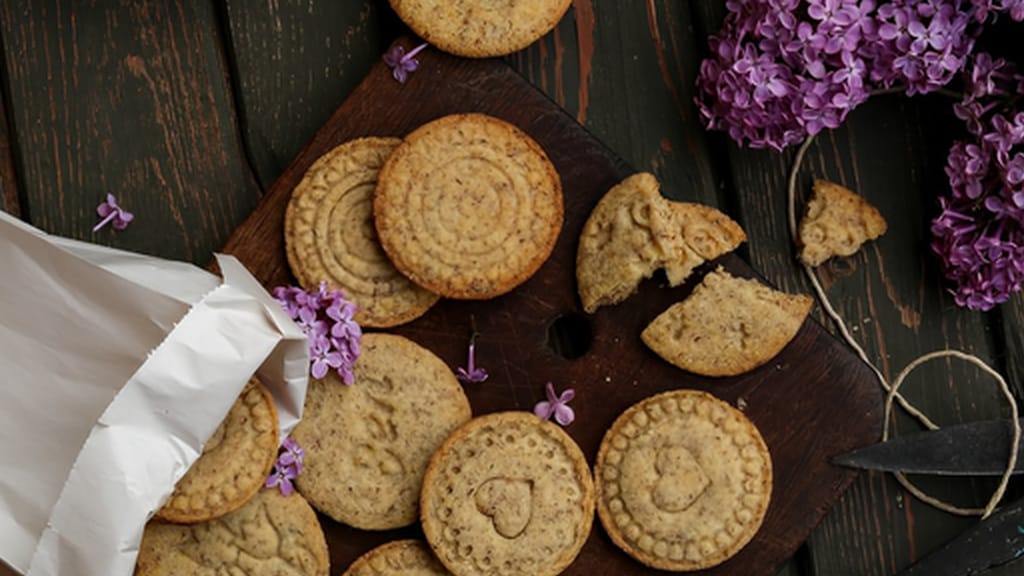
Delicate almond shortbread cookies
Crisp almond biscuits — homemade amaretti to go with zabaglione
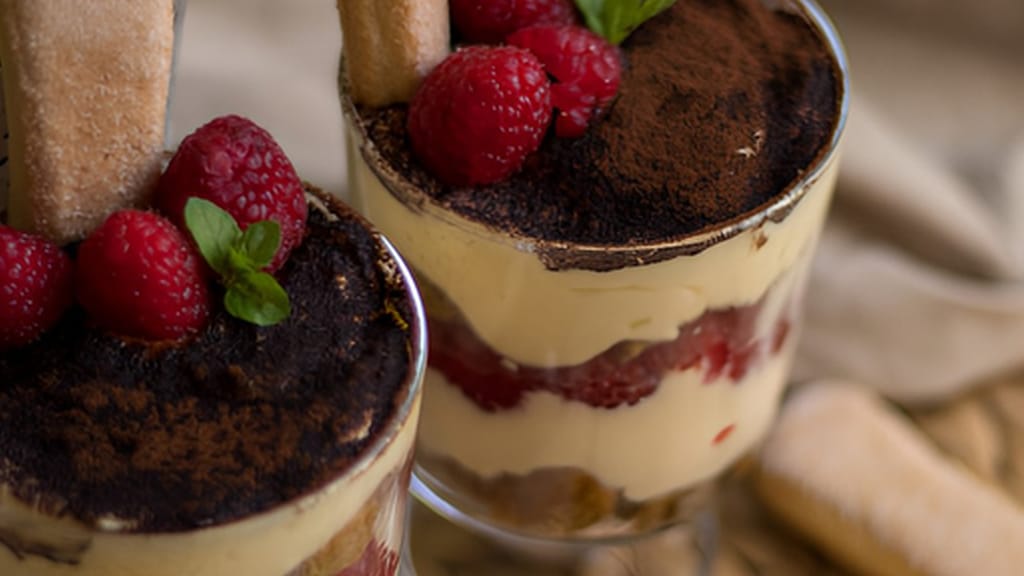
Raspberry tiramisu
Raspberry tiramisu — a dessert built on egg yolk custard

Classic warm zabaglione is best served right away — it starts to deflate within minutes. If you want to make it in advance, whisk it up, fold in some whipped cream while it's still warm, then chill it; stabilised this way, it'll keep in the fridge for about a day. Don't store the plain warm custard longer than that, and never reheat it, as it will curdle.
Classic zabaglione is a double no-go for children and pregnant women — because of the alcohol in the Marsala and because the yolks are only partially cooked. A safer option is an alcohol-free version (swap the wine for fruit juice) made with pasteurised eggs, heated for a few minutes above 70°C (158°F). Even so, it's worth checking with a doctor during pregnancy.
Zabaglione is simply the warm egg yolk custard made from yolks, sugar, and Marsala, while tiramisu is a layered chilled dessert. That said, zabaglione is often the base for tiramisu — it gets folded into mascarpone to make the creamy mixture that's layered with coffee-soaked sponge fingers.
Yes, there's a chilled version too. To stop the custard from collapsing once it cools, fold some whipped cream into the still-warm zabaglione and let it set in the fridge — you'll get a light foam similar to a semifreddo. The flavour is milder than the warm version, where the Marsala comes through more strongly.
One recipe worth heating the oven for, one tip, and one deal from the shop. Nothing else.