Making Pie Crust Ahead: How Long It Keeps in the Fridge and Freezer
Why Do Pie Crust Edges Burn? Pie Shields, Foil Rings and Timing
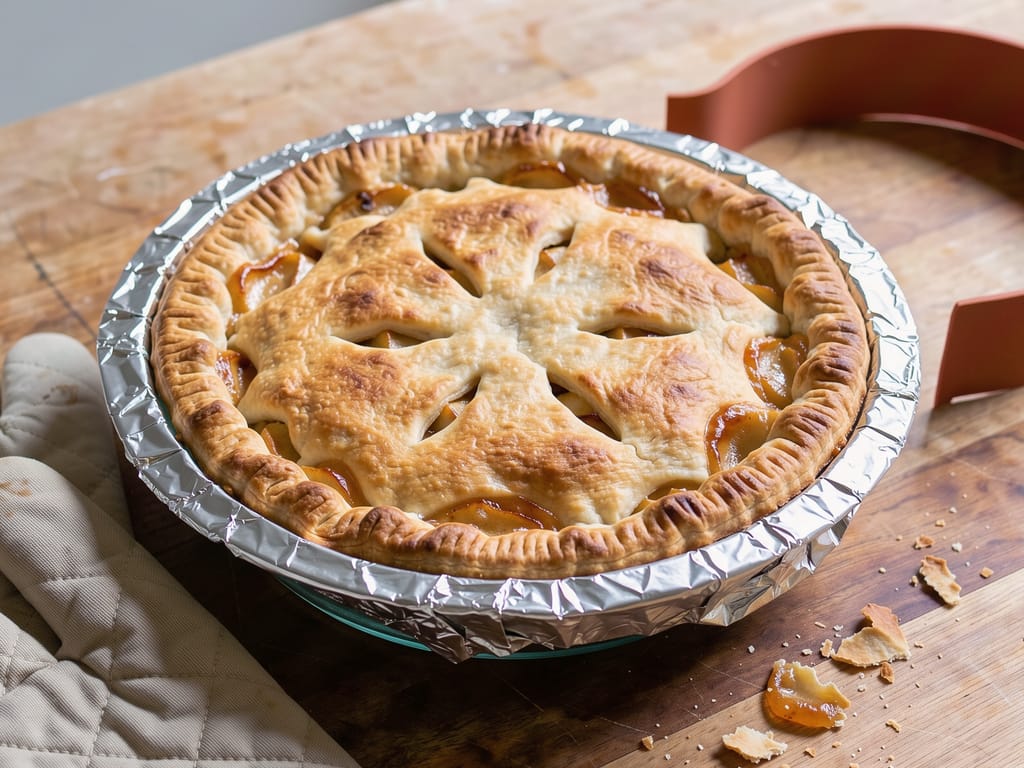
Updated Nov 20, 2026
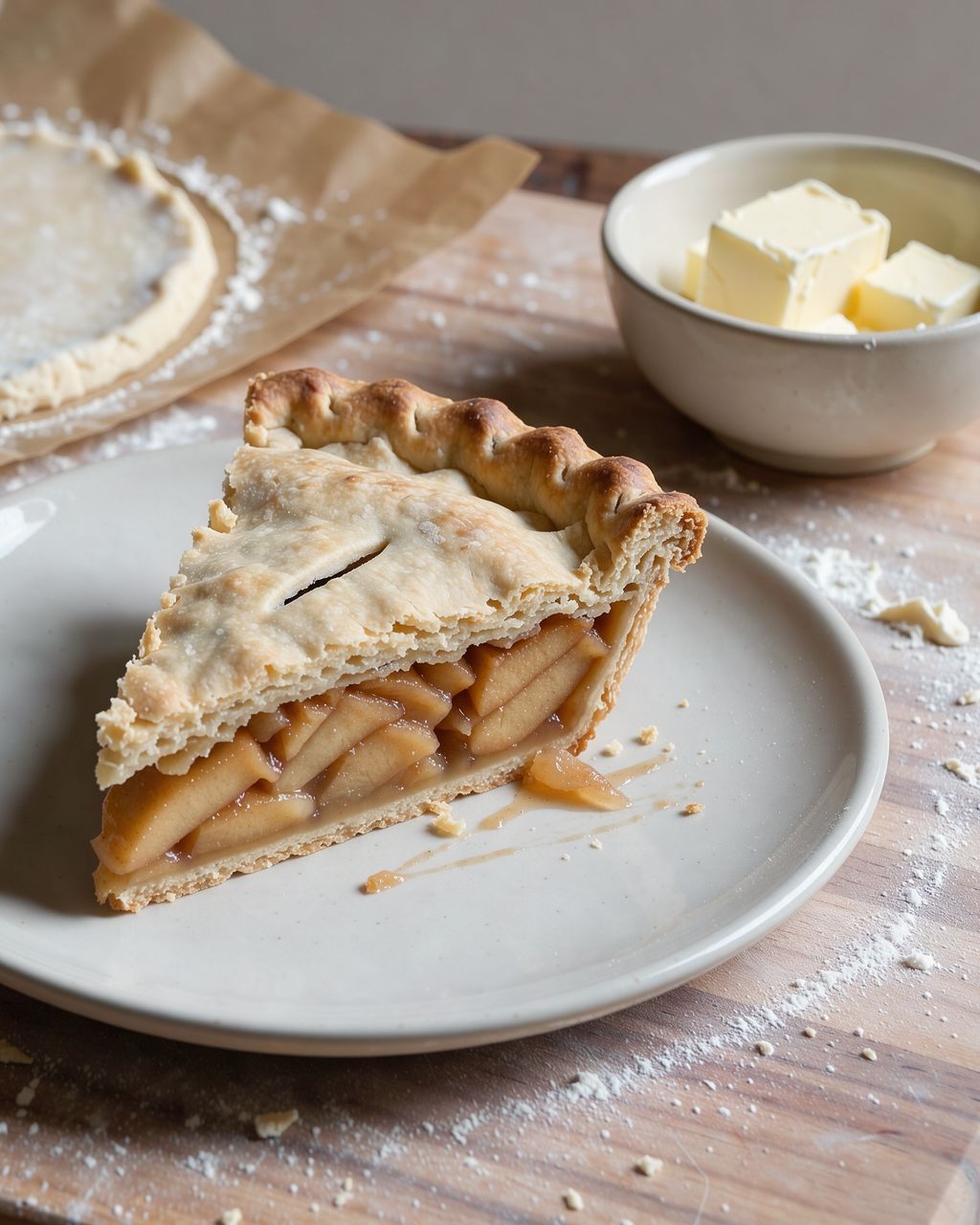
Pie crust edges burn because the thin rim sits higher and more exposed than the rest of the pie, so it browns long before a fruit or custard filling is cooked. The fix is to cover the edge with a pie shield or a foil ring for part of the bake, put the pie on a lower rack, and avoid a sugary egg wash on the rim. A dark metal pan, a top crust rolled too thin at the edge or a hot fan oven make it worse.
The rim of a pie is a thin strip of pastry, crimped up into the oven's hottest air, with heat reaching it from the top, the side and below. The filling is a deep, wet mass that heats slowly. A fruit pie needs time for the filling to bubble and thicken in the middle, and by then the edge has had far more heat than it needs.
Several things speed it up:
A high oven temperature for the whole bake.
A rack near the top of the oven, close to the top element.
A dark metal pan, which browns pastry faster than a shiny, light-colored one.
Egg wash and sugar on the rim. Both brown fast.
A thin edge. Dough stretched over the rim, or an overhang trimmed too short, browns before a thicker crimp would.
A pie shield is a ring that covers the edge and leaves the middle open. There are two ways to time it.
On from the start. King Arthur Baking suggests fitting the shield before baking, while the pie and pan are still cool, then removing it with about 15 minutes of baking left so the edge can color. If it darkens too fast after that, put it back.
Added partway. Bake uncovered until the edge is a light golden color, then add the shield for the rest of the bake. This works, but it means handling a hot pie, and it cannot undo an edge that is already too dark.
Adjustable silicone shields fit most pans from about 20 to 25 cm (8 to 10 inches) and follow a fluted edge better than rigid metal rings, which sit on top of the crimps and leave the dips exposed.
If you don't own a shield, foil works. A single ring holds better than loose strips, which tend to slide off.
Tear a square of foil about 5 cm (2 inches) wider than your pie.
Fold it in half, then in half again, so you have a small square with one folded corner at the center of the sheet.
From that corner, cut a quarter-circle with a radius about 4 cm (1½ inches) shorter than the pie's radius.
Unfold. You now have a square with a round hole in the middle.
Lay it over the pie and gently press the foil down and around the edge. Don't press so hard that it squashes the crimps.
For a pie that is already hot, make the ring on the counter first, then lower it on with oven gloves.
Where the pie sits matters as much as what covers it.
Use the lower third or the center of the oven. The bottom crust gets the heat it needs to crisp, and the rim is farther from the top element. King Arthur Baking notes that a lower rack helps a pale bottom crust brown, especially in a glass or ceramic dish.
Bake on a preheated baking sheet. It catches drips and gives the bottom crust a head start, so you can take the pie out before the rim overcooks. If you're using a glass or ceramic dish, check the maker's instructions before setting it on a preheated sheet.
Start hot, then lower the heat. King Arthur Baking's apple pie, for example, bakes at 220°C (425°F) for 20 minutes, then at 190°C (375°F) for 40 to 50 minutes in a conventional oven, with a shield if the edges brown too fast.
With a fan oven, the moving air browns exposed edges faster. Many ovens need about 20°C less on the fan setting, so check your oven's manual and shield the edge from the start.
If the bottom crust is your problem rather than the edge, our guide on how to blind bake shortcrust pastry without shrinking or a soggy bottom explains how to set it before the filling goes in.
Recipe of the week, one tip that saves you time and one deal from the shop. Unsubscribe in one click.
The next issue goes out on Thursday, November 26.
You can make the edge harder to burn before the pie goes in the oven.
Leave a generous overhang, about 2–3 cm (1 inch), and fold it under to make a thick, even rim before crimping. A thin rim burns first.
Chill the shaped pie for 30 minutes so the crimps hold and do not slump into thin, quick-browning edges.
Brush egg wash on the top crust only, or wipe it off the rim. Skip the coarse sugar on the edge.
Pick your pan. Glass lets you check the bottom crust, and light metal browns more slowly than dark metal. With a dark pan, start shielding earlier.
For ideas on what to bake, our guides on what to bake with apples and what to bake with nuts, including pecan pie, are good places to start.
A golden-brown edge with a few darker spots is fine, and many bakers like a well-browned rim. A truly burnt edge tastes bitter.
Shield it at once and finish the bake. The filling still needs to be done.
Scrape off black spots with a small serrated knife or a fine grater once the pie has cooled.
Trim and hide it. On a fruit pie, you can trim a burnt rim away and cover the cut edge with whipped cream or a scoop of ice cream at serving time.
Next time, shield earlier, move the rack down and check the pie 10 minutes before the recipe says it is done.
Cover the edge with a pie shield or a ring of foil, either from the start and removed for the last 15 minutes, or added once the edge is golden. Bake on a rack in the lower half of the oven and leave sugar off the egg-washed rim.
A pie crust shield is a ring of metal or silicone that sits over the rim of a pie so the edge browns more slowly than the middle. Adjustable silicone shields fit most pans from about 20 to 25 cm (8 to 10 inches).
Tear a square of foil a little wider than the pie, fold it into quarters and cut away a curved quarter-circle from the folded corner. Unfold it into a ring and press it gently over the crust edge.
You can put it on at the start and remove it with about 15 minutes of baking left, as King Arthur Baking suggests, or add it once the edge reaches a light golden color. Fitting it on the cold pie is easier and safer than handling a hot one.
The edge is exposed on three sides and much thinner than the filling, so it browns first, especially at a high oven temperature. Shield the edge, lower the temperature after the first 20 minutes and keep baking until the filling bubbles in the center.
One recipe worth heating the oven for, one tip, and one deal from the shop. Nothing else.