Why Is My Pie Crust Tough? Causes and Fixes for Hard, Chewy Pastry
Why Is My Pie Crust Crumbly or Cracking When I Roll It Out?
Updated Nov 20, 2026
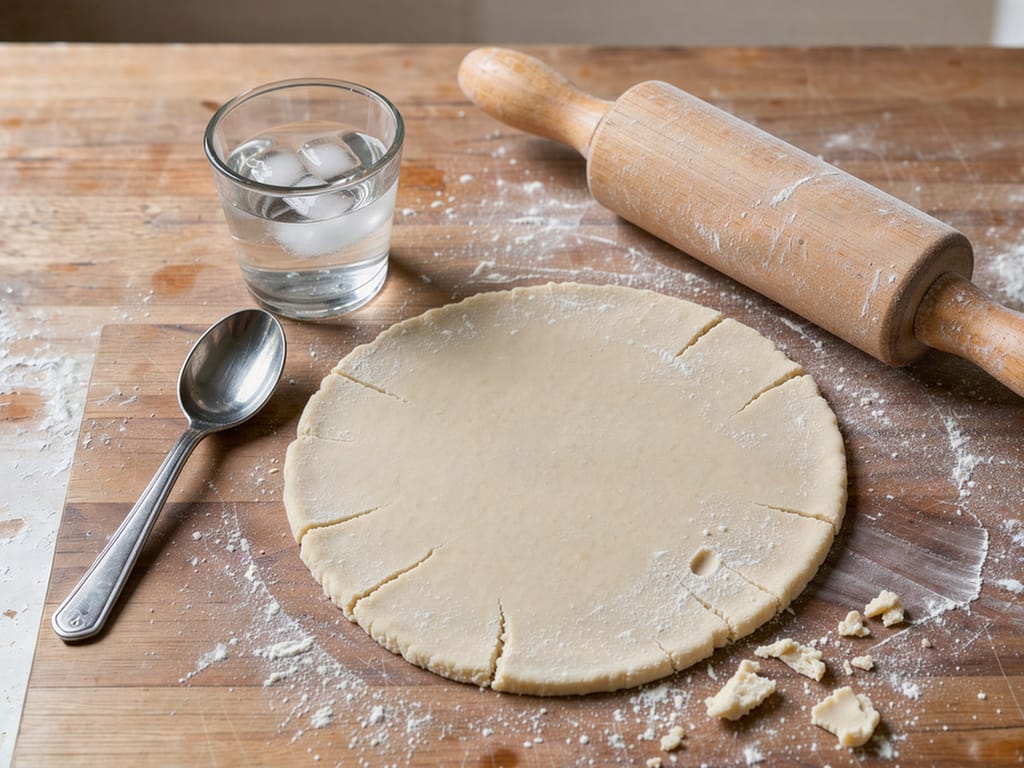
Pie crust is crumbly when the dough has too little water to hold the flour and fat together, or when it is so cold from the fridge that it cracks instead of bending. Add water a spoonful at a time until a squeezed handful holds, and let chilled dough sit for 5 to 10 minutes before rolling. Cracks and tears can be patched with scraps, so a crumbly dough is rarely a lost cause.
Pie dough holds together because water wets the flour and forms a little gluten. Too little water, and the flour stays dry and powdery between the bits of butter. The dough looks like damp sand, will not form a ball, and breaks apart when you lift it.
The common causes:
Not enough water, often from stopping at the low end of the recipe's range on a dry day or with a thirsty flour.
Water added unevenly, so some parts are wet and others dry.
No rest, so the water has not had time to spread through the dough.
Too much fat for the flour, from measuring flour or butter by volume instead of weighing.
Flours that form little or weak gluten, such as whole wheat (its bran cuts the gluten), rye, or gluten-free blends (which have no gluten network to hold the dough).
A crumbly crust is the opposite of a tough one. Tough crust has too much water and too much handling. Crumbly crust has too little of both.
Seasonal baking plans, tested recipes and kitchen tricks that save you time. Unsubscribe in one click.
There is no single number, because flour absorbs different amounts. King Arthur Baking's classic double crust uses 6 to 10 tablespoons (85–142 g) of ice water for 300 g of flour, roughly 28–47% of the flour's weight. That range is wide on purpose.
Add water a tablespoon at a time, sprinkled over the whole bowl, not poured into one spot.
Toss with a fork or your fingertips after each spoonful.
Squeeze test: take a handful and press it in your fist. If it holds together with only a crack or two, it has enough. If it crumbles back into the bowl, add another spoonful.
Weigh the flour and fat. A US cup of flour scooped straight from the bag often weighs 140–150 g, well over the 125 g our tool uses per US cup (236.6 ml); King Arthur counts 120 g, and conventions vary from about 120 to 142 g. Extra flour makes the dough dry. Use the cups and spoons to grams calculator to convert, and our stick of butter in grams guide for butter.
Chilling is good for pie dough. It firms the butter and lets the gluten relax. But dough that has been in the fridge for hours, or overnight, is often too firm to bend. Press a rolling pin into it and the edges split.
Let it stand for 5 to 10 minutes at room temperature after a long chill. It is ready when it gives a little under your thumb but still feels cold.
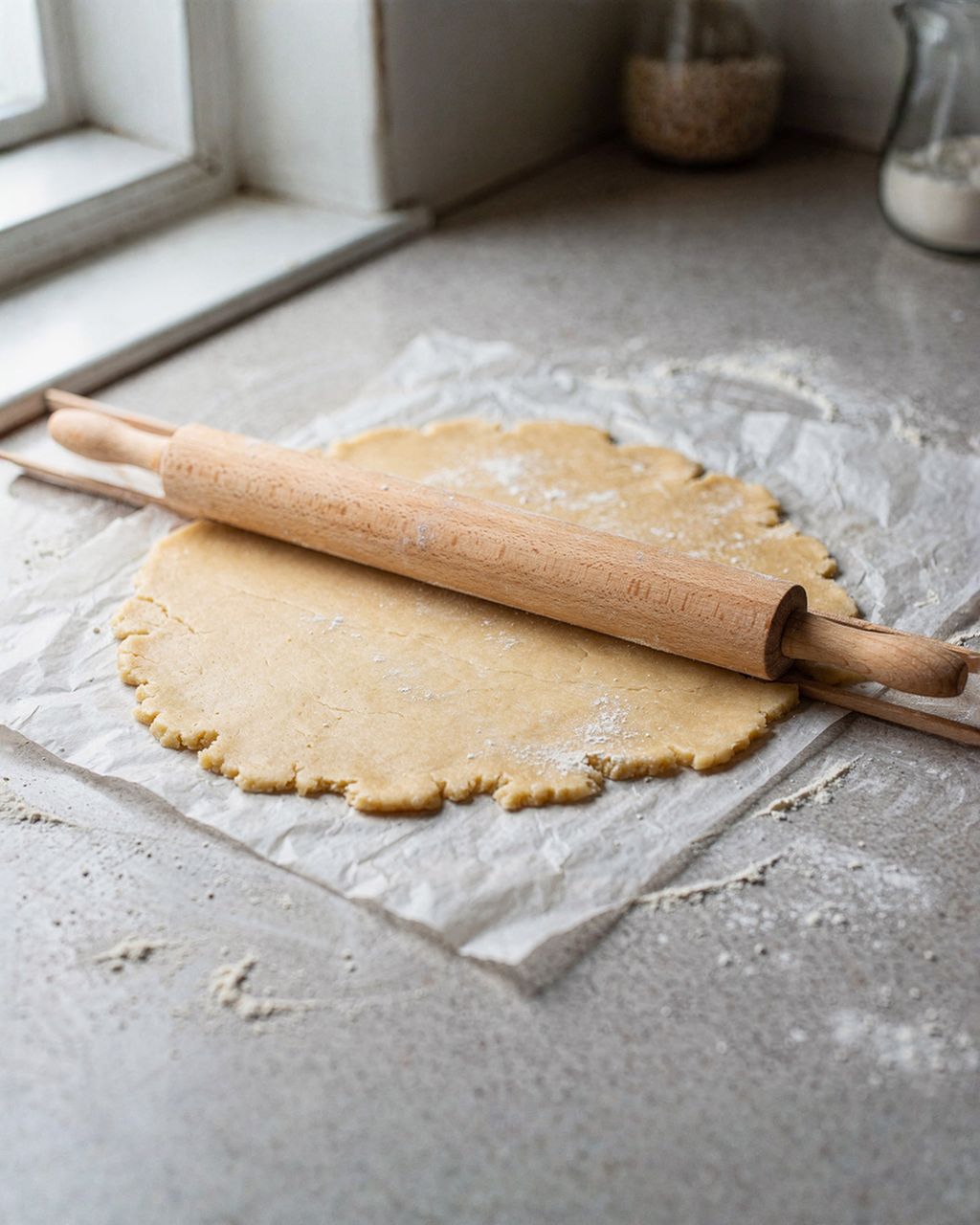
Tap it first. A few firm taps across the disc with the rolling pin flatten it gently before you start rolling.
Pinch edge cracks closed as they appear, before they run toward the middle.
Roll between sheets of parchment or baking paper if the dough is fragile. It holds the dough together and you can lift it with the paper.
If the dough keeps cracking once it has warmed up a little, the problem is water, not temperature.
You can still save a dry dough after mixing or chilling.
Flatten the dough or break it into a few pieces.
Sprinkle a teaspoon or two of ice water over the driest parts, or mist them with a spray bottle.
Fold the dough over itself two or three times, pressing rather than kneading.
Wrap it and chill for 30 minutes so the water spreads through.
Go easy. Adding water and folding builds gluten, so stop as soon as the dough holds. A slightly crumbly dough that you patch is better than an overworked one that bakes up tough.
Pie crust is forgiving. Patches disappear once the pie is filled and baked.
Cracks while rolling: pinch them closed, or press a small scrap over the split and roll over it lightly.
Tears when moving the dough: lay the dough in the pan anyway, then press scraps over the gaps, dabbing the edges with a little cold water so they stick.
Too short to reach the rim: press strips of dough along the edge and crimp over the joins.
Cracks in a blind-baked shell: press a thin piece of raw dough over the crack and bake for a few more minutes. For a wet filling, an egg wash brushed over the shell and baked for a few minutes helps seal it.
Ease the dough into the pan rather than stretching it. Stretched dough is thin, cracks easily and pulls back in the oven. If your crusts shrink or turn soggy on the bottom, our guide on how to blind bake shortcrust pastry without shrinking or a soggy bottom covers both.
Some flours are crumbly by nature.
Whole wheat and wholegrain spelt absorb more water and their bran cuts through gluten. Use a little more water than the recipe says, rest the dough for longer, or mix half and half with plain flour.
Gluten-free blends have no gluten to hold the dough together. Most gluten-free pie recipes add a binder such as xanthan gum or an egg, and the dough is easiest to roll between two sheets of parchment. Our gluten-free flour guide explains how each flour behaves.
A crumbly, sandy texture is also the point of some pastries. French pâte sablée and many Czech shortcrust doughs are meant to be short and tender, and they are pressed or rolled more gently. Our pâte sablée guide shows how that dough should feel.
Pie dough falls apart when it does not have enough water to bind the flour, or when the water has not spread through the dough yet. Sprinkle in more ice water a tablespoon at a time, press the dough together and rest it in the fridge for 30 minutes so the moisture evens out.
Dough straight from the fridge is often too firm to bend, so it cracks at the edges. Let it sit at room temperature for 5 to 10 minutes, then roll; if it still cracks badly, it needs a little more water.
Yes, a little: crumble or flatten the dough, sprinkle a teaspoon or two of cold water over the dry parts, fold it over itself a couple of times and chill it again. Work quickly so the butter stays cold and the dough does not get tough.
Press a thin piece of leftover dough over the crack, dabbing the edges with a little cold water so it sticks. For cracks in a blind-baked shell, patch with raw dough and bake for a few more minutes.
A crust that cracks in the oven was usually too dry, rolled too thin in places, or stretched into the pan instead of eased in. Use enough water, roll evenly and lift the dough into the corners of the pan without pulling it.
One recipe worth heating the oven for, one tip, and one deal from the shop. Nothing else.