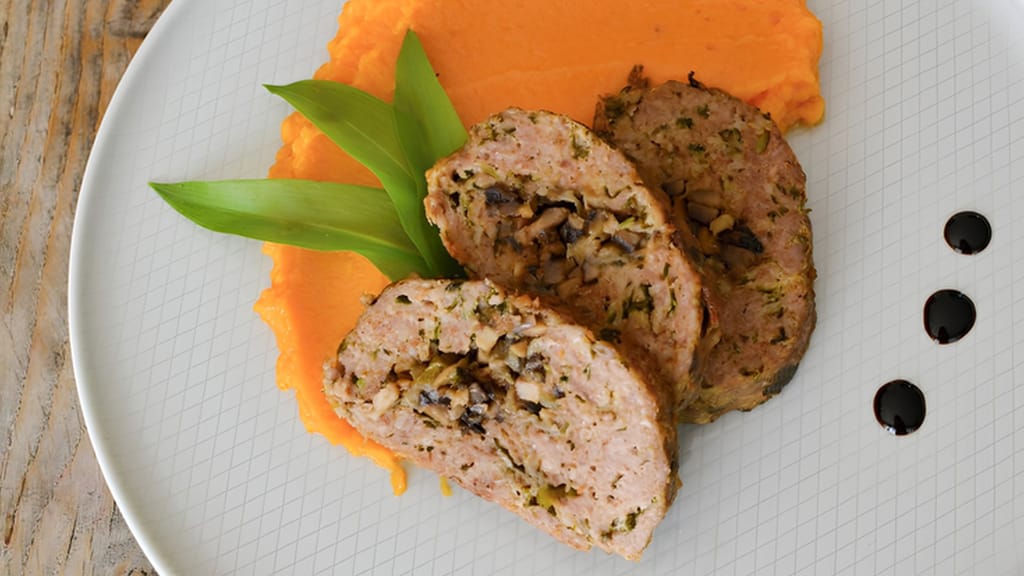
Spring meatloaf with wild garlic and sweet potato mash
Why Meatloaf and Burgers Fall Apart (and How to Fix It)
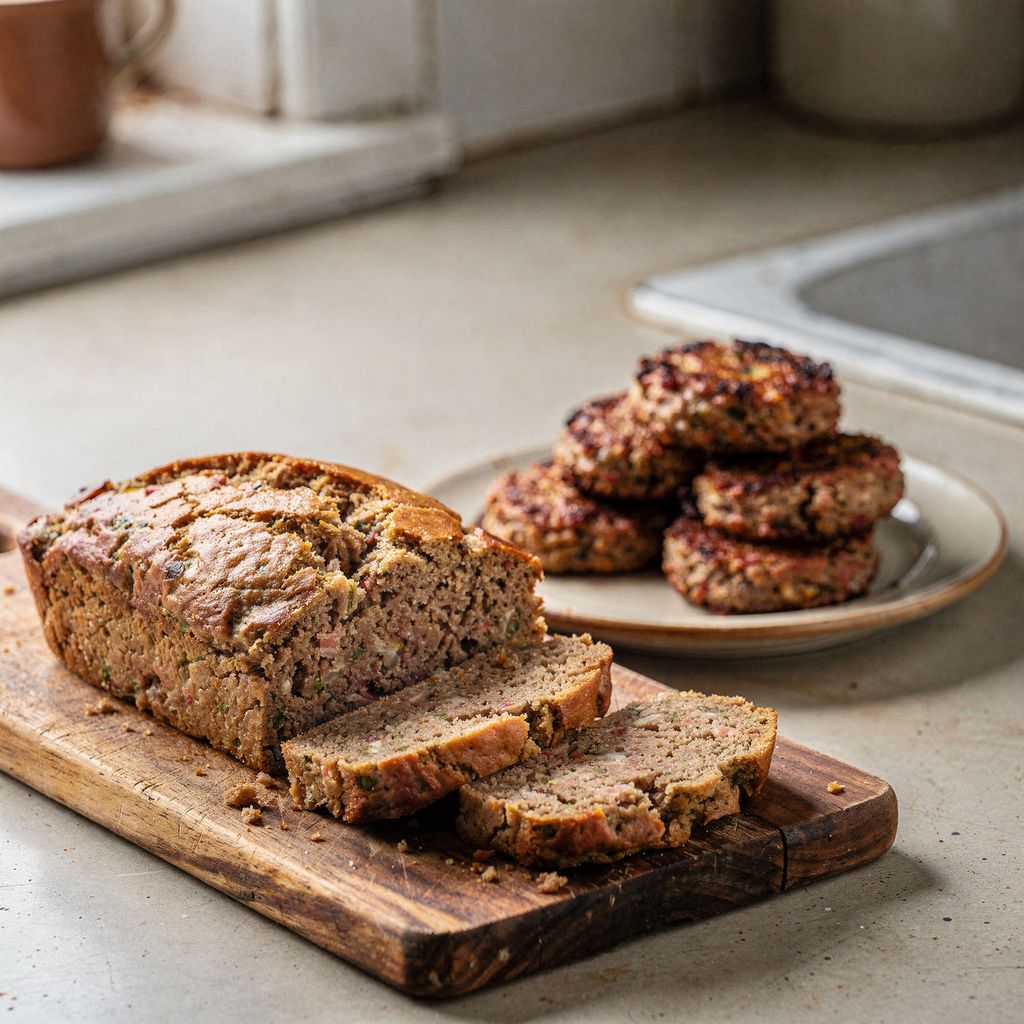
Updated Oct 6, 2026
Meatloaf and burgers usually fall apart because the meat mix isn't salted or worked enough, is too wet, or because you slice the meatloaf straight out of the oven. With burgers, the pan plays a role too: too cold, or flipped too soon. Eggs are rarely the real culprit — what actually holds meat together is its own protein, and with a bit of salt and a few minutes of kneading, you can get a solid result even without eggs.
When your meatloaf or burgers keep crumbling, it almost always comes down to one of these six things:
Not enough salt or too little mixing. The proteins in the meat never start binding.
Mix too wet. Watery vegetables, bread that wasn't squeezed out, or too much milk.
Meat that's too lean. Without fat, the mix turns dry and crumbly once cooked.
Chunky ingredients. Coarsely cut onion or vegetables break the mix into pieces that won't hold together.
Burgers on a cold pan, or flipped too soon. There's no time for a crust to form.
Slicing the meatloaf straight out of the oven. The inside is still soft and full of juice.
The good news is all six can be fixed ahead of time, and none of them call for more eggs. Below you'll find a concrete fix for each cause.
What holds a meatloaf together is the meat's own protein, mainly myosin, which salt dissolves and kneading links into a sticky network. Heat then firms up that network as it bakes. That's exactly why sausages need no egg at all, and why at home what you mostly need is salt and your hands.
How much salt: around 1.2–1.6% of the meat's weight, so 6–8 g per 500 g (roughly 1 heaped teaspoon of fine salt). If you're adding salty bacon or cheese, use less salt.
When to salt: add salt to the meat first and start kneading right away. Only then add the other ingredients.
How long to knead: 2–3 minutes by hand, or 1–2 minutes in a mixer with a dough hook. Keep going until the mix turns tacky — it holds together and clings lightly to the bowl, but doesn't smear off your fingers like wet mush. Pull it apart and you should see strands.
The palm test: take a walnut-sized piece of the mix, press it flat against your palm, then turn your hand upside down. If it stays put, the mix is ready.
Keep it cold. The meat should come straight from the fridge. Warm fat smears instead of binding, so the mix holds together worse.
Just don't overdo the kneading. Knead the mix for 10 minutes and your meatloaf won't crumble anymore, but it'll turn springy and rubbery like a sausage. Stop as soon as it passes the palm test.
The mix is too wet if a ball of it spreads out on its own on the cutting board, or if liquid squeezes out when you press it. Water sitting between the proteins stops them from binding, and during baking it turns to steam that tears the meatloaf apart from the inside.
The most common sources of extra water in the mix:
Soaked bread or a roll. Soak it, sure, but then squeeze it hard in your fist until no more liquid runs out.
Raw onion. Grated onion releases a lot of juice. Either chop it finely and sauté it for 5 minutes (which also brings out a sweeter flavor), or grate it and squeeze out the liquid.
Watery vegetables. Salt grated zucchini, carrot or potato, let it sit for 10 minutes, then wring it out in a kitchen towel.
Too much milk or cream. For 500 g of meat, a few spoonfuls of liquid for the soaked bread is enough — not half a cup.
You'll find exact ratios of breadcrumbs, bread and eggs per 500 g of meat, plus egg substitutes, in the article What to use instead of eggs in meatloaf and burgers. For now, one rule covers it: a properly balanced mix holds its shape as a ball and feels tacky, but no juices run out of it.
Meat with 15–20% fat holds together best — think ground pork shoulder, beef chuck, or a 1:1 blend of the two. Fat keeps the meatloaf moist and tender, so it doesn't crumble once baked. Completely lean meat, on the other hand, dries out, shrinks and starts crumbling after baking.
Chicken or turkey breast is the leanest and softest option. Mix it with thigh meat, or add 50–100 g of ground bacon per 500 g of meat. Chicken burgers also hold together better when made smaller, as in the recipe for grilled chicken burgers with cilantro.
Coarsely ground meat holds together worse than finely ground meat. If you're grinding your own, use a fine plate (3–5 mm).
Chop any add-ins finely — ideally into pieces smaller than 5 mm. Big chunks of onion, bell pepper or cheese act like fault lines, and the meatloaf breaks right along them.
Burgers fall apart in the pan mainly because you flip them before a crust forms, or because the pan is too cold and the meat ends up simmering rather than searing. The crust acts like a shell that holds the shape until the inside firms up too.
Shape them, then chill. Wet your hands with cold water so the mix doesn't stick. Shape patties 1.5–2 cm thick, smooth the edges so there are no cracks, and chill them in the fridge for 30 minutes. Cold fat firms up, and the patties hold together better.
Get the pan properly hot. Medium-high heat, with 2–3 tablespoons of oil. Don't overcrowd the pan, or the temperature will drop and the meat will start to stew instead of sear.
Leave them alone. Cook for 3–4 minutes without touching them. Once the crust forms, the patties will release from the pan on their own. If they're sticking, it's too soon to flip.
Flip only once, using a wide spatula, not a fork. Then lower the heat and finish cooking until done through. Thicker patties can be finished with 8–10 minutes in the oven at 180°C (355°F) after searing.
All of this applies just the same to vegetable-mix burgers, like beef and beetroot burgers. With those, it's especially important to squeeze the grated beetroot well.
Meatloaf usually falls apart when sliced because you're cutting it straight out of the oven. The inside is still soft and the juices are still flowing freely. Just let it rest for 10–15 minutes under loosely tented foil. The proteins firm up and the juices get reabsorbed.
Oven temperature: 170–180°C (340–355°F). Higher heat dries out the meatloaf on the outside before the inside is cooked through, and the surface starts to crack.
When it's done: once the center reaches 71°C (160°F) for pork and beef, or 74°C (165°F) for poultry. These are also the safe temperatures listed by the USDA. Without a thermometer, a 1 kg loaf at 180°C (355°F) takes roughly 60–70 minutes.
Shape it without air pockets. Before shaping, slap the mix down against the bowl a few times to knock out any air bubbles, then smooth the surface with wet hands. Empty pockets inside are exactly where the meatloaf will break apart.
Loaf pan or baking sheet? A loaf pan helps the meatloaf hold its shape and stay moist. A baking sheet gives you more crust. If you bake it in a pan, let it rest in the pan for 10 minutes first, then turn it out carefully.
Slice with a sharp knife, ideally serrated, using long, smooth strokes rather than pressing down. The neatest slices come from cutting it cold the next day.
Spring meatloaf with wild garlic and sweet potato mash
Spring meatloaf with wild garlic and sweet potato mash
How you rescue a mix that isn't holding depends on the cause: thicken a wet mix with breadcrumbs, salt and knead a mix that isn't tacky enough, and if neither helps, chill it for 30–60 minutes. The fastest way to work out what's wrong is to fry a test patty about the size of a tablespoon before baking the rest. In 3 minutes you'll see whether the mix holds together and is salty enough.
Is the mix wet and sticking to your hands? Add breadcrumbs 1 tablespoon at a time, mix, and let it sit for 10 minutes so the breadcrumbs can soak up the moisture.
Is the mix wet but not tacky? Add a pinch of salt and knead for 1–2 minutes.
Still falling apart? Chill it in the fridge for 30–60 minutes. A cold mix is much easier to shape.
And if your baked meatloaf does end up falling apart, don't throw it out. Crumble it into tomato sauce for a quick meat base for pasta, similar to bolognese sugo.
Yes, you can freeze raw patties without any issue — just freeze them individually first on a baking sheet lined with parchment paper, then transfer them to a bag. They'll keep in the freezer for about 3 months. Thaw them overnight in the fridge before cooking, and pat away any liquid that leaks out with a paper towel, or they'll fall apart in the pan.
Meatloaf most often cracks on top because the oven is too hot or there are air pockets trapped under the surface. Bake it at 170–180°C (340–355°F), knock the air out of the mix before shaping it, and smooth the surface with wet hands. Brushing it with a little oil or sauce before baking also helps.
Yes, you can make meatloaf a day ahead, and it'll actually hold together even better. The raw mix can sit overnight in the fridge, giving the salt time to work into the meat and the proteins time to bind more fully. Slice the baked meatloaf cold the next day for neat slices, then reheat them in a pan or the oven.
Meatloaf shrinks in the pan because the meat's proteins tighten up as they cook, squeezing out juice and fat. The fattier the meat, the higher the heat, and the longer it bakes, the more it shrinks. Use meat with 15–20% fat, bake at 170–180°C (340–355°F), pull it out once it hits 71°C (160°F) inside, and drain the fat from the pan after baking so the bottom doesn't go soggy.
Burgers fall apart in sauce when you add them raw, or when the sauce is boiling too hard. Sear them first until golden on all sides so they develop a crust. Then add them to the sauce, turn the heat down, and let it just barely simmer. Don't stir with a spoon — gently shake the pan instead.
One recipe worth heating the oven for, one tip, and one deal from the shop. Nothing else.



