Why Did My Toffee Separate? Causes, Fixes and How to Rescue It
Why Is My Toffee Grainy? Crystallization and How to Prevent It
Updated Nov 20, 2026
Toffee turns grainy when the sugar crystallizes, usually because undissolved sugar or crystals from the side of the pan seeded the hot syrup. Washing down the pan, dissolving the sugar fully and adding a little corn syrup, glucose or lemon juice keeps it smooth. Here is how crystallization starts and how to stop it.
Grainy toffee has crystallized. Instead of setting as smooth, glassy candy, some of the sugar has re-formed into tiny crystals, and once a few form they spread through the batch. You feel them as sand on the tongue, and the toffee often looks dull or cloudy instead of glossy.
Sugar crystallizes when something gives it a place to start. In toffee, the usual triggers are:
Undissolved sugar at the start, still gritty when the mixture comes to a boil.
Crystals on the side of the pan from splashes, which dry out, then fall back in.
Stirring with a spoon that carries crystals, or scraping crusty sugar from the pan walls into the toffee.
Too much agitation at the wrong moment, especially while the toffee cools.
Humid weather, which the Exploratorium links to softer, less reliable candy and which many candy makers blame for grainy toffee.
Graininess and separation often come together: when the butter splits out of toffee, the sugar left behind can crystallize too. If your toffee is oily as well as grainy, steady, even heat and a heavy pan help with both.
Seasonal baking plans, tested recipes and kitchen tricks that save you time. Unsubscribe in one click.
A hot sugar syrup holds more dissolved sugar than it could at room temperature. That makes it unstable. Give it a single undissolved grain, a dry crystal from the rim, or a speck of dust, and the dissolved sugar starts to stack onto it. Candy makers call this seeding.
That is why the details matter:
Dissolve the sugar fully before the boil. Heat the butter and sugar gently and stir until you can no longer hear or feel the spoon grating on sugar on the bottom of the pan, and the mixture coating the spoon shows no grains. Never touch the hot mixture to check.
Use a clean pan and clean tools. Old sugar stuck to a spatula is a seed.
Don't scrape the sides into the toffee when you pour. The thin film on the pan walls is often crystallized. Pour from the middle and leave the scrapings behind.
Don't double-dip. If you test with a spoon, use a clean one each time.
Splashes on the pan wall dry out quickly over the heat and turn into crystals. When they slide back in, they seed the batch. The classic fix is to wash them down.
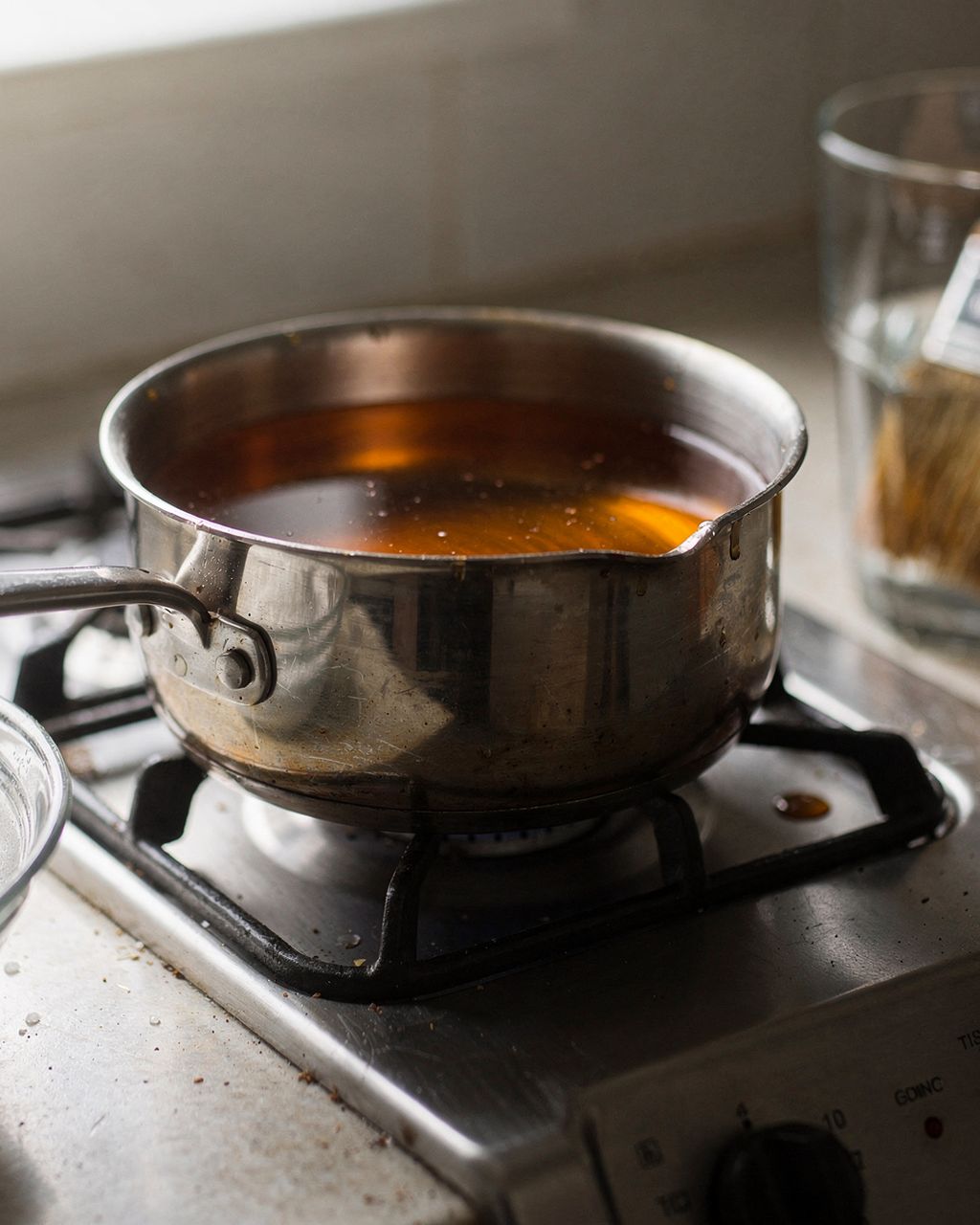
Keep a small glass of water and a clean pastry brush (silicone or natural bristle) next to the stove.
Once the mixture boils, brush the inside of the pan just above the surface with the wet brush. Use a long-handled brush and keep your fingers well above the syrup. The water dissolves the crystals and runs back into the pan, where it boils off.
Use only a little water and don't drip it in by the spoonful.
Repeat whenever you see crystals forming on the sides.
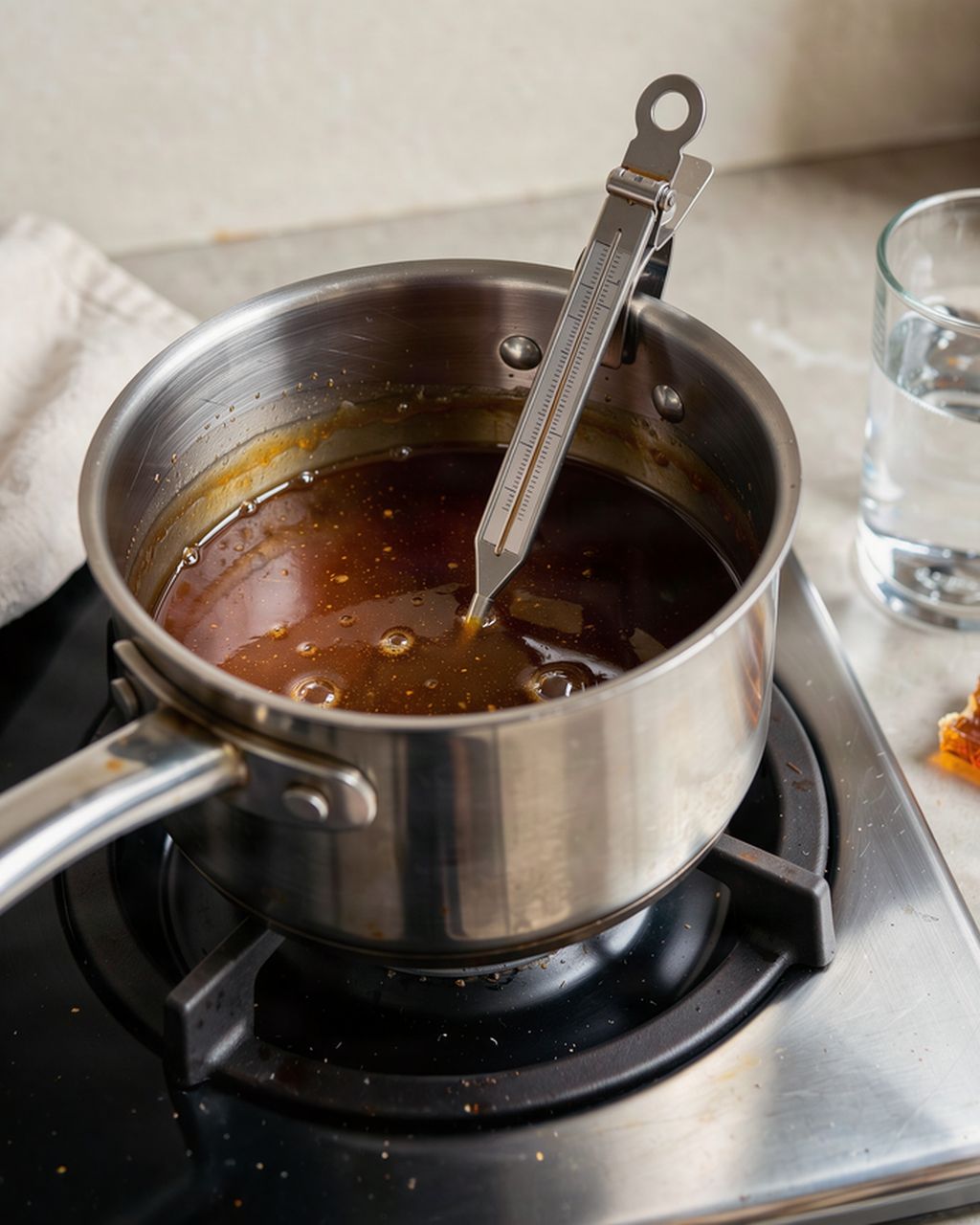
Another trick: put a lid on for a minute or two right after the mixture boils. The steam condenses on the walls and washes them down for you. Take the lid off afterwards so the toffee can keep cooking and you can watch the thermometer.
Washing down matters most early in the cook, when the mixture is thin and splashes easily. Later, when the toffee is thick and you are stirring it, keep your spatula off the upper walls of the pan.
Many toffee recipes add a spoonful of corn syrup, glucose syrup or a little acid. These are called interfering agents: they get in the way of sugar crystals forming.
Corn syrup or glucose syrup. These are made of glucose and longer sugar chains that don't fit neatly into a sucrose crystal, so they slow crystallization. A tablespoon or two per batch is a common amount in American recipes. In Europe, glucose syrup is the easier one to find and works the same way.
Golden syrup or honey. Both are rich in glucose and fructose (golden syrup is a partly inverted sugar syrup), which also interfere with crystals. They add their own flavor and make toffee slightly more prone to stickiness in damp weather.
Lemon juice or cream of tartar. Acid splits some of the sucrose into glucose and fructose as it cooks, which does the same job. A few drops of lemon juice or a pinch of cream of tartar is plenty; more will change the taste and color.
Use one interfering agent, in the amount your recipe gives. Adding a lot more won't help: too much syrup makes toffee softer and stickier.
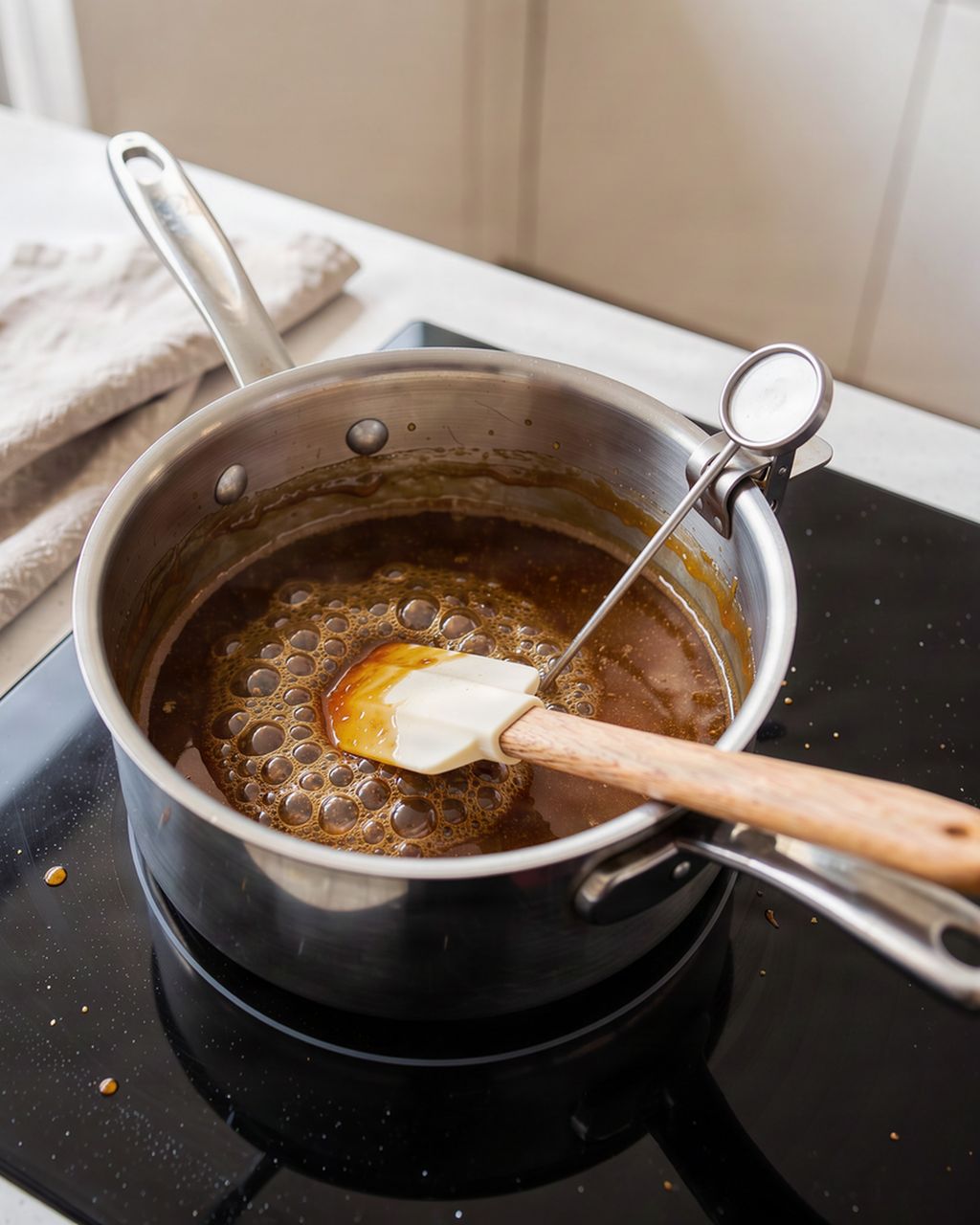
Butter toffee needs gentle, steady stirring while it cooks, so the butter stays mixed in. What you want to avoid is rough stirring that throws syrup up the sides, and any stirring once the toffee is off the heat and cooling, apart from quickly folding in nuts or vanilla.
Stir with a heatproof spatula, slowly, keeping the toffee off the pan walls as much as you can.
Pour it out as soon as it reaches temperature.
Spread it once and then leave it. Pushing it around the tray as it starts to set encourages crystals.
Let it cool at room temperature, not in the fridge, where damp air condenses on it.
Sometimes, if you catch it in the pan.
Take the pan off the heat and let it stop bubbling. Wearing oven gloves and standing back, add a few tablespoons of just-boiled water a little at a time to dissolve the crystals. The mixture will hiss and spit.
Return to low heat and stir gently until the mixture is smooth and no grit remains.
Add a spoonful of corn syrup or glucose syrup if the recipe didn't have one.
Wash down the sides and cook it back up to the hard-crack stage, 149–154°C (300–310°F) on the Exploratorium's sugar-stage chart.
The second cook darkens the toffee and the flavor becomes deeper, so it won't be identical. If the toffee has already set grainy, it is perfectly fine to eat; break it into small pieces for ice cream or baking, or melt it into a sauce with cream.
Cooking sugar is dangerous: toffee is far hotter than boiling water and sticks to skin. Wear oven gloves when adding water, and keep children away. The NHS advises cooling a burn under cool running water for 20 minutes, as soon as possible (within 3 hours), with no creams, oils or butter; get urgent medical help for a large or deep burn, or one on the face, genitals or bottom, and call NHS 111 (or your doctor) for advice about any burn on a child under 5.
Our article on why caramel crystallizes covers the same science for caramel, and how to make fudge that isn't grainy shows the opposite case, where some crystals are wanted.
Toffee crystallizes when stray sugar crystals seed the hot syrup. The usual sources are undissolved sugar at the start, crystals on the pan walls, a dirty spoon, or scraping the pan when pouring.
Dissolve the sugar fully before the mixture boils, wash down the sides of the pan with a wet pastry brush, add a spoonful of corn or glucose syrup, and don't scrape the pan when you pour.
Yes, corn syrup or glucose syrup helps. Its glucose and longer sugar chains get in the way of sucrose crystals, so a tablespoon or two makes a smoother toffee.
Yes, a few drops of lemon juice help. The acid splits some sucrose into glucose and fructose during cooking, and these interfere with crystal formation.
Often yes, if it is still in the pan. Add a little hot water, stir over low heat until the crystals dissolve, then cook it back to the hard-crack stage.
One recipe worth heating the oven for, one tip, and one deal from the shop. Nothing else.