Why Won't My Toffee Harden? The Hard-Crack Stage Explained
Why Did My Toffee Separate? Causes, Fixes and How to Rescue It
Updated Nov 20, 2026
Toffee separates when the butterfat breaks away from the sugar, usually because the heat was uneven or changed suddenly, the stirring was wrong, or the butter had too little fat. If it splits while it is still cooking, you can often whisk it back together with a little hot water. Here is what causes it and how to stop it happening next time.
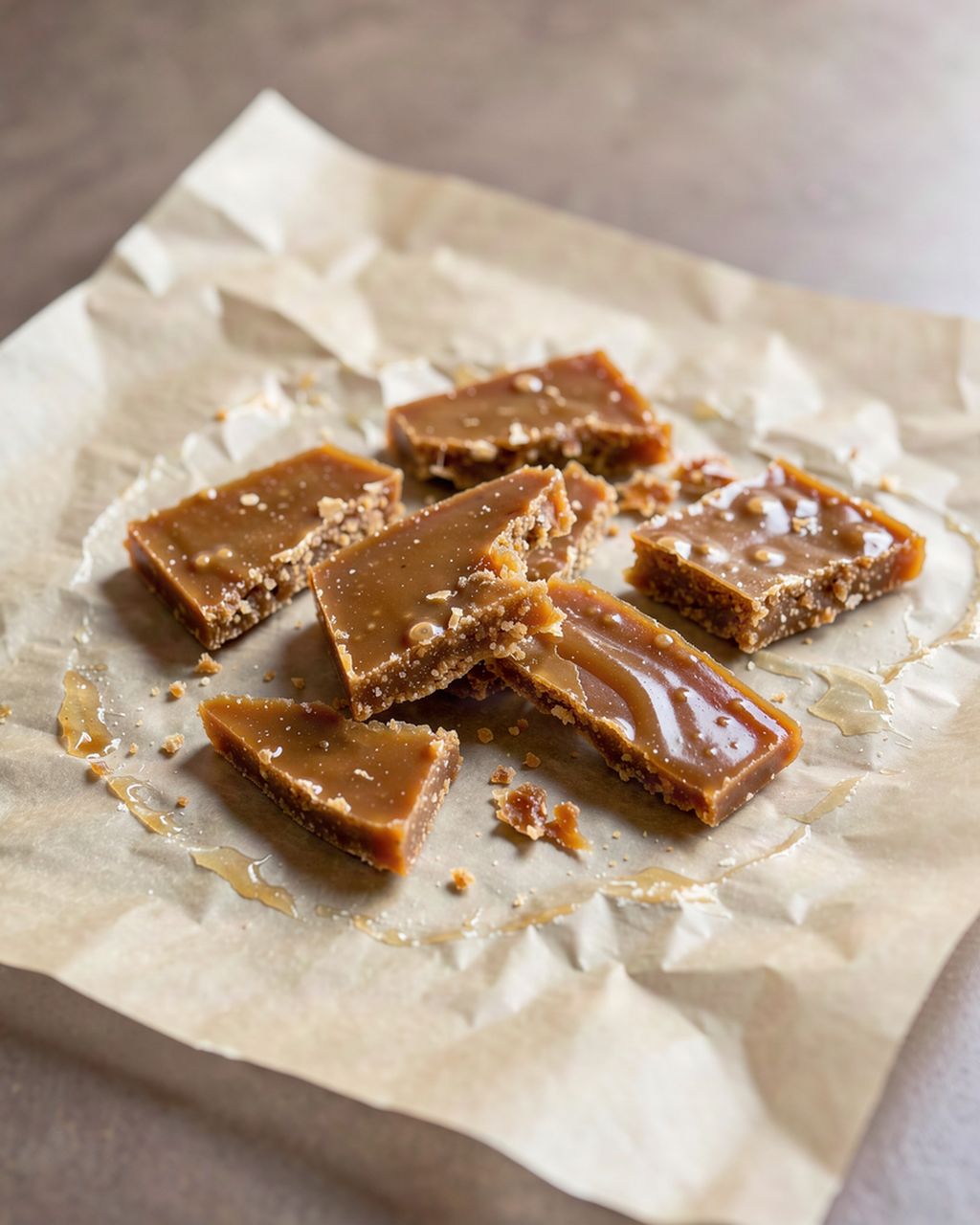
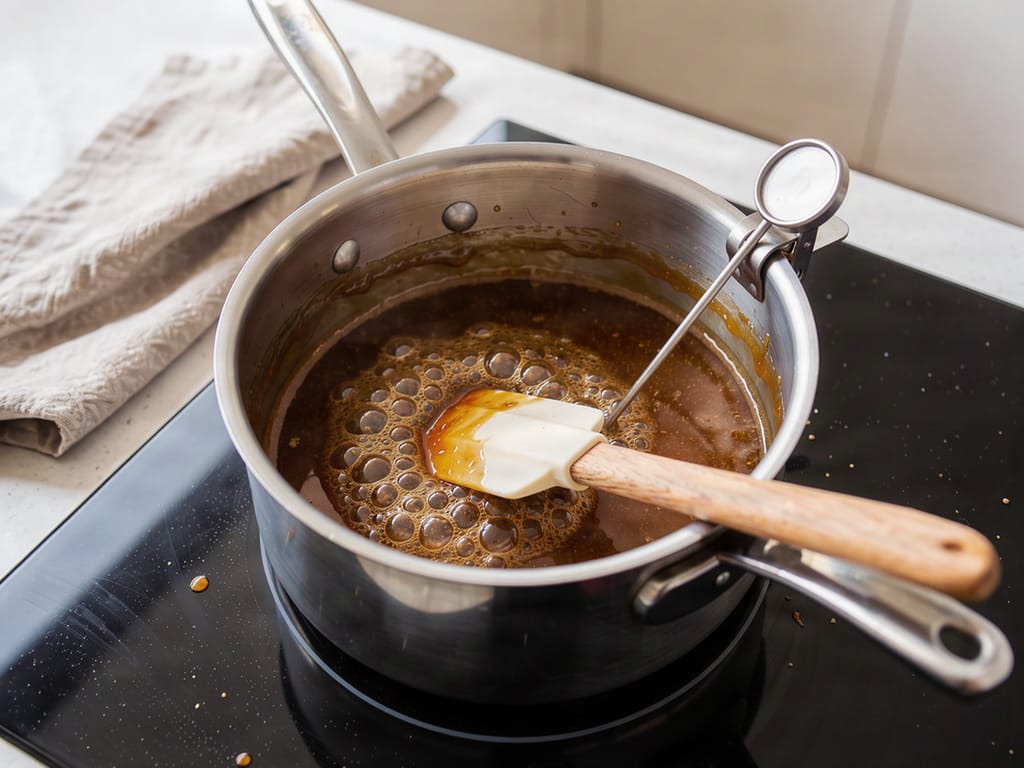
Toffee is an emulsion: tiny drops of butterfat held evenly through a hot sugar syrup. When that balance breaks, the fat slides out of the sugar and collects on top as a greasy, yellow layer. The candy underneath often turns grainy or sandy, and the finished slab feels oily in your hand.
The usual causes, roughly in order of how often we see them:
Sudden temperature changes. Heat turned up hard, then down, or a pan that is hot in one spot and cool in another.
The wrong kind of stirring. Beating hard early on, or leaving the pan alone near the end when it needs a steady stir.
Spreads or margarine instead of butter. Reduced-fat spreads carry more water, and margarine is made from vegetable fats with emulsifiers; neither is built for candy.
A thin pan. Thin bottoms make hot spots, and hot spots scorch the sugar and split the fat.
A humid day. Humidity mostly affects the finished toffee, which can turn soft and sticky, but a steamy kitchen makes the cook harder to judge.
The good news: if the toffee splits while it is still in the pan, you can usually bring it back.
Seasonal baking plans, tested recipes and kitchen tricks that save you time. Unsubscribe in one click.
Butter, sugar and the water in the butter need to heat up together. If the bottom of the pan races ahead, the sugar there overheats while the fat above it has nothing to cling to, and the emulsion tears.
Melt the butter and sugar over medium-low heat first. Let the sugar dissolve before the mixture boils.
Then raise the heat gradually, to medium, and leave it there. Don't keep nudging the dial up and down.
Use a heavy, wide pan. A thick base spreads heat evenly. Stainless steel with a sandwich base is ideal; thin enamel pots are the worst.
Match the burner to the pan. A small pan on a big gas flame heats the sides much hotter than the middle.
Don't add cold ingredients mid-cook. Cold nuts, cold vanilla or a splash of cold cream dropped into boiling toffee is a shock. Add flavorings at the end, off the heat, and warm the nuts in the oven if your recipe stirs them in.
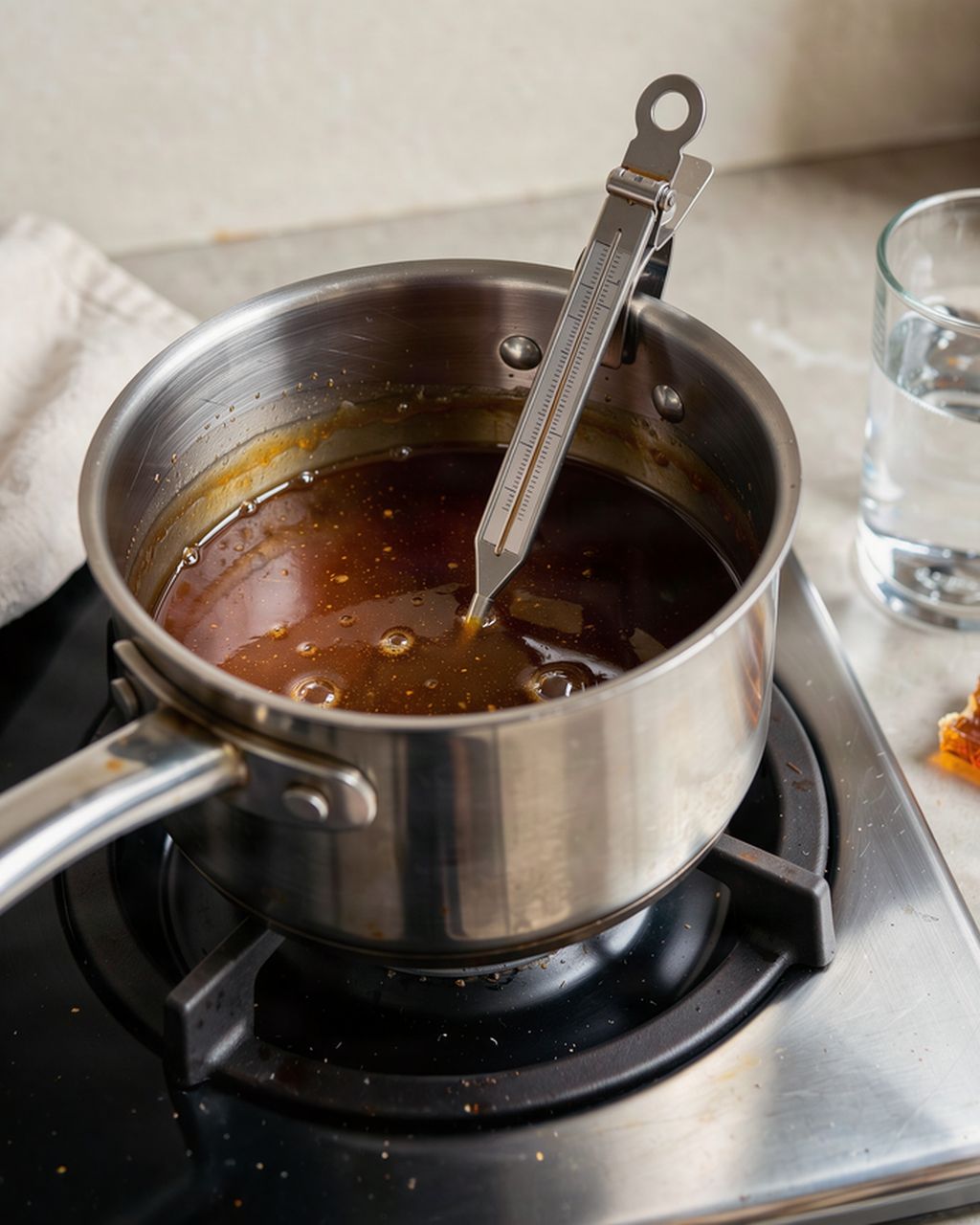
Toffee is cooked to the hard-crack stage, 149–154°C (300–310°F) at sea level according to the Exploratorium's sugar-stage chart. At altitude, the Exploratorium advises cooking about 1°F lower for every 500 feet, roughly 1°C for every 275 m (900 ft). Watching a thermometer climb steadily through the last 20 degrees is the best sign that the heat is even.
Toffee is a little different from plain sugar syrup. Sugar syrup is often left unstirred so it won't crystallize, but butter toffee needs gentle, regular stirring to keep the fat moving through the sugar.
Stir to dissolve the sugar in the melting butter at the start.
Once it boils, stir slowly and steadily, scraping the bottom and corners with a heatproof spatula or a wooden spoon. Think of a lazy figure eight, not a whisk.
Don't whip it. Hard, fast stirring early in the cook can knock the emulsion apart.
Don't walk away near the end. In the last few minutes the mixture darkens quickly and the bottom scorches easily. Gentle stirring keeps it even.
If the recipe has you stir in nuts or baking soda at the end, do it off the heat and quickly, then pour at once.
Butter for toffee should be real butter. In both the US and the EU, butter must be at least 80% milk fat; the rest is mostly water. Many European and Czech butters are a little richer, around 82%.
Reduced-fat spreads and light or half-fat butters contain more water and less fat. Margarine, even at 80% fat like butter, is made from vegetable fats with emulsifiers designed for toast, not for 150°C sugar. Both separate easily, and the toffee will not set the same way. Use unsalted butter or salted butter, never a spread.
High-fat butter (82–84%) has less water, so the sugar has less liquid to dissolve in at the start. Some candy makers add about a tablespoon of water to the pan with the butter and sugar to give the sugar time to dissolve evenly. That water simply boils off later.
Salted or unsalted both work. Salted butter varies by brand, so if you use it, skip or reduce any extra salt in the recipe.
If you are converting an American recipe, a US stick of butter is 113 g (8 tablespoons), and 1 US cup of butter (2 sticks) is 227 g. Our cups and spoons to grams calculator covers the sugar.
Sugar pulls water from the air, so on a humid day finished toffee can turn soft and sticky as it cools. The Exploratorium suggests making candy on dry days and cooking to the upper end of the hard-crack range. Humidity is a problem for the finished candy more than a cause of splitting, but a steamy kitchen makes the whole job harder to judge.
If you have to make toffee on a rainy day:
Keep the kitchen as dry as you can. Don't have a pot of pasta or soup boiling next to it.
Cook to the upper end of the hard-crack range, which the Exploratorium suggests to counter humidity.
Store the finished toffee airtight as soon as it is cool.
You can often fix toffee that splits while it is still cooking. Once it has been poured and has set, the fat cannot be worked back in.
Take the pan off the heat. Let the bubbling settle for a few seconds.
Add hot water a tablespoon at a time. Use water from a just-boiled kettle, not cold water. Expect it to hiss and spit.
Stir vigorously with a whisk or spatula until the fat is drawn back into the sugar and the mixture looks glossy and smooth again. This can take a minute of hard stirring.
Add more water only if needed, one tablespoon at a time. Most batches come back with one to three tablespoons. Too much water just means a longer cook.
Return it to medium heat and cook back up to the hard-crack stage, stirring gently.
If it splits again, the heat is still too high or uneven. Turn it down a notch and carry on.
If the toffee has already set with an oily layer, blot the surface with paper towels. The toffee is still safe to eat. If it tastes fine, break it up and use it as a topping for ice cream, or stir it into cookie dough. If it tastes burnt, it is better binned: burnt sugar stays bitter whatever you mix it into.
Toffee at around 150°C (300°F) is far hotter than boiling water, and it sticks to skin. Adding water to rescue a split batch makes it spit, so take care.
Use a deep pan, so the boiling candy fills no more than about a third of it.
Keep children and pets out of the kitchen while you cook and pour.
Use a long-handled spoon or spatula, and wear oven gloves when adding water or pouring.
Never taste toffee from the spoon.
If hot sugar touches your skin, the NHS advises holding the burn under cool running water for 20 minutes, as soon as possible (within 3 hours), with no creams, oils or butter. Get urgent medical help for a large or deep burn, or one on the face, genitals or bottom, and call NHS 111 (or your doctor) for advice about any burn on a child under 5.
For more on cooking sugar safely, read how to make caramel from sugar without burning it. If your toffee went sandy rather than oily, our guide to why caramel crystallizes explains the crystal side of the problem.
Yes, if it is still in the pan. Take it off the heat, whisk in hot water a tablespoon at a time until the fat blends back in, then return it to the heat and cook it to the hard-crack stage.
Oil on top means the butterfat separated from the sugar during cooking. The usual causes are uneven or fluctuating heat, a thin pan, hard stirring early on, or low-fat butter or spread.
It is not a good idea. Reduced-fat spreads contain more water and less fat than butter, and even full-fat margarine (80% fat, like butter) uses vegetable fats and emulsifiers that behave differently in hot sugar, so the toffee separates more easily and sets differently.
Yes, separated toffee is safe; the problem is texture, not safety. Blot off the extra fat and use it as a topping, unless it tastes burnt.
Humidity mainly affects the finished toffee: sugar draws moisture from the air, so toffee made on a damp day can turn soft or sticky. Cook to the upper end of the hard-crack range and store it airtight once cool.
One recipe worth heating the oven for, one tip, and one deal from the shop. Nothing else.