Why Is My Fudge Crumbly or Hard? Overcooking, Overbeating and the Fix
Why Won't My Fudge Set? Soft-Ball Stage, Beating and How to Fix It
Updated Nov 20, 2026
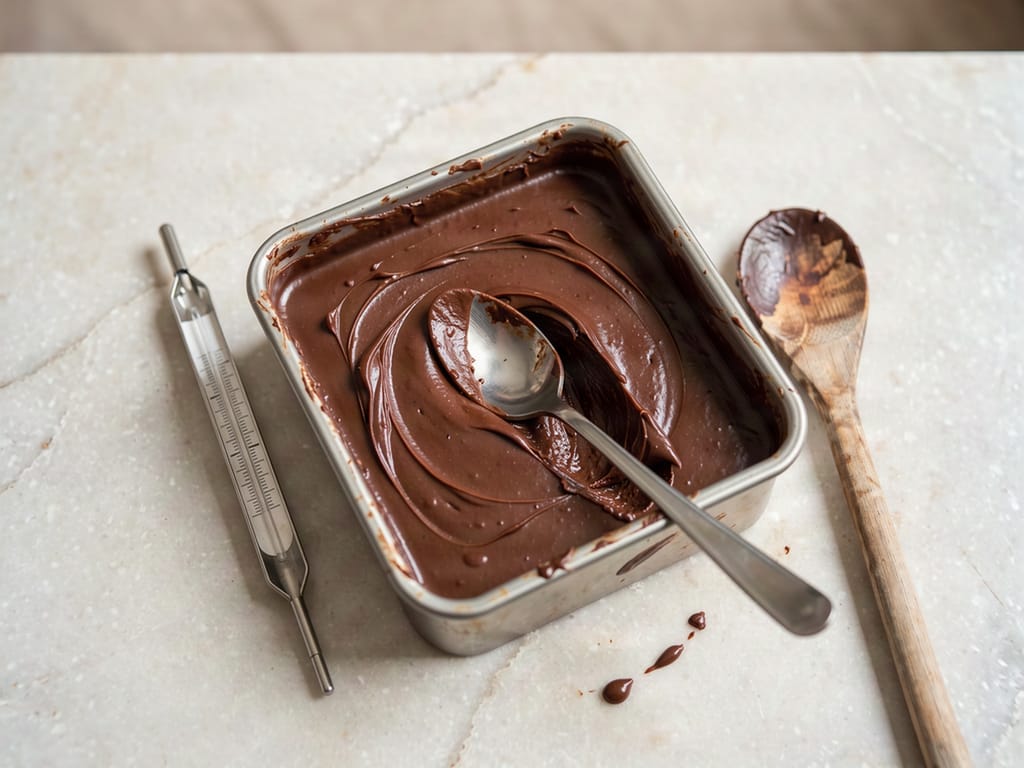
Fudge that won't set almost always didn't reach the soft-ball stage, 113–116°C (235–240°F) at sea level, or wasn't beaten at the right moment. A thermometer that reads high, altitude and humid weather make it worse. The good news is that soft fudge can be melted and re-cooked.
Fudge that stays soft, sticky or gooey almost always didn't reach the soft-ball stage, 113–116°C (235–240°F) at sea level. That range comes from the Exploratorium's sugar-stage chart, which lists fudge, fondant and pralines at this stage. At soft ball, about 85% of the syrup is sugar. Pull it off any earlier and there is too much water left for the fudge to firm up.
The other common reasons:
The thermometer reads high, so it said 115°C when the fudge was really at 111°C.
The fudge was beaten too hot, too little, or not at all. Beating is what turns the syrup into fudge.
Altitude. Water and syrup boil at lower temperatures higher up.
A humid day, because the cooling fudge picks up moisture from the air and sets softer.
The recipe was changed, for example more butter, extra cream, or a light spread instead of butter.
If your fudge set but went sandy or gritty, that is a different problem (crystals too big rather than too few). Our guide to fudge that isn't grainy covers it.
Seasonal baking plans, tested recipes and kitchen tricks that save you time. Unsubscribe in one click.
Most cooked fudge recipes give one target inside the soft-ball range, often 114–115°C (237–239°F). Cook to it with a thermometer you trust.
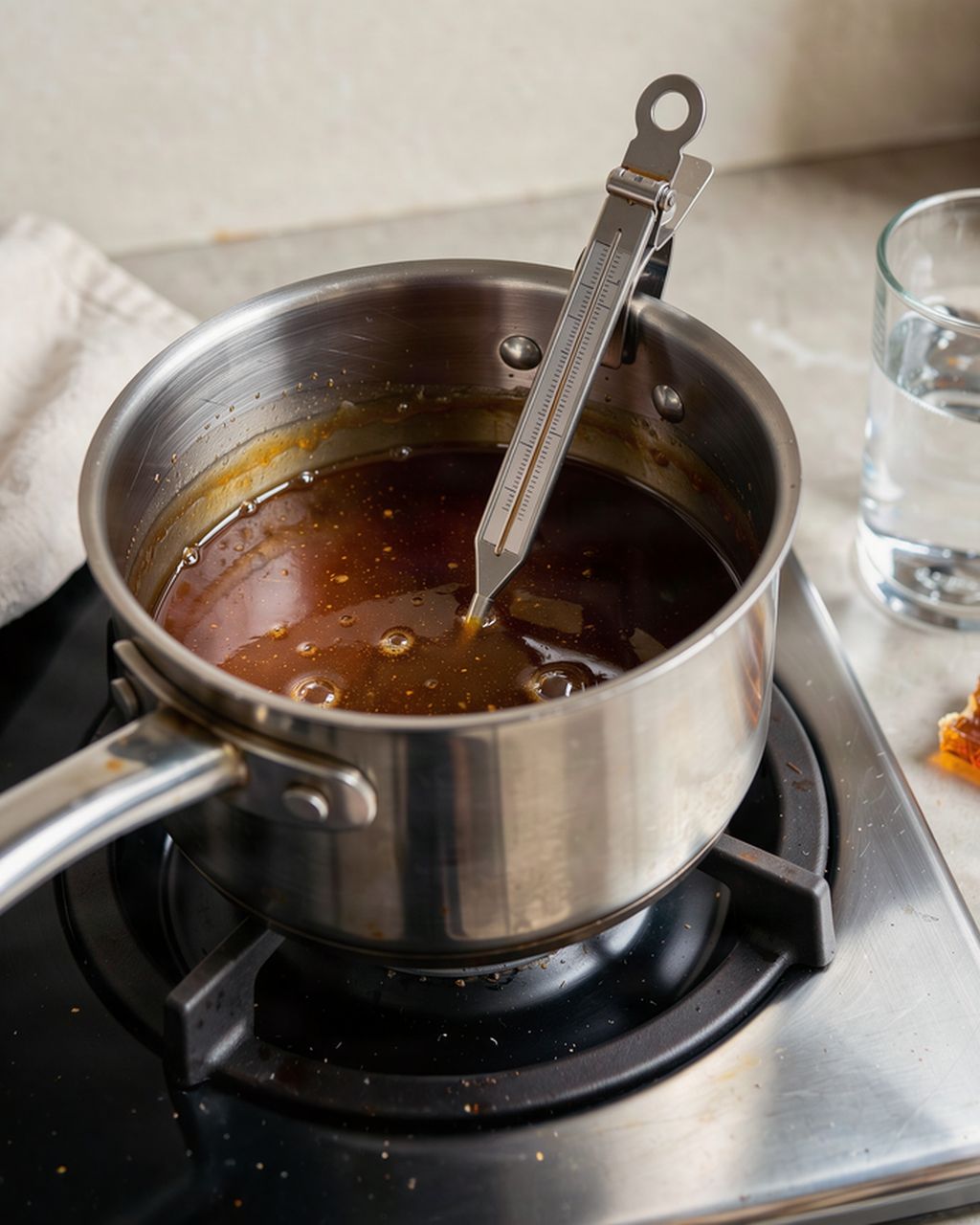
Test your thermometer first. Put it in a pan of rapidly boiling water. At sea level it should read 100°C (212°F). If it reads 98°C, it reads 2 degrees low, so cook your fudge to 2 degrees below what the recipe says. If it reads 102°C, cook to 2 degrees above. Higher up, water boils below 100°C even with an accurate thermometer; either way, cook the fudge that many degrees below the recipe temperature.
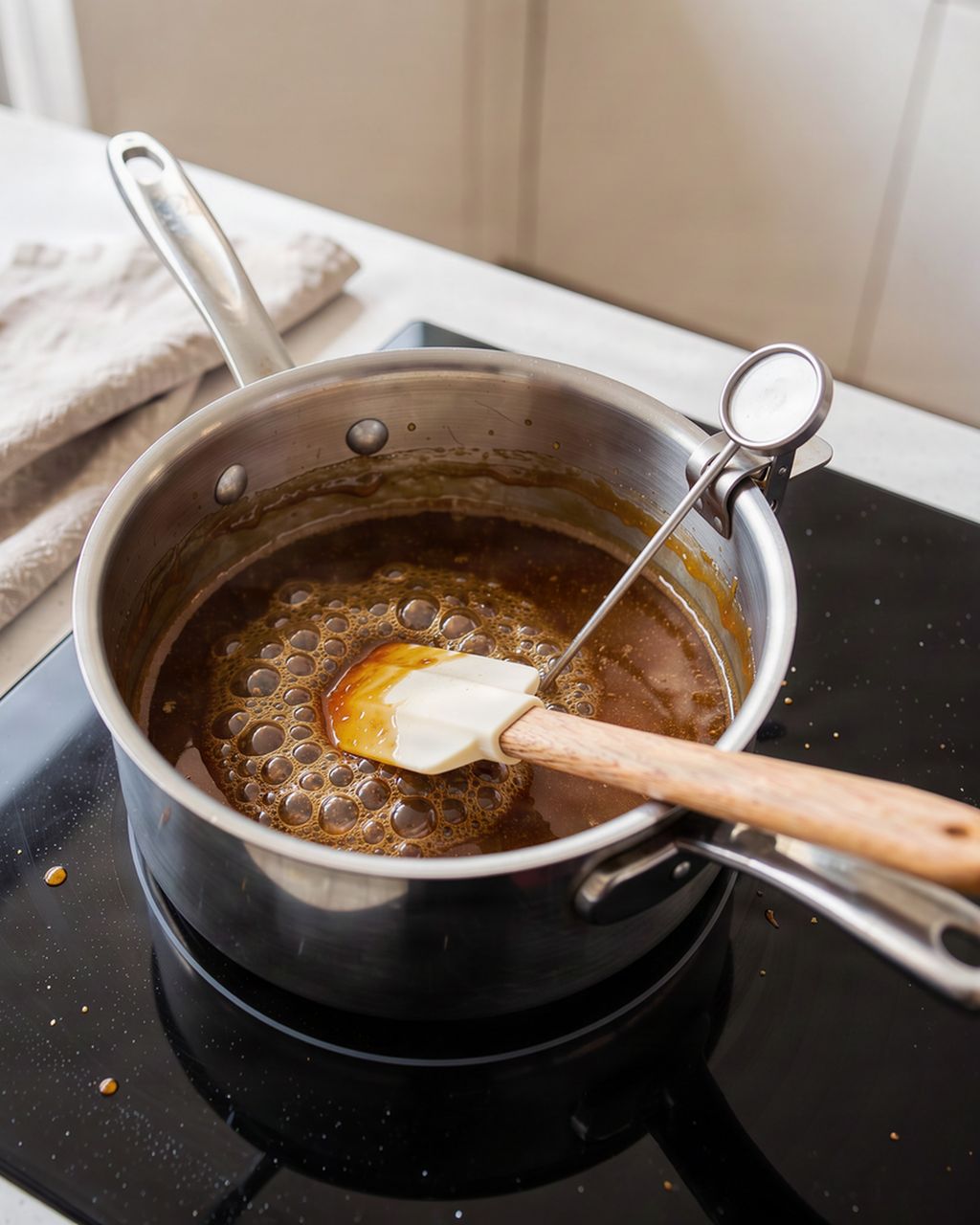
Clip it so the tip sits in the fudge, not on the bottom of the pan. Fudge is a shallow mixture in a wide pan, so tilt the pan or use a smaller one if the tip isn't covered.
No thermometer? Use cold water. Drop half a teaspoon of the syrup into a glass of very cold water and gather it with your fingers once it has cooled. At soft ball, the syrup forms a soft, flexible ball (Exploratorium) that flattens on your fingertip a moment after you take it out of the water. If it dissolves or won't hold together, keep cooking. If it forms a firm ball that holds its shape, you have gone past soft ball and the fudge will be firm or crumbly.
Stir only to dissolve the sugar at the start and to stop the bottom catching in milk-based fudge. Constant hard stirring while it boils does not help it set.
Cooked fudge sets because sugar crystallizes into millions of tiny crystals as you beat it. When and how you beat matters as much as the cooking temperature.
Let it cool undisturbed. Take the pan off the heat and leave it alone, without stirring, until it cools to about 43°C (110°F). The Exploratorium's fudge method and Utah State University Extension's candy guide both use this figure. Some recipes beat a little warmer, up to about 50–54°C (122–130°F), and still turn out well.
Beat steadily. Use a wooden spoon or a stand mixer on low. At first the fudge is glossy and runny.
Watch for the change. By hand this can take 10–20 minutes. It loses its shine, thickens and starts to hold its shape. That is the moment to pour, and the moment is short.
Pour and spread at once. If you wait, it sets in the pan.
If you pour while it is still glossy, the fudge may stay soft for good because not enough crystals have formed. If you beat it while still very hot, you get fewer, bigger crystals and a grainy fudge. If you beat it far too long, it sets hard in the pan. Once the gloss goes, the window to pour is short, which is why fudge feels unpredictable.
Humidity. Sugar picks up water from the air. The Exploratorium notes that humid weather can soften candy and suggests cooking to the upper end of the range on damp days. For fudge, that means aiming for 116°C (240°F) rather than 113°C (235°F), or simply choosing a dry day.
Altitude. The Exploratorium advises subtracting about 1°F for every 500 feet above sea level, roughly 1°C for every 275 meters (900 feet). Colorado State University Extension lists cream candies at 234–240°F at sea level and 224–230°F at 5,000 feet (about 2°F lower per 1,000 feet). The boiling-water test does the arithmetic for you: if water boils at 96°C in your kitchen, cook your fudge about 4°C below the sea-level target.
You can almost always save it by cooking it again.
Scrape the soft fudge back into the pan. Add a few tablespoons of milk or water, just enough to loosen it and stop it scorching.
Melt it over low heat, stirring gently until smooth.
Bring it back to a boil and cook to the soft-ball stage, checking with a tested thermometer or the cold-water test.
Cool undisturbed to about 43°C (110°F), then beat until it loses its gloss and thickens, and pour.
The second batch may be a little darker and firmer. If it went too far and turned hard, our article on hard or crumbly fudge covers that side.
Fudge that sets in the fridge. Quick fudge made by melting chocolate with condensed milk isn't cooked to soft ball at all. It sets as the chocolate cools, so if it stays soft, it usually needs more chocolate or more time in the fridge, covered. Add more melted chocolate next time rather than re-cooking it.
Fudge at soft ball is hotter than boiling water and clings to skin. Use a deep, heavy pan, long-handled tools and oven gloves, and keep children away from the stove and the cooling pan. Never taste from the spoon.
If hot sugar touches your skin, the NHS advises holding the burn under cool running water for 20 minutes, as soon as possible (within 3 hours), with no creams, oils or butter; get urgent medical help for a large or deep burn, or one on the face, genitals or bottom, and call NHS 111 (or your doctor) for advice about any burn on a child under 5.
Condensed milk fudge needs extra care: it catches on the bottom easily. Stir it gently but often, and never heat an unopened can of condensed milk. Our guide to condensed milk caramel explains why. For a firmer, chewier candy cooked one stage higher, see homemade caramels.
Cook fudge to the soft-ball stage, 113–116°C (235–240°F) at sea level, according to the Exploratorium's sugar-stage chart. Many recipes aim for the middle of that range.
Soft fudge usually didn't reach the soft-ball stage or wasn't beaten long enough. Check your thermometer in boiling water, cook to soft ball, and beat until the fudge loses its gloss.
Yes. Melt it with a few tablespoons of milk or water, cook it back to the soft-ball stage, cool it to about 43°C (110°F), then beat it and pour.
Beat fudge after it has cooled undisturbed to about 43°C (110°F), the temperature used by the Exploratorium and Utah State University Extension. Stop when it loses its shine and starts to thicken.
Yes. Sugar absorbs moisture from the air, so on a humid day fudge can set softer; cook to the top of the soft-ball range or choose a dry day.
Cooked condensed milk fudge still needs to reach the soft-ball stage. No-cook fudge made with chocolate and condensed milk sets by cooling, so it usually needs more chocolate or longer in the fridge.
One recipe worth heating the oven for, one tip, and one deal from the shop. Nothing else.