Why Is My Soup Bitter? Common Causes and How to Fix It
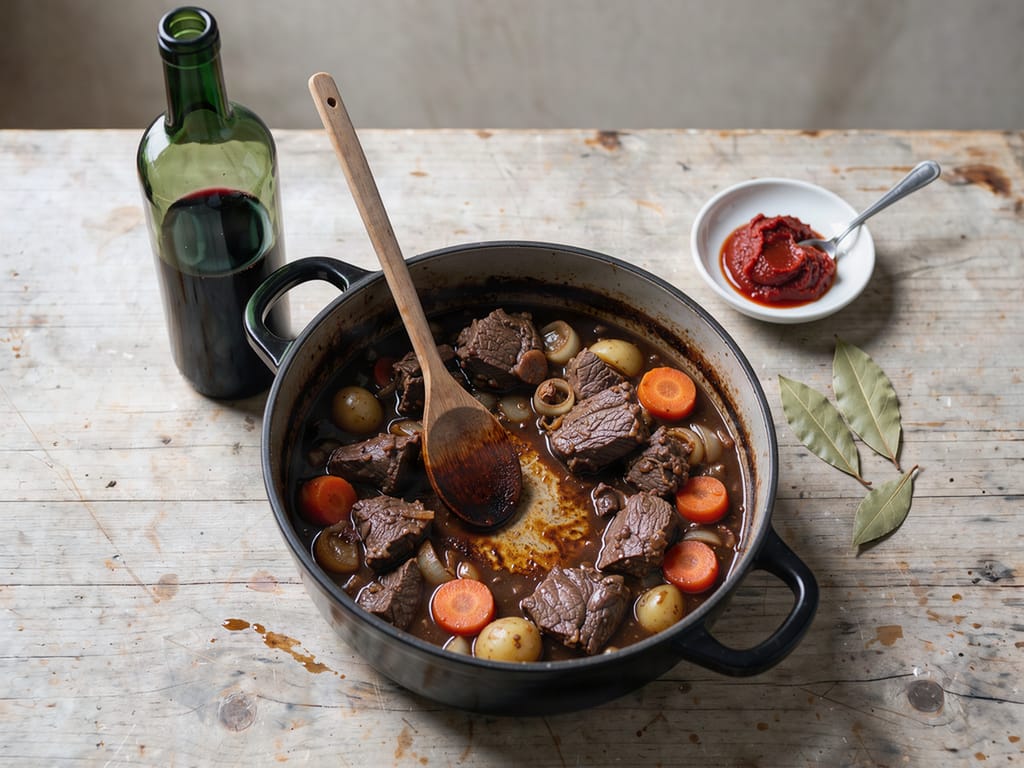
Why Is My Stew Bitter? Burnt Fond, Tomato Paste, Wine and Herbs
Updated Nov 21, 2026
Stew usually turns bitter because something burned: the browned bits on the pan bottom went black, or the paprika, garlic or tomato paste scorched before the liquid went in. Tannic red wine that didn't cook down, too many bay leaves or herbs, and a scorched pot bottom are the other common causes. Salt, a little sweetness and fat can balance mild bitterness, but burnt flavor can only be diluted.
Browning is where stew gets its flavor, and it is also where bitterness usually starts. There is a thin line between dark brown and black.
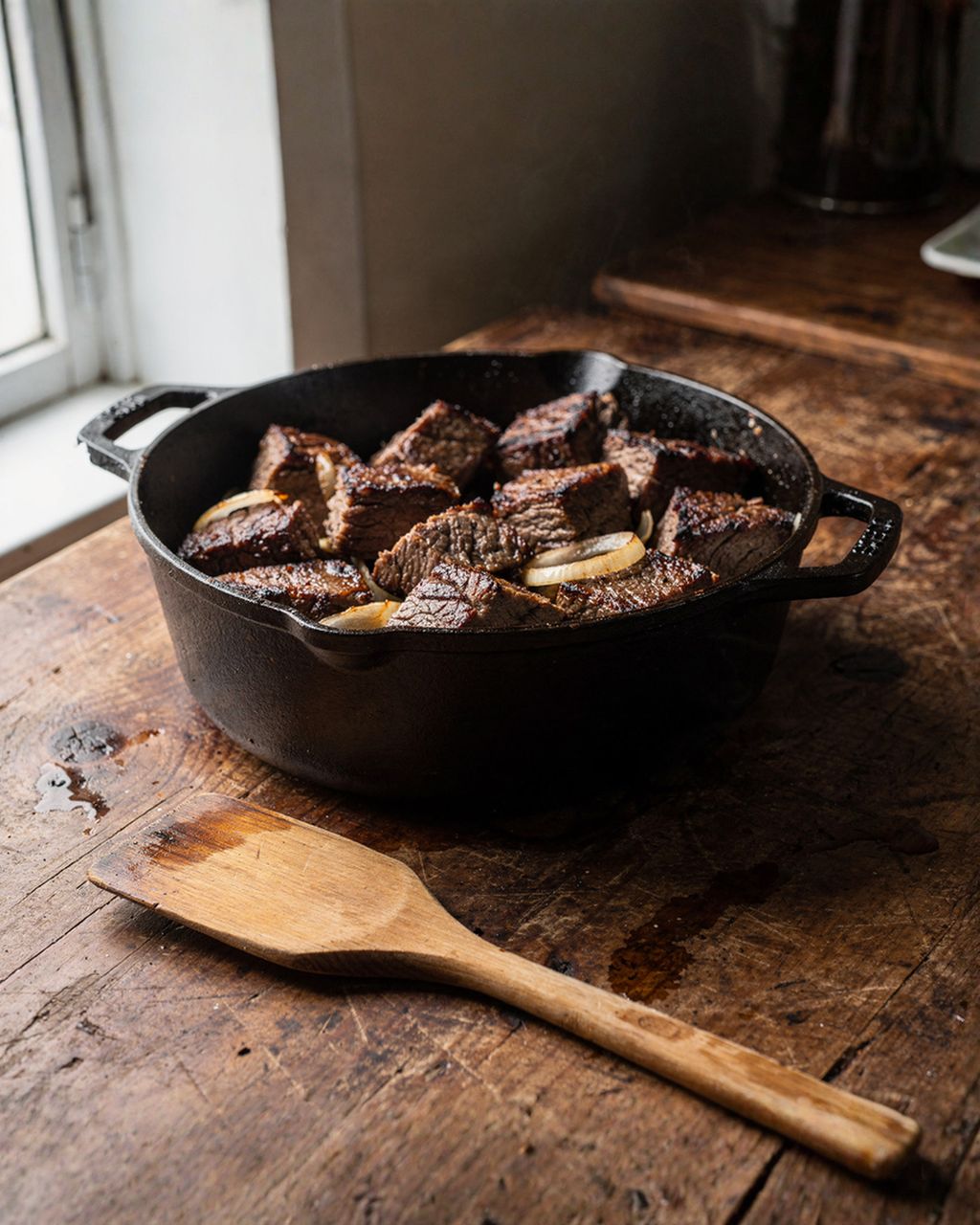
Fond is the brown crust that forms on the bottom of the pan as you sear meat. Dark brown fond, scraped up with liquid (deglazing), is the backbone of a good stew. Black, burnt fond tastes acrid and spreads that taste through the whole pot.
Onions cooked on high heat can catch at the edges before the middles soften.
Garlic burns in seconds in hot fat.
How to avoid it: sear meat in batches on medium-high heat, not the highest. If the fond is getting too dark between batches, add a splash of water, scrape it up, pour it into a bowl to add later, and wipe the pan. If any bits are truly black, wipe the pan out before you go on.
Recipe of the week, one tip that saves you time and one deal from the shop. Unsubscribe in one click.
The next issue goes out on Thursday, November 26.
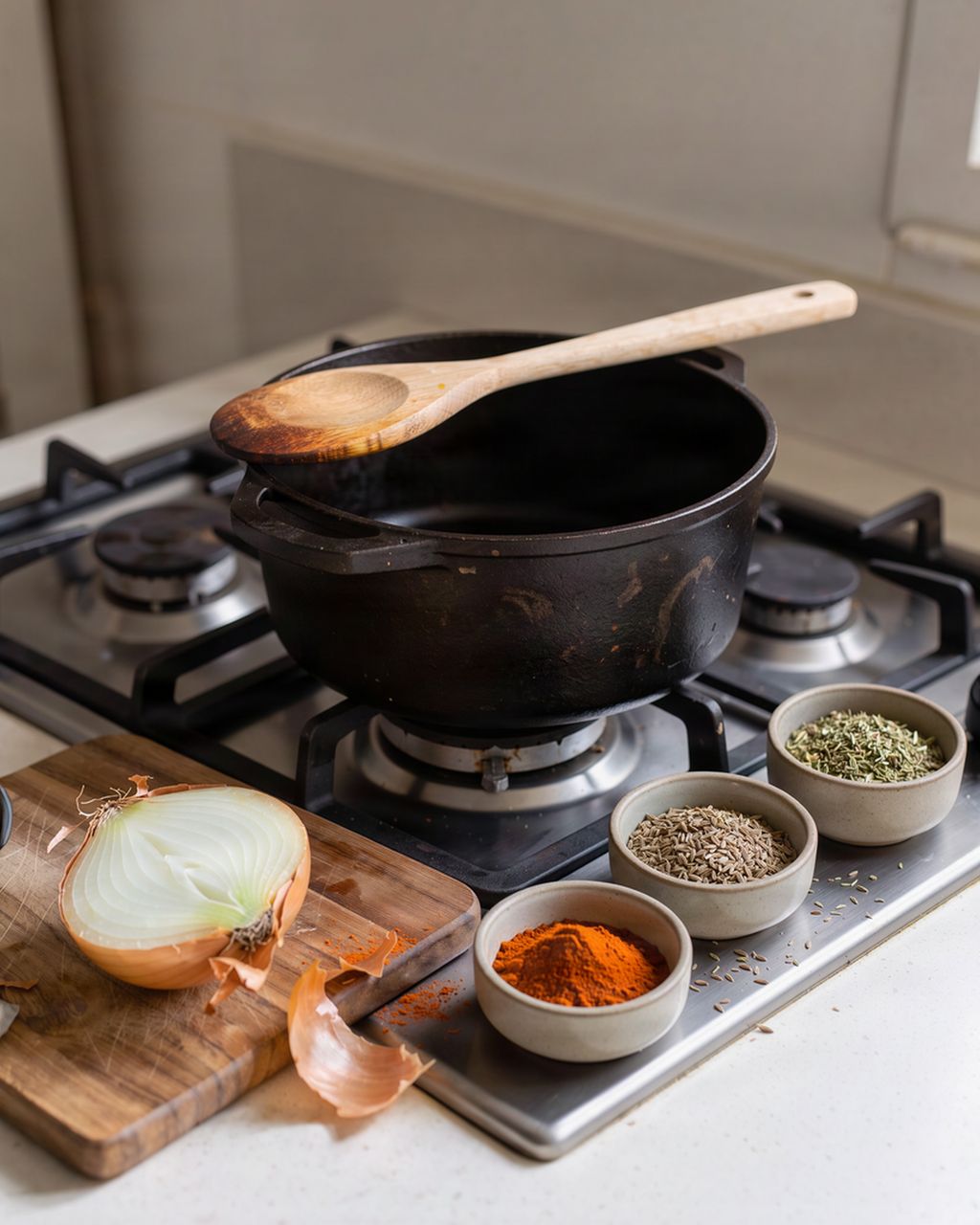
Ground spices burn even faster than garlic.
Paprika turns bitter almost as soon as it scorches. Czech and Hungarian cooks take the pot off the heat, stir in the paprika for a few seconds, then add the liquid at once. Our guide to bitter, sour or sweet goulash covers goulash in detail, and sweet vs smoked vs hot paprika explains which to use.
Ground cumin, caraway and chili behave the same way. Bloom them briefly, then add liquid.
Tomato paste should be fried for a minute or two, stirring, until it darkens slightly and smells sweet. Left alone on high heat, tomato paste sticks and turns bitter.
Bitterness from scorched spices is the same as burnt flavor: it can be diluted, not removed.
Red wine. A big, tannic red, or a lot of it, can make stew taste harsh. Add wine early, simmer it down so the raw alcohol taste goes, and use a smooth wine you'd be happy to drink. Very hard reduction concentrates the tannins. Alcohol added to stew doesn't all cook off, so if you avoid alcohol, use extra stock with a splash of vinegar instead.
Dark or hoppy beer. A very bitter beer, such as an IPA, carries its bitterness into the stew. Malty lagers and dark Czech lagers are gentler choices.
Cocoa or dark chocolate. A little rounds off a goulash or chili; too much turns it bitter. Our guide to chocolate in goulash and chili gives amounts.
Coffee or espresso, used in some beef stews, works the same way: a little adds depth, a lot adds bitterness.
Bay leaves. One or two bay leaves are plenty for a pot. Many of them, or a few left in all day, can taste medicinal. Fish them out once the stew tastes right.
Woody herbs such as rosemary and thyme stems. Use a sprig or two, and remove the stems before serving.
Caraway, common in Czech stews and goulash, turns bitter if you use too much or let it scorch.
Cabbage, kale and other brassicas turn bitter and sulfurous if they cook for hours. Add them in the last part of cooking.
Celery leaves and turnips add a bitter edge in quantity.
Stews thicken as they cook, and a thick stew on direct heat can stick and scorch without much warning.
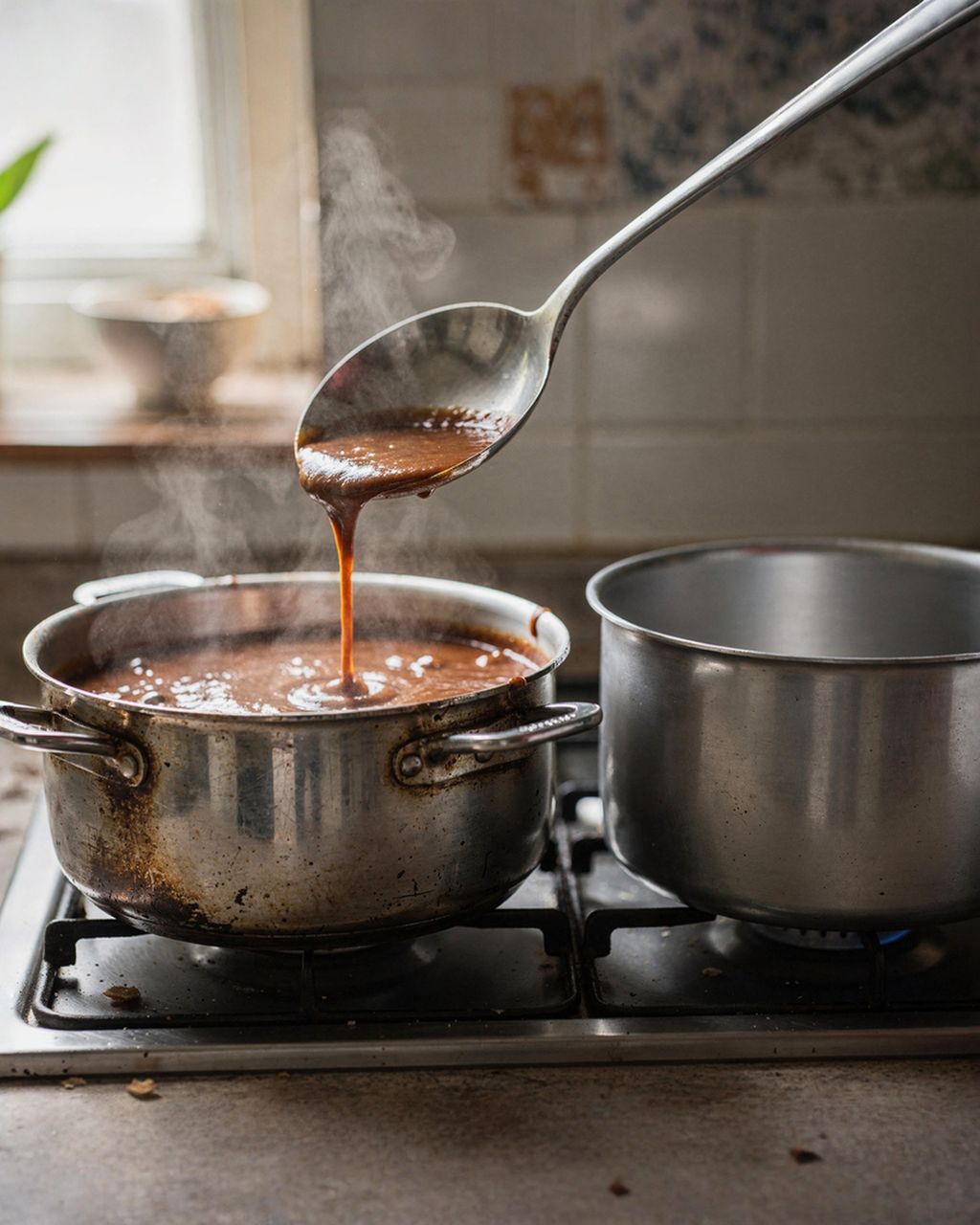
Don't stir the burnt layer in. As soon as you smell burning, stop stirring and pour or ladle the stew into a clean pot, leaving the stuck layer behind.
Taste it. Often the stew above is fine. If it carries a slight burnt taste, see the fixes below.
Next time, use a heavy pot, keep the heat low, stir and scrape the bottom now and then, or move the stew into the oven, where the heat comes from all sides.
Our guide to saving a scorched sauce walks through it.
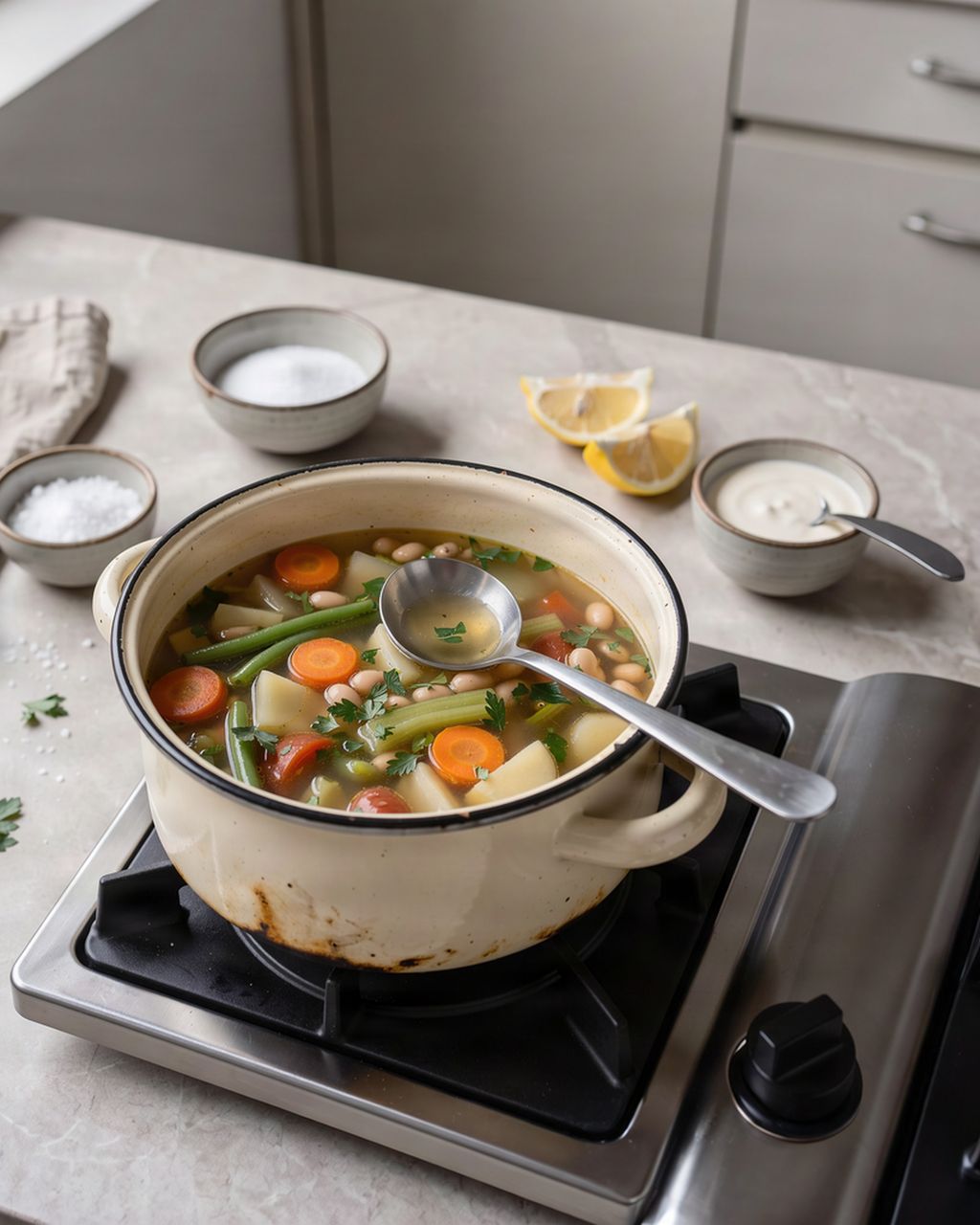
Taste after each step:
Salt. Salt suppresses bitterness, and an under-salted stew tastes harsher than it is.
A little sweetness. A pinch of sugar, a spoonful of honey or redcurrant jelly, or grated carrot simmered in.
Fat or dairy. A knob of butter, a spoonful of sour cream on each plate, or a splash of cream in a stew that suits it.
A sweet, starchy side. Bread dumplings, potatoes or buttered noodles soften a slightly bitter sauce on the plate.
Dilute. For burnt flavor, add stock and more browned onion or vegetables, simmer, and season again. If it is still acrid, lift out the meat and start the sauce again around it.
Sometimes a stew that tastes "off" is sour rather than bitter, and the fix is different.
Bitter is harsh and lingers at the back of the tongue, like burnt toast or strong coffee.
Sour is sharp and makes your mouth water, like lemon juice or vinegar.
Sourness in stew usually comes from tomatoes, wine or vinegar that haven't cooked long enough to mellow. Simmer it a little longer, then balance it with a pinch of sugar, a spoonful of butter or a little sour cream. Bitterness responds better to salt and to diluting the burnt or bitter ingredient.
If you can't tell which it is, add a pinch of salt to a spoonful of the sauce. If it tastes better, the stew was under-salted or bitter. If it still tastes sharp, it is sour.
Stew is usually bitter because something burned at the start: blackened fond on the pan bottom, or scorched paprika, garlic or tomato paste. Too much red wine that didn't cook down, too many bay leaves or a stew that caught on the bottom can also make it bitter.
Taste and add salt first, then a little sugar, honey or a sweet vegetable such as carrot, and a spoonful of butter or sour cream. A splash of stock helps dilute it. If the bitterness is from burning, dilute with more stock and vegetables, or start the sauce again.
Yes, red wine can make stew bitter or harsh if a lot of a very tannic wine goes in and isn't simmered long enough, or if it is reduced too hard. Use a smooth, drinkable wine, add it early so it cooks down, and don't use more than the recipe calls for.
Beef stew tastes burnt when the browned bits on the bottom of the pan went past dark brown to black while searing, or the stew stuck and scorched during cooking. Don't scrape black bits into the stew; pour the stew into a clean pot instead.
Goulash is usually bitter because the paprika scorched in hot fat. Paprika burns within seconds, so take the pot off the heat before adding it and pour in the liquid straight away. Burnt onions or too much caraway can also make it bitter.
Yes. One or two bay leaves add depth, but a lot of them, simmered for hours, can taste bitter and medicinal. Use a couple and take them out once the stew tastes right.
One recipe worth heating the oven for, one tip, and one deal from the shop. Nothing else.