Czech vs Hungarian vs American Goulash: What's the Difference?
Sweet vs Smoked vs Hot Paprika: Which One for Goulash and Paprikash?
Updated Nov 18, 2026
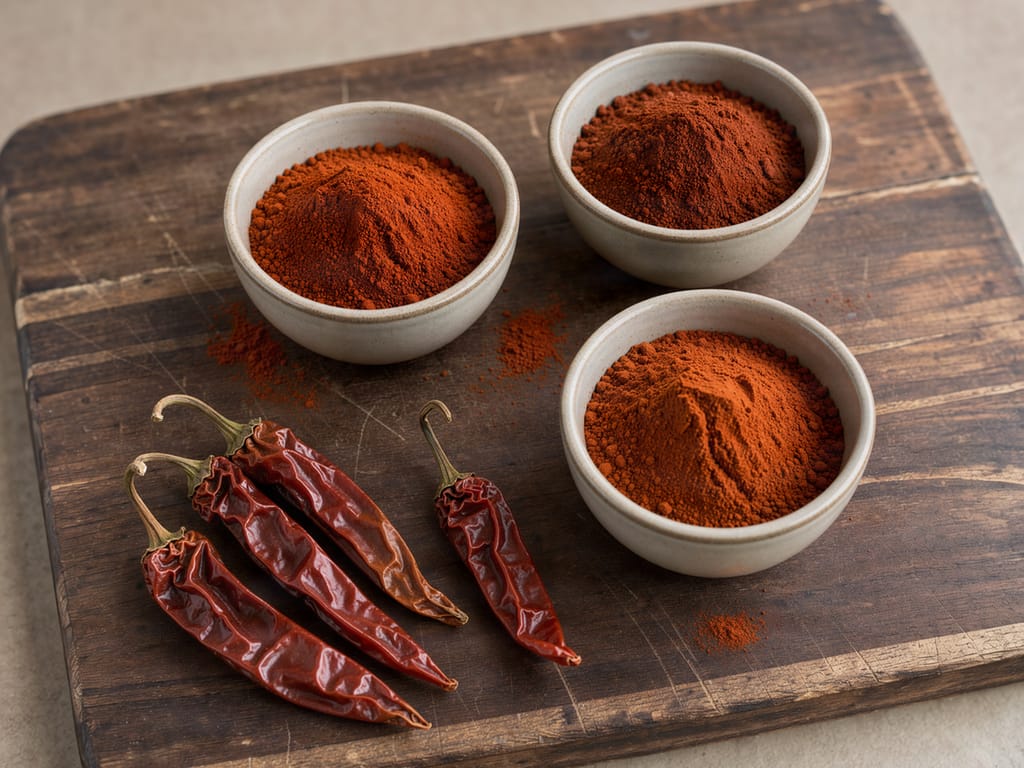
Sweet paprika is ground dried red peppers with little or no heat, hot paprika adds noticeable chili heat, and smoked paprika (Spanish pimentón, usually from La Vera) is dried over oak fires, so it tastes of wood smoke. For Czech and Hungarian goulash and chicken paprikash, use sweet Hungarian paprika as the base, with a little hot if you like heat, and leave smoked paprika for Spanish dishes. Here is how the types differ, how to cook with them without burning them, and what to use when you have no hot paprika.
Paprika is ground dried red pepper (Capsicum annuum). The peppers range from mild to hot, and how much of the seeds and inner ribs go into the grind affects the heat. Color, sweetness and heat all vary by variety and by grade.
The two big paprika traditions are Hungarian and Spanish. Central European cooking, Czech included, follows the Hungarian style. In Czech shops it is labeled sladká paprika (sweet), pálivá paprika (hot) and uzená paprika (smoked).
Seasonal baking plans, tested recipes and kitchen tricks that save you time. Unsubscribe in one click.
Hungarian paprika comes in several named grades, from very mild and bright red to hot and orange-brown. You don't need to learn them all. Two matter for cooking:
Édesnemes (noble sweet): the everyday sweet paprika, bright red, rich and fruity with a slight bite. It is the most common grade outside Hungary and the one most goulash recipes assume.
Erős (hot), sometimes labeled csípős: noticeably spicy. Use it alongside sweet paprika rather than instead of it.
You may also see különleges (special, the mildest and brightest), csemege (delicate) and félédes (semi-sweet, a blend with medium heat). Sources disagree a little on the exact order of the grades, so trust the word édes for sweet and erős for hot. Csípős means pungent and also turns up in milder grade names such as csípős csemege.
Hungarian paprika is not smoked. Its flavor comes from the peppers and drying, which is why it tastes sweeter and rounder than generic paprika.
Spanish paprika is called pimentón. The famous smoked kind is Pimentón de la Vera, a protected designation of origin from Extremadura, where the peppers are dried over oak fires. That gives the deep, bacon-like smokiness people mean by smoked paprika.
It comes in three strengths:
Dulce: sweet, no heat.
Agridulce: bittersweet, mildly hot.
Picante: hot.
Not all Spanish pimentón is smoked: paprika from Murcia, for example, is usually air- or sun-dried. Check the label for ahumado (smoked) or de la Vera.
Smoked paprika belongs in chorizo, paella, patatas bravas and barbecue rubs. See our smoked paprika page.
A jar labeled just paprika in a US or UK supermarket is almost always mild and unsmoked. It is often milder and less fragrant than Hungarian sweet paprika, and old jars lose color and flavor fast.
It works in goulash in a pinch. Use a little more than the recipe says, about a quarter extra, and taste. Hungarian paprika in a tin, sold in many US supermarkets and Eastern European delis, is worth the small extra cost if you cook goulash often. See sweet ground paprika.
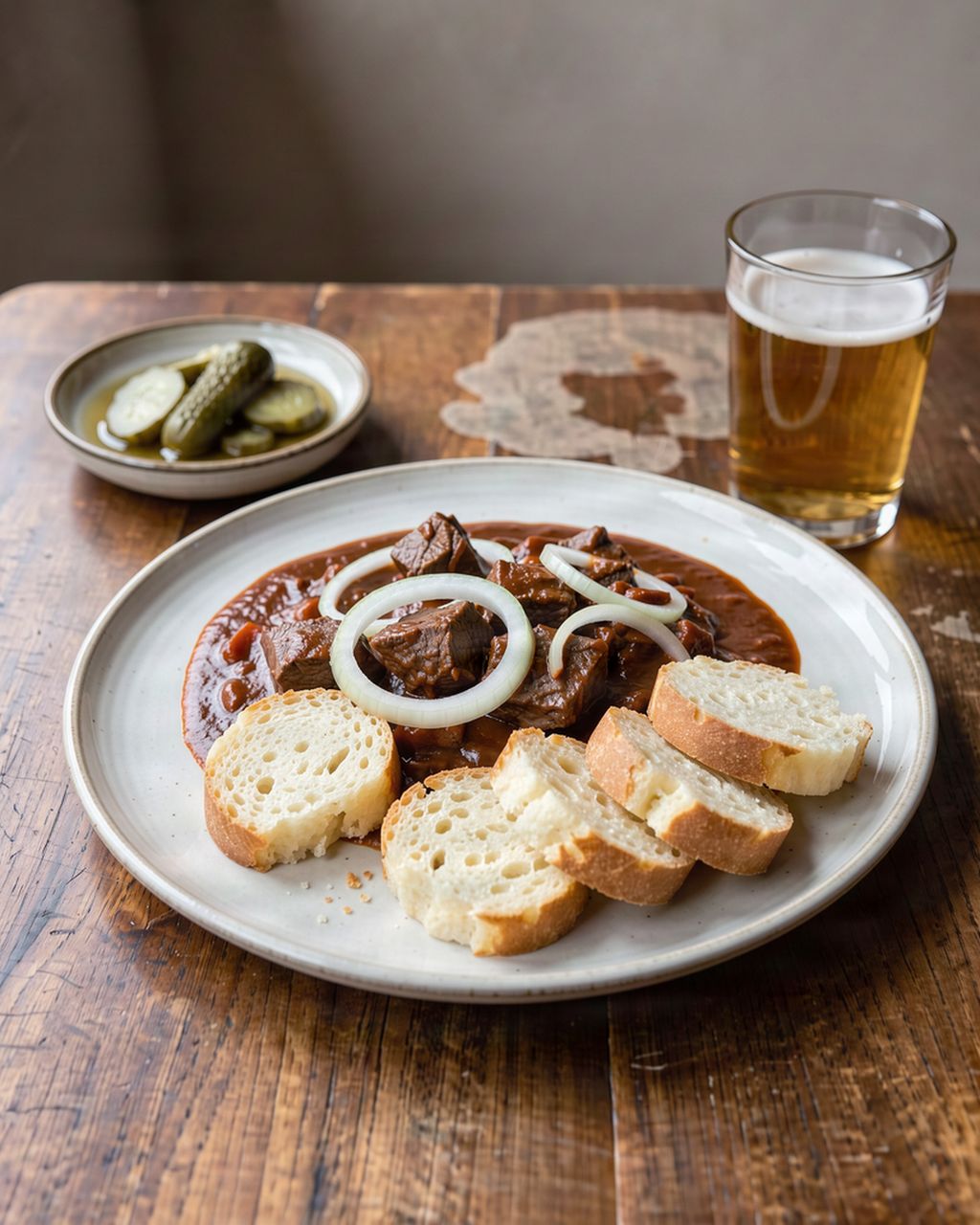
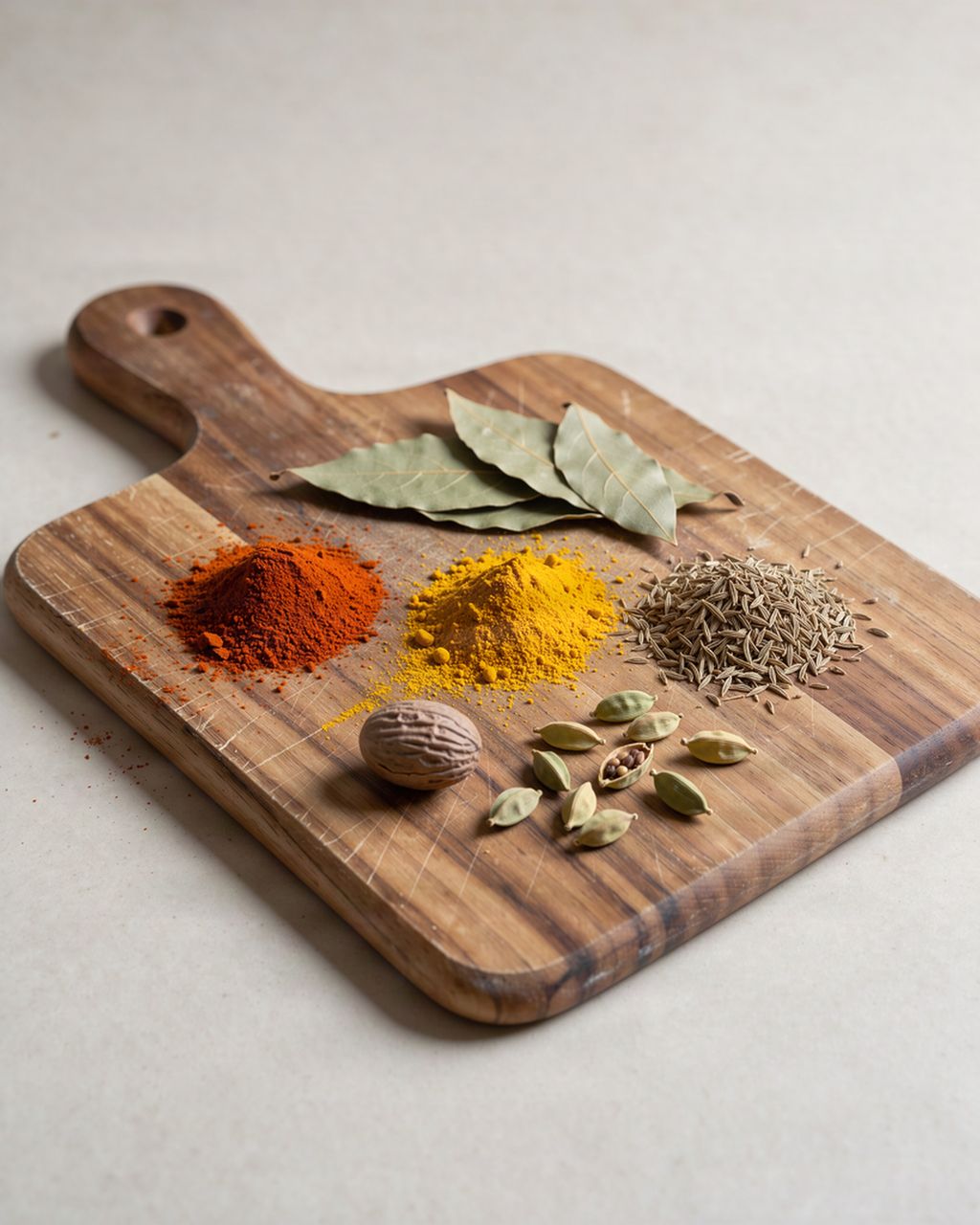
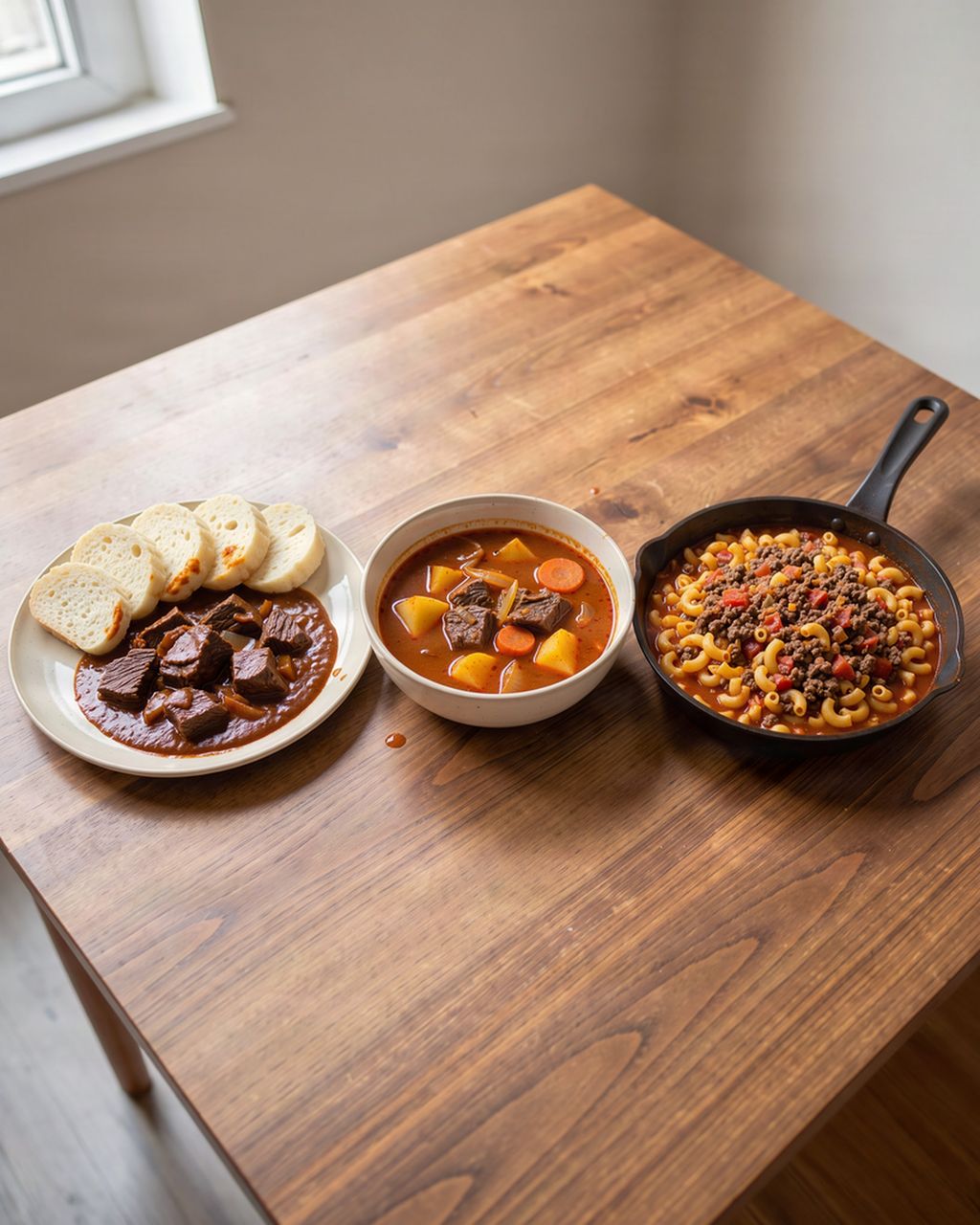
Goulash. Hungarian gulyás is a soupy beef dish. Czech guláš is a thicker stew served with bread dumplings. Both rely on sweet paprika, a lot of it, cooked with plenty of onion. Many cooks add a little hot paprika for warmth, roughly 1 part hot to 4 or 5 parts sweet. Smoked paprika is not part of either. A ready-made goulash spice mix usually combines paprika with caraway, marjoram and garlic.
Chicken paprikash (paprikás csirke) is chicken braised with onion and sweet paprika, finished with sour cream. Sweet paprika does almost all the work; hot is optional.
American goulash, the macaroni-and-ground-beef dish, is a different thing. It usually takes generic paprika or none at all.
If your goulash turns out chewy rather than tender, the paprika is not the problem. See why goulash meat stays tough.
Paprika releases its color and flavor into fat, which is why goulash starts with onions softened in lard or oil. But paprika contains natural sugars and scorches in seconds. Burnt paprika tastes bitter and turns brown, and there is no rescuing the pot.
The Czech and Hungarian way:
Soften the onions slowly until golden.
Take the pan off the heat. Let it stop sizzling for a moment.
Stir in the paprika so it coats the onions and turns the fat red.
Within 30 seconds to a minute, add the meat or a splash of liquid, then return the pan to the heat.
The liquid stops the paprika from scorching. Never add paprika to a smoking-hot empty pan.
If a recipe calls for hot paprika and you only have sweet, add heat separately. Chili powders vary a lot, so start low and taste.
Sweet paprika plus cayenne: for 1 tablespoon hot paprika, use 1 tablespoon sweet paprika plus about ⅛ teaspoon cayenne. Go up to ¼ teaspoon for a properly hot result.
Sweet paprika + chili flakes: 1 tablespoon sweet paprika plus about ¼ teaspoon crushed chili flakes, ground or added early so they soften.
Hot smoked paprika (picante): swap one for one only where smoke suits the dish. In goulash, use no more than a quarter of the paprika as smoked.
US chili powder: avoid it as a swap in goulash. It is a blend that usually includes cumin and oregano, so it changes the dish.
You can, but the goulash will taste smoky and Spanish rather than Central European. If smoked is all you have, use about a quarter of it smoked and make up the rest with any unsmoked paprika.
Mix sweet paprika with a pinch of cayenne: for 1 tablespoon of hot paprika, use 1 tablespoon of sweet paprika plus about ⅛ teaspoon of cayenne, then add more to taste. Ground dried chili or chili flakes also work in small amounts.
Plain supermarket paprika in the US is almost always mild, sweet paprika. It is often duller in flavor than Hungarian paprika, so you may need a little more of it.
Paprika turns bitter when it burns, because its natural sugars scorch quickly in hot fat. Take the pan off the heat before stirring it in, then add liquid within a minute.
Chicken paprikash uses sweet Hungarian paprika, usually a generous amount, finished with sour cream. Some cooks add a pinch of hot paprika, but smoked paprika is not traditional.
One recipe worth heating the oven for, one tip, and one deal from the shop. Nothing else.