How to Make Clear, Rich Beef Broth
Why Is My Soup Foamy? What the Scum on Stock Is and Whether to Skim It
Updated Nov 21, 2026
Foam on soup and stock is mostly proteins from meat and bones that set as the liquid heats and trap air, along with some fat. With beans, it comes from saponins and starch. It is harmless, but skimming it off makes a clearer, cleaner-tasting broth.
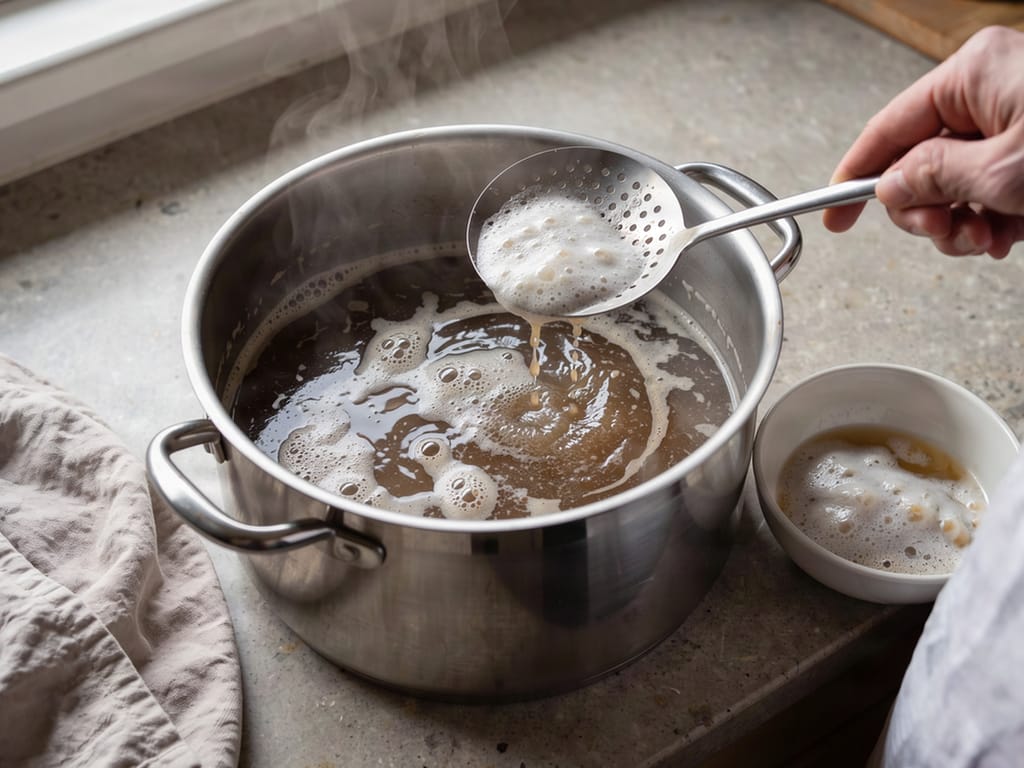
When you heat a pot of water with meat or bones in it, soluble proteins leak out into the liquid. As the temperature rises, those proteins set, the way egg white does, and catch tiny air bubbles and specks of fat. They rise to the top as a gray, beige or white foam, often called scum.
It is not dirt, and it is not a sign the meat was bad. It is the same protein you would eat anyway, just in an unappealing form.
Other foams come from different things:
You don't have to. The foam is harmless. But there are good reasons to skim it:
Clarity. If you boil the foam back into the broth, it breaks into fine particles that make the stock cloudy and grayish.
Taste. Skimmed stock tastes cleaner. The foam itself has a slightly flat, muddy taste.
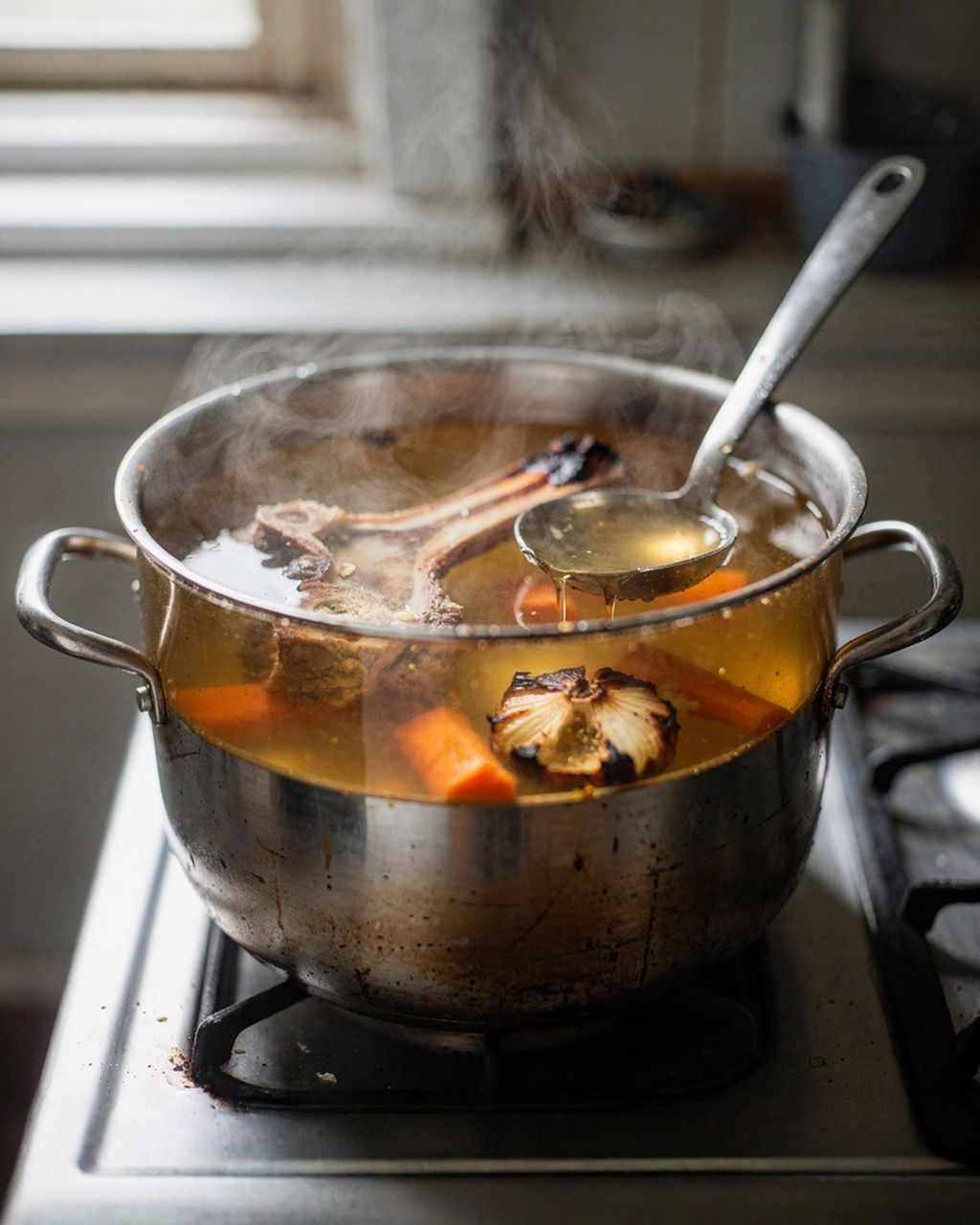
Looks. A clear Czech beef broth (hovězí vývar) served with noodles or liver dumplings is meant to be golden and see-through.
For a blended vegetable soup, a thick bean soup or a stew, skimming makes much less difference. Skim the first big layer and don't worry about the rest.
Start in cold water. Put the meat and bones in cold water and bring it up slowly. The proteins come out gradually and gather in one layer of foam, which is easier to lift off.
Skim just before it simmers. Most foam appears as the liquid nears a simmer. Lift it off with a large spoon, ladle or fine-mesh skimmer.
Keep a bowl of water beside the pot. Dip the spoon in it between skims to rinse off the foam.
Then turn the heat down. Keep the stock at a gentle simmer, with only a few bubbles breaking the surface. A hard boil churns foam and fat back into the liquid.
Skim again now and then in the first part of cooking. After that, little new foam appears.
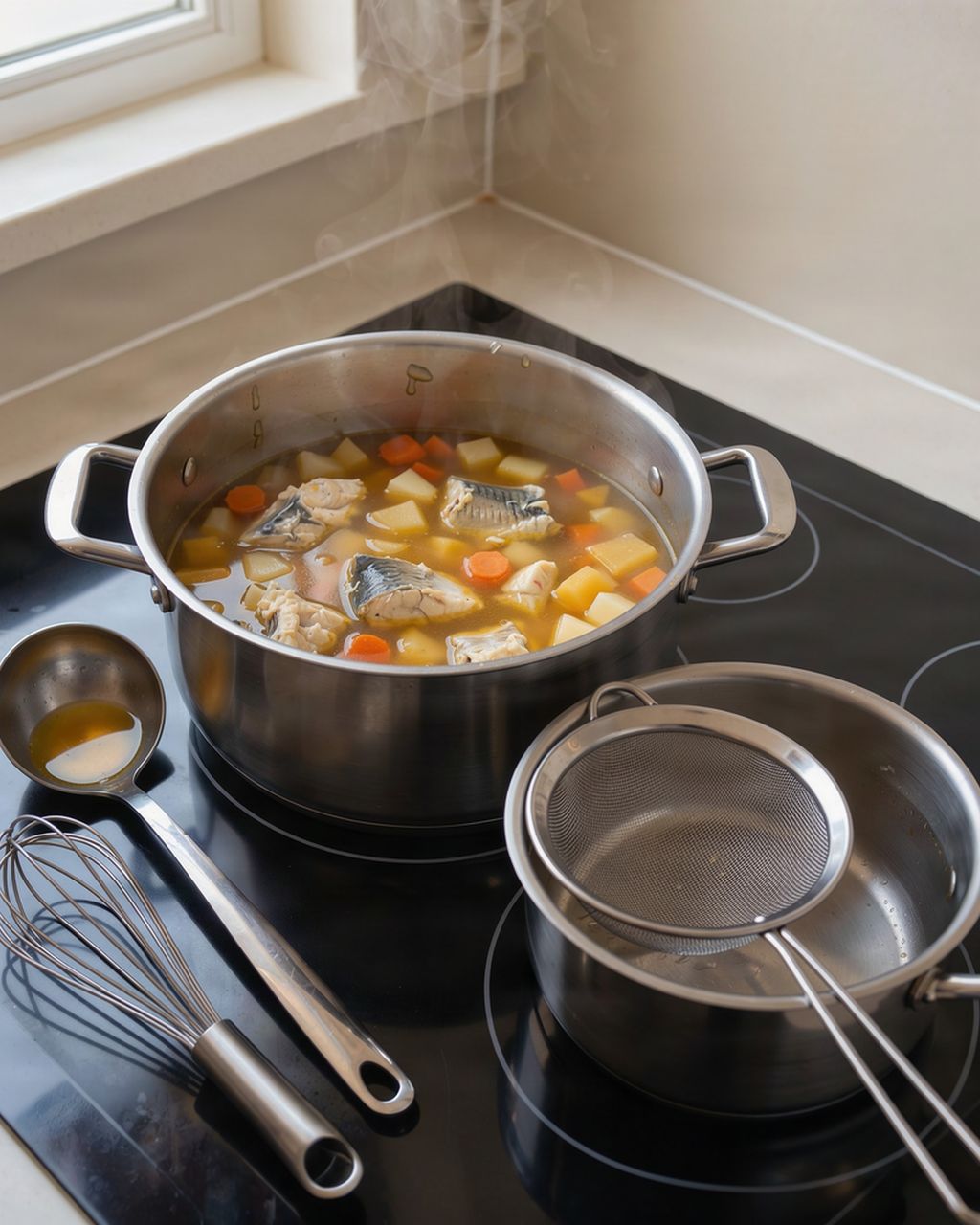
Some cooks blanch bones first: cover them with cold water, bring to a boil, drain, rinse, then start again with fresh water. It removes much of the foam in one go. Our guide to clear, rich beef broth covers the whole method. If your fish soup turned cloudy instead, see why fish soup turns cloudy.
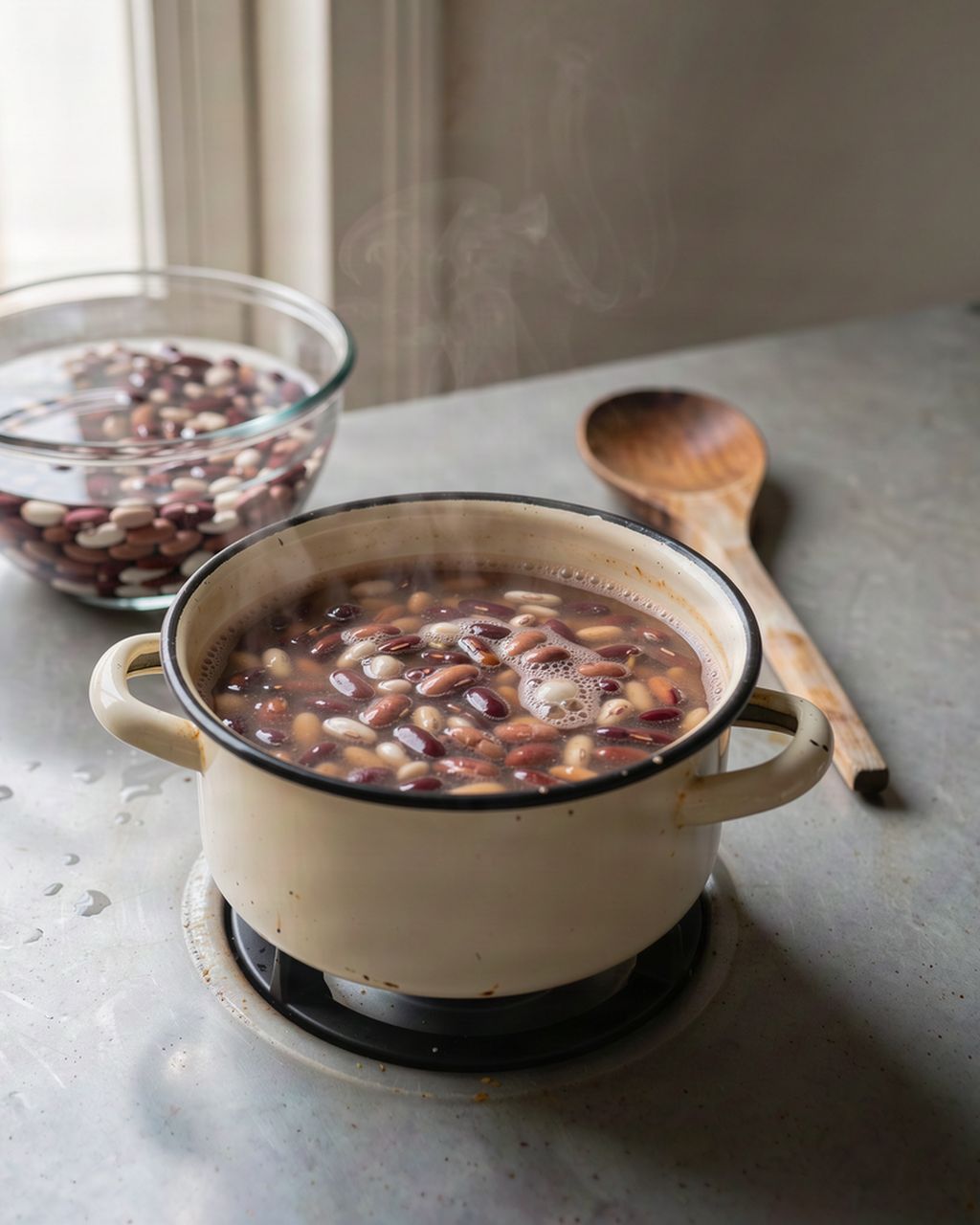
Dried beans, lentils, chickpeas and split peas all foam as they cook. The foam comes from saponins, which foam in water the way soap does, plus starch and protein from the beans.
It is harmless. You can skim it or leave it.
A little oil or butter in the pot calms the foam.
Boil first, then simmer. Dried beans contain a natural toxin (phytohaemagglutinin, highest in red kidney beans) that a full boil destroys. For red kidney beans, FDA advises soaking for at least 5 hours, pouring away the water, and boiling them in fresh water for at least 30 minutes. Skim the foam during that boil, then lower the heat to a simmer so it doesn't push over the rim. FDA also warns that slow cookers may not get hot enough, so don't cook dried kidney beans from raw in one.
Rinsing canned beans washes off the starchy, foamy liquid if you don't want it in the soup.
In a pressure cooker, foam matters more: it can block the steam valve. Pressure cooker manuals typically warn about beans, split peas and grains and set a lower maximum fill line for them. Follow your manual. For soaking and timing, see how to cook beans until tender.
Pasta and potatoes release starch into the water. Starch thickens the water slightly and stabilizes the bubbles, so the foam builds up and spills over the rim.
Use a larger pot with plenty of space above the water.
Lower the heat a little once the pasta is in, enough to keep a lively boil without the foam climbing.
Leave the lid off once the pasta goes in.
Keep that starchy water when you drain the pasta. It helps sauce cling.
A stick blender or countertop blender whips air into soup, especially a starchy or creamy one. The froth is harmless and settles on its own.
Keep the blade under the surface of a stick blender, and tilt the pot so it stays covered.
Let blended soup rest for a few minutes before serving, then stir.
Reheat it gently, stirring, and the bubbles break.
Take care blending hot soup in a jug blender. Check your blender's manual first: some makers want the lid and center cap locked in place for hot liquids, others allow venting. Never blend hot soup in a small personal cup. Fill no higher than the maker's hot-liquid line, start on the lowest speed, and keep your hand on the lid. A stick blender in the pot is the safer choice.
Recipe of the week, one tip that saves you time and one deal from the shop. Unsubscribe in one click.
The next issue goes out on Thursday, November 26.
Foam and cloudiness are related, but they are not the same thing.
Foam on top is protein and air that has collected at the surface. You can lift it off.
A cloudy broth means fine particles of protein and fat are suspended through the liquid. It usually happens when the stock boiled hard, the foam was stirred or boiled back in, or starchy ingredients such as potatoes or noodles were cooked in it.
A cloudy broth is just as safe and often just as tasty; it just doesn't look as clear. To keep a broth clear, skim early, keep it at a gentle simmer, don't stir it, and cook noodles or dumplings separately before adding them to the bowl.
If you want to rescue a cloudy stock, strain it through a sieve lined with a clean, damp cloth. It won't turn crystal clear, but it removes the larger particles.
Soup foams because proteins from meat and bones set as the liquid heats and trap air bubbles, forming a gray-white scum on top. Beans, lentils and pasta foam because of starch and saponins. The foam is harmless; skim it off if you want a clearer broth.
The scum on soup is mostly coagulated protein from the meat and bones, mixed with fat and tiny particles. It forms as the liquid heats up. It is safe to eat, but it can make broth cloudy and slightly gray, so cooks skim it.
No, skimming foam off soup is optional. It is harmless, but skimming gives a clearer broth with a cleaner taste, which matters for a clear stock or consommé. For a blended or creamy soup it makes little difference.
Beans foam because of saponins, natural soap-like compounds in legumes, together with starch and protein released into the water. The foam is harmless. Skim it if you like and add a little oil to the pot. Soak and boil dried beans hard first (for red kidney beans, FDA advises soaking at least 5 hours, draining, then boiling in fresh water for at least 30 minutes), then turn the heat down to a simmer so the foam doesn't climb over the rim.
Blending whips air into soup, especially a soup with starch or protein. Let it rest for a few minutes, then reheat it gently and stir. Blending with the blade fully under the surface traps less air.
No. Foam keeps forming for the first part of cooking as more protein reaches the surface, then slows down. A hard boil makes more of it and also churns it back into the broth, so lower the heat to a gentle simmer.
One recipe worth heating the oven for, one tip, and one deal from the shop. Nothing else.