Emulsions in Cooking: What They Are, Examples, Emulsifiers and How to Whip One Up at Home
Why Is My Sauce Separating? How to Fix a Split or Broken Sauce
Updated Nov 21, 2026
A sauce separates when the fat and the water in it stop holding together, usually because it got too hot, the fat went in too fast, or there wasn't enough liquid to hold it. Cream and cheese sauces can also curdle when they boil or meet acid. Most split sauces can be rescued if you catch them early.
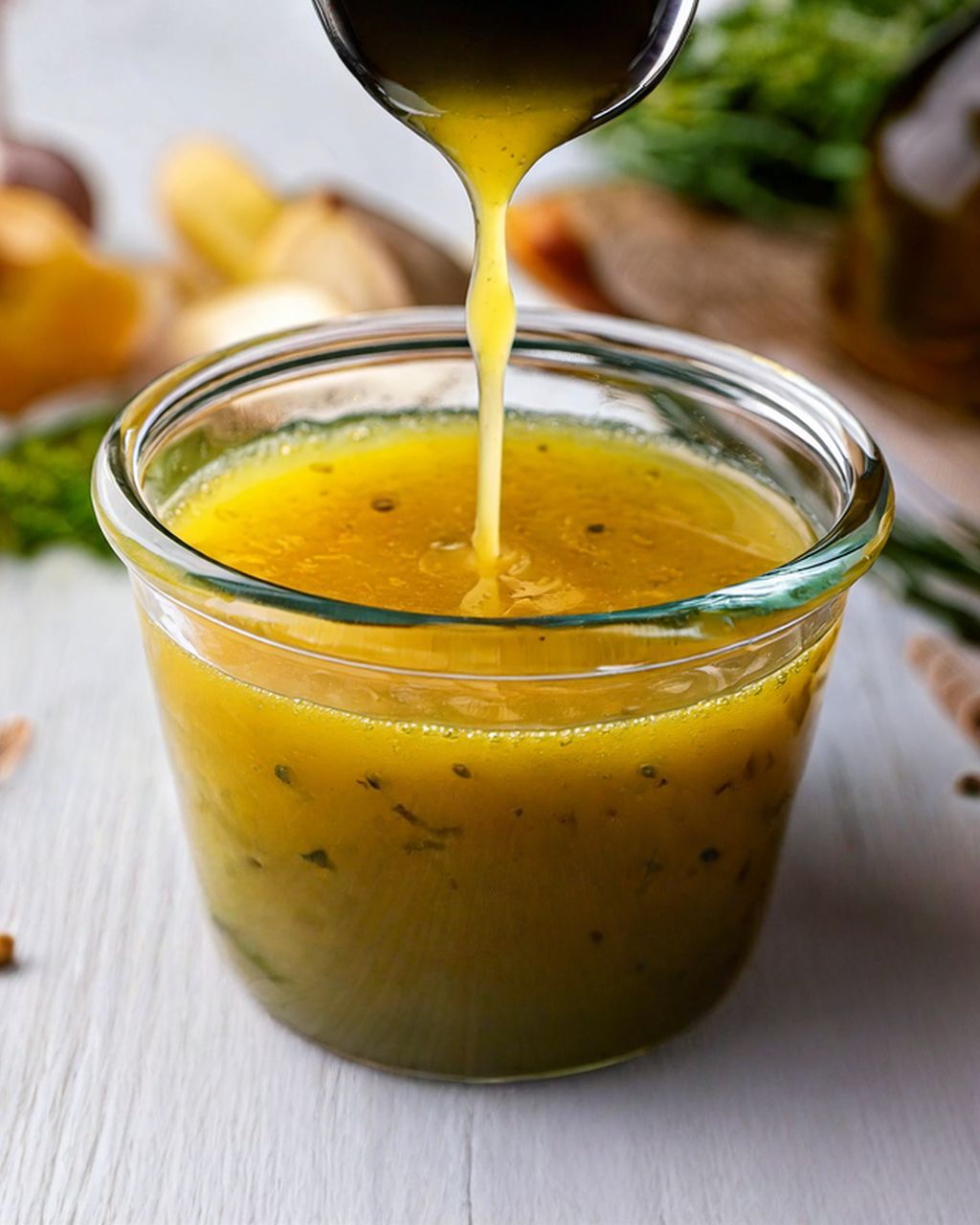
Many sauces are an emulsion: tiny droplets of fat held in water, or water held in fat. Butter, cream, egg yolks and cheese all bring emulsifiers that keep the two together. When something knocks that balance over, the droplets merge and the fat pools on top or the sauce looks curdled and grainy.
There are three common kinds of "separating", and the fix depends on which one you have:
A broken emulsion: butter sauces, hollandaise, beurre blanc and pan sauces finished with butter. The sauce suddenly turns greasy and thin.
Curdled dairy: cream sauces, milk-based soups and sauces with sour cream or yogurt. Small white flecks appear in a thinner liquid.
Fat rising out of a reduced sauce: tomato sauce, ragù, curry or goulash. An orange or clear layer of oil collects on top.
For the science of how emulsions hold together, see our guide to emulsions in cooking.
Butter is itself an emulsion of fat and water. Melt it gently into a little liquid and it stays creamy. Get it too hot and it separates into clear fat and milky solids, and your sauce goes with it.
The usual causes:
Too much heat. A pan sauce finished with butter at a hard boil will split. Take the pan off the heat before you swirl the butter in.
Butter added too fast. Add it in small cold pieces and let each one melt in before the next.
Too little liquid. If you reduce a pan sauce almost dry and then add a lot of butter, there isn't enough water to hold the fat. Keep a few spoonfuls of liquid in the pan.
Leaving it to sit. A butter sauce held over direct heat keeps cooking. Make it just before serving. If it contains egg yolk, like hollandaise, serve it promptly rather than keeping it warm, and throw away any leftovers.
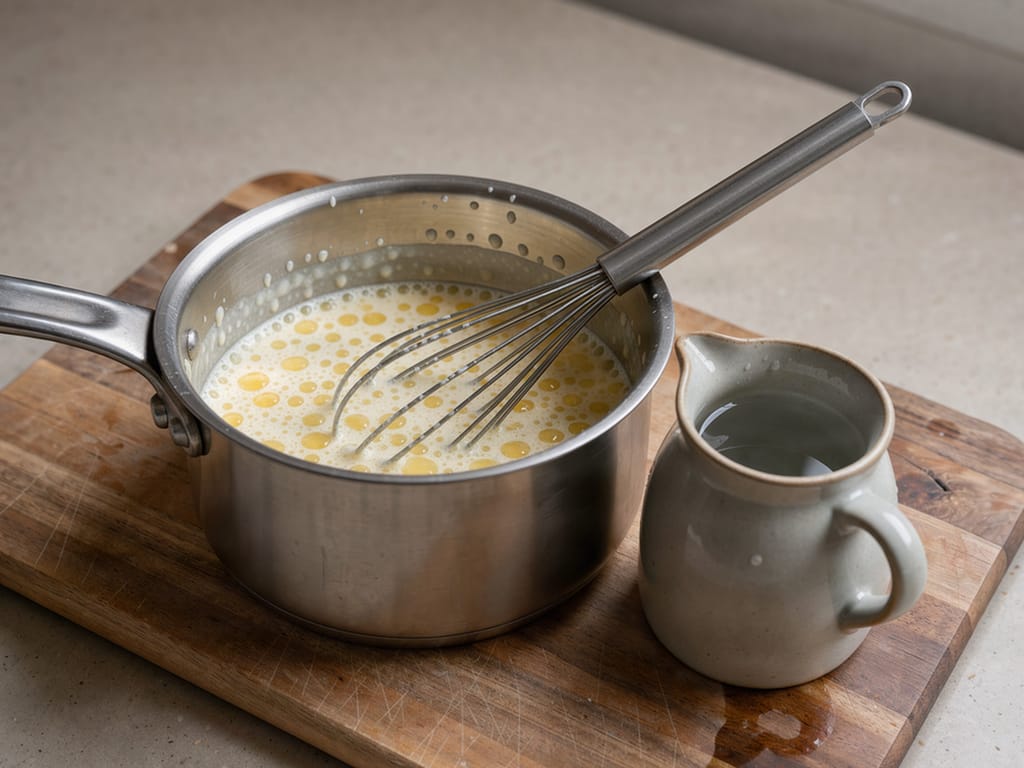
The fix: take it off the heat and whisk in a tablespoon of warm water. If it is very broken, put a spoonful of water or a little reduced cream in a clean pan and whisk the broken sauce into it slowly, the way you made it the first time.
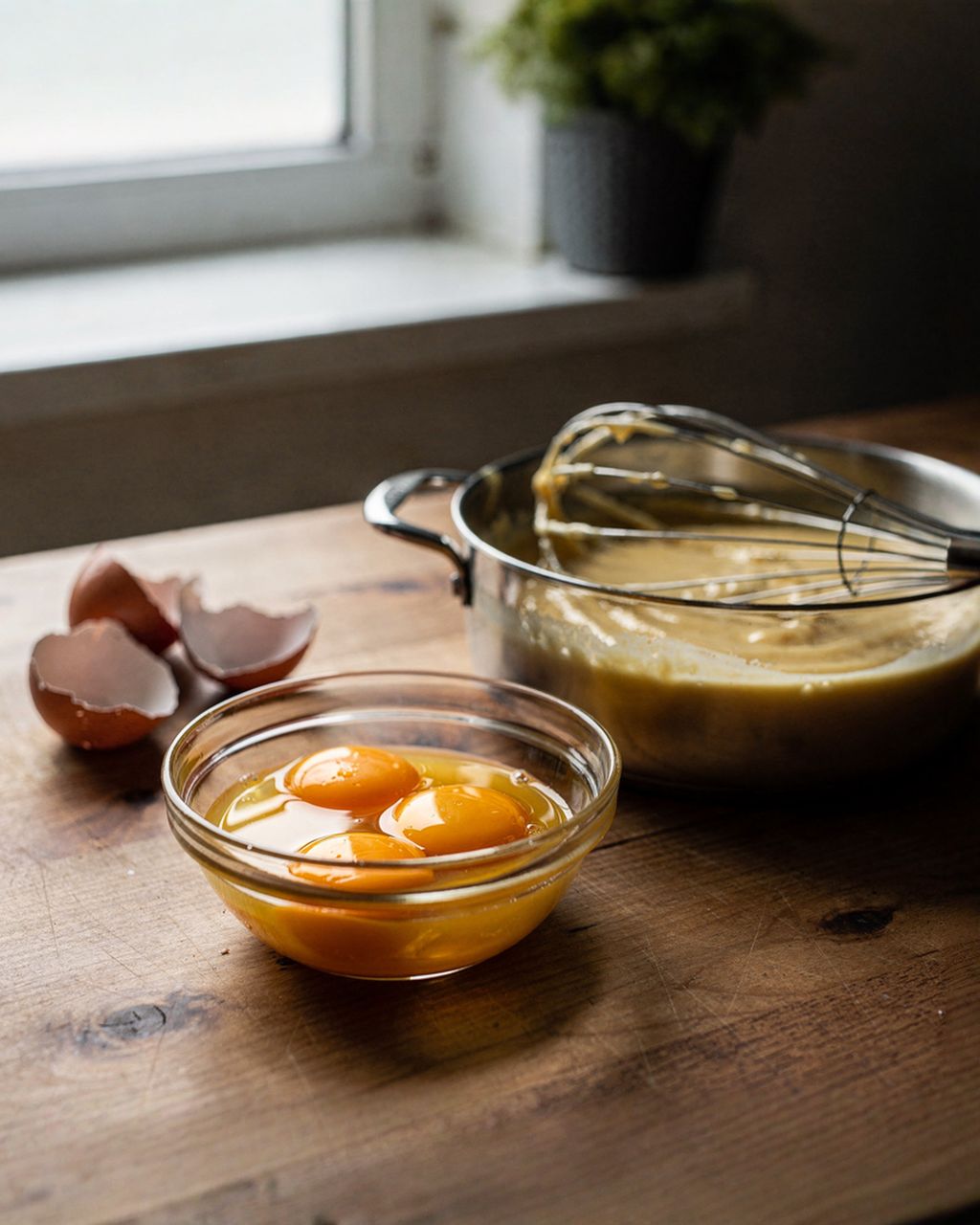
Hollandaise and its cousins (béarnaise, for example) are butter held in warm egg yolk. They break for two opposite reasons:
Too hot: the yolk starts to scramble and can no longer hold the fat. The sauce goes grainy, then oily.
Too cold, or butter added too fast: the yolk can't take in the butter, and it sits in a greasy layer.
To rescue it: check which it is first. If it is too hot, take it off the heat and whisk in a spoonful of cold water. If it is cool and greasy, whisk in a spoonful of warm water over a pan of barely simmering water. If neither works, start a fresh yolk (use a pasteurized egg if you are cooking for pregnant women, young children, older adults or anyone with a weakened immune system) in a clean bowl over the simmering water and drizzle the broken sauce into it while whisking, as if it were the butter.
Hollandaise yolks are only lightly cooked. FDA advises using pasteurized eggs or egg products in recipes that call for raw or lightly cooked eggs, which matters most if you are cooking for pregnant women, young children, older adults or anyone with a weakened immune system.
Cream sauces curdle when the milk proteins clump into small white flecks. Fat protects those proteins, so the less fat in the dairy, the more easily it curdles.
Low-fat dairy boiled hard. Milk, half-and-half, single cream, sour cream and yogurt curdle much more easily than heavy cream (in the UK, double cream, which is richer still and even less likely to curdle).
Acid. Wine, lemon juice, tomato or vinegar tip low-fat dairy over the edge, especially at a boil. Reduce wine well before the cream goes in.
Cold dairy into a boiling pan. Warm it first, or stir a few spoonfuls of the hot sauce into the dairy before adding it.
Salt and long simmering both concentrate the sauce and make curdling more likely.
A little starch protects dairy too. Czech cooks thicken sour cream sauces such as koprovka (dill sauce) with flour, which keeps the sour cream from splitting. Our guide to curdled cream sauce goes through the rescue step by step.
Cheese is protein, fat and water. Heat it too much and the proteins tighten and squeeze the fat out, leaving a grainy sauce with an oily sheen.
Add cheese off the heat. Make the base sauce (for example a béchamel), take it off the heat, then stir in grated cheese a handful at a time.
Grate it finely so it melts before it overheats.
Watch aged, dry cheeses. Very hard cheeses such as parmesan melt less smoothly and are better stirred in at the end, off the heat.
Don't boil it again once the cheese is in.
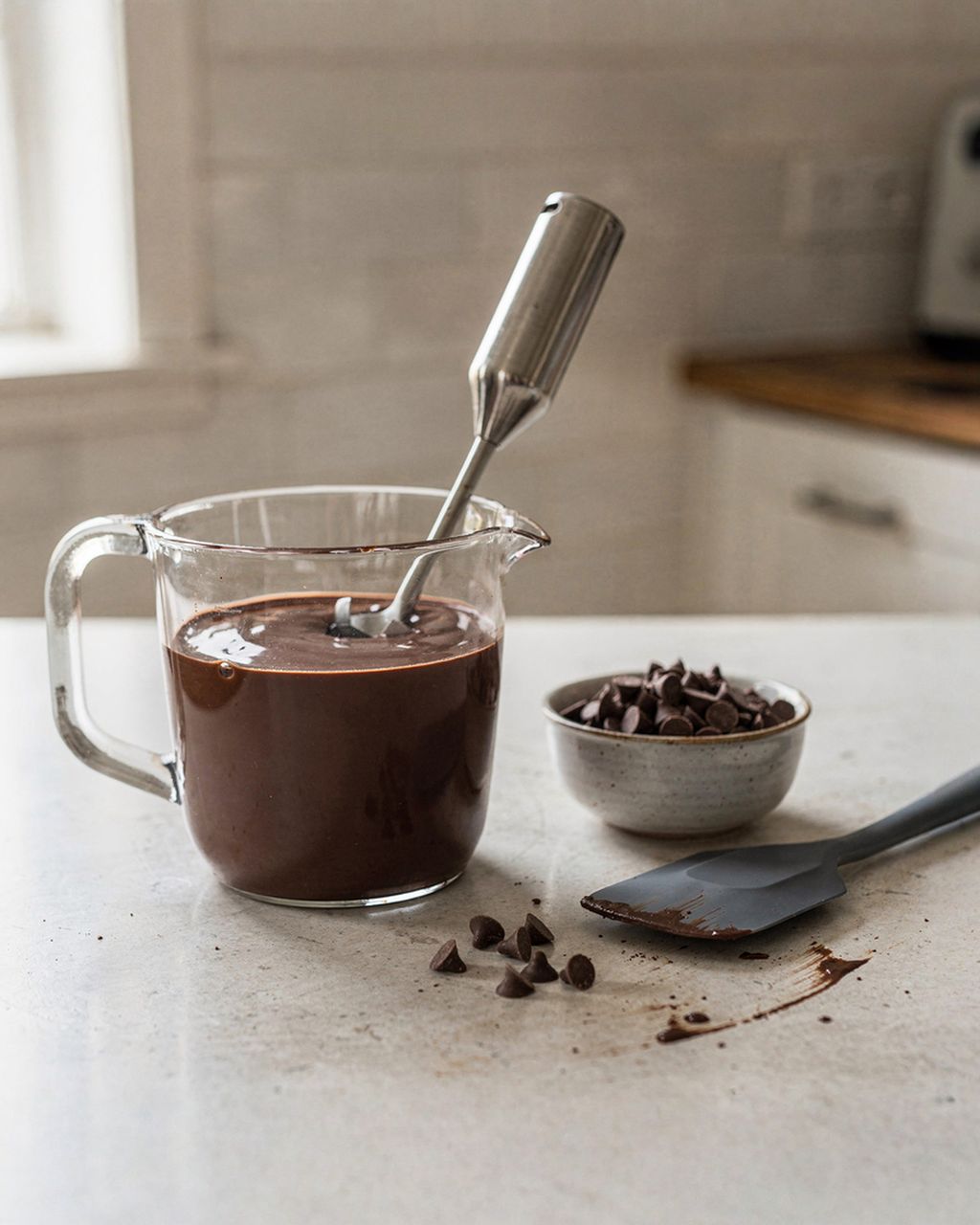
A starch-thickened base helps, because the starch keeps the fat suspended. A lightly grainy cheese sauce can be blended briefly with a stick blender, but a fully split one rarely turns silky again. The same chemistry is why cheese fondue splits.
A long-simmered sauce that contains oil, butter or fatty meat will often show a layer of fat on top. That is not a mistake. As water evaporates, there is less liquid to hold the fat, so it rises out.
If you like it: stir it back in just before serving.
If it is too much: tilt the pan and spoon it off, or blot the surface with a folded paper towel.
To bring it back together: add a splash of water, stock or pasta water and stir hard. Some liquid gives the fat something to cling to again.
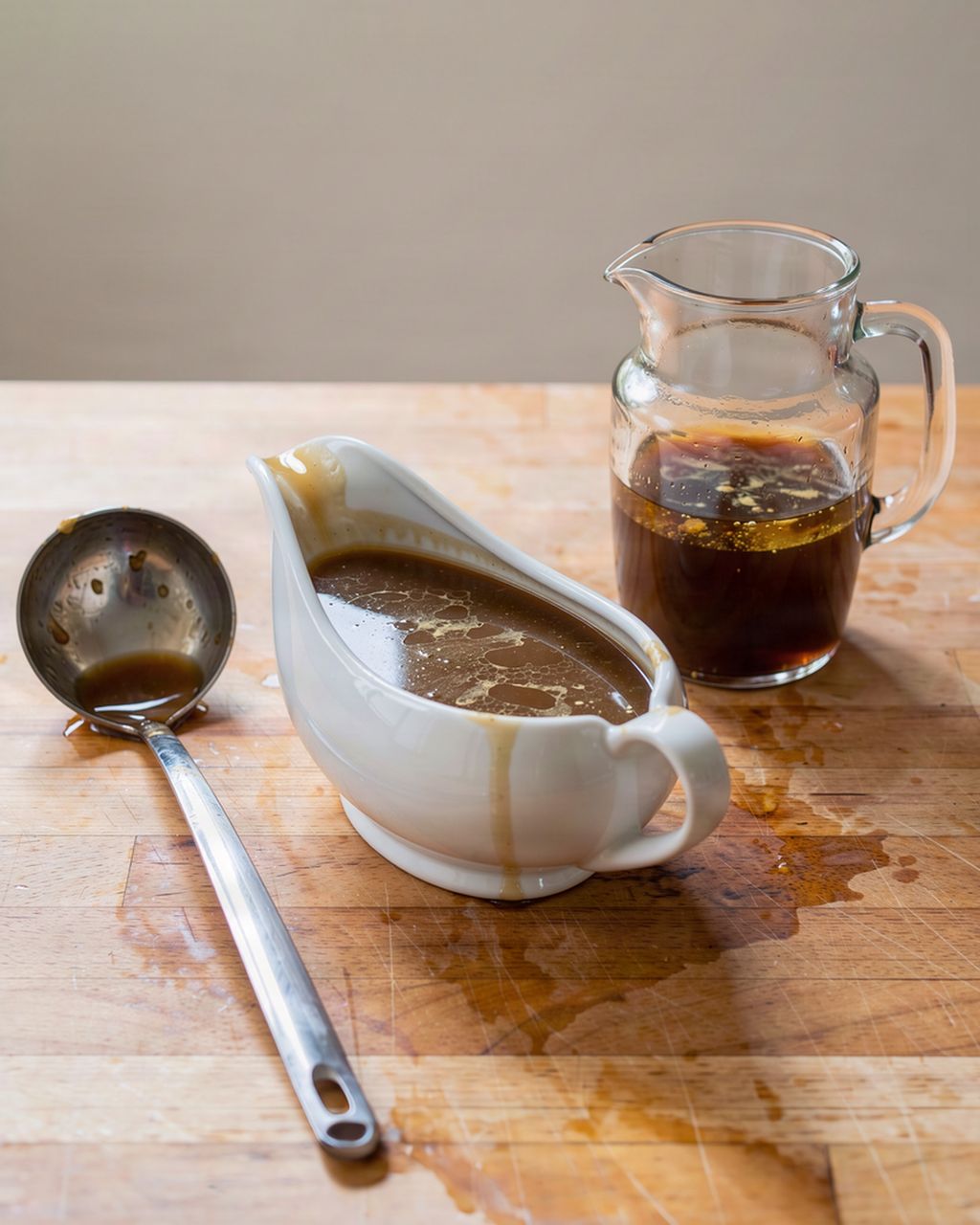
In Hungarian and Czech goulash, a little red, paprika-colored fat on top is normal and expected. Gravy behaves the same way; our guide to greasy or separating gravy covers skimming in detail.
Recipe of the week, one tip that saves you time and one deal from the shop. Unsubscribe in one click.
The next issue goes out on Thursday, November 26.
Keep the heat moderate once fat, egg or dairy is in. Most split sauces were simply too hot.
Add fat slowly, in small pieces or a thin stream.
Keep some water in the pan. A sauce reduced too far has nothing left to hold its fat.
Use full-fat dairy for sauces that will simmer, and stir low-fat dairy in at the end, off the boil.
Reduce acid before the dairy goes in.
Make butter and egg sauces last, just before serving, and serve egg-yolk sauces promptly rather than holding them.
A sauce separates when its emulsion of fat and water breaks, most often from too much heat, fat added too quickly, or too little liquid. Take it off the heat, whisk in a spoonful of warm water, and it will often come back together.
Take the pan off the heat and whisk in a tablespoon of warm water, a little at a time. If that fails, whisk the broken sauce slowly into a new base, such as a fresh egg yolk for hollandaise (use a pasteurized egg if you are cooking for pregnant women, young children, older adults or anyone with a weakened immune system) or a splash of reduced cream for a butter sauce, just as if you were making it from scratch.
Cream sauces curdle when the milk proteins clump, usually because a low-fat dairy product such as milk, single cream or sour cream boiled or met acid like wine, lemon or tomato. Higher-fat cream holds up much better. Strain or blend a lightly curdled sauce, and next time add the dairy off the boil.
Cheese sauce turns grainy or oily when the cheese gets too hot and its proteins tighten and squeeze out fat. Add grated cheese off the heat a handful at a time, stir until it melts, and don't let the sauce boil afterwards.
Oil on top of a long-simmered tomato or meat sauce is normal: as the sauce reduces, the fat it contains separates out. Stir it back in, skim it off with a spoon, or loosen the sauce with a splash of water or pasta water and stir hard.
Reheat leftover sauces until they reach at least 74 °C (165 °F) on a food thermometer; USDA FSIS advises bringing sauces and gravies to a rolling boil. Tomato and pan sauces take a boil well; a cream sauce may split as it comes to the boil, so whisk hard and add a spoonful of water if it turns oily. Refrigerate leftover sauce within 2 hours of cooking (1 hour if the room is above 32 °C / 90 °F) and use it within 3 to 4 days, or freeze it (USDA FSIS). Don't keep or reheat leftover hollandaise or other egg-yolk butter sauces; make them just before serving.
One recipe worth heating the oven for, one tip, and one deal from the shop. Nothing else.