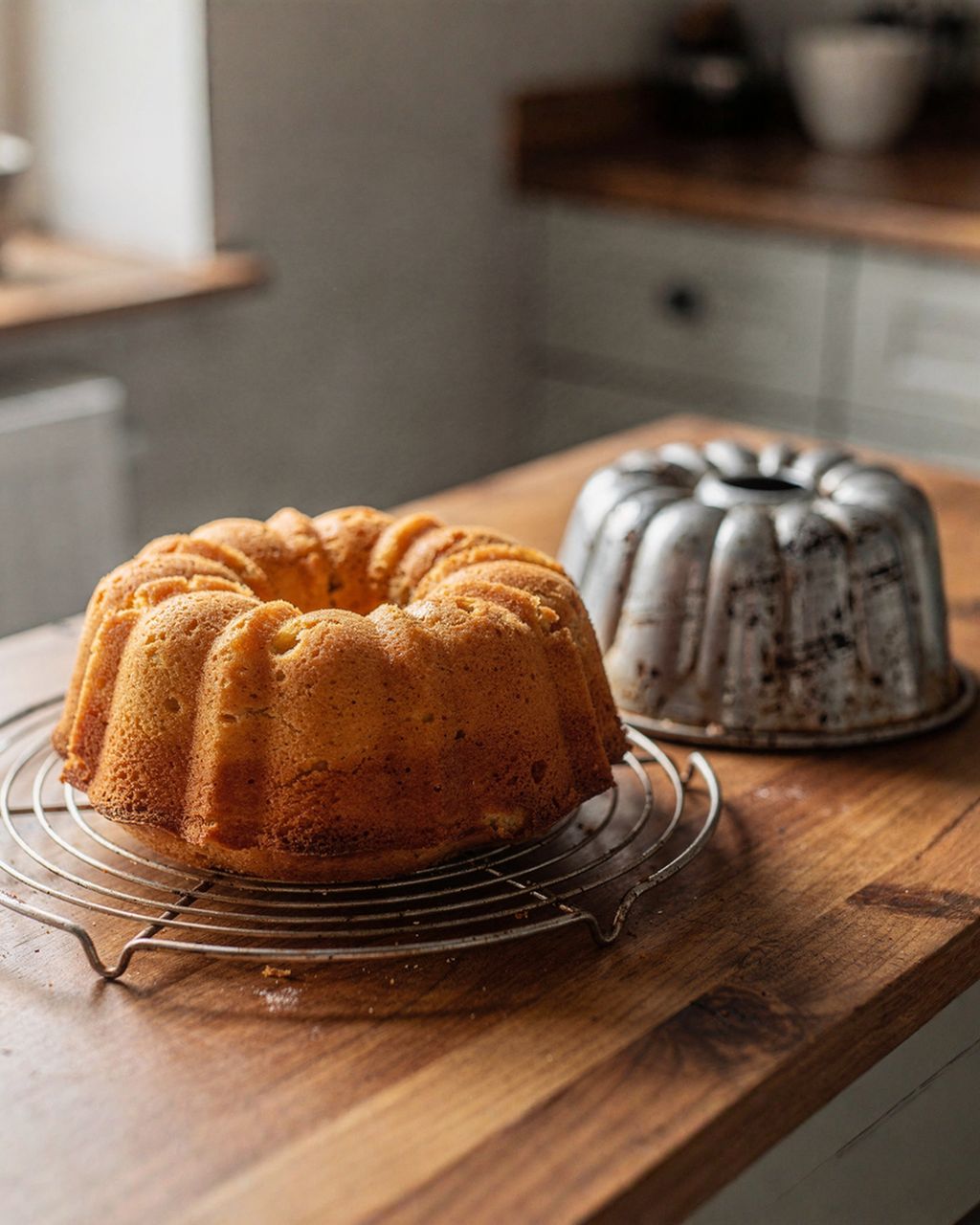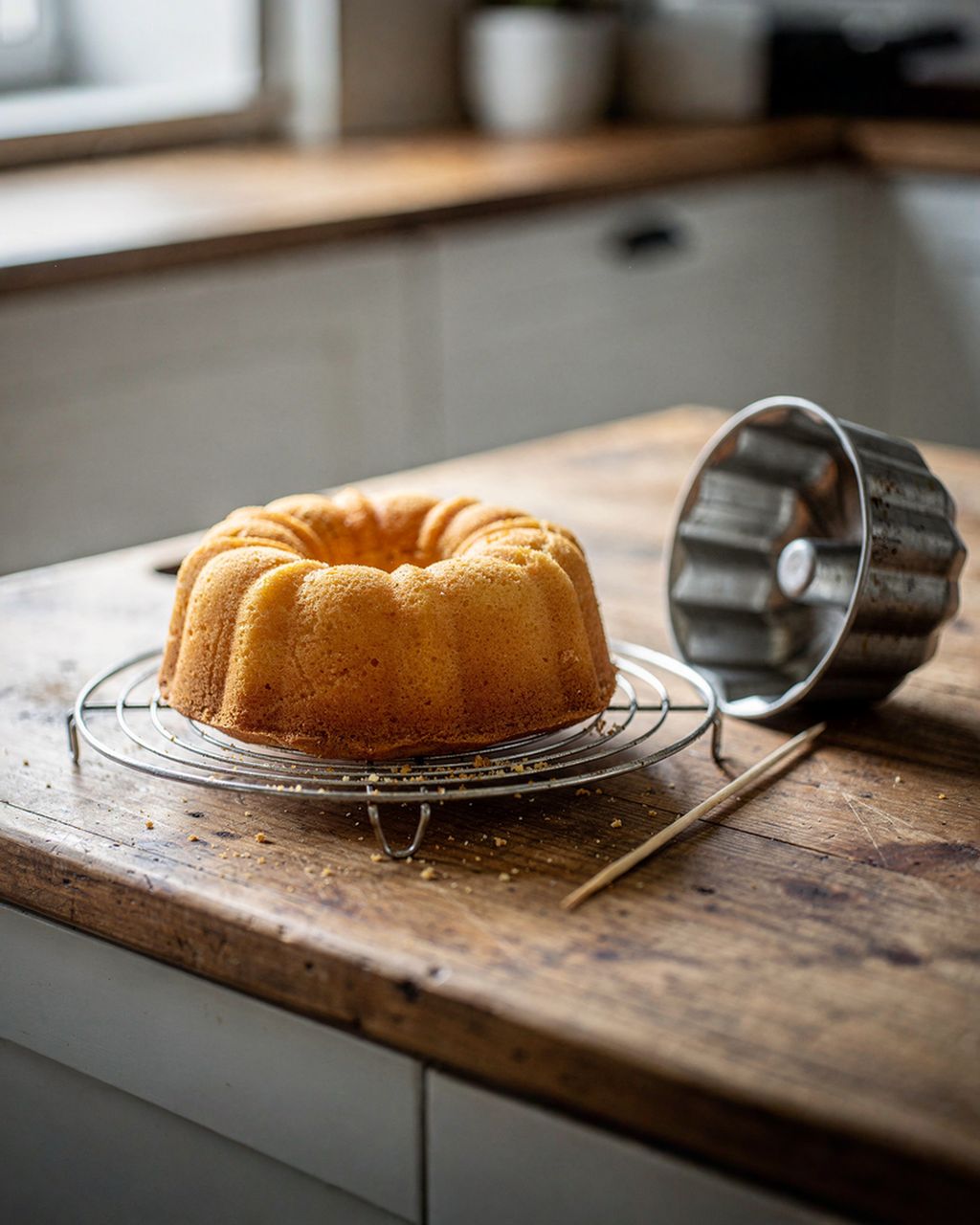
Zucchini and carrot mini bundt cakes
Why Does a Bundt Cake Sink in the Middle? 7 Causes & Fixes
Updated Oct 6, 2026
Why does a bundt cake sink in the middle? Almost always because the centre doesn't set before the steam and gas from the leavening agent stop holding it up. In the oven, a bundt cake first rises as the air and carbon dioxide bubbles inside expand with the heat. But the structure that keeps that shape standing only forms once the eggs set and the starch turns gelatinous. If the bubbles shrink before that structure is in place, the centre sinks. Below are the seven most common causes, how to tell which one got you, and what to do with a sunken bundt cake.
A sunken bundt cake almost always comes down to one of these seven causes, usually two at once:
Underbaked centre: the most common culprit.
Too much baking powder: the cake shoots up, then collapses.
Too much air in the batter: over-whipped butter or over-beaten egg whites.
Opening the oven during the first half of baking.
Wrong oven temperature: too cool or too hot.
Overfilled or too-small tin.
Heavy or runny batter: too much sugar, fat, liquid, or moist fruit.
They all do the same thing: the centre rises before it has anything solid to hold it up. Each one is broken down below.
An underbaked centre is the most common reason a bundt cake sinks, especially if it collapses only after it's out of the oven or turned out of the tin. Bundt cakes are tall, and the ring of cake around the central tube bakes through last. The surface can be golden brown long before the inside is actually set. While the cake is still in the oven, steam helps hold that unstable centre up; once it cools, the steam condenses and the centre gives way.
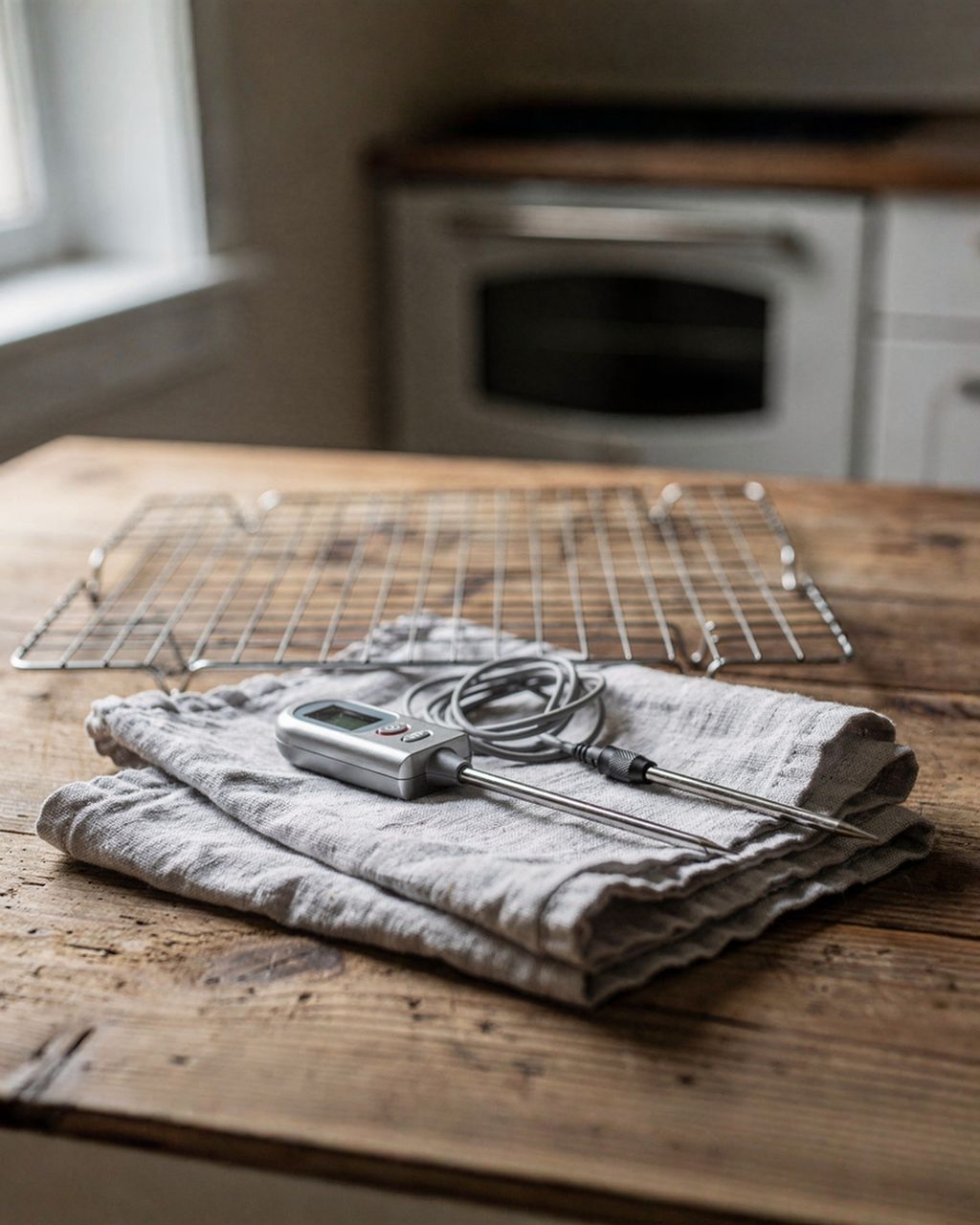
You'll spot this by a damp, dense, shiny streak of batter just under the sunken spot. Colour isn't a reliable test for doneness — a skewer inserted at the highest point of the cake is: it should come out dry or with just a few dry crumbs. An instant-read thermometer is even more reliable; baking references put dense pound-cake-style batters at roughly 93–99°C (200–210°F) in the centre when done. For exact times and temperatures for different bundt cakes, see Bundt Cake: What Temperature and How Long to Bake.
A bundt cake with too much baking powder rises too quickly and then collapses, because the gas stretches the batter further than the gluten and eggs can support. The bubbles merge, burst, and escape before the centre has a chance to set.
A standard sachet of baking powder (12g) is formulated for roughly 500g of flour. For a bundt cake using 300g of flour, you only need about half to two-thirds of that sachet.
Measure baking powder by weight or with a levelled teaspoon — never by eye.
If your recipe already combines baking powder with bicarbonate of soda, don't add extra of either, even if the amount looks small.
A bundt cake made with over-whipped butter or over-beaten egg whites rises too high and then sinks as it cools, because the centre simply can't support all that extra air. Creaming butter and sugar until pale and fluffy is correct — beating it for ten minutes on the highest speed is not. Excess air behaves just like too much baking powder: the cake rises dramatically, often well over the rim of the tin, and then falls.
The same goes for whipped egg whites. Over-beaten, dry, grainy whites don't fold smoothly into the batter — they leave large bubbles behind, and those bubbles collapse in the oven. Whip egg whites to stiff but still glossy peaks, then fold them in using a spatula in two additions, with a gentle circular motion from the bottom up. Once the flour goes in, stop whisking — just fold briefly to combine.
A bundt cake sinks if you open the oven during the first half of baking, because the temperature can drop by 15–30°C (27–54°F) and the still-unset centre simply settles. The cold air shrinks the bubbles, and since the centre hasn't firmed up yet, there's nothing to hold its shape. The cake "sits down" and never rises again.
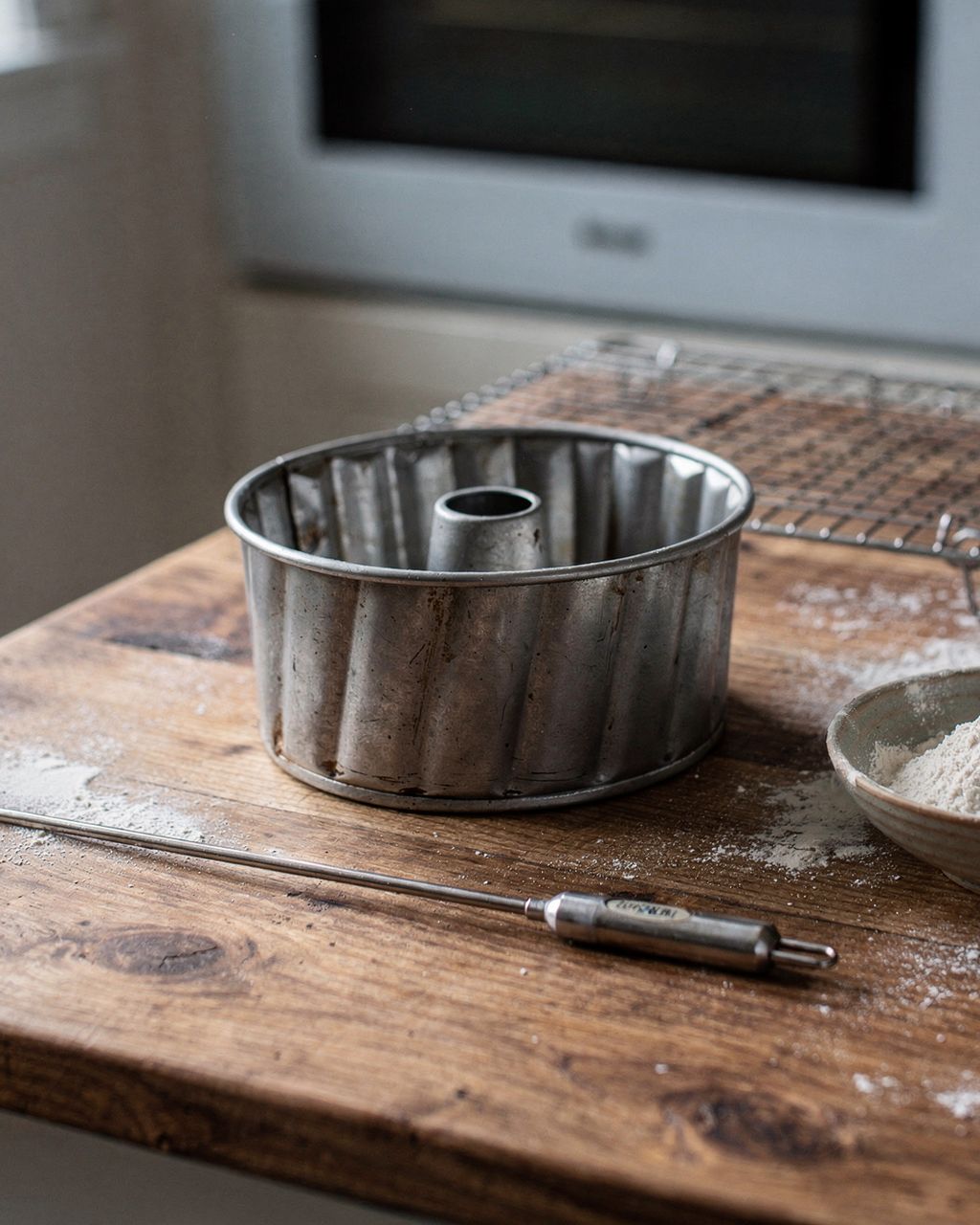
Don't open the oven for the first 35–40 minutes. Turn on the oven light and check through the glass door instead. Only test with a skewer once the cake smells baked, looks golden, and has started pulling away from the sides of the tin — and even then, open the door for just a few seconds.
A bundt cake sinks in an oven that's too cool because its structure sets too late, and in an oven that's too hot because the surface sets while the centre is still raw. Home ovens commonly run 10–20°C (18–36°F) off their set temperature:
Oven too cool: the batter heats slowly and the structure sets late. Meanwhile the bubbles keep growing, merging, and escaping through the surface before the crumb can hold them, and the centre sinks. You'll notice a pale surface, a sunken centre, and a coarse, dense crumb underneath.
Oven too hot: the surface browns and sets before the centre has had time to cook through. This creates a tall, cracked ridge with raw batter underneath. From the outside it looks done, so you take it out — and it sinks.
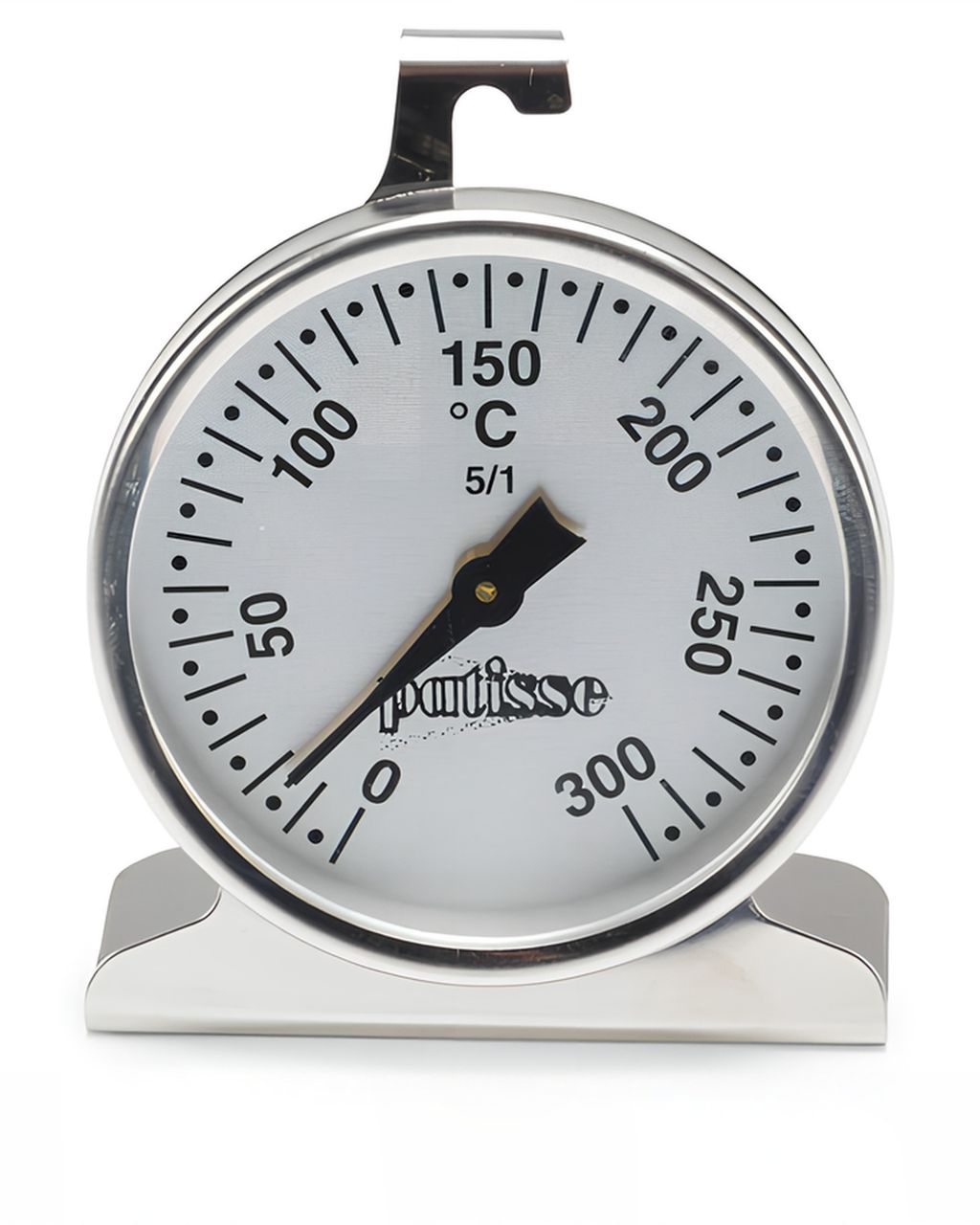
Pound-cake-style bundt cakes are usually baked at 160–170°C (320–340°F) on conventional top/bottom heat, or 10–20°C (18–36°F) lower in a fan oven. Always let the oven fully preheat — not just until the indicator light goes off. A cheap oven thermometer will tell you if your oven actually runs at the temperature it claims.
A bundt cake in an overfilled tin sinks because the batter above the rim has nothing to support it. Fill the tin no more than two-thirds full. Add more, and the top layer rises above the rim and collapses under its own weight. On top of that, a taller centre bakes through later than the rest, so overfilling often brings underbaking along with it.
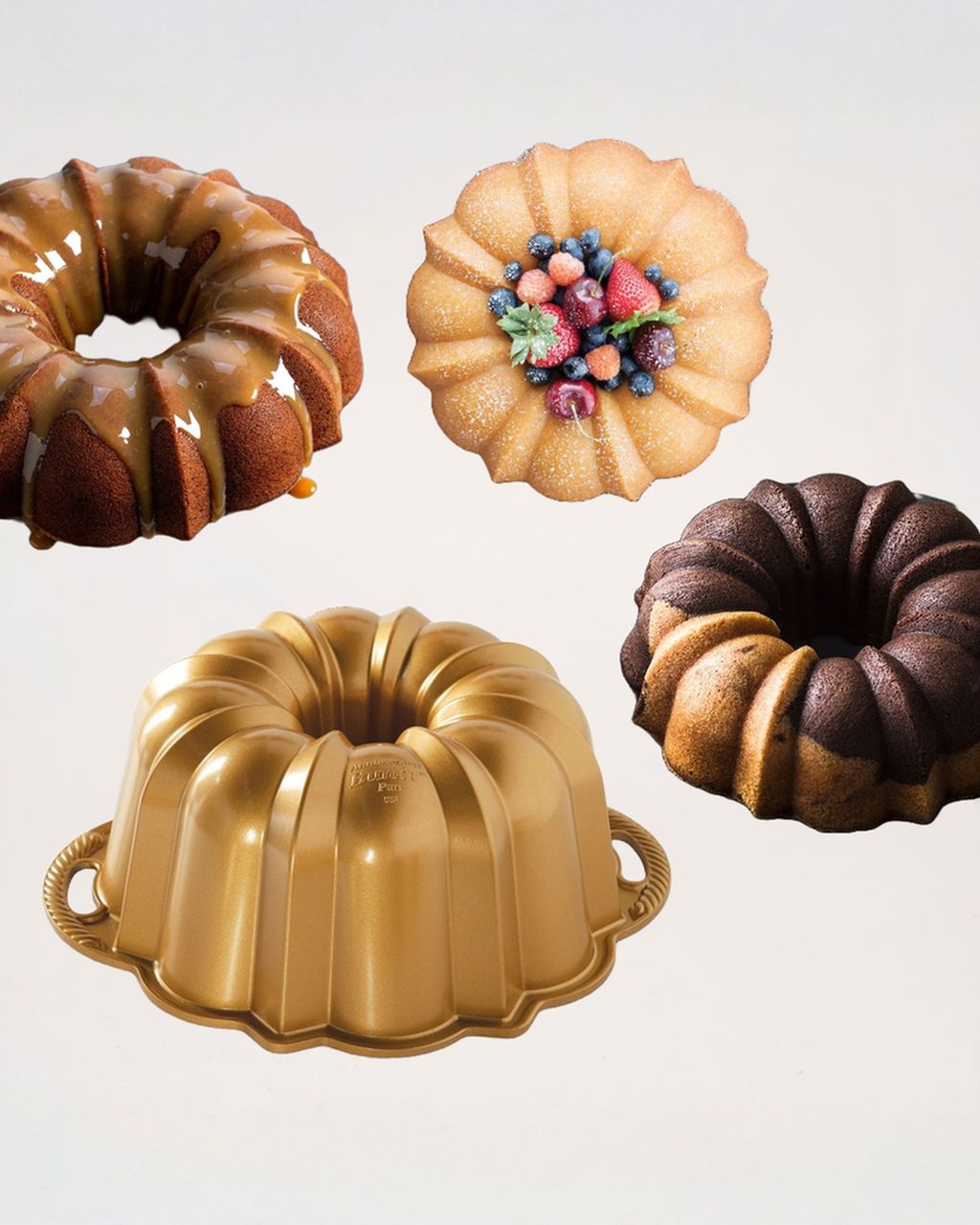
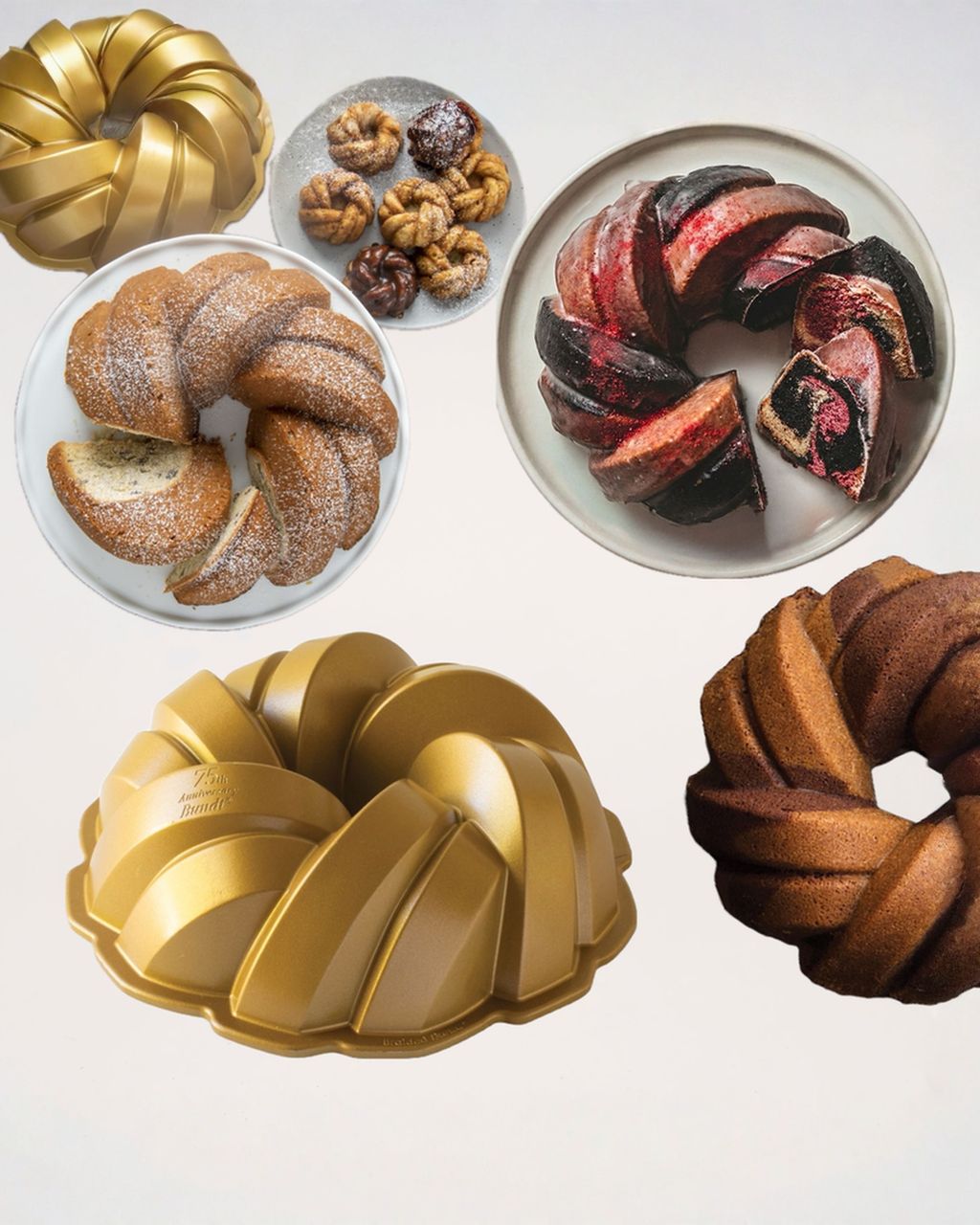
For a bundt cake using 300–350g of flour, you'll need a tin with roughly a 2.5-litre (10-cup) capacity; it won't fit in a 1.5-litre (6-cup) tin. If your recipe calls for a bigger tin than you have, bake the extra batter in a few muffin cups, or use a larger tin. Browse bundt tins here. We cover how ceramic, silicone, cast iron, and cast aluminium tins differ in how to choose a bundt tin. A dark, heavy tin conducts heat to the centre more evenly; a thin, light-coloured tin relies more heavily on the oven's own temperature.
A bundt cake made from a heavy or runny batter sinks because too much sugar, fat, liquid, or moist fruit delays the centre from setting. Sugar and fat keep a bundt cake moist, but they also weaken its structure: sugar delays egg coagulation and starch gelatinisation, while fat coats the gluten strands. Too much of either, and the centre sets later than it should — or not at all. The same goes for extra liquid, such as milk added "to loosen the batter up a bit".
Weigh ingredients — don't measure by cups. A cup of flour can weigh anywhere from 120g to 160g depending on how it's scooped. Just 40g too little flour is enough to make a bundt cake sink.
Egg size matters. Recipes are written for medium eggs (around 50g without the shell). Four large eggs add roughly 30–40g extra to the batter — about two-thirds of an egg's worth of liquid.
Count moist ingredients as liquid. Grated courgette, pumpkin purée, or frozen fruit all release water in the oven. For courgette and carrot bundt cakes, squeeze the courgette thoroughly, and for a raspberry and white chocolate bundt cake, use the raspberries frozen and un-thawed, tossed in a spoonful of flour.
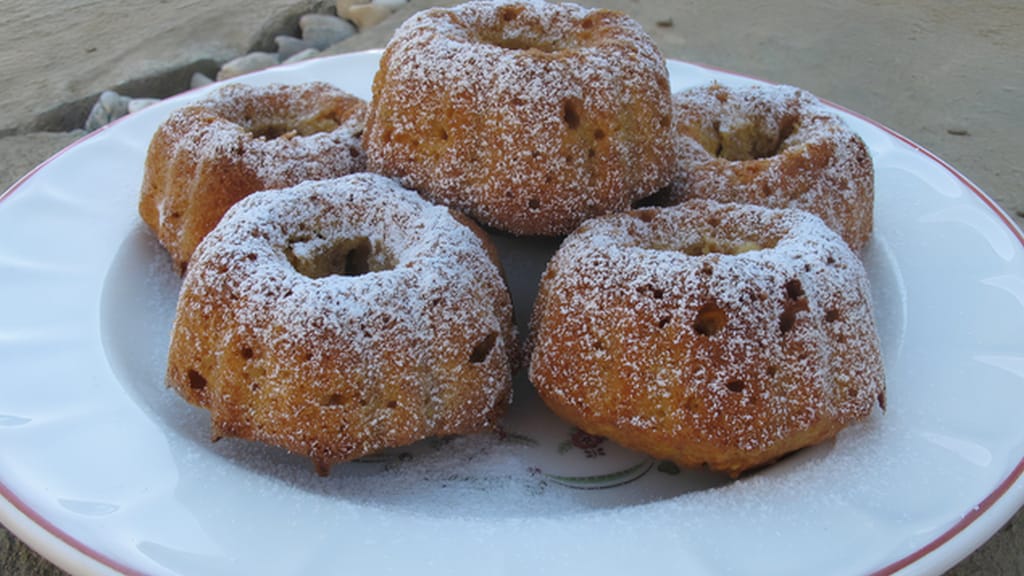
Zucchini and carrot mini bundt cakes
Courgette and carrot mini bundt cakes: moist yet won't sink, as long as you squeeze out the courgette
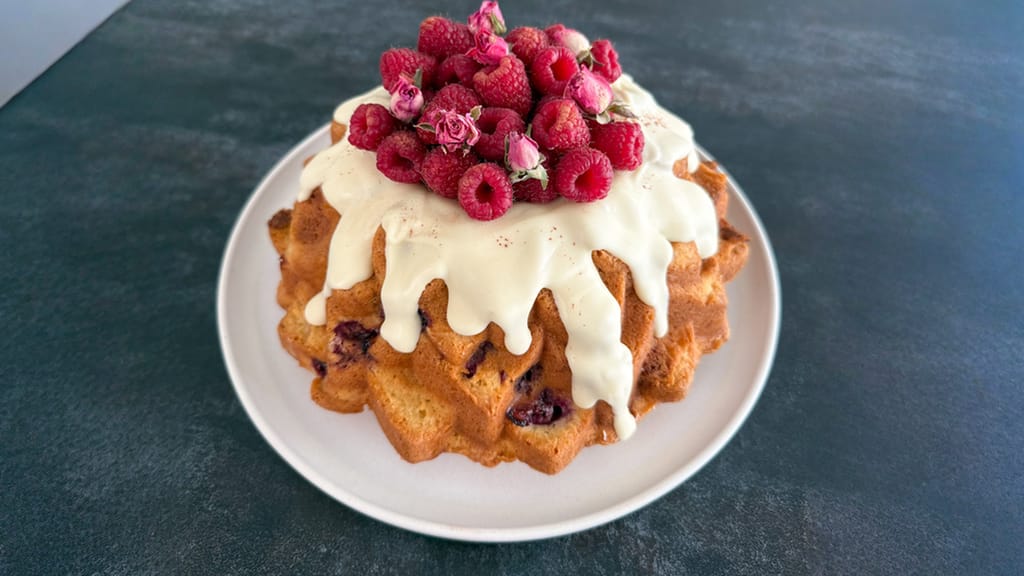
Raspberry bundt cake with white chocolate and sour cream
Raspberry and white chocolate bundt cake: how to bake fruit in without the cake sinking
You can usually work out why your bundt cake sank by slicing it open and looking at how it collapsed:
A damp, dense, shiny streak under the sunken spot: underbaking, or too much sugar, fat, or liquid.
It rose dramatically high in the oven, then sank all over as it cooled: too much baking powder, or too much air in the batter.
It sank suddenly during baking and the crumb is coarse with large holes: the oven door was opened, or the egg whites weren't folded in properly.
A dark, cracked ridge with raw batter underneath: the oven was too hot.
A pale surface, sunken centre, and coarse, dense crumb underneath: the oven was too cool.
It overflowed the rim and sank in a "waistline" just below it: the tin was overfilled.
If you spot two signs at once — say, a ridge over the rim plus a damp streak — fix the batter quantity and the temperature first next time. The rest tends to sort itself out.
A sunken bundt cake can almost always be rescued — it just depends how badly it collapsed.
A slight dip: no problem at all for a bundt cake. Once turned out, the top becomes the bottom, so the dip ends up facing the plate. If it wobbles, level it off with a sharp knife.
A damp streak, but the cake is still warm: put it back in the tin in the oven for 10–15 minutes, loosely covered with foil so the surface doesn't scorch. Don't re-bake a cake that's already cooled — it'll just dry out.
A deep collapse or raw centre: cut out the raw part. Cube the rest into a glass with whipped cream and fruit, blitz it into crumbs for cake pops, or dry it out in the oven as a coffee-time biscuit.
Just a cosmetic flaw: cover it with icing or a thick glaze to hide the dip.
If your bundt cake often turns out raw in the middle, read Underbaked Bundt Cake: Why It Happens and What to Do. And if yours tends to come out dry rather than sunken, Why Is My Bundt Cake Dry? How to Bake a Moist One will help.
A bundt cake won't sink if you stick to exact quantities, full temperature, and a little patience:
Bring ingredients to room temperature. Take them out 1–2 hours ahead. Cold butter and eggs won't combine properly and the batter will curdle.
Weigh everything, including the baking powder.
Cream the butter and sugar until pale and fluffy, but don't over-whip. Once the flour goes in, mix only briefly.
Grease and flour the tin, then fill it no more than two-thirds full.
Let the oven fully preheat to 160–170°C (320–340°F) and bake on the middle or lower-middle shelf.
Don't open the oven for the first 35–40 minutes.
Check for doneness with a skewer at the highest point, or with a thermometer: roughly 93–99°C (200–210°F) inside.
Let it rest in the tin for 10–15 minutes, then turn it out and let it cool on a wire rack, away from draughts.
If you'd like to try a tried-and-tested recipe, go for a marble bundt cake with buttermilk and vanilla or a classic Grandma's "250" curd cheese bundt cake.
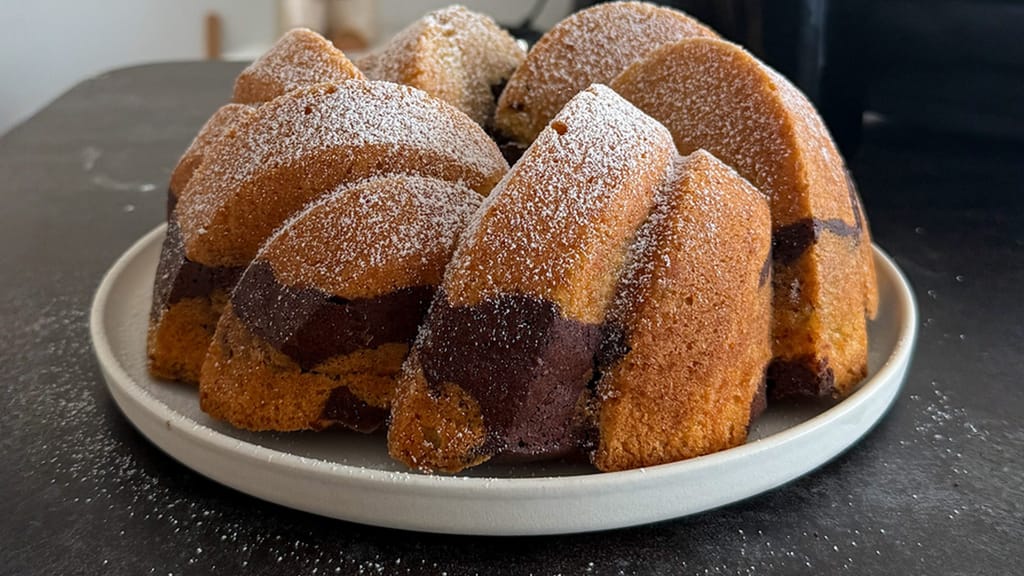
Marble bundt cake with buttermilk and vanilla
Marble bundt cake with buttermilk and vanilla: moist, stable, and won't sink
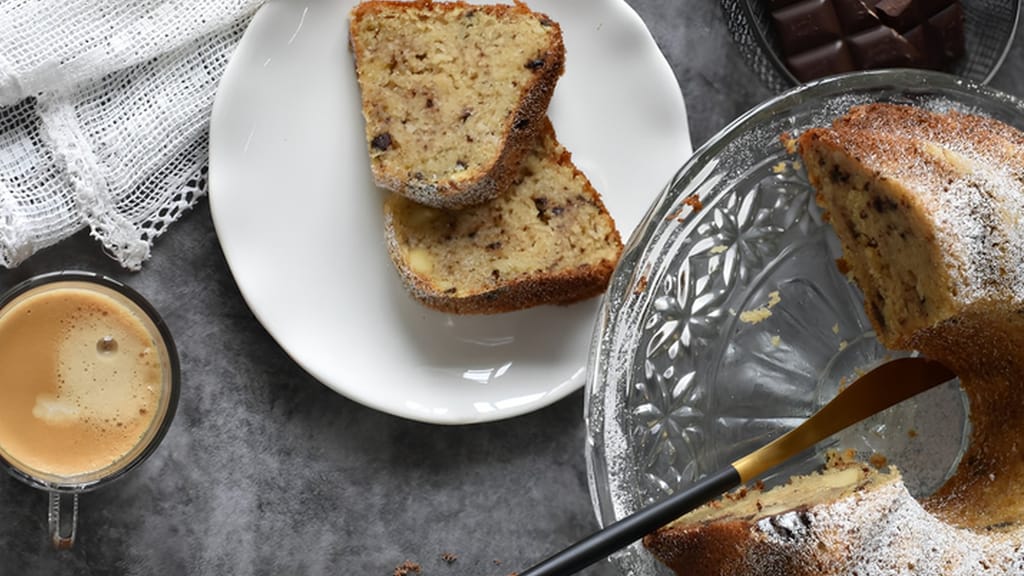
Grandma's two-fifty cottage cheese bundt cake
Grandma's "250" curd cheese bundt cake: rises well and holds its shape
Yes, a sunken bundt cake is perfectly fine to eat as long as it's cooked through. The sinking itself isn't a problem. What you shouldn't eat is the damp, shiny streak of raw batter just under the sunken spot, since it contains undercooked egg. Cut that part out and enjoy the rest.
A yeasted bundt cake most often sinks because it over-proved. The yeast produced more gas than the gluten could hold, so the dough collapses in the oven. Only let it rise until a finger pressed into the dough springs back slowly — if the dent stays, it's over-proved. An oven that's too cool is the second most common cause.
Yes, a bundt cake is somewhat more prone to sinking in a silicone tin, because silicone conducts heat less efficiently than metal, so the centre bakes through more slowly. Set the tin on a baking sheet to give it a firm base and heat from below, and allow an extra 5–10 minutes of baking time. Always check doneness with a skewer.
Yes, you can freeze a sunken bundt cake just like any other, as long as it's fully baked through. Cut away any raw streak under the sunken spot first, let the cake cool completely, then wrap it tightly in foil or a freezer bag. It keeps for roughly 2–3 months in the freezer; thaw it still wrapped at room temperature so it doesn't turn damp. Once thawed, cube it straight into a glass with whipped cream.
You can only replace baking powder with bicarbonate of soda in a bundt cake if the batter contains enough acidic ingredients, such as buttermilk, yogurt, or soured cream. Bicarbonate of soda is roughly four times stronger than baking powder, so use about 1/4 teaspoon of soda in place of 1 teaspoon of baking powder. Add more than that, and the cake will rise and then sink — and taste soapy on top of it.
One recipe worth heating the oven for, one tip, and one deal from the shop. Nothing else.