Pizza Dough: How Much Water, Which Flour, and How Long to Proof for a Thin, Airy Crust
Why Is My Pizza Dough Not Stretching? Springing Back, Tearing, Fixes
Updated Nov 21, 2026
Pizza dough that won't stretch is almost always tight gluten: the dough was just shaped, is still cold from the fridge, or hasn't rested long enough to relax. Cover it, let it rest and warm up, and it will open out instead of snapping back. If it tears instead, the gluten is underdeveloped or overworked, and the fix is different.
Dough that pulls back like a rubber band isn't ruined. Gluten, the stretchy protein network in wheat dough, tightens every time you knead, fold or ball the dough, and it relaxes again when the dough sits still. Most stretching problems come down to shaping a dough while its gluten is still tight.
The usual causes, most common first:
It hasn't rested since it was balled. Shaping a dough ball tightens it, so it needs a rest before stretching.
It's cold. Dough straight from the fridge is stiff and springs back hard.
The flour is very strong. High-protein bread flour gives elastic dough, especially at low hydration.
It's too dry. A stiff, low-water dough fights back more than a soft one.
It's underproofed. A dough that hasn't fermented long enough is tighter and harder to open.
If the dough tears rather than shrinks, skip to the section on tearing below; that's a different problem.
Seasonal baking plans, tested recipes and kitchen tricks that save you time. Unsubscribe in one click.
Rest is the fix that works almost every time. Cover the dough ball with a bowl, a cloth or a lid so the surface doesn't dry and crack, and leave it alone.
A dough that springs back mid-stretch: King Arthur's Baker's Hotline suggests a rest of about 15 minutes, covered. Then try again.
Dough from the fridge: let the covered dough balls warm up until they no longer feel cold and a gentle press leaves a soft dent. Cold gluten is stiff, so this matters more than any clock.
Dough you just divided and balled: give it time to relax and spread slightly before you shape it.
America's Test Kitchen's rule of thumb is simple: whenever the dough resists, stop, cover it and give it a few more minutes. Fighting a tight dough just tears it.
Cold-fermented dough, left covered in the fridge for one to three days, has a lot going for it: better flavor, easier timing, and, once it warms up, a dough that stretches well. The catch is the warm-up. Cold gluten is stiff, and cold dough is firm, so a ball shaped straight from the fridge snaps back and often tears.
A good rhythm for fridge dough:
Divide and ball the dough before it goes into the fridge, in covered containers or a lidded tray.
On baking day, take the covered dough balls out and let them warm up until they feel soft and relaxed.
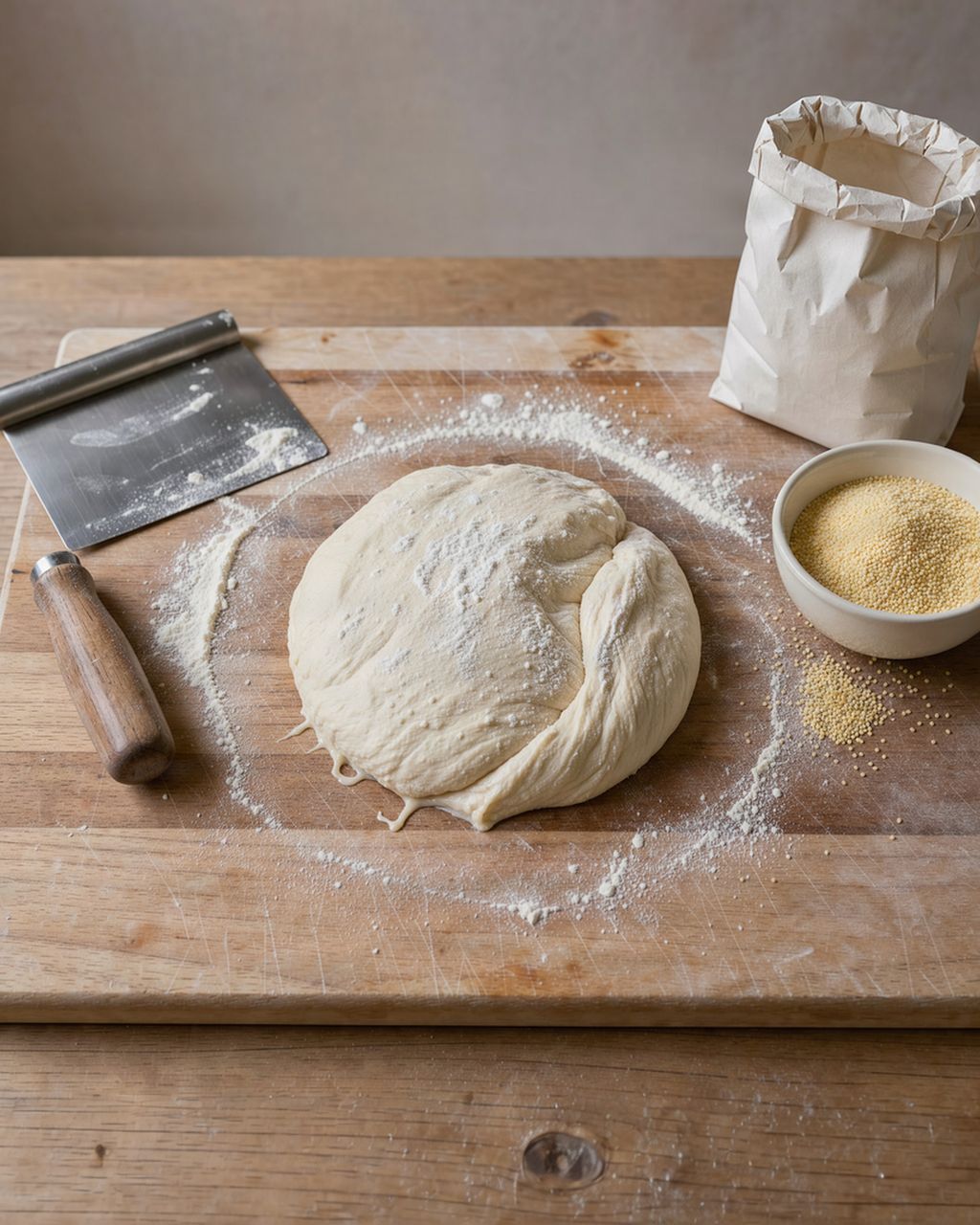
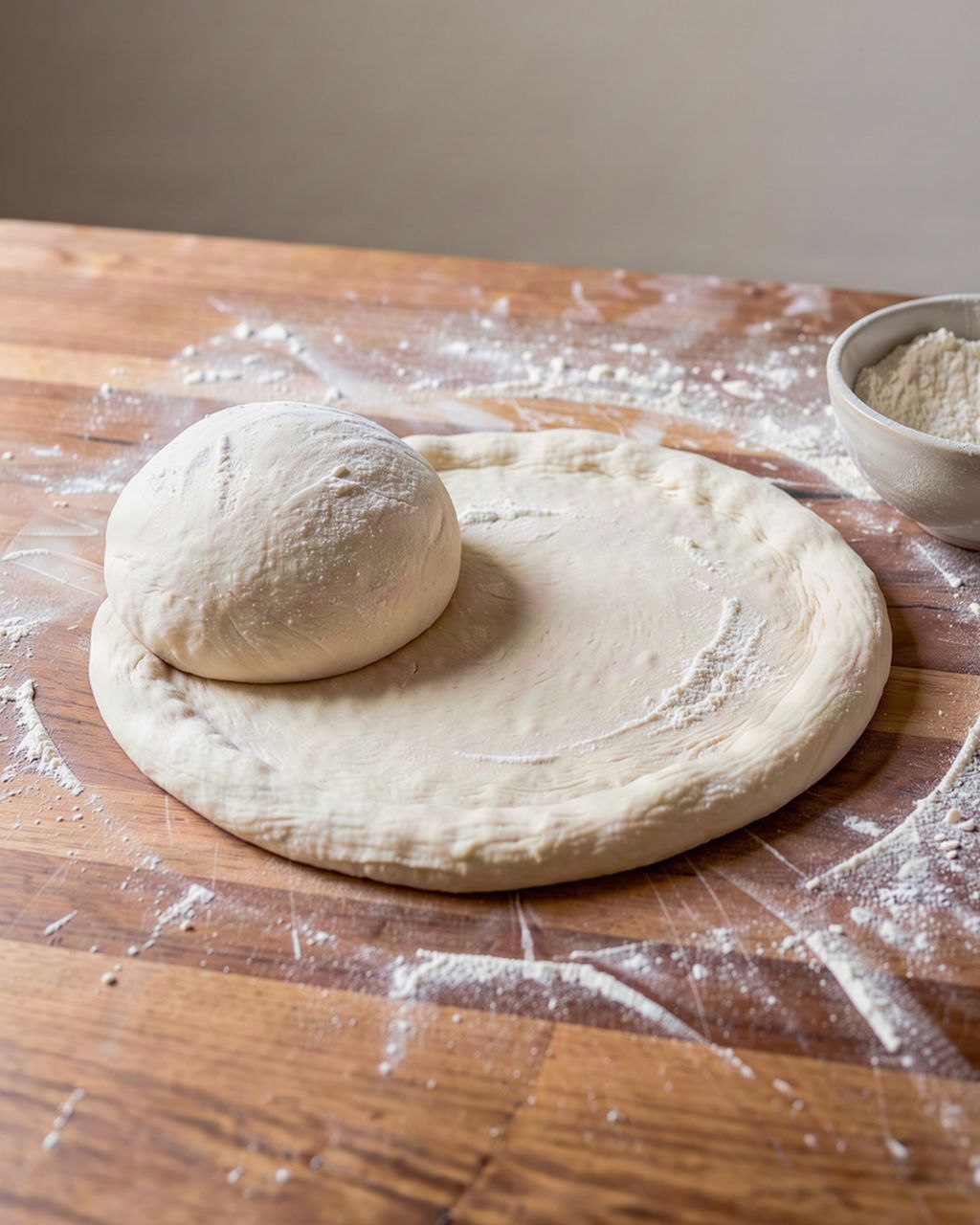
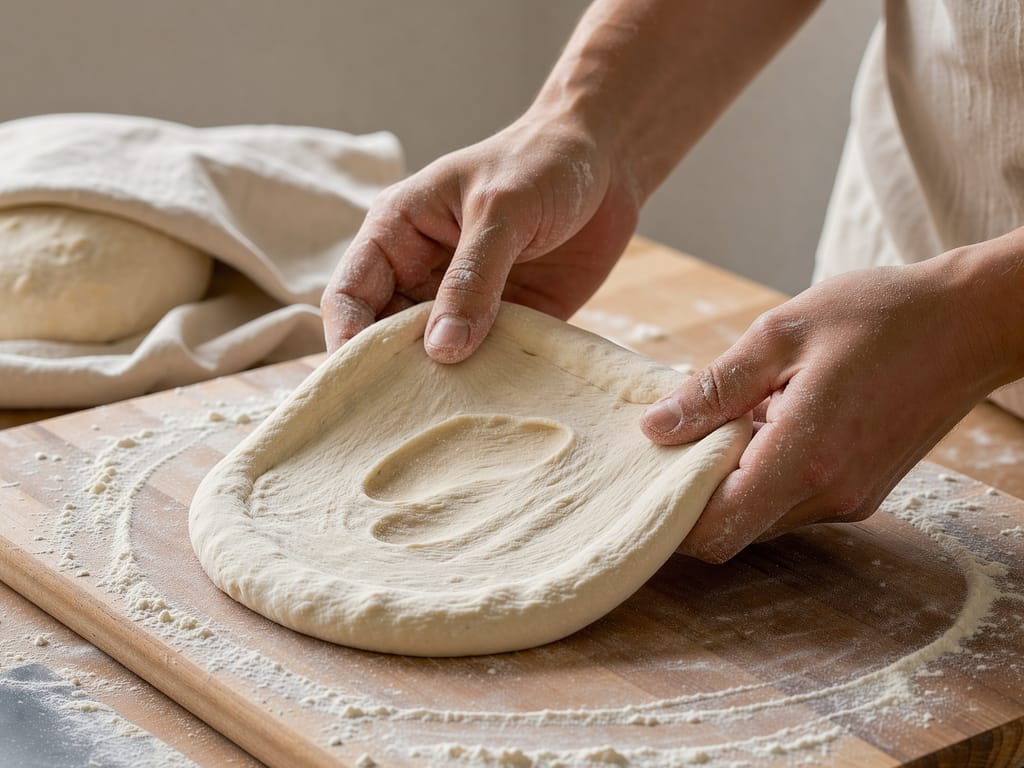
Flour the ball well, press it out from the center with your fingertips, and leave a rim if you want one.
Our guide to pizza dough water, flour and proofing covers proofing times in detail, and proofing dough explains how temperature changes the timing.
Flour decides how elastic a dough will be. The more protein the flour has, the more gluten it can form, and the more the dough springs back.
Bread flour or strong white flour (UK): great chew, but tight and springy, especially in a stiff dough. Give it longer rests.
Italian 00 pizza flour: finely milled and designed to stretch thin. The Associazione Verace Pizza Napoletana (AVPN), which sets the rules for Neapolitan pizza, asks for medium-strength flour of about 11 to 13.5% protein.
All-purpose or plain flour: stretches easily but tears more readily in a very thin base.
If you are working from a European recipe, our guide to flour numbers like 00 and T650 helps match what you have. You can also see what a dedicated pizza flour is.
A dough that is too dry also fights back. If your dough feels stiff and hard to press even after a rest, add a little more water next time; the hydration guide linked above gives the ranges.
Tearing means the gluten can't stretch far enough before it breaks. Look at where and when it tears:
It tears everywhere and feels slack and sticky: the dough is probably overproofed. Long, warm fermentation weakens the gluten. Bake it anyway, gently, as a thicker or pan pizza.
It tears and looks shaggy or lumpy: underkneaded. The gluten never formed a smooth, stretchy network. Next time knead until the dough is smooth, or use a few sets of stretch-and-folds during the first rise.
It tears in the middle only: you stretched the center too thin. The middle always thins first, so work from the rim outward.
It tears right after shaping a cold ball: cold and tight. Rest it.
Small holes are easy to fix: pinch the dough together, or lay a scrap over the hole and press it on.
Once the dough is relaxed, technique does the rest:
Flour both sides well so the dough doesn't stick to your hands or the counter.
Press, don't pull, first. Use your fingertips to press the dough out from the center, leaving about 1 to 2 cm (½ to ¾ inch) untouched for the rim.
Stretch over your knuckles, turning the dough so gravity does the work evenly.
Stop when it pulls back. Cover it for a few minutes and come back. Most doughs give in after one short rest.
Use a rolling pin only if you want a flat crust. It works, but it presses out the gas that makes a puffy rim.
If you are not sure how big to stretch it, our pizza size comparison shows how much more pizza a larger round really gives you.
Pizza dough shrinks back because the gluten is tight, usually because it was just balled, kneaded or taken cold from the fridge. Cover it and let it rest; King Arthur's bakers suggest about 15 minutes for a dough that fights back, longer if it is cold.
Rest a freshly balled dough until it relaxes and spreads a little, and let covered fridge dough warm up until it no longer feels cold. If it still springs back while you stretch, cover it and give it another few minutes.
Dough that tears has weak or uneven gluten: it was underkneaded, made with low-protein flour, overproofed, or stretched too thin in one spot. Rest it, then stretch from the rim rather than the center, and patch small holes by pinching.
Yes, a rolling pin works on a tight dough, but it presses out the gas and gives a flatter, crisper crust without a puffy rim. Rest the dough first so it doesn't shrink back after rolling.
Cold pizza dough stretches badly, because cold gluten is stiff and springy. Leave the covered dough balls on the counter until they feel soft and relaxed before you shape them.
One recipe worth heating the oven for, one tip, and one deal from the shop. Nothing else.