Why Is My Pizza Dough Not Stretching? Springing Back, Tearing, Fixes
Pizza Dough Without Olive Oil: What Oil Does and What to Use Instead
Updated Nov 21, 2026
You can make pizza dough without olive oil: swap in the same amount of any neutral oil, or leave the oil out entirely, as Neapolitan pizza makers do. Oil makes the dough easier to stretch and the crust softer and browner, so a dough without it bakes up a little crisper and leaner. Here is what each substitute changes.
Yes, and easily. Oil is the least essential ingredient in pizza dough. Flour, water, salt and yeast make the dough; oil only changes the texture of the crust.
You have three good options:
Swap in another oil, one for one.
Use melted butter or lard for a softer, richer crust.
Leave it out, and add up to the same volume of water, a spoonful at a time, only if the dough feels stiff.
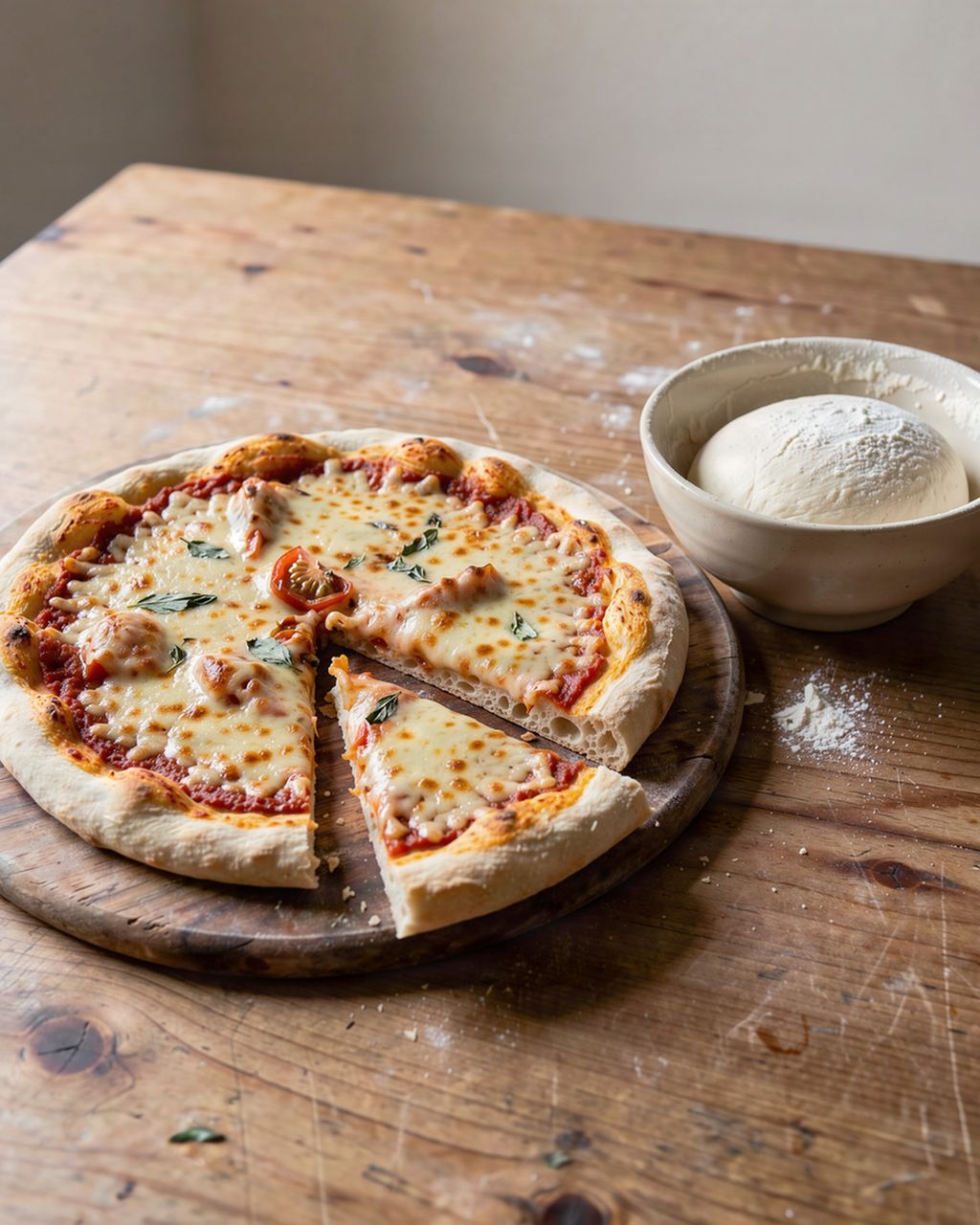
The Associazione Verace Pizza Napoletana (AVPN), which sets the rules for true Neapolitan pizza, doesn't allow any fat or sugar in the dough at all. So an oil-free pizza isn't a compromise; it is one of the classic styles.
Oil coats strands of gluten and the starch, which changes the dough and the crust in a few ways:
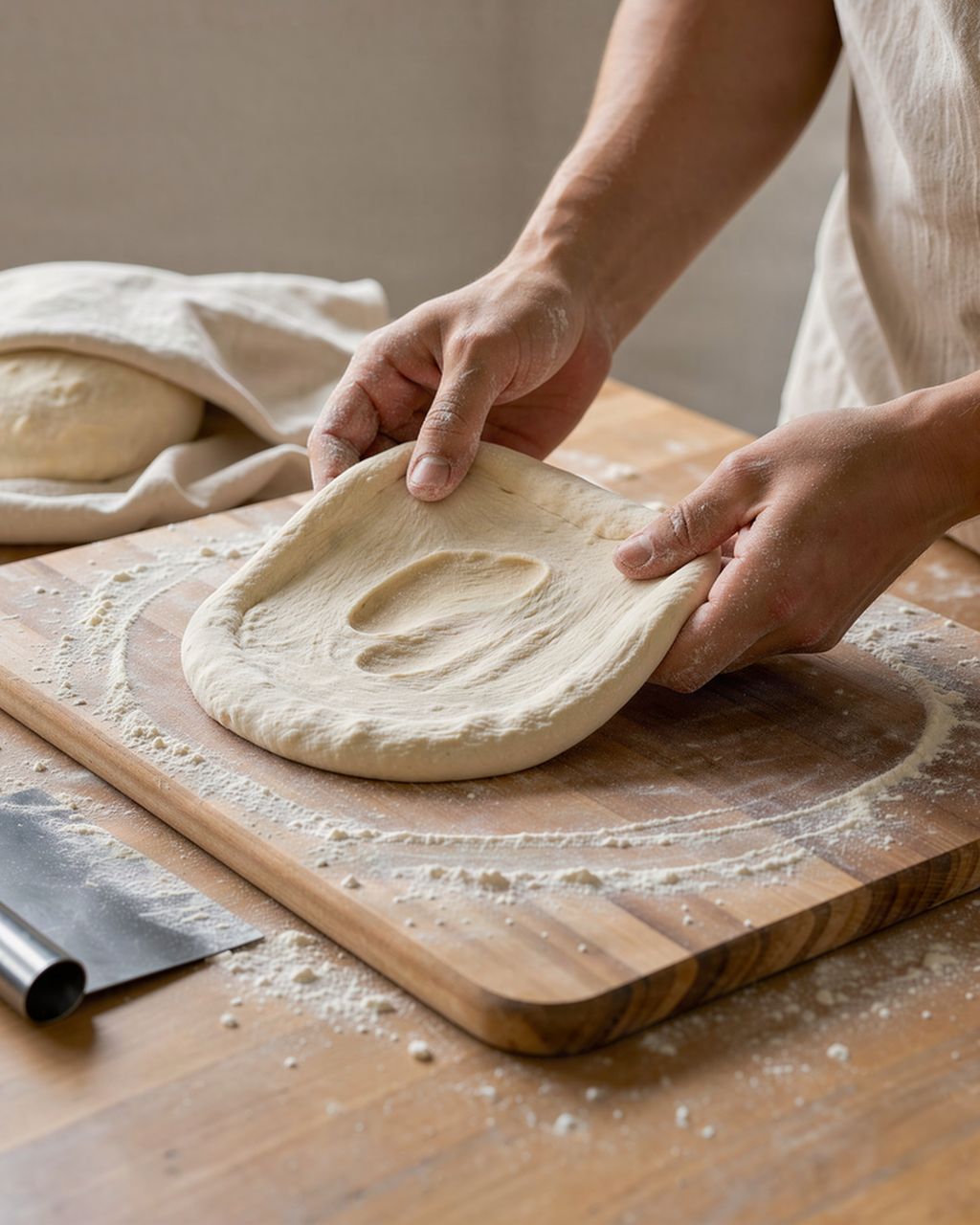
Easier stretching. An oiled dough is more extensible, so it opens out with less springing back.
A softer, more tender crumb. Fat shortens the gluten strands slightly, so the crust bites more easily.
Better browning in a home oven. Home ovens are far cooler than pizza ovens, and oil helps the crust color in the longer bake. Styles made for home ovens, such as New York and pan pizza, usually include oil.
Slower staling. A crust with oil stays softer for longer after baking.
How much is typical? Pizza Today's Dough Doctor column puts most pizza doughs at about 2 to 3% oil by flour weight, with some up to 5%. On 500 g of flour, 2 to 3% is 10 to 15 g, roughly one tablespoon of oil; USDA FoodData Central lists olive oil at about 13.5 g per tablespoon.
Sunflower, canola (rapeseed) or other neutral oil: swap one for one. The dough and crust behave the same; only the faint olive flavor goes. This is what we reach for most in Czech kitchens, where sunflower oil is one of the everyday cooking oils.
Melted butter: softer, richer and browner. Let it cool before mixing so it doesn't warm the dough too much. Butter is about 80% fat, the rest mostly water, so use about a quarter more by weight than the oil. A tablespoon of butter is about 14 g; see a tablespoon of butter in grams. Butter adds dairy, so check before you serve someone avoiding milk.
Lard: soft, short and savory, an old Central European habit in bread and pastry. Use the same weight as the oil, softened or melted.
Nothing: leave the oil out for a lean, crisp, Neapolitan-style crust. If the dough feels stiffer, add a little water.
Strongly flavored oils, such as toasted sesame or pumpkin seed oil, will taste in the crust; save them for drizzling.
You don't need a new recipe, just a few small adjustments:
Weigh or measure the oil the recipe asks for. Two tablespoons of olive oil is about 27 g.
Replace it with the same amount of neutral oil, or about a quarter more melted butter by weight, or the same weight of lard.
If you are leaving the oil out, add up to the same volume of water, a spoonful at a time, only if the dough feels stiff after mixing. Many doughs are fine without it.
Mix the fat in after the flour has absorbed the water if you are kneading by hand. Fat added right at the start slows gluten forming slightly, so the dough takes a little longer to turn smooth.
Everything else, from proofing to baking, stays the same.
An oil-free dough works fine, but expect some differences:
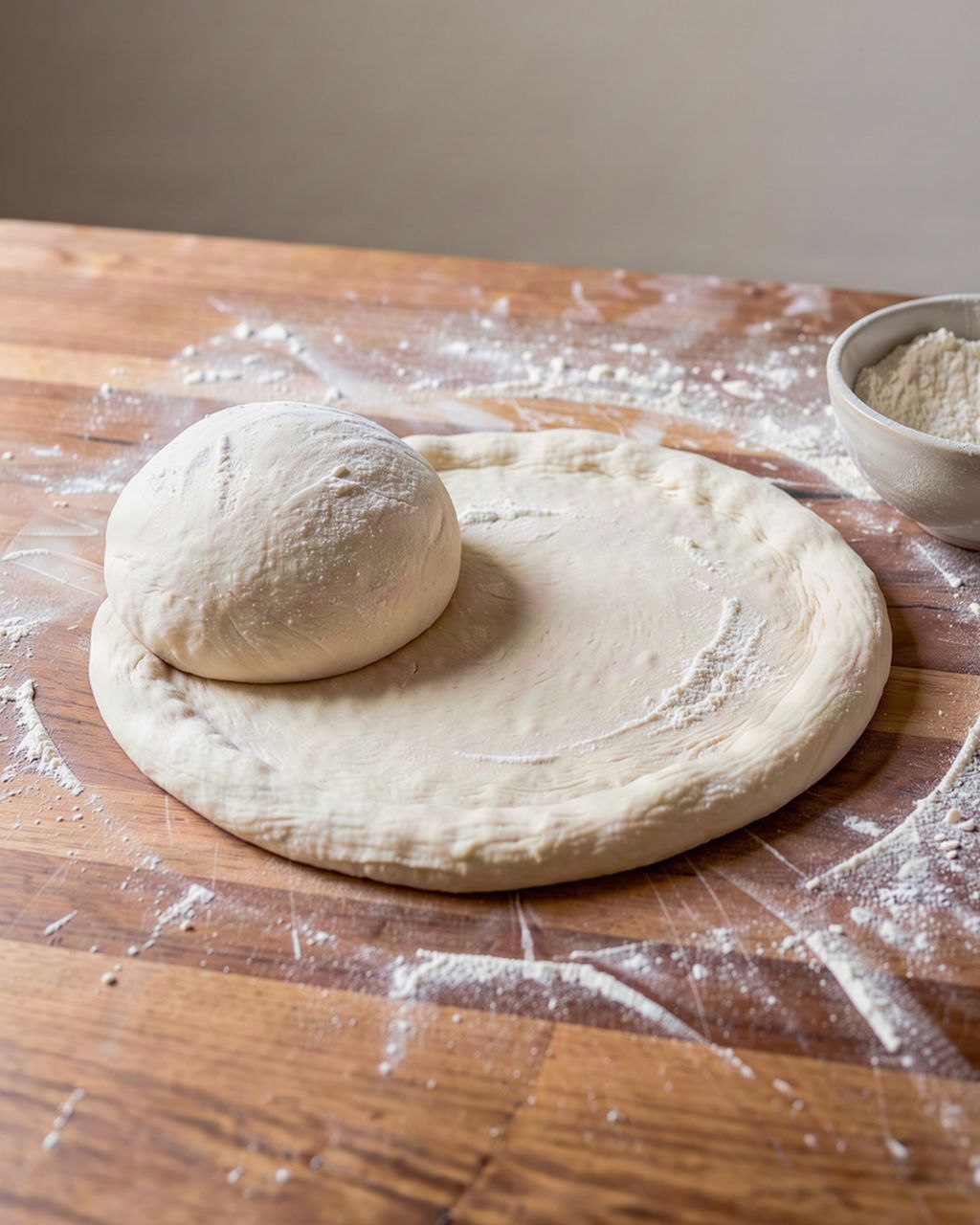
Slightly tighter dough. It may spring back a little more when you stretch it. Rest it, covered, if it fights you.
A crisper, leaner crust. Less tender, more bread-like, with a drier crunch.
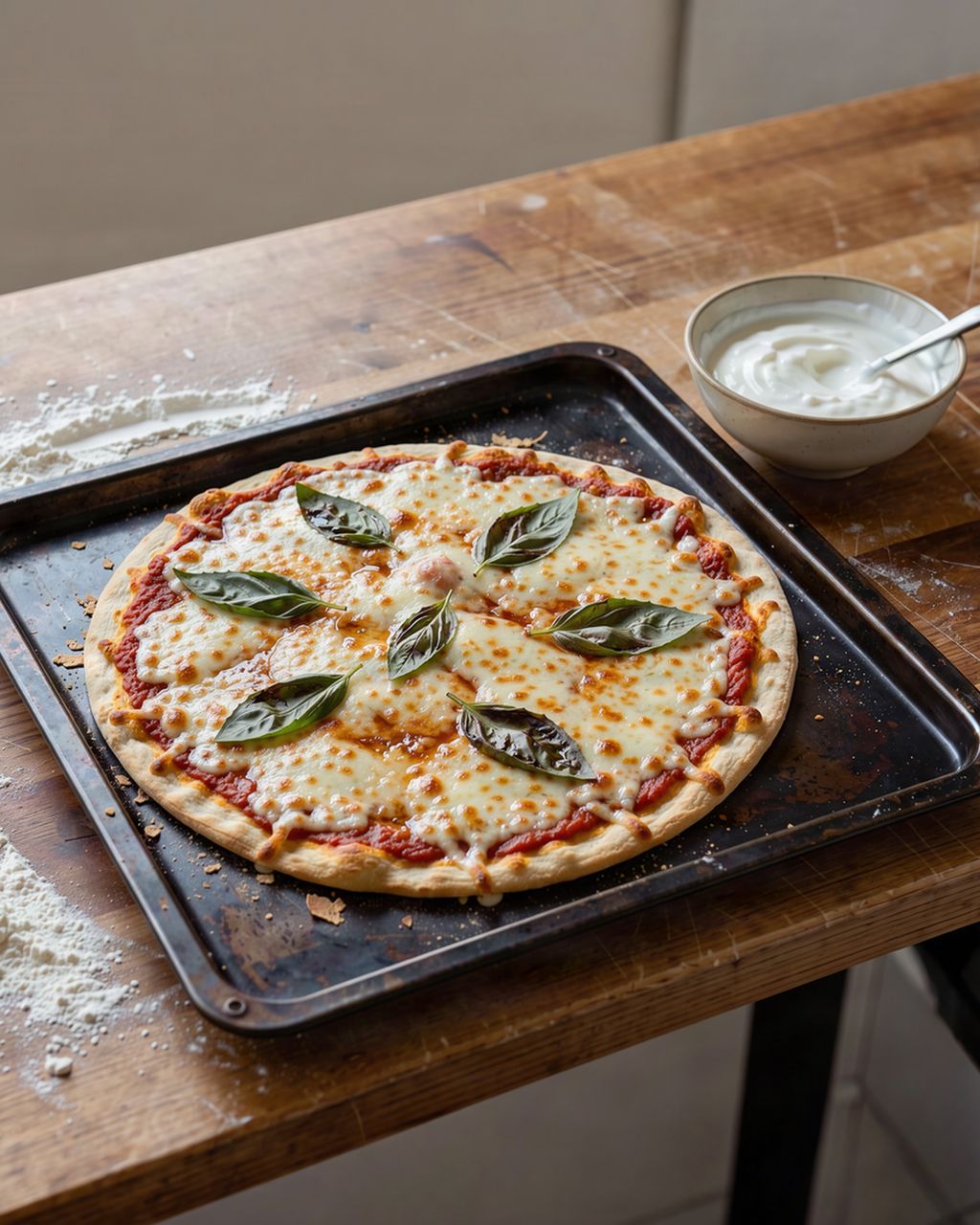
Paler color in a home oven. Lean dough browns more slowly. Bake on a well-preheated stone, steel or heavy tray on a low shelf.
Faster staling. Eat it fresh; leftover crust firms up sooner.
For the water side of the dough, which matters more than oil for texture, our guide to pizza dough hydration, flour and proofing explains the ranges.
Olive oil also turns up outside the dough. None of these uses needs olive oil specifically:
Oiling the bowl or container for the rise: any neutral oil works, or a light dusting of flour.
Pan pizza: oil in the pan fries the base crisp. Sunflower or canola oil work well and handle high heat.
Brushing the rim before baking helps browning. Melted butter gives a softer, golden edge.
Drizzling after baking is where olive oil really earns its place, because you taste it raw. If you have only a little good olive oil, save it for this.
If you do keep olive oil, our guide to storing olive and canola oil explains how to keep it from going rancid.
Recipe of the week, one tip that saves you time and one deal from the shop. Unsubscribe in one click.
The next issue goes out on Thursday, November 26.
These come up alongside oil, so briefly:
No sugar: fine. Sugar is optional in most pizza doughs; it feeds the yeast a little and helps browning in a home oven. Neapolitan dough has none.
No yeast: that's a different dough altogether, leavened with baking powder or made as a flatbread. Our guide to no-yeast pizza dough explains how to keep it from turning into a cracker.
Use the same amount of any neutral vegetable oil, such as sunflower or canola (rapeseed) oil. Melted butter or lard also work, and you can simply leave the oil out; the dough will still rise and bake.
Yes. Neapolitan pizza dough is made only from flour, water, salt and yeast, and the AVPN rules for it exclude any fat. An oil-free dough bakes up crisper and a little leaner and dries out sooner once baked.
Yes, swap it one for one. Vegetable oil does the same job in the dough; you only lose the faint olive flavor, which is hard to taste in the crust anyway.
Yes, melted and cooled butter works and gives a softer, richer crust that browns faster. Butter is roughly 80% fat and the rest mostly water, so use a little more by weight than the oil, and remember it adds dairy.
Olive oil coats the gluten, so the dough stretches more easily, the crust is more tender, and it browns better in a home oven. It also slows the baked crust from drying out.
One recipe worth heating the oven for, one tip, and one deal from the shop. Nothing else.