How to Cook Pasta: How Much Water and Salt, How Long, and How to Keep It From Sticking
Why Is My Pasta Gummy? Overcooking, Water and the Rinsing Myth
Updated Nov 21, 2026
Pasta gets gummy when it is overcooked, cooked in too little water, or left sitting after draining, so its surface starch turns sticky. Plenty of boiling water, an early stir, tasting before the package time and saucing it straight away prevent it. Here is what goes wrong and what to do.
Pasta turns gummy when it is overcooked, cooked in too little water, or left to sit after draining. In each case, starch from the surface of the pasta builds up and turns the outside soft and sticky. Gluten-free pasta and very fresh pasta are more prone to it.
Check which one matches:
Soft, swollen and limp all the way through: overcooked.
Sticky, clumped, with cloudy, thick cooking water: too little water, or not stirred at the start.
Fine at first, gluey a few minutes later: it sat in the colander or the pot without sauce.
Gummy gluten-free pasta: that kind of pasta goes from firm to soft very quickly.
Our guide to how to cook pasta gives water, salt and timing. This one is about what went wrong.
Recipe of the week, one tip that saves you time and one deal from the shop. Unsubscribe in one click.
The next issue goes out on Thursday, November 26.
The cooking time on the package is a guide. Pasta shapes vary in thickness, and your stove, your pot and how hard the water is boiling all change the result.
Start tasting a couple of minutes before the package time. Pasta is done when it is tender but still has a little firmness in the center, what Italians call al dente. If you are going to finish it in a hot sauce, take it out a minute earlier, because it keeps cooking in the pan.
Overcooking is the single biggest reason for gummy pasta. The starch on the outside of each piece swells and bursts, and that soft surface turns gluey.
Pasta releases starch into the water as it cooks. In a big pot, that starch is spread through a lot of water. In a small pot, the water turns thick and cloudy fast, and the pasta sits in what is almost a thin paste.
Two more things make it worse:
Adding pasta before the water boils properly. The pasta sits in hot but not boiling water, softens on the outside and sticks together.
Not stirring in the first minute or two. That is when the surface starch is stickiest. Stir right after you add the pasta, and once or twice more.
Oil in the water doesn't stop pasta sticking; it mostly floats on top. Plenty of boiling water and an early stir do the job. The live pasta cooking guide has the water amounts.
For hot pasta with sauce, no. The starch on the surface helps the sauce cling. Rinsing washes it off and cools the pasta, so the sauce slides off.
Rinsing makes sense only in a few cases:
Cold pasta salad. Rinsing stops the cooking and keeps the pieces separate.
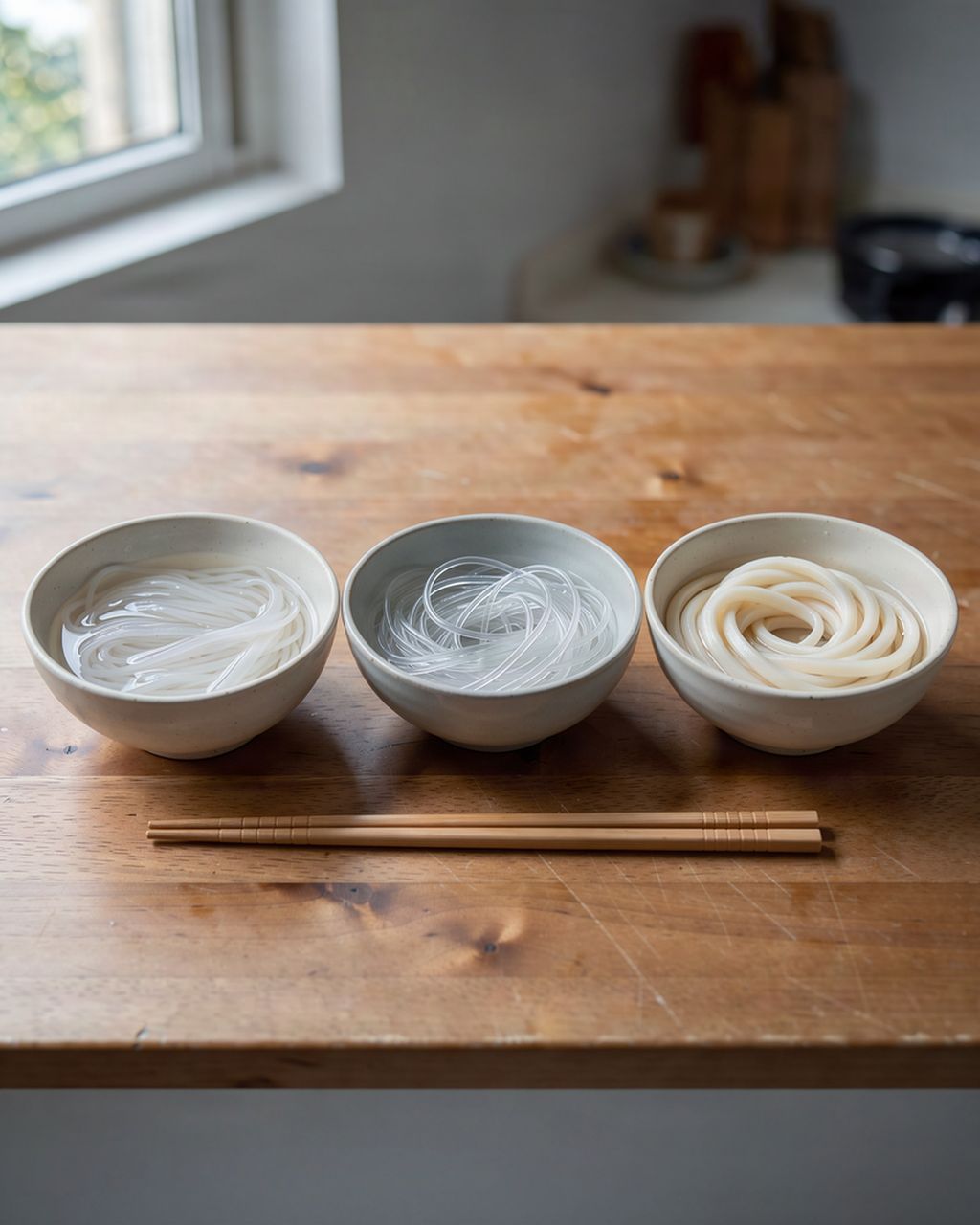
Some Asian noodles, such as many rice and buckwheat noodles, where the recipe calls for rinsing. See our guide to rice, glass and udon noodles.
If the pasta is already gummy and you have no sauce ready, a quick rinse can wash off the sticky surface. It won't fix overcooked pasta.
Rinsing is not a cure for gumminess. Cooking it right is.
Pasta goes on cooking from its own heat after you drain it, and as it cools, the starchy surface turns sticky. A colander full of pasta left on the side while you finish the sauce will clump into a block.
Better timing:
Get the sauce ready before the pasta is done.
Save a cup of the cooking water before draining.
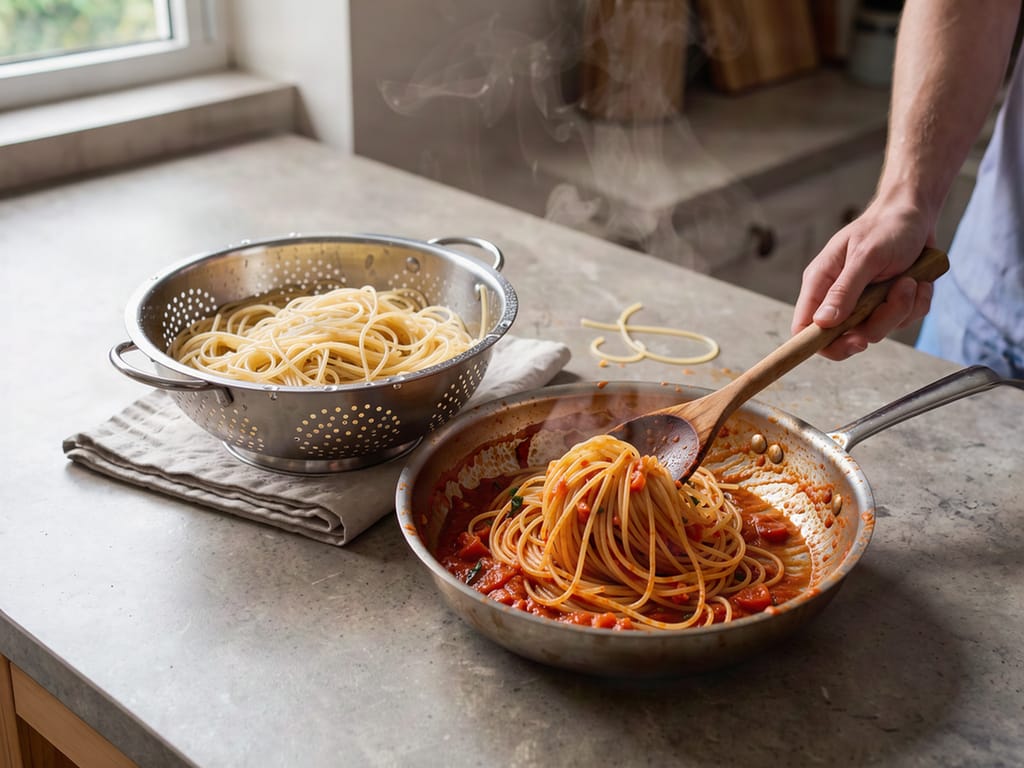
Drain the pasta and get it straight into the sauce.
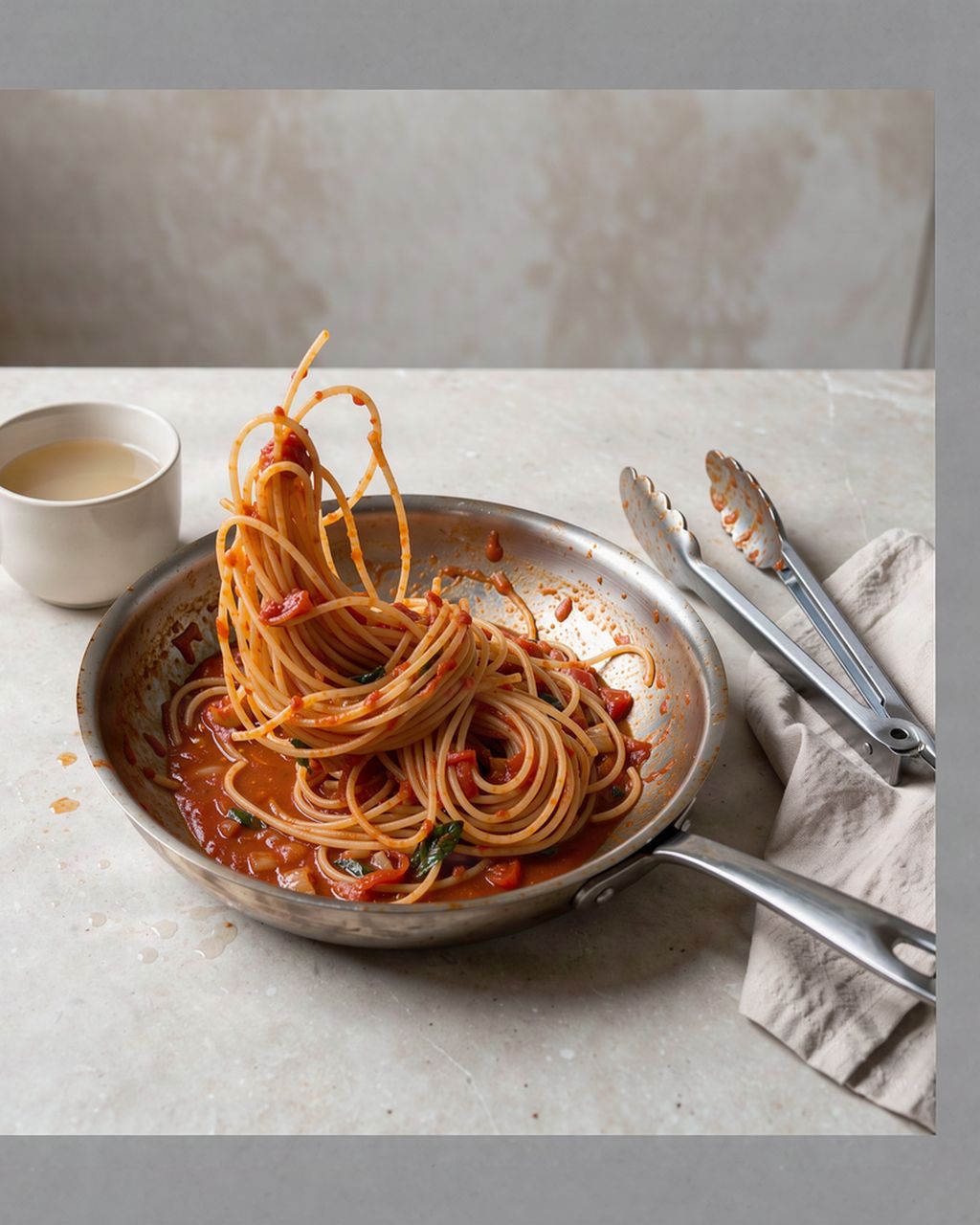
Toss it over the heat for a minute with a splash of the pasta water, which loosens the sauce and coats every piece.
If the pasta must wait, toss it with a little butter or olive oil so the pieces don't stick, and keep it moving.
Some pasta is simply less forgiving:
Gluten-free pasta (rice, corn or legume based) has no gluten to hold its structure, so it turns soft and gummy quickly. Use plenty of water, stir often, start tasting early and drain the moment it is ready. Some brands recommend a quick rinse; follow the package. Our gluten-free flour guide explains how these flours behave.
Fresh egg pasta cooks in a few minutes. A short distraction is enough to overcook it.
Whole wheat pasta can feel softer and grainier when overcooked.
If you are cooking pasta ahead for a party or to keep for later, read our guide on cooked pasta and how long it keeps first.
Lightly gummy pasta can be saved; truly overcooked pasta can't be made firm again, but it can still be used.
Sticky but not overcooked: loosen it with a splash of the reserved pasta water, or water from the kettle, and toss it in the sauce.
Soft all through: put it in a dish where softness doesn't matter, such as a baked pasta with sauce and cheese, or fry it in a pan with butter until the edges crisp.
Clumped into a block: break it up with a splash of the reserved pasta water or kettle-hot water before saucing.
Cloudy, foamy or thick pasta water is starch that has washed off the pasta. It is normal, and it tells you something.
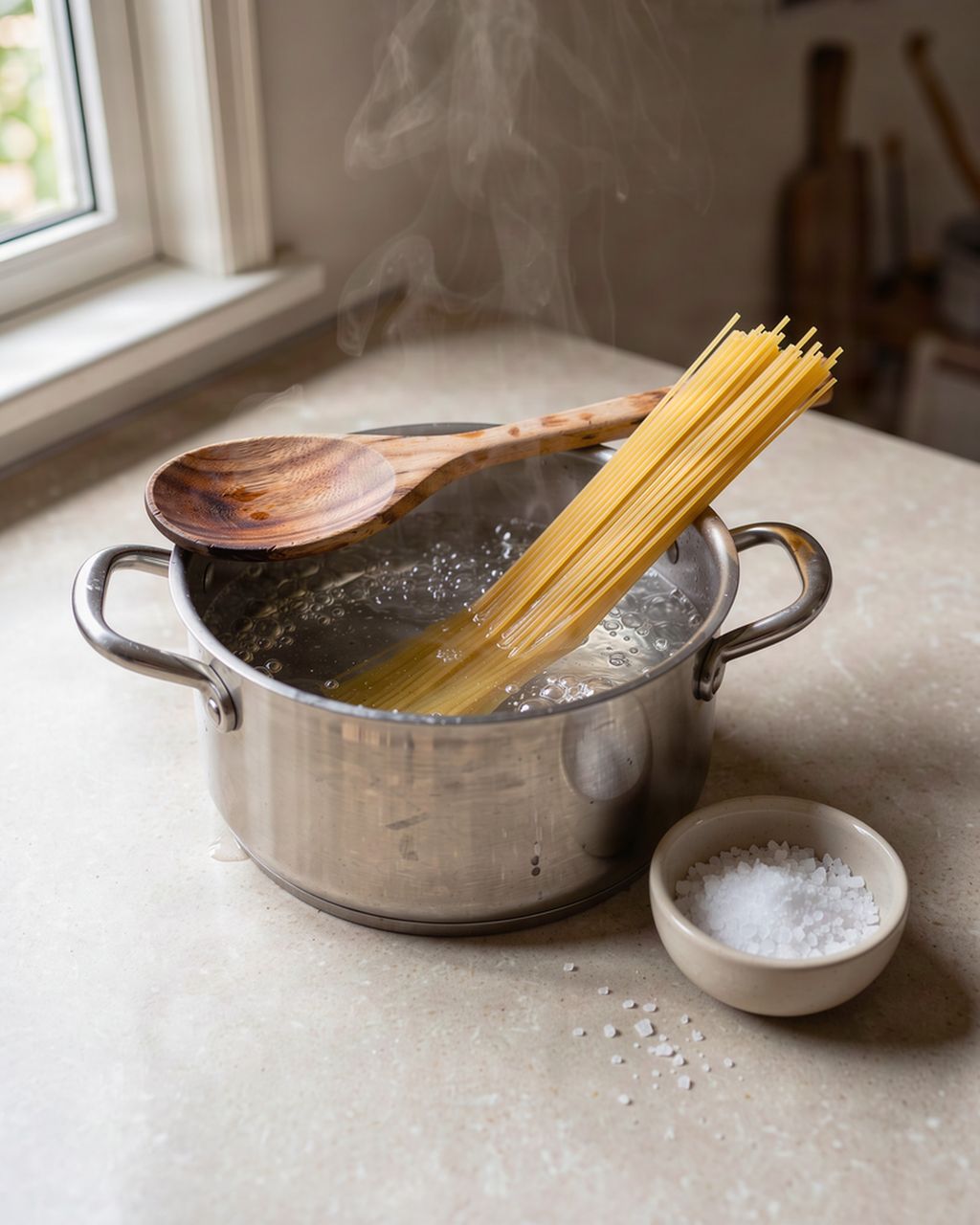
Foam that rises and boils over: the starch traps steam bubbles. Turn the heat down slightly, or set a wooden spoon across the pot. A bigger pot helps more than anything.
Water that turns thick and milky fast: there is too little water for the amount of pasta, so the starch is concentrated. That is when pasta gets gummy.
Very cloudy water from fresh or homemade pasta: the dusting flour or semolina washes off. Shake off the extra before it goes in.
Don't throw all of it away. A splash of that starchy water stirred into the sauce at the end helps it cling to the pasta and turn glossy instead of watery.
Pasta is sticky and gummy when it is overcooked, cooked in too little water, or left to sit after draining. Use plenty of boiling water, stir early, taste before the package time and sauce it straight away.
Rinsing washes the sticky starch off the surface but doesn't fix overcooked pasta, and it stops sauce from clinging. Rinse only for cold pasta salads or noodles whose recipe calls for it.
No, oil in the water mostly floats on top and does little to stop pasta sticking. Plenty of water at a full boil and a stir in the first minute or two work much better.
Gluten-free pasta gets gummy because it has no gluten to hold its structure, so it softens very quickly. Cook it in plenty of water, stir often, taste early and drain it the moment it is tender.
You can't make overcooked pasta firm again, but you can use it in a baked pasta dish or pan-fry it with butter until the edges crisp. Lightly sticky pasta just needs a splash of hot water and its sauce.
One recipe worth heating the oven for, one tip, and one deal from the shop. Nothing else.