How to Cook Rice: Water Ratios for Basmati and Jasmine, on the Stove, in the Oven and in a Rice Cooker
Why Is My Rice Mushy? Water, Stirring, Rinsing and Rice Type
Updated Nov 21, 2026
Rice turns mushy when it gets too much water, cooks too long, or is stirred so its starch glues the grains together. The type of rice matters too, because short-grain rice is meant to be soft and sticky. Here is how to find the cause and get fluffy rice next time.
Mushy rice has almost always had too much water, too much time, or too much stirring. Sometimes it is the rice itself: a short-grain or risotto rice cooked like basmati will always come out soft and sticky.
Work out which one it was:
Wet, with water left in the pot: too much water for that rice.
Soft and burst grains, split at the ends: cooked too long or at too high a heat.
Gluey and sticky, grains glued into a mass: surface starch, from stirring or not rinsing.
Soft and clumpy from the start, even with less water: a short-grain or medium-grain rice.
For water amounts by rice type and method, our guide to how to cook rice has the ratios. This article is about what went wrong.
Seasonal baking plans, tested recipes and kitchen tricks that save you time. Unsubscribe in one click.
Each rice can absorb only so much water. Anything extra stays between the grains and turns the outside of each grain soft and sticky before the middle is done.
Common ways to end up with too much:
Using the ratio for a different rice. Brown rice needs more water than white, and basmati and jasmine often need less than a generic "1 to 2".
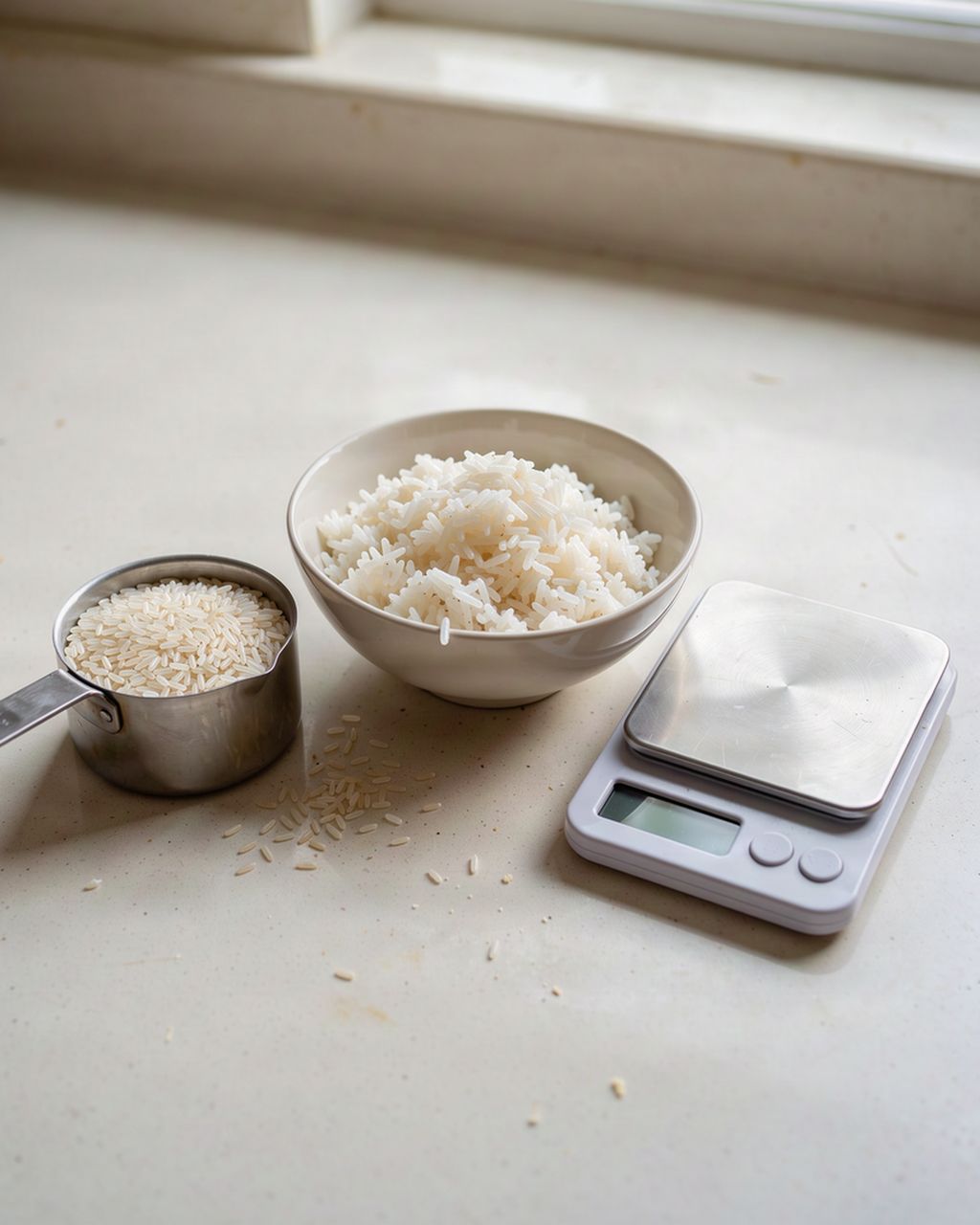
Measuring rice and water with different cups. A ratio only works if you use the same cup for both. A US cup and a coffee mug are not interchangeable. Our cup of rice in grams guide explains why weighing helps.
Following the package for a different pot. A wide pan loses more water as steam than a narrow, deep pot with a tight lid, so the same ratio can turn out drier in one and wetter in the other.
Wet rice after rinsing. Rinsed rice carries some water with it. With small amounts this can tip it over.
If your rice is reliably mushy, cut the water a little next time and keep everything else the same. Change one thing at a time.
Rice is not risotto. Stirring it while it cooks rubs starch off the grains, which turns the water cloudy and thick and glues everything together.
Bring the rice and water to a boil, stir once to unstick any grains from the bottom, then cover, turn the heat right down and leave it alone. Lifting the lid lets steam out and drops the temperature, which tempts people to cook it longer or add water.
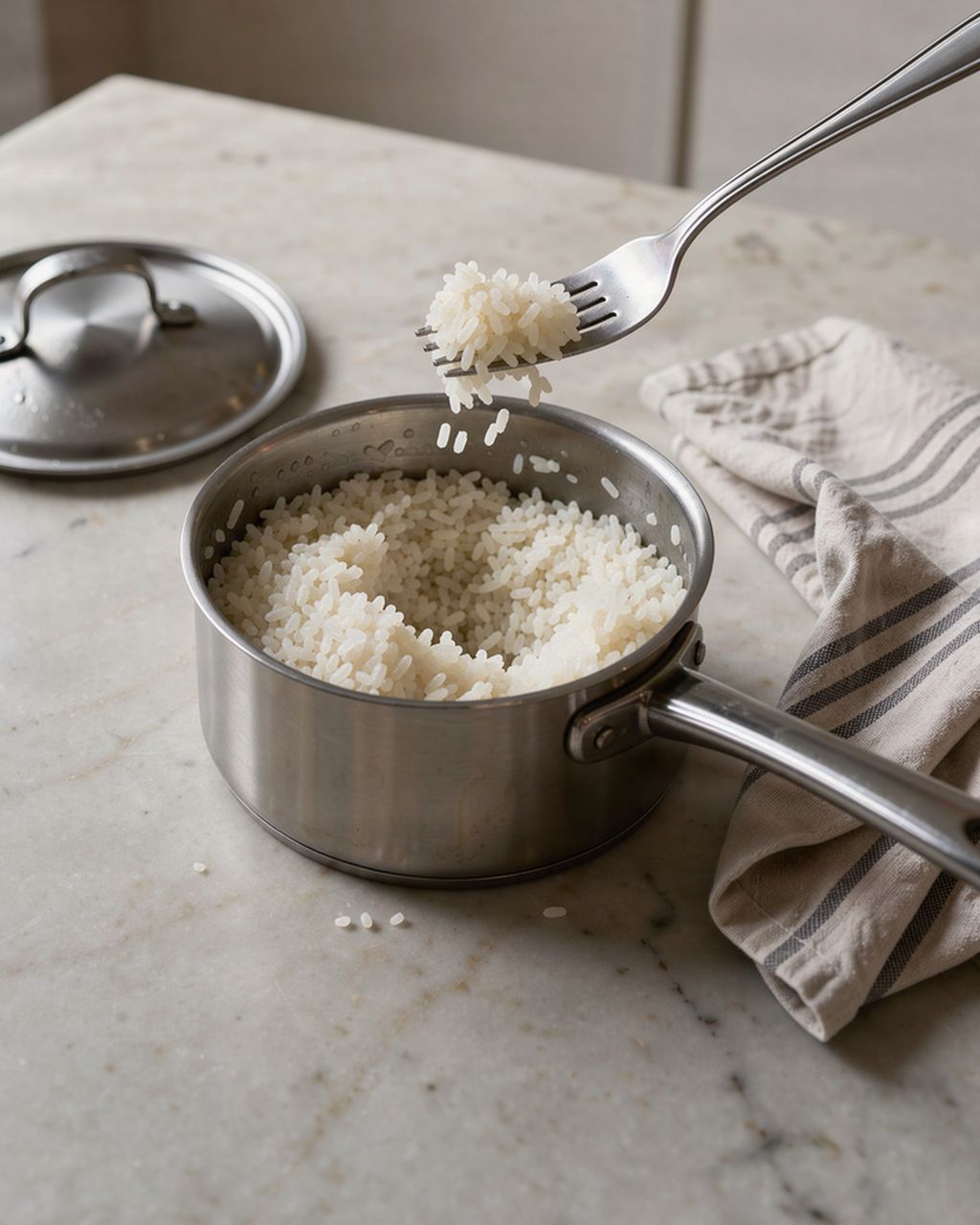
When the time is up, take the pan off the heat and let it rest with the lid on. The resting time lets the moisture spread evenly through the grains. Fluff with a fork afterwards rather than a spoon, which mashes.
Rinsing helps for long-grain rice. It washes off loose surface starch, which is the main reason grains clump. Put the rice in a sieve and rinse it under cold water, moving it with your hand, until the water runs mostly clear. Drain it well.
When not to rinse:
Risotto rice such as arborio or carnaroli. You want that starch for creaminess. See our risotto guide.
Rice pudding. The starch thickens the milk.
Enriched rice, in the US. Rinsing washes off some of the added vitamins, so the package usually says not to.
Sushi rice is a special case: it is rinsed, but it is meant to be sticky.
Sometimes there is no mistake at all. Different rice types are meant to cook differently:
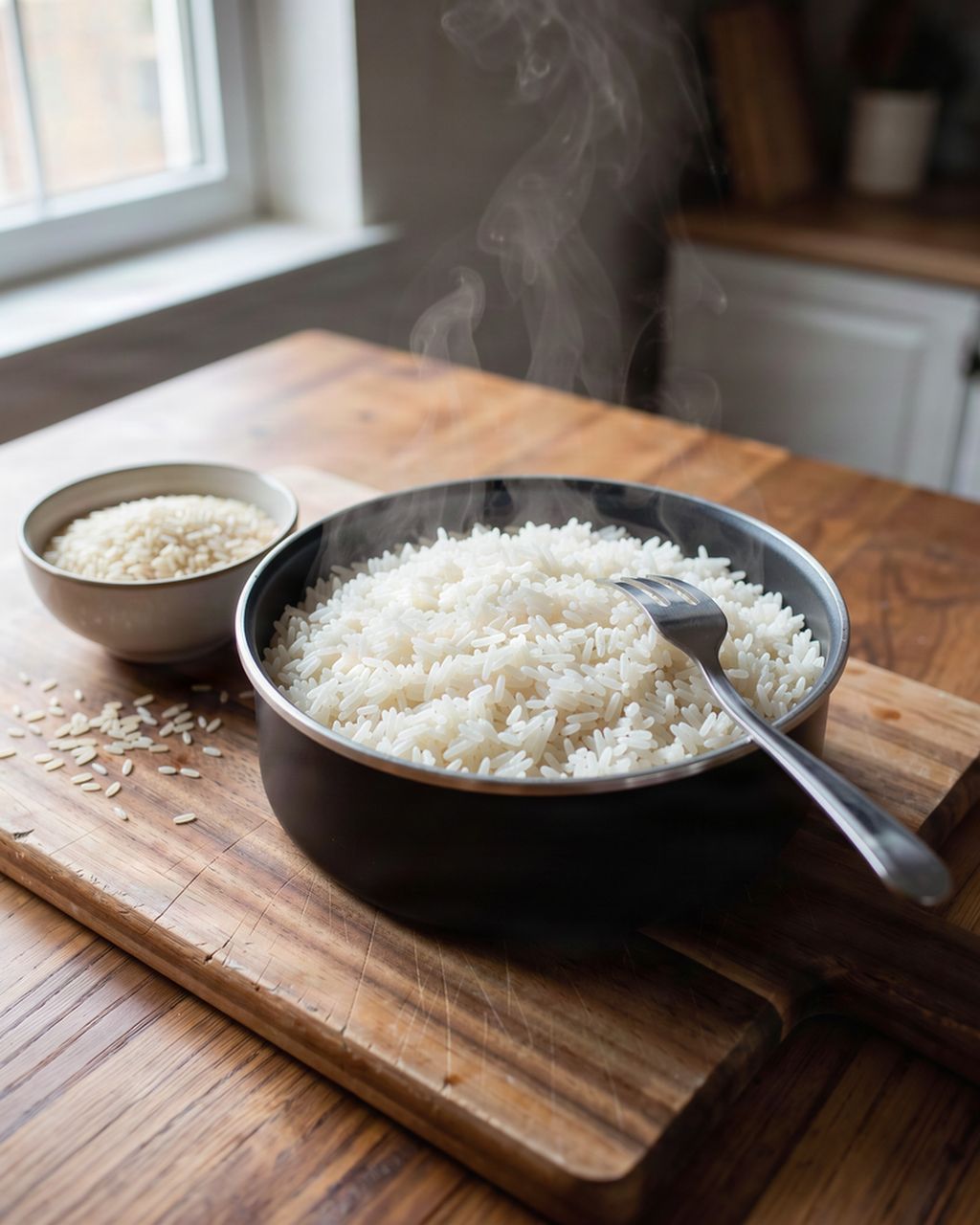
Long-grain (basmati, jasmine, American long-grain): the grains stay separate. Jasmine is a little softer and stickier than basmati.
Medium-grain rice such as Calrose, and risotto rices such as arborio and carnaroli: softer and creamier.
Short-grain (sushi rice, Czech round-grain rice for rice pudding): soft and sticky by nature.
Parboiled rice: the most forgiving, it stays separate even if overcooked a little.
If you cook short-grain rice and want fluffy rice, no amount of rinsing will turn it into basmati. Use a long-grain rice instead.
A rice cooker takes timing and heat out of your hands, so mushy rice there almost always comes from the water.
Using the wrong cup. The cup that comes with many rice cookers is about 180 ml, smaller than a US cup (236.6 ml). If you measured the rice with a US cup and filled water to the line for that number of cooker cups, you have too much water.
Using the wrong line. Many cookers have separate water marks for white, brown and sushi rice.
Leaving it on keep-warm for a long time. The rice keeps softening and drying at the edges. If you won't eat it soon, take it out, cool it quickly and refrigerate it rather than leaving it on keep-warm; Food Standards Scotland advises cooling cooked rice as quickly as possible, ideally within one hour.
Use the cooker's own cup for the rice and its marks for the water.
You can't make mushy rice firm again, but you can save it.
If it is just wet: take off the lid and leave the pan on the lowest heat for a few minutes so the extra water steams away. Then spread the rice on a baking sheet for a few minutes to let it steam off a little more. Spreading it thin also helps it cool faster if you are keeping it. Serve it straight away, or cool it and refrigerate it; Food Standards Scotland advises cooling cooked rice as quickly as possible, ideally within one hour, so don't leave it out for longer than that.
If it is soft and sticky: use it where softness doesn't matter, such as a rice pudding, a soup, rice patties, or stuffed peppers.
If it is truly mushy: treat it like a congee and cook it further with more liquid.
If you plan to keep any rice for later, cooked rice needs care because of Bacillus cereus. Read our guide on how long cooked rice lasts and how to freeze it before you plan a second meal around it.
Rice that is always mushy usually gets too much water for its type, or is stirred while it cooks. Cut the water a little, use the same cup for rice and water, stir once at the start and keep the lid on.
Rinsing helps long-grain rice stay separate because it washes off loose surface starch. It does not fix too much water, and you shouldn't rinse risotto rice, rice for pudding, or US enriched rice.
You can dry slightly wet rice by leaving it uncovered on the lowest heat for a few minutes, then spreading it out on a tray for a few minutes. Eat it straight away, or cool it as quickly as possible (Food Standards Scotland advises ideally within one hour) and then refrigerate it. Food Standards Scotland also says to eat chilled leftover rice within 24 hours and reheat it only once; USDA FSIS advises reheating leftovers to 74 °C (165 °F), checked with a food thermometer. Truly mushy rice can't be made firm again, so use it in rice pudding, soup or patties.
Rice is sticky when its surface starch is released, from stirring, not rinsing long-grain rice, or simply because it is a short-grain or medium-grain rice that is meant to be sticky. For separate grains, rinse long-grain rice and don't stir it.
Mushy rice from a rice cooker nearly always means too much water, often because the rice was measured with a US cup instead of the smaller cup that came with the cooker. Use the cooker's own cup and its water marks.
One recipe worth heating the oven for, one tip, and one deal from the shop. Nothing else.