Why Is My Gelatin Clumping? Blooming, Dissolving, Powder vs Sheets
Why Is My Gelatin Not Setting? Ratios, Fruit, Heat and Alcohol
Updated Nov 21, 2026
Gelatin doesn't set when there is too little of it for the liquid, when it was never fully dissolved, when it was boiled, or when fresh pineapple, kiwi or papaya digested it. Lots of alcohol or a very acidic liquid weakens it too, and it simply needs several hours in the fridge. Here is how to find the cause and rescue the batch.
Liquid all the way through, no set at all: too little gelatin, gelatin never dissolved, or a fruit enzyme.
Soft, wobbly, won't hold a shape: the ratio is a little low, it needs more time, or there is alcohol or a lot of acid.
Set around fresh fruit but liquid next to it: a fruit enzyme. Pineapple and kiwi are the usual suspects.
Gritty grains or rubbery lumps, with a weak set: the gelatin didn't dissolve fully. Our guide to gelatin sheets vs powder covers soaking and dissolving.
Recipe of the week, one tip that saves you time and one deal from the shop. Unsubscribe in one click.
The next issue goes out on Thursday, November 26.
This is the most common cause. Knox, the US gelatin brand, says one envelope of its unflavored gelatin (about 7 g) gels 2 US cups (about 475 ml) of liquid. That is Knox's standard ratio. For a firmer jelly that holds its shape well out of a tall mold, many recipes use a little more.
Things that throw the ratio off:
Sheets vs powder. Sheet gelatin comes in different strengths (bloom grades), and a sheet from one brand may not equal a sheet from another. Our guide to gelatin sheets vs powder converts between them, and gelatin bloom strength explains the numbers on the packet.
A European recipe with a different product. Czech and German recipes often use gelatine sheets or a sachet of powdered gelatin sized for a set amount of liquid. Check the packet.
Extra liquid added later, such as juice from fruit or a splash more cream.
Agar used as if it were gelatin, or the other way around. They work differently; our guide to gelling agents explains.
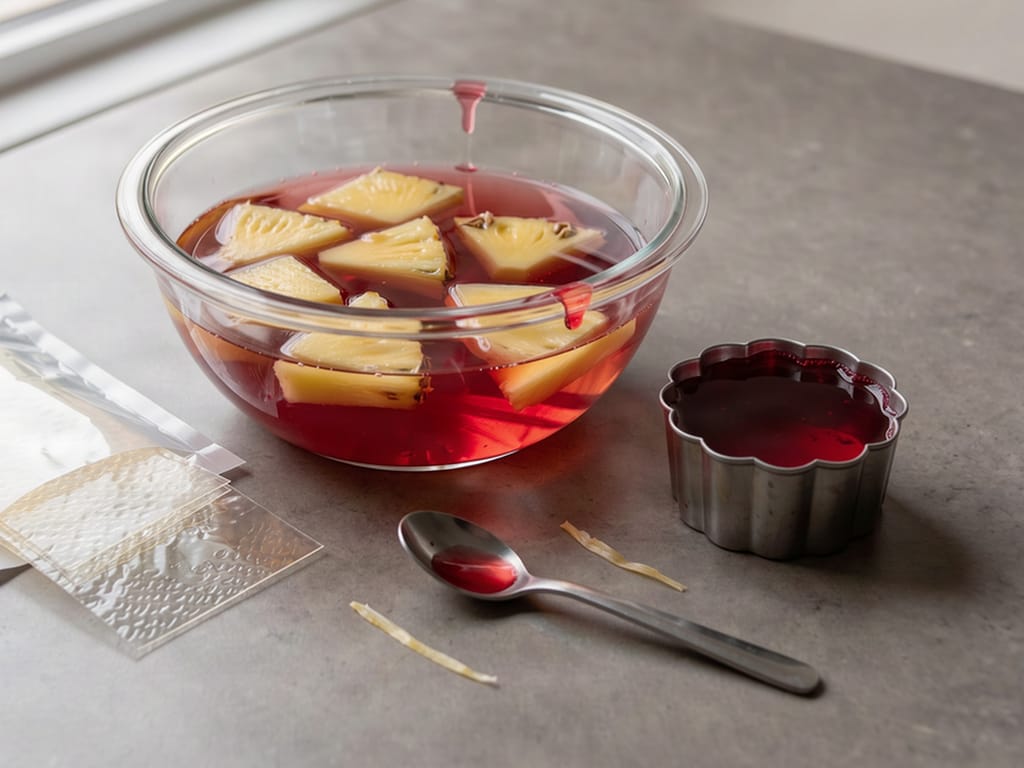
Some fruits contain enzymes that cut proteins apart, and gelatin is a protein. Fresh pineapple has bromelain, kiwi has actinidin, and papaya has papain. Knox also lists fresh figs and prickly pears. The enzyme chops the gelatin strands faster than they can form a gel, so the jelly stays liquid around the fruit.
What works:
Canned pineapple is fine, because canning heats the fruit and destroys the enzyme. Heat-pasteurized pineapple juice from a carton usually works too. Fresh-squeezed and cold-pressed (high-pressure processed) juices are not heated, so they can still stop the set.
Cooking the fruit. Knox says boiling the peeled, cut-up fruit for 5 minutes usually inactivates the enzymes, but it makes an exception for kiwi, which can still cause trouble.
Kiwi on top. The easiest fix for kiwi is to arrange it on the set jelly just before serving.
If you want a set with raw tropical fruit, agar is not affected by these enzymes. See what to use instead of gelatine.
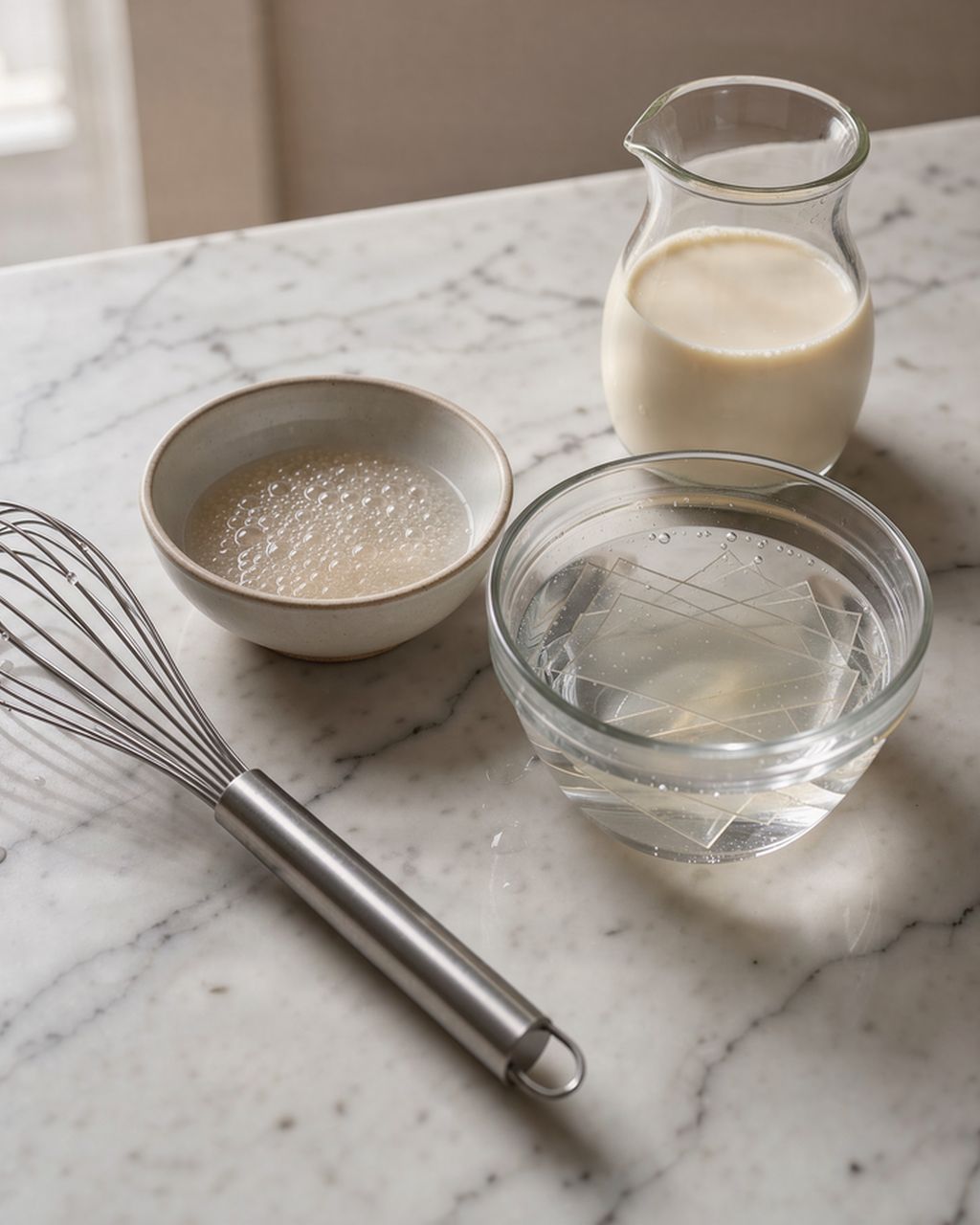
Gelatin needs two steps: blooming in cold liquid, then dissolving in warm liquid.
Not dissolved: if you can see grains or feel grit, some of the gelatin never joined the liquid, so the set is weaker than the ratio promises. Warm the mixture gently and stir until it is completely clear.
Boiled: Knox warns that boiling can destroy gelatin's gelling ability, and advises dissolving it in hot but not boiling liquid. A brief accidental boil may only weaken the set; boiling for a long time can ruin it. Warm cream or milk to steaming, take it off the heat, then stir in the bloomed gelatin.
Added to a cold mixture too fast: warm gelatin poured into a cold base can set into strings before it spreads. Stir a spoonful of the base into the gelatin first, then pour it back in while stirring.
Gelatin in a whipped or creamy dessert has more to fight against than in a clear jelly.
Air and fat dilute it. Whipped cream, mascarpone and cream cheese add volume, so the gelatin is spread through more mixture than the liquid amount suggests. Follow the recipe's amount rather than the packet's liquid ratio.
Strings instead of a set. Warm gelatin poured into a cold cream sets into threads on contact instead of spreading through. Temper it: stir a few spoonfuls of the cold mixture into the gelatin first, then fold it back in.
Collapsed whipped cream. If the cream was overwhipped or folded too roughly, the mousse slumps even with enough gelatin.
Fresh fruit purée. Pineapple, kiwi and papaya purées break down gelatin in a mousse just as they do in a jelly.
Mousse cakes and set cream fillings also need longer in the fridge than a thin jelly, because they are thick and start out cold.
Alcohol. A small splash is fine, but a lot of spirits weakens gelatin, and very strong mixes may not set. Boozy jellies need more gelatin. Our guide to jello shots gives amounts by alcohol level. Alcohol stirred into a cold jelly stays in it in full, so make an alcohol-free batch for anyone who avoids it.
Acid. Very sour liquids, such as lots of lemon juice, soften the set. Add a little more gelatin or balance the acid.
Not enough time or cold. Gelatin firms slowly and keeps firming for hours. Chill it covered, in the fridge, for several hours, and overnight for a big or deep mold. Don't leave it in the freezer to speed things up: if it freezes, ice crystals ruin the texture.
Warm it gently in a pan until it is liquid again. Don't boil it.
Bloom extra gelatin in a little cold water. As a rough guide, add about a quarter to half of the original amount, depending on how soft it is.
Dissolve the bloomed gelatin in the warm mixture, stirring until clear.
Pour it back into the mold and chill it again, covered, in the fridge.
If raw pineapple or papaya was the cause: strain out the fruit, bring the liquid to a full boil for a few minutes, let it cool a little, then dissolve fresh bloomed gelatin in it. Add canned or cooked fruit instead.
If kiwi was the cause: boiling may not be enough, because Knox says the kiwi enzyme can survive it. Start again with fresh liquid.
For creamy desserts such as panna cotta, the same fix works; warm it gently and stir carefully so the cream doesn't split.
Gelatin usually doesn't set because there is too little for the amount of liquid, it wasn't fully dissolved, it was boiled, or raw pineapple, kiwi or papaya broke it down. It also needs several hours of chilling. Check the ratio first: Knox says one envelope gels 2 US cups (about 475 ml) of liquid.
Yes, gelatin that didn't set can usually be rescued. Warm it gently until liquid, dissolve some extra bloomed gelatin in it, and chill it again. If raw pineapple or papaya was the cause, strain out the fruit, bring the liquid to a full boil for a few minutes, then dissolve fresh bloomed gelatin in it. If kiwi was the cause, boiling may not be enough, so start again with fresh liquid.
Fresh pineapple contains bromelain, an enzyme that cuts gelatin's proteins apart so it can't form a gel. Canned pineapple works because canning heats the fruit and destroys the enzyme. Kiwi, papaya and fresh figs cause the same problem.
Gelatin usually takes several hours in the fridge to set firm, and a large or deep mold may need overnight. A thin layer sets faster. If it is still liquid after a long chill, the ratio or a fruit enzyme is more likely to blame than time.
Boiling can weaken gelatin's setting power, which is why Knox advises dissolving it in hot but not boiling liquid. Dissolve it gently, and don't keep a gelatin mixture boiling.
A lot of alcohol weakens gelatin and can stop it setting, so boozy jellies need more gelatin than plain ones. Our jello shots guide gives amounts by alcohol strength.
One recipe worth heating the oven for, one tip, and one deal from the shop. Nothing else.