Panna cotta
Panna Cotta Step by Step: How to Make a Perfectly Creamy Dessert

Updated Nov 15, 2026
For a panna cotta made with 500 ml (about 2 cups) of cream, you need 5–6 g of 200 Bloom sheet gelatin (3 gold sheets of 2 g each) if you want to unmold it, and just 3–4 g if you serve it in a glass and want it to wobble gently on the spoon. Panna cotta is an Italian dessert of cream warmed with sugar and vanilla and set with just a touch of gelatin: velvety, creamy and made from a handful of ingredients. The whole trick is in the details: how much gelatin to weigh out, how to heat the cream without boiling it, how long to chill the dessert and how to unmold it without it tearing. We'll go through it step by step, including agar instead of gelatin and the reasons why panna cotta doesn't set or turns rubbery.
Panna cotta is a traditional Italian dessert from northern Piedmont. It is cream warmed with sugar and vanilla and set with gelatin into a velvety, creamy, gently wobbling texture. The name literally means "cooked cream," and it is exactly that simple.
Its roots lie in the Langhe and Monferrato hills, where there was always plenty of cream. Under the name panna cotta, however, the dessert only appears in Italian cookbooks in the 1960s. In 2001 the region added it to its list of traditional food products.
The base is always the same: good cream flavored with vanilla or lemon zest. The rest is up to you, whether chocolate, coffee, matcha or fruit sauces. That's why panna cotta works in a restaurant as well as at home for guests. And because it's made a day ahead, there's no work left when it's time to serve.
Panna cotta
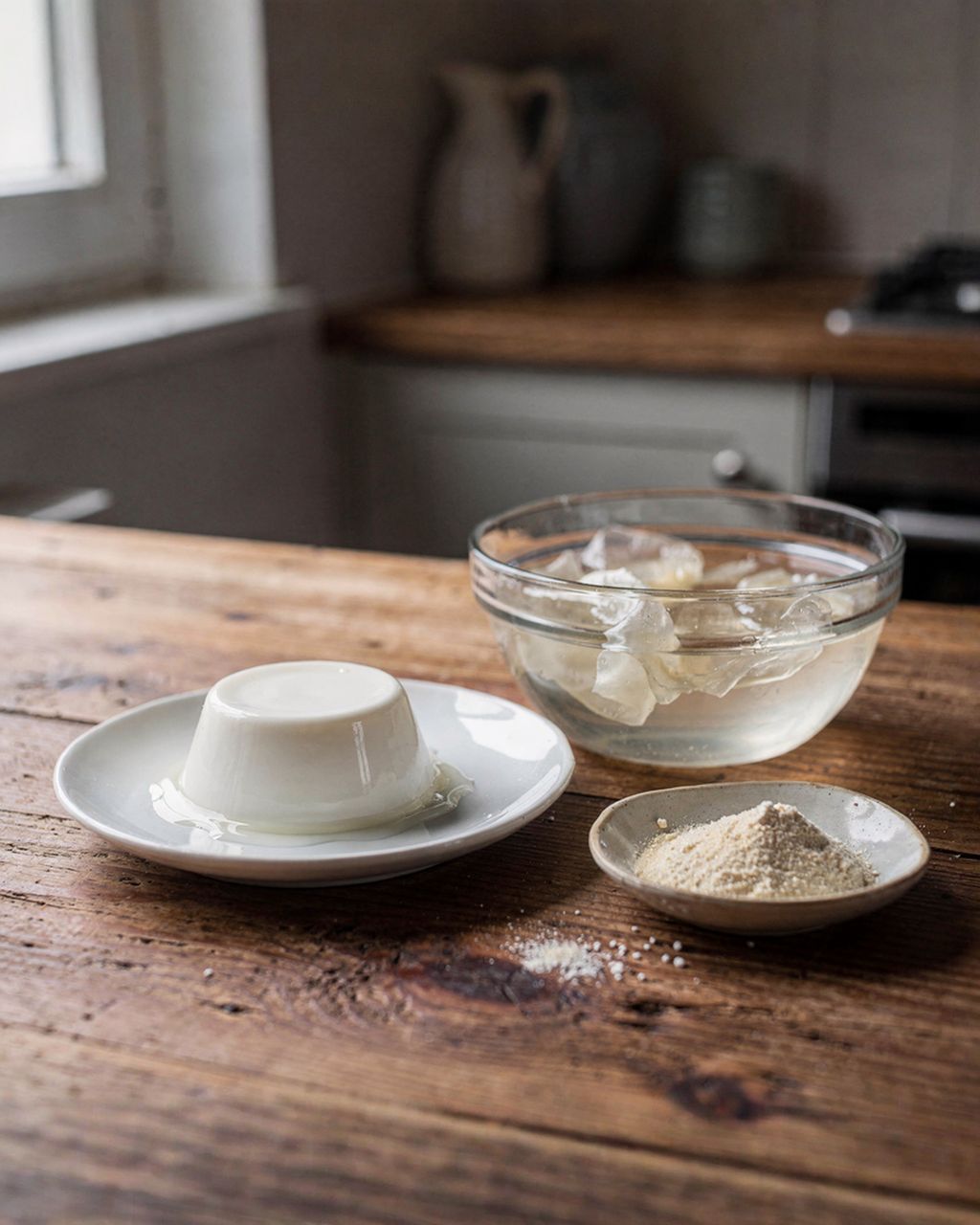
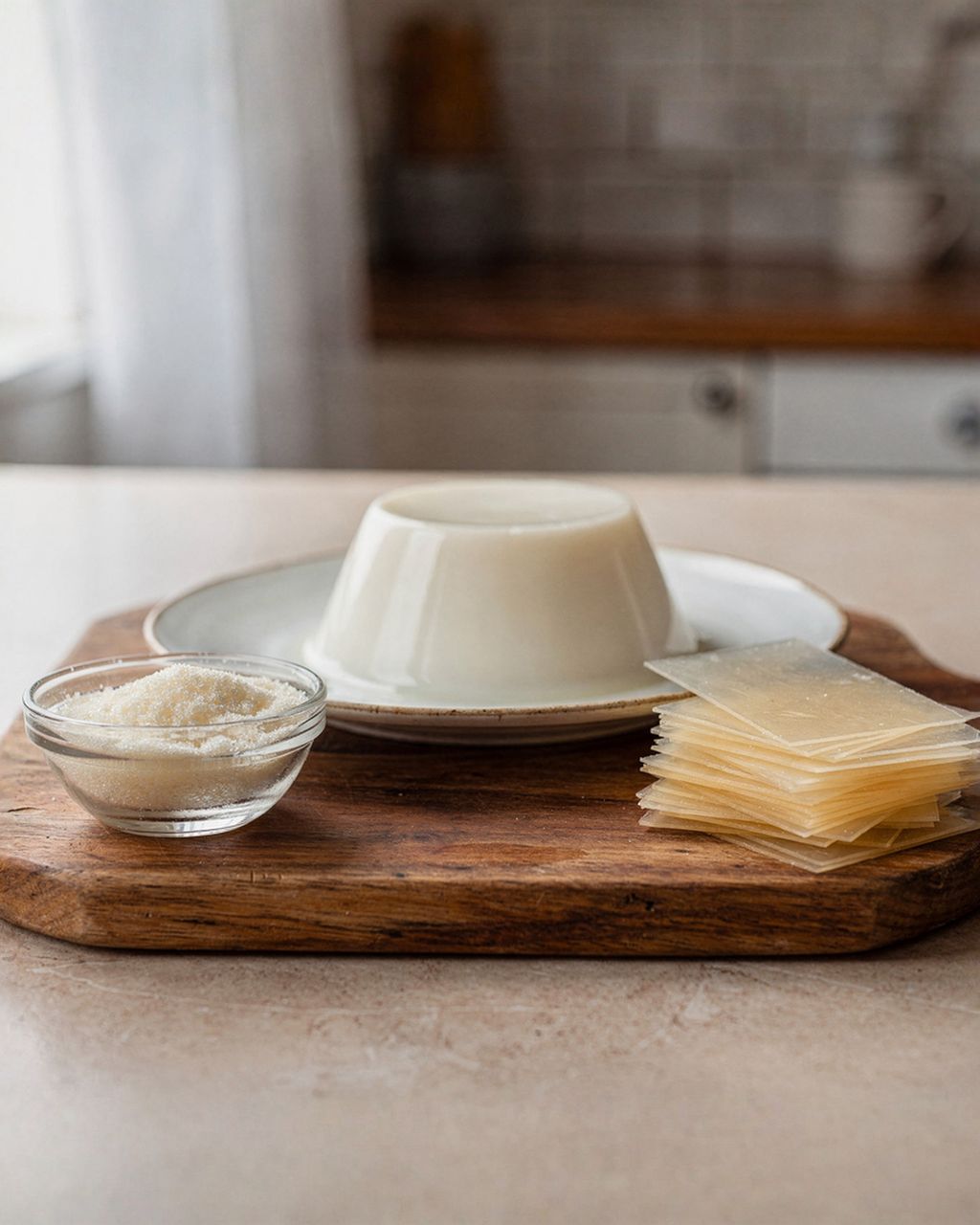
The basic panna cotta recipe we build on in this article
Seasonal baking plans, tested recipes and kitchen tricks that save you time. Unsubscribe in one click.
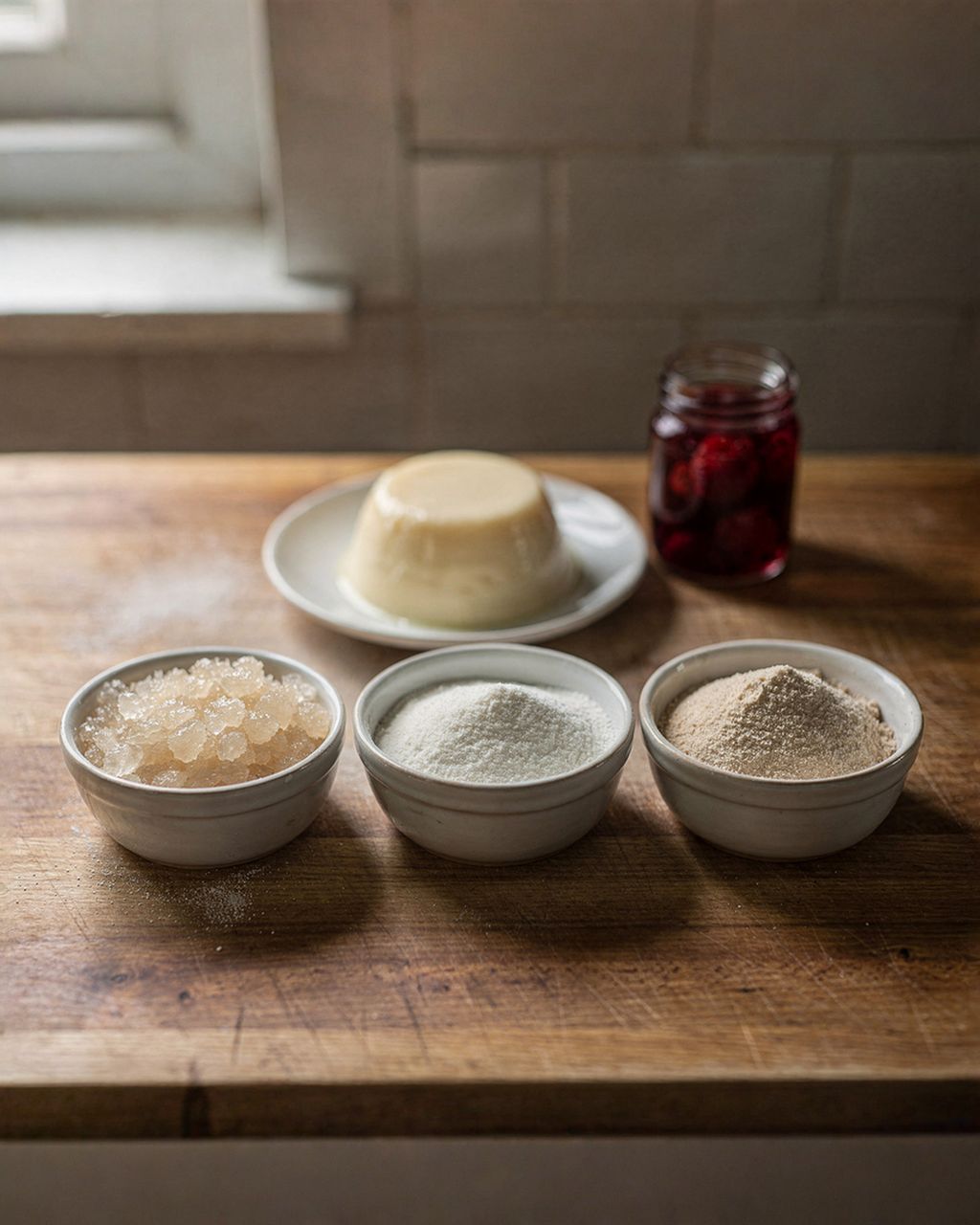
Classic panna cotta rests on four ingredients: whipping cream (legally at least 30% fat, ideally 33–36%), gelatin (or agar), sugar and vanilla. The fewer the ingredients, the more each one shows in the result.
Cream: the star of the show, it provides creaminess. Count on 500 ml for 4–5 servings.
Gelatin: holds the shape but shouldn't be noticeable. 3–6 g, depending on whether you unmold the dessert.
Sugar: balances and softens the flavor. Usually 50–70 g per 500 ml.
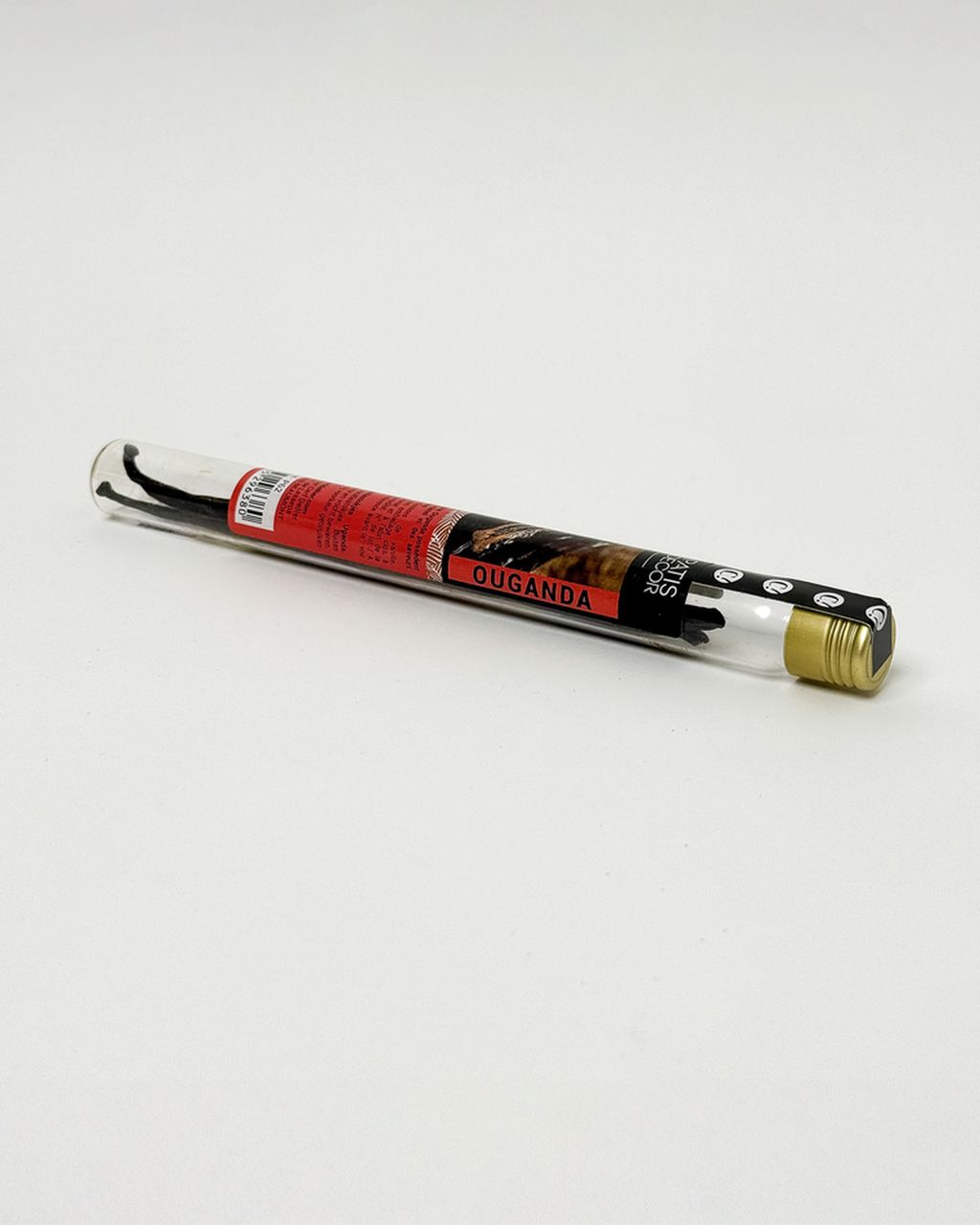
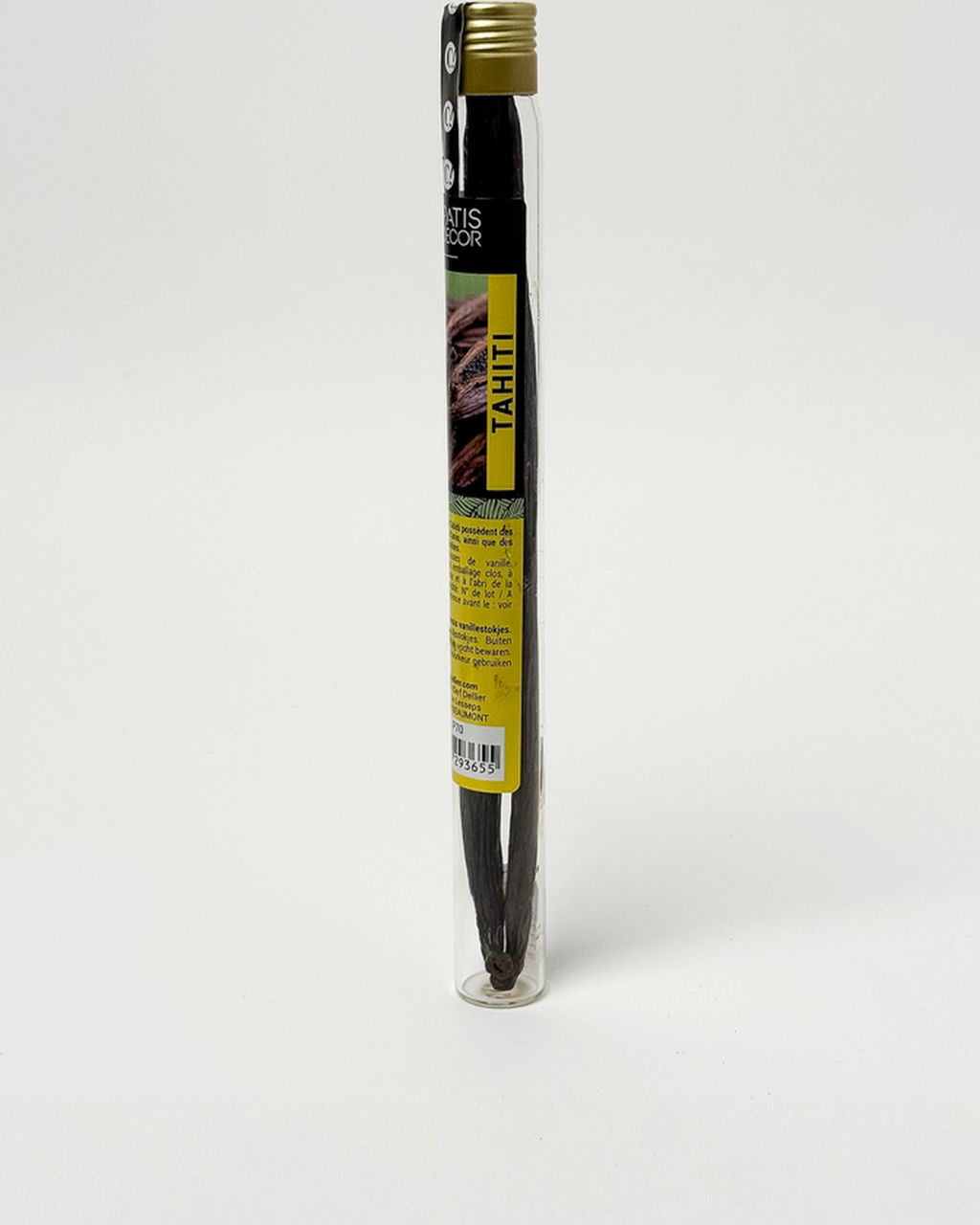
Vanilla: gives that typical aroma. One bean is enough.
For panna cotta, use whipping cream, ideally with 33–36% fat. The more fat, the smoother and fuller the result. If you want a lighter, less rich texture, you can replace up to a fifth of the cream with whole milk: for example 400 ml of 36% cream and 100 ml of milk, which comes to roughly 30% fat in the whole mixture. Don't go below that, or the panna cotta starts to taste watery and more like pudding. For a plant-based version, canned full-fat coconut milk works best, not the coconut drink in a carton.
For 500 ml of cream, use 5–6 g of sheet gelatin (200 Bloom) if you want to unmold the panna cotta, and 3–4 g if it stays in a glass. No more. A good panna cotta is right on the edge: it holds its shape but wobbles on the plate.
Unmolded panna cotta: 5–6 g per 500 ml, which is 3 gold sheets of 2 g each.
Panna cotta in a glass: 3–4 g per 500 ml, which is 2 gold sheets. It's silkier and trembles gently on the spoon.
With lower-fat cream or acidic fruit inside: add roughly 1 g extra, because acid and water weaken the gel.
Pay attention to which gelatin you have. The grams in recipes apply to a specific gel strength called Bloom. Gold sheets are around 200 Bloom and weigh 2 g, platinum sheets are about 250 Bloom and weigh only 1.7 g. Manufacturers set the sheet weight so that one sheet sets roughly the same amount of liquid. So if you're counting sheets, the label hardly matters. If you're weighing grams, Bloom is what decides. For how to convert a recipe to a different strength, see the article Gelatin Bloom: what the number means and how to convert it.
Powdered gelatin works the same way, it's just prepared differently. At the same Bloom, you use it gram for gram. The differences between sheets and powder and how to soak them properly are explained in the guide to using gelatin.
For 500 ml of cream, 2 g of agar powder is enough instead of gelatin for glasses, and 2.5–3 g for unmolding. Agar is a plant-based, vegan alternative made from seaweed and is much stronger, hence the small numbers. Weigh it on a digital scale accurate to 0.1 g; you can't measure it precisely with a spoon.
Agar behaves completely differently from gelatin:
It has to be boiled. Stir it into cold cream, bring to a boil and simmer gently for 1–2 minutes, stirring constantly. Agar that is only warmed won't set.
It sets fast and while still warm. The gel forms at around 35–40°C (95–104°F), so pour the mixture into the molds right away. If it starts to set in the pot, just warm it again, because agar only melts at around 85°C (185°F).
The texture is different. Agar panna cotta is firmer and more brittle; it tends to break rather than wobble. If you want a softer result, stay at the lower end of the amount.
Agar flakes are weaker than powder: count roughly 1 tablespoon of flakes in place of 1 teaspoon of powder, and follow the dosage on the package.
For more on the differences between agar, gelatin and pectin, see the article Types of gelling agents: pectin, agar and gelatin.
For a panna cotta made with 500 ml of cream, use 50–70 g of sugar. Sugar sweetens and at the same time softens the flavor of the cream. Plain white granulated or powdered sugar is fine; it has a neutral taste and won't overpower the vanilla. If you're preparing a sweet sauce for the panna cotta, such as caramel, reduce the base by about 15 g (one tablespoon). For tart raspberries, on the other hand, you can go to the upper end.
A vanilla bean is best for panna cotta, and pure extract is a convenient second choice. Split the vanilla bean lengthwise, scrape out the seeds and put the empty pod into the warm cream as well. Let it steep for at least 15 minutes with the lid on, then fish it out. One bean is enough for 500 ml of cream. Add vanilla extract (1–2 teaspoons) only at the end so the aroma doesn't evaporate. Use vanillin sugar only in an emergency; the flavor will be noticeably flatter.
Don't throw away the steeped pod. Rinse it, let it dry and tuck it into a jar of sugar. In a few weeks you'll have your own vanilla sugar.

You make panna cotta in four steps: warm the cream with the sugar and vanilla to 70–80°C (160–175°F), stir in the soaked gelatin, let the mixture cool to about 30°C (86°F), and chill it in the fridge for 4–6 hours or overnight.
Slowly warm the cream with the sugar and vanilla to 70–80°C (160–175°F), but don't boil it.
Take it off the heat and stir in the soaked and squeezed-out gelatin until it dissolves completely.
Let the mixture cool to about 30°C (86°F), stirring occasionally, so the vanilla seeds don't sink to the bottom.
Pour into molds and chill in the fridge for at least 4 hours (in a glass), or 6 hours to overnight for unmolding.
The whole job takes 15 minutes, and the fridge does the rest. Below are the details that make or break it.
Heat the cream for panna cotta to 70–80°C (160–175°F), not to a boil. Warm it slowly over medium heat and stir: steam starts to rise from the surface and the first tiny bubbles appear at the edge. It shouldn't boil vigorously. Boiling needlessly thickens and reduces the cream, it scorches at the edge and forms a skin on the surface that you'd later find in the dessert as lumps. This stage dissolves the sugar and steeps the vanilla. If you don't have a thermometer, go by those first bubbles at the edge of the pot and take it off the heat right away.
Let the gelatin bloom in cold water, squeeze it out and dissolve it in hot cream taken off the heat, ideally at 60–80°C (140–175°F). Soak sheet gelatin for 5–10 minutes in a bowl of very cold water, then squeeze it out. Stir powdered gelatin into five times its weight in cold water (25 ml for 5 g of powder) and let it bloom for 5 minutes. At 60–80°C, gelatin dissolves in the cream within seconds. Stir until the mixture is completely smooth, with not a single grain left. Then strain it through a fine sieve to be safe. That also catches any skin and the vanilla pod.
Don't add gelatin to lukewarm cream below about 50°C (122°F); it won't dissolve properly and rubbery strings will remain in it.
Panna cotta sets in the fridge in at least 4 hours in a glass and at least 6 hours, ideally overnight, if you want to unmold it. Before it goes in the fridge, let the finished mixture cool to about 30°C (86°F), stirring occasionally (it should feel lukewarm to the touch), and only then pour it into molds or glasses. There are two reasons: the vanilla seeds stay suspended instead of sinking to the bottom, and no condensation forms on the surface in the fridge. Then cover the dessert and put it in the fridge:
in a glass for at least 4 hours,
for unmolding for at least 6 hours, ideally overnight.
Gelatin gel keeps firming up for a long time after it first sets, most of all during roughly the first 12–18 hours. Panna cotta holds a little better the next day than in the evening. That's why it's an ideal dessert to make a day ahead.
Panna cotta most often fails to set because of too little gelatin, too short a chill, boiled gelatin or raw fruit with enzymes. It turns rubbery when you used too much gelatin or took the amount in grams from a recipe for a weaker Bloom. Here are all the mistakes and how to avoid them.
Unset, runny panna cotta: too little gelatin, gelatin boiled in the mixture, or you took the dessert out of the fridge too soon. Weigh precisely, don't boil, and chill for at least 4–6 hours.
Raw fruit with enzymes: fresh pineapple, kiwi, papaya, figs and ginger contain enzymes that break gelatin down. Add purées of these only cooked, or set the layer with them using agar, which the enzymes don't bother.
Too firm, rubbery texture: too much gelatin, or a stronger gelatin weighed in grams according to a recipe for a weaker one. Stick to 3–6 g per 500 ml and rather use less. A good panna cotta wobbles gently on the plate.
Lumps and strings of gelatin: the gelatin didn't dissolve completely, or it went into lukewarm cream. Stir until the mixture is smooth and strain it through a fine sieve.
Grainy surface or skin: the cream came to a boil or caught on the bottom. Watch the temperature and strain.
Vanilla seeds at the bottom and two layers: the mixture went into the molds too hot. Let it cool to about 30°C (86°F) and only then pour.
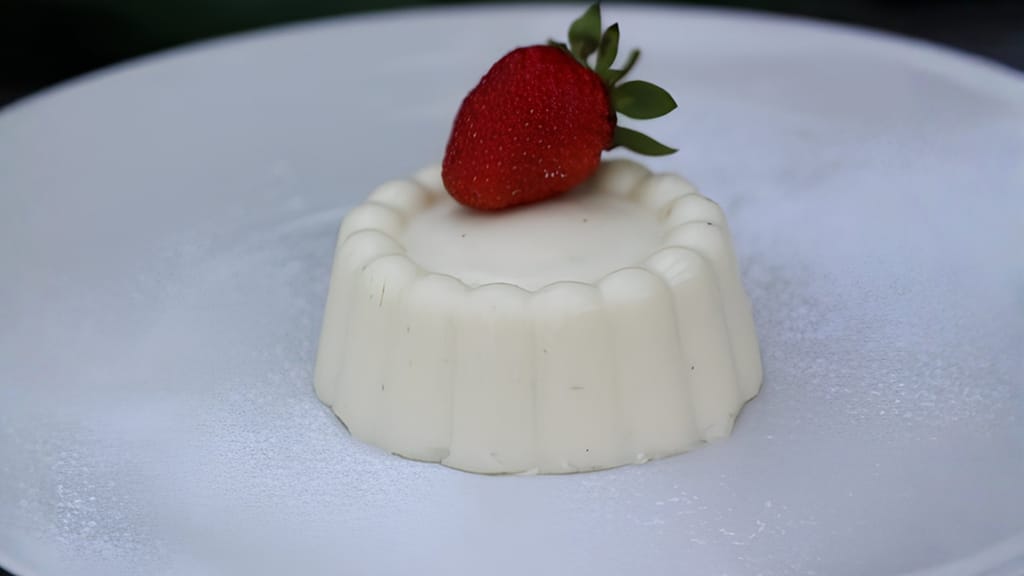
Panna cotta unmolds cleanly when it has the unmolding amount (5–6 g of gelatin per 500 ml), has sat in the fridge for at least 6 hours, and you dip the mold in hot water for 5–10 seconds. Then you just cover it with a plate and flip.
Prepare the mold ahead. Before pouring, wipe it with a thin layer of neutral oil and blot off the excess with a paper towel. The surface stays smooth and the dessert releases more easily.
Loosen the edge. Gently push the top edge away from the wall with a finger, or run a thin knife around it. This lets air under the dessert and breaks the vacuum.
Briefly into hot water. Dip the mold up to the rim in water at 50–60°C (122–140°F). A metal one for 5 seconds, a ceramic or glass one for 10 seconds, because it conducts heat more slowly. No longer, or the surface melts.
Cover and flip. Dampen the plate with a few drops of water, place it over the mold and turn both over decisively. Shake briefly and the panna cotta slides out. On a wet plate you can still nudge it to the center.
A silicone mold doesn't get dipped in water. Just peel it away from the edges and push the dessert out.
If it won't let go, put the mold back in the water for another 3–4 seconds; don't try to pry it out. Put the unmolded panna cotta back in the fridge for 10–15 minutes so the surface firms up again.
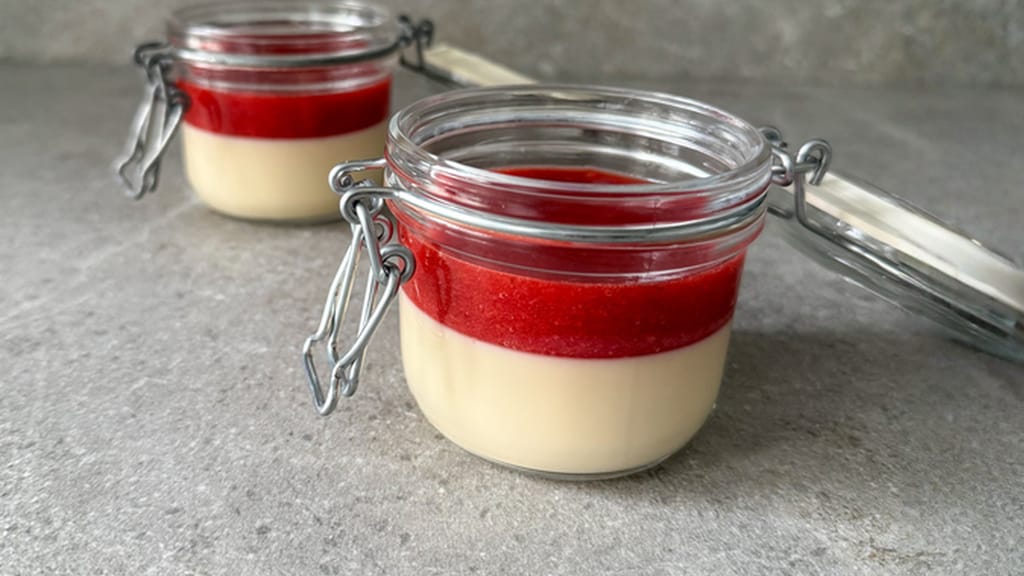
Panna cotta: a simple italian dessert ready in no time
Quick panna cotta, ready in no time when you're in a hurry for dessert
Homemade panna cotta keeps in the fridge for 2–3 days, covered and at a temperature up to 4°C (40°F). It's a cooked cream dessert without preservatives, so rules similar to those for puddings and custards apply. FoodSafety.gov gives 3–4 days at up to 4°C (40°F) for cream and pudding pies, so 2–3 days is a recommendation with a safety margin.
Cover it with plastic wrap or a lid, because cream easily absorbs odors from the fridge.
Out of the fridge, 2 hours at most in total; according to FoodSafety.gov, chilled food should be thrown out after that. In a warm room or outdoors in the sun, count on a shorter time.
Add sauce and fruit only just before serving, because fruit releases juice and makes the surface soggy.
We don't recommend freezing it. On thawing, the gelatin gel releases water and the creamy texture turns grainy.
If the panna cotta smells sour, tastes sour or has liquid on the surface that wasn't there before, don't eat it.
Panna cotta looks best when you let its clean surface stand out and add one contrasting element: tart fruit, a sauce or something crunchy. Less is more; one color and one extra texture are plenty. It's best 10 minutes after coming out of the fridge, when it softens a little and the flavor of cream and vanilla opens up more.
Serve panna cotta on small white plates or in clear glasses of 100–150 ml. Simple dishes let the color and smooth surface of the dessert stand out. Rustic ceramics with a subtle pattern work too, as long as they don't upstage the panna cotta itself. In a glass you can let the panna cotta set at an angle (prop the glass against the rim of a bowl in the fridge) and top up with a second layer of fruit purée to level it. The effect takes almost no work.
Tart fruit such as raspberries, blueberries, currants or strawberries goes best with panna cotta, along with fresh herbs such as mint, lemon balm or basil. Fruit adds a color contrast and acidity that balances the sweet cream and keeps the dessert from feeling heavy. A herb leaf adds aroma and a fresh look. In autumn try roasted plums or pears, in winter citrus segments.
A berry coulis or caramel sauce suits panna cotta best: the coulis adds acidity and color, the caramel depth. A coulis takes just a few minutes: warm 250 g of raspberries with 30–40 g of sugar and a tablespoon of lemon juice, blend and strain out the seeds. A few strokes of a spoon on the plate are then enough. For more on impressive plating, see the article plating desserts like a Parisian pastry shop.
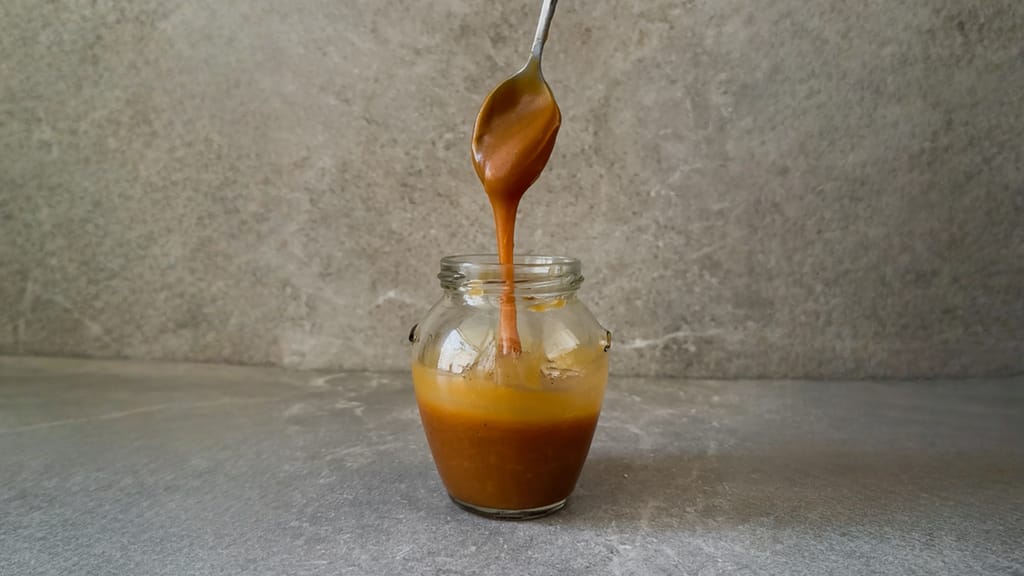
Homemade caramel sauce with just 4 ingredients
Homemade caramel sauce from 4 ingredients, an ideal topping for panna cotta

You can vary panna cotta by swapping the liquid, the flavoring or by layering. Tried-and-true directions: plant-based (coconut and agar), coffee, matcha, seasonal spices and layering with fruit purée. The amount of gelatin stays the same; only the flavor changes.
Make plant-based panna cotta from 500 ml of canned full-fat coconut milk and 2 g of agar, which you have to simmer for 1–2 minutes. Coconut adds a subtly exotic flavor, and agar makes sure the dessert sets even without animal gelatin. Almond or oat drink gives a thinner result because it doesn't have enough fat itself. Combine it with coconut cream at a ratio of at least 1:1.
For coffee panna cotta, stir 1–2 shots of espresso (30–60 ml) or strong coffee extract into the warm cream and add 5–10 g of extra sugar. The extra liquid slightly dilutes the gel, so add roughly 0.5 g of gelatin. For the matcha version, whisk ½–1 teaspoon of matcha (about 1–2 g) with a little warm cream until smooth, then stir it into the rest. It gives a green color and a mildly bitter taste that nicely balances the sweetness.
Flavor seasonal panna cotta with spices steeped in the cream, and make a layered one by alternating panna cotta and fruit purée, with each layer setting for 30–60 minutes. In autumn, steep cinnamon, nutmeg or cloves in the cream and the dessert gets a warm, spiced note. In summer try lemon zest or a few lavender leaves. For contrasting textures, layer panna cotta with raspberry or mango purée and top it with something crunchy, such as granola or toasted nuts. Let each layer set for at least 30–60 minutes before pouring the next, and pour the new layer only lukewarm so it doesn't melt the one below.
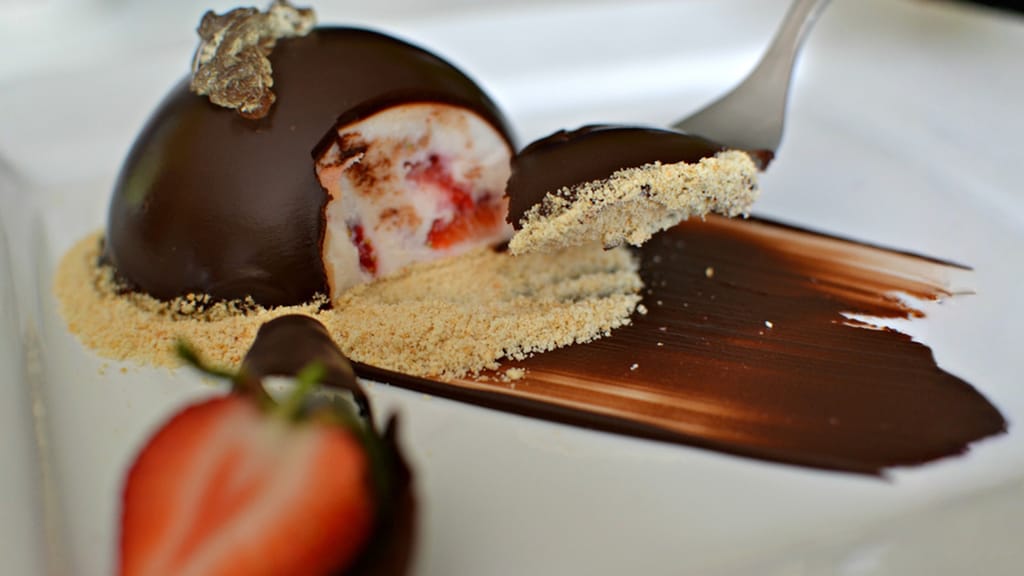
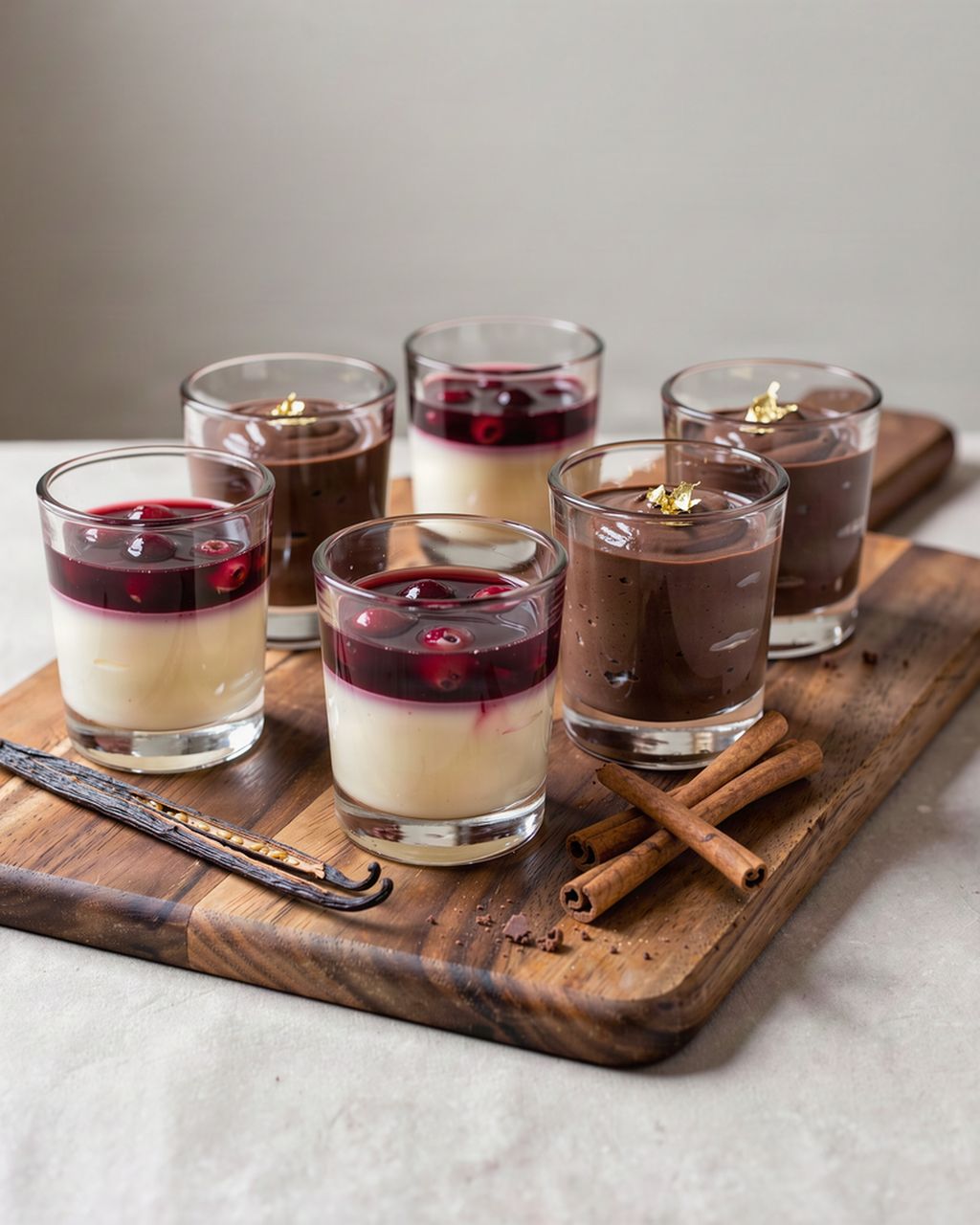
Strawberry panna cotta with chocolate and mint jelly
Strawberry panna cotta with chocolate and mint jelly: a layered twist on the classic
No, classic panna cotta is egg-free. It sets thanks to gelatin, not to cooked yolks like crème brûlée or baked custard. That makes it easier to prepare and gives a pure cream flavor, which people who avoid eggs will appreciate.
Classic panna cotta isn't vegetarian, because gelatin is made from pork or beef skins and bones. You can make a vegetarian or even vegan version with agar: 2 g per 500 ml of liquid (2.5–3 g for unmolding). For the vegan one, use canned full-fat coconut milk instead of cream.
You can rescue an unset panna cotta by returning the mixture to the pot, warming it gently to 60–70°C (140–158°F) and stirring in 1–2 g of extra soaked and squeezed-out gelatin. Then strain it, pour it back into the molds and let it set for at least another 4–6 hours. If the dessert was set with agar, simply bring the mixture back to a boil and add 0.3–0.5 g of agar.
You can make panna cotta with milk alone, but the result will be more of a milk jelly than a creamy dessert. Milk lacks the fat that gives the velvety texture, so the dessert is thinner and less full. If you try it, add roughly 1 g of extra gelatin per 500 ml of milk, and expect it to taste better in a glass than unmolded.
Panna cotta releases water when the gel is weak or damaged: too little gelatin, acidic fruit mixed right into the dessert, freezing or storing it for too long. Weigh the gelatin precisely, add fruit and sauce only just before serving, and don't freeze panna cotta. A drop of liquid after a few hours is fine, but if it appears after several days together with a sour smell, throw the dessert away.
500 ml of cream makes 4–5 servings of 100–120 ml, the usual size of a dessert mold or glass. For smaller portions in shot glasses or for a dessert table, count on 8–10 pieces of 50–60 ml each.
One recipe worth heating the oven for, one tip, and one deal from the shop. Nothing else.