Why Is My Gelatin Not Setting? Ratios, Fruit, Heat and Alcohol
Why Is My Gelatin Clumping? Blooming, Dissolving, Powder vs Sheets
Updated Nov 21, 2026
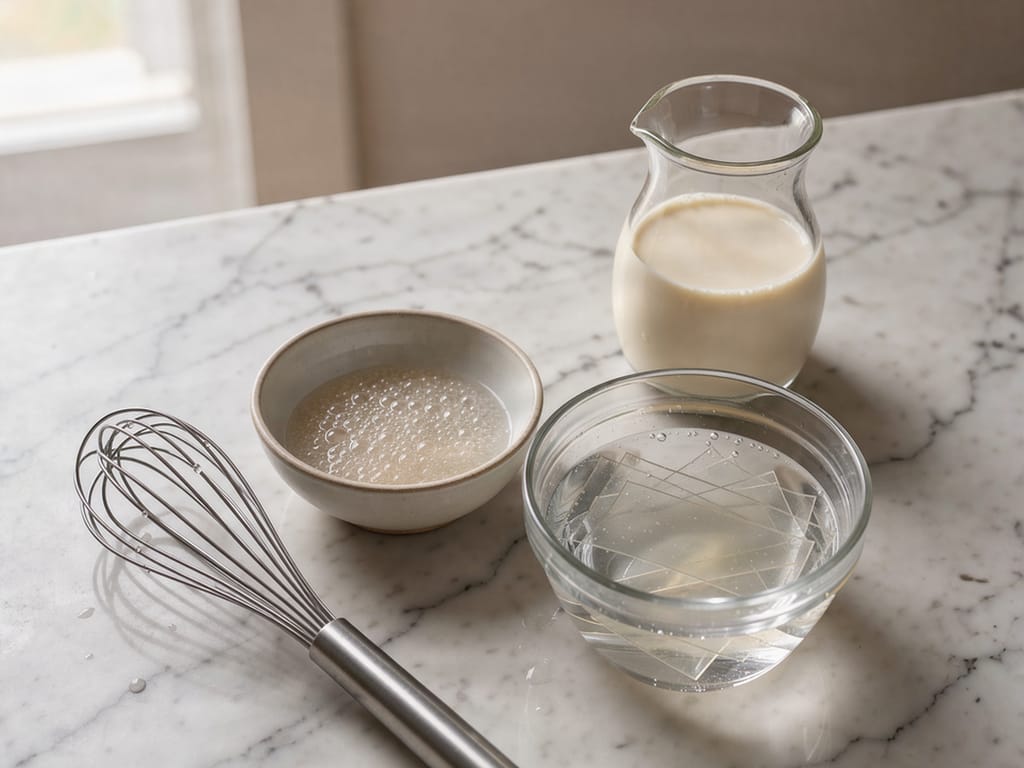
Gelatin clumps when the powder is dumped into liquid or stirred in all at once, when it is added straight to hot liquid without blooming, or when warm dissolved gelatin hits a cold mixture and sets into strings. Sprinkle powder evenly over cold liquid, let it bloom, dissolve it in warm (not boiling) liquid, and temper it into cold bases. Here is each step, for powder and sheets.
Gelatin granules soak up water and swell. If a heap of them meets liquid all at once, the outside of the heap hydrates first and forms a gel skin. That skin stops water from reaching the dry powder inside, and you get rubbery lumps with gritty centers that won't dissolve no matter how much you stir.
The same thing happens if powder goes straight into hot liquid: the outer layer gels and dissolves at once, sealing the rest.
Clumps aren't just a texture problem. Undissolved gelatin doesn't help the set, so a lumpy batch is often also a soft one. If yours is soft as well, check the ratio in our guide to gelatin sheets vs powder.
Seasonal baking plans, tested recipes and kitchen tricks that save you time. Unsubscribe in one click.
Blooming means letting gelatin soak up cold liquid before you heat it.
Measure the cold liquid into a small, wide bowl: water, juice or milk from the recipe. Knox's basics use about 60 ml (¼ US cup) per envelope.
Sprinkle the powder evenly over the surface, in a thin layer. Don't dump it in one spot.
Leave it alone. Don't stir yet. Knox's instructions let it stand for 1 minute; many recipes give it 5 to 10 minutes, which does no harm.
Check it. The powder should look swollen and translucent, with no dry white patches. If a few dry spots remain on top, press them gently into the liquid with a spoon.
A wide bowl matters: in a deep, narrow cup the powder piles up and clumps.
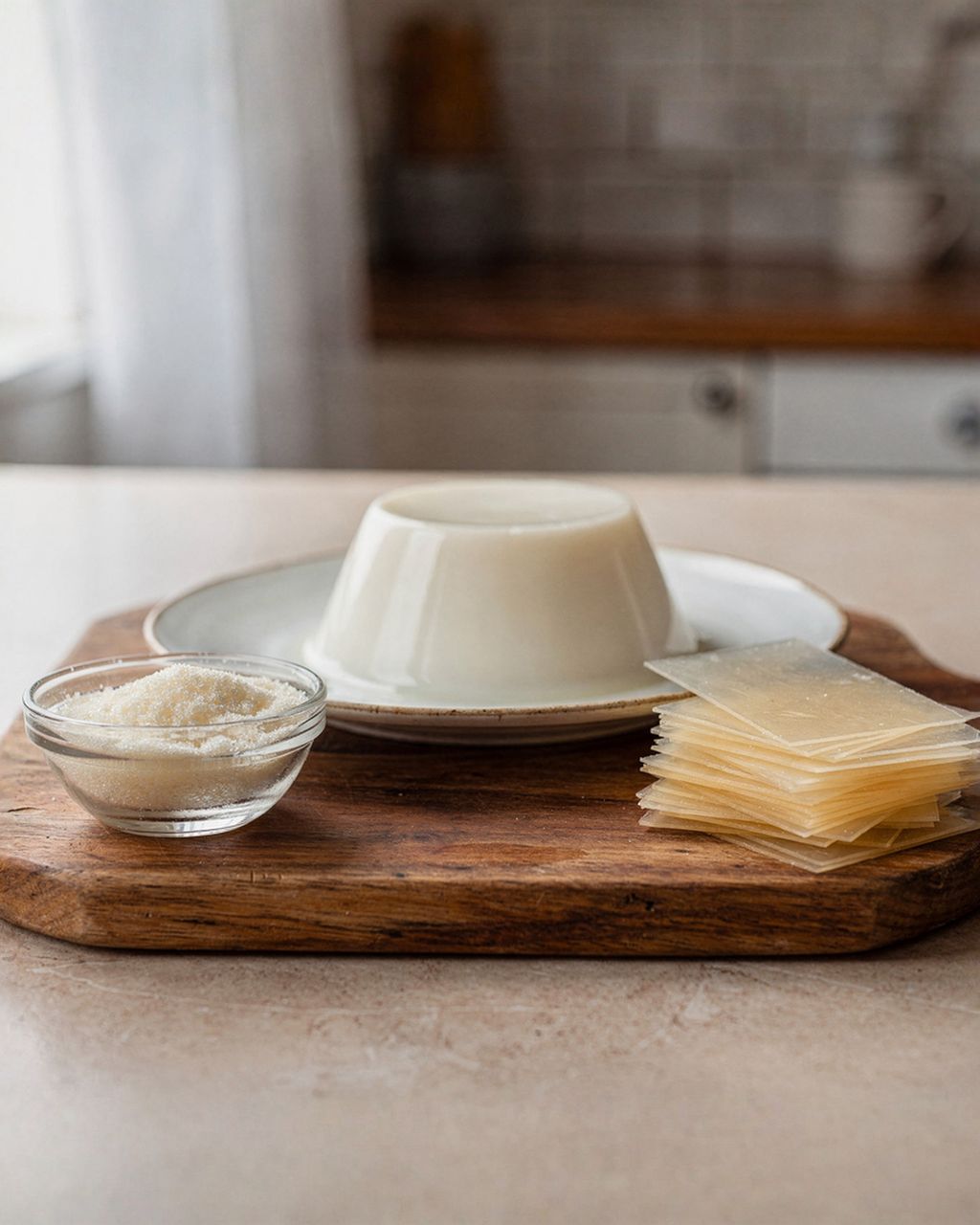
Gelatine sheets (leaf gelatin) are widely used in Central European, especially German, baking, and rarely clump.
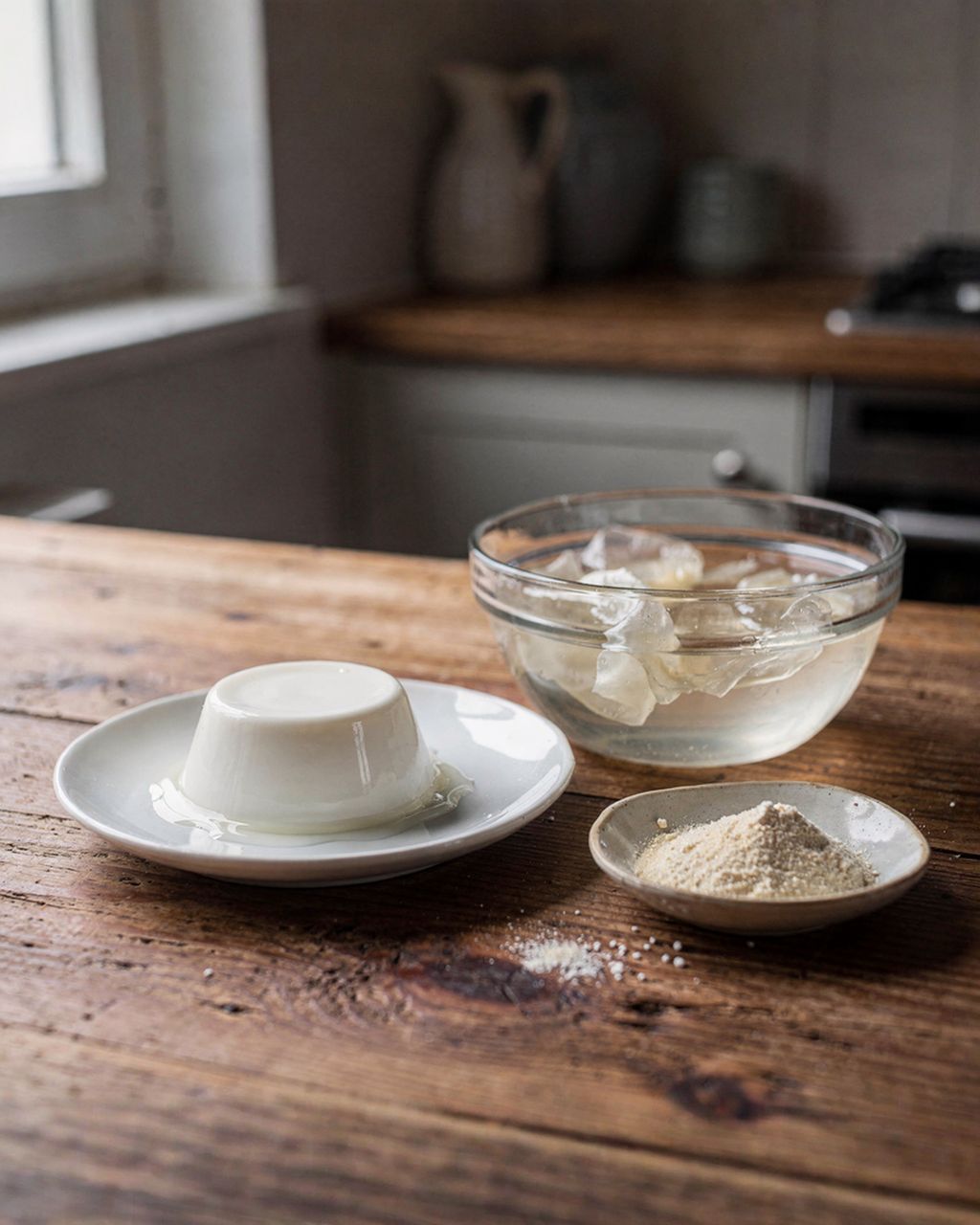
Soak them in plenty of cold water, one at a time so they don't stick together, until soft and floppy.
Lift them out and squeeze out the excess water.
Dissolve them in warm liquid, or melt them gently on their own and then add them.
Warm tap water melts the sheets in the soaking bowl and you lose some gelatin, so use cold water.
Sheets and powder are not one-to-one, and sheet strength varies by brand. Our guide to gelatin sheets vs powder gives soaking ratios and conversions, and gelatin bloom strength explains the grades.
Sheets hydrate evenly because each one is a flat, thin layer. They almost never clump, as long as you soak them separately in cold water and squeeze them out. Sheets are widely used in Central European, especially German, baking.
Powder is easier to measure precisely and dissolves fast once bloomed, but it clumps if it lands in a heap or goes into hot liquid dry.
Instant or "no-bloom" gelatin is made to dissolve without soaking. Follow the packet; it doesn't need the cold-water step.
Either works. If clumping is your recurring problem, switching to sheets is the easiest fix. Remember that they are not interchangeable one-for-one; convert with the guides above.
The same rules apply to other gelling agents in a different way: agar, for example, must be boiled to dissolve. See our guide to gelling agents.
Bloomed gelatin then needs gentle heat to dissolve completely.
Into a warm liquid: stir the bloomed gelatin into hot, steaming liquid off the heat until no grains remain.
On its own: warm the bloomed gelatin over very low heat, or in short bursts in the microwave, until it is clear and liquid.
Not boiling. Knox warns against boiling the gelatin mixture itself, because boiling can destroy its gelling ability.
Check that it is fully dissolved: tilt the spoon and look for grains, or rub a drop between your fingers. It should feel smooth.
This is the other kind of clumping. Dissolved gelatin is warm; whipped cream, mascarpone, yogurt or a fruit purée is cold. If you pour the gelatin straight in, it sets on contact into rubbery threads.
Temper it:
Stir two or three spoonfuls of the cold base into the warm gelatin.
Pour this loosened mixture back into the rest in a thin stream, stirring all the time.
Work at an even pace; don't leave the gelatin sitting until it starts to set.
This is how stable fillings are made in our guides to stabilized whipped cream and quark cake filling.
Clear liquid with lumps (jelly, panna cotta base): warm it gently and stir until the lumps melt and the liquid is clear. Don't boil it. Strain it if grains remain.
Strings in a cold cream or mousse: pass it through a sieve if the texture allows. Or take out a small portion, warm it until the strings melt, and temper it back in.
Gritty, undissolved grains in a set dessert: they can't be fixed once set. Next time, bloom on a wider surface and dissolve fully.
If the batch was lumpy and also didn't set, add a little extra bloomed gelatin when you warm it, then chill it again, covered, in the fridge. For mousses or whipped-cream bases, warm only a small portion, so the whole batch doesn't deflate.
Gelatin clumps when the powder isn't spread out over cold liquid before it hydrates, or when it goes straight into hot liquid. The outside of each clump swells into a gel and seals dry powder inside. Sprinkle it evenly over cold liquid and leave it to bloom before heating.
Sprinkle the powder in a thin, even layer over cold liquid and leave it alone to bloom. Then warm it gently, or stir it into hot but not boiling liquid, until it is completely clear with no grains. Don't stir while it blooms.
Knox's instructions let powdered gelatin stand in cold liquid for 1 minute; many recipes give it 5 to 10 minutes, which does no harm. Sheets soak in cold water until floppy. It is ready when the powder looks swollen and translucent, with no dry spots.
Gelatin turns stringy in cream or mousse when warm dissolved gelatin is poured into a cold base and sets on contact. Stir a spoonful of the cold base into the gelatin first to temper it, then pour the mixture back in while stirring.
Yes, warm the mixture gently and stir until the lumps melt and it turns clear, without boiling it. For a cold cream or mousse, strain out the lumps, or warm a small portion, dissolve the lumps in it and stir it back.
Sheet gelatin is less likely to clump, because each sheet hydrates evenly in a bowl of cold water and you squeeze out the excess. Powder is easier to measure exactly. Both work if you bloom them properly.
One recipe worth heating the oven for, one tip, and one deal from the shop. Nothing else.