How to Reheat Pizza So It's Crispy: Skillet, Oven or Air Fryer
How to Reheat Food Without a Microwave: Oven, Skillet and Steamer
Updated Nov 17, 2026
How do you reheat food without a microwave? Pick the method to suit what you're reheating. Anything saucy goes in a skillet or pot with a lid, dumplings and rice go in a steamer, and anything meant to be crisp (schnitzels, roast potatoes) goes in the oven or air fryer. Whichever you choose, one rule applies: the food must be steaming hot all the way through, not just on the surface. Below you'll find the method for each approach, then separate advice for meat, potatoes and sides.
In short: a skillet with a lid for sauces and meat in juices, a steamer for dumplings and rice, the oven for big portions and roasted meat, and an air fryer for anything that should be crisp. The microwave is the fastest, but it heats unevenly and turns breaded and roasted foods rubbery.
Skillet or pot: fast, you stay in control, and you can stir. Good for sauces, goulash, braised meat, risotto, pasta and boiled potatoes.
Steamer: dries nothing out and actually restores moisture. For dumplings, rice, boiled potatoes and vegetables.
Oven: slower, but hands-off and good for large amounts. For roasts, baked dishes, lasagna and a tray of roast potatoes.
Air fryer: a small oven with fast-moving air. For schnitzels, fries, roast potatoes and chicken pieces, so for everything that should be crisp.
Microwave: for a single portion of soup or sauce in a pinch. Not for breaded foods.
One temperature applies to every method: according to USDA/FSIS (the US food safety authority), reheated food should reach 165°F (74°C) inside. The UK's FSA gives 70°C for 2 minutes. At home, you can tell by whether the food is steaming in the middle. A probe thermometer gives you certainty.
Seasonal baking plans, tested recipes and kitchen tricks that save you time. Unsubscribe in one click.
In the oven, reheat food covered, with a little liquid, at 160–180°C (320–355°F). According to USDA/FSIS, the oven for reheating shouldn't be set below 325°F, which is roughly 160°C. Lower than that, food heats so slowly that it spends a long time in the lukewarm danger zone.
Preheat the oven so the food doesn't sit in a cold oven.
Put the food in a baking dish in a single layer. Slice large pieces of meat, as slices heat through faster and more evenly.
Add a tablespoon or two of broth, juices or water, and cover with aluminum foil or a lid. The steam under the cover keeps the food tender.
For baked dishes and potatoes, take the foil off at the end so the surface turns golden again.
Check the center. It should be steaming, or read 165°F (74°C) on a thermometer (USDA/FSIS).
Rough times: sliced meat in sauce 15–20 minutes, lasagna and baked pasta 25–35 minutes, a tray of potatoes 15–20 minutes.
The oven is best for roasted meat, lasagna, baked pasta and big family portions. For a single bowl of rice it's needlessly slow, so a skillet or steamer wins there.
In a skillet, reheat over low to medium heat, with a lid on and a spoonful of liquid. High heat scorches the bottom before the middle warms through.
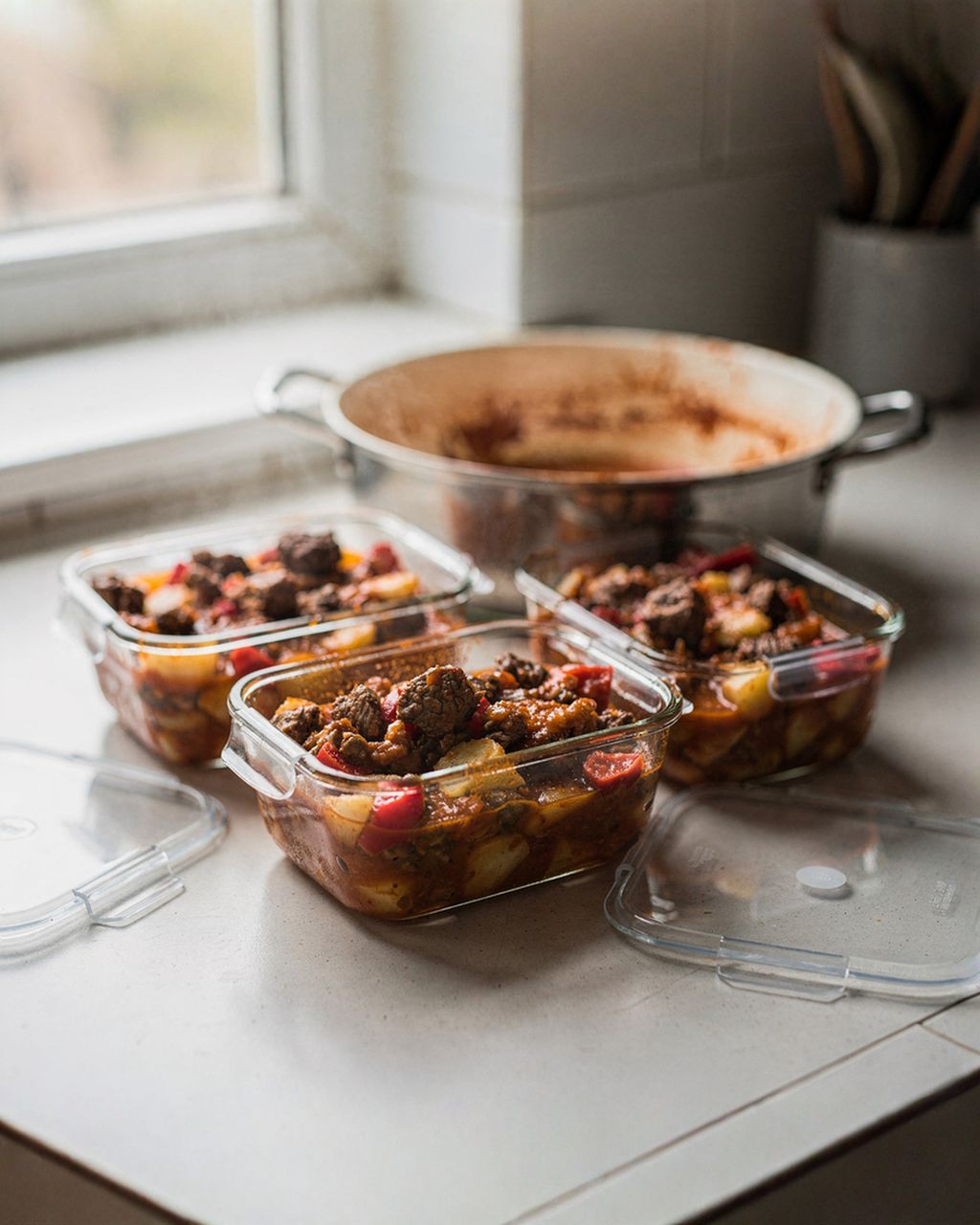
Sauces, goulash, soups: put them in a pot and bring to a boil, stirring constantly. USDA/FSIS recommends bringing sauces, soups and gravies to a boil when reheating. If a sauce has thickened, thin it first with a little water or broth so it doesn't scorch. For goulash, there's more in our article how long goulash keeps and how to reheat it.
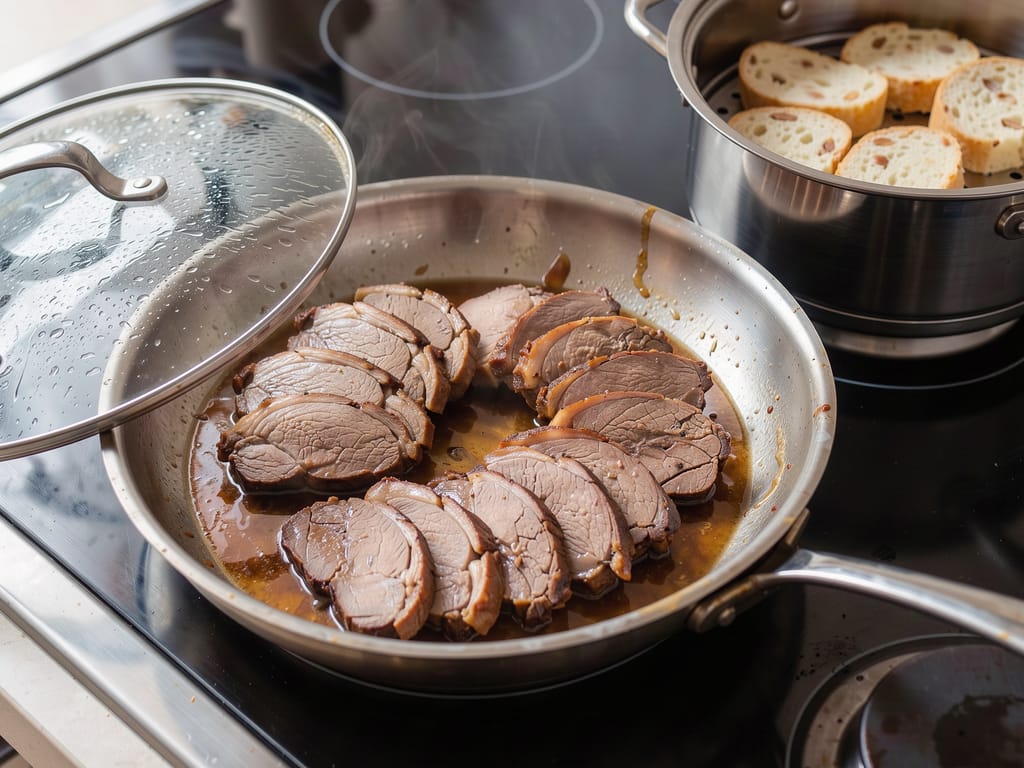
Meat in juices: lay the slices in the sauce and reheat under a lid. The sauce protects the meat and heats it from all sides.
Rice, pasta, risotto: put in a skillet, add a spoonful of water or broth, cover and stir now and then. The steam loosens them up.
Vegetables and boiled potatoes: in a little fat if you want them browned, or with a spoonful of water under a lid if they should stay soft.
Steaming heats food without drying it out. It's the best method for dumplings, rice and boiled potatoes. You don't need a steamer pot. A metal sieve or colander set over a pot of boiling water, plus a lid, is enough.
Pour 3–5 cm (about 1–2 in) of water into the pot and bring it to a boil. The water must not touch the sieve.
Spread the food in the sieve in a single layer: dumplings in slices, rice in a thin layer, potatoes halved.
Cover with a lid and heat until hot in the middle: dumpling slices 5–8 minutes, rice 3–5 minutes, halved potatoes 8–10 minutes.
Starch stiffens in the fridge, and steam softens it again. That's why a steamed dumpling is soft as if freshly made, while one from a skillet turns hard and one from the microwave turns gummy. Steam, on the other hand, is wrong for schnitzels and anything that should be crisp.
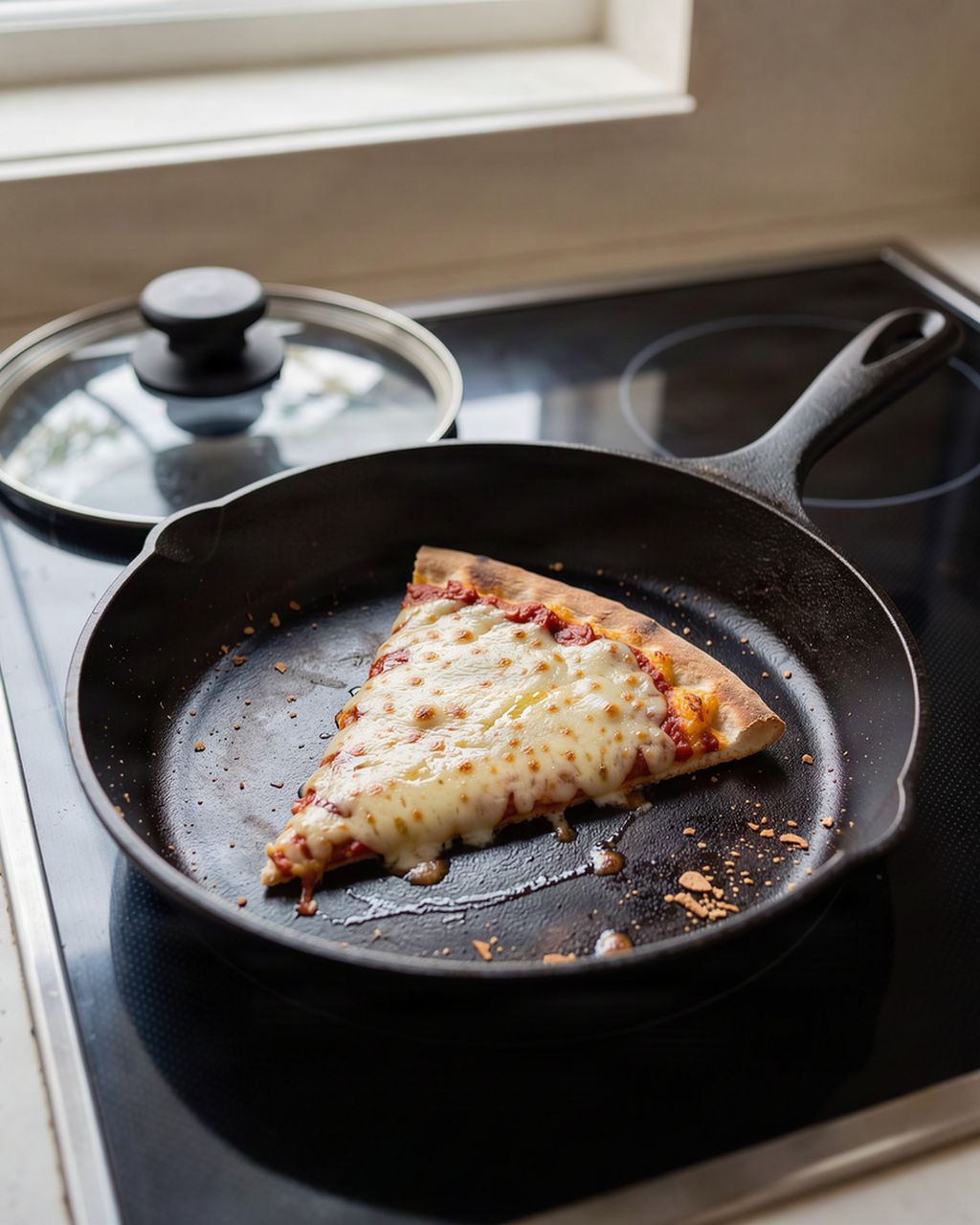
An air fryer is a small oven with a fan, so it suits mainly what should be crisp after reheating: schnitzels, fries, roast potatoes, chicken pieces, pizza. The circulating air evaporates moisture from the surface, so the coating crisps up again instead of going soft.
Spread the food in a single layer and leave gaps between the pieces so the air can flow around them.
Don't cover schnitzels or fries. Under a lid they would steam.
Halfway through, turn the pieces over or shake the basket.
Take times and temperatures from the manufacturer's instructions, as air fryers differ in power. Don't set it lower than about 160°C (320°F), just like the oven. The center must be hot.
An air fryer isn't for sauces, goulash and rice, which would dry out or scorch. Pizza has its own article: how to reheat pizza so it's crisp.
Meat dries out when it's reheated for a long time, over high heat and without moisture. So reheat it in slices, with liquid, covered, and only until it's heated through. Heat keeps tightening the muscle fibers and pushing out the juices. Every extra minute takes more away.
Roasts, svíčková, braised meat: slice it, lay it in the sauce or add a splash of broth, and reheat under a lid in a skillet, or covered with aluminum foil in the oven. For example, homemade svíčková (Czech beef in a root-vegetable cream sauce) reheats best if you put the meat back into the sauce and let it heat through slowly together with it.
Schnitzels and breaded meat: never under a lid or in a steamer. Put them on a rack in the oven or in the air fryer so the coating dries and crisps up.
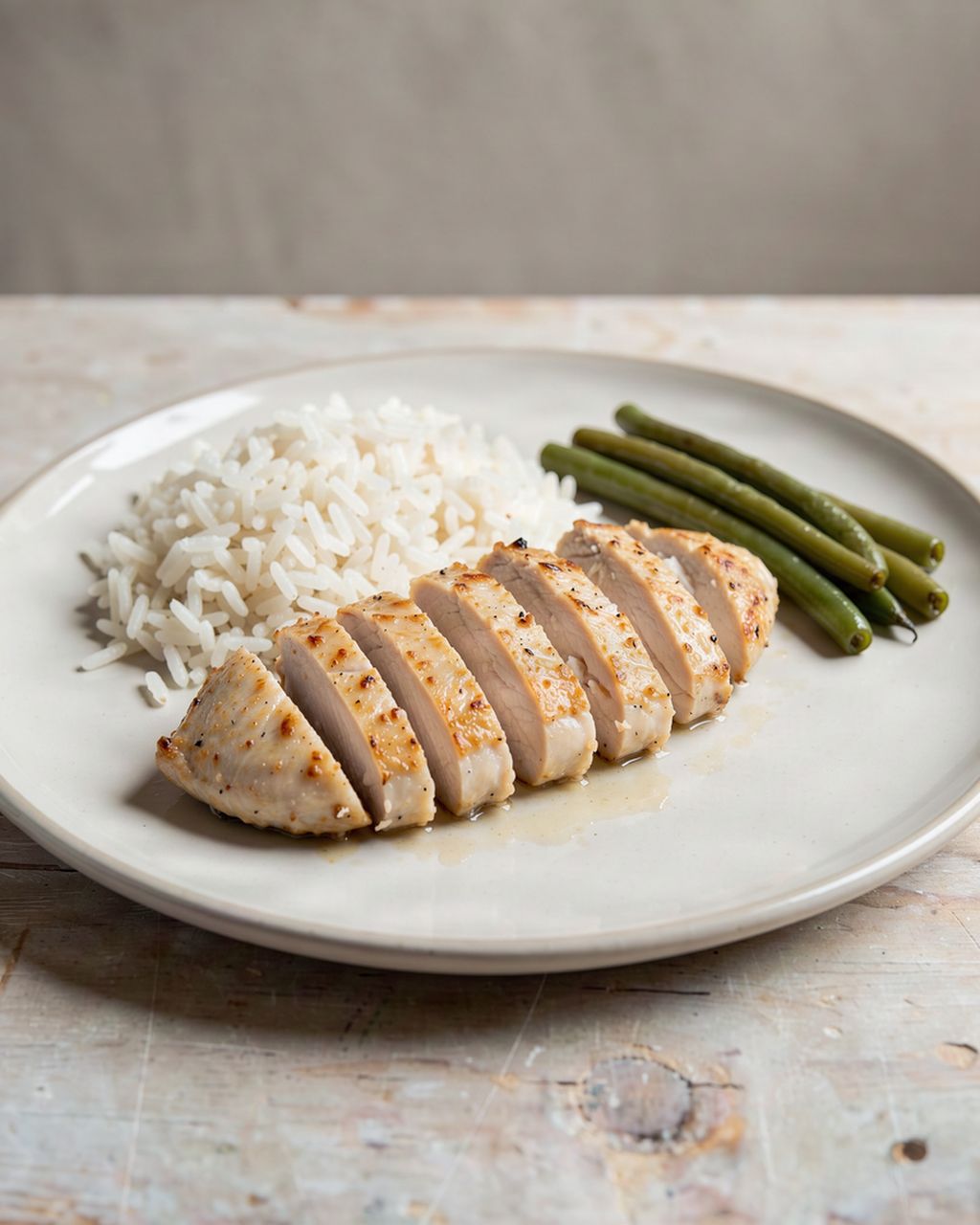
Chicken: breasts dry out fastest, while thighs hold up better. Take a whole roast chicken apart into pieces, add a splash of broth and cover with aluminum foil.
Hot dogs and sausages: in hot, not boiling, water so they don't split. More in our article how to reheat hot dogs and sausage.
Even meat you care about must be hot all the way through. For juiciness, rely on liquid and a lid, not a lower temperature.
Reheat boiled potatoes either in a steamer if they should stay a side dish, or in a skillet in fat if you want them browned. Cold boiled potatoes are firmer because their starch stiffened in the fridge. Steam softens them back, while a skillet uses that firmness and fries them until crisp.
Boiled potatoes as a side: halved, in a sieve over boiling water, covered and left to heat through.
Fried from boiled: slice or cube them, put them in hot fat in a single layer and don't turn them until the bottom turns golden. Then add salt and sprinkle with caraway seeds.
Roast potatoes and fries: oven or air fryer, uncovered. A skillet with a lid makes them soggy.
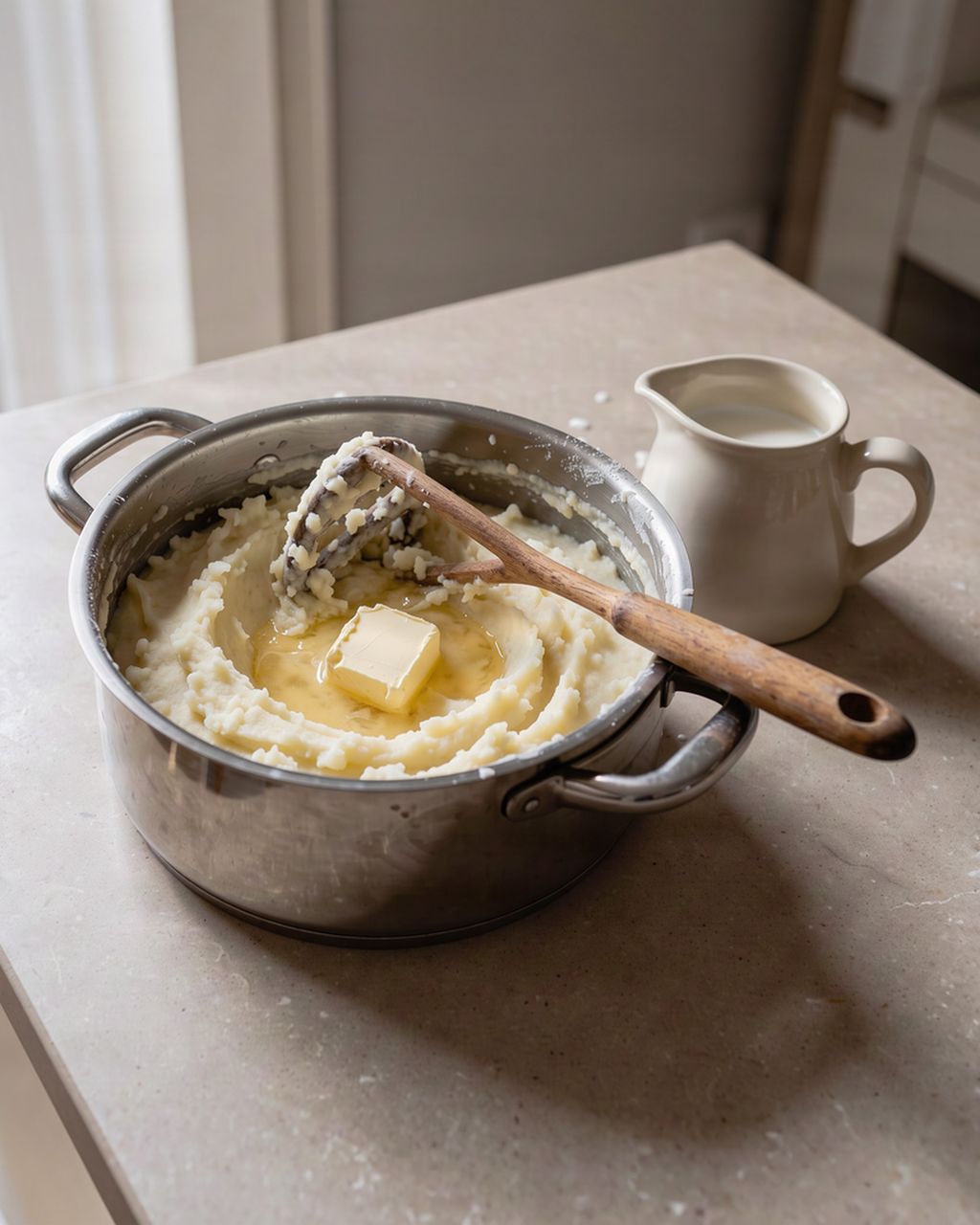
Mashed potatoes: in a saucepan with a spoonful of milk and a knob of butter, over low heat, stirring constantly. Mash thickens in the fridge, and milk restores its creaminess. The same goes for smooth mashed potatoes with nutmeg. You'll find more about day-after mash in our article mashed potatoes: how to thicken, season and reheat them.
Reheat dumplings and rice in a steamer, and pasta briefly in boiling water or right in the sauce.
Bread dumplings (houskové knedlíky): in slices in the steamer. The slices heat evenly and stay fluffy. If you make them yourself, steamed bread dumplings are reheated exactly the way they were cooked. You can also fry leftover dumplings with egg.
Rice: in the steamer, or in a skillet with a spoonful of water under a lid. Watch the storage: spores of the bacterium Bacillus cereus survive cooking. The UK's FSA therefore advises cooling cooked rice and putting it in the fridge ideally within 1 hour and eating it within 24 hours. It can be reheated only once.
Pasta: on its own, dip it into boiling salted water for a moment and drain right away. With sauce, reheat them together in a skillet with a spoonful of water. Baked pasta belongs in the oven under foil.
Reheat soup in a pot on the stovetop, stirring now and then, and bring it to a boil. USDA/FSIS recommends bringing soups and sauces to a boil when reheating. If the soup has thickened, thin it first with a little water or broth so it doesn't scorch on the bottom.
Reheat store-bought ready meals in the oven or in a skillet, following the package directions. Put a plastic tray in the oven only if the manufacturer explicitly allows it; otherwise, transfer the food to a baking dish. Most ready meals list oven or skillet reheating too. Like homemade food, a ready meal must be hot in the middle as well (USDA/FSIS: 165°F/74°C).
Reheat mashed potatoes in a skillet with a knob of butter over medium heat, and just turn them over rather than stirring them like a purée. Mashed potatoes turn gluey when you stir them hard for a long time while reheating, because that releases their starch. If you let them sit on the fat for a while, they form a golden crust that tastes even better than on day one.
Reheated food is hot enough when it steams in the middle after you cut into it, not just around the edges, and any sauce or soup is bubbling. For meat and baked dishes, push a metal knife into the center, leave it for a few seconds, and carefully touch it to the back of your hand. It should feel uncomfortably hot. This is only a rough test. For poultry and large cuts of meat, only a probe thermometer reading 165°F/74°C in the center (USDA/FSIS) gives you certainty.
One recipe worth heating the oven for, one tip, and one deal from the shop. Nothing else.