How to Make Crepes Without a Crepe Pan: Which Pan, Heat and Swirl
Why Are My Pancakes Not Browning or Sticking to the Pan?
Updated Nov 21, 2026
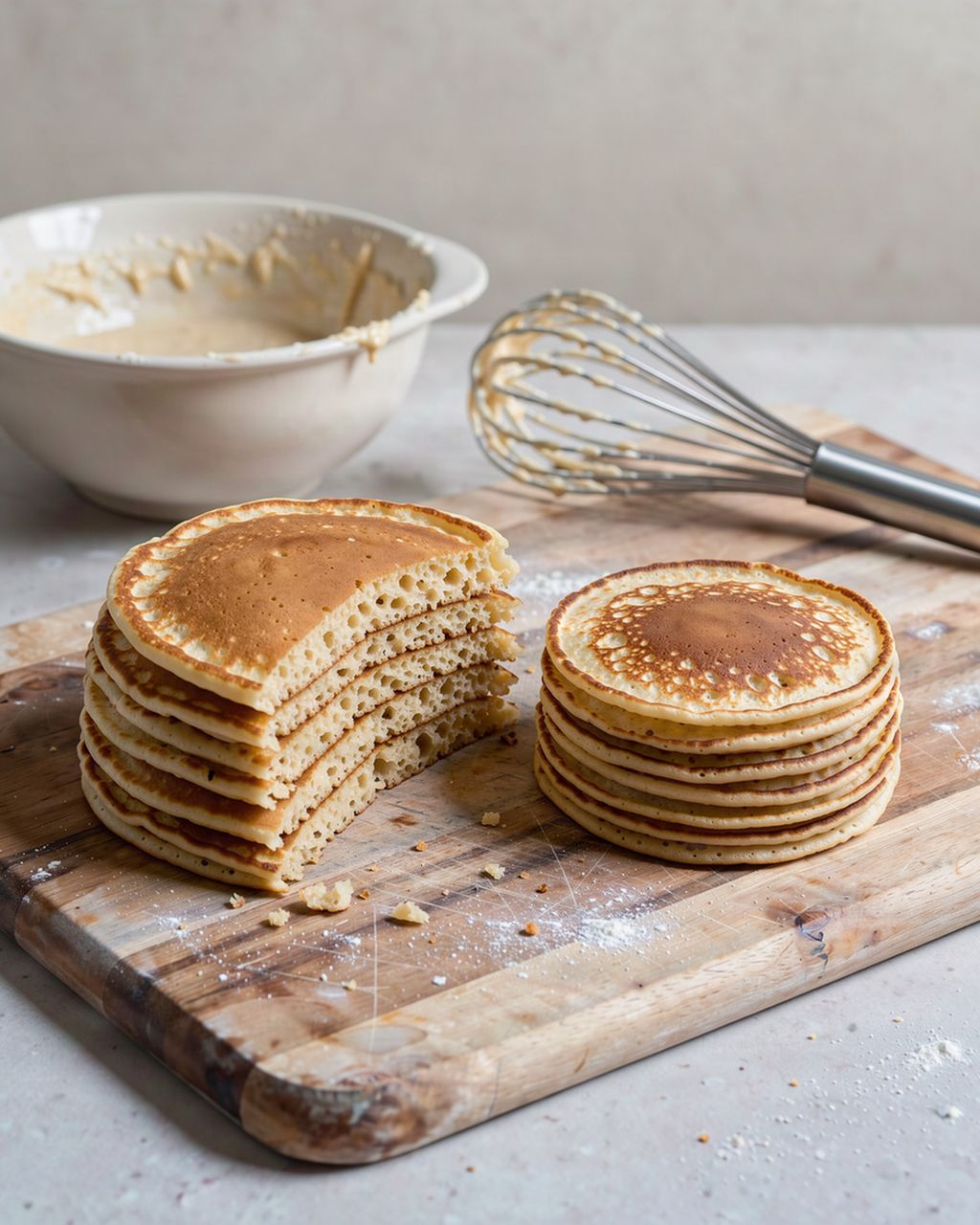
Pancakes stay pale when the pan is not hot enough, the batter has little sugar or milk, or there is too much fat in the pan; they stick when the pan is underheated, ungreased or scratched, or when you flip too early. Most of it comes down to preheating the pan properly and using a thin film of the right fat. That is also why the first pancake so often fails.
The golden color on a pancake comes from browning reactions between sugars and proteins in the batter. They need heat and direct contact with the pan. If your pancakes are pale, one of these is missing:
The pan is too cool. The most common cause. The batter sets slowly and stays white and a little tough.
The batter is lean. Milk sugar (lactose), milk protein, egg and a little sugar all help browning. Pancakes made with water, or with no sugar, stay paler.
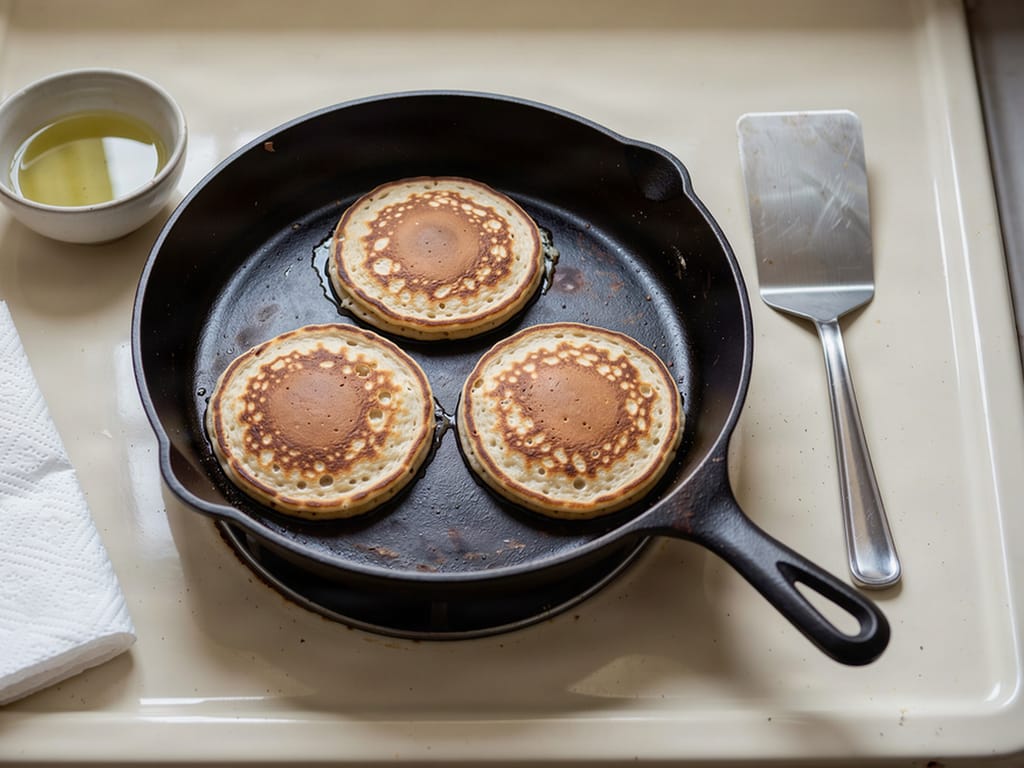
There is too much fat in the pan. A pool of butter or oil keeps the batter off the metal, so it fries in patches and you get pale pancakes with dark rings.
The pan is thin or the burner is small. The middle browns and the edges stay white.
Quick fixes: preheat longer, wipe the fat thin, and add 1 to 2 teaspoons of sugar to a lean batter.
Recipe of the week, one tip that saves you time and one deal from the shop. Unsubscribe in one click.
The next issue goes out on Thursday, November 26.
Medium heat on most stoves, heated for a few minutes. With a nonstick pan, put the thin film of oil in first. On an electric griddle, around 190 °C (375 °F) is a common setting.
On a dry cast-iron, steel or griddle surface, the water test is more reliable than the dial. Flick a few drops of water onto the pan:
The drop just sits and steams: too cool. Wait.
The drop hisses and boils away in a second or two: nearly there. Give it another minute.
The drop balls up and skitters across the pan: ready.
Do the water test only on a dry pan: water flicked into hot oil spits and can burn. In a nonstick pan that already has oil in it, skip the water and cook a small test pancake instead.
If the fat smokes, or the underside browns before bubbles form on top, the pan is too hot and the middle will be raw; turn the heat down. If bubbles form and pop but the underside is still pale, it is too cool.
Heavy pans, such as cast iron, take longest to heat but hold the heat best, so the third pancake looks like the first. Thin pans heat fast but run hot in the middle, so lower the heat a notch once they are going.
A pancake sticks when the batter bonds to the metal before it has set. The usual reasons:
The pan is not hot enough. Batter on a cool pan glues itself on. On a properly hot pan, the underside sets almost at once and releases.
No fat. Grease the pan and wipe the fat thin. With a nonstick pan, add the thin film of oil before you heat it, and don't heat it empty for long.
You flipped too early. The underside releases by itself once it has set. If it won't slide when you nudge it, give it another 30 seconds.
The nonstick coating is worn. Scratched or old nonstick pans stick in patches. If the coating is heavily scratched, peeling, flaking or chipped, stop using the pan and replace it, or switch to a well-seasoned cast-iron or stainless-steel pan.
Stainless steel needs a full preheat and fat. It works well for pancakes once it is hot, but it is the least forgiving pan.
Sugary batter or mix-ins. Chocolate chips, banana and fruit purée caramelize and stick. Lower the heat a little, or press the fruit into the top after pouring.
The fat in the pan matters as much as the heat.
Neutral oil, such as sunflower oil or canola oil, is the easiest. It doesn't burn at pancake heat and gives even color.
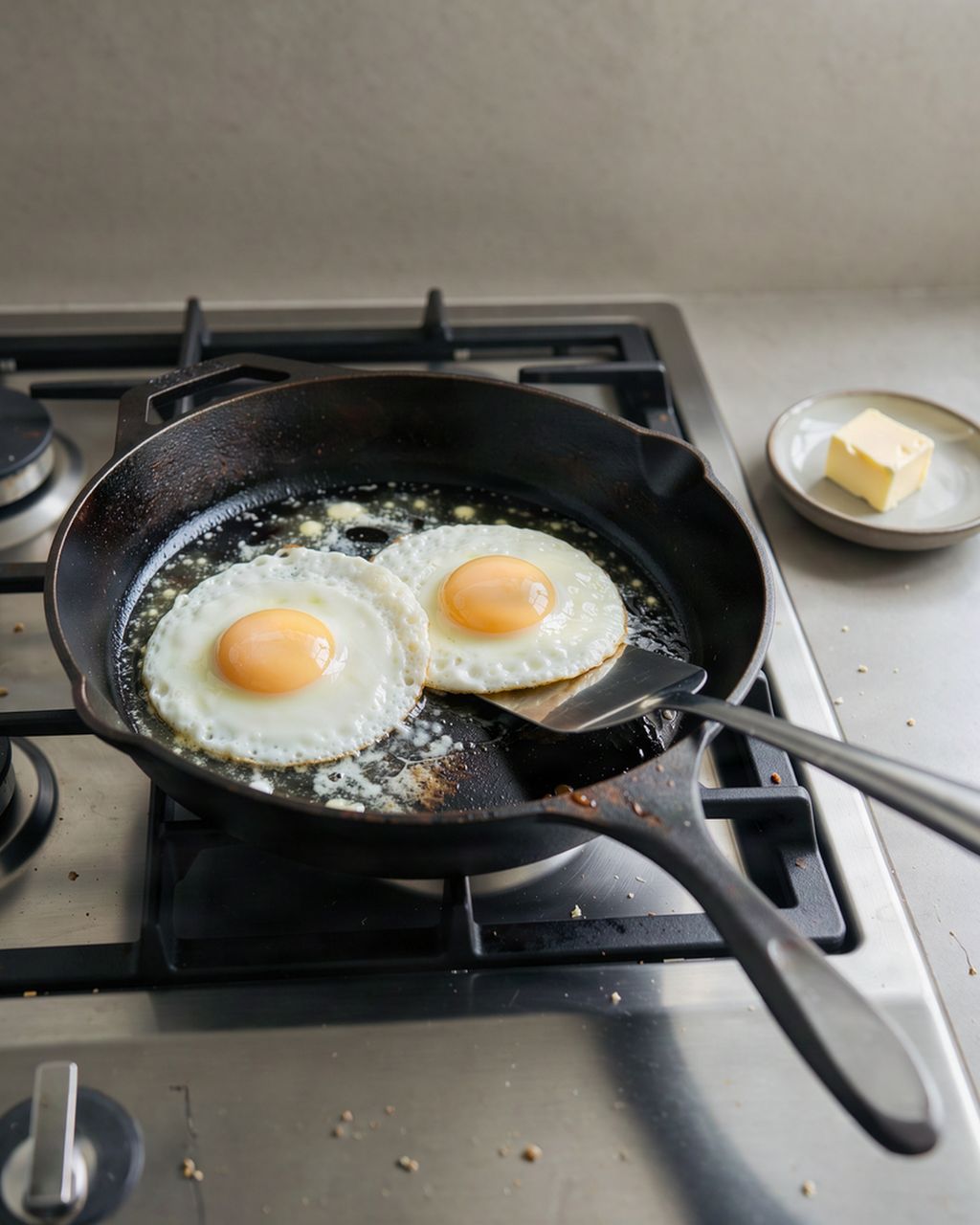
Ordinary butter tastes best but its milk solids burn, leaving dark specks that build up batch after batch. If you use it, brush on a little and wipe the pan between batches.
Clarified butter or ghee has the milk solids removed, so you get butter flavor with less burning. See our ghee page.
How much: a thin film, not a pool. Pour a little oil into a saucer, dip a folded paper towel in it, and wipe the hot pan. Repeat every two or three pancakes.
For flavor, keep melted butter in the batter itself. A batter with enough fat also releases from the pan more easily.
Almost everyone's first pancake is the worst one: pale in places, dark in others, sometimes stuck. It isn't bad luck.
The pan is still heating unevenly. Hot spots over the flame and cooler edges cook the first one patchily.
The fat hasn't spread evenly. The first pancake soaks up the excess.
How to skip it:
Heat the pan for longer than you think, a good few minutes over medium heat. With nonstick, add the oil first.
Wipe the fat into a thin film with a paper towel.
Cook a small test pancake, about a tablespoon of batter. Adjust the heat from what it tells you.
Then the real batch starts on a pan that is ready.
If your pancakes break when you turn them, it is usually one of these:
Too early a flip. Wait for bubbles across the surface and dry, matt edges.
Too big. A 10 cm (4 inch) pancake is easy to flip. A pan-sized one isn't.
Too thin or too weak a batter. Little flour, no egg, or a gluten-free flour mix without a binder all make fragile pancakes. Our gluten-free pancakes guide covers binders.
The wrong spatula. A wide, thin one slides under cleanly; a thick, chunky one pushes the pancake along the pan. On nonstick, use a thin silicone or nylon spatula, because metal scratches the coating.
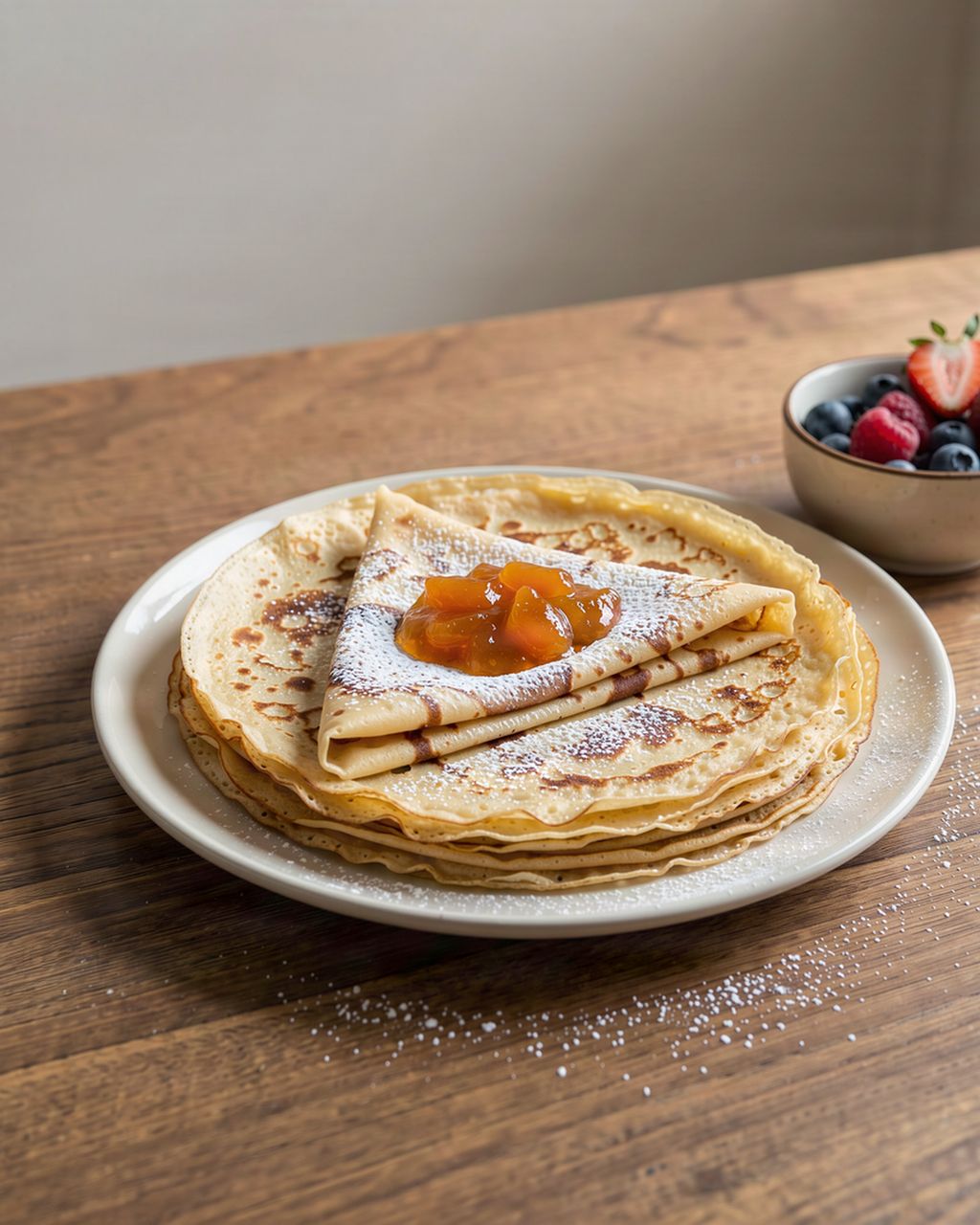
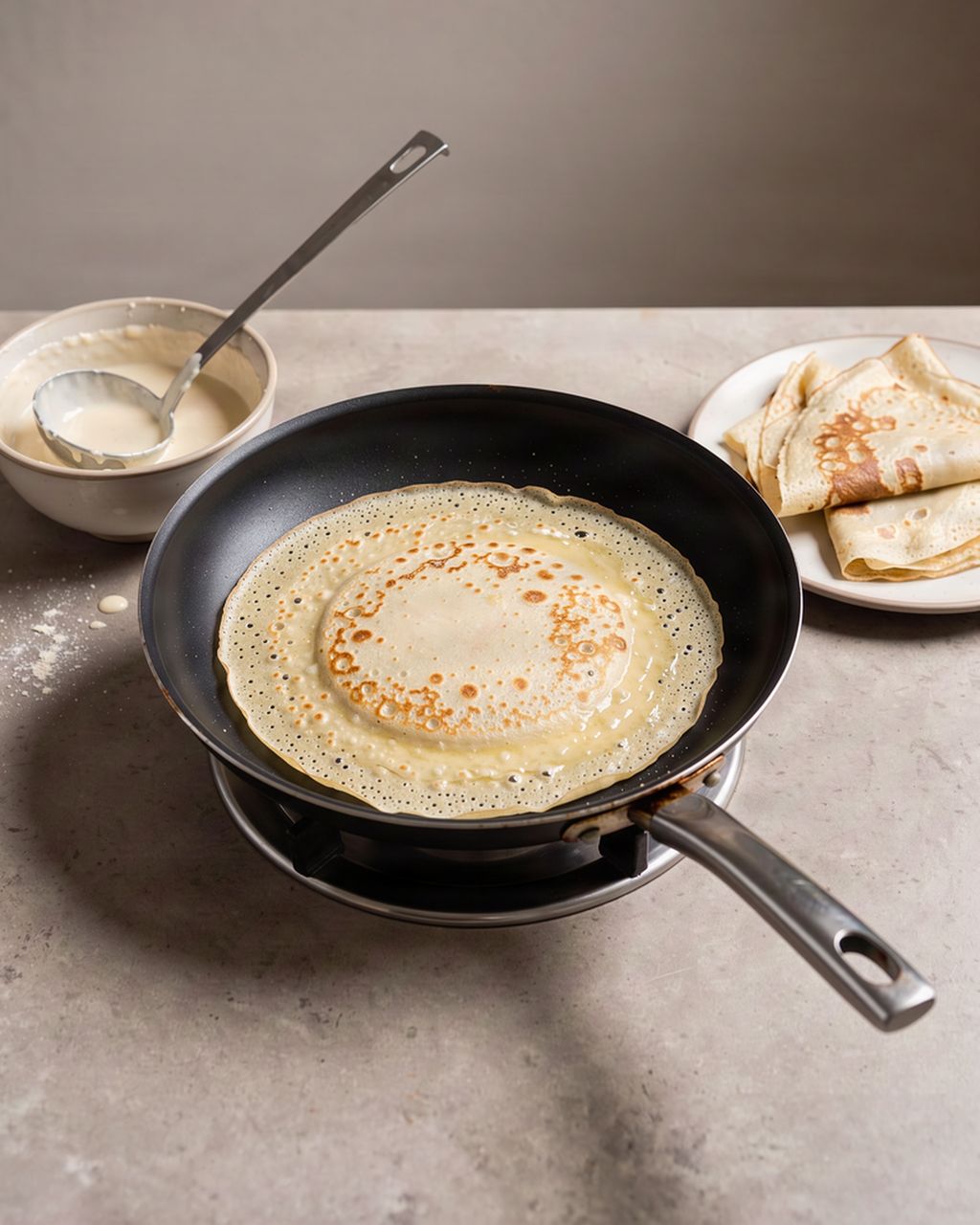
Thin pancakes, such as crêpes or Czech palačinky (thin, rolled pancakes), are flipped with a quick shake or a thin spatula once the edges lift. Our guide to make-ahead crêpes covers how to store them once cooked.
Pancakes don't brown when the pan is too cool, the batter has little sugar or milk, or the pan has too much butter or oil in it. Heat over medium heat until drops of water flicked onto the dry pan skitter across it (on an oiled nonstick pan, cook a small test pancake instead), wipe on a thin film of fat, and add a teaspoon of sugar to lean batters.
Pancakes stick when the pan is not hot enough, has no fat, has a worn or scratched nonstick coating, or when you try to flip before the underside has set. Preheat fully, grease lightly, and wait until the edges look dry before flipping.
The first pancake fails because the pan is still heating unevenly and the fat has not spread into a thin, even film yet. Heat the pan longer over medium heat, wipe the fat around with kitchen paper, and cook one small test pancake before the rest.
Use a neutral oil or clarified butter for the pan, because the milk solids in ordinary butter burn and leave dark spots. For buttery flavor, keep the butter in the batter or brush a little on the pan with a paper towel.
Pale pancakes with brown spots mean there was too much fat in the pan, so the batter fried in patches instead of touching the hot metal evenly. Wipe the pan with kitchen paper so only a thin film is left.
Pancakes fall apart when they are flipped too early, are too big, or the batter is too thin or has too little egg or flour to hold together. Make them smaller, wait for bubbles and dry edges, and use a wide, thin spatula.
One recipe worth heating the oven for, one tip, and one deal from the shop. Nothing else.