Why Is My Cast Iron Rusting? Orange Spots, Causes and How to Fix It
Why Does Food Stick to Cast Iron? Heat, Fat, Seasoning and Eggs
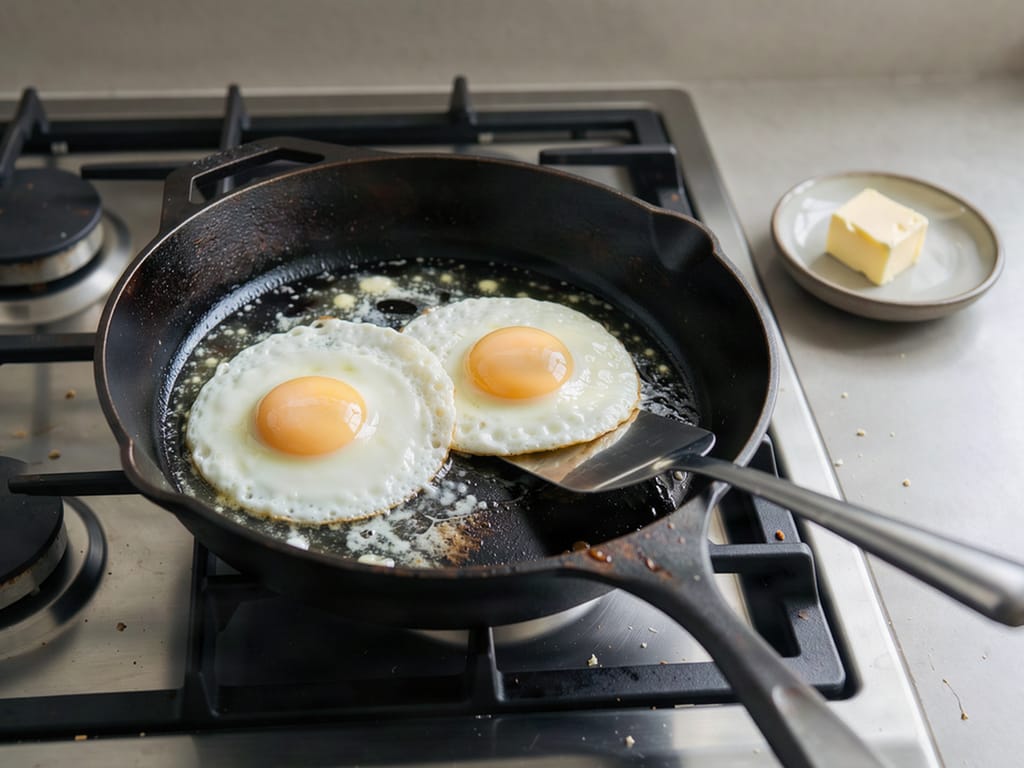
Updated Nov 21, 2026
Food sticks to cast iron when the pan is the wrong temperature, there isn't enough fat, or the seasoning is still thin; Lodge says the most common mistake is a pan that is simply too hot. Preheat it gradually over medium or medium-low heat, add enough fat, and let food release on its own before you move it. Eggs need the gentlest heat and the most fat.
Food sticks when proteins and starches bond to the pan before a crust forms or a film of fat gets between them. In cast iron, it almost always comes down to four things:
The pan is too hot. Lodge says this is the most common reason. Cast iron holds heat so well that a pan left on high gets far hotter than you need, and food scorches onto it.
The pan is not evenly hot. A big pan on a small burner has a hot center and cool edges. Food sticks in the cool parts.
Not enough fat. Seasoning is not a nonstick coating. It still needs oil or butter, especially for eggs, fish and batter.
Thin or new seasoning. New pans, freshly stripped pans and pans that have cooked a lot of tomato sauce have less protection.
And one habit makes all of them worse: moving the food too soon. Meat, potatoes and fish stick at first, then release once a crust forms.
Seasonal baking plans, tested recipes and kitchen tricks that save you time. Unsubscribe in one click.
Lodge recommends preheating gradually, on a burner close to the size of the pan. Cast iron heats slowly but evenly once it gets there.
For most cooking, medium heat for several minutes. Lodge says you rarely need a setting above medium, because the iron stores so much heat.
For eggs, medium-low for about 5 minutes.
For searing, Lodge suggests at least 200 °C (400 °F) pan temperature before the food goes in. You reach it with a longer preheat on medium-high, not by blasting it on high.
The water test: flick a few drops of water onto the dry pan. If they sizzle straight away, it is ready. Do this only before you add oil. Water flicked into hot oil spits and can burn you.
Once the food is in, you can usually turn the heat down. The iron carries on cooking.
Eggs are the hardest test for any pan. They are mostly protein and water, cook fast, and bond to anything they can. Lodge's tips, with ours:
Preheat on medium-low for about 5 minutes. A gently, evenly hot pan beats a scorching one.
Use more fat than for meat. Lodge says eggs need a bit more oil than fatty foods like chicken thighs. Butter, bacon fat and ghee all work.
Add butter late. Start with a little oil and add the butter just before the eggs, so the butter foams rather than burns.
Turn the heat down once the eggs are in.
Leave fried eggs alone until the white has set at the edges. Then slide a thin, flat spatula under them.
Keep scrambled eggs moving with a flat-edged spatula, over low heat.
If eggs stick in a pan that handles everything else, the seasoning is probably still young. Fry other things in it for a few weeks and try again.
Meat: pat it dry, preheat well, add a thin layer of oil, and lay it in without moving it. Once a crust forms it releases. If you tug and it tears, wait. Our guide to frying ground meat in a pan covers burgers and patties.
Fish: dry the skin well and use a little more fat. Cook skin side down and don't move it until the skin crisps.
Potatoes: starch glues potatoes to the pan. Rinse and dry cut potatoes, use enough fat to coat the base, and let them brown before turning. Czech bramboráky (potato pancakes) are traditionally fried in lard or oil with plenty in the pan.
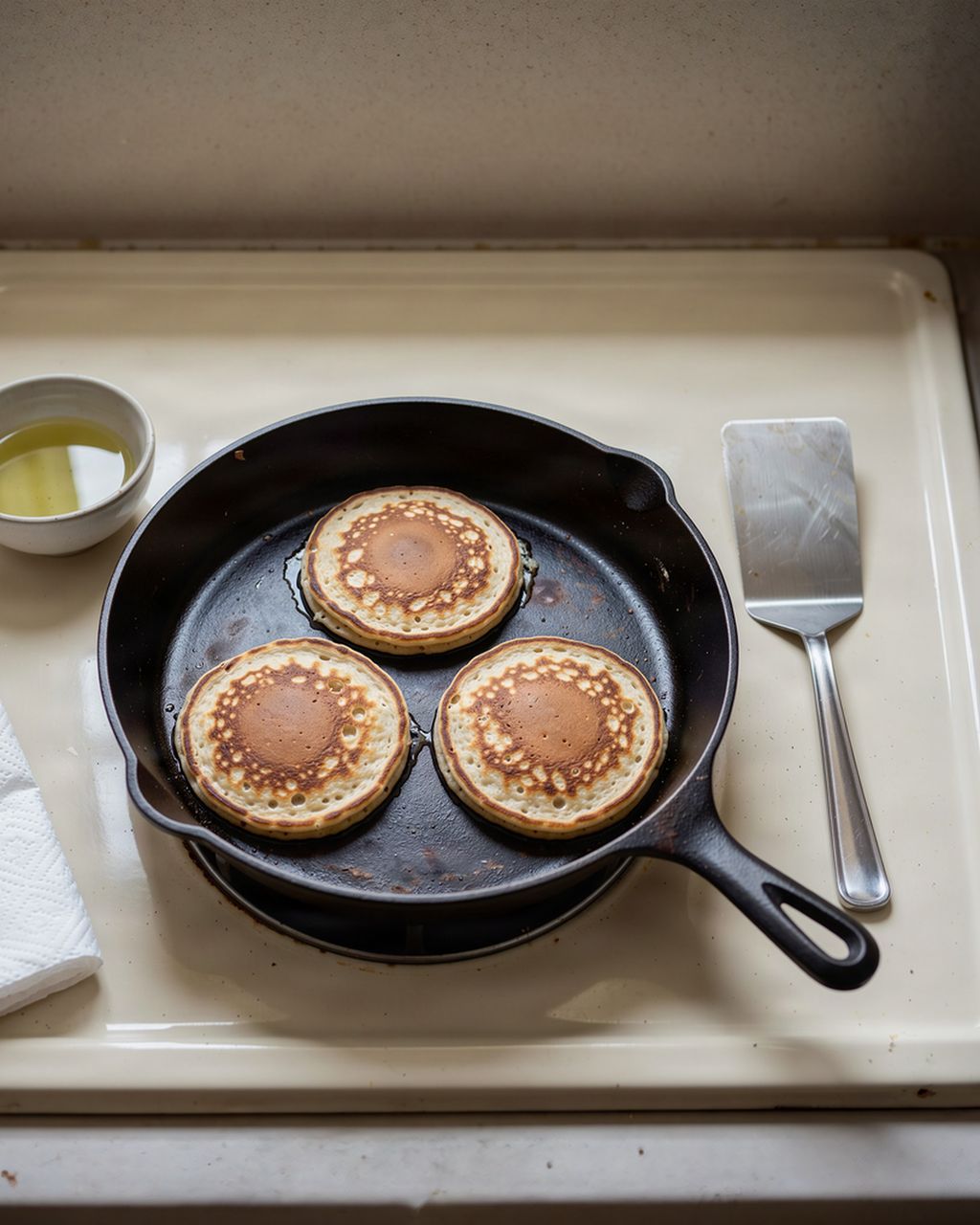
Pancakes and batter: these need a thin, even film of fat and a properly preheated pan. Our guide to pancakes sticking or not browning covers the details.
Look at the surface. Good seasoning is dark, smooth and evenly satin. If food sticks only in certain patches, check them:
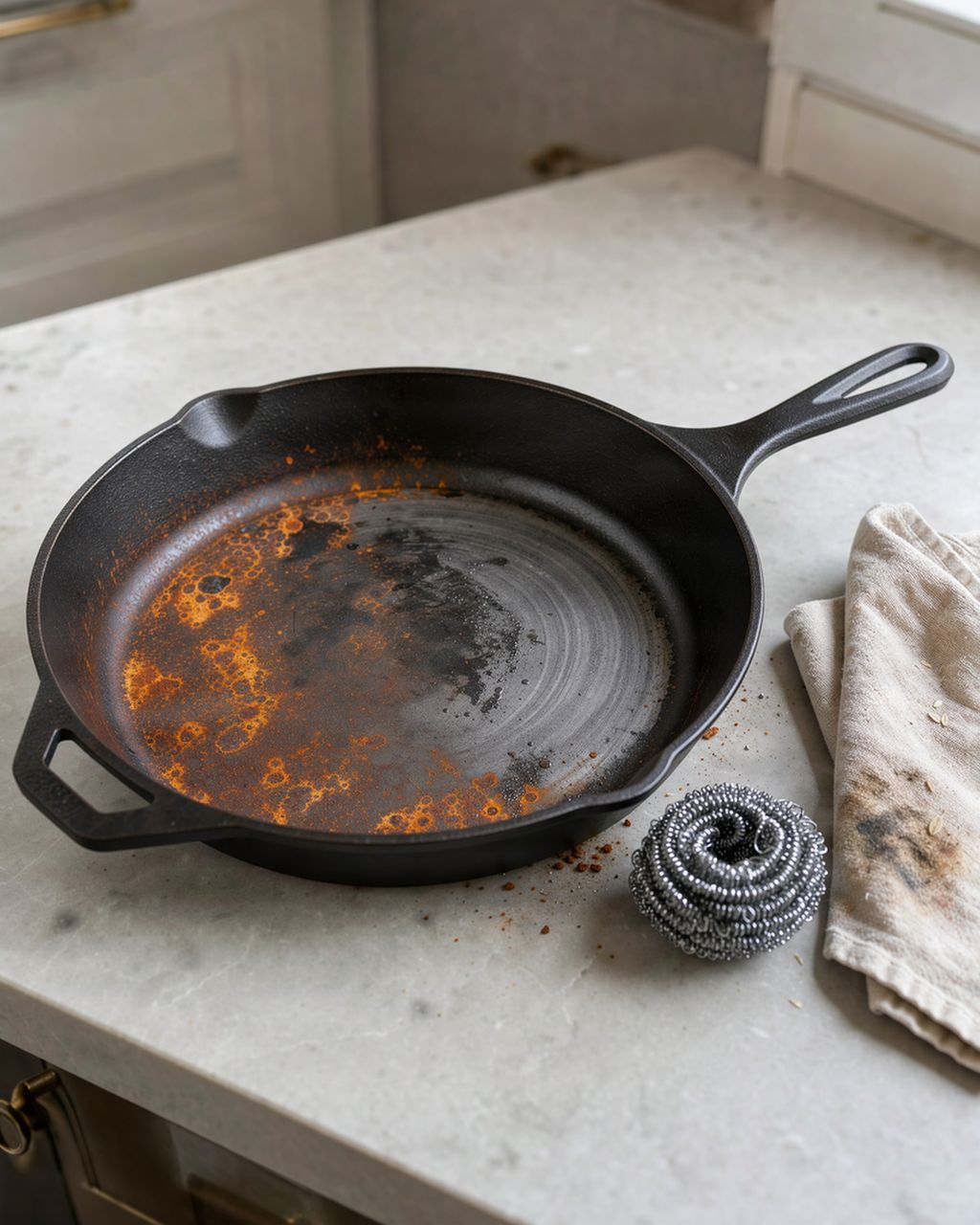
Dull, gray or rusty patches: the seasoning is thin there. Scrub, dry and re-season.
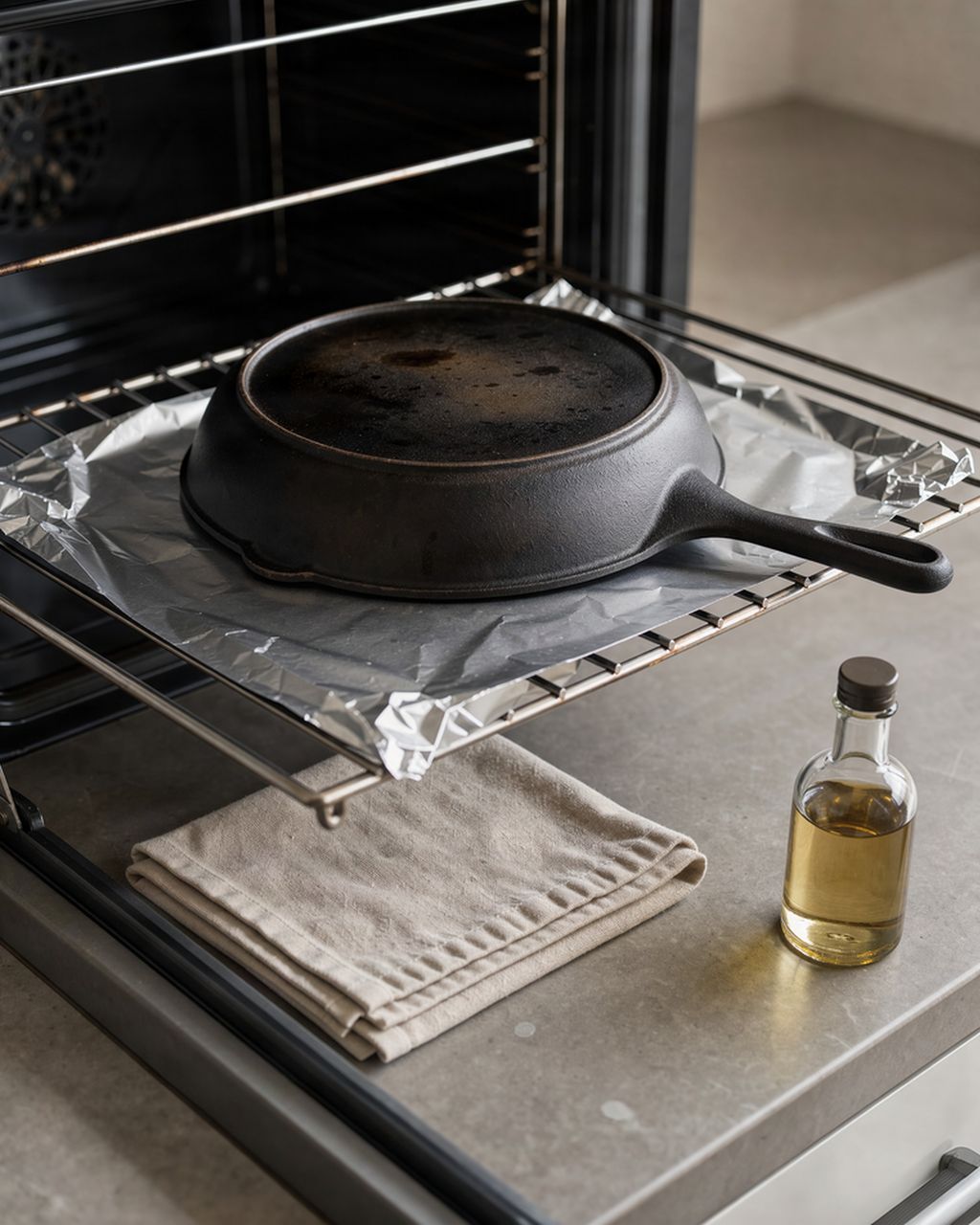
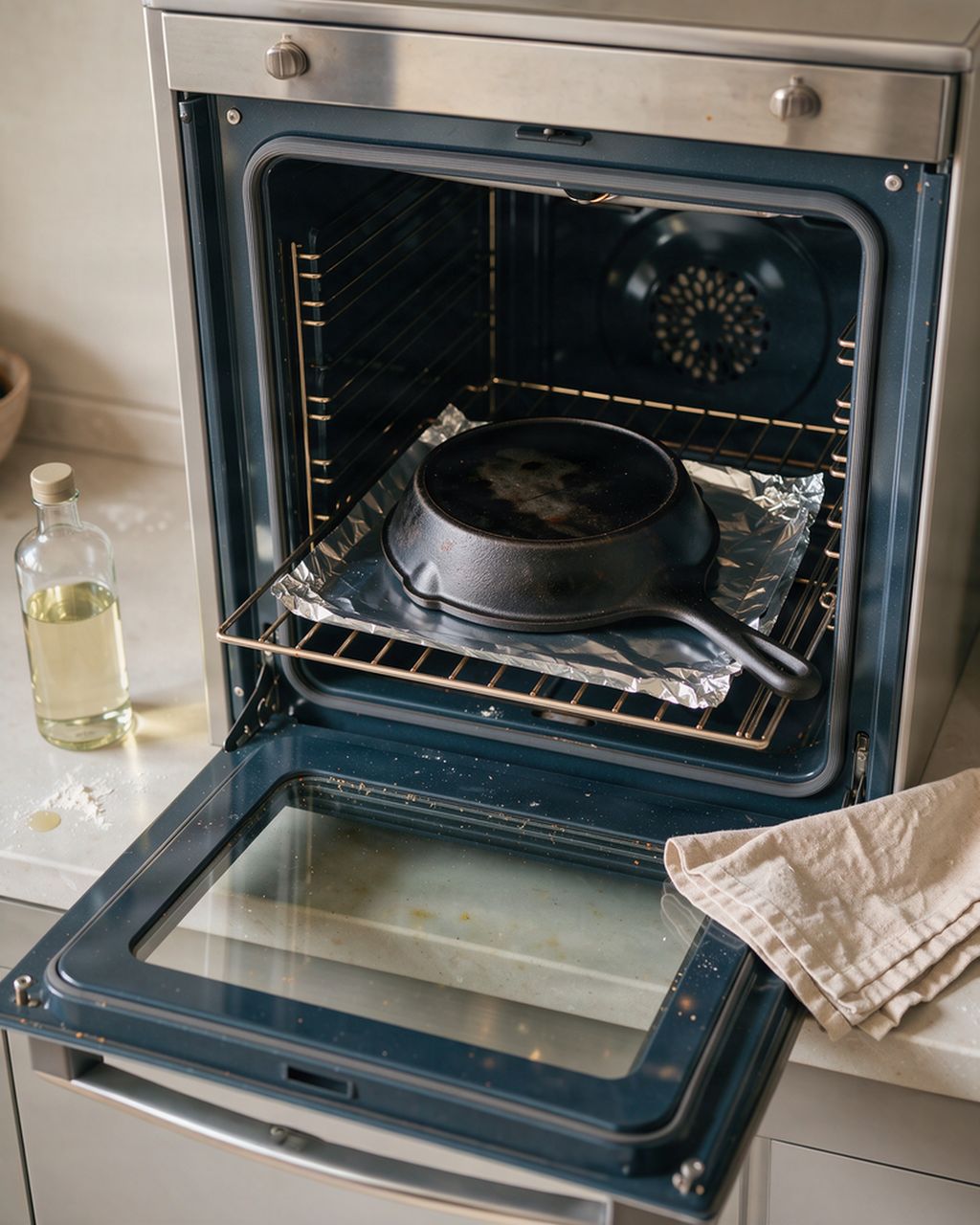
Sticky, tacky patches: too much oil was left on and never hardened. Lodge's fix is to bake the pan upside down at 230–260 °C (450–500 °F) for an hour.
Rough, crusty build-up: old carbonized food. Scrub it off with a brush or a little coarse salt and oil, rinse, dry and oil lightly.
Lodge also suggests avoiding long-simmered acidic dishes, such as tomato sauce, in new cast iron, because acid wears young seasoning thin. Once the seasoning is established, Lodge says acidic dishes cooked for under 45 minutes are fine.
Stuck-on food doesn't need harsh treatment:
While the pan is still warm, pour in hot water and scrape with a flat wooden or metal spatula.
Scrub with a stiff brush. A little dish soap is fine on seasoned cast iron.
For stubborn bits, scrub with coarse salt and a little oil, then rinse.
Dry at once and warm on low heat until bone dry.
Wipe in a few drops of oil and buff it until it looks dry.
Don't soak it, and keep it out of the dishwasher. Both lead to rust.
Food sticks to cast iron when the pan is too hot or not preheated evenly, there is too little fat, or the seasoning is thin or new. Preheat gradually on medium, add enough oil to coat the base, and give the seasoning time to build with regular cooking.
Keep eggs from sticking by preheating the pan on medium-low for about 5 minutes, as Lodge suggests, and using more fat than you would for meat. Butter or bacon fat works well; add butter just before the eggs, and lower the heat once they are in.
Lodge suggests preheating cast iron gradually and, if you are using butter, starting with oil and adding the butter just before the food. Heating the pan with a little oil in it also shows you when it is hot: the oil shimmers and flows easily.
Meat sticks when it goes into a pan that isn't hot enough, when it is wet, or when you try to move it before a crust forms. Pat it dry, preheat well, and leave it until it lets go by itself.
Yes, seasoning builds with every round of cooking with fat, so a pan that is used often releases food better over time. New or freshly re-seasoned pans stick more at first.
Usually it is heat and fat, not the pan. If food sticks only in patches that look dull, gray or rough, the seasoning there is thin, and re-seasoning will help.
One recipe worth heating the oven for, one tip, and one deal from the shop. Nothing else.