What Is Kremrole? Czech Cream Horns vs English Cream Horns and Cannoli
What Is Trdelník, Where Is It From, and Is It Really Czech?
Updated Nov 18, 2026
Trdelník is a hollow pastry of sweet yeast dough wound around a spit, baked over heat and rolled in sugar and nuts. Despite the signs on Prague stalls, it is not a traditional Czech food: its best-documented home is Skalica in Slovakia, and its roots lie in the old Kingdom of Hungary. Here is what it is, where it really comes from, and how it relates to the Hungarian chimney cake.
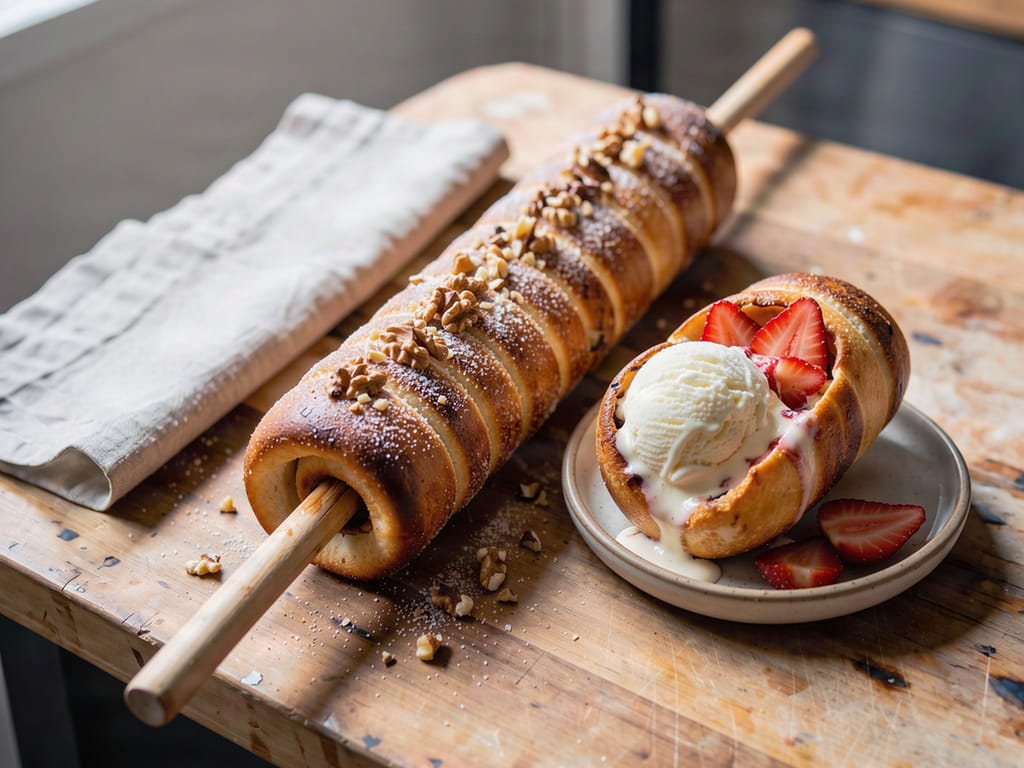
Trdelník is a hollow pastry made by wrapping a strip of sweet yeast dough around a thick wooden or metal spit, then turning it over heat until it is golden, and rolling it in sugar and chopped nuts. Pulled off the spit, it is a short, wide tube: crisp and caramelized outside, soft and bready inside.
The name comes from trdlo, the old word for the wooden roller the dough is wound around. In English it is often called a chimney cake, which is the usual translation of its Hungarian cousin, kürtőskalács.
You will find trdelník sold hot from street stalls, especially in the center of Prague, where the smell of caramelizing sugar is hard to miss. That is also where most visitors first meet it, and where most of the confusion about its origin starts.
Seasonal baking plans, tested recipes and kitchen tricks that save you time. Unsubscribe in one click.
Not in the way most Prague stalls suggest. Trdelník is real and has a genuine history in the region, but it is not a traditional Prague or Bohemian food, and most Czechs did not grow up eating it.
What the evidence supports:
Its roots are in the former Kingdom of Hungary, which included today's Slovakia. Spit-baked cakes of this kind were known across that region, including Transylvania, where kürtőskalács is a national favorite in Hungarian communities.
Its strongest home tradition is in Skalica, a small town in western Slovakia right on the Moravian border. Local tradition says the recipe reached Skalica in the late 18th century through the cook of József Gvadányi, a Hungarian poet and retired general who lived in the town. That story is local lore, not documented fact, but Skalica's long tradition of baking trdelník is well established.
It was also known in Moravia, the eastern part of today's Czech Republic, close to Skalica.
In Prague it is recent. Trdelník stands spread through the tourist center from the early 2000s onward. Many sell it as "traditional Czech" or "Old Bohemian" pastry, which Czech journalists and English-language media have criticized as misleading.
So the honest answer: trdelník belongs to Central Europe, its best-documented home is Slovakia, and its Prague street version is a modern tourist food that borrowed a regional pastry.
In December 2007, Skalický trdelník (trdelník from Skalica) was registered by the European Union as a Protected Geographical Indication (PGI). It was the first Slovak product to receive one.
The registration describes a hollow cylinder of dough with an inner diameter of about 3–5 cm and an outer diameter of about 6–10 cm, made by winding dough around a roller and baking it over embers or a slow open fire. Its label must state the topping (a nut mix, walnuts, almonds or apricot kernels) and the baking method (over embers or a slow open fire).
Unlike the Prague version, the Skalica original is not rolled in caramelizing sugar: it is brushed with egg white, sprinkled with chopped nuts, baked, and dusted with vanilla icing sugar once cool.
Only trdelník made in the defined Skalica area under these rules may carry the name Skalický trdelník. The protection covers that name, not the general word trdelník, which is why stalls anywhere can still sell something called trdelník.
The two are close relatives and look nearly identical. Differences you might notice:
Kürtőskalács (Hungarian, Transylvanian): usually rolled in sugar that caramelizes into a crackly glaze, then coated in cinnamon sugar, ground walnuts, cocoa or coconut. Often a longer, taller tube.
Trdelník (Slovak, Moravian, now Prague): the Skalica version is sprinkled with chopped walnuts, almonds or apricot kernels and dusted with vanilla icing sugar after baking. Prague stalls most often use cinnamon sugar and crushed walnuts or almonds.
The dough, the spit and the method are essentially the same. Which country invented the pastry is argued about, and spit cakes of this broad type appear in several European traditions, including German Baumkuchen, which is built from layered batter rather than wound dough. We would not claim a single birthplace.
You do not need a recipe to understand what is going on:
The dough is a soft, slightly sweet yeast dough with flour, milk, butter, eggs and sugar. It is left to rise, then rolled into a long rope or strip. For the principles, see our guide to yeast dough ratios.
Winding: the strip is wrapped in a spiral around a greased cylinder of wood or metal, tapered slightly so the pastry slides off later. It is rolled lightly to press the coils together.
Coating: the dough is brushed with egg or butter and rolled in sugar and nuts before baking.
Baking: the spit turns over charcoal, gas burners or an electric element, until the sugar caramelizes and the dough is cooked through.
Finishing: it slides off the spit as a hollow tube and is rolled in more sugar while hot.
At home without a spit, people wrap a wooden rolling pin or a purpose-made metal chimney-cake roller in baking paper or foil and bake in the oven. The result is close, though the crust is less even.
The trdelník filled with soft-serve ice cream, whipped cream, fruit or chocolate spread is a Prague invention. Filling the hollow center with ice cream became popular in the 2010s, and the cone-shaped versions topped with strawberries and cream became a social media image of the city.
There is nothing traditional about it, and the Skalica bakers would not recognize it, but it is not a bad idea either: the warm, crisp pastry works well with cold ice cream. Some stalls also sell savory versions with ham, cheese or sausage. If you want to make a filled one at home, let the trdelník cool slightly first, or the ice cream will slide straight out. A no-churn ice cream is the easiest filling to keep on hand.
Eat it if you want to: fresh off the spit, it is a perfectly good sweet snack. Just know what you are buying. It is a regional Central European pastry repackaged for tourists, not a dish Prague families bake at home.
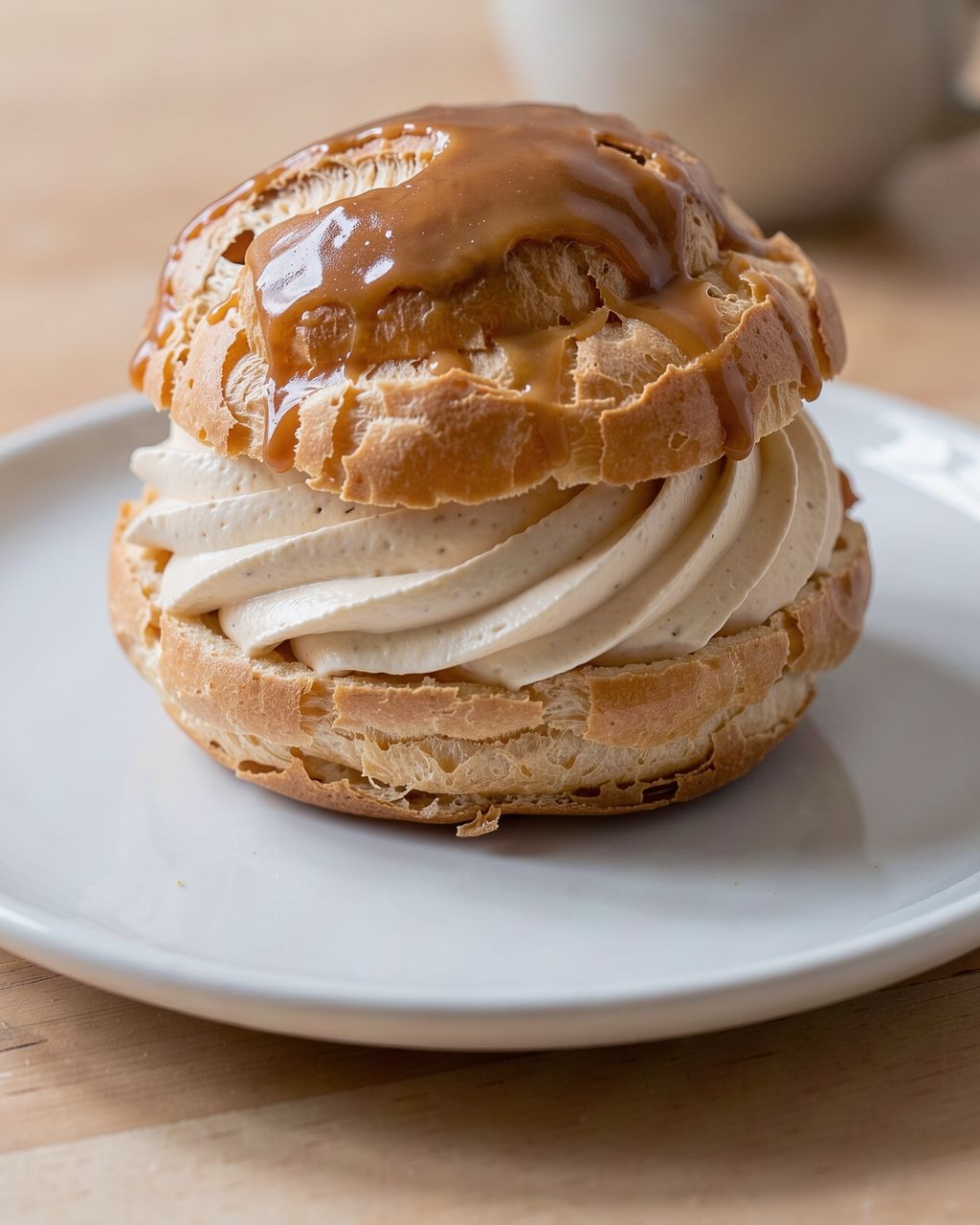
If you want something Czech bakeries have sold for generations, look for koláče (round yeast pastries filled with curd cheese, poppy seed or plum butter), buchty (filled sweet buns) or větrník (a large choux pastry with caramel cream). And if you want the trdelník with the longest documented history, the place to try it is Skalica, in Slovakia.
Trdelník is a hollow pastry made by wrapping sweet yeast dough around a spit, baking it over heat, and rolling it in sugar and nuts. It is sold hot from street stalls, especially in Prague.
Trdelník's best-documented home is Skalica in western Slovakia, and its roots lie in the former Kingdom of Hungary. It was also known in Moravia, but the Prague street version is a recent tourist food.
No, trdelník is not a traditional Prague or Bohemian food, although stalls often sell it that way. It is a regional Central European pastry that spread through Prague's tourist center from the early 2000s.
Trdelník and chimney cake (Hungarian kürtőskalács) are close relatives made the same way, by baking dough wound around a spit. They differ mainly in name, region and toppings.
Trdelník tastes like a warm sweet bread with a crisp caramelized sugar crust, usually with cinnamon and chopped nuts. Filled versions add ice cream, whipped cream or chocolate.
No, ice-cream-filled trdelník is a modern Prague invention that became popular in the 2010s. Traditional trdelník is eaten plain, coated in sugar and nuts.
One recipe worth heating the oven for, one tip, and one deal from the shop. Nothing else.