Oven-Roasted Potatoes: What Temperature for American-Style Wedges, New Potatoes and Jackets
Sweet Potatoes: How to Bake, Boil and Store Them (and Why They Don't Belong in the Fridge)
Updated Nov 17, 2026
Whole sweet potatoes bake in 45–60 minutes at 200°C (400°F), fries in about 30 minutes, and whole ones are tender after about 20 minutes in water. These times come from the North Carolina Sweetpotato Commission, a growers' association from the US state that grows more sweet potatoes than any other. But don't put raw sweet potatoes in the fridge. Cold damages them, and the center stays hard after cooking. Below you'll find times for the oven and the pot, how to store sweet potatoes, and how to freeze them so they don't turn watery when thawed.
Bake sweet potatoes at 200°C (400°F). Whole ones are done in 45–60 minutes, fries in about 30 minutes. Both times come from the North Carolina Sweetpotato Commission. The time depends mainly on thickness. Length doesn't matter, so a slim, long sweet potato bakes faster than a short, plump one.
The oven has one advantage over the pot. During slow heating, enzymes in the sweet potato break starch down into the sugar maltose, according to food chemists. That's why a baked sweet potato is sweeter and creamier than a boiled one.
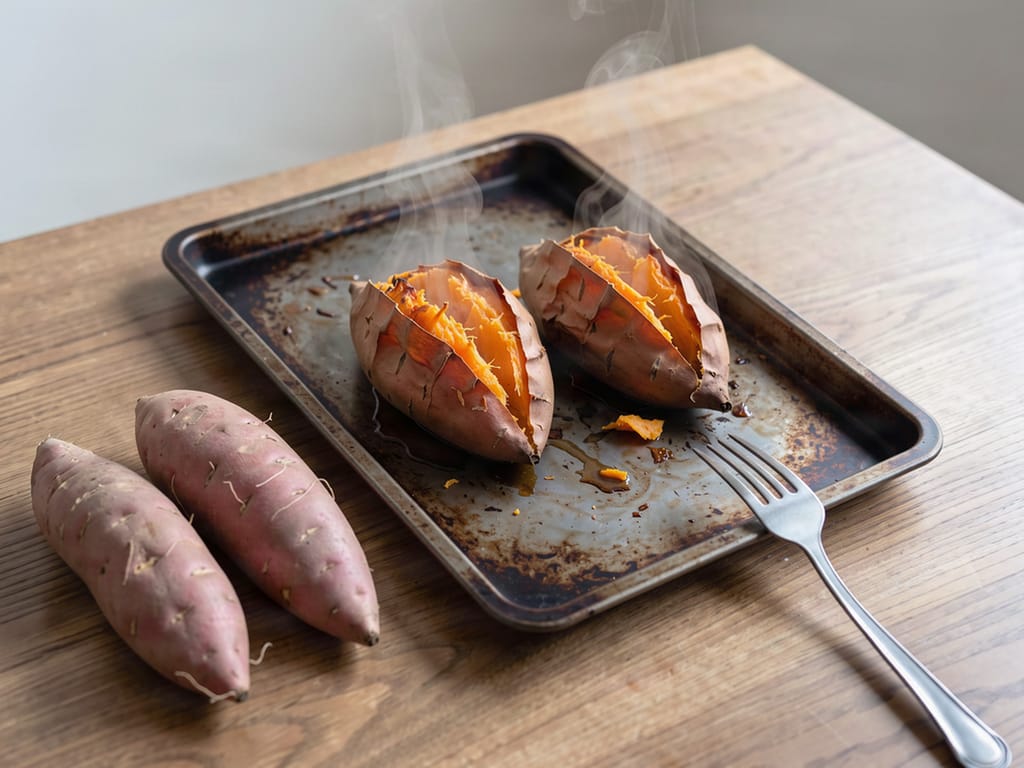
Bake whole sweet potatoes in their skins at 200°C (400°F) for 45–60 minutes, depending on thickness.
Scrub the sweet potatoes with a brush and dry them. There's no need to peel them.
Prick the skin with a fork 5–6 times all around so the steam can escape.
Place them on a baking sheet lined with aluminum foil or parchment paper. The caramelized juice that leaks out would otherwise bake onto the sheet.
Bake at 200°C (400°F) for 45–60 minutes, according to the NC Sweetpotato Commission.
How to tell they're done: a knife slides all the way to the center without resistance, the skin wrinkles slightly and loosens, and there's a sticky caramel patch on the paper. If you squeeze a sweet potato in a dish towel, it gives all the way through, even in the middle.
A halved baked sweet potato is a meal in itself. All it needs is a spoonful of sour cream or quark (tvaroh, a Czech fresh curd cheese), salt and a few herbs.
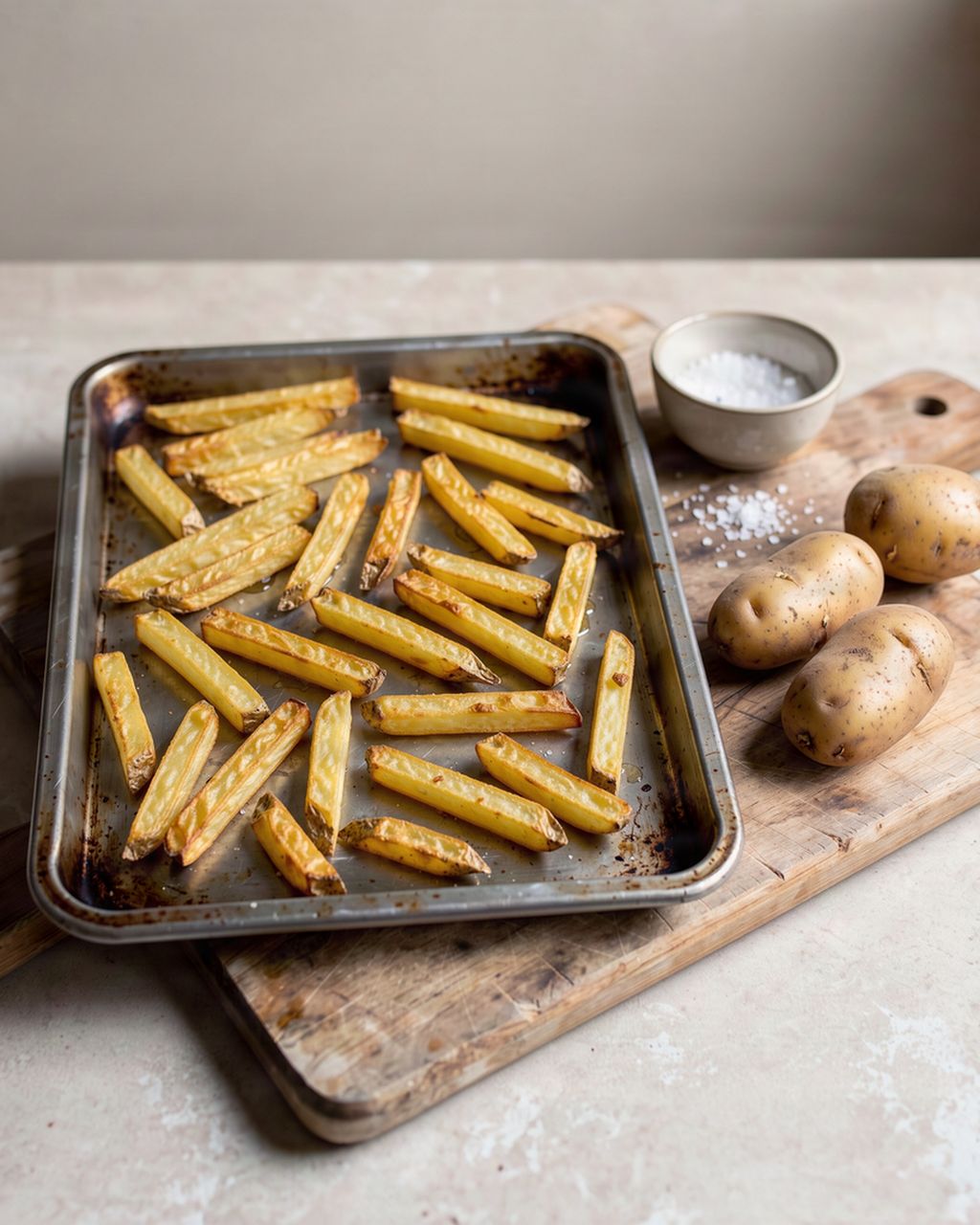
Bake fries about 6 mm (¼ in) thick at 200°C (400°F) for about 30 minutes, turning them halfway through, according to the NC Sweetpotato Commission. Bake cubes with 2–3 cm (¾–1¼ in) sides at the same temperature and turn them halfway too. They're thicker than fries, so allow longer than 30 minutes. They're done when the edges are browned and a knife slides through the center without resistance.
To get cubes that brown instead of steaming:
One layer, with gaps between the pieces. On a crowded sheet the steam has nowhere to go, and the sweet potatoes go soft before they can take on color.
Add oil and salt right before baking, to dry pieces. Oil won't cling to a wet surface.
Pieces of the same size, so they're all done at once.
Don't expect potato-style crispness. Sweet potato has more sugar and less starch than potato. The edges caramelize, but the center stays soft. If you want them really crisp, toss the cubes in a tablespoon of cornstarch before baking.
We cover the general principles of roasted vegetables, meaning why temperature, spacing and oil matter so much, in our article how to roast vegetables perfectly. For thin slices baked until dry, try sweet potato rosemary chips.
Seasonal baking plans, tested recipes and kitchen tricks that save you time. Unsubscribe in one click.
Whole sweet potatoes in their skins are tender in water after about 20 minutes. Slices about 2.5 cm (1 in) thick need only simmering in a small amount of boiling water for roughly 12–20 minutes, with a first check after 12 minutes.
Cook them in their skins if you can. That way the sweet potato takes on less water and won't turn mushy. Peel after cooking, when the skin slips off almost by itself.
For purée and mash, steam them or use a small amount of water. The less water the sweet potato absorbs, the thicker and sweeter the mash.
It's done when a fork slides in without resistance. An overcooked sweet potato falls apart faster than a potato, so keep an eye on it.
You can use boiled sweet potato in a sweet potato mash with asparagus and mushrooms, as a sweet potato purée to go with spring meatloaf with wild garlic, or in the batter for sweet potato pancakes with avocado mash. Raw cubes can go straight into a sauce to cook, as in sweet potato curry with red lentils.
Raw sweet potatoes suffer chill damage in the fridge. According to North Carolina State Extension, it happens below 10°C (50°F), and a fridge is usually around 4–5°C (39–41°F). Cold changes their tissue, and most often it shows up as a hard, woody spot in the center. The sweet potato looks perfectly normal raw, but after baking or boiling a piece in the middle stays firm no matter how long you cook it.
NC State Extension lists other effects of chilling too:
pitting and dark spots on the skin,
flesh that darkens quickly when cut,
cavities forming inside,
the sweet potato molds more easily.
The NC Sweetpotato Commission adds that sweet potatoes from the fridge have an unpleasant off-flavor. Once the fridge has damaged them, that can't be fixed, even if you put the sweet potato back on the counter.
Store raw sweet potatoes in a cool, dry, ventilated place, not in the fridge. According to the NC Sweetpotato Commission, they'll keep for about 2 weeks that way. NC State Extension gives 13°C (55°F) with high humidity as the ideal. That's more like the temperature of a cool pantry or cellar than a kitchen counter.
Loose, not in plastic. Moisture condenses in a closed bag and the sweet potatoes start to rot. A paper bag or basket works well.
Not next to the oven or a radiator. In warmth, sweet potatoes sprout and dry out faster.
Don't wash them ahead of time. Wash them just before cooking.
Set aside any bruised or dented ones. Rot starts first at a damaged spot, so use those first.
Baked or boiled sweet potatoes, on the other hand, do belong in the fridge. According to USDA FSIS, refrigerate them within 2 hours of cooking and use them within 3–4 days. Reheat baked cubes in a pan in the morning, or just toss them into a salad.
Sweet potatoes have different needs from ordinary potatoes, so don't store them next to potatoes out of habit. For regular potatoes, see our article how to store potatoes so they last until spring.
You can freeze sweet potatoes, but cook them first. The NCHFP, the US National Center for Home Food Preservation, recommends cooking, baking or steaming sweet potatoes until almost tender before freezing. You finish the job when you reheat them.
Boil, bake or steam the sweet potatoes until almost tender.
Let them cool at room temperature, peel them, and halve them, slice them or mash them into a purée.
To keep the flesh from darkening, dip slices for about 5 seconds in water with lemon juice. The NCHFP gives a ratio of about 120 ml (½ cup) of lemon juice to just under a liter (about 0.95 l) of water. Into just under a liter of purée, stir about 2 tablespoons of lemon or orange juice.
Fill containers or bags, leave about 1 cm (½ in) of headspace for expansion, seal and freeze.
How long in the freezer: at −18°C (0°F), food is safe indefinitely, according to USDA FSIS. For flavor and texture, though, FSIS advises using cooked leftovers from the freezer within 3–4 months.
The NCHFP also has a trick for whole baked sweet potatoes. Pre-bake them in their skins at 175°C (350°F) only until they begin to soften, let them cool, peel them, wrap each one separately in aluminum foil and freeze. Before serving, finish baking them in the foil at 175°C (350°F).
Frozen purée is best in soups, mashes and batters. Cubes go soft after thawing, so they're no longer good for crisp roasting. We cover blanching and freezing vegetables in full in our article how to freeze vegetables.
You can borrow the baking technique from potatoes, but not the times or the storage. Sweet potato bakes and boils slightly faster and falls apart easily, while a potato holds its shape. Neither tolerates the fridge, but for different reasons: cold damages a sweet potato, while a potato turns sweet in the cold. For temperatures and times for regular potatoes, see our article oven-baked potatoes. For sweet potato fries, the same rules apply as in our article homemade fries in the oven or air fryer, just expect a softer center.
You don't. Whole sweet potatoes are baked in their skins. Just scrub them with a brush and prick them with a fork. The skin is edible, and for cubes and fries it helps the sweet potato hold together. Peeling only pays off for purée or soup.
Prick a whole sweet potato 5–6 times with a fork and microwave it on full power for 5–8 minutes, turning it halfway through. These times come from the NC Sweetpotato Commission. Large ones need longer, and it's done when a knife slides through the center without resistance. The flavor won't be as caramelized as from the oven.
Use sweet potatoes from the fridge as soon as possible and don't put them back in the cold. Chill damage can't be undone. Cook them, or blend them into a purée or soup, where any harder center or off-flavor will be least noticeable. Throw away moldy pieces or soft, rotting ones.
The best way to thaw sweet potato purée is overnight in the fridge, or you can heat it straight from the freezer in a pot over low heat, stirring as it warms. You can also add it to soup or sauce still frozen. If a little water separates after thawing, just stir it in or simmer it briefly so it thickens.
You can eat sprouting sweet potatoes, just cut off the sprouts and the flesh around them. A sweet potato isn't related to the potato. It belongs to the morning glory family, so it doesn't form solanine when it sprouts the way potatoes do. Sprouting does draw water and sugar out of the sweet potato, though, so use it soon, while it's still firm. Throw away any that are shriveled, soft or moldy.
One recipe worth heating the oven for, one tip, and one deal from the shop. Nothing else.