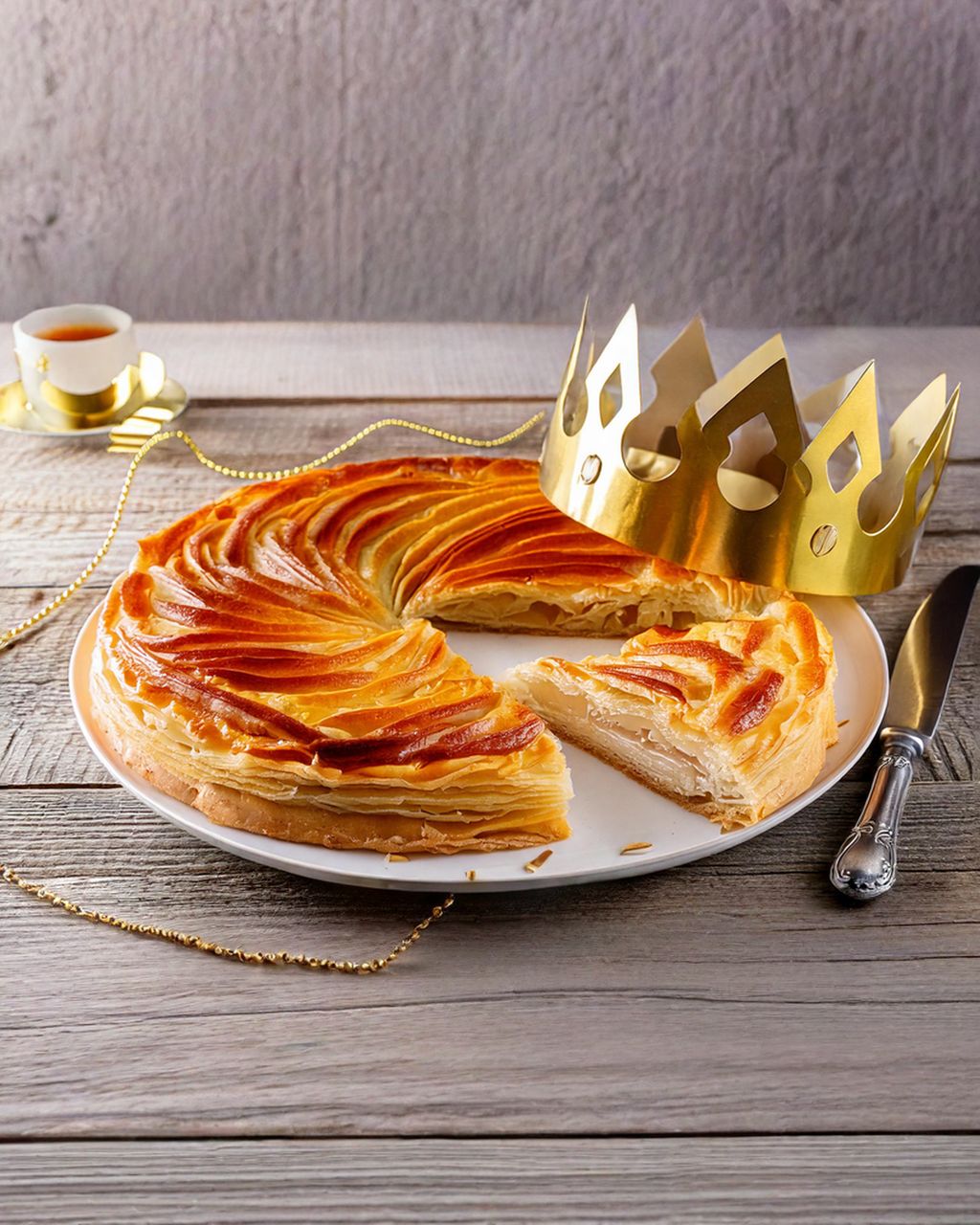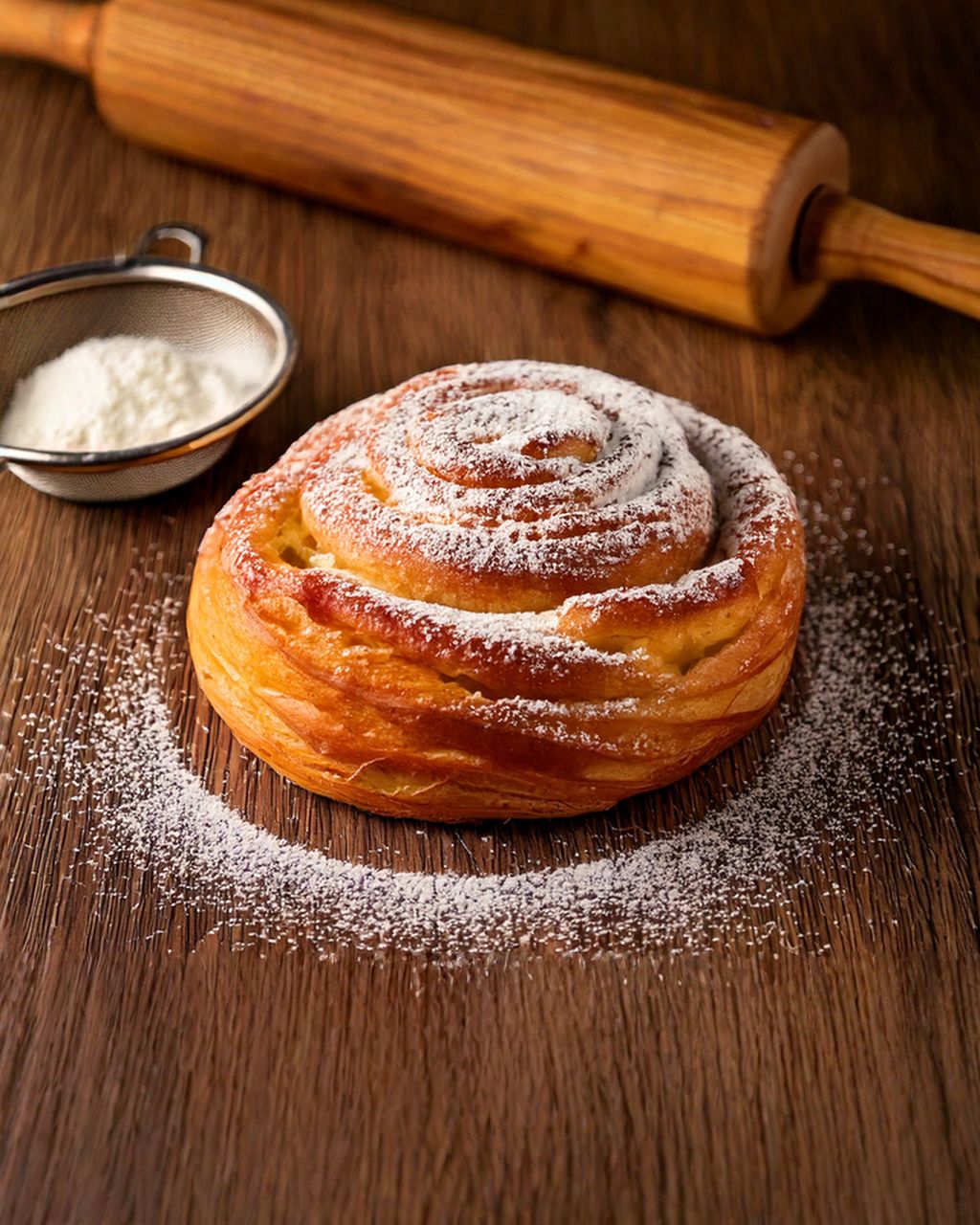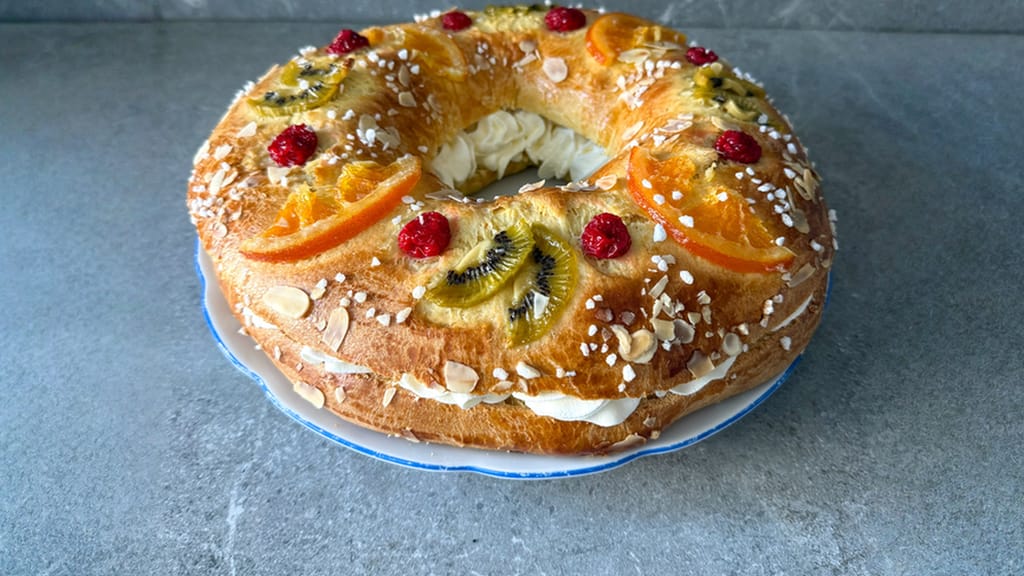
Roscón de reyes: spanish three kings' cake with candied fruit
Roscón de Reyes: How to Bake a Soft Spanish Three Kings Ring
Updated Nov 16, 2026
Roscón de Reyes is made from an enriched, brioche-style yeast dough – with eggs, milk, sugar and butter – and it stays soft thanks to two things: a long, cold rise and plenty of fat. In Spain it's baked for Three Kings' Day on January 6: a ring scented with orange blossom water and citrus zest, studded with candied fruit, with a figurine and a fava bean hidden inside, and often sliced open and filled with cream. Here you'll find everything about the dough, shaping and decorating; the step-by-step method is in our roscón recipe.
The full method with weights, times and temperatures is in the recipe Roscón de Reyes: Spanish Three Kings Cake with Fruit. This article adds to it by explaining why each step works and where a roscón most often goes wrong.
Roscón de reyes: spanish three kings' cake with candied fruit
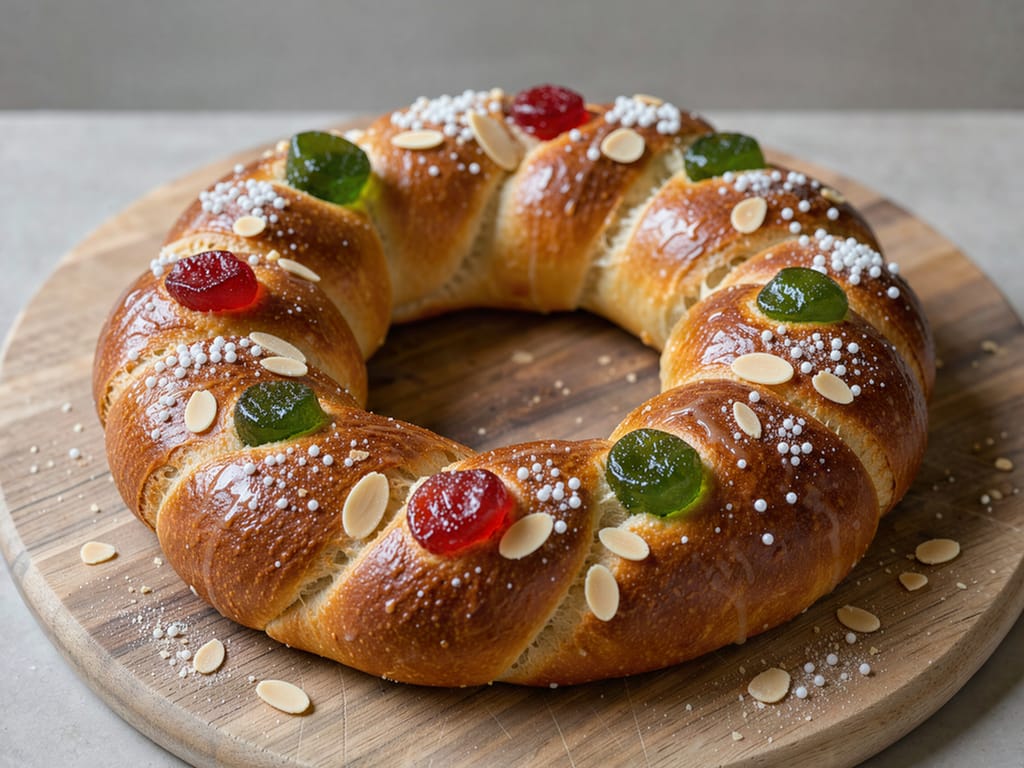
Roscón de Reyes – a recipe for a Spanish Three Kings ring with candied fruit
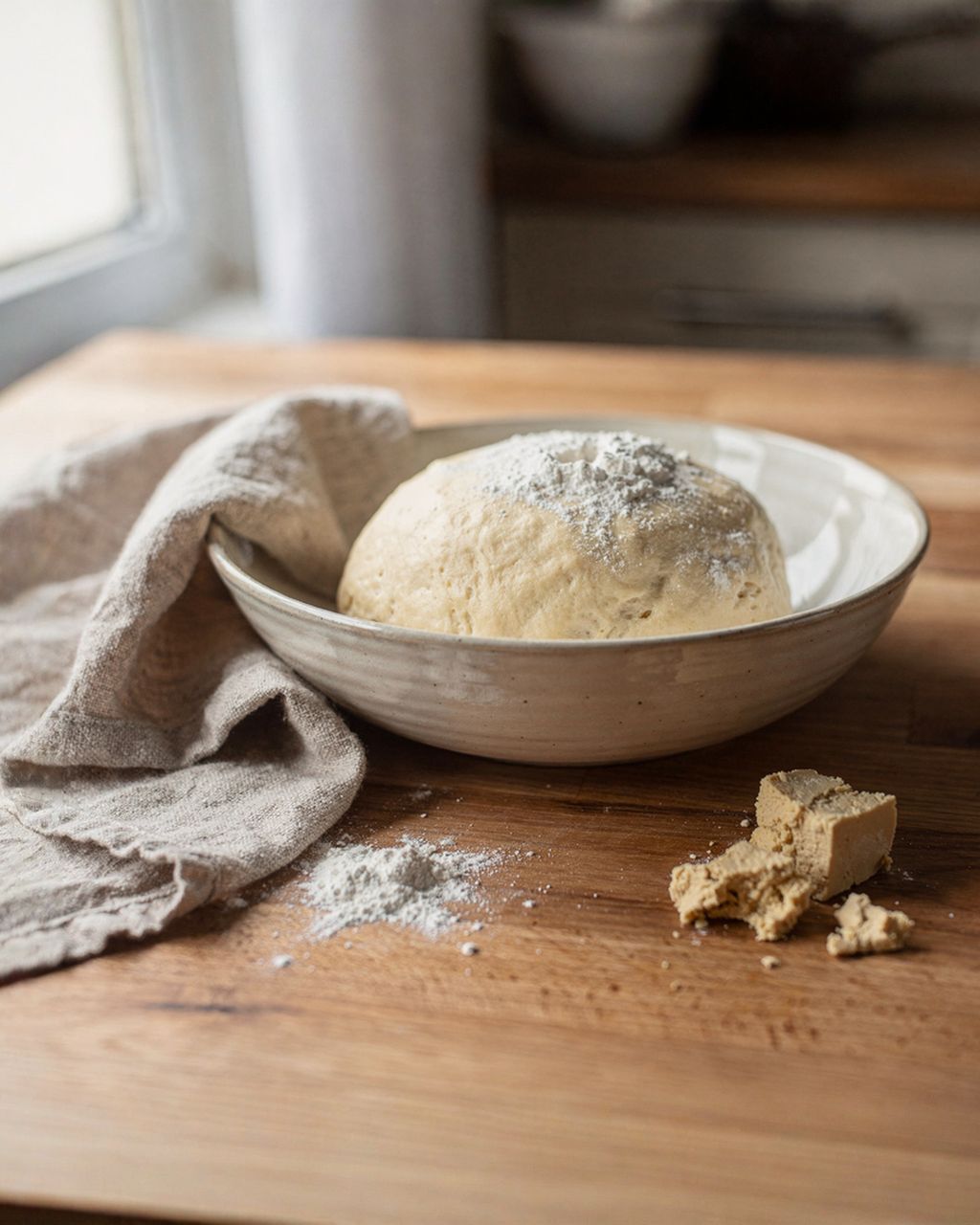
A roscón calls for an enriched, brioche-style yeast dough: light, higher-protein wheat flour, eggs, milk, sugar and plenty of butter. It's a close relative of vánočka (Czech braided Christmas bread), only softer, more fragrant and richer in fat.
What each ingredient does:
Higher-protein flour – in the Czech Republic that means light all-purpose (plain) flour (Czech hladká) or extra-fine all-purpose flour (Czech hladká 00 extra), at around 11–12% protein (check the package), or a stronger Italian manitoba flour. It builds a firm gluten network that holds up the rich dough and gives it volume. With a weak flour, the roscón spreads sideways.
Butter – softens the crumb and slows drying out. Spanish recipes usually use around 20–25% of the flour's weight (roughly 100–125 g for 500 g flour).
Eggs and milk – richness, color and a fine, cottony structure.
Sugar – sweetness and a golden crust, but it slows the yeast, which is why rich dough rises more slowly than bread dough.
Add the butter only once the dough is already developed, in pieces and soft (not melted). If you add it right at the start, it coats the flour and the gluten develops far less well. The dough is ready when it pulls away from the bowl and can be stretched into a thin, translucent membrane. For more on ratios and handling yeast dough, see Yeast dough: basic ratios and how to work with it.
The best roscón rises overnight in the fridge, for roughly 12–18 hours, and then for another 2–3 hours at room temperature once shaped into a ring. A quick same-afternoon version works too, but the roscón comes out drier and flatter in flavor.
Why the cold helps:
Flavor. During a slow rise, the yeast and enzymes have time to break down starches and build aromas that two hours in the warm can't produce.
Softness. Overnight, the flour absorbs the liquid thoroughly, so the crumb holds moisture and goes stale more slowly. The longer and colder the rise, the finer the crumb.
Handling. Chilled butter dough isn't sticky and is easy to shape. Warm brioche dough is tacky and tempts you to dust it with flour – and every extra spoonful of flour dries the roscón out.
After taking the dough out of the fridge, let it relax for about an hour, then shape it. The shaped ring is fully proofed when it has roughly doubled in size and a dent made by gently pressing a finger springs back slowly.
Want the roscón to stay soft on the second day? You can replace part of the sugar with a spoonful of invert sugar – it holds moisture in the dough. It's optional, not essential.
The typical roscón aroma comes from orange blossom water (agua de azahar) together with grated orange and lemon zest. Without them, it's just a sweet ring.
Zest: grate only the outer colored layer – the white pith beneath is bitter. You'll draw out the most aroma if you toss the zest with sugar the evening before, or let it steep in the milk – the essential oils from the zest then spread through the whole dough.
Orange blossom water is strong. Start with one or two tablespoons for 500 g flour; any more and the roscón starts to taste like soap. Buy the kind meant for baking, not cosmetic.
Some bakers also add a spoonful of rum or brandy, which makes the dough smell even better. Some of the alcohol evaporates during baking, but not all of it, so leave it out if you're baking for children.
A roscón isn't shaped by coiling a rope of dough into a circle, but by poking through a ball: you shape a tight ball, make a hole in the middle with your fingers and gradually stretch it into a large ring.
Shape the rested dough into a smooth ball with the seam underneath and a taut surface.
Flatten it slightly, push your thumbs through the middle and turn the dough between your hands like a steering wheel until the hole is about a palm wide.
Transfer the ring to a baking sheet lined with parchment paper and stretch the hole to 15–20 cm (6–8 in). It looks exaggerated, but the center closes in noticeably during rising and baking.
If you want to be sure, place a greased ovenproof bowl or a ring mold in the middle to hold the hole open.
If the dough keeps springing back as you stretch it, let it rest for five minutes and carry on – the gluten relaxes on its own. Push the figurine and the bean into the dough from underneath only now, into the shaped ring.
A traditional roscón is decorated with candied fruit – orange slices, pieces of red and green candied cherries or melon –, sliced almonds and coarse sugar moistened with a few drops of water. The colors are said to resemble the jewels on the Three Kings' robes.
How to decorate:
Gently brush the fully proofed ring with beaten egg (ideally with a drop of milk or water), so it doesn't set unevenly or streak.
Press the fruit and almonds in only lightly, so they don't fall off during baking, but not so hard that you flatten the dough.
Moisten the coarse sugar with a teaspoon of water so it forms clumps, and scatter it between the fruit.
You can also make candied peel at home – it's much more fragrant than store-bought, just allow 2–3 days, mainly for drying; the method is in the article chocolate-dipped candied orange peel. For roscón, skip the chocolate and use just the candied strips.
Roscón bakes briefly: about 180°C (350°F), 15–25 minutes depending on size, on the middle rack of the oven. Short baking is the third, often overlooked route to softness – every extra minute dries out the crumb.
The crust should be golden, not dark brown. If the almonds darken before the roscón is done, cover the ring loosely with aluminum foil.
The most reliable tool is an instant-read thermometer: the crumb is baked through at roughly 88–90°C (190–194°F) inside. The higher temperatures you know from bread apply to lean dough – with brioche dough they'd dry it out for no reason.
Straight out of the oven, you can brush the roscón with a thin sugar syrup – it adds shine and slows drying.
Let it cool completely before filling it with cream, or the filling will run out.
Two things hide inside a roscón: a small figurine (sorpresa) and a dried fava bean (haba). Whoever finds the figurine is "king" for the day and wears a paper crown; whoever finds the bean, by tradition, pays for next year's roscón.
The custom of hiding a bean in festive baking is much older than the roscón itself. The figurine as a prize in the roscón came later, according to various sources in the 19th or early 20th century, and only with it did the bean become the thing you pay for. You'll find the same custom in the roscón's French cousin – the puff pastry galette des rois with almond filling, which we cover in a separate article on the origins of galette des rois and how to bake it.
Use an ovenproof figurine (porcelain, ceramic). Even a large figurine isn't safe for small children, though – more in the box below. Plastic melts in the oven. If you'd rather not bake anything inside, push the figurine and bean into the baked ring from underneath just before serving.
In Spain, roscón is sold either unfilled or sliced horizontally in half and filled with whipped cream (nata), vanilla custard (crema pastelera) or chocolate cream. Filling is optional – without it the roscón is less rich and keeps longer.
Whipped cream – whipping cream with at least 30% fat, whipped with a little powdered sugar. The airiest option, but it softens fastest; for stability you can add a spoonful of mascarpone.
Vanilla custard – milk, egg yolks, sugar and starch, cooked until thick. Denser and holds its shape. Vanilla pods give it a true vanilla flavor: split the pod, scrape the seeds into the milk and leave the scraped pod to steep in it while it heats. Chill the custard completely with plastic wrap pressed directly on the surface, and whisk it smooth before filling.
Slice the roscón with a long serrated knife and fill it only a few hours before serving. Once filled, it belongs in the fridge and should be eaten by the next day at the latest. According to the Ohio State University Extension storage chart, egg-based custards and baked goods with a cream filling keep 1–2 days in the fridge, including the time the custard waited to be used.
Recipe of the week, one tip that saves you time and one deal from the shop. Unsubscribe in one click.
The next issue goes out on Thursday, November 26.
For a roscón with afternoon coffee on Three Kings' Day (January 6, 2027 falls on a Wednesday), start two days ahead:
Evening of January 4 – toss the zest with sugar.
Evening of January 5 – make the dough, let it rise for an hour in a warm place, then refrigerate overnight. If you're filling it with custard, cook it now and chill it in the fridge.
Morning of January 6 – after roughly 12–14 hours, take the dough out, let it relax for an hour, shape the ring, let it proof for 2–3 hours, decorate and bake.
Afternoon of January 6 – fill the cooled roscón and serve.
Want roscón for breakfast on January 6? Move everything a day earlier: make the dough on the evening of January 4, take it out on the afternoon of January 5 and bake in the evening. An unfilled roscón keeps overnight wrapped in a kitchen towel and a bag, and you simply fill it in the morning. For how long yeast bakes keep and how to keep them soft, see how long vánočka keeps and how to keep it soft – the same applies to roscón.

Patisdécor
Uganda Vanilla Beans, 2 pcsIn Spain, roscón de Reyes is eaten on January 6, the feast of the Three Kings, usually for breakfast or in the afternoon. It's traditionally served with thick hot chocolate or coffee; the night before, the Three Kings bring children their presents.
The closest substitute is extra grated orange zest plus a drop of good-quality orange extract or a spoonful of orange liqueur (leave out the liqueur if children will be eating the roscón). You won't fully replace the floral note, but the roscón will still smell wonderfully of citrus. Rose water and vanilla won't recreate the typical roscón aroma.
An unfilled roscón de Reyes is best within 24 hours, and stays soft for about two days wrapped in a bag at room temperature. It doesn't belong in the fridge, where it turns hard faster – the exception is a roscón filled with cream or whipped cream: that one goes in the fridge and should be eaten by the next day at the latest.
Yes, an unfilled roscón de Reyes can be frozen for up to a month, ideally as soon as it has cooled completely, well wrapped. Thaw it still wrapped at room temperature and warm it in a 150°C (300°F) oven for a few minutes before serving. Don't freeze it filled with cream or whipped cream.
Roscón de Reyes is a yeasted ring of brioche-style dough with orange water and candied fruit, whereas the French galette des rois is a flat puff pastry tart with an almond frangipane filling. Both are baked for Three Kings' Day, and both hide a figurine.
One recipe worth heating the oven for, one tip, and one deal from the shop. Nothing else.