Puff pastry bites
Galette des rois (French Three Kings Cake): History and How to Bake It at Home
Updated Nov 15, 2026
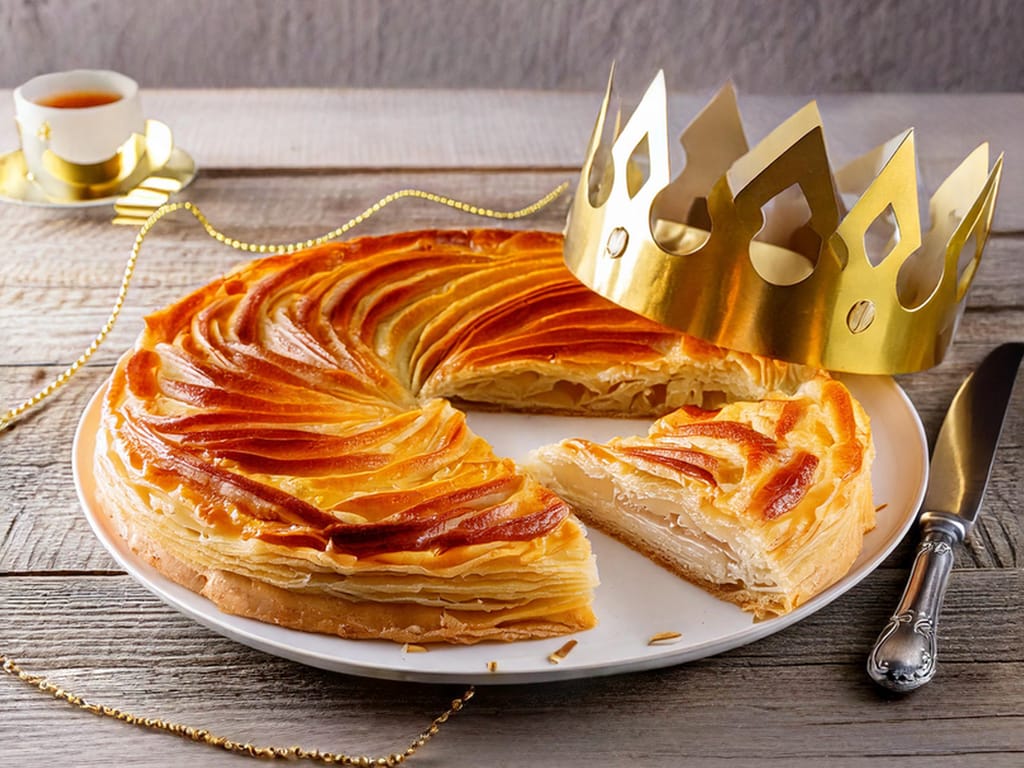
Galette des rois is a French Three Kings cake made from two rounds of all-butter puff pastry with almond frangipane cream between them and a little fève (charm) hidden inside. It's eaten around Epiphany (January 6) and, in France, pretty much all through January. Whoever finds the fève in their slice is king for the day. You can make it at home with store-bought or homemade puff pastry. The filling takes just 100 g butter, 100 g sugar, 100 g almond flour and 2 eggs, plus plenty of cold and a few tricks to keep the cake from splitting open and help it puff up nicely. Here you'll find where the galette comes from, the full method with grams and temperatures, how to decorate it and how to hide the fève so it's safe even for small children.
Galette des rois combines the Roman custom of drawing a "king for the day" at the Saturnalia with the Christian feast of Epiphany (January 6). According to historians, the draw using a bean hidden in the food comes from the Saturnalia. The feast of Epiphany (Three Kings' Day) commemorates the arrival of the three wise men at the manger. In France, Epiphany is celebrated on the Sunday between January 2 and 8, and bakeries sell galettes practically all through January.
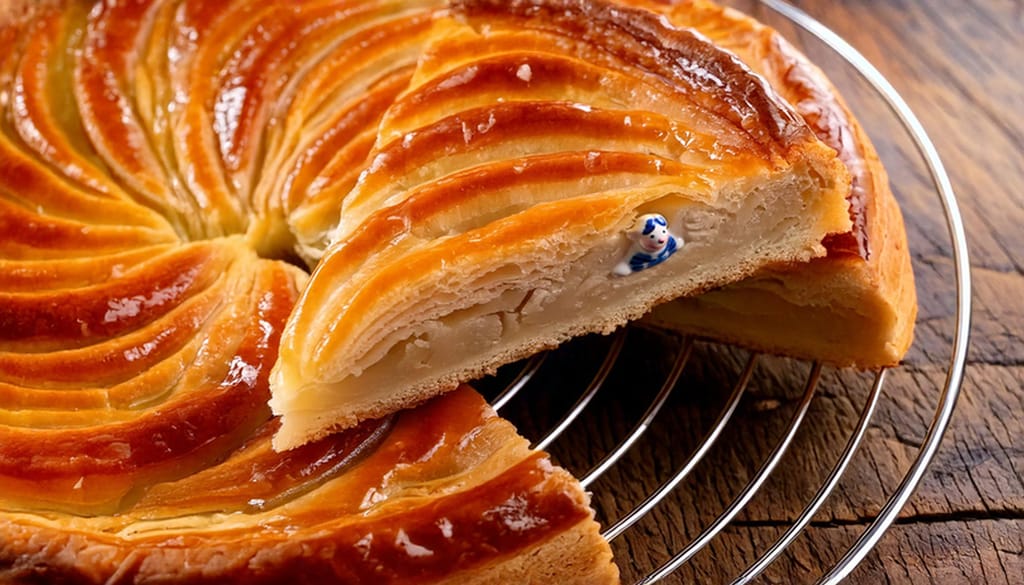
A cake with a hidden bean is documented in France as far back as the Middle Ages. The almond cream frangipane is traditionally said to be named after the Italian Frangipani family, and it appears in French cookbooks in the 17th century. At the end of the 19th century, tiny porcelain figurines replaced the dried bean, in French the fève. Today enthusiasts collect them, and they're known as fabophiles.
Every region has its own version. In northern France and Paris, the puff pastry galette with frangipane rules. In the south, especially Provence, people bake brioche des rois: a yeasted ring with candied fruit. In Spain it's the roscón de reyes (more on both below).
Today the galette is mostly about sharing: the family gathers, the cake is cut, and everyone waits anxiously to see whose slice has the fève. Whoever finds it puts on a paper crown and is king for the day.
Seasonal baking plans, tested recipes and kitchen tricks that save you time. Unsubscribe in one click.
Galette des rois rests on three things: all-butter puff pastry (2 rounds, 24–26 cm / about 9½–10 in across), almond frangipane cream (about 400 g) and a hidden fève charm. The traditional Three Kings cake needs little else, which makes the quality of each ingredient matter all the more.
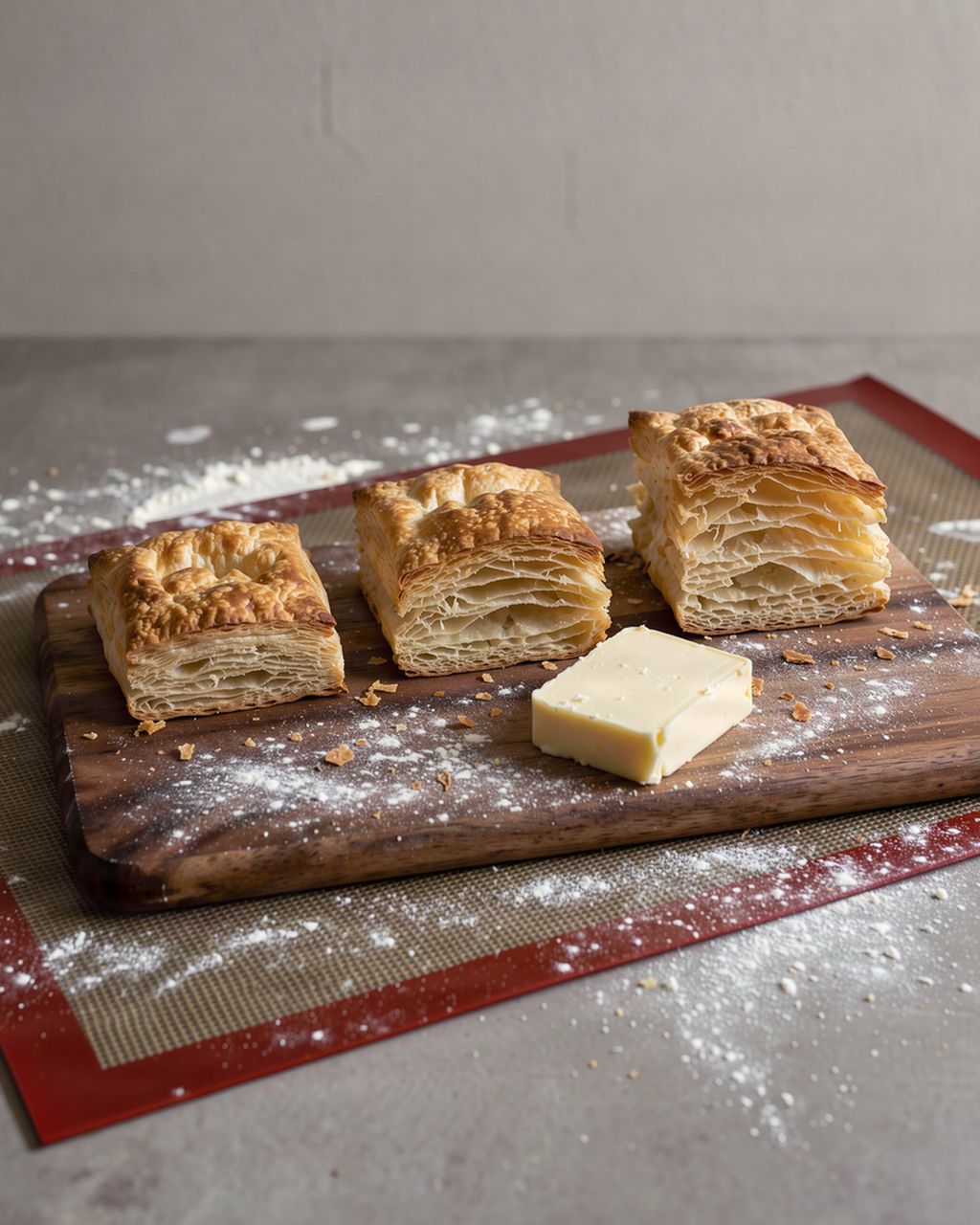
For galette des rois, feel free to use store-bought puff pastry, as long as it's made with butter. The pastry should give the cake dozens of tender layers, and those rise best and taste best with butter. So look on the package for butter, not vegetable fat (French pur beurre) and the shortest ingredient list you can find. You can also tell all-butter pastry by its smell once it's baked.
Store-bought (2 sheets or 2 round sheets): ready in 5 minutes and reliable. Cut out a round using a plate or cake ring 24–26 cm (about 9½–10 in) across.
Homemade pâte feuilletée: the most layers and the best flavor, but count on 4–6 hours, because the dough has to chill between folds.
Rough puff (quick puff pastry): a compromise that takes about an hour. It rises a little less, but it's plenty good enough for a galette.
For a detailed comparison of all three, and when each one is worth it, see the article Puff pastry: store-bought, homemade or rough puff.
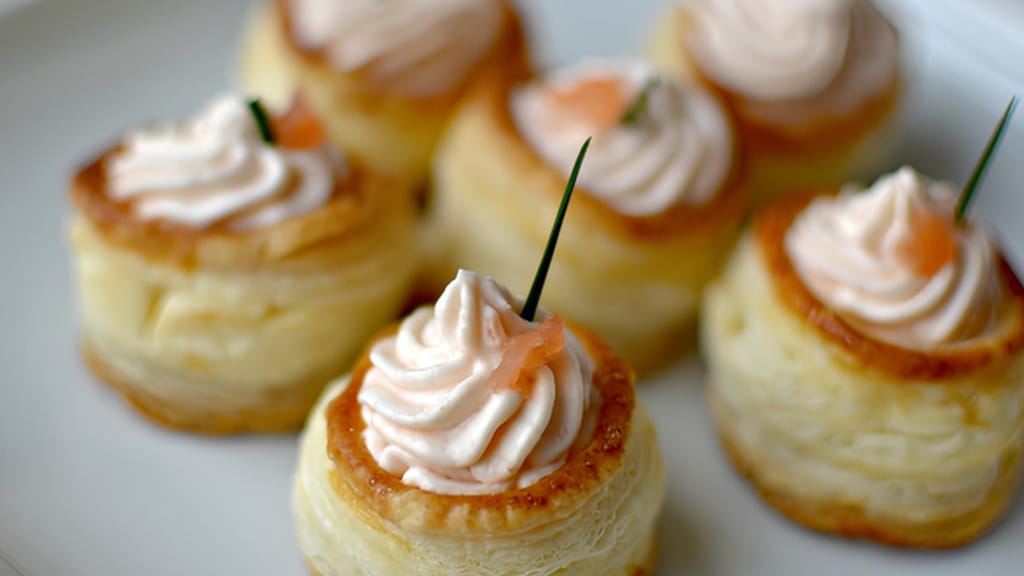
Puff pastry bites
Puff pastry shells: a recipe where you can practice working with puff pastry before making the galette.
Frangipane is built on almond cream (crème d'amande) made from equal parts butter, sugar, almond flour and eggs, 1 : 1 : 1 : 1. For one galette 24–26 cm (about 9½–10 in) across (6–8 servings) you need:
100 g butter, softened to room temperature,
100 g sugar (powdered or granulated),
100 g almond flour (finely ground blanched almonds),
2 eggs (about 100 g without the shell),
optionally 10 g all-purpose (plain) flour or starch (they help the filling hold its shape), the seeds from half a vanilla bean and 1 tablespoon rum.
Just beat the butter and sugar until smooth; don't whip it into a fluffy mass. Then mix in the eggs one at a time and the almond flour last. Air whipped into the cream expands in the oven, so the filling puffs up and pushes through the edges. Chill the finished cream for at least 30 minutes so it firms up and becomes spreadable.
According to pastry chefs, true frangipane is actually a mix of almond cream and a smaller portion of pastry cream (crème pâtissière), usually 2 parts almond cream to 1 part pastry cream. That makes the filling softer and less greasy. At home, though, you can happily get by with the almond cream alone.
The almonds matter. Finely ground blanched almond flour gives a smooth, pale cream. Almonds ground with their skins are darker and coarser, but they have a stronger flavor. The flour should be fresh: stale almonds give themselves away with a bitter, rancid taste.
The fève is a charm baked into the filling of galette des rois, and whoever finds it in their slice is king for the day. Originally it was a dried bean; today it's usually porcelain, ceramic or metal.
Don't have a porcelain fève? The traditional substitute is a dried bean or a whole almond. But a hard charm and a whole nut can both easily be swallowed, or can break a tooth. If small children will be at the table, don't bake the charm in; slip it into the finished cake instead (we explain how below).
You can bake galette des rois in six steps, in about 2 hours total (most of that time the pastry is resting in the fridge):
Cut out two rounds of puff pastry: the bottom one 24 cm across, the top one 1–2 cm larger so it covers the filling without stretching. Put them on parchment paper and chill for 20 minutes.
Spread about 400 g chilled frangipane over the bottom round in a layer 1.5–2 cm thick, leaving a 2–3 cm border all around.
Place the fève closer to the edge, so you don't hit it with the first cut. (For small children, don't bake it in; see below.)
Brush the border with water, cover with the top round, press out the air and press the edges down firmly.
Brush the top with egg yolk, chill for 30 minutes, brush a second time, score a pattern and cut a small steam vent in the center.
Bake in a preheated oven for 10 minutes at 200°C (400°F), then 25–30 minutes at 180°C (350°F) (conventional, top and bottom heat), until the galette is deep golden on the bottom too.
Below, we go through each step and why it matters.
What seals the edges of a galette is cold pastry, water and firm pressure, nothing more. The most important thing is keeping it cold. The cold butter in the pastry turns to steam in the oven, and the steam lifts the layers. Warm, soft pastry spreads out instead and doesn't rise. Before you assemble the galette and before you bake it, always chill it for 20–30 minutes. If the pastry starts sticking to your fingers as you work, put it back in the cold for 10 minutes.
Brush the edges with water, not egg, before sealing. Egg glues the edges less well, and it also burns on them. Press the rounds together firmly with your fingers, then go around the edge with the back of a knife, making small cuts from the outside in to "pull it in" (the French call this chiqueter). The edge holds better that way and the frangipane doesn't leak out. Better not to use a fork: it squashes the layers and the edge won't rise.
For a glossy, deep golden galette, 1 egg yolk beaten with 1 teaspoon milk and a pinch of salt is all you need. The salt thins the yolk so it brushes on more easily. Brush twice: the first time right after assembling, the second after 30 minutes in the fridge, just before decorating. Two thin coats give a deeper color than one thick one. Brush only the top and take care that the egg doesn't run down the sides: egg glues the layers together at the cut edge, and then the edge won't rise.
Draw the pattern with the back or tip of a small knife and cut only through the top layer of pastry, never through to the filling. Classic patterns:
Sun (spiral): curves from the center to the edge, like the blades of a pinwheel.
Ears of wheat (épi): one straight line with slanted cuts on both sides, like the grains on a stalk.
Lattice: parallel lines in two directions, the easiest for beginners.
In the center, cut a small steam vent (French cheminée) with the tip of a knife, and feel free to add 3–4 tiny pricks between the lines of the pattern. Steam escapes through them. Without them, the cake balloons up and bursts in an unexpected spot.
Bake galette des rois in a preheated oven first for 10 minutes at 200°C (400°F) so the pastry puffs up sharply, then lower to 180°C (350°F) and bake another 25–30 minutes. With a convection setting, go 10–20°C lower. The gentler temperature and longer time dry out the bottom too, so the pastry inside doesn't stay raw and gummy. Put the baking sheet on the lower third of the oven, where the bottom is closer to the heat.
You can tell the galette is done when:
it's deep golden brown on top and on the bottom (carefully lift it with a spatula to check),
you can see separate, puffed-up layers of pastry on the sides,
the frangipane doesn't bubble in the steam vent and is firm.
For a bakery shine, brush it right after taking it out with a thin layer of sugar syrup (a tablespoon of sugar dissolved in a tablespoon of hot water). Then let it rest for at least 20 minutes so the filling sets. Serve lukewarm.
Galette des rois is served lukewarm, cut into wedges right at the table, with a bit of ceremony. Let it cool briefly after baking, move it to a nice plate and cut as many wedges as there are guests, plus the traditional "extra share" for an unexpected visitor (called the part du pauvre, the poor person's share). Reheat a cooled galette for 5–8 minutes at 150°C (300°F); the butter pastry crisps up again and smells wonderful.
One game goes with the tradition: the youngest in the family crawls under the table and, as each wedge is cut, names who gets it. That way it's certain that nobody cheats and the fève really goes to chance. Whoever then finds the charm in their slice is king or queen, puts on a paper crown and chooses a partner. By custom, that person then buys or bakes the next galette.
A glass of hard cider (cidre) (as they do in Normandy and Brittany), dry sparkling wine or Champagne goes wonderfully with buttery pastry and almond filling. A non-alcoholic option? Apple juice, freshly squeezed orange juice or black tea. If you want a richer spread, add mild cheeses like brie and camembert with grapes or figs.
The classic is frangipane, but the galette takes well to lots of variations: gluten-free, fruity, chocolate, and even a completely different yeasted dough. Whichever you pick, the principle stays the same: a crisp shell, a flavorful filling and a hidden fève.
You can swap the classic puff pastry for a gluten-free one. The surest route is to buy ready-made gluten-free puff pastry, but expect it to be less flaky and to rise less than wheat pastry, because without gluten the layers don't lift as much. Frangipane is gluten-free on its own; just use cornstarch instead of all-purpose (plain) flour. Work quickly with well-chilled pastry, though, because gluten-free dough is harder to roll out and tears more easily.
You can make a fruit or chocolate galette des rois by mixing 80–100 g fruit (raspberries, blueberries or chopped apricots) or 50 g chopped dark chocolate into the chilled frangipane. Fruit adds freshness and color, but don't use more, because it releases juice and the filling would turn runny. Add frozen fruit without thawing it. Chocolate melts in the oven and goes beautifully with almonds. You can also use a tablespoon of cocoa instead. Other popular variations are pistachio frangipane (replace half of the almond flour with ground pistachios) or a layer of thick apple purée under the cream. Fold in the fruit or chocolate only right before assembling.
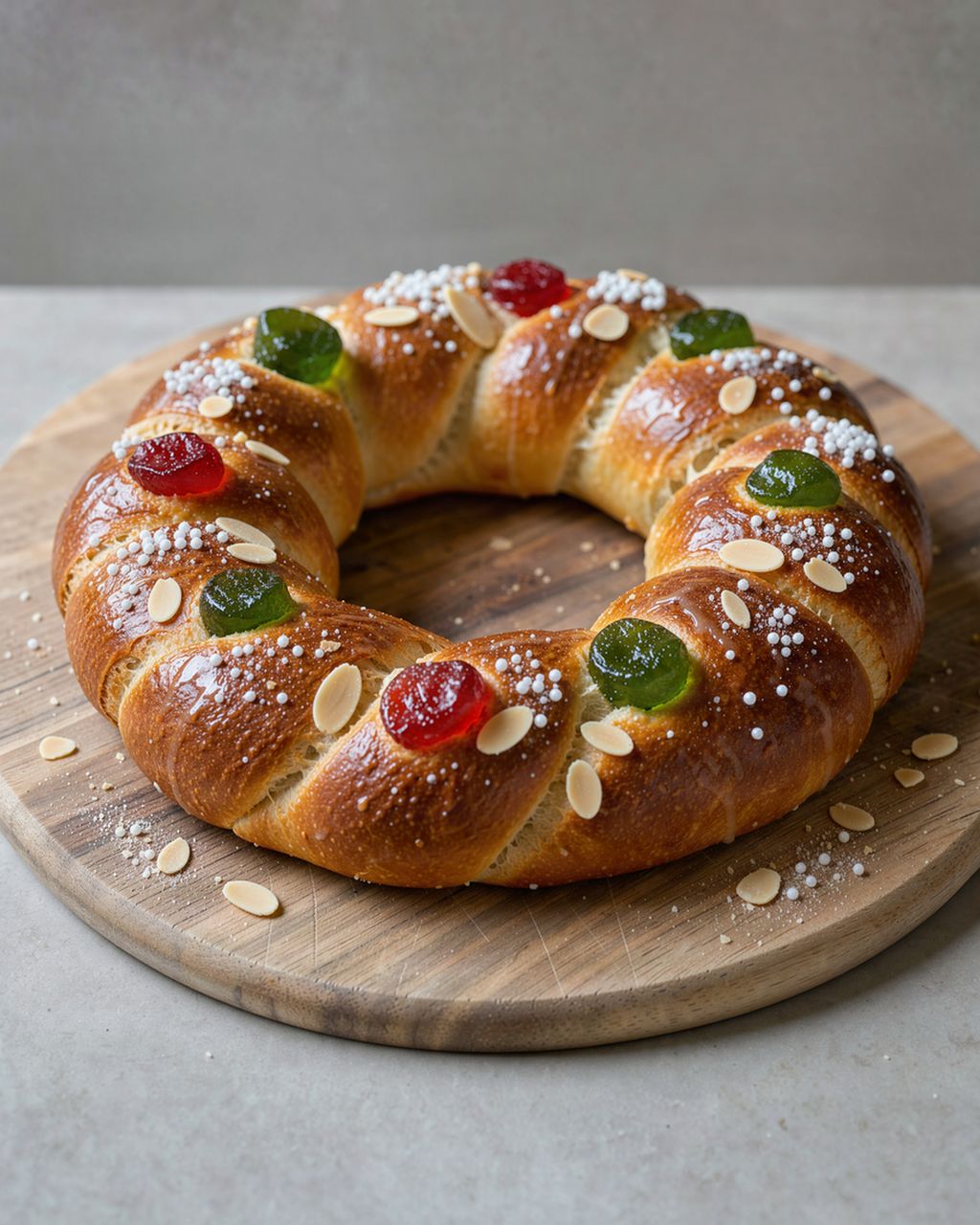
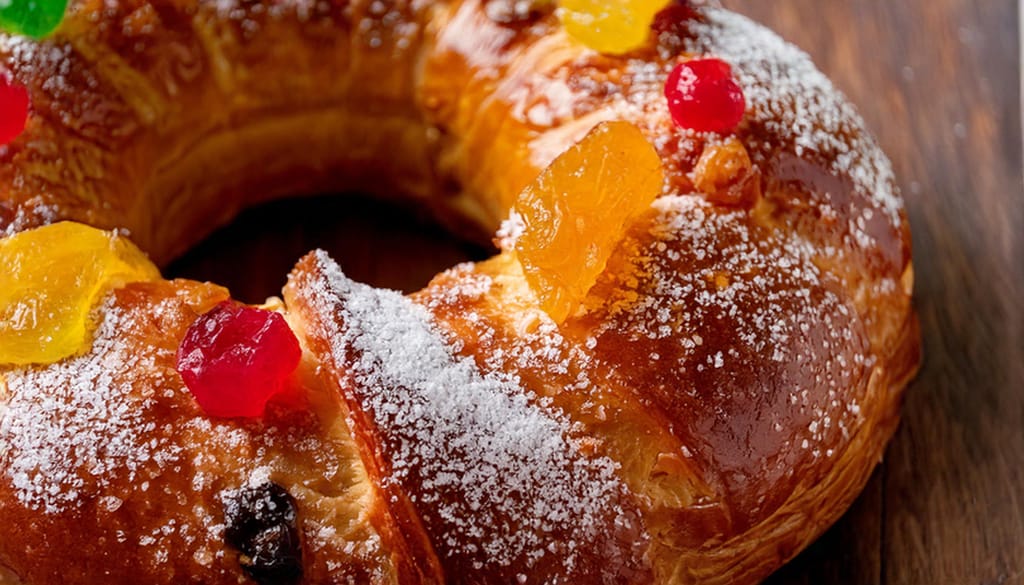
In southern France, instead of the puff pastry galette, people bake brioche des rois (also gâteau des rois): a yeasted butter brioche shaped like a ring, scented with orange blossom water and decorated with candied fruit and pearl sugar. It's lighter and less buttery-flaky than the galette. The fève is hidden in it in the same way.
Roscón de reyes is the Spanish Three Kings cake: a yeasted ring scented with orange zest and blossom water, decorated with candied fruit and sliced almonds, and often split and filled with whipped cream. It's eaten on the morning of January 6, when children in Spain get presents from the Three Kings. Two things are usually hidden inside: a figurine, which makes the finder king, and a dried bean. Whoever finds the bean pays for next year's roscón. You can already find a recipe on Yumsto.
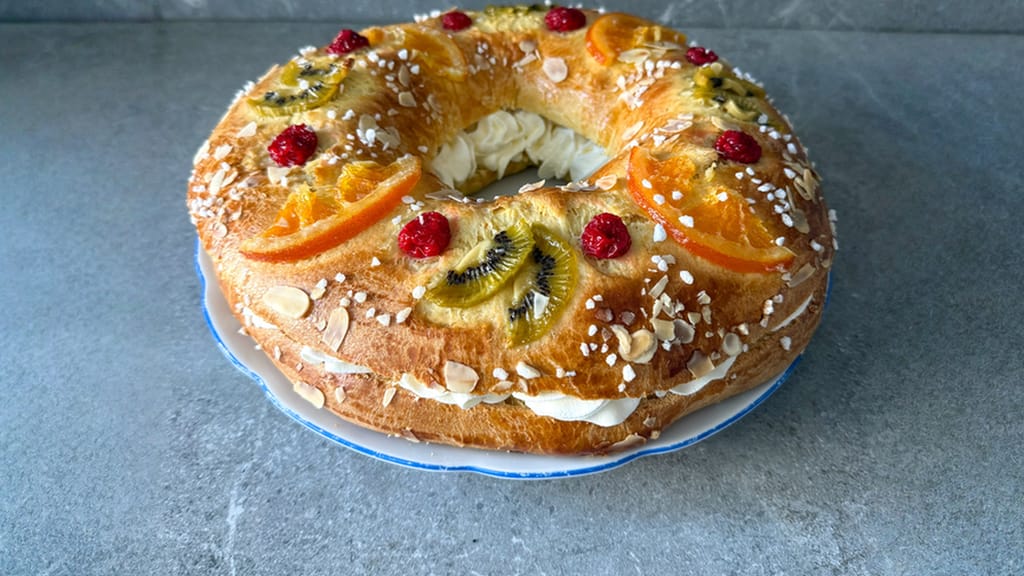
Roscón de reyes: spanish three kings' cake with candied fruit
Roscón de reyes: a recipe for the Spanish Three Kings cake with candied fruit.

Patisdécor
Uganda Vanilla Beans, 2 pcs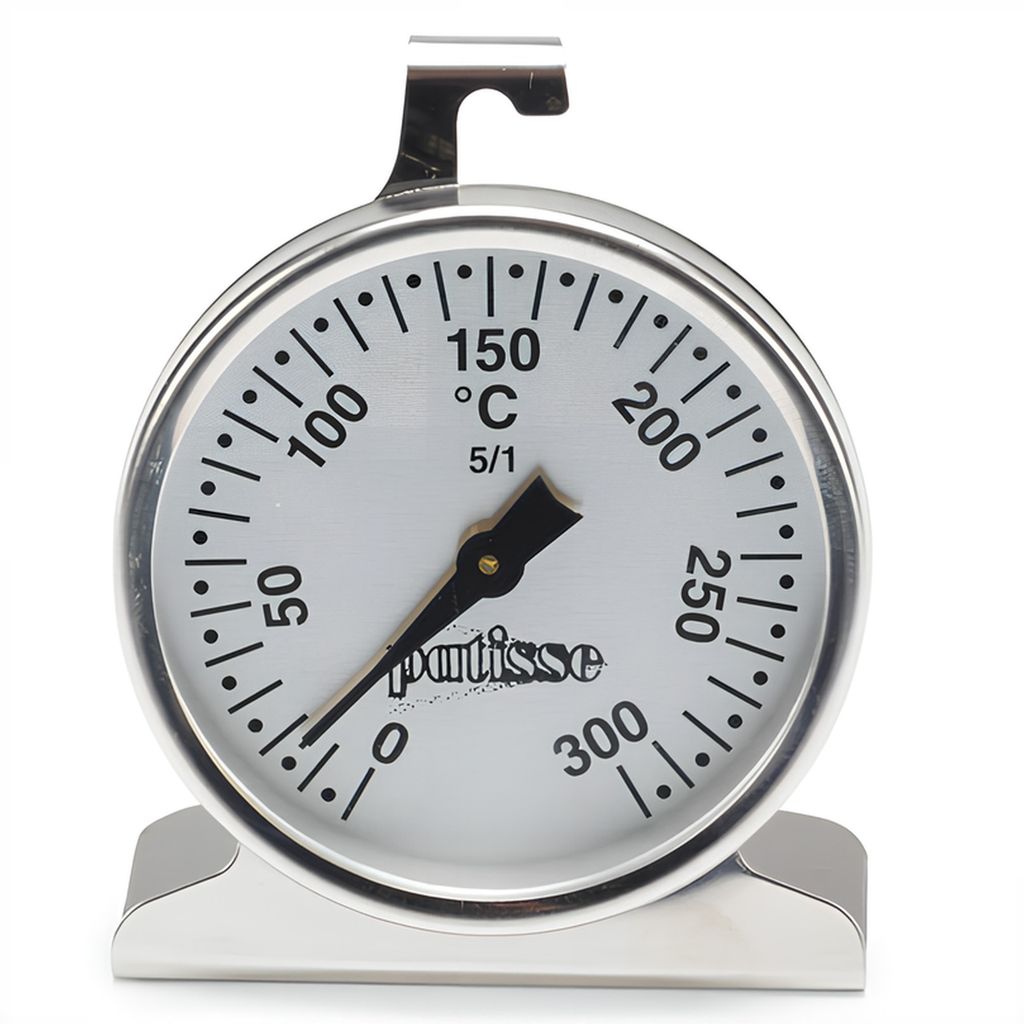
Patisse
Patisse Oven ThermometerBaked galette des rois keeps 1–2 days covered in a cool place, but it's best fresh and lukewarm. Before serving, reheat it for 5–8 minutes at 150°C (300°F) so the pastry crisps up again. The frangipane on its own keeps 2–3 days in the fridge. You can assemble the galette unbaked and keep it in the fridge a day ahead, or freeze it and bake straight from the freezer, adding 5–10 minutes.
A galette des rois 24–26 cm (about 9½–10 in) across cuts into 6–8 wedges. For more servings, bake two smaller galettes rather than one giant one: a big cake bakes less evenly in the middle and the filling tends to leak. And don't forget the traditional extra wedge for an unexpected guest.
A pithivier is the same type of puff pastry cake with almond cream, but it's baked all year round and has no fève. It comes from the town of Pithiviers. It tends to be taller, with a domed center and a scalloped edge. Galette des rois is flatter and belongs only to January and Epiphany.
You can replace the almond flour in a Three Kings cake with the same amount of ground hazelnuts or pistachios; the ratio stays 1 : 1 : 1 : 1. For people with nut allergies, a completely different filling is safer, such as thick apple purée with cinnamon or vanilla pastry cream. Check the ingredients of store-bought puff pastry too.
Porcelain or ceramic fèves for galette des rois are easiest to find in online shops for baking supplies or French groceries, often sold in sets of several. In France, bakeries and supermarkets sell them in January, and a store-bought galette usually comes with a figurine and a paper crown. Look for a heat-resistant charm made of glazed porcelain or ceramic, not plastic, which would melt in the oven.
One recipe worth heating the oven for, one tip, and one deal from the shop. Nothing else.