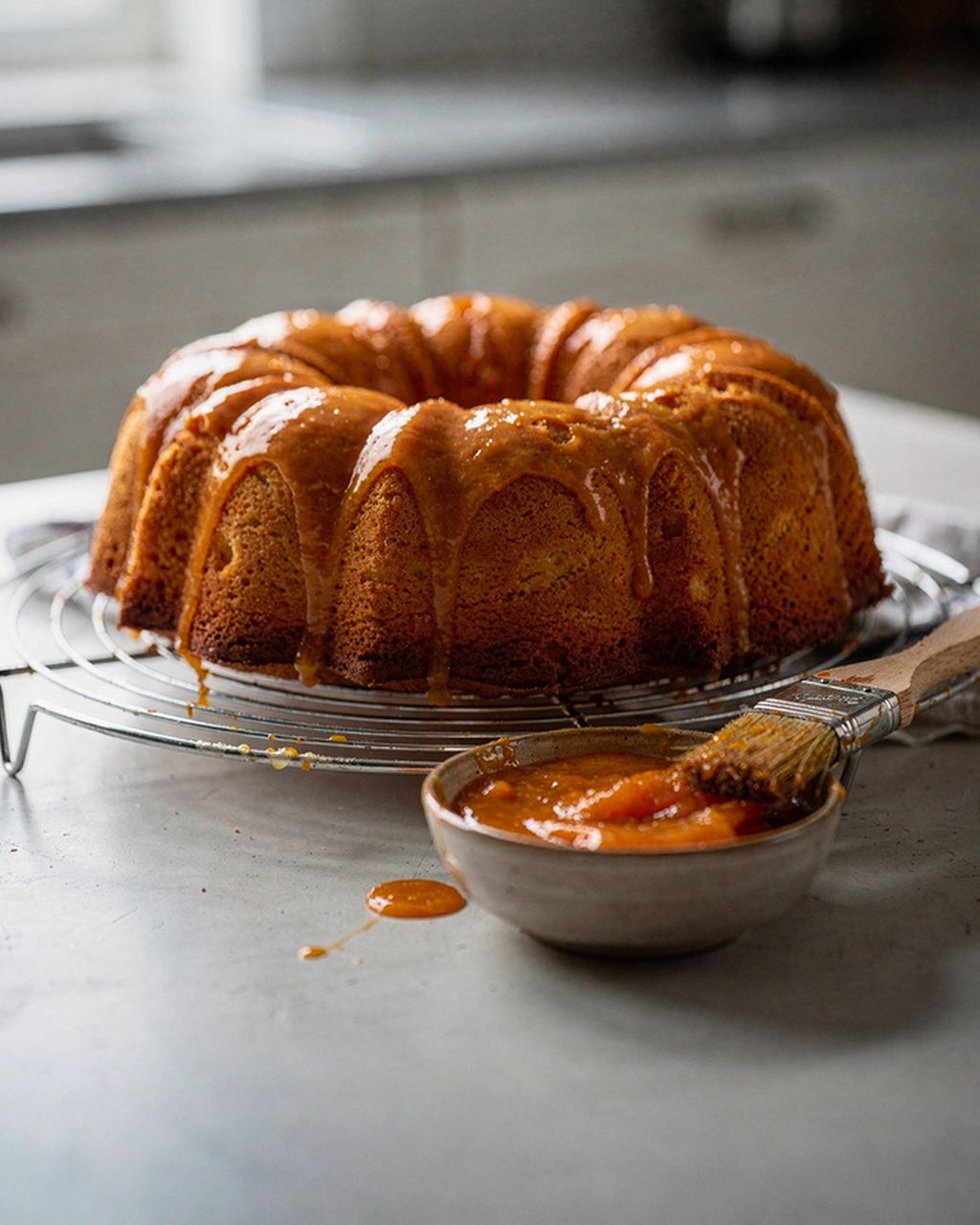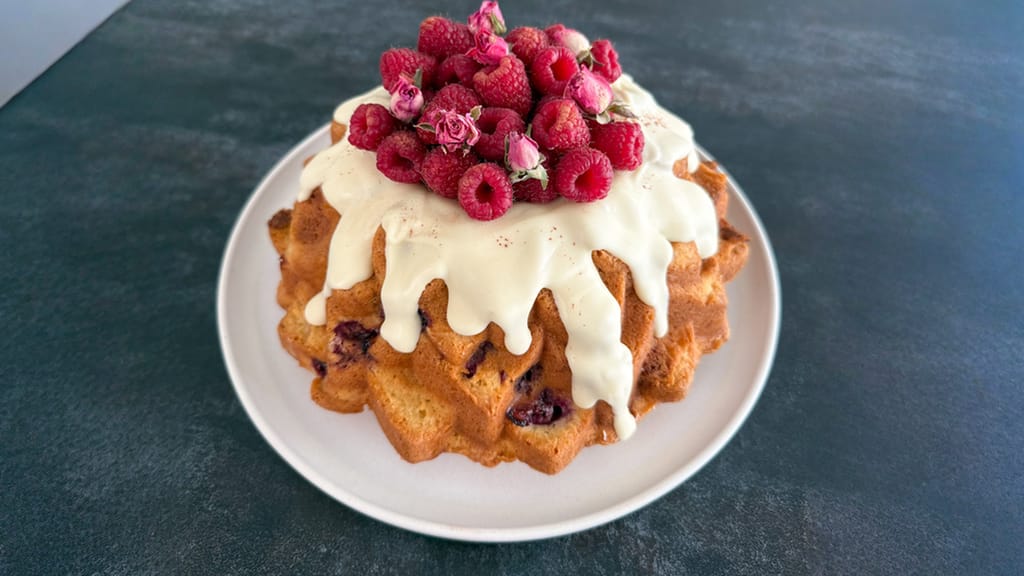
Raspberry bundt cake with white chocolate and sour cream
Why Is Your Bundt Cake Dry? How to Bake a Moist One Every Time
Updated Oct 4, 2026
Why does bundt cake turn out dry? Most often because it's overbaked. Right behind that come too much flour, too little fat or sugar, missing sour cream or yogurt, overmixed batter, too hot an oven or a dark pan, and poor cooling. Every one of these mistakes is easy to fix, and usually changing just one or two things is enough. Here we'll go through them one by one, with exact numbers, so you can bake a moist bundt cake on your very first try.
A dry bundt cake almost always comes down to one of these seven causes, listed from most to least common:
Overbaking – leaving it in the oven 5–10 minutes longer than needed.
Too much flour – measured with cups instead of weighed, or "just one more spoonful to be safe."
Too little fat or sugar – or fat that hardens once the cake cools.
Missing a moist dairy ingredient – sour cream, yogurt, curd cheese, or buttermilk.
Overmixed batter – too much gluten develops once the flour goes in.
Oven too hot, or a dark, thin-walled pan – the edges overbake before the center is done.
Poor cooling and storage – left to cool in the pan, or uncovered on the counter.
Next we'll break down each cause: how to spot it and what to do about it.
Overbaking is the most common reason bundt cake turns out dry. The cake is done the moment a skewer inserted into the thickest part comes out with a few moist crumbs clinging to it, not perfectly clean. If it comes out dry and smooth, it baked a bit longer than it needed to.
Test earlier. Do your first check 10 minutes before the time stated in the recipe. Every oven bakes differently.
Check the internal temperature. A butter-based batter is done at roughly 93–99°C (199–210°F) in the center — most bundt cakes land toward the higher end of that range. An instant-read thermometer is the surest way to know when to pull it out.
Mind the pan. A dark metal pan bakes faster than a light-colored or silicone one. In a dark pan, shorten the baking time or lower the oven by 10°C (18°F).
We cover the opposite problem — a center that's still gummy — in our article on underbaked bundt cake: why it happens and what to do.
For a classic 22–24 cm (9-inch) pan, use roughly 250–300 g of all-purpose/fine flour — about the same weight as the sugar, and a bit more than the fat (a rough ratio of 1 : 1 : 0.7). The key is to always weigh it in grams rather than scooping it by cup. Depending on how you scoop it, a cup of flour can weigh anywhere from 120 to 160 g. In a single cake that's a swing of up to 100 g — and that's exactly what gives you a dry, crumbly bundt cake.
Don't add extra flour by eye just because the batter looks runny. Bundt cake batter should be thick but still pourable — about the consistency of thick sour cream. It should slide slowly off a spatula in one continuous ribbon, not fall off in clumps.
Traditionally, a fine or all-purpose flour is used.
Cocoa in a marble bundt cake with buttermilk and vanilla behaves like flour and absorbs even more water. If you're adding 2 tablespoons of cocoa to half the batter, add 1–2 tablespoons of milk as well.
Don't cut back on either the fat or the sugar in the recipe — both help the crumb hold onto moisture. Bundt cake made with oil tends to stay moister, while one made with butter tastes richer. Oil stays liquid even at room temperature, so the crumb still feels moist the next day. Butter firms up as it cools, which can make the cake seem a touch drier, though it has a rich, buttery flavor.
Want both? Replace about a third of the butter with oil (for example, 150 g butter + 50 ml oil instead of 200 g butter).
Skip 60–62% fat margarine, 39–41% fat margarine, and lower-fat spreads. The rest is mostly water, so the cake turns out blander and dries out faster. Baking margarine (80–90% fat) has enough fat to work, but it won't give the cake a buttery flavor.
Don't cut sugar by guesswork. Sugar isn't just there for sweetness — it binds water and holds it in the crumb. Cut a recipe's sugar by a third and the cake will almost certainly come out drier. For ways to reduce sugar without drying out the cake, see our article on how to replace sugar in bundt cake.
The most reliable fix is sour cream, plain yogurt, curd cheese, or buttermilk — about 150–250 g per cake. They add both water and fat, and the acidity makes the crumb finer and more tender.
Sour cream (typically 12–18% fat) is the safest choice. It adds fat and moisture without changing the flavor.
Curd cheese makes for a denser, moister, more substantial cake. That's exactly the idea behind Grandma's Best Curd-Cheese Bundt Cake.
Heavy cream used instead of milk adds fat and gives the cake a lovely tender texture. Try our whipped-cream bundt cake.
Grated apple, apple purée, or mashed banana (100–150 g) add both moisture and flavor — just expect a denser cake.
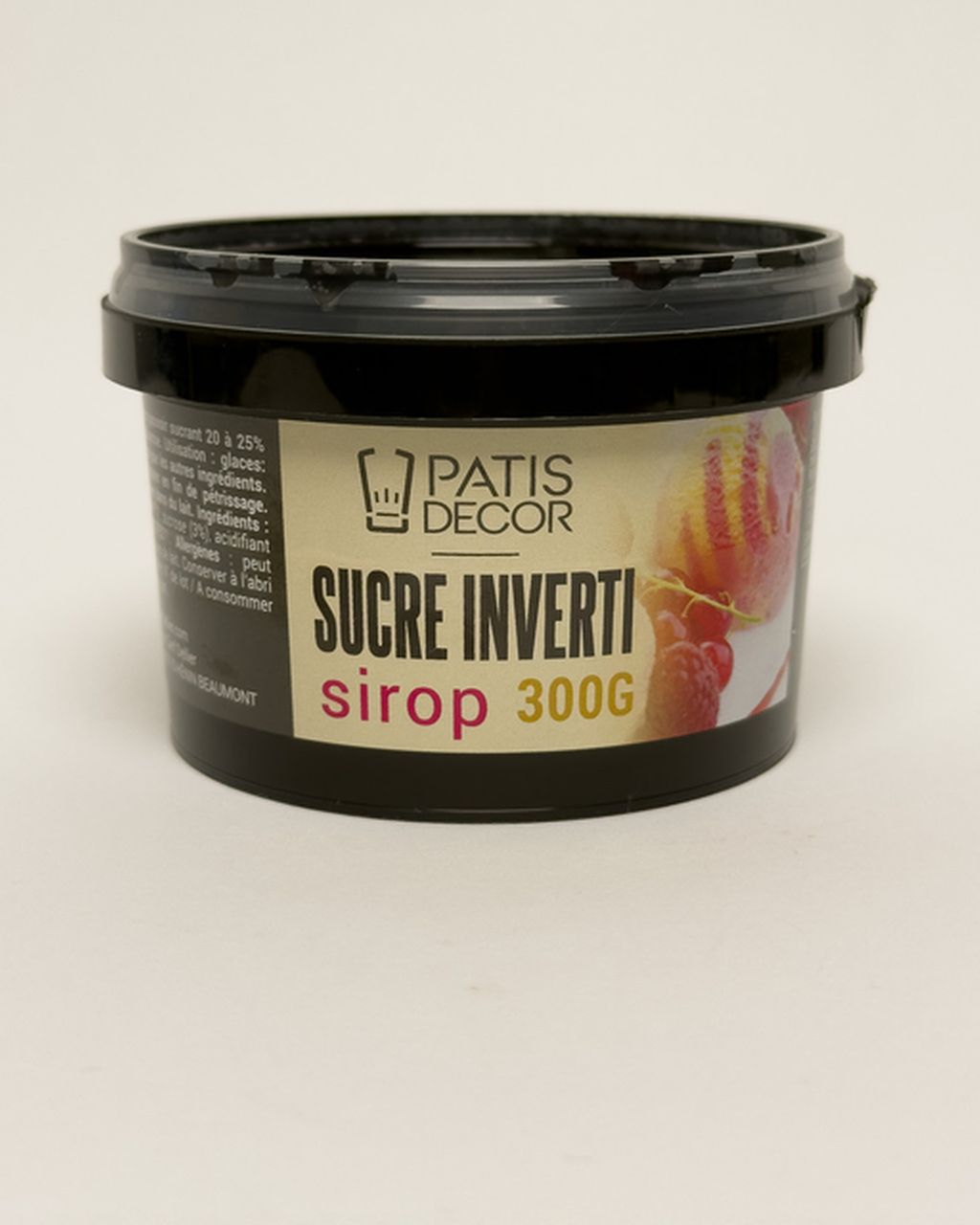
Invert sugar or honey in place of 20–30 g of regular sugar helps the cake stay moist longer, since both hold onto water even more than granulated sugar.
Raspberry bundt cake with white chocolate and sour cream
Moist raspberry bundt cake with sour cream and white chocolate
Bundt cake turns tough and dry from overmixing because prolonged mixing after the flour goes in develops too much gluten. The crumb then becomes elastic and firm, and feels dry on the tongue even when it actually has plenty of moisture.
Go ahead and beat the butter and sugar for 3–5 minutes until light and fluffy — this is where you want to work air into the batter.
Once the flour goes in, mix it only until the dry streaks disappear, using a spatula or the lowest mixer speed.
Add the flour alternately with the liquid ingredient (flour – sour cream – flour); the batter comes together faster and needs less overall mixing.
Bake bundt cake at 170–180°C (340–355°F) conventional (top and bottom heat), or 160–170°C (320–340°F) fan/convection, usually for 50–65 minutes in a classic 22–24 cm (9-inch) pan. At a higher temperature, the edges and base (the top once turned out) overbake before the center finishes cooking. The result is a cake that's dry around the edges and bottom but still underdone in the middle — and it often domes and cracks, too.
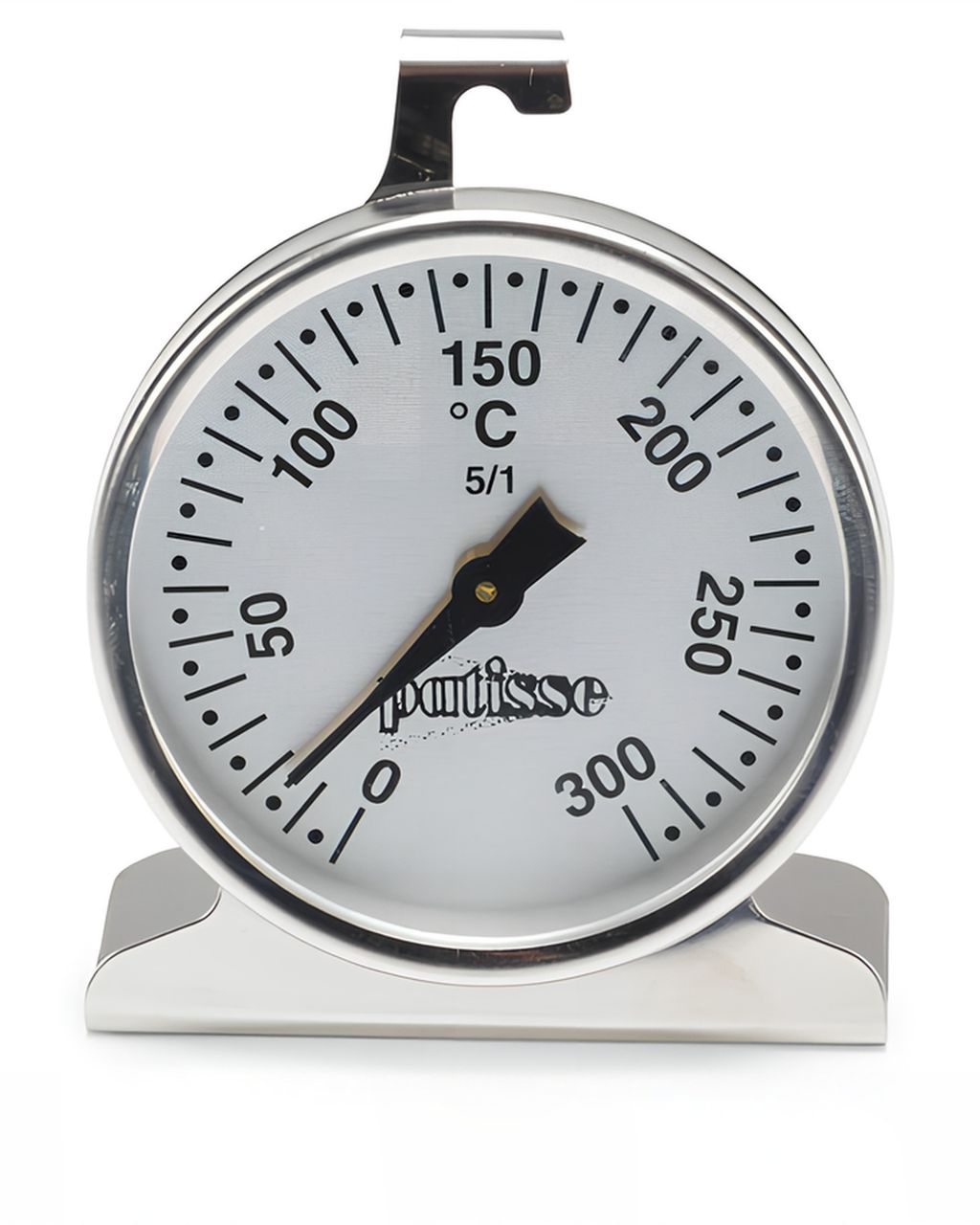
Always preheat the oven thoroughly, and if it ever feels like it's baking "differently" than usual, check the real temperature with an oven thermometer. A 15–20°C (27–36°F) discrepancy is nothing unusual in home ovens.
Place the cake in the center of the oven and don't open the door for the first 40 minutes.
For detailed times and temperatures across different pan sizes, see our article on bundt cake: what temperature and how long to bake it.
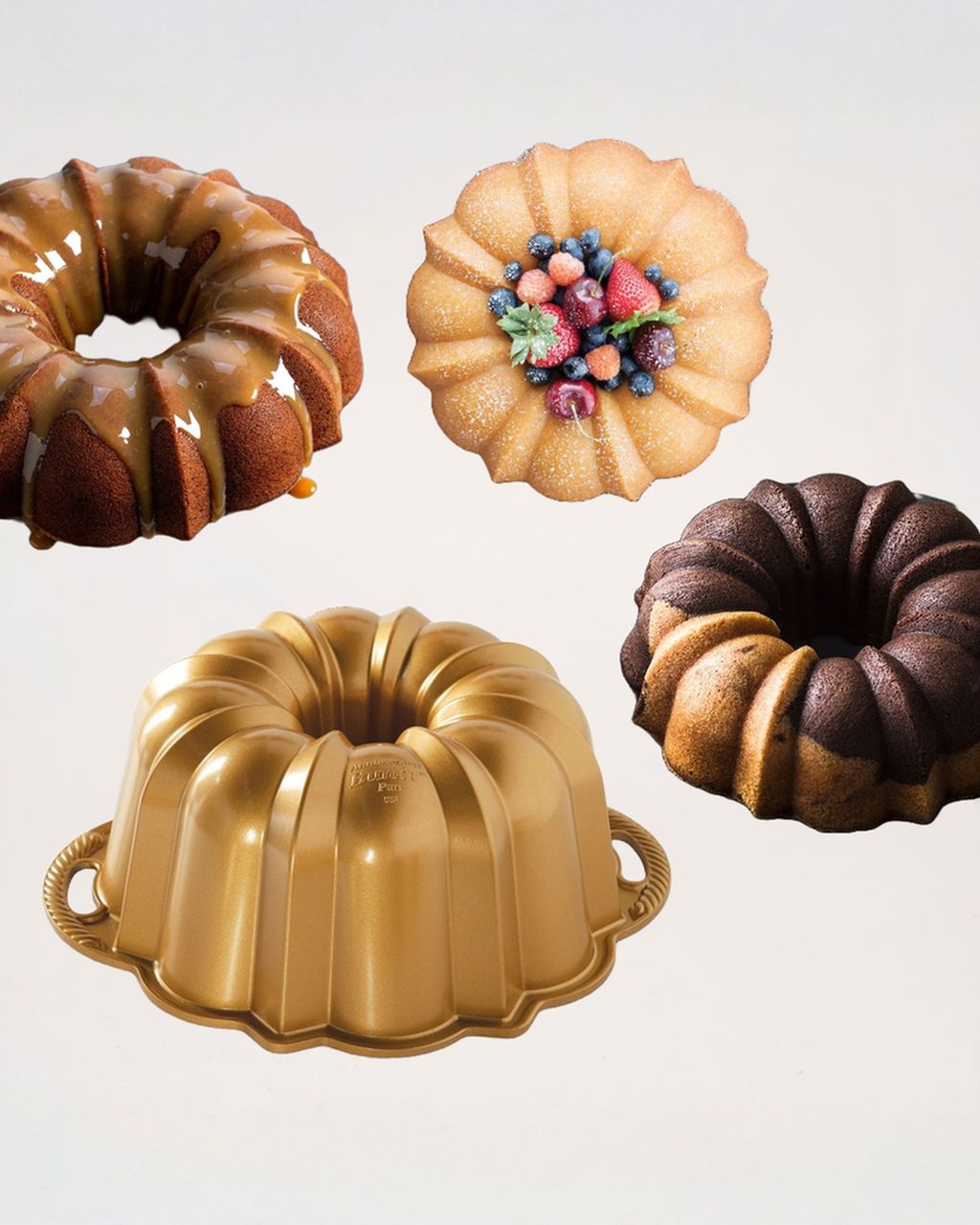
Yes, the bundt pan determines how quickly and evenly the batter bakes through. Dark, thin-walled pans bake fast and the edges can easily dry out. A heavy cast-aluminum pan (like Nordic Ware) distributes heat evenly, so the cake bakes consistently from the sides right through to the center. Silicone pans bake the slowest, and the crust won't brown much in them.
If you're shopping for a new one, take a look at our bundt pans. For a moister cake, a heavier, light-colored pan is worth the investment. Always grease the pan thoroughly with butter and dust it with flour or breadcrumbs. If the cake sticks and tears, the exposed crumb will dry out before you get a chance to eat it.
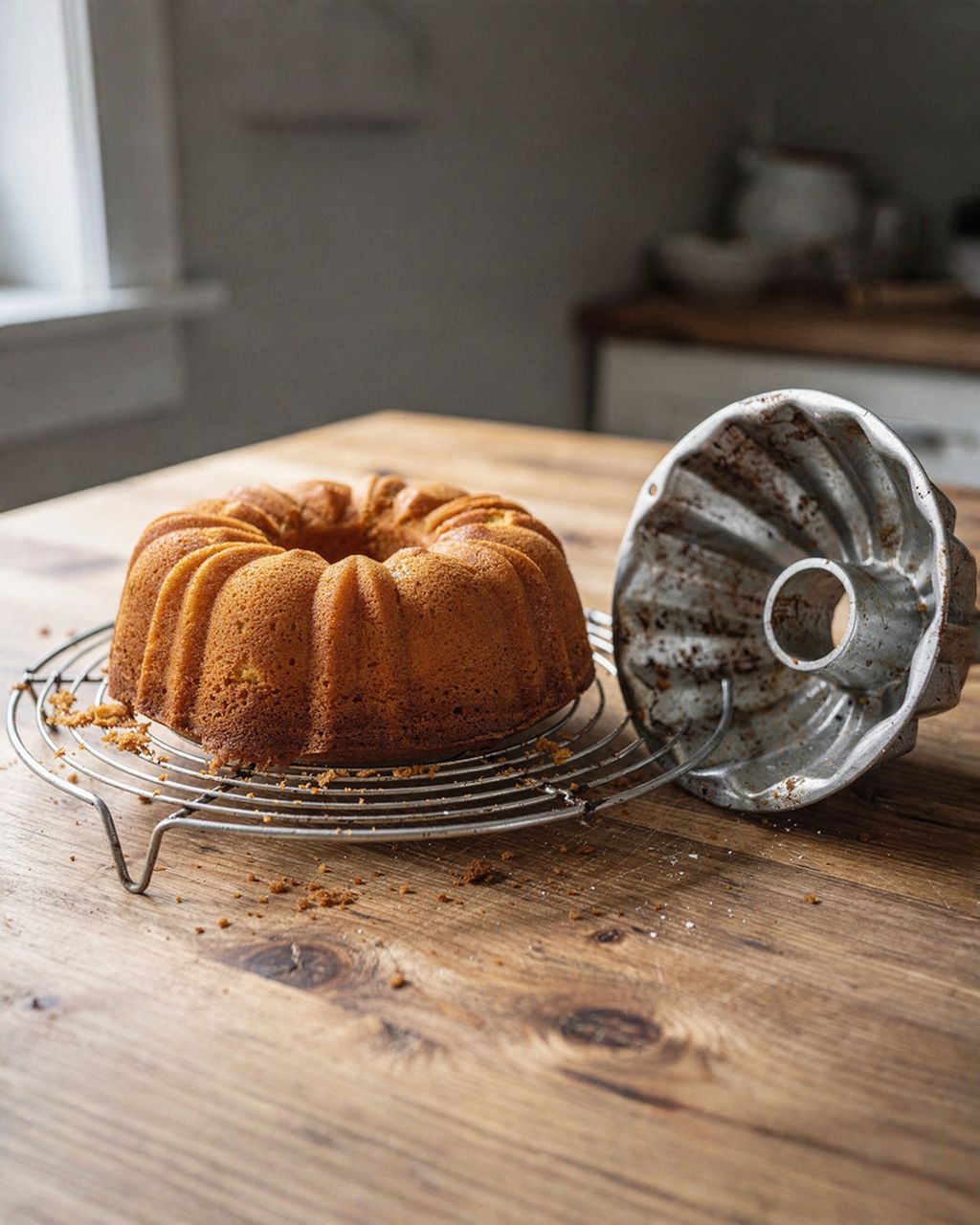
After baking, let the cake rest 10 minutes in the pan, then turn it out onto a wire rack and leave it uncovered until it's fully cooled — that's what keeps it moist. Leave it in the pan longer and condensation will dampen and stick the bottom; leave it uncovered all day and it'll dry out.
Don't cut it while warm. Hot crumb releases steam, and moisture along with it. Wait at least an hour.
Store it under a cake dome, in an airtight container, or wrapped in foil at room temperature — it'll keep for 3–4 days this way. Press the cut side against a plate or cover it with foil.
Don't refrigerate it unless the filling requires it. Starch in baked goods firms up (retrogrades) fastest at fridge-like temperatures, so the cake actually goes stale faster in the fridge than on the counter.
The easiest fix for a dry bundt cake is to soak it in syrup. Simmer 100 ml water with 100 g sugar along with some lemon or orange zest, or a tablespoon of rum, then pour the warm syrup over the cooled cake after poking it all over with a skewer. A few other options:
Warm up a slice for 10–15 seconds in the microwave. The butter in the crumb softens and the cake tastes freshly baked again.
Serve it with something moist: whipped cream, vanilla custard, curd cheese with fruit, or baked plums.
Repurpose it. Cubes of bundt cake layered with cream and fruit in a glass make a quick dessert, and slices pan-fried in butter are a great breakfast.
Follow these seven points and you'll bake a moist bundt cake:
weigh your flour, ideally a fine all-purpose type,
add 150–250 g of sour cream, yogurt, or curd cheese,
don't skimp on sugar or fat — or replace a third of the butter with oil,
once the flour goes in, mix only until just combined,
bake at 170–180°C (340–355°F) (160–170°C/320–340°F fan) in a heavy pan,
test with a skewer 10 minutes early — a few moist crumbs are fine,
rest 10 minutes in the pan, then onto a rack, and cover only once fully cooled.
Try it out on our orange bundt cake with almonds, cinnamon, and cardamom or our autumn pumpkin bundt cake with creamy caramel — pumpkin purée holds in moisture just as well as apple.
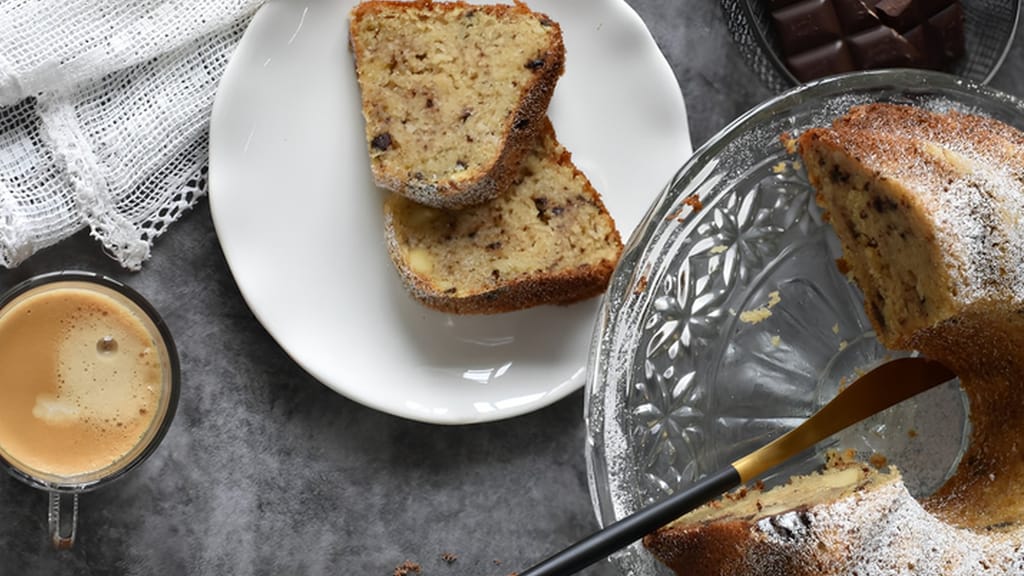
Grandma's two-fifty cottage cheese bundt cake
Grandma's moist curd-cheese bundt cake, the classic 250 version
Yes, bundt cake with raisins or other dried fruit tends to be drier, because the dried fruit soaks up water from the batter as it bakes. Soak the fruit beforehand for 15–30 minutes in warm water, tea, or rum, then pat it dry and toss it in a spoonful of flour so it doesn't sink to the bottom.
Yes, a bundt cake baked a day ahead is often even moister, because the moisture spreads out evenly through the crumb overnight. Let it cool completely on a wire rack, then wrap it in foil or put it in an airtight container and keep it at room temperature, not in the fridge.
Yes, bundt cake can be frozen for up to 2–3 months and stays moist. Wrap it fully cooled (whole or sliced) tightly in foil and then in a bag. Thaw it still wrapped at room temperature — that way any condensation forms on the foil rather than on the cake, so the surface doesn't go soggy. Add any glaze only after it has thawed.
You can replace sour cream in bundt cake, in the same amount, with plain yogurt (ideally Greek), smooth curd cheese mixed with a little milk, crème fraîche, or buttermilk. Buttermilk is thinner, so cut back on other liquids in the recipe or the batter will end up too runny.
Even with an exact recipe, bundt cake most often turns out dry because the oven actually runs hotter than it shows, or because the flour was measured by cup instead of weighed. Check the real temperature with an oven thermometer, weigh your flour, and test with a skewer 10 minutes before the recipe says to.
One recipe worth heating the oven for, one tip, and one deal from the shop. Nothing else.