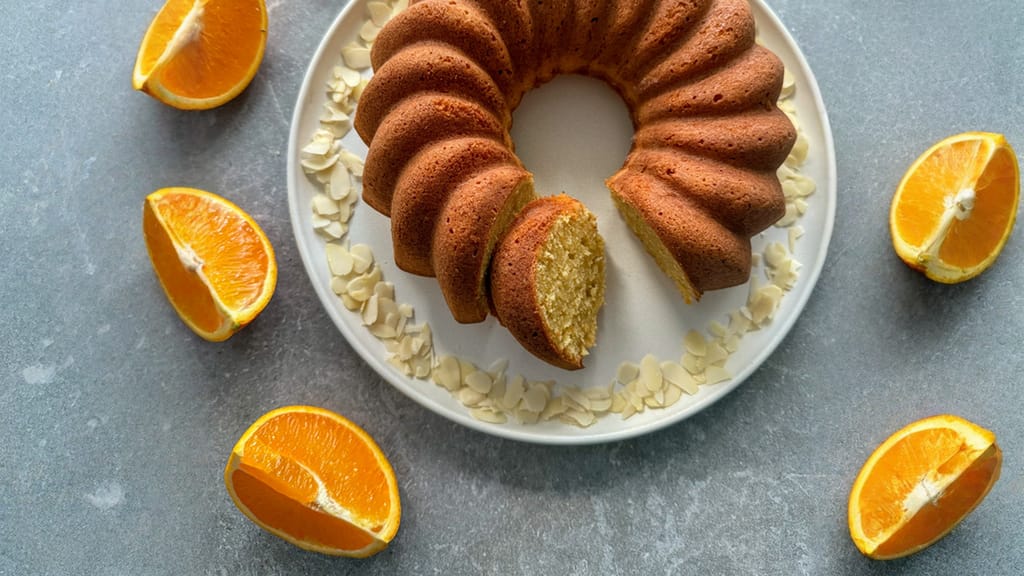
Orange bundt cake with almonds, cinnamon and cardamom
What to Brush on a Bundt Cake Instead of Icing: Syrup, Butter, Lemon & Jam for Shine
Updated Oct 4, 2026
What should you brush on a bundt cake instead of icing? The best options are sugar syrup, melted butter, lemon juice with sugar, or strained apricot jam — and each one does something different. Syrup keeps the cake moist, butter with sugar gives it a thin, crisp crust, lemon adds a fresh tang, and jam creates the prettiest shine. Unlike icing, none of them cover up the pattern from the tin or make the cake too sweet. Below you'll find the right ratios, timing, and how to get a shine on your bundt cake that actually lasts until it hits the table.
Skip the icing and brush your bundt cake with one of four finishes instead — or simply dust it with sugar. Pick based on what you want it to do:
Sugar syrup (1:1 sugar and water) – keeps the cake moist and makes it last longer.
Melted butter + sugar – a thin, lightly crisp crust with a buttery aroma.
Lemon juice with granulated sugar – a tangy, crackly glaze.
Strained apricot jam – the glossiest shine, sealing the surface.
And if you don't want to brush anything on at all, there's always icing sugar — the quickest finish for a cake that's already cooled.
The first three go on while the cake is still warm; the jam and icing sugar go on once it's completely cool.
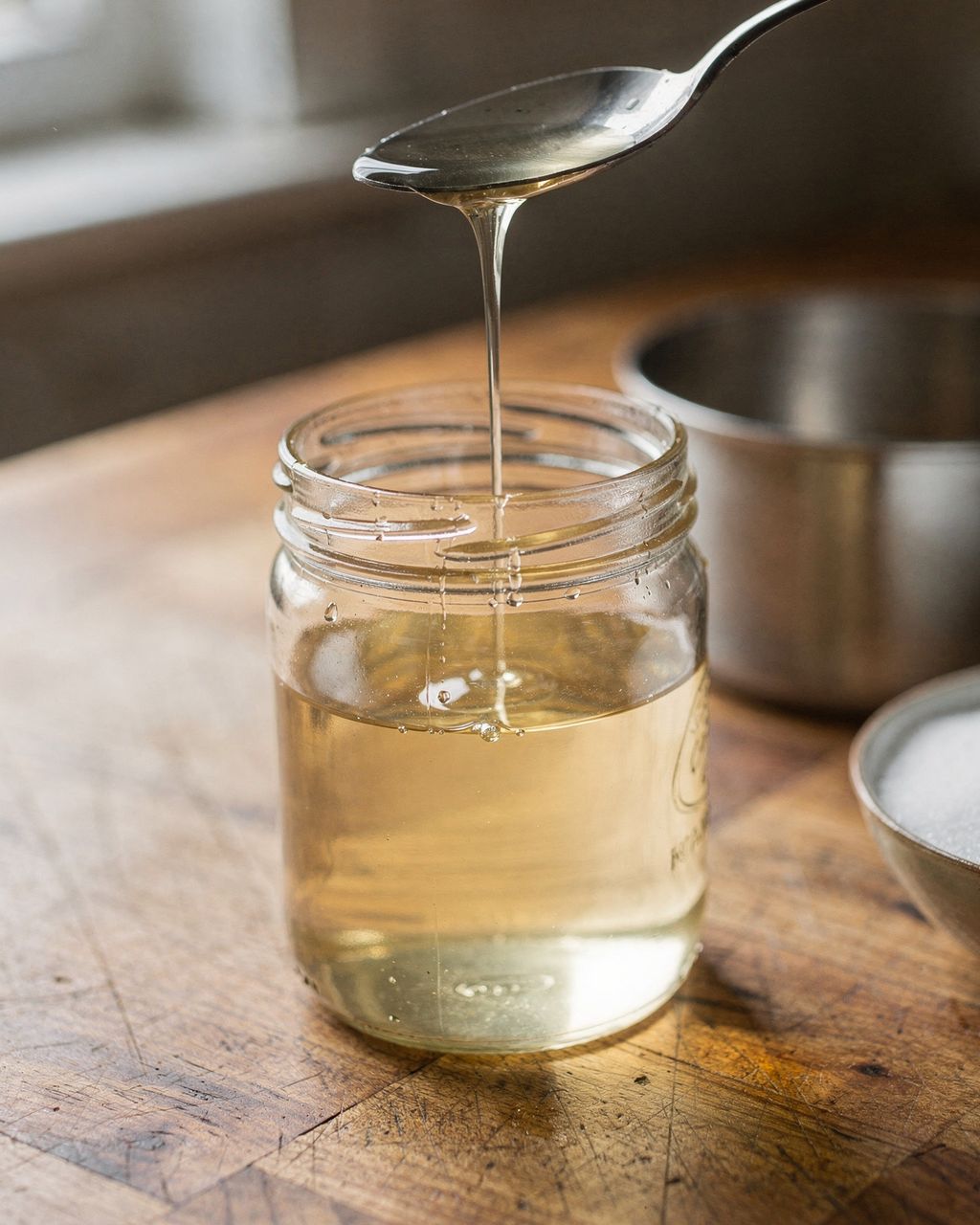
Sugar syrup is the best choice when you want a moist cake — it soaks into the crumb and locks in moisture. Simmer 100 g sugar with 100 ml water just until the sugar dissolves, then let it cool slightly. For a classic bundt cake baked in a 22–24 cm (9 in) tin, 100–150 ml of syrup is enough.
Method: turn the cake out of the tin and, while it's still warm (about 10 minutes out of the oven), brush it with a pastry brush or spoon the syrup over in stages. Let each round soak in before adding the next.
Flavouring: once the syrup has cooled, stir in 2–3 tablespoons of lemon or orange juice, some zest, vanilla, or 1–2 tablespoons of rum.
Watch out: pour all the syrup on at once and it'll run down the sides, leaving the base soggy.
Syrup will add a bit of moisture to an overbaked cake, but it won't save it — a dry bundt cake usually comes down to the fat ratio, baking time or oven temperature.
Orange bundt cake with almonds, cinnamon and cardamom
Orange bundt cake with almonds, cinnamon and cardamom – a perfect candidate for a citrus syrup
Melted butter gives the cake a satiny surface and a buttery aroma, and rolling it in sugar afterwards creates a thin, crisp crust. Just 30–50 g of butter is enough.
Brush the warm cake all over with butter, then immediately coat or sprinkle it with granulated sugar, or cinnamon sugar (50 g sugar + 1 teaspoon cinnamon).
Want just a light sheen with no sugar? Brush with butter and let it cool. Bear in mind the shine will fade a little as the butter soaks in.
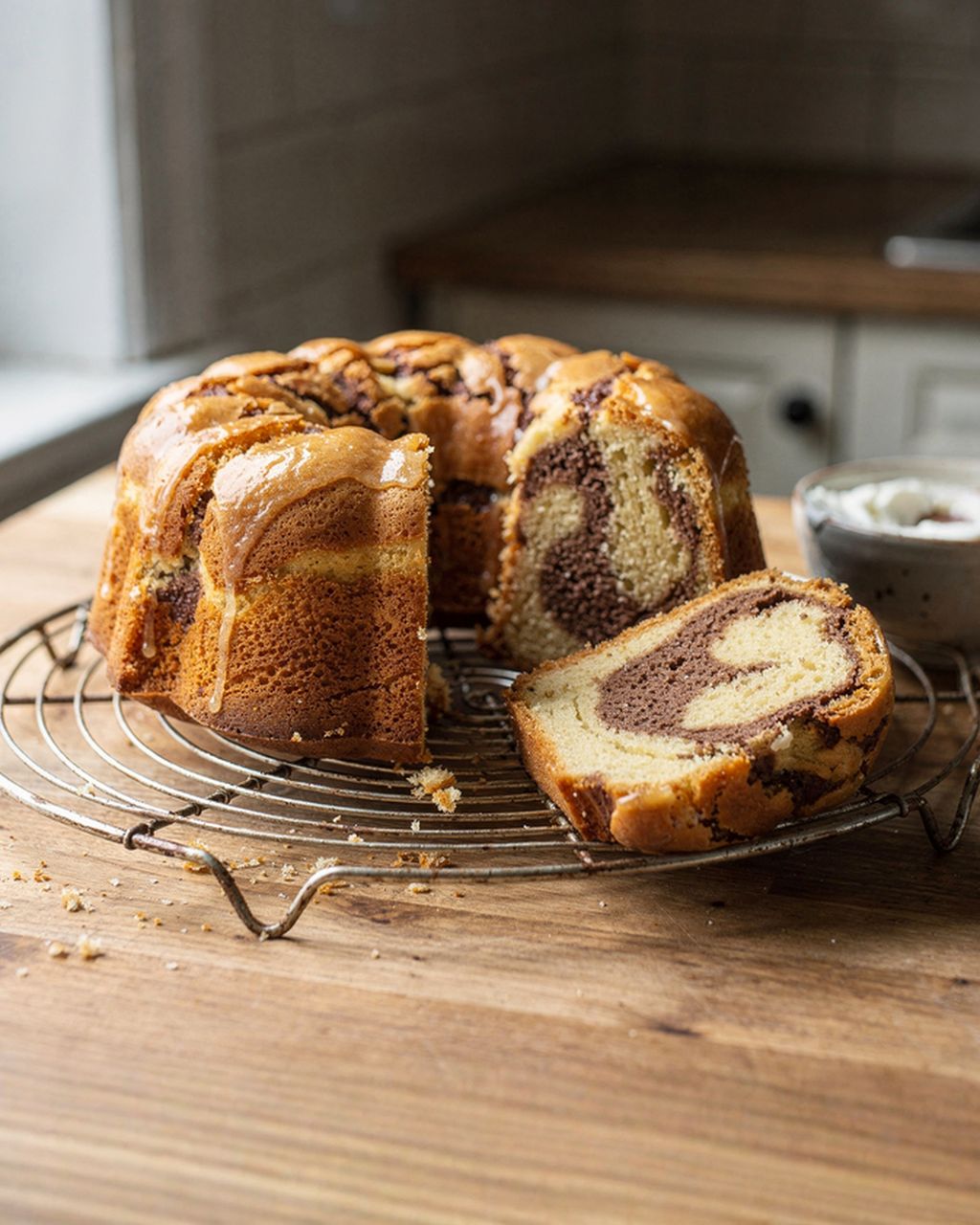
This is the best option for simple marble or curd-cheese bundt cakes, which a syrup would make unnecessarily sweet.
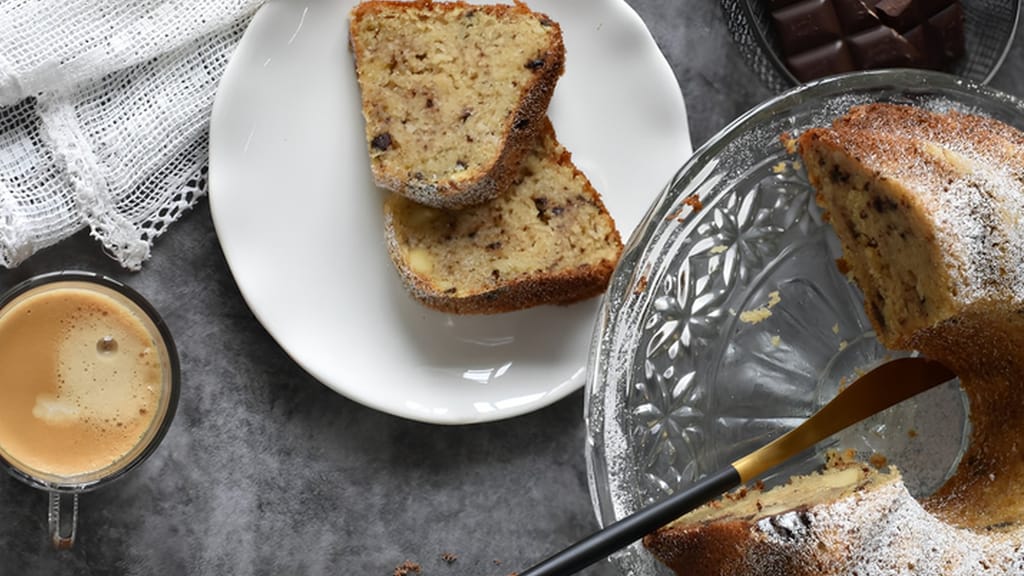
Grandma's two-fifty cottage cheese bundt cake
Grandma's curd-cheese bundt cake – the one that calls for butter and sugar
A mix of lemon juice and granulated sugar forms a tangy, finely crackled layer on a warm bundt cake. Combine 60 ml lemon juice (about 1–1½ lemons) with 80–100 g granulated sugar and don't dissolve it. It's the undissolved sugar crystals that give it that crunch.
Brush it onto the cake while it's still warm. The juice soaks in while the sugar stays on the surface, drying out as it cools. Orange or lime juice works the same way — just use less sugar with orange, since it's sweeter.
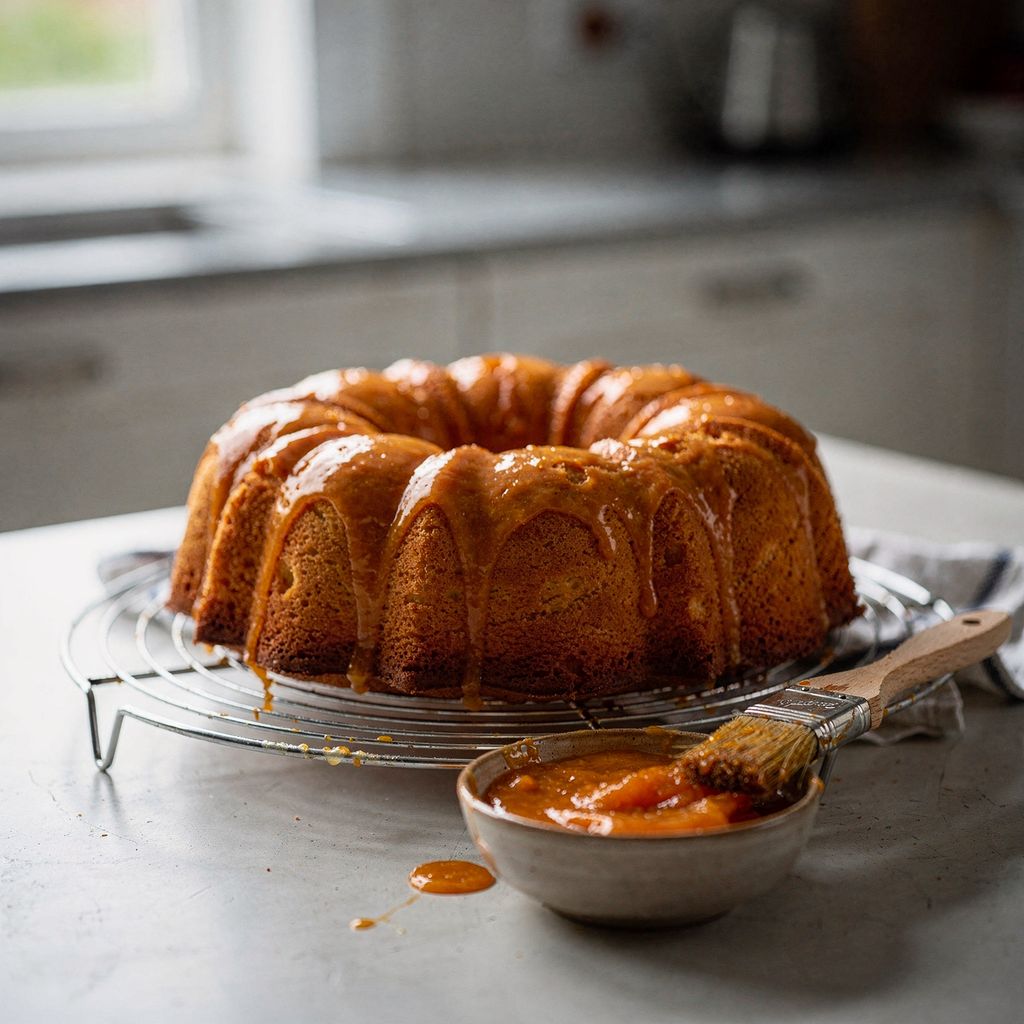
The prettiest, most reliable shine on a bundt cake comes from warmed, strained apricot jam — pastry chefs call this "apricoting" (from the French abricotage). Warm 3 tablespoons of jam with 1 tablespoon of water (or lemon juice), strain it through a sieve, and brush it on while it's still hot and runny.
Only on a cooled cake. On a warm surface the jam soaks in and the shine disappears. On a cooled one it forms a thin film that sets and stays glossy.
Keep it thin. One pass of the brush is enough. A thick layer gets sticky and pools in the grooves.
Bonus: the film also slows moisture loss, so the cake stays moist a little longer.
Apricot is the classic choice because it's pale, mild, and masks the cake's own flavour the least. Redcurrant or apple jelly works just as well.
The shine on a bundt cake lasts when the glaze sits on the surface instead of soaking in. That's why glossy finishes go on a cooled cake, and soaking finishes go on a warm one.
Jam gives the strongest, longest-lasting shine.
Syrup with a touch of glucose (about 1 tablespoon glucose syrup per 100 ml of sugar syrup) shines more than plain sugar syrup and crystallises less. Brush it on once the cake has cooled.
Honey or maple syrup thinned with a tablespoon of hot water looks beautifully glossy, but stays sticky, so add it just before serving.
Butter on its own only shines briefly before it soaks in.
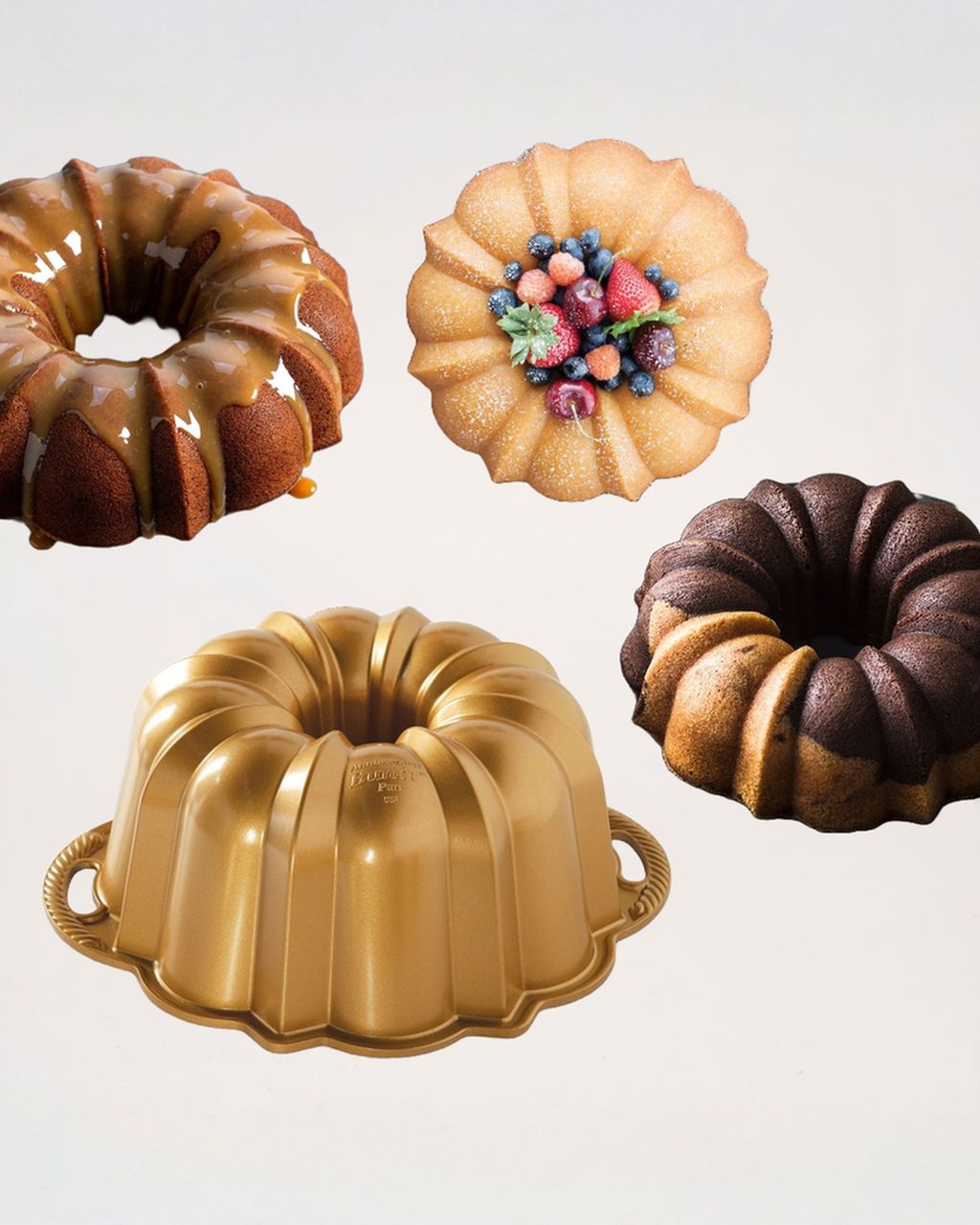
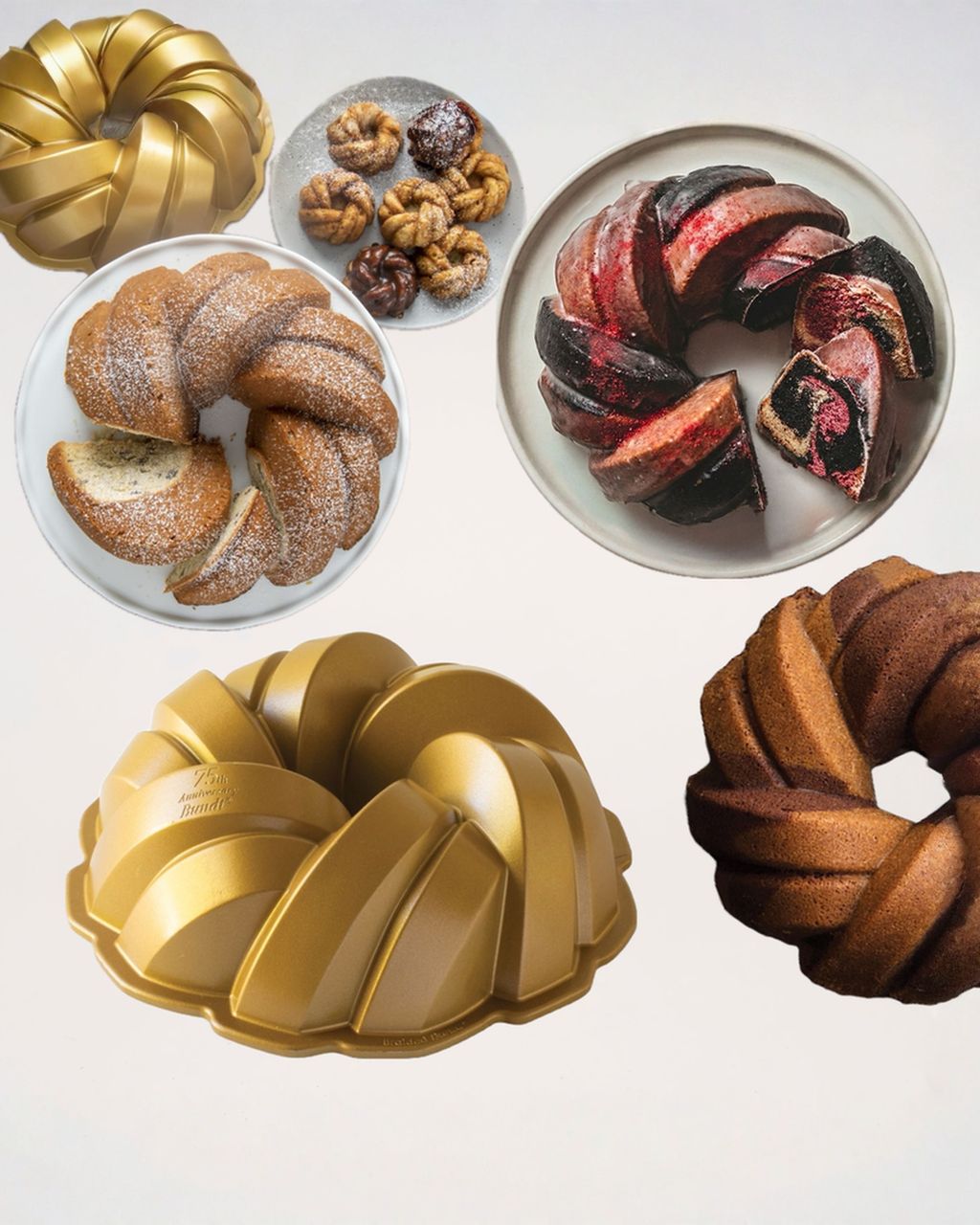
The shine shows up best on a bundt cake with sharp, deep relief — light catches the edges and every groove gleams. If you want a pattern that really stands out, take a look at bundt tins with deep relief patterns. Icing would fill in a pattern like that, while a thin glossy glaze highlights it instead.
Brush syrup, butter, or lemon-and-sugar onto a warm cake (10–15 minutes out of the oven); save jam, honey, and icing sugar for a cooled one — a warm cake absorbs the glaze, while a cooled one holds it on the surface.
Warm (10–15 minutes out of the oven, already turned out): sugar syrup, melted butter, lemon with sugar.
Cooled (after 1–2 hours on a rack): jam, honey, glucose syrup, icing sugar.
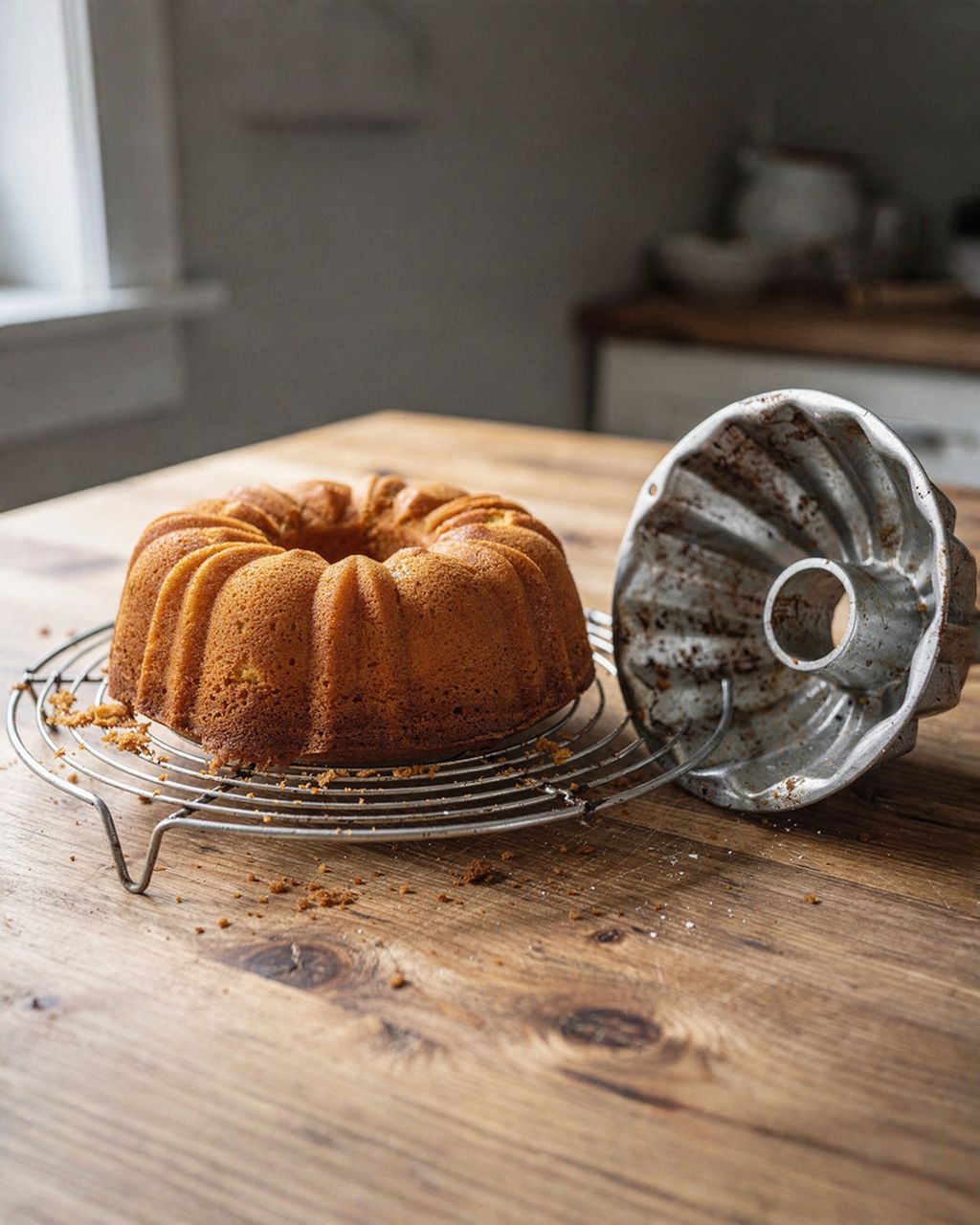
Only brush the cake once it's out of the tin, never while it's still inside — glaze pooling at the base inside the tin can make the cake stick. Brush it while it sits on a wire rack over a tray, so any excess drips away and the base doesn't turn soggy.
The 5 most common mistakes when glazing a bundt cake are adding too much syrup at once, brushing jam onto a warm cake, skipping the straining step, dusting icing sugar on a warm surface, and glazing while the cake is still in the tin. All of them are easy to avoid:
Too much syrup at once. The base turns soggy and the cake can collapse. Add it in stages instead.
Jam on a warm cake. It soaks straight in and leaves no shine behind.
Unstrained jam. Fruit chunks in the layer look messy.
Icing sugar on a warm cake. It melts into a greyish, sticky film. Dust it only once the cake is completely cool, right before serving.
Glazing inside the tin. The glaze runs to the bottom and the cake sticks to the tin.
Yes — a syrup-brushed bundt cake is actually even better the next day, since the moisture has time to spread evenly through the crumb. Wrap it in foil or keep it under a cake dome once it's completely cool. Save the apricot jam glaze for serving day, though, since it loses its shine overnight under cover.
For kids, use an alcohol-free sugar syrup flavoured with lemon or orange juice, vanilla, or citrus zest. The ratio stays the same: 100 g sugar, 100 ml water, and 2–3 tablespoons of juice.
Brush the cooled cake with a thin layer of hot, strained apricot jam, then immediately scatter toasted almond flakes or chopped nuts over it. As the jam sets, it holds them in place like glue.
A bundt cake brushed with syrup or jam keeps well at room temperature under a cake dome for 3–4 days. Both the syrup and the jam film slow down drying, so it stays moist a bit longer than an unglazed cake. It dries out faster in the fridge, so only chill it there if it has a curd-cheese filling.
Yes — melt 50 g chocolate with 20 g butter and brush it in a thin layer over the cooled cake. This gives a thin, glossy coating rather than a thick icing, so the pattern from the tin still shows through.
One recipe worth heating the oven for, one tip, and one deal from the shop. Nothing else.