Swedish almond cake
Portuguese Almond Cake (Bolo de Amêndoa): Recipe & Tips

Updated Jul 19, 2026
Portuguese almond cake (bolo de amêndoa) is a moist, dense dessert made from ground almonds, sugar and eggs – classically with no flour at all, so it's naturally gluten-free. It comes from Portugal's convent baking tradition and the almond groves of the Algarve, and it's an easy win even for a first-time baker. In this guide, you'll learn how to pick the right almonds, whip up an airy batter, nail the right baking temperature and time, and decorate the cake so it tastes – and looks – like it came from a pro.
Portuguese almond cake, known in its original language as bolo de amêndoa, is a moist, dense cake made from ground almonds, sugar and eggs – classically completely flourless, which makes it naturally gluten-free. It's the almonds standing in for flour that give it that signature dense, moist crumb and intense nutty flavour. It's an easy bake even for beginners: no special technique required, just good-quality almonds and a bit of patience with the whisking.
The roots of almond cake trace back to Portugal's convent confectionery tradition (known as doçaria conventual) and to the Moorish legacy of southern Portugal. Almonds spread widely through the Algarve mainly during Moorish rule, and the climate there still suits them perfectly today – the region is famous for its almond orchards, which burst into white blossom every spring.
Historians believe desserts like bolo de amêndoa owe their existence to convent life: nuns and monks used egg whites to clarify wine and starch their habits, then turned the leftover yolks into rich sweets with sugar and almonds. This is where the whole family of Algarve almond specialities comes from, from morgada to doce fino. The original recipes were simple – almonds, sugar, eggs – and only later did orange zest or cinnamon find their way in.
The foundation is just four ingredients: ground almonds, sugar, eggs and a pinch of salt – everything else is just there to fine-tune the flavour. Almond quality is key, since the almonds are what carry the whole cake.
Ground blanched almonds (about 200 g): the heart of the cake. Go for finely ground, blanched (skinless) almonds rather than dark, coarse almond meal with the skins still on – that will turn the cake grey and gritty. For an extra-fine crumb, sift the ground almonds first.
Eggs (4–6): separated. Whipped egg whites lift the dense batter, while the yolks, beaten with sugar, add colour and moistness.
Sugar (about 200 g): classic white granulated sugar works well; caster or cane sugar adds a faint caramel note.
Lemon or orange zest: brightens the sweetness and brings out the almond flavour.
A pinch of salt: balances the sweetness and sharpens all the other flavours.
Cinnamon (optional): a pinch for that traditional Algarve aroma.
Bolo de amêndoa is a forgiving base for dietary tweaks:
Naturally gluten-free: the classic version contains no flour at all. If a recipe still calls for some, just leave it out, or use a gluten-free blend instead.
Less sugar: swap some of the sugar for honey or maple syrup – just expect a moister, denser crumb as a result.
Vegan version: swap the butter for a plant-based fat or coconut oil, and replace the whipped egg whites with aquafaba (chickpea brine). The texture will be a bit less fluffy.

There's really just one trick: whip the egg whites separately and gently fold them into the almond mixture to keep the batter light and airy. Here's how:
Separate the eggs. Put the whites into a clean glass or metal bowl – even a trace of fat can stop them from whipping properly.
Whip the whites. Add a pinch of salt and whisk the egg whites, starting on low speed, until they form stiff, glossy peaks.
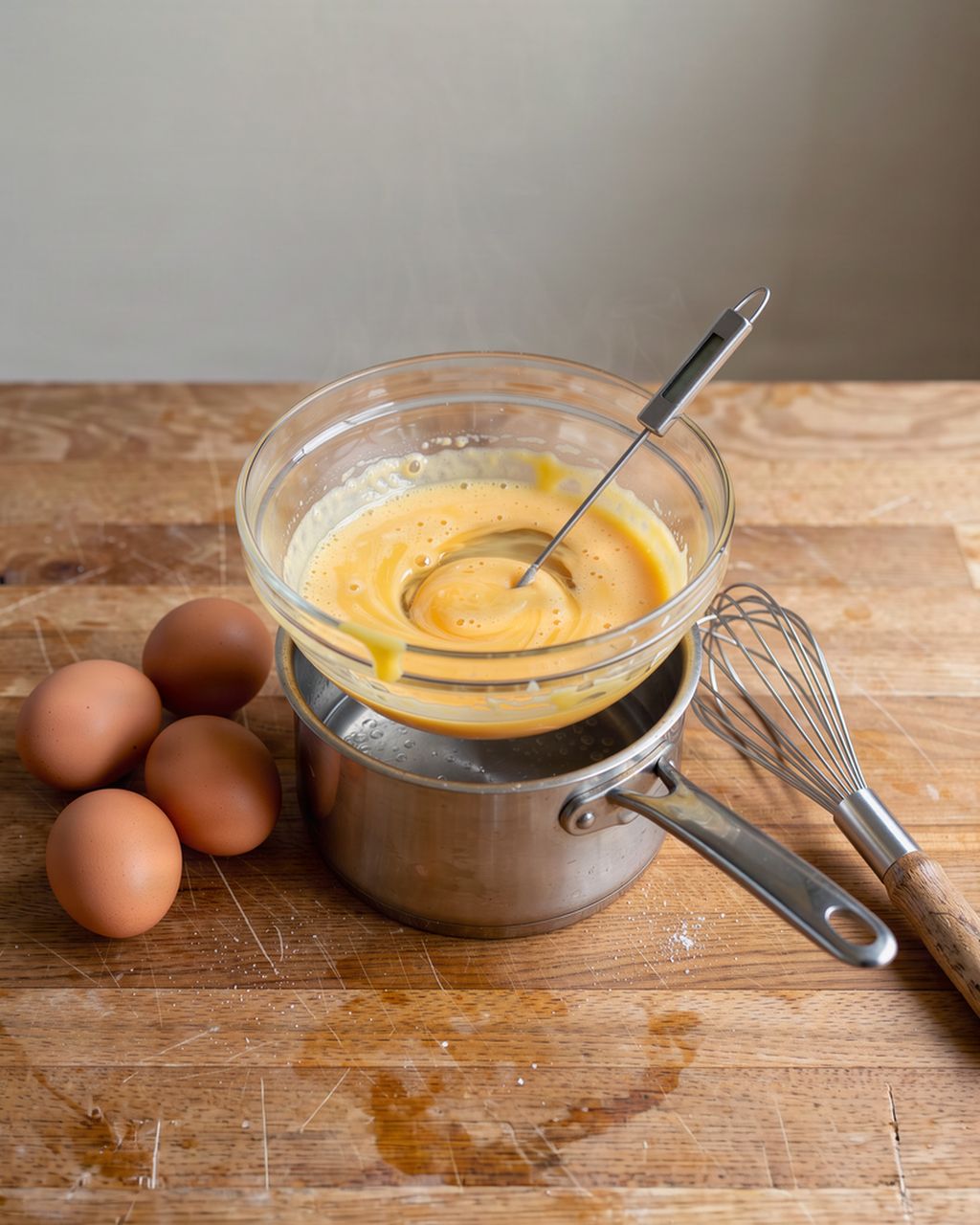
Beat the yolks with the sugar. Whisk for a few minutes until pale and fluffy – this is where the cake's lightness really comes from.
Fold in the almonds. Gradually add the sifted ground almonds to the yolk mixture (plus a pinch of baking powder, if you're using it).
Combine gently. First fold in a third of the whipped whites to loosen the mixture, then fold in the rest with a spatula, working gently from the bottom up. Don't stir vigorously – that will knock the air out and leave you with a dense cake.
Bake at 175°C (350°F) for roughly 40–50 minutes in a preheated oven. The cake is done when the top is golden, springs back when pressed, and a skewer inserted into the centre comes out clean or with just a few crumbs.
Why is bolo de amêndoa so moist? Ground almonds have no gluten and carry a lot of natural fat, so the cake stays dense and moist even after cooling – it's often even better the next day. Use a light-coloured, non-stick tin: metal conducts heat faster than glass or ceramic, and a pale surface helps protect the edges from over-browning. Once baked, let the cake cool in the tin so it doesn't collapse.
Overmixed egg whites: vigorous stirring knocks the air out and leaves the cake dense. Fold gently instead.
Oven too hot: above 180°C (350°F+), the top browns before the centre finishes baking. Stick to 175°C (350°F).
Cutting too soon: a warm cake crumbles – let it cool fully first.
Wrapping while warm: a hot cake sealed under foil will turn damp and soggy. Wait until it's completely cool before wrapping.

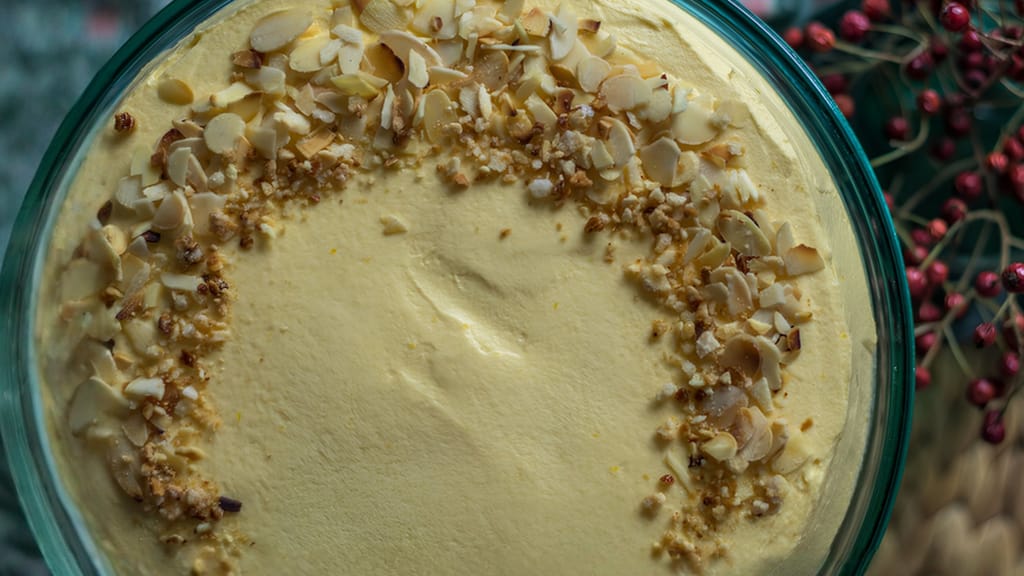
The simplest and most authentic decoration is toasted almond flakes and a light dusting of icing sugar. For a pop of colour, add fresh fruit.
Almond flakes: scatter over the top, or toast them briefly in a dry pan for extra nutty aroma and shine.
Fresh fruit: raspberries, blueberries or kiwi slices add freshness and colour contrast.
Sugar and glaze: a dusting of icing sugar, or a thin lemon glaze.
A plain white plate lets the cake stand out at the table. For drinks, port wine, a glass of prosecco or simply good coffee all pair beautifully – almonds and coffee are a classic match.
In a sealed container, Portuguese almond cake keeps in the fridge for about 4 days and only gets better with time – the crumb settles and becomes even more moist. For longer storage, freeze it.
Once cooled and wrapped, the cake also freezes well, whole or in slices, for about a month – just let it thaw at room temperature before serving. Always store the cake once it's completely cool – wrapping it warm would trap steam and make it soggy.
Craving more Portuguese sweets? Stick with the classics: fluffy pão de ló (Portuguese sponge cake), the caramel marvel that is pudim Abade de Priscos, or homemade traditional Portuguese biscuits. And while we work on our own dedicated bolo de amêndoa recipe, another moist almond cake can satisfy that craving for almond baking in the meantime.
Swedish almond cake
Swedish almond cake – another moist ground-almond cake you can bake right away.
Better not to – for a classic bolo de amêndoa, go for blanched, ground almonds. The skins will turn the cake a dull grey and give it a gritty, sandy texture. If you only have skin-on almonds, blanch them, peel off the skins, and grind them finely yourself, or simply buy ready-made blanched almond flour.
Whipped egg whites can be swapped for aquafaba – the liquid from a can of chickpeas, which whips into stiff peaks just like egg whites. To replace the yolks and their binding power, try a tablespoon of ground flaxseed mixed with water. The texture will end up a bit denser and less fluffy than the classic version.
Bolo de amêndoa is a standalone baked cake made from ground almonds, sugar and eggs, served as a whole cake. Frangipane is an almond cream that's baked as a filling inside pies and tarts, not served as a cake in its own right. Both are built on almonds, but bolo de amêndoa is a dessert all by itself.
You don't have to – the traditional version relies mainly on the air whipped into the egg whites. A pinch of baking powder will lighten the cake slightly and act as a safety net if you're not confident about your whisking technique. What really matters, though, is folding the egg whites in gently so you don't knock the air back out.
Yes, and it's often even better that way. Once cooled, wrap the cake and keep it in the fridge – the dense almond crumb settles overnight and tastes even more moist the next day. Just let it come back to room temperature before serving.
One recipe worth heating the oven for, one tip, and one deal from the shop. Nothing else.