Cheese Board: How Much Cheese per Person, Which Cheeses to Pick and How to Arrange It (with Fruit, Nuts and Bread)
Party Platter: How Much Per Person, How to Arrange It and What to Prep the Day Before
Updated Nov 16, 2026
A party platter needs about 150 g of meat and cold cuts, 100 g of cheese, 120 g of vegetables and 120 g of bread per person when it's the main meal of the evening. When it's just one of several dishes, you need less: 70 g of meat, 40 g of cheese, 70 g of vegetables and 50 g of bread. Below you'll find the amounts for 6, 10 and 15 people, a method for arranging the platter so it looks generous, and what you can safely slice a day ahead.
For a party platter, plan on 150 g of meat and cold cuts, 100 g of cheese, 120 g of vegetables and 120 g of bread per person when it's the main meal; as one of several dishes, plan on less (70 / 40 / 70 / 50 g).
The platter is the main meal: meat and cold cuts 150 g, cheese 100 g, vegetables 120 g, bread 120 g per person.
The platter is one of several dishes (alongside open-faced sandwiches, salads, a hot dish): meat and cold cuts 70 g, cheese 40 g, vegetables 70 g, bread 50 g per person.
These are net grams of what ends up on the platter, not the weight of the packaging. Meat and cheese disappear fastest, vegetables slowest. If you're unsure, go a bit heavier on meat and cheese and lighter on bread, because bread fills people up and then the rest goes uneaten. If you're also making open-faced sandwiches and canapés, you'll find the per-person counts in how many open-faced sandwiches and canapés per person.
A party platter for 10 people as the main meal needs 1.5 kg of meat and cold cuts, 1 kg of cheese, 1.2 kg of vegetables and 1.2 kg of bread. In the overview below, the first figure applies when the platter is the main meal, and the figure after the slash when it's one of several dishes.
6 people: meat and cold cuts 900 g / 420 g, cheese 600 g / 240 g, vegetables 720 g / 420 g, bread 720 g / 300 g.
10 people: meat and cold cuts 1.5 kg / 700 g, cheese 1 kg / 400 g, vegetables 1.2 kg / 700 g, bread 1.2 kg / 500 g.
15 people: meat and cold cuts 2.25 kg / 1.05 kg, cheese 1.5 kg / 600 g, vegetables 1.8 kg / 1.05 kg, bread 1.8 kg / 750 g.
For 10 or more people, don't make one giant platter; make several smaller ones: two platters for 10 people, three for 15. They look fuller on the table, everyone can reach them, and you can keep the second one in the fridge and swap it in once the first runs low (more in the section on keeping it cold).
Seasonal baking plans, tested recipes and kitchen tricks that save you time. Unsubscribe in one click.
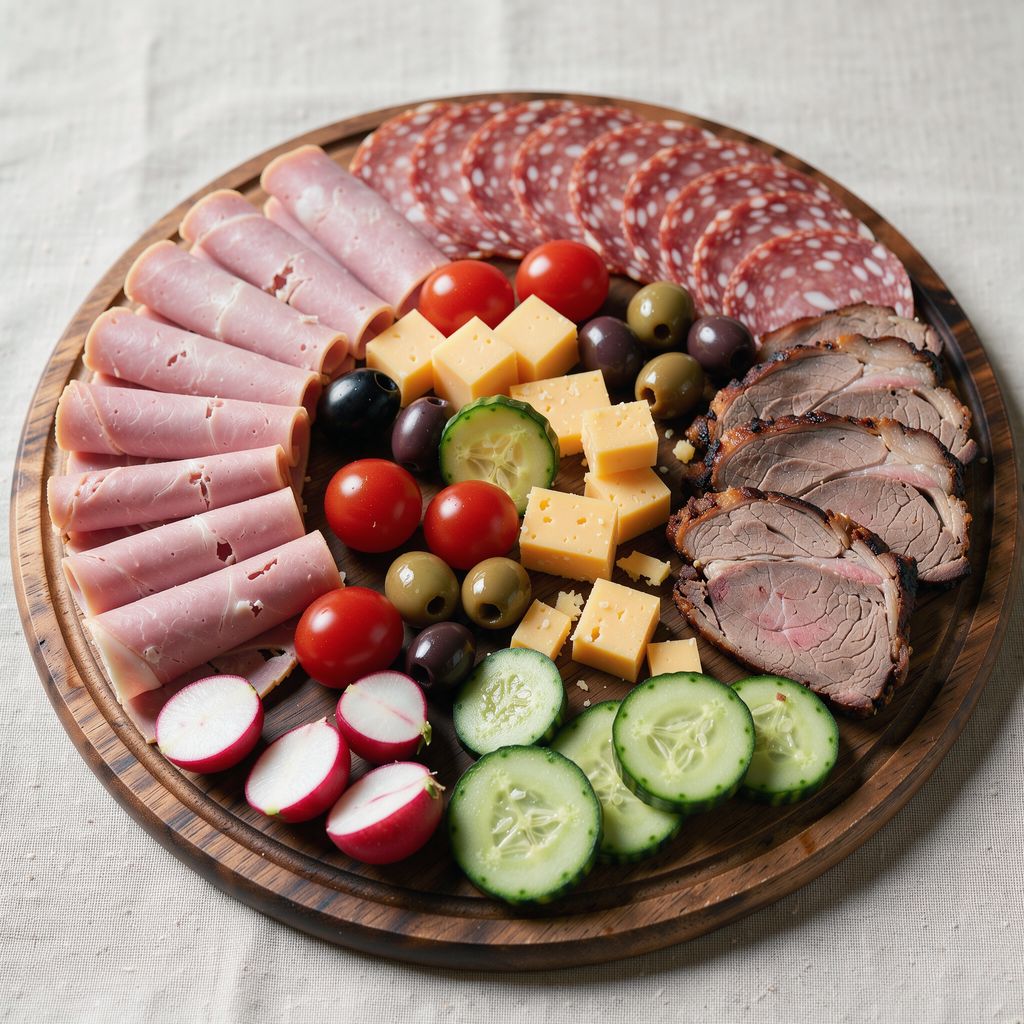
A generous platter rests on four groups – meat and cold cuts, cheese, vegetables and something tangy – plus bread served alongside in a basket. Variety matters more than quantity. Three kinds of meat and three cheeses look more generous than a kilo of a single ham.
Meat and cold cuts: one mild ham (steamed or off the bone), one dried or smoked meat (Vysočina salami, chorizo, prosciutto) and one roast meat cut into slices. Homemade slow-roasted turkey breast slices beautifully thin when cold and makes a welcome change from deli meats.
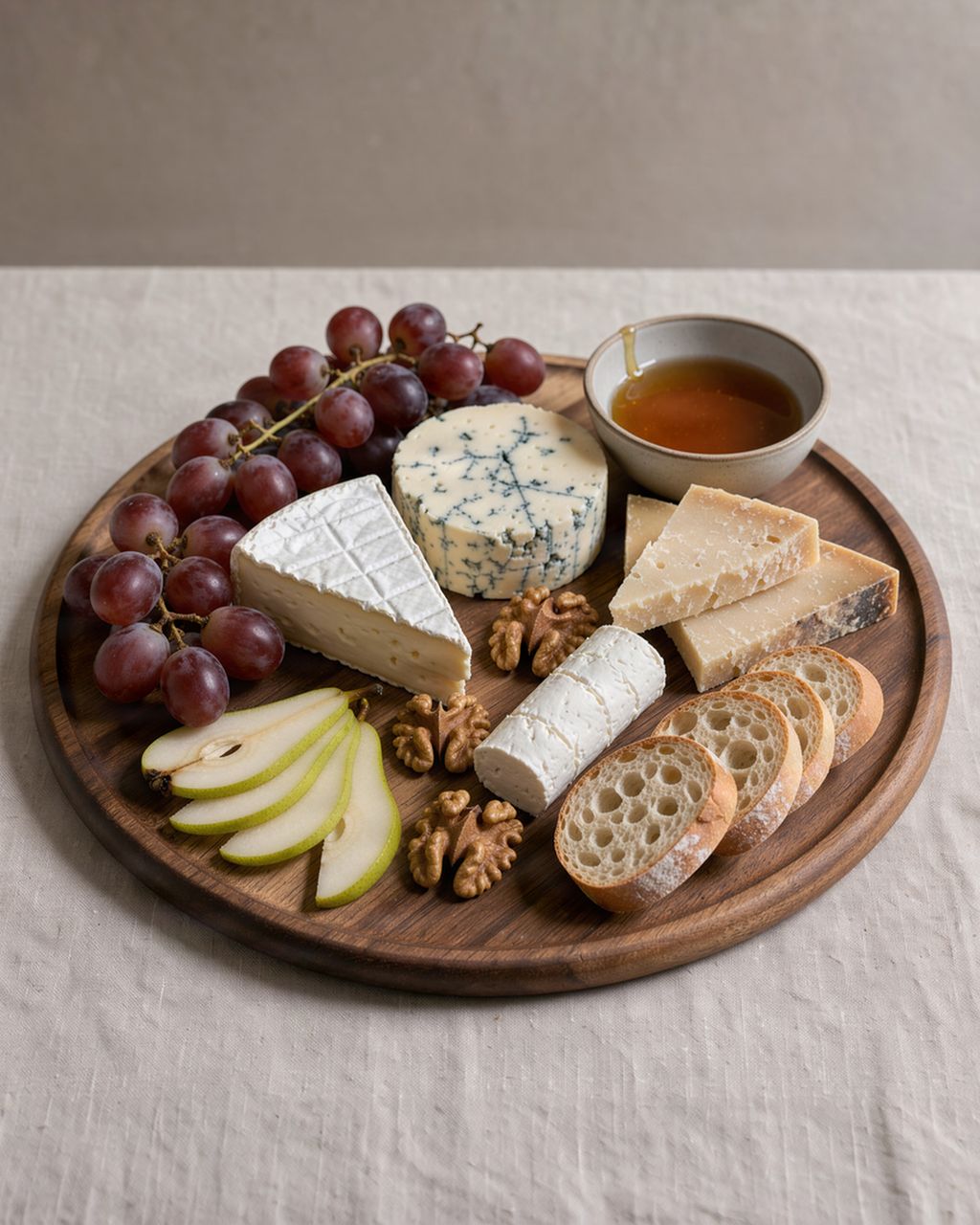
Cheese: one semi-hard or hard (Edam, Gouda, cheddar), one bold (Niva, a Czech blue cheese, or a smoked cheese) and one soft or creamy. Three different textures side by side look richer than three similar yellow cheeses. For how to choose and slice them, see cheese board.
Vegetables: cherry tomatoes, cucumber, peppers in three colors, radishes, celery stalks. They need to be easy to eat by hand, no knife required.
Tangy and salty: pickles, olives, pepperoncini, pickled pearl onions. With fatty meat and cheese, this is exactly what makes people reach for more.
Bread and a dip: baguette, veka (a Czech white loaf) or a round loaf of bread in a basket beside the platter, and one spread in a small bowl on the platter, such as roasted beet spread, which adds color.
At Czech parties, schnitzels belong on the platter too. They're great cold, but put them on a separate plate so the breading doesn't soak up juices from the vegetables. Baked schnitzels in a cornflake-style cornmeal coating stay crisp. For vegetarians, grilled zucchini rolls with Lučina (a Czech soft cheese) are a good fit; on the platter they look like rolled ham. Add baked peppers with fresh cheese and thyme or a bowl of carrot hummus. You'll find more quick party food ideas under the party snacks tag.
You arrange a party platter in five steps: anchors, large areas, shapes, colors and filling the gaps. In other words, you work from big pieces to small ones:
Anchors. Set a bowl of spread or pickles and a block of cheese on the platter. They divide the space and everything else is arranged around them.
Large areas. Lay slices of roast meat and cheese in rows, overlapping by about half, like roof tiles. On a smaller area they look like a bigger pile.
Shapes. Roll the ham into rolls (one slice, rolled tightly, seam side down). Fill them with horseradish whipped cream and you have classic ham rolls. Arrange salami and dried meat into fans: fold a slice in half, then once more into a quarter, and line these little triangles up in an arc. Shapes give the platter height, and height looks like abundance.
Colors. Don't put pink next to pink or yellow next to yellow. Put vegetables between the ham and the salami, and tomatoes between two cheeses.
Filling the gaps. Tuck olives, cherry tomatoes, nuts, radishes and sprigs of parsley in wherever the plate shows through. On a finished platter, you shouldn't see the plate.
Don't put bread on the platter; it dries out and goes soggy. Serve it alongside in a basket.
Slice the day before anything that won't dry out or release juice. Slice on the day whatever wilts or darkens quickly.
The day before:
hard cheese cut into cubes or slices, wrapped tightly in plastic wrap
roasted and cooled meat, whole (slice it in the morning; left whole it stays juicier)
peppers, carrots and celery cut into sticks, stored in a container with a damp towel
spreads (the flavors blend overnight)
schnitzels fried or baked and cooled, on the top shelf of the fridge, loosely covered with parchment paper so the breading doesn't go soft
On the day of the party:
cold cuts and ham (sliced a day ahead they dry out at the edges), rolls and fans
cucumbers and tomatoes, which release water on the platter
apples, pears and avocado, which darken
bread
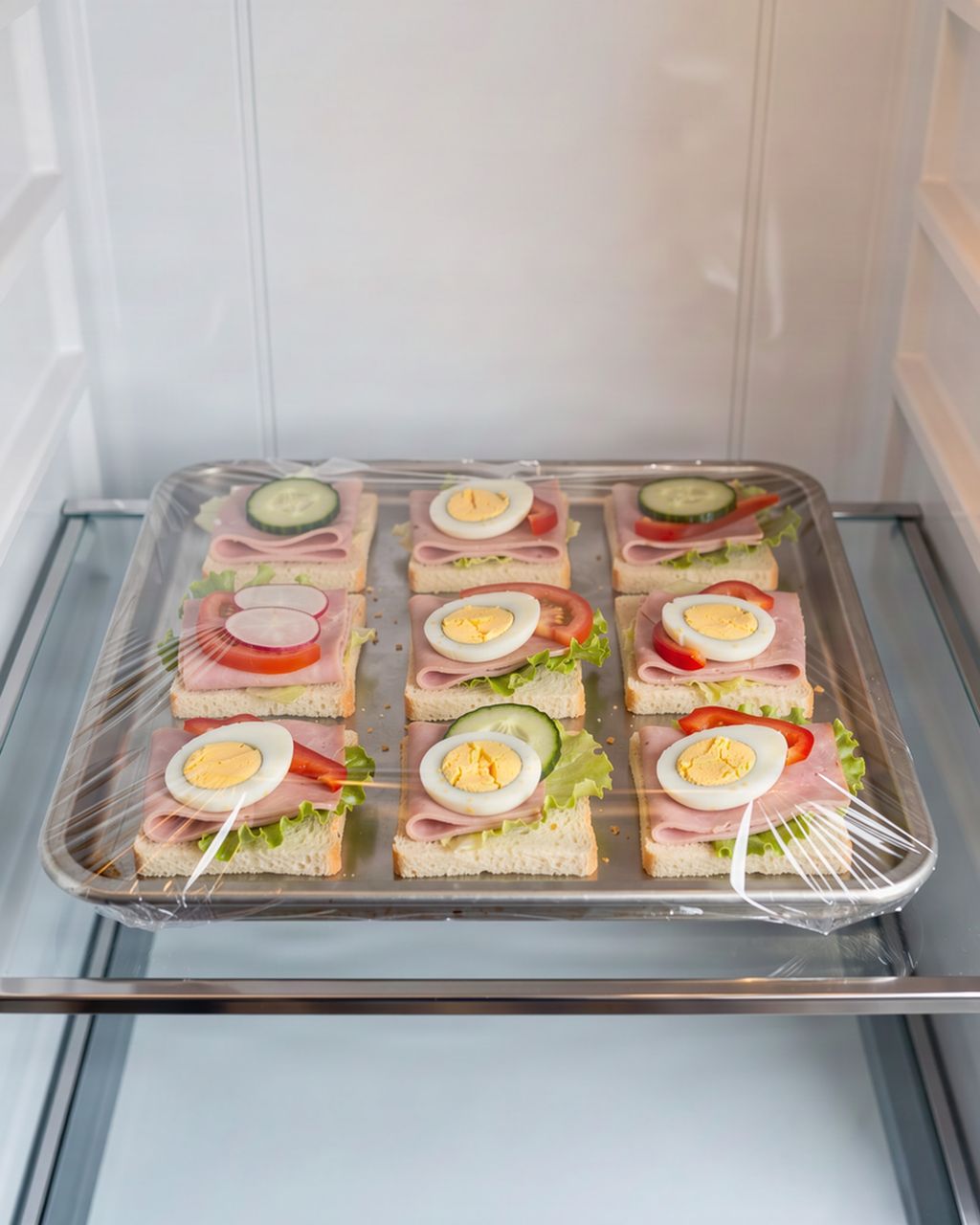
You can arrange the platter 2 to 3 hours before the guests arrive; cover it tightly with plastic wrap and put it back in the fridge. Add cucumbers and tomatoes just before serving.
According to the U.S. food safety agency (USDA/FSIS), a party platter shouldn't sit at room temperature for more than 2 hours, or just 1 hour when it's above 32 °C (90°F). FSIS says bacteria multiply fastest between 4 and 60 °C (40–140°F), and it recommends keeping your fridge at 4 °C (40°F) or below.
In practice, that means:
Smaller platters and swapping. Put one platter on the table and keep the other in the fridge. Swap them after an hour or two. Don't top up a platter that has already been out with fresh meat.
Cooling from below. Set the platter on a baking sheet or tray of ice. A wooden board lets hardly any cold through from ice or cold packs, so use a metal or ceramic platter for chilling.
Covering. Until the guests arrive, keep the platter covered with plastic wrap. Uncovered cold cuts dry out and darken at the edges within half an hour in the open air.
Heat from the room. Don't put the platter near a radiator, a fireplace or a sunny window. In winter, the coldest spot is often by the balcony door.
Don't put anything that has been out on the table for more than two hours back in the fridge for tomorrow. What stayed in the fridge as backup you can eat the next day, for example in a baked croque monsieur toastie or in a chorizo omelet.
If you're planning a whole evening, treat the platter as the foundation and add one hot dish, small canapés and something sweet. For the platter, use the lower figures (after the slash) from the amounts above. For canapé ideas you can prepare ahead, see New Year's Eve canapés. For a party where people mostly drink wine, savory cookies for wine go well with the platter and stay crisp for several days.
Meat and cheese cost the most, so that's where you can save the most. Roast your own meat for slicing and buy cheese in a block instead of pre-sliced packs.
Serve the platter on a large wooden board or a flat platter 35–40 cm (14–16 in) across, big enough for rows of slices, rolls and fans; an ordinary plate is usually too small for a generous spread. If you need to keep it cold, use a metal or ceramic platter set on a baking sheet or tray of ice; ice barely chills a wooden board through the wood. Put schnitzels and bread on the side, separately.
Leftovers that stayed in the fridge as backup keep 2–3 days in a covered container and work well in a baked toastie, an omelet or a pasta bake. Throw away anything that has been out on the table for more than 2 hours.
Instead of meat, add more cheese, grilled zucchini rolls, baked peppers with fresh cheese, carrot hummus or a beet spread, and hard-boiled or stuffed eggs. Put the vegetarian part on its own plate so it doesn't mix with the cold cuts.
One recipe worth heating the oven for, one tip, and one deal from the shop. Nothing else.