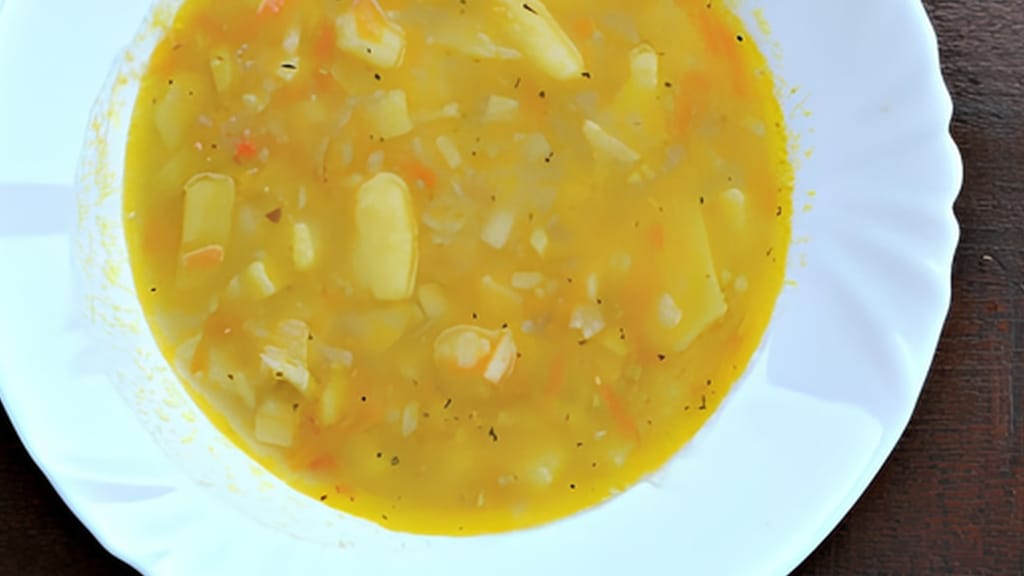
Super-quick potato soup
Updated Aug 30, 2026
You can rescue oversalted food with three moves: dilute it with an unsalted base, add fat or starch, and finish with a touch of acid. A potato won't pull out the salt — that's a myth that's stuck around kitchens for decades, and testing keeps disproving it. Below you'll find exactly what to do for soup, sauce, meat and side dishes, how much salt actually belongs in what (in grams), and how to spot you're near the limit before you cross it.
You can't pull salt out of a finished dish — it's not chemically possible. You can only dilute it, mask it with fat, or spread it through a bigger volume of food. Here's what works, ranked by reliability:
Dilution with an unsalted liquid or unsalted base — the only method that genuinely lowers the salt concentration.
Extra volume — potatoes, rice, pasta, pulses or vegetables that stay in the dish.
Fat — cream, butter, yoghurt, coconut milk. Won't reduce the salt content, but takes the edge off how sharp it tastes.
A few drops of acid — lemon, vinegar, wine. Draws your palate's attention elsewhere.
A second, unsalted batch, which you mix into the oversalted one.
Combine them. For a mildly oversalted soup, a ladle of unsalted stock and a spoonful of cream is enough; for a real disaster, you won't get away without a second batch.
To cut the saltiness in half, you have to double the volume of the dish — salt dilutes in a straight line, and there's no shortcut around that. A soup salted to 2% will drop to about 1% once you add an equal amount of unsalted stock — roughly the point where it tastes pleasant.
The best thing to dilute with is an unsalted base, not water. Water dilutes the salt and the flavour together; unsalted stock, milk, coconut milk or tomato passata dilutes mainly the salt.
Add it ladle by ladle and taste in between. You can always add more salt later — undoing an over-diluted dish is extra work.
If you've got nothing to dilute with, shrink the portion. Serve less of it, and fill out the plate with an unsalted side.
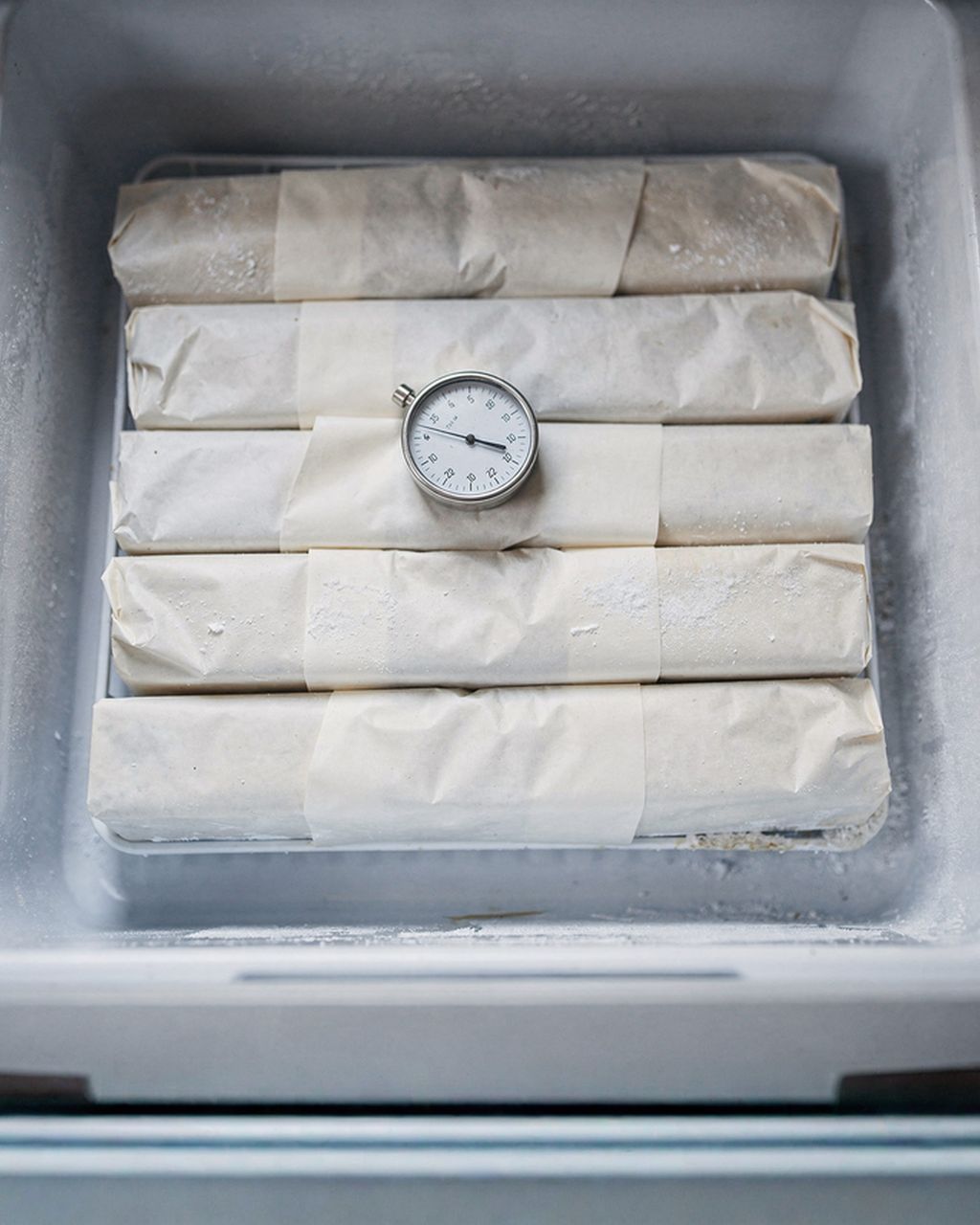
That's why it's worth keeping a litre of completely unsalted stock in the freezer. It's the cheapest insurance policy in the kitchen, and you'll use it for more than just rescue missions.
Starch and vegetables work because they stay in the dish and spread the salt through a larger amount of food — not because they soak up the salt itself.
For soup: diced potatoes, a handful of rice, lentils or small pasta. Cook them separately in unsalted water and stir them in at the end.
For sauce: unsalted béchamel, tomato passata, sautéed onion, finely grated courgette.
With meat: an unsalted side on the plate does more good than any trick in the pot.
One rule to remember: always cook pasta, rice and potatoes with no salt when you're using them as a rescue. Otherwise you'll bring the same problem back to the plate a second time.
Super-quick potato soup
Super-fast potato soup — a good example of how potato should be used: diced and left in the pot, not fished out
Fat doesn't remove salt, but it coats the tongue and blunts the saltiness — that's why salty cheese in a creamy sauce tastes milder than the same cheese in a watery base.
For soups and sauces: 2–3 tablespoons of whipping cream, or a spoonful of cold butter stirred in off the heat.
Full-fat yoghurt should only be stirred into hot food once it's off the heat, otherwise it will split.
For Asian and Indian sauces: coconut milk, even up to 100ml per portion.
For mash and purées: more butter and milk, no extra salt.
Creamy soups almost always balance out this way — you can see the principle in creamy mushroom soup, where the cream holds the flavour together.
Add acid in ½ teaspoon per litre of food, tasting between additions. It isn't an antidote to salt: studies on taste interactions suggest that at low concentrations, acidity actually sharpens the perception of saltiness, and only at higher concentrations does it dull it. So a small splash of acid can make a dish taste saltier than before — which is exactly why this trick sometimes backfires.
What to use: lemon juice, apple cider or wine vinegar, dry white wine.
How much: ½ teaspoon per litre, taste, then add the same amount again only if needed.
Where to be careful: in cream- and milk-based sauces there's a risk of splitting — add the acid off the heat, stirring constantly.
Pickle brine is best avoided: it's salty in its own right, so you'd just be solving one problem with another.
Cook a second portion completely without salt and mix it into the oversalted one — it's the most reliable method, and for a genuinely salty dish, the only one that will actually work. It sounds like a lot of effort, but with a sauce it's often just frying up another onion with some passata and topping it up with stock — ten minutes' work.
Two practical tricks to save yourself the extra effort:
Split it over two days. Keep half of the oversalted batch in the fridge and finish cooking it tomorrow with an unsalted base.
Treat the salty batch as a seasoning. Freeze it in ice-cube trays and drop in a cube instead of salt for future dishes. An oversalted sauce is basically a ready-made flavour base — it just hasn't been eaten whole.
No, a potato will not pull the salt out of food. It can't be selective about what it absorbs — it soaks up salty liquid at the same concentration as the soup around it, and when you take it out, all you've removed is a chunk of soup along with it. What's left in the pot is exactly as salty as before. Tests measuring saltiness confirm this again and again: dissolved salt breaks down into ions spread evenly through the whole volume of liquid, and no ingredient selectively picks them out.
Where the myth comes from: a potato does do something — it adds volume and starch to the pot, which slightly dilutes the salt concentration. But that only holds true if you leave it in. A potato you fish back out is pure soup, wasted.
The takeaway: go ahead and add potatoes to oversalted soup, but dice them and leave them in for good, as part of the meal. That turns the "trick" into method number two from the previous section — adding volume — and that one actually works.
Sugar, bread or egg white, rinsing the finished dish, and spoonfuls of vinegar — none of these fix oversalted food. Here's why, one by one:
Sugar. Sweetness masks saltiness somewhat, because the two flavours suppress each other, but it doesn't remove it. An over-sweetened, salty sauce is worse than the original problem. A pinch to balance it out — yes. A spoonful — no.
Bread or egg white in soup. Same principle as the potato: they soak up the soup, not the salt.
Rinsing a finished dish. With meat or braised vegetables, you'll rinse away the flavour, not the salt inside. The exception is cooked pasta, rice and potatoes — rinsing them under hot water removes some of the salt (roughly a third of it, for pasta), so it can fix a mild case of oversalting, but not a disaster.
Spoonfuls of vinegar. You'll turn an oversalted dish into an oversalted and sour one. Acid belongs in food drop by drop, not by the spoonful.
The approach depends on whether the dish has liquid you can dilute. Liquid dishes can almost always be saved, meat only partly, and bread or dough hardly at all.
Soup is the easiest to save — you've got liquid you can dilute. Add unsalted stock or water with a bit of passata, throw in diced potatoes, and boost the amount of vegetables. With creamy soups, a bit of cream will finish the job.
For a stock that's salty in its own right, think about what you'll use it for: an oversalted reduced chicken stock with meat and mushrooms can be thinned with water and used as a base — just don't add any salt at all in whatever recipe you make with it next.
Sauce is easier to rescue with fat and volume than soup, because more of it can hide in there.
Tomato-based: add more passata, sautéed onion, grated carrot or courgette. A pinch of sugar will balance out the extra acidity you've just added.
Cream-based: top up with more cream or milk, and thicken with flour whisked into cold milk.
Roasting juices: typically oversalted because they've reduced. Dilute with water or unsalted stock and reduce briefly again.
For dishes with lots of sauce and not much meat, the rescue is almost always guaranteed — like meatballs, which will soak up as much sauce as you give them.
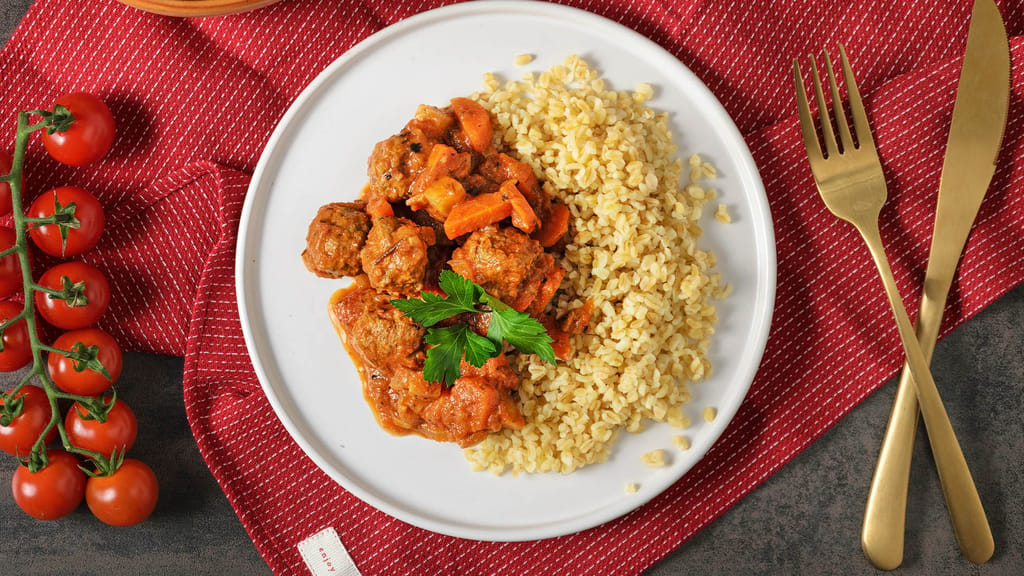
Meatballs in vegetable sauce
Meatballs in vegetable sauce — a vegetable base can always be topped up, spreading the saltiness out
Meat can't be diluted — the salt is inside the muscle fibres. You've got three options:
Slice it thin and serve it with a generous unsalted side. Rice, potatoes or couscous cooked without salt will cut the saltiness of each bite more than anything else.
Turn it into a sauce. Return the sliced meat to an unsalted base with cream or passata and let it simmer for a bit; the salt redistributes through the whole volume.
An oversalted steak or chop is rescued by acidic, fatty extras — a pat of herb butter, a yoghurt dip, a salad with lemon dressing.
With an oversalted marinade, the situation is better than it looks: if the meat is still sitting in it, rinse it off, pat it dry and cut the marinating time short. Salt reaches the meat faster than the flavour of the herbs and spices in the marinade, which is exactly why you should shorten it.
Potatoes, rice and pasta are the one category where rinsing at least partly works — some salt washes off the surface with the water, though the rest stays absorbed inside. Rinsing pasta cuts the sodium by roughly a third, so it fixes mild oversalting but not an extreme case.
Drain and rinse under hot water from the kettle. With pasta and rice, this also washes away some starch, so toss them afterwards with a bit of butter or oil.
Potatoes can be briefly reboiled in fresh, unsalted water.
An oversalted boiled potato works well in creamy nutmeg mashed potato: add extra unsalted potatoes plus plenty of milk and butter, and the saltiness spreads out.
Oversalted dough — for bread, dumplings, buns — can't be diluted at all, because the flour-to-liquid ratio is fixed. The only fix is to mix up a second batch with no salt at all and combine the two.
A reliable baseline is 1% salt by weight of the food, i.e. 10g of salt per kilo. Adjust from there depending on the dish:
Soups and stocks: 0.8–1%, i.e. 8–10g per litre. If salty cheese, bacon or soy sauce are going in too, start at 0.5% and season to taste at the end.
Pasta water: 10g of salt per litre of water — the classic Italian ratio of 1–10–100 (1 litre water, 10g salt, 100g pasta). The pasta itself only takes up a fraction of that.
Water for potatoes and vegetables: 8–10g per litre, otherwise they'll taste bland inside no matter how much you season them on the plate.
1% of the meat's weight, i.e. 10g per kilo — you can do this a day ahead in the fridge.Dry-brining meat:
1% of the meat's weight, i.e. 10g per kilo — you can do this a day ahead in the fridge.Minced meat and burgers/meatballs:
1–1.2%. Season it, fry a test patty, taste it — only then shape the rest.
Why food ends up oversalted
A teaspoon isn't a unit: different salts weigh different amountsThe same teaspoon can hold twice as much salt depending on which type you're using. Fine table salt packs tightly, and a level teaspoon weighs roughly 6g. Coarse salt (like coarse sea salt) fits 3–5g into the same volume, and flaky sea salt like Maldon only 2–4g
.
The result: a recipe written for flaky salt but measured out with fine salt can end up twice as salty — and you haven't made a single mistake in your measuring. This matters even more with recipes from abroad, since "1 tsp salt" means a different amount every time (American recipes often specify kosher salt too, which is roughly equivalent to our coarse salt).There's only one solution, and it's a boring one: weigh your salt in grams.
Reduction concentrates salt too — season at the endWater evaporates out of the pot; salt doesn't. When you reduce a sauce, stock or roasting juice by half, you double the salt concentration
without adding a single extra grain.
Hidden sources of salt
The most common hidden sources of salt are stock cubes, soy and fish sauce, cured meats, aged cheeses and bread. Before you reach for the salt shaker, add up what's already salty in the pot:
stock cubes and instant stock — the cube is often made largely of salt
soy sauce, Worcestershire sauce, fish sauce, mustard, ketchup
bacon, sausage, ham, smoked meat
hard and aged cheeses, olives, capers, sun-dried tomatoes in oil
bread, canned pulses, pickled vegetablesThe rule: if any of these are going into the recipe, skip the salt entirely at the start and season to taste only at the end.
Palate fatigue and the temperature of the food
After ten minutes standing over the pot, your tongue starts underestimating saltiness — it adapts, and you keep on salting. Three habits that reliably fix this:Taste with a clean spoon
each time, and take a sip of water or a bite of bread between tastings. It resets your sensitivity.Taste what will actually be on the plate
, not the bare base. Salty cheese, dressing or bacon on top will change the result more than you'd expect.Taste cold dishes chilled
, not right after mixing — a warm dressing or pâté will throw off your read on the final saltiness.And always salt in two stages
How much salt a day? What the guidelines sayThe World Health Organization recommends adults have less than 5g of salt a day — that's roughly equivalent to 2g of sodium, or about one teaspoon of salt from all sources combined (WHO gives this as an approximate conversion; depending on the salt type, it works out to 5–6g). The reality is quite different: according to WHO, the global average sodium intake was 4,278mg per day
(2021 estimate) — more than double the recommendation.
Most of that salt doesn't come from the shaker on the table, but from processed foods — bread, cured meats, cheese, ready meals and store-bought sauces. When you cook at home, you're the one in control of how much salt goes in, not a manufacturer.
What actually works in practice:Compare labels
— the salt content per 100g for the same type of bread or ham can easily differ several times over between brands.Cut back gradually
, by 10–20% in a recipe at a time. Your palate adjusts within a few weeks, and you'll stop missing the extra salt.Make up for the missing intensity elsewhere
— with umami, acid and spice, exactly as covered in the next section.
How to season food without saltWhen a dish tastes flat, what's usually missing is umami, acid or the warmth of spice
rather than salt — salt is just the fastest way to paper over that gap. Four levers that work instead:umami
— dried mushrooms, tomato passata, caramelised onion, aged cheeseacid
— lemon, vinegar, wine, fermented dairyaroma
— fresh herbs, citrus zest, toasted whole spicesheat/sharpness
Umami is the strongest lever
Umami boosts the sense of fullness in a dish's flavour, so it tastes well-seasoned even with noticeably less salt. Where to find it:Dried mushrooms and their soaking liquid.
Don't pour the liquid away — use it in place of water in a sauce or soup. It's the cheapest umami boost around.Tomato passata fried in fat
until it darkens and starts to smell rich. Raw passata straight from a can doesn't have this effect.Slowly caramelised onion
, even 20 minutes over a low heat.A parmesan rind simmered in soup
, miso, Worcestershire sauce — just note these are salty in their own right, so factor that in.
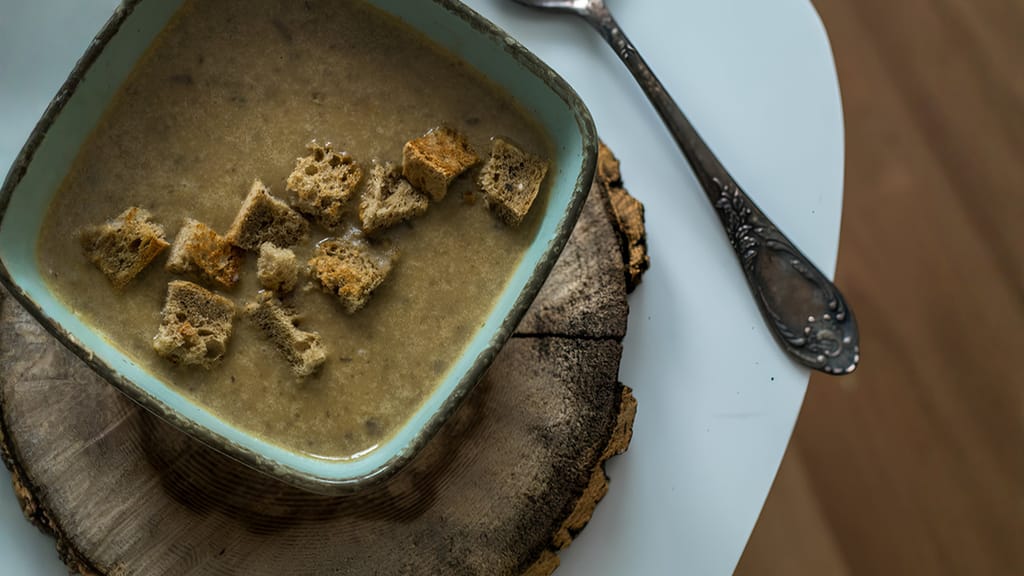
Mushroom soup
A mushroom base is the easiest way to try this principle out for yourself.
Herbs, spices and citrus
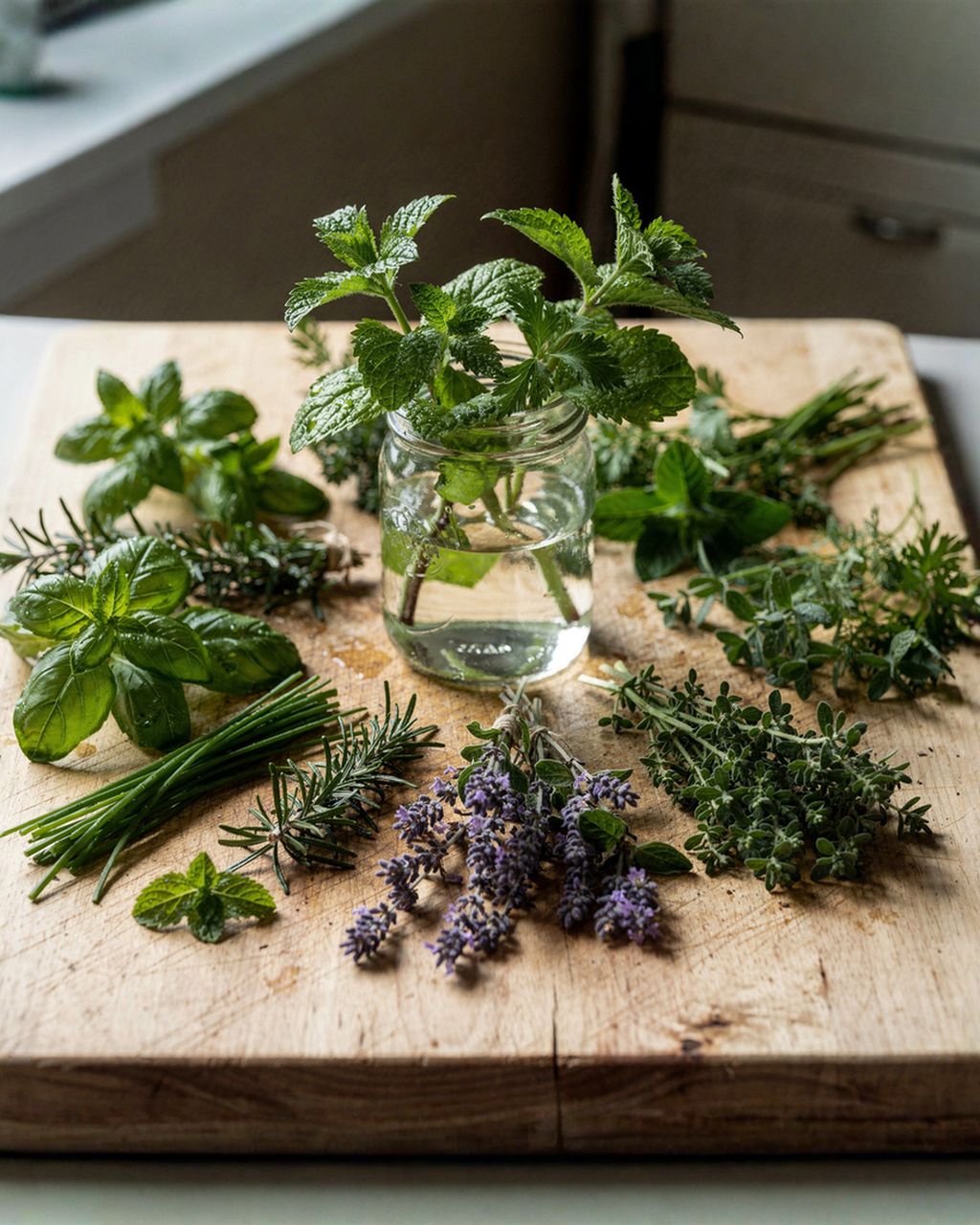
You can replace salt in a dish with four things: herbs, toasted whole spices, citrus zest, and heat (chilli, horseradish, ginger). How to handle each:Herbs: dried ones go in early in cooking, fresh ones go in at the end, off the heat. Basil with tomatoes and pasta, rosemary and thyme with roast potatoes and meat, dill in creamy soups, parsley on pretty much anything. Rosemary alone can carry a simple side — sweet potato rosemary crisps
barely need any salt at all.Spices:
crush whole ones and toast briefly in a dry pan or in fat — that's what releases the aromatic compounds. Cumin, coriander, pepper and smoked paprika do more for roasted vegetables than the salt shaker ever could.Citrus:
the zest carries the aroma, the juice the acidity. Grated lemon or lime zest stirred in at the end of cooking is the cheapest way to brighten up a dish.Heat/sharpness:
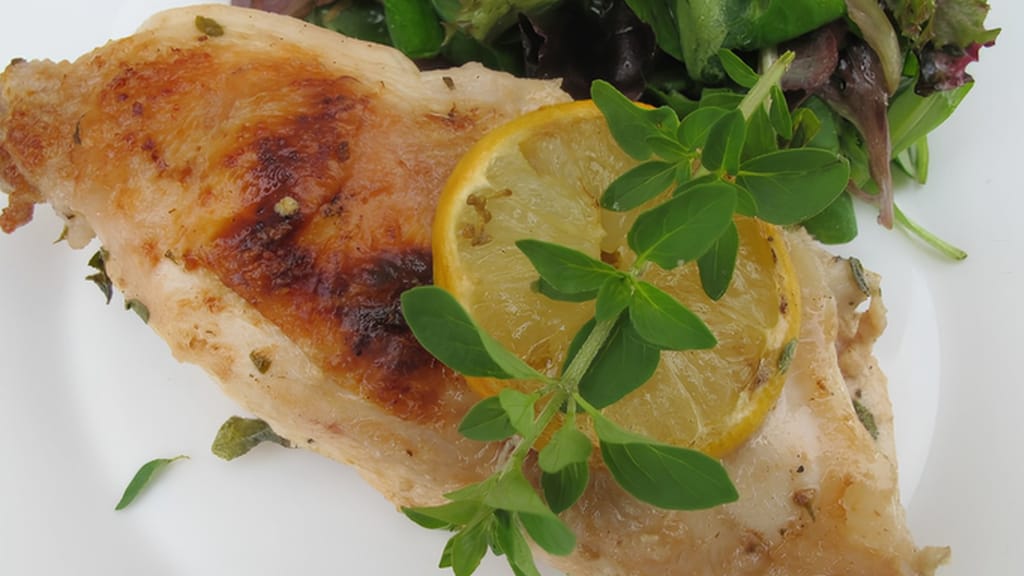
Chicken with lemon and oregano
chilli, horseradish and fresh ginger cut through flatness in a completely different way than salt does — and you'll still notice it even if you cut the salt by a third.
One oversalted dish is mainly a culinary problem: it tastes sharp and drowns out the other flavours in the meal. The exception is infants, young children, and people whose salt intake is monitored by a doctor — for them, different rules apply, and their doctor will set those. WHO recommendations are about average daily salt intake, not one salty lunch.
No, don't give oversalted food to children under one year old. Recommendations for infants are much stricter than for adults — the UK's SACN and NHS both put the limit at under 1g of salt a day for under-ones. In practice, take the child's portion out of the pot before you add salt, then season the rest for the adults.
Because water has evaporated from it, not salt. When you reheat an uncovered sauce, stew or soup, some liquid disappears and the salt concentration rises; with braised dishes, the salt has also had time to spread more evenly through the meat and vegetables, so you notice it more. The fix is simple — add a splash of unsalted stock or water when reheating, and keep the lid on.
You rescue cold mixed dishes by stirring in more unsalted ingredients, not liquid. For potato salad, add extra unsalted boiled potatoes, egg and fresh vegetables; for stuffing, add grated unsalted bread and egg — the volume goes up and the saltiness spreads out. Adjust the dressing or mayonnaise right at the end, and taste it chilled — tasting it warm will throw off your judgement.
There's only one way: mix up a second batch with no salt at all and combine the two. You can't dilute salt in raw dough with anything else, because the flour-to-liquid ratio is fixed and adding water will wreck the texture. With yeasted dough, remember that salt slows fermentation — once you've combined the batches, give the dough extra time and keep an eye on it, since the unsalted batch will rise faster than the salty one.
One recipe worth heating the oven for, one tip, and one deal from the shop. Nothing else.