Nuremberg Lebkuchen: How They Differ from Czech Gingerbread Cookies and How to Bake Them at Home
Nuremberg Lebkuchen: How They Differ from Czech Gingerbread Cookies and How to Bake Them at Home
Updated Oct 17, 2026
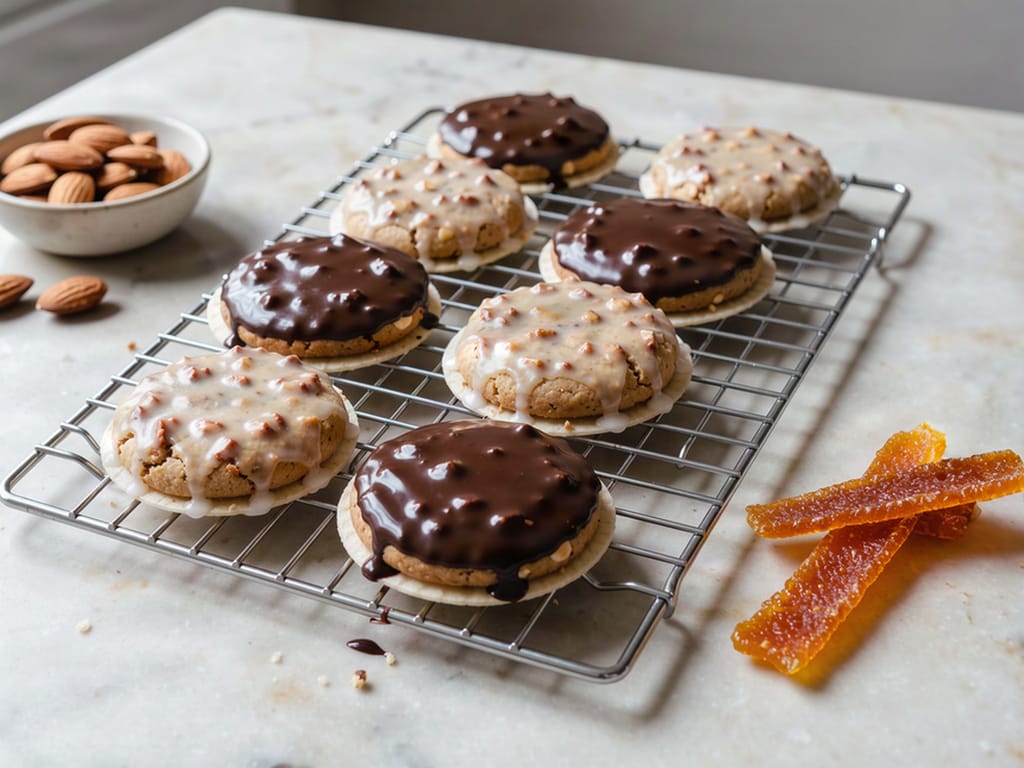
Nuremberg Lebkuchen (German: Nürnberger Lebkuchen) are soft, round cookies made from a dense nut mixture, baked on a thin wafer and topped with chocolate or a sugar glaze. They share little with Czech gingerbread cookies beyond the spices. Otherwise they're a completely different bake: you don't roll the dough or cut out shapes, and there's hardly any flour in them. Here you'll find how they differ, what goes into them, how to bake them so they stay tender, and why they benefit from a week in a tin.
What Nuremberg Lebkuchen Are
Nuremberg Lebkuchen are gingerbread-style cookies baked on a wafer: a dense, sticky mixture of ground nuts, sugar, eggs, candied peel and gingerbread spice, spread in a mound on a thin wafer 5–9 cm (2–3½ in) across and baked until soft. Flour plays only a minor role, or none at all.
Since 1996, the name "Nürnberger Lebkuchen" has been a protected geographical indication in the EU, so only bakers from Nuremberg may sell them under that name. You can of course bake them at home too. Strictly speaking, they're just Lebkuchen Nuremberg-style.
The top grade is Elisenlebkuchen. Under German food guidelines (Leitsätze für Feine Backwaren), they must contain:
at least 25% almonds, hazelnuts or walnuts (no other oilseeds),
no more than 10% flour or 7.5% starch.
That ratio is a good compass for home baking too: the more nuts and the less flour, the more tender and "premium" the Lebkuchen.
Want to know what’s next every Thursday until Christmas?
How to soften gingerbread that’s gone hard, when to fill Linzer cookies and how to tell the carp is done. One recipe and one tip a week. Unsubscribe in one click.
How Nuremberg Lebkuchen Differ from Czech Gingerbread Cookies
A Czech gingerbread cookie is a rolled dough of flour and honey, while a Nuremberg Lebkuchen is a nut mixture on a wafer. Everything else follows from that:
Base: Czech gingerbread cookies are built on rye or wheat flour, Nuremberg Lebkuchen on ground nuts (25% or more) and eggs.
Shape: you roll gingerbread dough to 3–5 mm (about ⅛–¼ in) and cut out shapes; you scoop the Lebkuchen mixture with a spoon and spread it in a mound on a wafer.
Texture straight from the oven: gingerbread cookies tend to be hard and only soften in the tin; Nuremberg Lebkuchen are soft from the start and, stored properly, stay that way.
Decoration: gingerbread cookies are piped with royal icing; Lebkuchen are coated entirely in chocolate or a translucent sugar glaze and topped with almond halves.
Leavening: in gingerbread cookies the work is done by baking soda or baker's ammonia; in Lebkuchen mainly by whipped eggs, sometimes with a pinch of potash.
If you're curious about the Czech, rolled type, read why gingerbread cookies harden and how to make them soft, or go straight to baking soft gingerbread cookies.
What Goes into Nuremberg Lebkuchen
The basic mixture has seven components: nuts, sugar or honey, eggs, candied peel, spices, a little flour or breadcrumbs, and wafers. Each one has its job.
Nuts (25–40% of the mixture): almonds and hazelnuts are the classic choice, often half and half. Toast them lightly before grinding so they smell wonderful, and grind them in short pulses, otherwise they release oil and turn into a greasy paste.
Sugar or honey: sweetens and keeps the Lebkuchen moist. The next sections cover what to sweeten with.
Eggs: whisked with sugar into a thick foam, they bind the mixture and help it rise. For about 20 Lebkuchen, count on 3 eggs per 250–300 g (9–10½ oz) of nuts.
Candied orange and lemon peel: finely chopped, it adds tenderness and the typical bittersweet aroma. Usually 80–120 g (3–4 oz) for the same batch.
Spices: cinnamon, cloves, allspice, cardamom, nutmeg. You don't need to buy a ready-made blend, since you can mix up homemade gingerbread spice in five minutes. 1–2 teaspoons is enough.
Flour or breadcrumbs: just a little, 0–30 g, so the mixture doesn't run off the wafer.
Wafers: thin edible rounds made from flour and water. They stop the sticky mixture from gluing itself to the baking sheet and help it hold its shape. You buy them ready-made, and in season you'll find them in baking supply shops.
Honey or Invert Sugar: What to Sweeten Nuremberg Lebkuchen With
You can sweeten Nuremberg Lebkuchen with honey or invert sugar. Both hold moisture, so the cookies stay soft for weeks. Honey and invert sugar are largely a mix of glucose and fructose, which binds water better than ordinary sugar crystals.
The difference is in flavor and price:
Honey brings its own aroma (buckwheat is strong, wildflower is mild). Just warm it slightly so it blends into the mixture, and don't boil it.
Invert sugar is neutral in taste, so the spices and nuts stand out rather than the honey. It's exactly what pastry chefs reach for when they want tenderness without a honey flavor.
Plain granulated or powdered sugar can be used too, but the Lebkuchen dry out and harden faster.
A practical approach: replace roughly 20–30% of the sugar in the recipe with honey or liquid invert sugar for baking. Invert sugar is slightly sweeter than granulated sugar and contains a little water, so don't use more, or the mixture will be too runny and spread on the wafer. You'll find other syrups and sugars for baking under sugars and syrups.
How to Bake Nuremberg Lebkuchen at Home
The method has five steps: mix the batter, spread it on the wafers, let it dry, bake briefly, let it cool. The third and fourth steps are the key ones.
The mixture: whisk the eggs with the sugar (and honey or invert sugar) into a thick, pale foam, about 5 minutes. Fold in the nuts, peel, spices and any bit of flour. The mixture should be as thick as stiff porridge, with a spoon able to stand in it for a moment.
On the wafers: put 1–2 tablespoons of the mixture on each wafer and smooth it into a mound with a wet knife. Leave a 2–3 mm (about ⅛ in) bare rim, since the mixture spreads a little more as it bakes.
Drying: leave the Lebkuchen on the baking sheet at room temperature for several hours, ideally overnight. A thin skin forms on the surface, which helps the Lebkuchen hold their mound in the oven without cracking or spreading.
Baking: 160–180 °C (320–355 °F), top and bottom heat, for 12–18 minutes depending on size. They're done when lightly golden on top and springy to the touch, but still soft in the middle. An overbaked Lebkuchen won't be tender again, even in a tin.
Cooling and glazing: brush on the sugar glaze right away while the Lebkuchen are still warm; for chocolate, let them cool on a wire rack first.
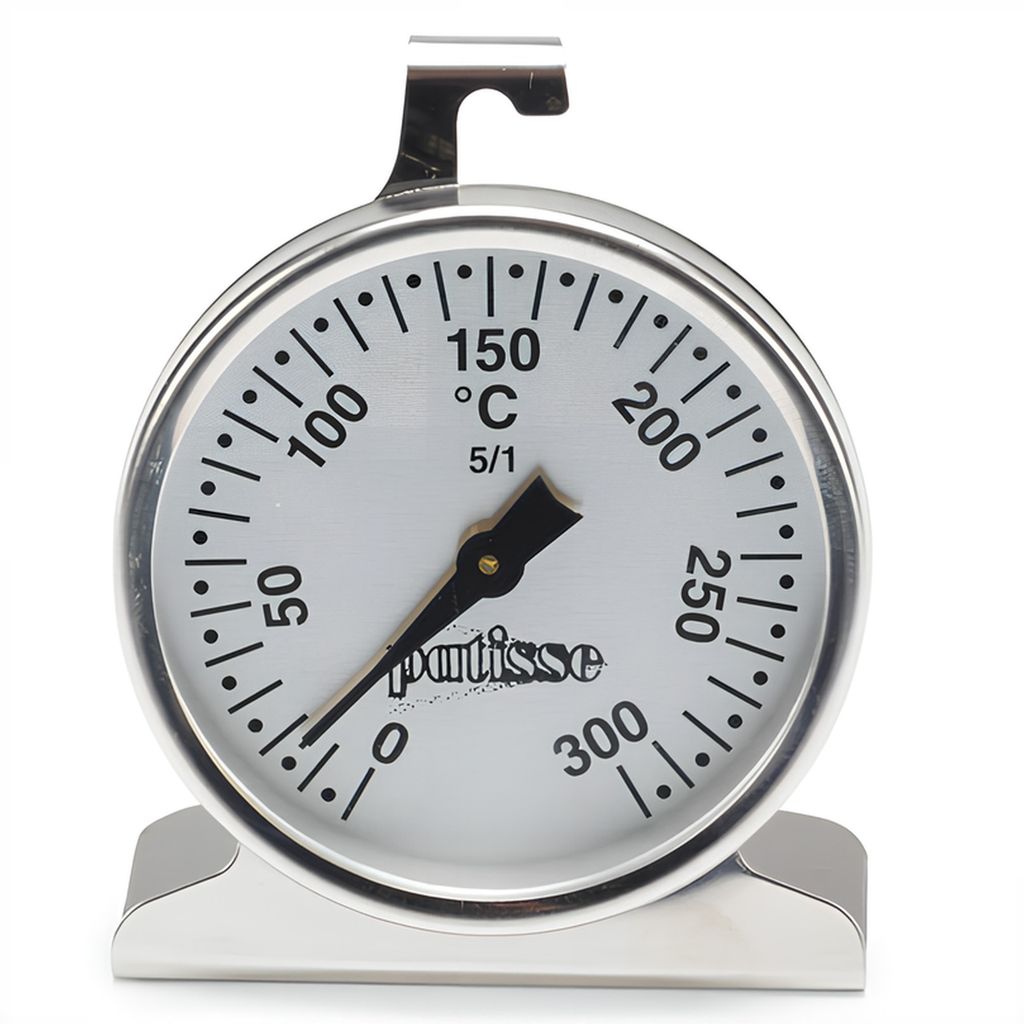
Ovens are commonly off by 10–20 °C (20–35 °F), and for a cookie that bakes for only a few minutes, that's the difference between soft and dry. If you don't trust your oven, an oven thermometer will tell you what the temperature really is.
Chocolate or Sugar Glaze for Nuremberg Lebkuchen
Nuremberg Lebkuchen are traditionally coated in dark chocolate or a thin, translucent sugar glaze. The third option, "natur," is a Lebkuchen with no coating, just almond halves baked on top.
Chocolate: use proper couverture with 50–60% cocoa, not compound coating. Callebaut 811 dark chocolate with 54.5% cocoa works well: it's fluid enough for a thin layer and not overly bitter next to the sweet nut mixture. To get a glossy finish that doesn't smear, temper it: melt it to 45–50 °C (113–122 °F), cool to 27–28 °C (81–82 °F), and work at 31–32 °C (88–90 °F). Dip the top of each Lebkuchen into the chocolate or spread it on with a spoon, then let it set at room temperature, not in the fridge.
Sugar glaze: roughly 100 g (about ¾ cup) of powdered sugar to 2 tablespoons of hot water or lemon juice. Brush it on while the Lebkuchen are still warm. The heat dries it into a thin, matte, translucent shell that also seals the Lebkuchen and keeps moisture in.
Untempered chocolate tastes just the same, but it stays dull, grayish and marbled, and melts on your fingers. That doesn't matter for home baking, but it does for a gift.
Why Let Nuremberg Lebkuchen Rest
Nuremberg Lebkuchen are best after 1–2 weeks in a sealed tin. During that time the moisture evens out between the mixture, wafer and glaze, the spices meld, and the Lebkuchen become more tender with a rounder flavor.
Where: in a metal tin or tightly sealed container, somewhere cool and dry (pantry, hallway), not in the fridge.
How: store glazed Lebkuchen in a single layer or separated with parchment paper so the glaze doesn't stick together.
How long: stored properly, they keep for 3–4 weeks. That's why they're baked at home well ahead of time, even as early as the end of November.
If your Lebkuchen do harden, put a slice of apple in the tin for a day or two, and it will return moisture to them. Then take the apple out so it doesn't mold.
You'll find these handy for baking Nuremberg Lebkuchen
Patisse
Patisse Oven ThermometerKč 243.00

Frequently asked questions
Can I make Nuremberg Lebkuchen without wafers?
Yes, you can spoon the mixture straight onto parchment paper or a silicone mat. The flavor stays the same, but the bottoms will be stickier and the cookies will spread a little more, so add an extra spoonful of flour or breadcrumbs to the mixture.
Are Nuremberg Lebkuchen gluten-free?
Not as they are, because the wafers are made from wheat flour and the mixture often contains a little flour or breadcrumbs. You can make them gluten-free by leaving out the flour or replacing it with cornstarch or potato starch, spooning the mixture onto parchment paper instead of wafers, and checking that the other ingredients (candied peel, spices, breadcrumbs, chocolate) are labeled gluten-free. This is general information about ingredients. If you have celiac disease, always follow the labeling on the packaging.
Can I freeze Nuremberg Lebkuchen?
Yes, unglazed Nuremberg Lebkuchen keep in the freezer for 2–3 months in a sealed container. Thaw them with the lid on at room temperature so no condensation forms on them, and add the glaze afterward.
Can I put peanuts or coconut in Nuremberg Lebkuchen?
At home you can, but by German standards they're then no longer Elisenlebkuchen, which allow only almonds, hazelnuts and walnuts, and no other oilseeds. Peanuts overpower the spices with their strong flavor, and coconut dries out the mixture, so replace no more than a third of the nuts with them.
Why did my Nuremberg Lebkuchen spread while baking?
Most often because the mixture was too runny or hadn't dried before baking. It helps to use a little less liquid sweetener, add a spoonful of ground nuts, and leave the cookies on the baking sheet overnight so a skin forms on top.
Want tips like this every Thursday?
One recipe worth heating the oven for, one tip, and one deal from the shop. Nothing else.