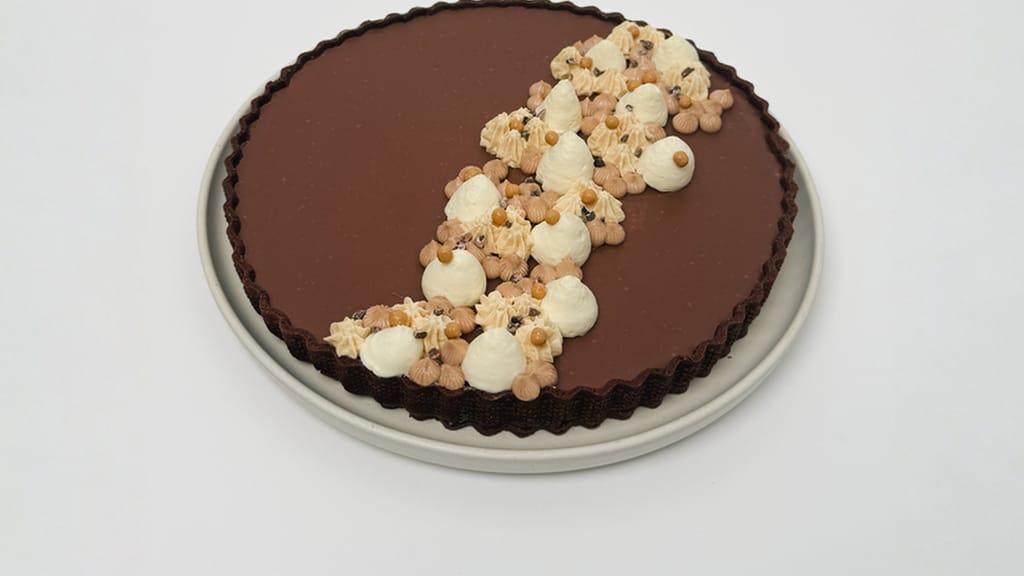
Chocolate tart with salted caramel
Layering Flavors and Textures in Modern Desserts: The Complete Guide

Updated Jul 19, 2026
Layering flavor and texture is what separates an ordinary dessert from an unforgettable one: in a single bite, crunchy meets creamy, sweet meets sour. In this guide, we'll walk through how to build flavors and textures deliberately — from the classic crumble ratio, through gelatin vs. agar, to wine pairing — and how to use that know-how to modernize classics like tiramisu or panna cotta. No filler, just concrete ratios, temperatures, and tips that actually work at home.
A good dessert rests on two axes — flavor and texture — and layering means deliberately building both so that more than one thing happens in a single bite. Contrast wakes the taste buds up; harmony settles them down. Crunchy next to creamy gives your mouth something to do.
When it comes to flavor, work with four basic notes and their roles:
Sweetness (sugar, honey, chocolate) — the foundation, but on its own it gets boring fast.
Acidity (lemon, raspberries, yogurt, crème fraîche) — lightens things up and cuts through sweetness.
Bitterness (dark chocolate, coffee, cocoa) — adds depth and complexity.
Saltiness (a pinch of salt) — makes everything else pop.
Salt plays a bigger role here than you'd expect: it suppresses the perception of bitterness, which lets sweetness and other flavors come to the front — that's why a pinch of salt belongs in sweet dough and caramel too. According to a study published in Nature, sodium selectively dampens the signal from bitter receptors, rather than adding any flavor of its own.
Contrasting combinations pit two different flavors against each other; harmonious ones push in the same direction — both work, they just do different jobs.
Contrast creates tension that holds attention: dark chocolate against tart raspberries, sweet caramel against salt. Reach for it when you want a dessert that makes a statement.
Harmony blends flavors into one seamless profile: vanilla with caramel, milk chocolate with nuts, vanilla cream with pear. The result is soft and soothing — a dessert that feels like a hug.
The strongest desserts usually rest on one bold contrast, with everything else on the plate kept in harmony around it.
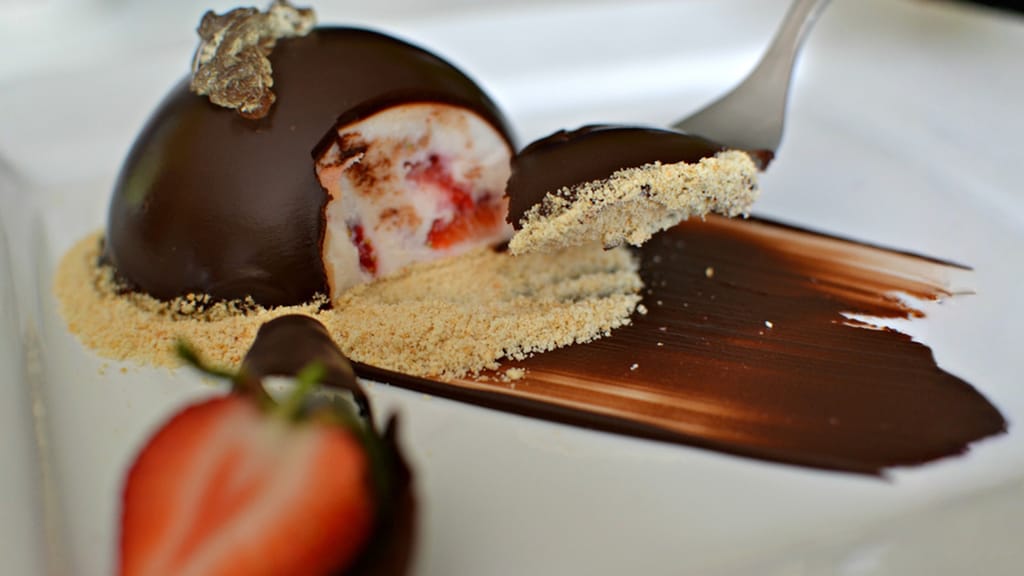
Chocolate tart with salted caramel
Chocolate tart with salted caramel – a textbook sweet-and-salty contrast
Spices and herbs add a third dimension that sugar or fruit alone can't provide.
Warm spices (cinnamon, cardamom, star anise, ginger) pair naturally with apples, pears, and anything gingerbread-inspired — soft gingerbread cookies are a good place to start.
Fresh herbs (mint, basil, thyme) brighten up fruit layers, sorbets, and creams.
Use a light hand and build up gradually — with cardamom or star anise, even 1/4 teaspoon per serving is plenty, otherwise the spice will overpower the rest of the dessert. The best way to pull flavor from herbs is a quick infusion in warm cream or milk.
Seasonal baking plans, tested recipes and kitchen tricks that save you time. Unsubscribe in one click.
Texture shapes the experience just as much as flavor does. A layered dessert should ideally have at least two different textures — otherwise it falls flat, even if it tastes good. There are three basic textural building blocks:
Crunchy — crumble, nuts, caramelized flakes, a cookie base.
Smooth and creamy — custards, mousses, mascarpone, ice cream.
Gelled — jellies, panna cotta, fruit aspics.
The goal is contrast: crunchy on creamy, firm jelly next to airy mousse.
A crunchy layer gives a creamy dessert structure, and it's the fastest way to elevate it. The classic crumble ratio is 1 : 1 : 1 (flour : cold butter : sugar), worked into clumps and baked golden at 170–180°C (340–355°F) for about 12–15 minutes.
A few tips to keep it crunchy:
Add it right before serving — on top of moist cream or fruit, it'll go soft within an hour.
Mix a handful of chopped almonds, hazelnuts, or oats into the dough for extra bite.
A pinch of salt in the crumble brings out the buttery and nutty flavors.
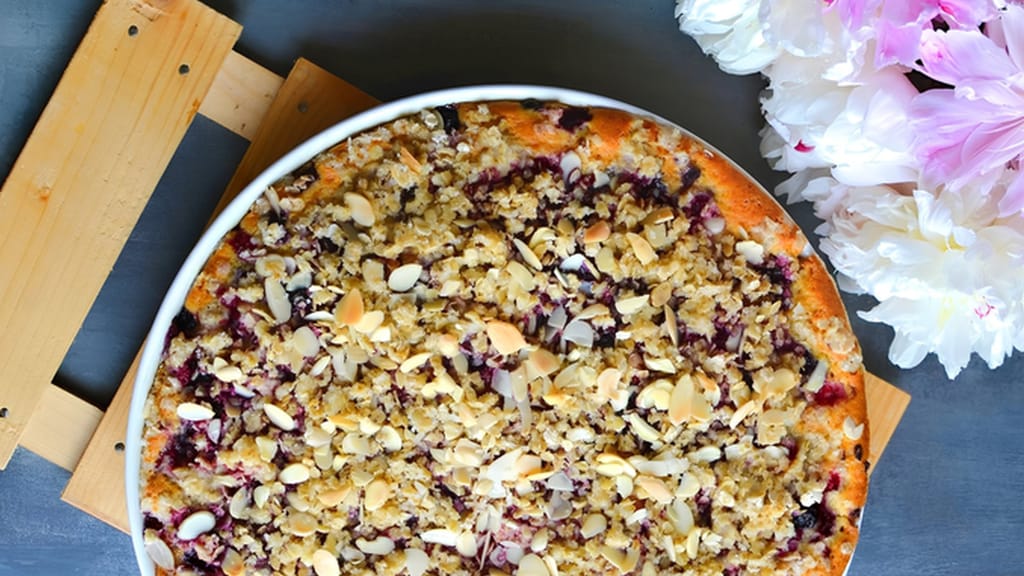
Summer fruit bubblanina with crunchy crumble
Summer fruit bubble cake with a crunchy crumble topping – a crisp layer over soft fruit

The smooth layer is the counterpoint to crunch, and it carries the dessert's main flavor. Custards and creams (pastry cream, buttercream, mascarpone) hold their shape and feel rich; mousses whip air into the mix, making them lighter and fluffier.
For a stable mousse, whip the cream only to soft peaks — overwhip it and it'll curdle and turn grainy.
Chill both the cream and the mousse thoroughly before layering, or the layers will run together.
A basic vanilla cream comes together in a few minutes and works well under both fruit and chocolate.
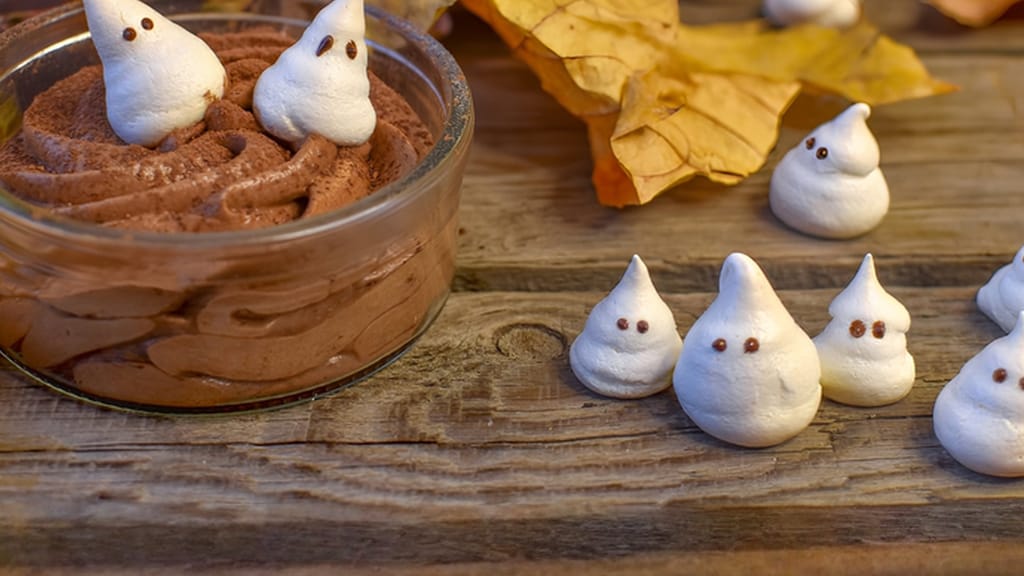
Halloween chocolate mousse with meringue ghosts
Chocolate mousse – an example of a smooth, airy layer
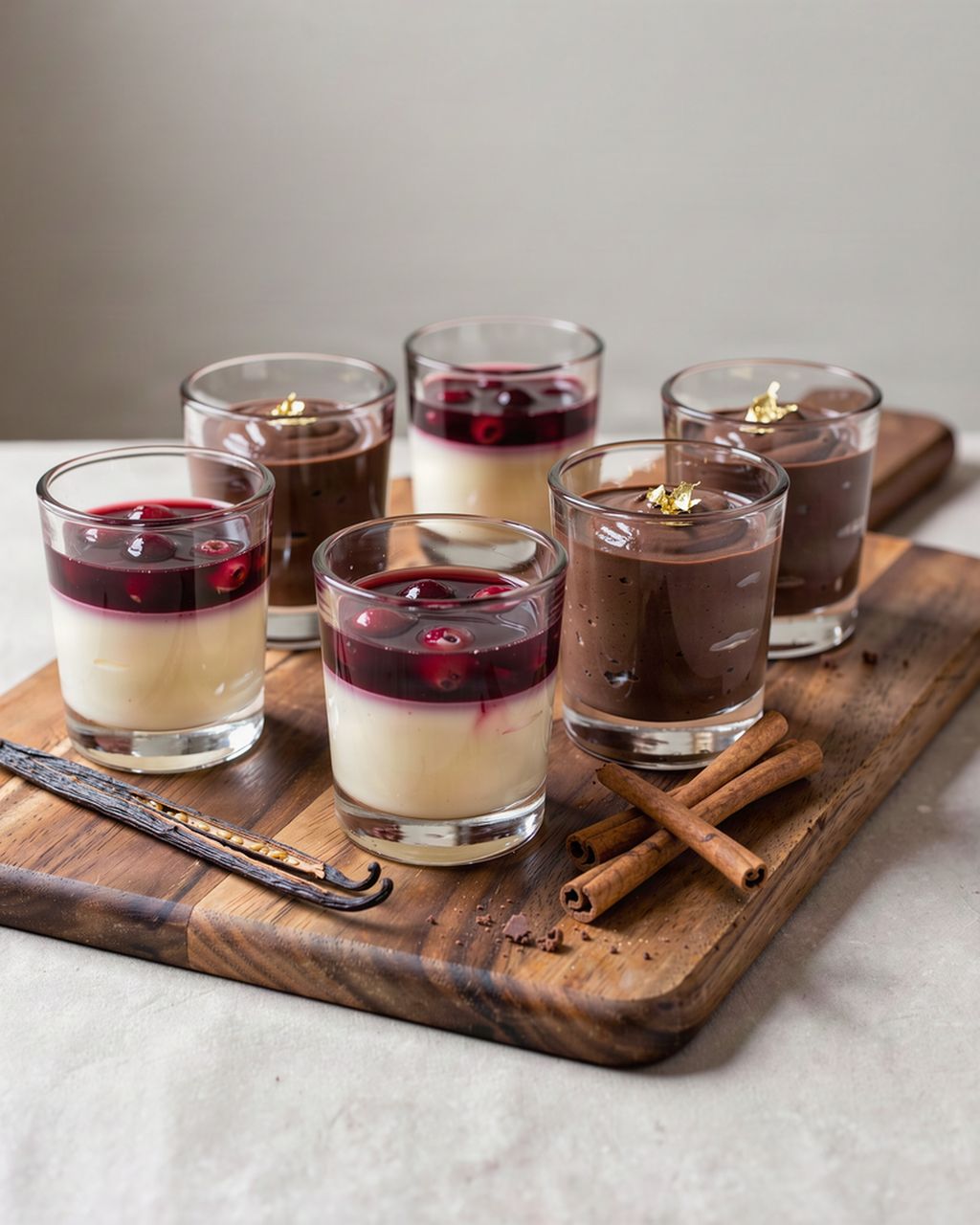
Jelly holds its shape thanks to a setting agent — and the choice between gelatin and agar matters more than you'd think.
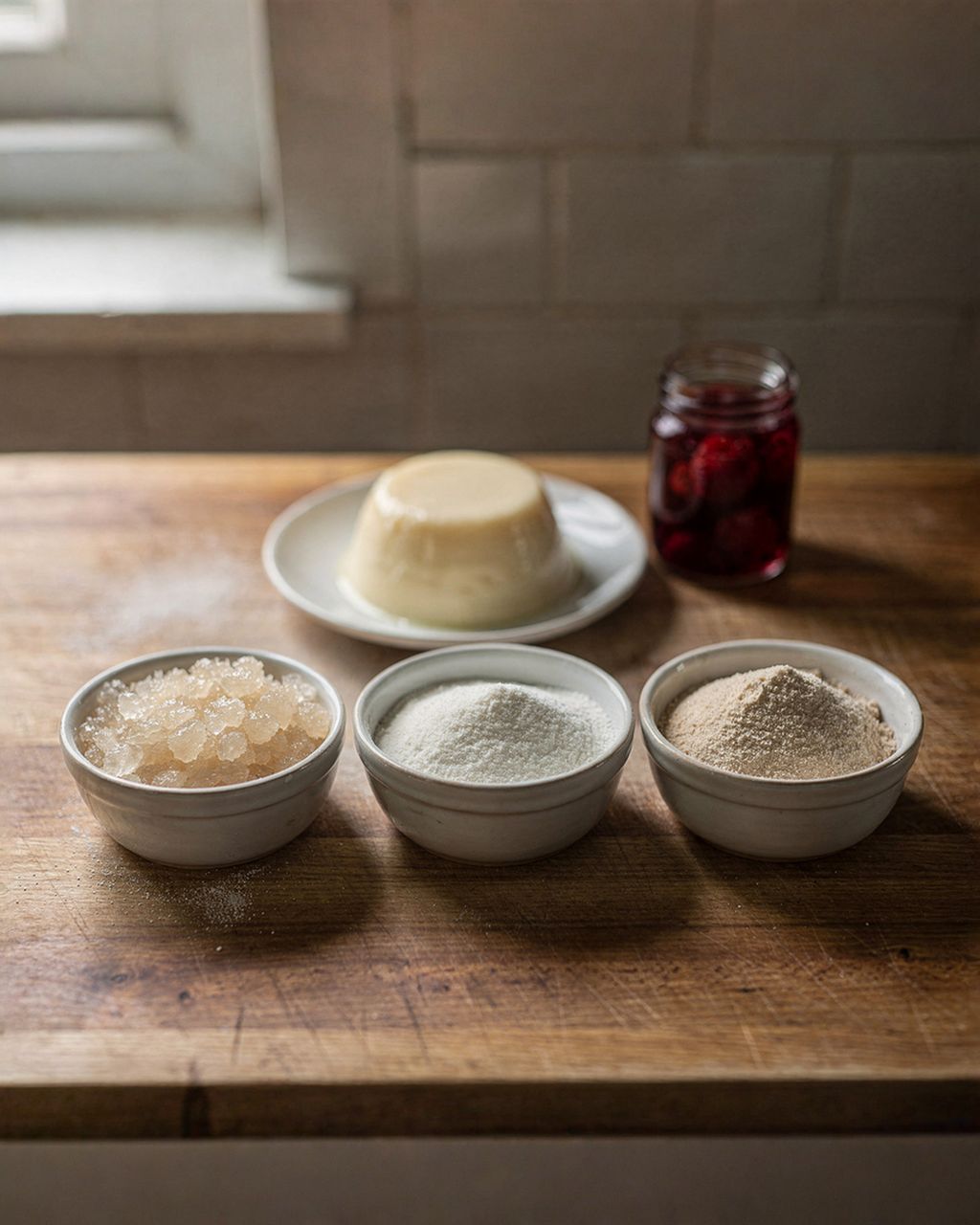
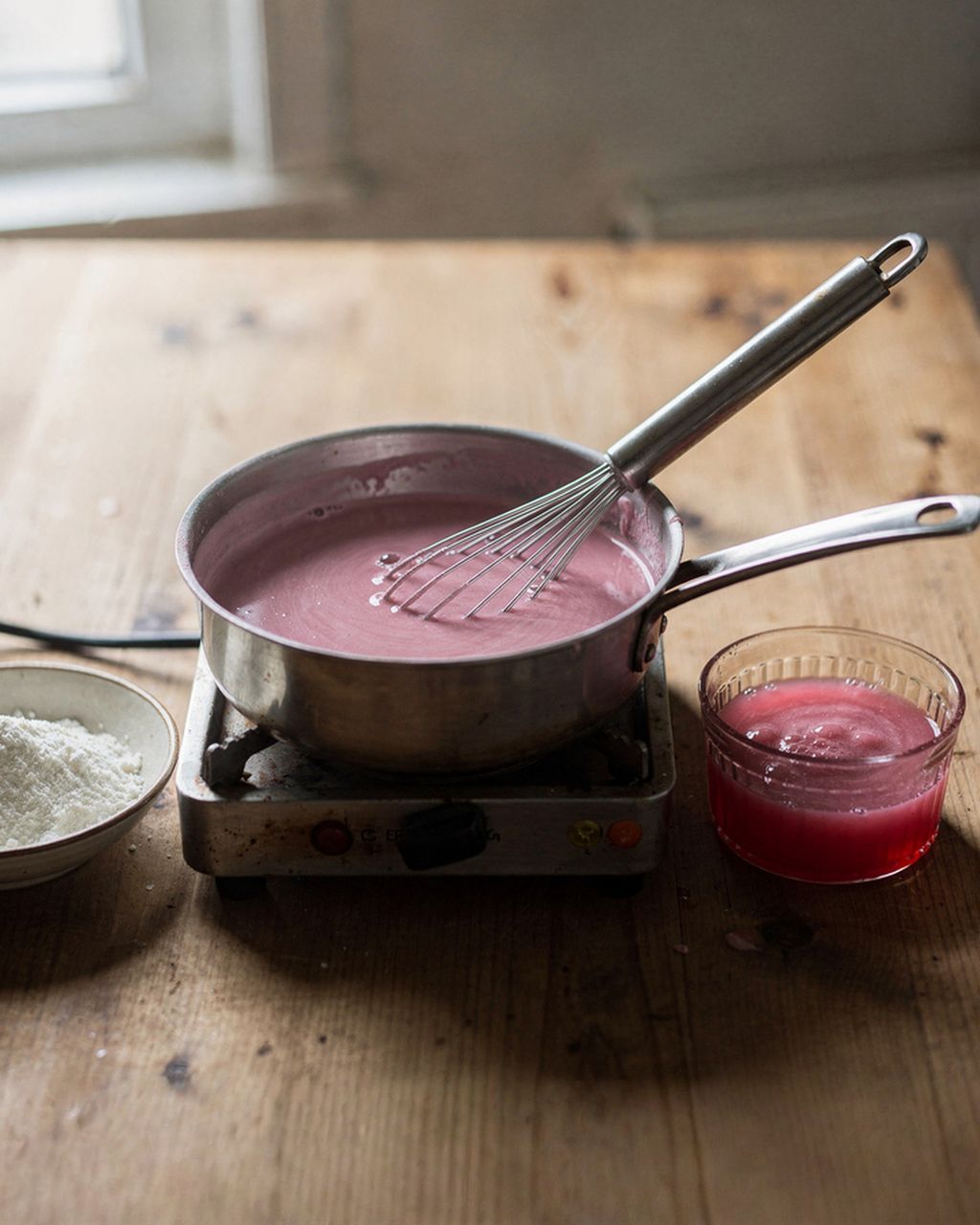
Gelatin (animal-derived) gives a springy, creamy jelly that melts on the tongue. Let the sheets bloom in cold water; it dissolves around 35–60°C (95–140°F) and only sets once chilled in the fridge (below roughly 15°C/59°F). Don't let it boil, or it loses its setting power.
Agar (a plant-based alternative made from seaweed) gives a firmer, more brittle gel that holds its shape even at room temperature. It must be brought to a boil (~85–90°C / 185–195°F) and sets quickly, even at just 35–45°C (95–113°F).
Conversion ratio: you only need roughly a third to a half the amount of agar compared to gelatin — as a rough guide, 1 teaspoon of agar powder ≈ 1 tablespoon of powdered gelatin. For a vegan dessert, agar is the obvious choice; for a classic, melt-in-your-mouth panna cotta, stick with gelatin.
Modernizing a classic doesn't mean reinventing it — often just one extra layer of flavor or texture is enough to give it a new dimension. The most rewarding candidates are desserts that are simple on their own and naturally build in layers: tiramisu and panna cotta.
Tiramisu is built on coffee, mascarpone, and cocoa — and that's exactly the framework you can play with without breaking it.
Swap the ladyfingers for macarons or a homemade Génoise sponge for a different texture.
Add a thin layer of fruit purée (raspberry, mango) between the cream layers — its acidity cuts through the rich mascarpone.
Swap the espresso for coffee with caramel or nutty notes, or add a splash of coffee liqueur.
The simplest upgrade is still fruit — tart raspberries lighten up what's otherwise a rich, heavy dessert (see the recipe below).
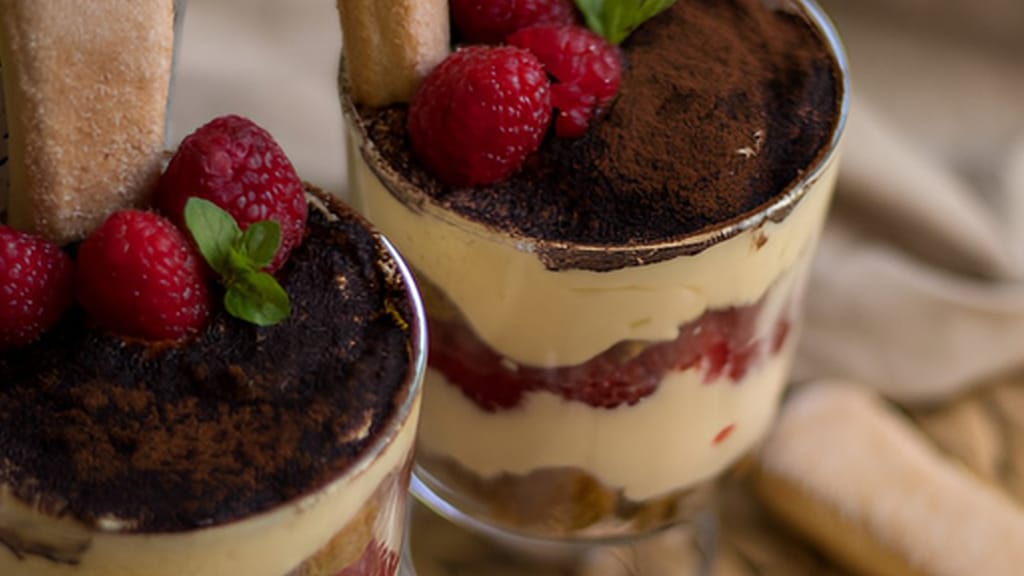
Raspberry tiramisu
Raspberry tiramisu – a classic freshened up with tart fruit
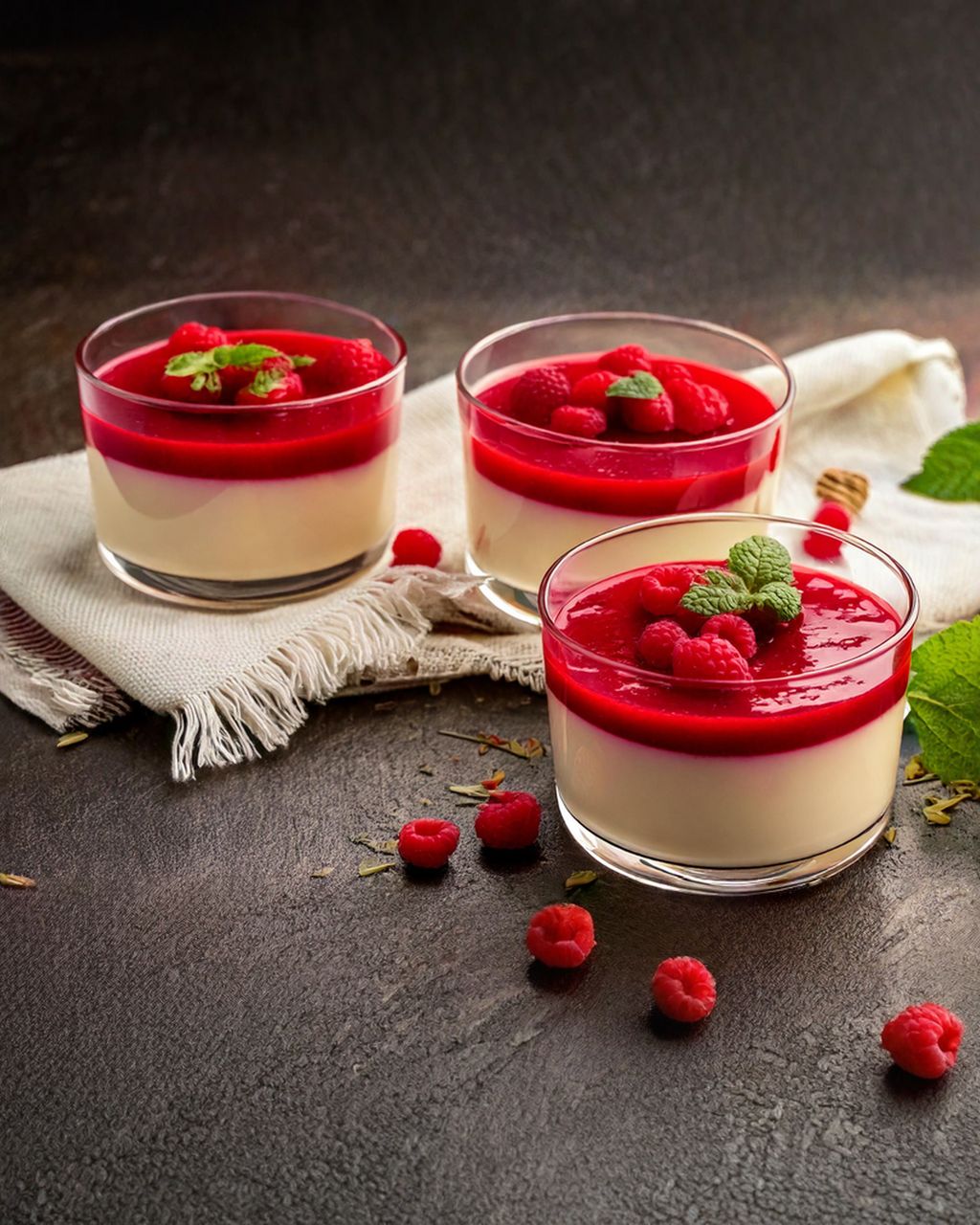
Panna cotta is just cream, sugar, and gelatin — which makes it the perfect blank canvas for experimenting. Start with the classic panna cotta recipe, then build it up:
Infuse the cream with matcha (subtle bitterness, green hue) or Earl Grey tea.
Top it with a fruit jelly — raspberry or mint adds both color and a tart contrast.
Fold in pieces of fruit or crushed nuts for texture.
The natural next step is a matcha panna cotta with raspberry jelly — bitter matcha against sweet cream and tart jelly. We don't have the exact recipe for it yet, but in the meantime, take inspiration from our layered strawberry panna cotta with chocolate and mint jelly.
Strawberry panna cotta with chocolate and mint jelly
Strawberry panna cotta with chocolate and mint jelly – a layered, modern take on panna cotta
Color shapes the first impression, and with a layered dessert, it's half the battle. The prettiest — and tastiest — colors come from natural ingredients, not artificial dyes:
Red/pink — raspberries, strawberries, beetroot.
Purple/blue — blueberries, blackberries.
Green — matcha, pistachios, a pinch of spinach blended into cream (won't change the flavor).
Yellow/orange — mango, turmeric, apricots.
Blend them and stir into the creamy component. Serve in clear glasses or bowls so the layers show through, pour each chilled layer carefully over the back of a spoon or with a piping bag (so the layers don't run together), and garnish only at the very end — edible flowers, a mint leaf, a dusting of cocoa.

The golden rule of pairing is this: the wine must be sweeter than the dessert — otherwise it'll taste bitter and sour next to the sweet layers. It's one of the few things sommeliers all agree on; the rest is trial and error. Choose based on the dessert's dominant layer:
Chocolate → ruby port or a rich red — depth and sweetness that can keep up with the cocoa.
Fruit (strawberries, raspberries) → Prosecco, sparkling rosé, or a crisp white — the bubbles and acidity highlight the fruit.
Caramel and nuts → Sauternes or Tokaji late-harvest wines; their honeyed notes complement caramel beautifully.
As for texture: pair creamy desserts (panna cotta, tiramisu) with a fuller-bodied wine, and light, airy ones with something lighter.
Build in at least two textures (crunchy + creamy) and one clear flavor contrast.
Crumble: 1:1:1 ratio, bake at 170–180°C (340–355°F), add just before serving.
Jelly: gelatin = melt-in-the-mouth, sets in the fridge; agar = firm, vegan-friendly, must be boiled.
Chill layers before pouring so they don't run together.
Wine should always be sweeter than the dessert.
Aim for at least two different textures and one strong flavor contrast; more than four or five layers tends to be about show rather than taste. Fewer layers that make sense together beat five that just drown each other out.
Chill each layer thoroughly before pouring the next one on top, so it firms up. Pour liquid layers carefully over the back of a spoon or down the side of the glass with a piping bag, and add crunchy elements like crumble only right at the very end.
Yes — creamy and gel layers (panna cotta, mousse, jelly) hold up fine in the fridge for 1–2 days and the flavors actually settle nicely. Crunchy layers like crumble or nuts, though, should go on just before serving, or they'll turn soft.
Start with panna cotta or a simple layered glass — you build it one chilled layer at a time, nothing bakes all at once, and any small imperfections barely show. From there you can work up to more elaborate layer cakes.
Creamy and foamy layers (mousse, mascarpone, ice cream) freeze well, but gel layers made with either gelatin or agar, as well as fresh fruit, tend to weep and separate once thawed — gelatin turns grainy, agar breaks down. Freeze the dessert without the jelly and crumble layers, thaw slowly in the fridge, and add the crunchy and gel elements only after thawing.
One recipe worth heating the oven for, one tip, and one deal from the shop. Nothing else.