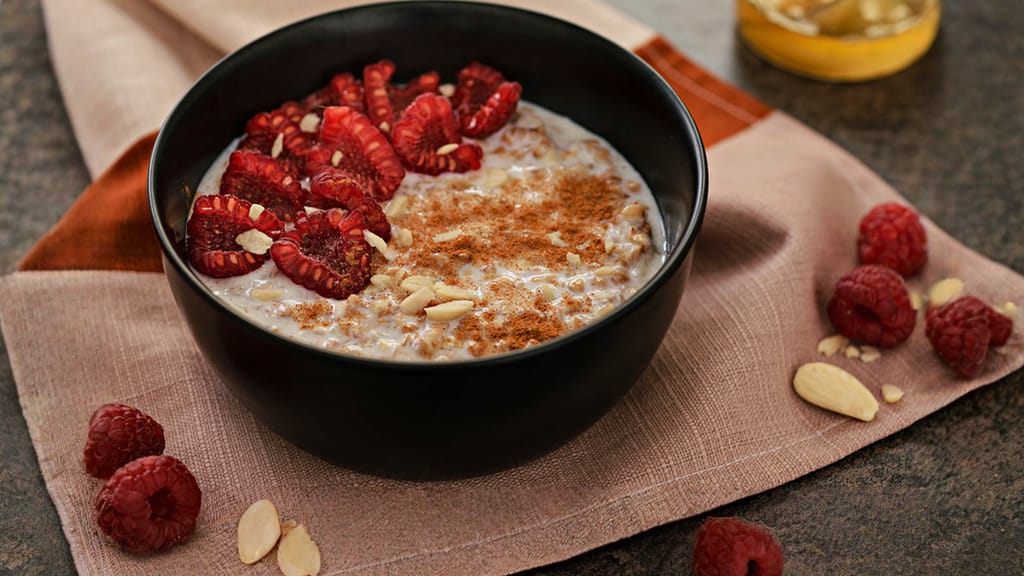
Fermented buckwheat porridge with raspberries
Wheat Allergy: Symptoms, Diagnosis, and Living Wheat-Free
Updated Aug 30, 2026
A wheat allergy is an IgE-mediated immune reaction to wheat proteins: symptoms typically kick in within minutes to two hours of eating, and in severe cases can escalate to anaphylaxis. It's not celiac disease and it's not gluten intolerance, even though the three get lumped together constantly — and the distinction matters enormously for what you can actually eat. This article walks you through the four forms wheat allergy takes, how it's actually diagnosed, which grains cross-react with wheat, and where wheat hides on ingredient labels. No website or DIY elimination diet can give you a diagnosis — that's an allergist's job. This is what you need to know before you walk into that appointment.
A wheat allergy is an immune response in which the body flags one of wheat's proteins as a threat and produces IgE-class antibodies against it. On the next exposure, the allergen binds to these antibodies, mast cells release histamine and other mediators — and symptoms fire off in the skin, gut, airways, or circulatory system.
Wheat isn't a single allergen — it's dozens of different proteins. The clinically most important ones are:
omega-5 gliadin (Tri a 19) — the main allergen behind immediate reactions in children after eating wheat, and the marker allergen for exercise-induced anaphylaxis
alpha-amylase/trypsin inhibitors — water-soluble proteins behind baker's asthma
LTP (lipid transfer protein) and thaumatin-like proteins
Here's why this matters: which protein triggers you determines what form the condition takes. Some people only react after eating wheat, some only after inhaling flour dust, and some only when they go for a run after a sandwich.
According to a StatPearls review, confirmed IgE-mediated wheat allergy affects roughly 0.2 to 1% of the population. It's markedly more common in children than adults, and the outlook is good — around 65% of children outgrow wheat allergy by age 12. Studies show that children who had anaphylaxis before age three, and those with high IgE levels against omega-5 gliadin, are more likely to carry the allergy forward.
Wheat allergy, celiac disease, and non-celiac gluten sensitivity are three distinct conditions: allergy is an IgE reaction to wheat proteins with onset within two hours, celiac disease is an autoimmune reaction to gluten, and gluten sensitivity is a diagnosis of exclusion. In more detail:
Wheat allergy — an IgE-mediated allergic reaction to wheat proteins. Onset: minutes to two hours. Can lead to anaphylaxis. The trigger is wheat, not necessarily gluten.
Celiac disease — an autoimmune condition of the small intestine triggered by gluten. IgA and IgG antibodies, no IgE involved. Symptoms can appear over hours, days, or weeks. Doesn't cause anaphylaxis. Trigger: gluten from wheat, rye, and barley.
Non-celiac gluten (or wheat) sensitivity — neither an allergy nor an autoimmune condition; diagnosed by ruling out the other two. Doesn't cause anaphylaxis.
Which leads to one practical rule worth memorizing, because it trips up almost everyone at the grocery store:
Gluten-free ≠ automatically wheat-free. A product labeled "gluten-free" can still contain deproteinized wheat starch — the gluten's been removed, the wheat hasn't. EU Regulation No. 828/2014 explicitly allows this labeling even for foods containing wheat-derived ingredients that have been specially processed to bring gluten below 20 mg/kg. But the trigger for an allergic reaction is wheat protein, not gluten. So if you have a wheat allergy, always check the ingredient list — under EU Regulation No. 1169/2011, wheat must be named and highlighted.
Wheat-free ≠ gluten-free. Bread made from rye flour is wheat-free but still contains gluten. That might be fine for you, but not for someone with celiac disease.
If you're looking at this from the other angle, it's worth reading about how cross-reactive allergies work — they play a big role with grains.
Wheat allergy symptoms fall into four categories: skin (hives, itching, swelling, worsening eczema), digestive (stomach pain, nausea, vomiting, diarrhea), respiratory (runny nose, sneezing, coughing, wheezing, breathlessness), and circulatory (dizziness, paleness, drop in blood pressure). You might get just one category, or several at once — and it's the combination of two or more organ systems that's the real warning sign.
Timing is the hallmark of an IgE allergy: the reaction hits within a few minutes to roughly two hours of eating wheat. If you feel unwell only the next day, it's almost certainly not a classic wheat allergy, and you should be looking elsewhere.
On the skin, reactions show up fastest and most visibly: hives (raised, itchy welts that shift around and fade within hours), widespread itching, swelling of the lips, eyelids, or tongue. In children with atopic eczema, it can show up as a sudden flare of otherwise stable eczema.
In the digestive tract, expect cramping stomach pain, nausea, vomiting, or diarrhea, usually within two hours. The tricky part is that these symptoms are easy to write off as overeating or a stomach bug. What matters is repeatability: if it happens every time after wheat and never after other foods, that's a pattern worth bringing to a doctor. Keep a diary — what you ate, how much, what time, what symptoms, how long after. It'll save your allergist half the legwork.
Respiratory symptoms range from a watery nose and sneezing to coughing, wheezing, chest tightness, and breathlessness. They come on fast, and unlike skin symptoms, there's no point in waiting them out.
Anaphylaxis is the most severe form of reaction: a rapid-onset, life-threatening state affecting multiple organ systems at once. It typically combines hives or swelling with breathlessness, hoarseness, vomiting, dizziness, or collapse. It's a documented occurrence with wheat allergy, and it's the main reason this allergy should never be treated as trivial.
Wheat allergy comes in four distinct clinical forms: classic food allergy (reaction after eating), WDEIA (anaphylaxis triggered by wheat combined with exercise), baker's asthma (reaction to inhaled flour), and contact urticaria (skin reaction from direct contact with dough or flour). Having one doesn't mean you have the others — in fact, they usually occur independently.
WDEIA (wheat-dependent exercise-induced anaphylaxis) is a form where wheat alone isn't the problem, and exercise alone isn't either — it's the combination that triggers it, typically when physical exertion happens within a few hours of eating wheat. The marker allergen is omega-5 gliadin, and it mainly affects adults and teens.
This is why someone can eat bread rolls for breakfast without issue for years, and then get hit with a severe reaction after lunch followed by an afternoon run. Studies point to alcohol, NSAIDs (like ibuprofen), and infections as additional "augmentation factors" alongside exercise. If this description sounds like you, tell your allergist explicitly — without that detail, standard tests often come back deceptively negative.
Baker's asthma is an allergic reaction of the airways to inhaled flour dust, not to eaten wheat. It's one of the most common occupational asthmas out there. It's driven mainly by water-soluble flour proteins, especially alpha-amylase inhibitors.
Here's the key distinction that often gets missed: people with baker's asthma usually tolerate eating wheat just fine. So a diagnosis of "flour allergy" in a baker doesn't automatically mean a wheat-free diet. What to do about it — respiratory protection, workplace changes, or possibly a career change — is a decision for an occupational physician and allergist.
Diagnosis rests on four pillars — clinical history, blood test for specific IgE, skin prick test, and an oral food challenge; the order and scope are up to the allergist. The food challenge is the gold standard; the history, somewhat surprisingly, is the most important piece.
Clinical history. The doctor needs to know what you ate, how much, how long before symptoms appeared, exactly what they were, how long they lasted, and whether it's a repeating pattern. Without this story, all the test results are just numbers.
Specific IgE (blood test). Measures antibodies against wheat, or against individual components — testing for omega-5 gliadin specifically is especially useful when WDEIA is suspected.
Skin prick test. A drop of wheat extract on the forearm, a small prick, a reading after about 15 minutes. A raised bump and redness indicate sensitization. It's commonly combined with the blood test, often on the same visit.
Oral food challenge. Administering wheat under medical supervision. It's the only method that can truly confirm or rule out the allergy — and because it can trigger anaphylaxis, it's done exclusively in a facility equipped to handle that.
And now the most important point, one that rarely gets said in allergy articles: a positive test on its own is not a diagnosis. It only indicates sensitization — the presence of antibodies. It only becomes an actual allergy once your symptoms match. With wheat, this gap is especially wide — due to cross-reactivity with grass pollen, the Thermo Fisher Allergen Encyclopedia review notes that up to 60% of people allergic to grass pollen test positive for wheat, despite eating it with no problems at all.
The strongest cross-reactors with wheat are spelt and kamut (khorasan) — botanically, these are types of wheat — followed by barley, rye, and oats; cross-reactivity with grass pollen is common but usually not clinically significant.
In more detail, with the caveat that each figure comes from a different patient population:
Spelt: in a study published in Annals of Allergy, Asthma & Immunology (2024), 90% of patients with augmentation-factor-dependent wheat allergy (WALDA) tested positive on a skin test for spelt. So neither spelt nor kamut are a safe substitute for wheat — allergists recommend avoiding both.
Triticale: a wheat-rye hybrid, classified as a risk grain.
Barley: in children with IgE-mediated wheat allergy, cross-reactivity with barley is reported more often than with rye or oats. In adults with WALDA, on the other hand, barley is usually well tolerated — so the scope of your diet is something for your allergist to determine, not a chart.
Grass pollen: up to 60% of people sensitized to grasses test positive for wheat, but the vast majority tolerate it just fine.
Which brings up the most common mistake: blanket avoidance of all grains isn't warranted. The research is clear on this — serological cross-reactivity doesn't reliably predict clinical symptoms, and the scope of your diet should be set by an allergist based on your tests and actual history, not by preemptively clearing an entire shelf.
Wheat most commonly hides in soy sauce, cured meats, surimi, salad dressings, instant broths, baking powder, and beer — and under names like spelt, kamut, bulgur, couscous, semolina, or seitan. Labeling laws actually work in your favor here: under EU Regulation No. 1169/2011, wheat must be listed by name in the ingredients and highlighted (in bold, capitals, or otherwise distinguished text). So you don't need to decode anything — just read the label every single time, since manufacturers can change a recipe overnight.
Wheat also hides in ingredient lists under these names:
spelt, kamut/khorasan, triticale, einkorn, emmer, farro
bulgur, couscous, groats, semolina, manna, tarhonya
durum, wheat germ, wheat bran, seitan, matzo flour
And here are foods where you'd least expect wheat, yet it often turns up:
soy sauce — classic brewed soy sauce is made with wheat (the wheat-free version is called tamari, but check that one too)
baking powder and leavening mixes (wheat starch as a carrier)
cured meats, sausages, pâtés, processed meat products
imitation crab meat (surimi)
salad dressings, mustard, ready-made sauces, instant broths and stock cubes
beer and malt, breaded and fried foods
ice cream, candy, "natural flavorings"
One exception worth knowing: wheat-derived glucose syrups, including dextrose, and wheat maltodextrin are exempt from mandatory allergen labeling. Processing removes essentially all the protein, so they're not considered a risk — but if you react even to trace amounts, mention it to your doctor.
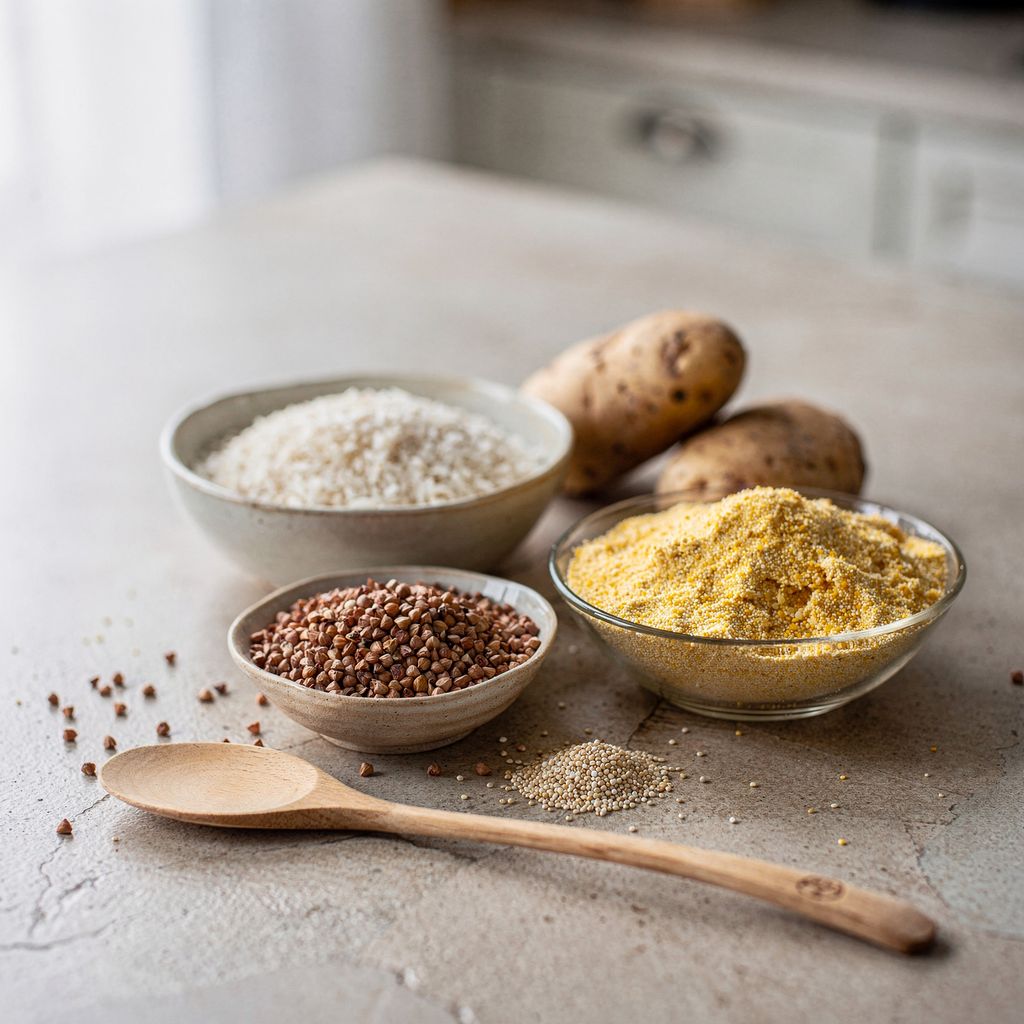
Plenty of staple foods are naturally wheat-free: rice, buckwheat, quinoa, corn and polenta, millet, sorghum, amaranth, potatoes, legumes and their flours, nut and coconut flours, and certified uncontaminated oats. Add to that meat, fish, eggs, dairy, fruit, and vegetables, which never contain wheat — unless someone breads them, thickens them, or marinates them in something that does.
A quick note on the recipes below: they're built on naturally wheat-free ingredients, but always double-check the specific products you use. Broth, soy sauce, baking powder, and prepared mustard are the most common hidden routes wheat takes into otherwise innocent everyday cooking.
You can absolutely have a wheat-free breakfast: buckwheat or corn porridge, flatbreads made from lentil or chickpea flour, eggs any way you like them, and yogurt with fruit and nuts. Fermentation also softens buckwheat's flavor and takes away that raw bitterness that put half of us off it as kids.
In place of bread, flatbreads made from legume flours work great — lentil or chickpea flour holds together on its own thanks to its protein and starch content, so it doesn't need any gluten substitute at all.
Fermented buckwheat porridge with raspberries
Fermented buckwheat porridge with raspberries — a wheat-free breakfast

Lentil flour flatbread crackers
Chickpea flour flatbreads instead of bread — wheat-free and naturally gluten-free (check the flour's certification)
The simplest everyday strategy is to build meals around a naturally wheat-free side rather than hunting for a wheat substitute. Rice, polenta, and potatoes can carry pretty much anything.
Risotto is a perfect safe bet here: arborio rice releases its own starch and thickens the sauce on its own, so there's no need for a flour-based roux or breadcrumbs anywhere. Polenta works the same way — cooked soft as a porridge, or chilled, sliced, and pan-fried. If you're craving pasta, reach for corn or rice pasta: it cooks a few minutes faster, don't rinse it with cold water after draining, and mix it straight into the sauce or it'll clump together. Just watch the broth in everything, since instant stock cubes are often where wheat sneaks in.

Baked chicken and vegetable risotto
Baked risotto with chicken and vegetables — a wheat-free main course

Creamy polenta with roasted tomatoes and onion chutney
Polenta porridge with roasted tomatoes — a wheat-free corn-based side

Healthy quinoa pizza
Quinoa pizza — a wheat-free crust with no substitute-hunting required
In wheat-free baking, gluten gets replaced by psyllium, xanthan gum, eggs, and ground flaxseed or chia — each doing a slightly different job. Gluten is a protein network that traps gas and holds shape; without a substitute, you get crumbly dough that falls apart under a knife. Here's how to use each substitute:
Psyllium (husk fiber) — the closest match for bread, at 1–2% of the flour's weight. It binds water into a gel and gives the crumb some elasticity. Let the dough rest 20–30 minutes so the fiber can swell.
Xanthan gum — roughly 1 teaspoon per 250g of flour for baked goods, less for cookies. Don't overdo it — too much and the dough turns slimy.
Eggs — protein that firms up as it sets. Often enough on their own in small wheat-free baked goods.
Ground flaxseed or chia — 1 tablespoon to 3 tablespoons of water, rested 10 minutes; good for softer, moister doughs.
Second rule: don't use just one flour — blend several. Rice flour gives structure, buckwheat and sorghum add flavor, potato or tapioca starch adds moistness. A ratio of roughly 60% flour to 40% starch is a solid starting point. And expect wheat-free dough to need more liquid — the consistency will look more like a thick batter than a springy ball of dough, and that's normal.
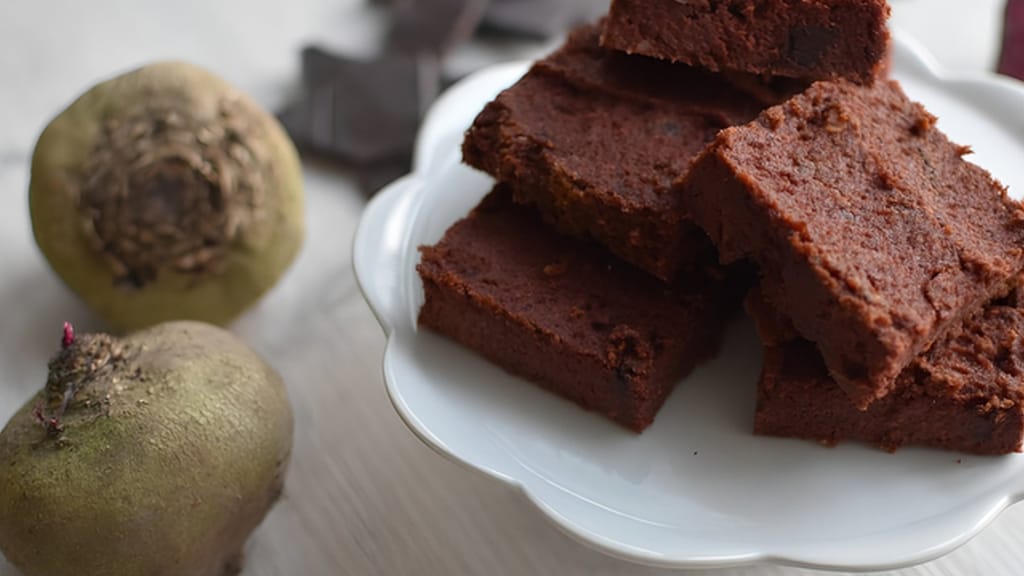
Gluten-free beetroot and walnut brownies
Gluten-free beet and walnut brownies — a wheat-free dessert
See an allergist for any suspicion that keeps repeating — and call emergency services for any reaction that affects breathing or circulation. Specifically:
Call emergency services immediately if, after eating, you notice swelling of the tongue or throat, breathlessness, hoarseness, sudden paleness, dizziness, or collapse.
Book an allergist appointment if you repeatedly get hives, swelling, vomiting, or diarrhea after eating wheat, or if your eczema keeps flaring up.
Mention any link to exercise, alcohol, or painkillers explicitly — without that detail, WDEIA is easy to miss.
If you work with flour and have coughing, a runny nose, or wheezing that gets worse at work and better on weekends, bring it up with an occupational physician — it could be baker's asthma.
Don't delay seeing a doctor for a child, and don't cut wheat out on your own beforehand — for kids, both the diagnosis and any supervised reintroduction of wheat matter enormously.
What this article can't do: diagnose you or prescribe treatment. Both of those are for the doctor examining you to decide. If you're looking into food allergies more broadly, you might also find it useful to read about what nut allergy symptoms look like.
No — home tests can't reliably identify a wheat allergy, and basing decisions on them is risky. Tests that measure IgG antibodies against foods, often marketed as "food intolerance tests," aren't validated for diagnosing allergies: even healthy people carry IgG antibodies against foods they eat regularly, and major allergy societies advise against using them for diagnosis. A wheat allergy is diagnosed through a clinical history, specific IgE testing, a skin prick test, and sometimes an oral food challenge — all done by an allergist. The only thing worth prepping at home is a food-and-symptom diary.
No — not everyone with a wheat allergy needs one. An allergist prescribes it based on your individual risk of anaphylaxis, which depends mainly on whether you've had a severe reaction before, which form of the allergy you have, and how you react to small amounts. Don't get one — or stop carrying one — on your own: it should always come with a written action plan for when and how to use it, and after any dose, you call emergency services immediately.
Most children do outgrow wheat allergy — a StatPearls review reports that roughly 65% of children are allergy-free by age 12. Studies show that kids who experienced anaphylaxis before age three, or who have high IgE levels against omega-5 gliadin, are more likely to carry the allergy into adulthood. The only way to confirm tolerance has developed is through a supervised oral food challenge with a doctor — never a test at home.
Yes, and in adults it most often shows up as WDEIA — wheat-dependent, exercise-induced anaphylaxis. You can eat wheat without any issue for years, and the reaction only appears when exercise, alcohol, an NSAID painkiller, or an infection is added into the mix within a few hours of eating. That's exactly why this form so often goes unrecognized for years.
Plain oats cross-react with wheat less often than barley or rye, so many people with wheat allergy tolerate them fine — but an allergist needs to make that call based on your specific tests and history. The bigger practical issue is contamination: standard oats are frequently processed on the same lines as wheat, so look for oats certified gluten-free.
Prevent wheat cross-contamination at home with a dedicated toaster and utensils, your own butter dish and jam jar, fresh frying oil, and by not letting flour billow into the air. Specifically: keep a separate toaster or use toaster bags, don't fry wheat-free food in oil that's already fried breaded meat, and don't dip a knife that's touched wheat bread into a shared butter dish or jam jar. Measure and mix flour gently — airborne flour dust settles all over the kitchen, and for baker's asthma, even inhaling it can trigger symptoms.
One recipe worth heating the oven for, one tip, and one deal from the shop. Nothing else.