Soft gingerbread cookies
Updated Aug 29, 2026
Christmas cookies aren't all baked at once — every type has its own moment, and there can easily be five weeks between the first and the last. Gingerbread belongs in mid-November, because it needs time to soften. Linzer bases are baked between 22 November and 6 December and sandwiched together seven to ten days before the holidays. Vanilla crescents, meringue kisses and no-bake balls only make sense in the final week. Here's the full calendar with exact dates — Christmas Eve this year falls on Thursday, 24 December 2026, and everything is calculated backward from that.
Christmas baking happens in four waves: gingerbread from 14–22 November, dry crumbly types from 5–13 December, crescents and decorating from 14–20 December, and no-bake, filled and meringue types from 21–23 December. Advent 2026 begins on Sunday 29 November, and Christmas Eve falls on Thursday, 24 December — everything else is planned around that.
Mid-November (14–22 Nov): gingerbread and anything that needs time to mellow. The latest sensible date for classic honey gingerbread is the first Advent weekend, 28–29 Nov.
Two weeks out (5–13 Dec): pracny, marokánky, lakronky, coconut macaroons, nut slices — dry, crumbly types with no filling.
Second-to-last week (14–20 Dec): vanilla crescents, cut-out butter biscuits, icing decoration, and sandwiching the Linzer bases together.
Final three days (21–23 Dec): no-bake balls, filled wafer rolls and crescents, wasp's nests, meringue kisses.
The one exception to these four waves is the Linzer base: it gets its own longer window, 22 November to 6 December, so it starts back in the November wave and runs through the first December weekend. It's only sandwiched together in the second-to-last week, though.
There's just one rule behind all of this: the more moisture and filling a type contains, the later it gets made. Dry, firm dough needs weeks to draw in moisture and soften. A moist filling does the opposite — every extra day strips away its crispness.
And if you flip the schedule — gingerbread on 22 December, meringues at the end of November — both will turn out badly. The gingerbread will be rock-hard, and the meringues will be a sticky puddle.
Bake classic honey gingerbread between 14–22 November, at the latest on the first Advent weekend, 28–29 Nov — it needs two to three weeks to soften, and nothing will speed that up. Gingerbread dough is deliberately baked firm; the softness only comes later, drawn in from the surrounding moisture. Bake it on 20 December and you'll be biting into a rusk.
Classic well-baked gingerbread needs 2–3 weeks, lightly baked (barely golden) needs about a week, and soft honey gingerbread with a high honey content is soft almost right away. So the mellowing time depends on how baked-through the gingerbread is and what's in the dough:
Classic gingerbread, baked golden-brown: 2–3 weeks. Bake it 14–22 November, at the very latest on the first Advent weekend, 28–29 Nov.
Gingerbread baked only lightly (5–7 minutes): softens in about a week. Feel free to leave this one until 5–6 December.
Soft honey gingerbread with a high honey or invert-sugar content: soft almost straight away. Honey and invert sugar are hygroscopic — they hold onto water in the dough on their own. The date here is flexible, even the final week.
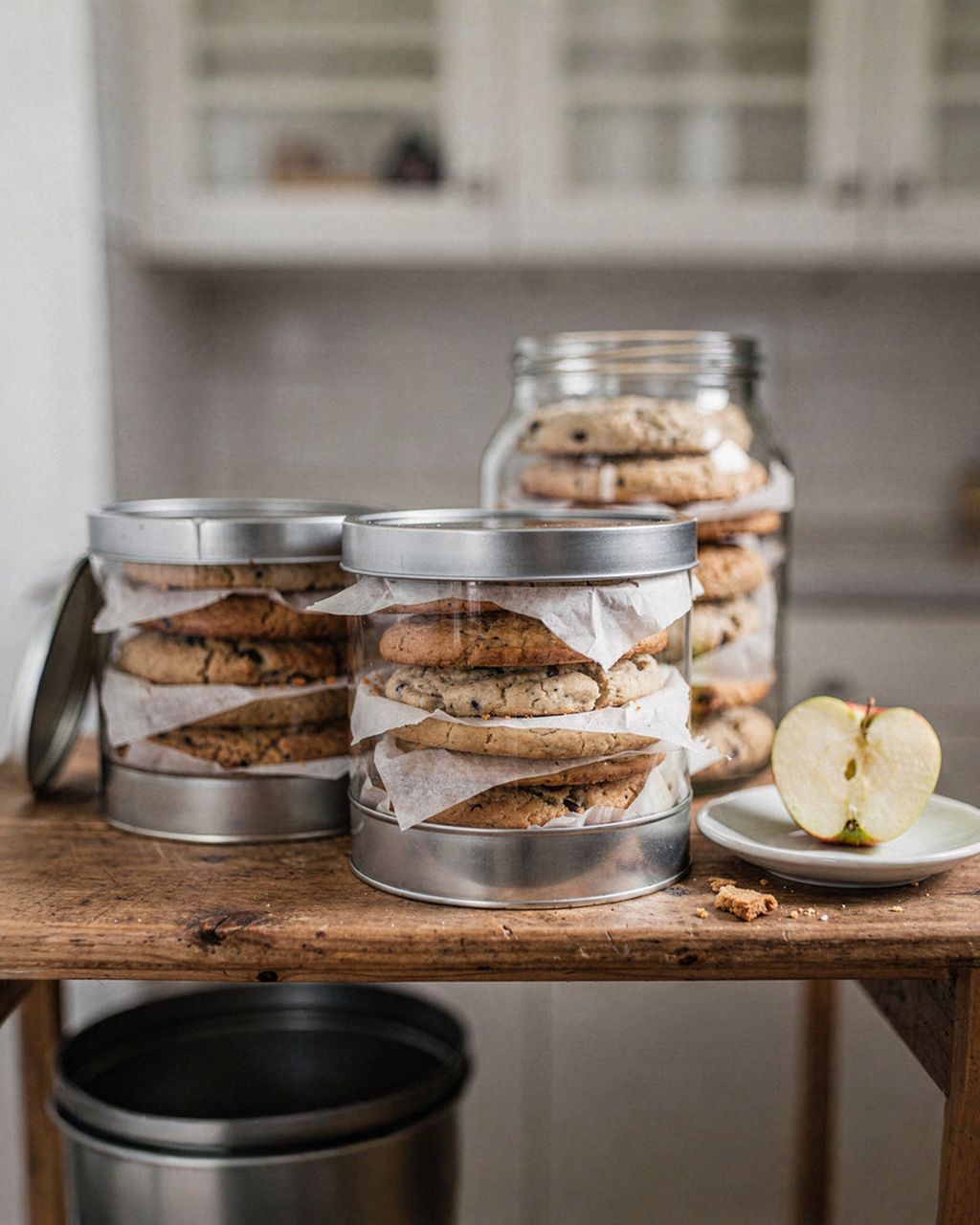
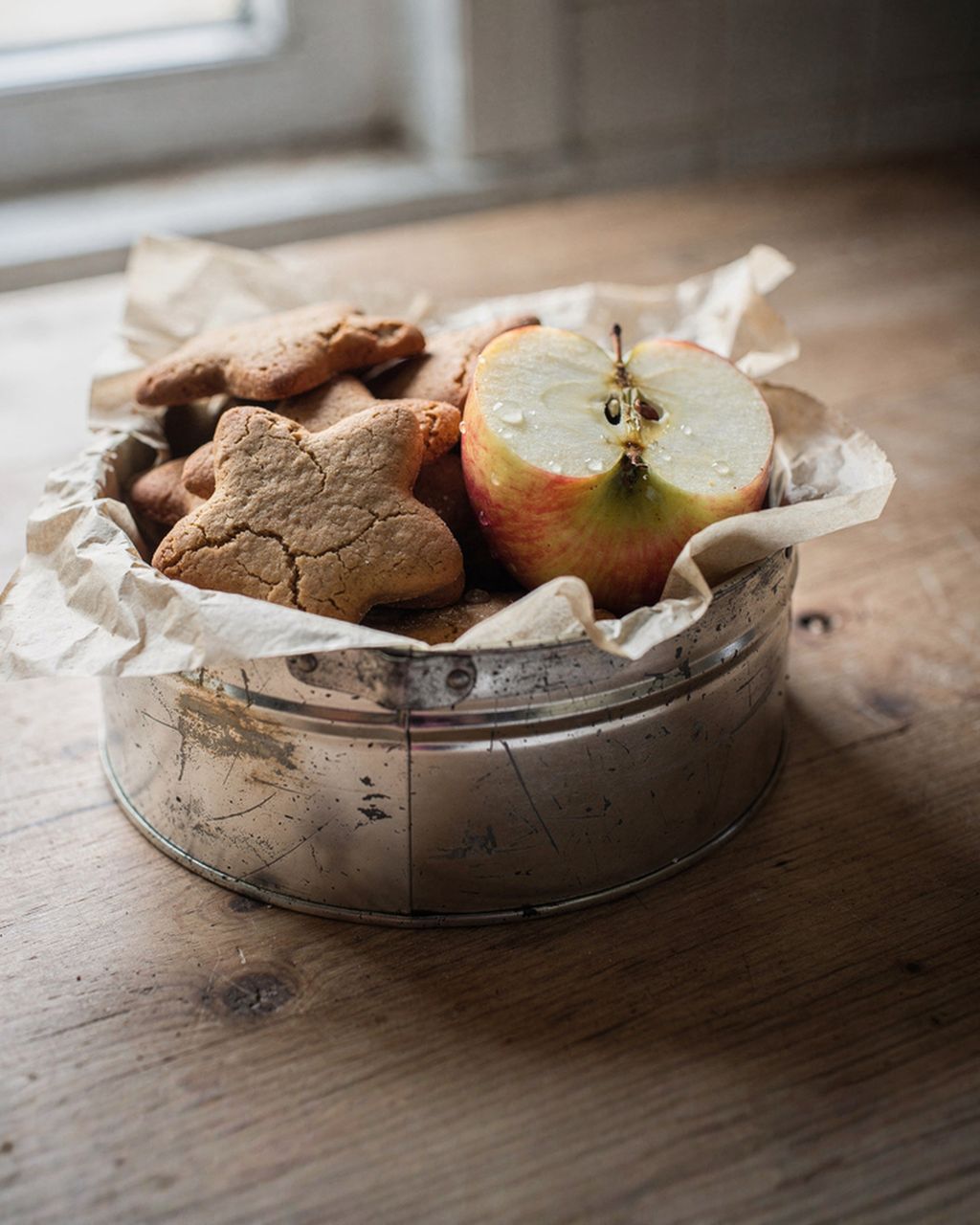
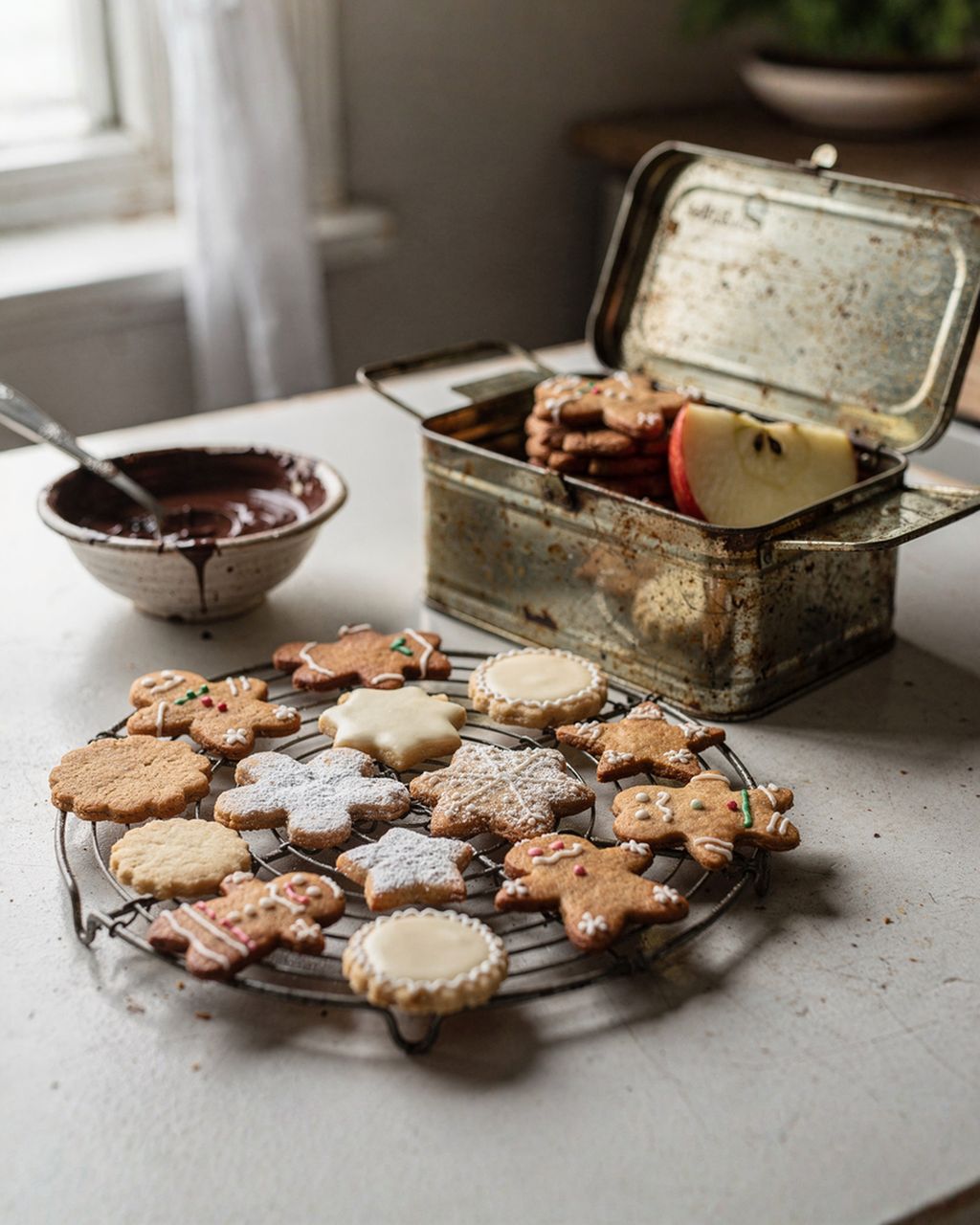
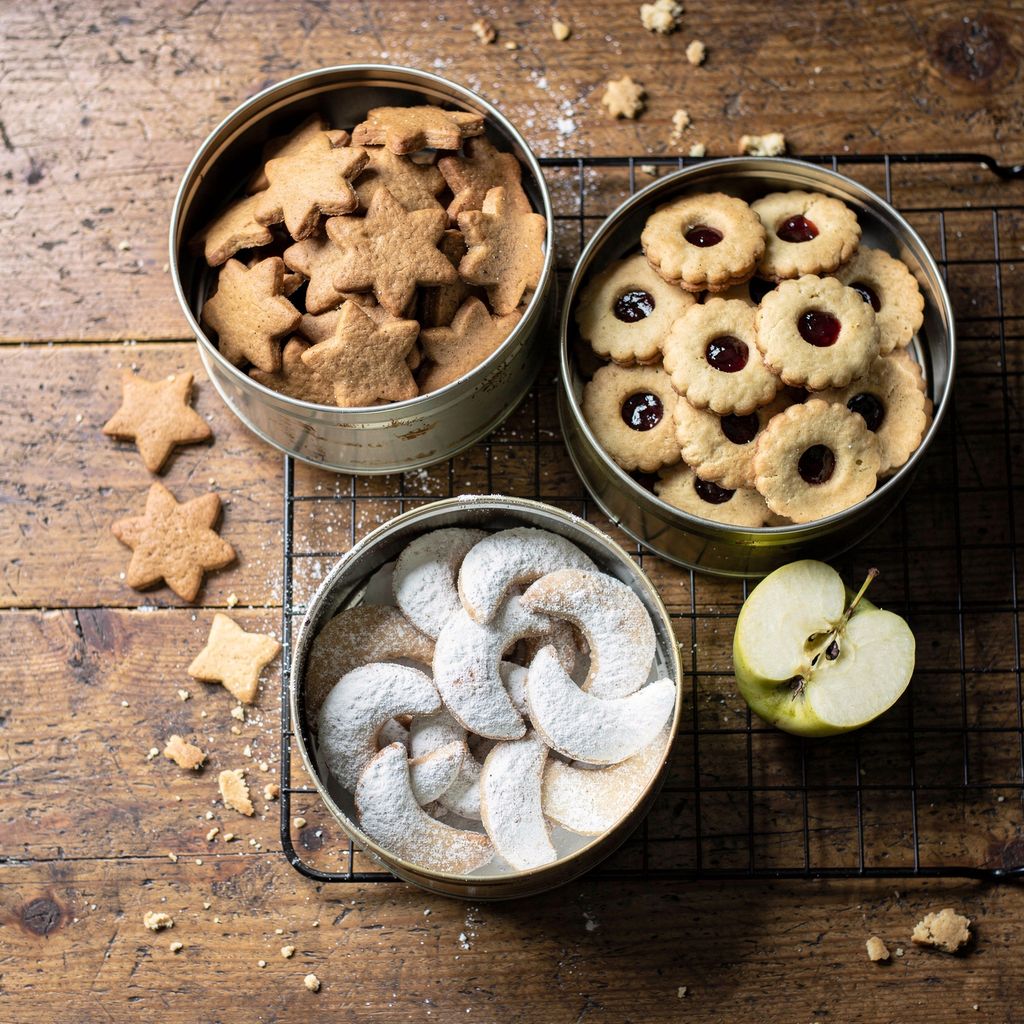
The same old trick for softening still works well: gingerbread into a tin or box, a half an apple tucked in among them, lid on, somewhere cool — a pantry, larder or balcony. Swap the apple every two days, or it'll start to mould and take the whole tin down with it.
One thing most schedules skip over: decorate only after it's mellowed. The same moisture that softens the gingerbread will also make royal icing go soggy and dull. Bake in November, let it soften, then decorate at leisure over the weekend of 12–13 December.
Recipes that suit this timeframe: soft gingerbread the classic way, soft honey gingerbread that never goes hard for a late start, and royal icing for decorating.
Soft gingerbread cookies
Soft gingerbread — a classic you bake in mid-November and let mellow until Christmas
Bake Linzer bases between 22 November and 6 December and sandwich them together with jam 7–10 days before Christmas Eve, i.e. 14–17 December. The bases and the finished, filled biscuits each have their own timing — which is why the two most common bits of Linzer advice seem to contradict each other, even though both are half right:
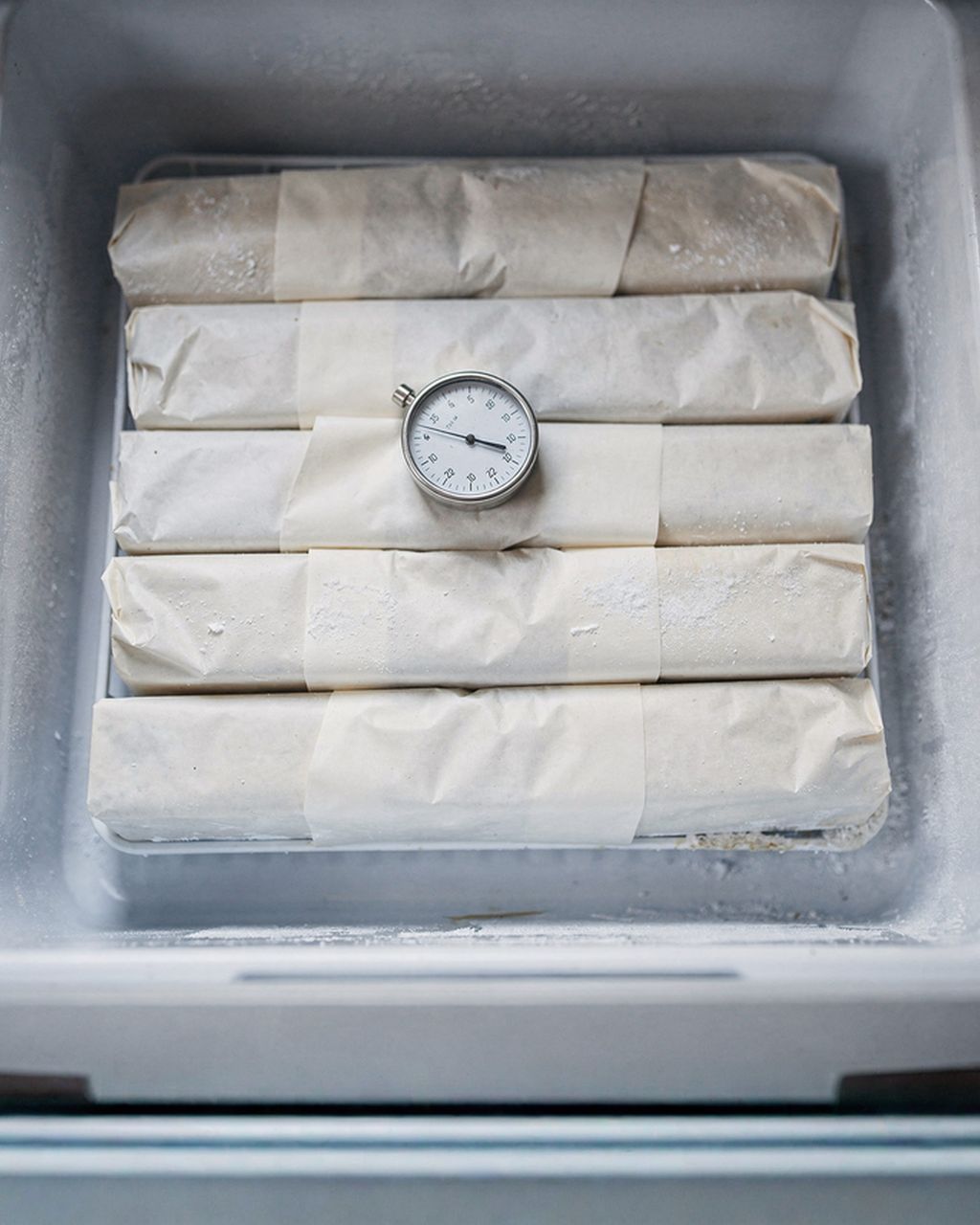
The dough can be mixed any time from late October onward. It keeps 2–3 days in the fridge, and up to 3 months in the freezer with no drop in quality. Always let it rest at least 24 hours in the fridge — the fat firms up, the flour hydrates fully, and the dough rolls and cuts noticeably better.
The bases should be baked within the window 22 November – 6 December. Dry, unfilled rounds stored in a well-sealed tin will happily stay crisp for a month. The most practical weekends in this window are 28–29 November and 5–6 December.
Sandwich them together only 7–10 days before Christmas Eve, meaning 14–17 December. That's the sweet spot where the jam has had time to soak into the biscuit so it melts in the mouth, but hasn't yet gone soggy.
How to adjust the sandwiching date to suit your filling: thick, well-set jam or fruit butter (povidla) soaks in more slowly, so give those 10–14 days if you like. Thinner jam or a cream filling will soak the base through in just a few days — sandwich those only 4–5 days ahead. And if you prefer your Linzer biscuits crisp rather than soft, leave the sandwiching until 21–22 December.
The one thing never to do: sandwich Linzer biscuits together on Christmas Eve morning. They'll be sandy, crumbly and prone to breaking, because the filling never got the chance to do its work.
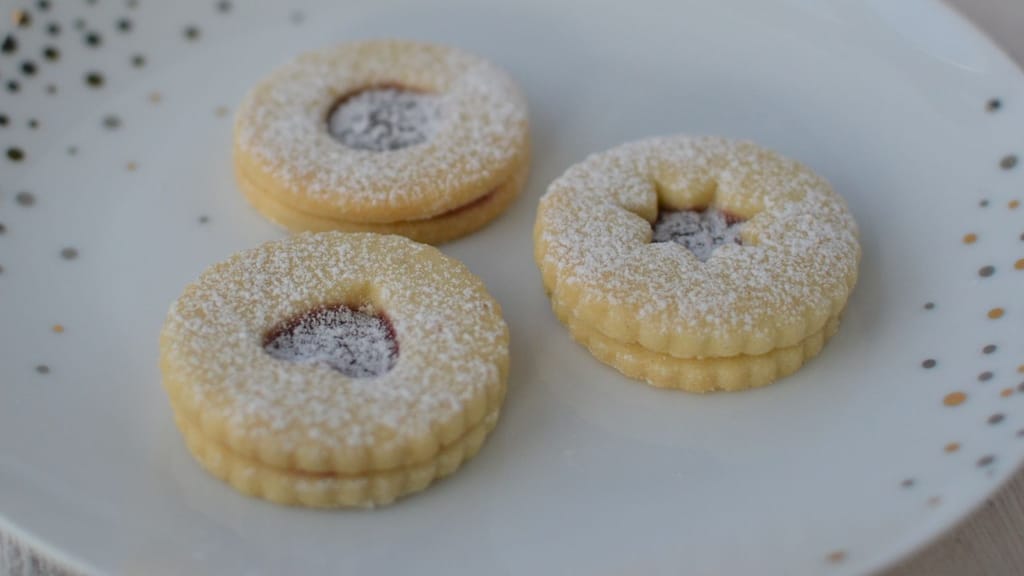
Classic christmas cookies: delicate linzer cookies
Classic crisp Linzer biscuits — bake the bases by 6 December, sandwich them together in mid-month
The weekends of 5–6 and 12–13 December are for everything dry and crumbly with no filling: pracny, marokánky, lakronky, coconut macaroons, nut slices and cut-out butter biscuits. The 5–6 December weekend also happens to be the last call for Linzer bases, since their window of 22 Nov – 6 Dec closes here.
Why this timing, specifically: these types have nothing to gain and nothing to lose. Kept in a well-sealed tin, they'll last 3–4 weeks with no noticeable change, so there's no point rushing them into November — and equally no reason to save them for the final week, when you'll be busy with things that simply can't be done any earlier.
A small exception rarely mentioned: marokánky and lakronky actually improve after a few days. The nuts and candied fruit redistribute their moisture a little and the flavour settles. They're good fresh, but better after three days.
The 5–6 December weekend also works well logistically — once the oven's hot, it can churn through several dry types back to back. Just check on the November gingerbread that weekend and swap in a fresh apple.
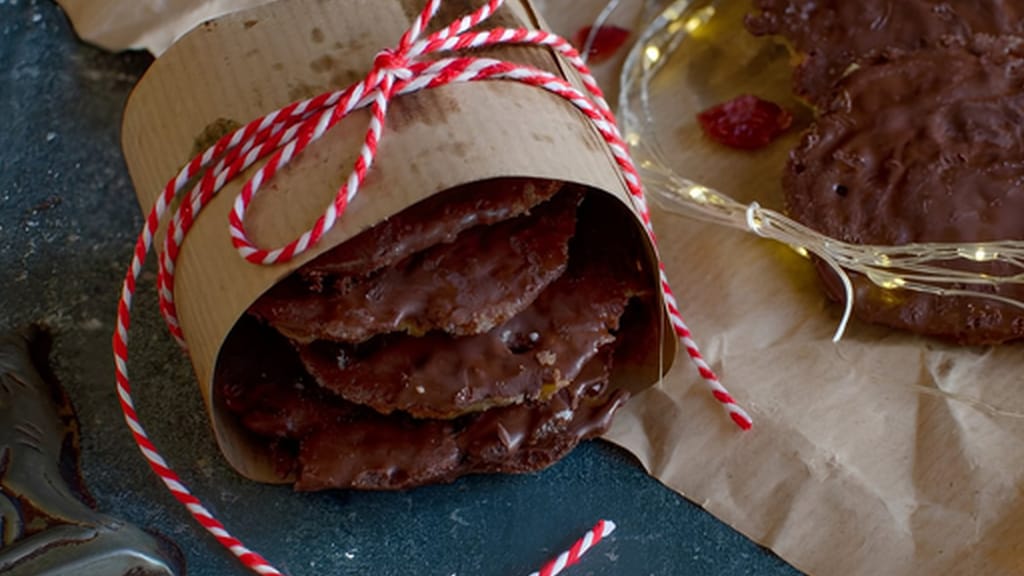
Chocolate-glazed marokánky (nut & candied fruit cookies)
Chocolate-glazed marokánky — a dry type that only gets better after a few days in the tin
In the week of 14 to 20 December, bake vanilla crescents, cut-out butter biscuits, and finish sandwiching the Linzer biscuits. The last pre-Christmas weekend, 19–20 December, is the best window for this — you're likely free, and it leaves four days, which is exactly what these types want.
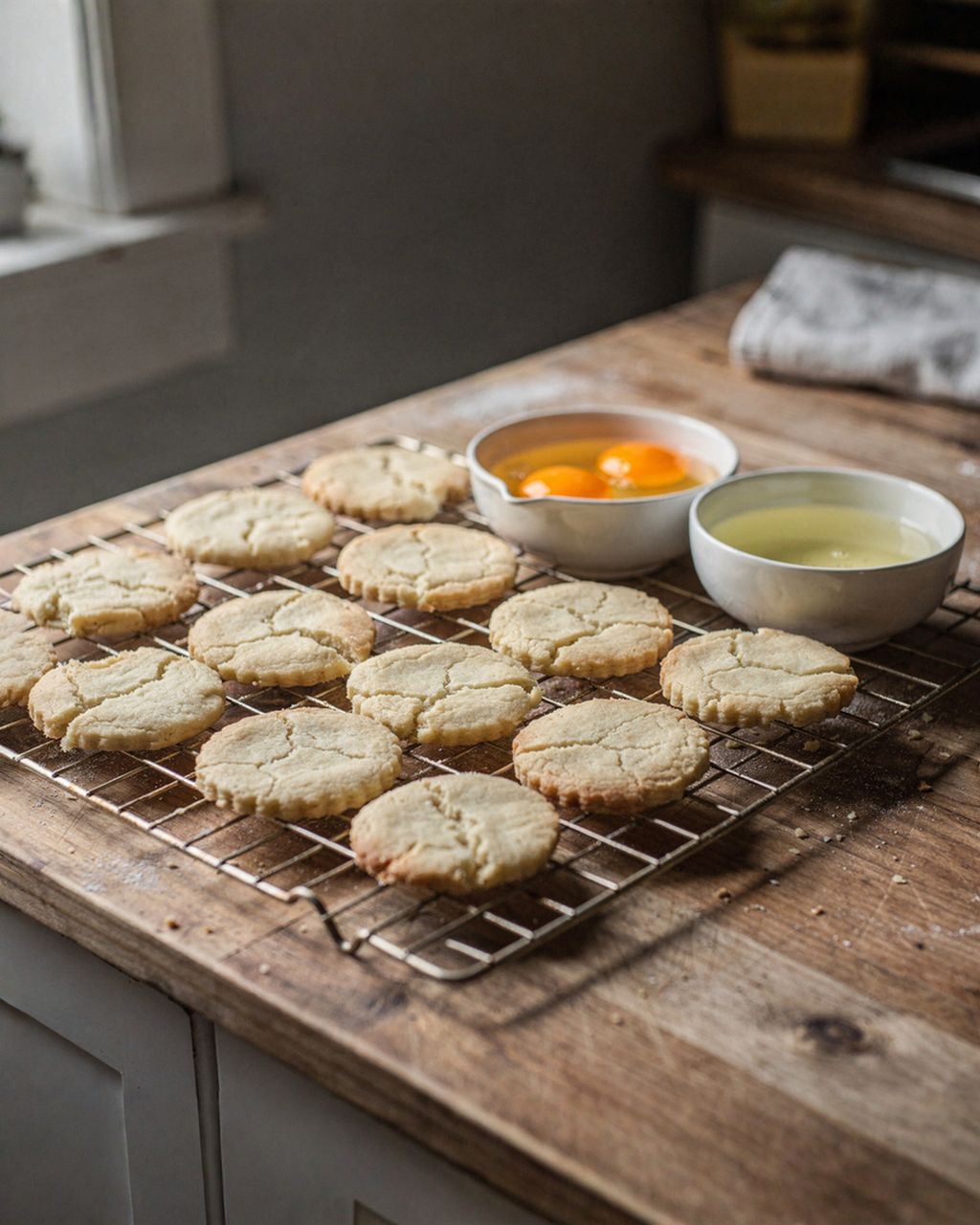
Vanilla crescents taste best 3–7 days after baking. Straight from the oven they're delicate to the point of crumbly; after a few days the vanilla sugar coating settles in and the crescent turns softer and more fragrant. Roll them in sugar while still warm, or the sugar won't stick — that's the one step you can't fix later.
Cut-out biscuits and royal icing decoration belong in this window too. Icing needs 6–12 hours to set properly, so decorate over the weekend of 19–20 December, otherwise the decorated pieces will stick together in the tin.
Recipes for this week: vanilla crescents, pistachio crescents as a variation, and cut-out sugar Christmas biscuits for cutting shapes and decorating.
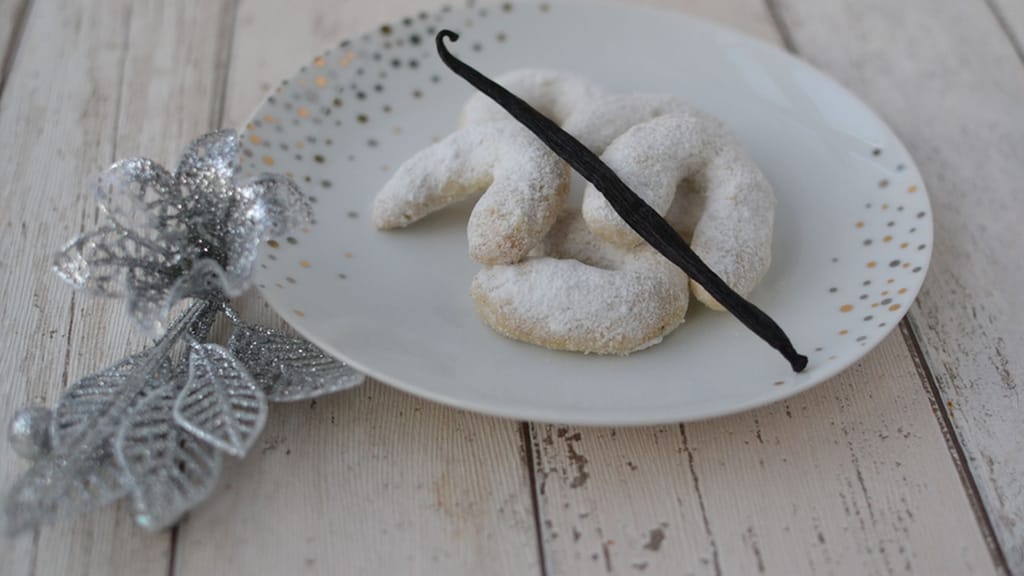
The best christmas cookies? vanilla crescents, of course!
Vanilla crescents — at their best 3 to 7 days after baking, ideally baked the weekend of 19–20 December
Save meringue kisses, filled wafer rolls and cones, wasp's nests and no-bake balls for 21–23 December — every extra day chips away at their quality. Three days before Christmas Eve is when the types that simply can't be made any earlier get their turn:
Meringue kisses and meringues — 22–23 December. Let them cool overnight in the switched-off, closed oven, then seal them into an airtight tin first thing in the morning: the sugar in them is hygroscopic, so they turn damp quickly in the open air. If you bake them earlier, count on two weeks at most — after that they'll start going soft even in a well-sealed tin.
Filled wafer rolls, cones and hollow crescents — fill them no more than 2 days ahead. The unfilled shells can be baked back in the December dry-type window; the countdown only starts once the cream goes in.
Wasp's nests and rum balls made from crumbs — 21–23 December. Buttery rum cream holds its shape and softness for about a week, then dries out and crumbles.
No-bake balls made from oats, dates or breadcrumbs — 21–23 December. They come together in twenty minutes and keep about 4–5 days in the fridge, so there's no reason to make them any earlier.
If you've still got icing decoration left to do, finish it by the morning of 22 December at the latest — icing needs 6–12 hours to set before Christmas Eve so the pieces don't stick together in the tin.
Recipes for the final three days: traditional wasp's nests with rum cream, white chocolate and mango wasp's nests, hollow nut crescents for filling, Linzer biscuits filled with salted caramel and cocoa no-bake balls made with oats and dates.
From 14 November through 23 December 2026, you can fit all your Christmas baking into six weekends plus two weekday blocks. Here's the full plan broken down by date:
14–15 November — classic honey gingerbread. Bake it, store it with an apple, and forget about it for three weeks.
21–22 November — a second batch of gingerbread, if you're baking a lot. Mix and freeze the Linzer dough; the window for Linzer bases opens.
28–29 November (1st Sunday of Advent) — the last sensible date for classic gingerbread. Also bake the Linzer bases (we're mid-way through the 22 Nov–6 Dec window).
5–6 December (St Nicholas' weekend) — pracny, marokánky, lakronky, coconut macaroons and the last of the Linzer bases. Meanwhile, just check on the gingerbread and swap the apple.
12–13 December — decorate the gingerbread with royal icing, make nut slices, finish off any remaining dry types.
14–17 December (weekdays) — sandwich the Linzer biscuits together with jam.
19–20 December — vanilla crescents, cut-out butter biscuits, icing decoration.
21–23 December (weekdays) — no-bake balls, filling the wafer rolls, wasp's nests, and meringue kisses right at the very end.
If you've only got two weekends for the whole thing, pick 28–29 November (gingerbread and Linzer bases) and 19–20 December (crescents, sandwiching, icing), then round it off with no-bake types on 22–23 December. That minimal plan works perfectly well.
Dough, fillings and equipment can all be sorted well ahead of time — it's only the actual baking that can't be rushed. These things can easily be done back in October or early November:
Freeze the dough. Both Linzer and gingerbread dough keep in the freezer for up to 3 months with no drop in quality. Freeze it as flat discs, not balls — a disc thaws overnight in the fridge, while a ball needs a day and a half.
Cook down povidla or a thick jam. Homemade filling for Linzer biscuits beats store-bought, and it can be made any time in advance.
Buy nuts just before baking and grind them fresh. Shelled nuts are high in fat and turn rancid quickly — walnuts only keep two to four weeks at room temperature. Buy them right before you bake and store them in the shell, in the fridge or freezer. A rancid nut is the most common reason cookies taste off even when you've done everything else right.
Check your baking powder and bicarbonate of soda. Gingerbread that won't rise is almost always down to out-of-date raising agents.
Get your tins ready. Discovering on 23 December that you've got five types of cookies and only two tins is a stress you don't need.
In four days you can still manage vanilla crescents, cut-out butter biscuits, marokánky (nut-meringue slices), wasp's nests, filled wafer rolls, no-bake balls and meringue kisses — just skip anything that needs time to mellow. Skip classic gingerbread (it would be rock-hard) or swap in a soft honey-based version with a high honey content, which is soft straight away. Bake Linzer biscuits, but expect them to be crisp rather than melt-in-the-mouth.
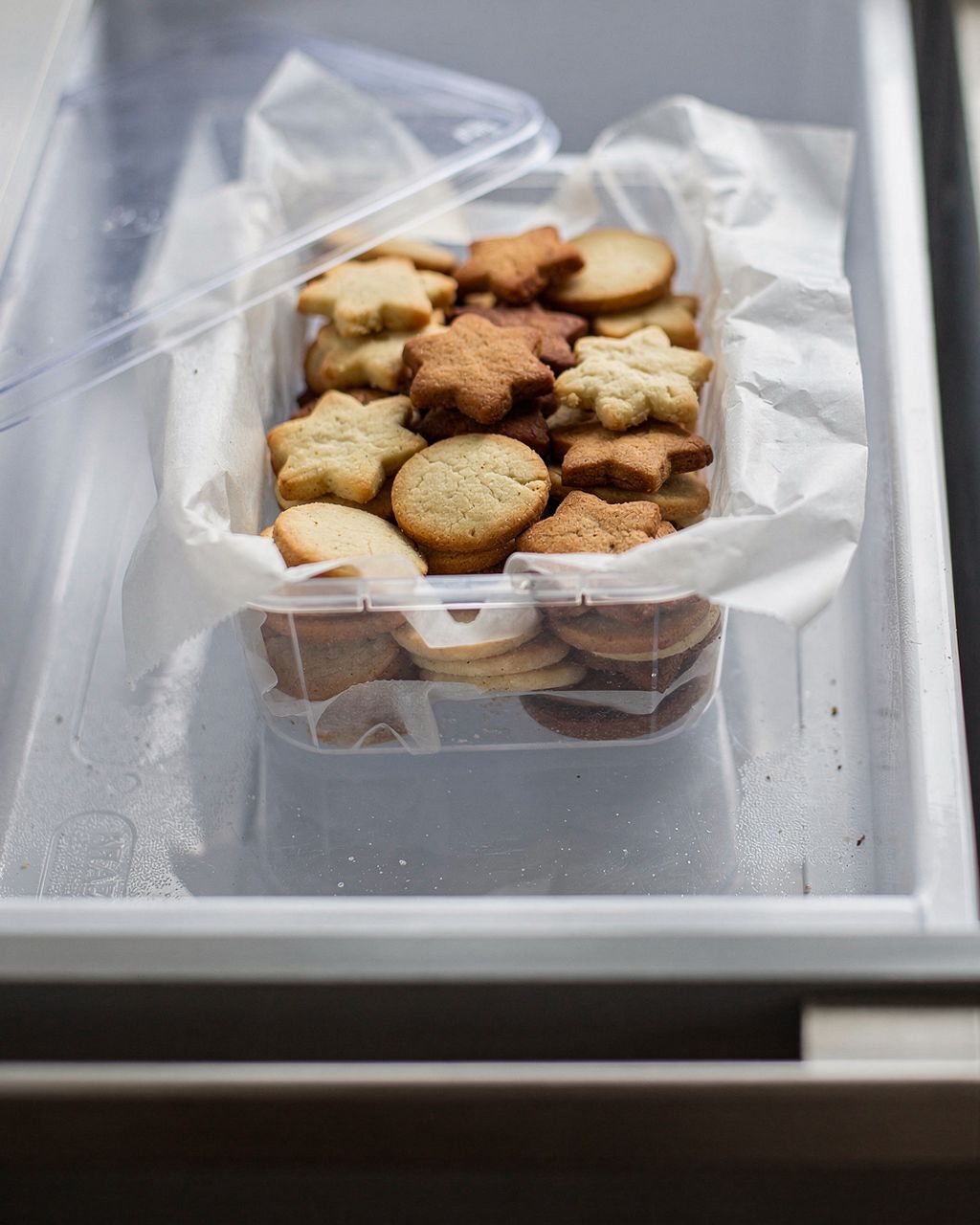
Baked cookies are best within a few weeks — dry, crumbly types like pracny or marokánky keep 3–4 weeks, vanilla crescents around two weeks, meringue kisses two weeks at most, and cream-filled types just a few days. The longer cookies sit, the more flavour they lose, especially nut- and butter-based ones. Gingerbread is the one exception that actually benefits from time. Always store in a well-sealed tin, somewhere cool, and keep each type separate.
Yes, but only dry types without filling or icing — Linzer bases, crescents before rolling in sugar, cut-out biscuits, unglazed gingerbread and meringue kisses. Pack them into a sturdy airtight box with baking paper between layers; lay meringues in a single layer so they don't crush under the rest. Always thaw in a closed tin at room temperature so moisture doesn't condense onto the cookies. Don't freeze filled wafer rolls or anything with royal icing — it turns damp and loses its shine once thawed.
Yes, but only ones that share a temperature and similar baking time — and never something strongly scented next to something neutral. Gingerbread with cloves and star anise will pass its aroma on to plain butter biscuits on the tray next door. Good pairings: Linzer biscuits with cut-out biscuits, marokánky with lakronky. Always bake meringue kisses on their own, since they dry out at a low temperature for several hours.
From experience, plan on roughly 300–400g per person for the whole holiday period — but treat that only as a rough guide, since it depends on how many guests you have and whether you're giving cookies away as gifts. Aim for 4–6 varieties: eight types in small batches look better on a plate than three types by the kilo, but past six the workload and number of tins shoot up fast. If it's your first time baking, start with four: gingerbread, Linzer, crescents and one no-bake type.
Try bending it between your fingers — properly mellowed gingerbread gives slightly and bends a little, while freshly baked gingerbread snaps. The second test is by bite: it should give way without pressure, not shatter. If after three weeks it's still hard, either it was baked too long or the tin isn't sealing properly; add a fresh apple half and give it another four days.
One recipe worth heating the oven for, one tip, and one deal from the shop. Nothing else.