Classic beef goulash with chilli and bread dumpling
How Long Does Goulash Last in the Fridge and Freezer (and Why It Tastes Better the Next Day)
Updated Oct 6, 2026
How long does goulash last? Cooked goulash keeps in the fridge for 3–4 days, and in the freezer it holds its best flavor and texture for 2–3 months, up to about 4 months at most — based on guidance from the USDA/FSIS. There's one condition: it needs to go into the fridge within 2 hours of cooking. Below you'll find how to cool the pot quickly, how to safely reheat goulash, and why it tastes better the next day than it did on Sunday fresh off the stove.
Cooked goulash keeps in the fridge for 3–4 days, as long as you refrigerate it within 2 hours of cooking and your fridge stays at 40°F (4°C) or below. Both come from USDA/FSIS guidance on cooked leftovers.
Day zero is cooking day. The clock doesn't start when you first reheat the goulash — it starts when you finish cooking it.
Reheating doesn't reset the clock. Goulash cooked on Sunday should be finished by Wednesday at the latest, even if you reheated it on Monday.
This applies to the finished, cooked dish. Raw beef has its own timeline — cubed, it keeps 1–2 days in the fridge, and in a whole piece, 3–5 days — don't lump that in with the timeline for finished goulash.
If you know you won't finish it within 3–4 days, don't wait until the last day — freeze part of it straight away. That way you won't be left guessing whether it's still good.
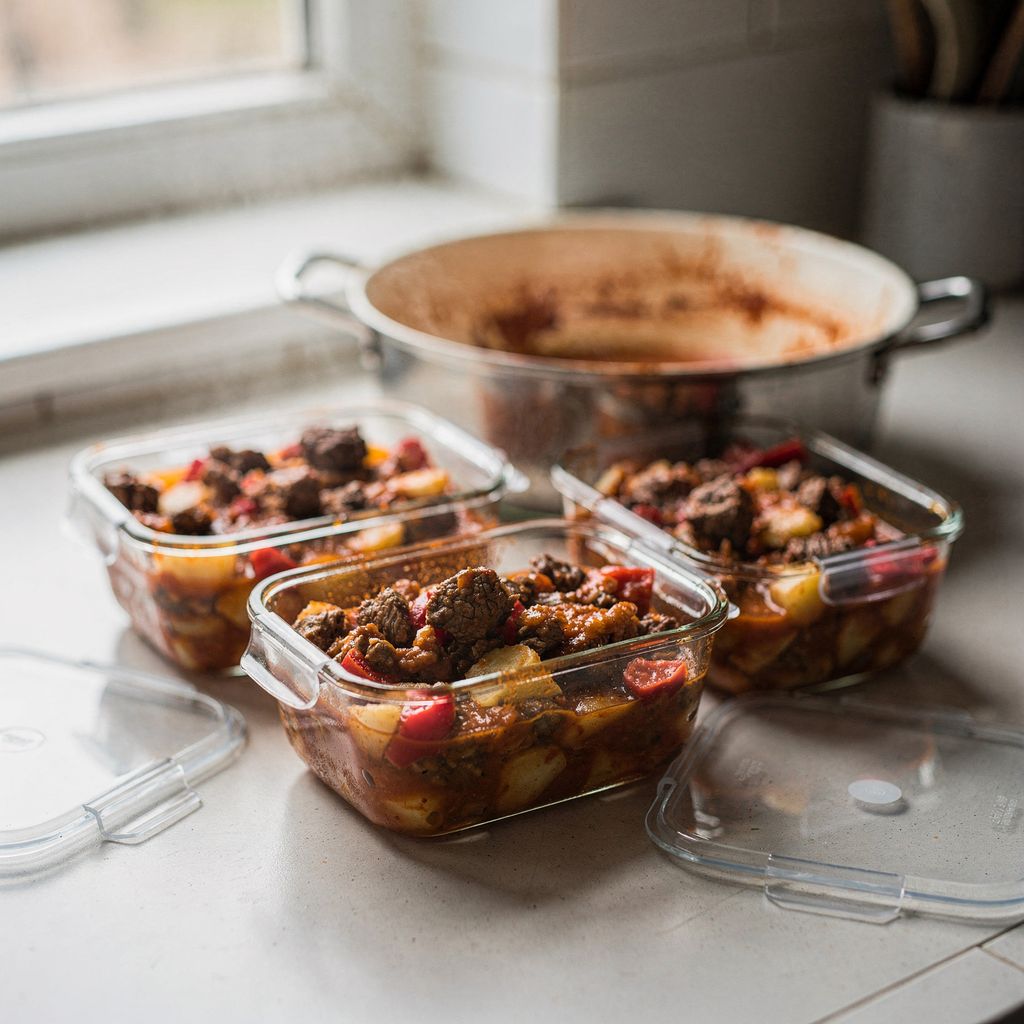
Split the goulash into shallow containers and get it into the fridge within 2 hours of finishing cooking — that's the USDA/FSIS recommendation. A big pot full of hot goulash is exactly the scenario where cooling most often goes wrong.
Here's why it matters: according to the FSIS, bacteria multiply fastest between 40 and 140°F (4 and 60°C), and dense meaty dishes like goulash, sauces, and stews are a favorite environment for Clostridium perfringens. Its spores survive cooking, and if food cools slowly, they multiply in that warm zone. A pot left to cool overnight on the counter or balcony can spend hours sitting right in that danger zone.
What to do:
Split the goulash into several shallow containers. A thin layer cools far faster than five liters in one big pot.
Don't wait for it to cool on the counter first. According to the FSIS, you can put warm food straight into the fridge — just don't stack the containers, and leave space around them so air can circulate.
Speed things up with cold water. Set the pot in a sink of ice water and stir it for a few minutes before transferring the goulash into containers.
Only put the lid on once it's cooled. Leave warm containers slightly uncovered in the fridge at first so steam can escape and the goulash cools faster.
Frozen goulash holds its best flavor and texture for 2–3 months, up to about 4 months at most, at 0°F (−18°C), based on USDA/FSIS guidance. It stays safe to eat beyond that too, since freezing stops bacteria — it just gradually dries out and loses flavor over time.
Goulash is one of the most freezer-friendly dishes out there — both the sauce and the tender meat hold up well. A few tips that help:
Freeze it in portions. One portion per container or bag means you only thaw what you'll actually eat.
Freeze it once it's cooled, not while it's warm — fridge first, then freezer.
Label it with the date. You won't remember three months from now otherwise.
Leave the potatoes out if you can. If your goulash includes potatoes, they tend to turn mealy and fall apart after thawing — the rest of the goulash won't be affected.
Freeze dumplings separately. Slices of bread dumpling freeze well on their own and can be reheated by steaming.
Reheat goulash until it reaches 165°F (74°C) all the way through — for a saucy dish like this, that basically means bringing it to a boil, as recommended by the USDA/FSIS. Just warming it through isn't enough — the heat needs to reach every part of the portion.
On the stove: add a splash or two of water or stock (cold goulash thickens up), cover, and bring to a boil, stirring occasionally. Let it bubble for a bit and scrape the bottom so it doesn't stick.
In the microwave: cover it, heat in short bursts, and stir in between. Microwaves heat unevenly, so the center of a portion can stay cold even while the edges are bubbling.
From frozen: the safest approach is to thaw it in the fridge overnight. According to the FSIS, you can also reheat a frozen portion straight from the freezer — it just takes longer, over low heat with the lid on. Never thaw goulash by leaving it out on the counter.
Only reheat what you'll eat. Every extra round of cooling and reheating is another trip through the danger zone, and the meat dries out a little more each time.
If your goulash comes out too thick or too thin after reheating, check out our article on what to thicken goulash with and how much to use per liter.
On the second day, goulash has a thicker, more velvety sauce and a more rounded flavor, because it keeps coming together while it cools and sits in the fridge. This isn't an old wives' tale — it's kitchen chemistry at work:
Gelatin. During long braising, the collagen in beef shin breaks down into gelatin. Once the goulash cools, that gelatin firms up the sauce, and reheating brings back that signature silky, clingy richness.
The flavors settle in. Aromatic compounds from paprika, cumin, marjoram, and sautéed onion dissolve into the fat and, given time to rest, spread evenly through the whole pot. Sharp edges (garlic, chili) soften, and the onion's natural sweetness comes forward.
The meat soaks up the sauce. As the goulash cools, the pieces of meat draw in some of the surrounding liquid, so the next day they're juicier and taste of the sauce itself, not just plain boiled beef.
The sauce reduces a touch more. Bringing it back to a boil a second time cooks off a bit more water, concentrating the flavor further.
Which gives you a handy tip: feel free to make goulash a day ahead. Cook it, chill it quickly using the method above, and the next day just reheat it. If you want a tried-and-tested base recipe, try our classic beef goulash with chili and bread dumplings.
That said, tough meat won't magically turn tender overnight — a night in the fridge rounds out the flavor, it doesn't finish the cooking. The usual culprit is lean, collagen-poor meat (like round) used instead of shin or shoulder, or boiling too hard instead of a gentle simmer. We cover how to fix that in our article on why goulash turns out tough and how to get the meat properly tender — you'll find the link at the end.
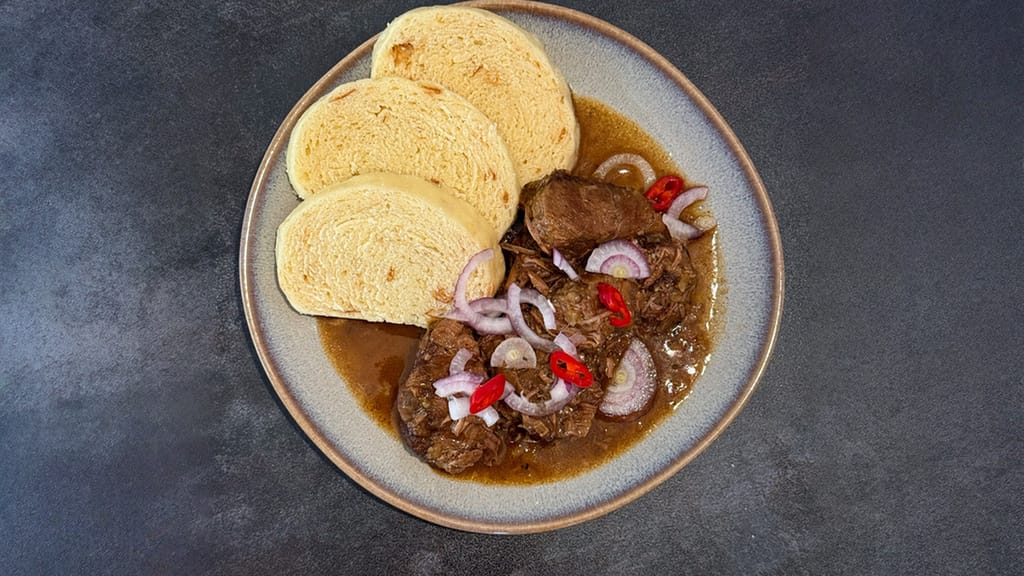
Classic beef goulash with chilli and bread dumpling
Why does goulash taste better the next day? On the second day, goulash has a thicker, silkier sauce and a rounder, more complete flavor, because it keeps coming together as it cools and sits in the fridge. This isn't an old wives' tale — it's basic kitchen chemistry: Gelatin. During long braising, collagen from beef shin breaks down into gelatin. As the goulash cools, that gelatin firms up the sauce, giving it that signature sticky, silky richness once reheated. The flavors spread out. Aromatic compounds from paprika, caraway, marjoram, and sautéed onion dissolve into the fat and, left to sit, spread evenly through the whole pot. Sharp notes — garlic, chilli — mellow out, and the sweetness of the onion comes forward. The meat soaks up the sauce. As the goulash cools, the chunks of meat pull in some of the sauce, so the next day they're juicier and taste of the sauce rather than just plain boiled beef. The sauce reduces a touch more. Bringing it back to a boil a second time evaporates a bit more water, concentrating the flavor further. Which gives you a handy tip: feel free to cook your goulash a day ahead. Cook it, cool it quickly using the method above, and just reheat it the next day. Looking for a solid base recipe? Try our classic beef goulash with chilli and bread dumplings. That said, tough meat won't magically become tender overnight — a night in the fridge rounds out the flavor, it doesn't finish the braising. The usual culprit is lean, collagen-poor meat (like topside) used instead of shin or shoulder, or cooking at too hard a boil instead of a gentle simmer. We cover how to fix that in our article on why goulash turns out tough and how to get the meat properly tender — you'll find the link at the end. </block4>
You can't reliably tell if goulash has spoiled just by smell, because the bacteria that cause food poisoning usually don't change the smell, taste, or appearance of food, according to the USDA/FSIS. Goulash can smell perfectly normal and still be unsafe. Go by time instead: no more than 3–4 days in the fridge after cooking, and no more than 2 hours left out at room temperature.
Goulash can sit out on the stove or counter for a maximum of 2 hours after cooking before it needs to go into the fridge — that's the USDA/FSIS recommendation. In hot weather above 90°F (32°C), it's just 1 hour. If you want to keep it out longer than that, it has to be kept actively hot above 140°F (60°C), not just warm under a lid.
According to USDA/FSIS guidance, you can refreeze goulash that was thawed in the fridge, though the texture will suffer a bit — the meat dries out more and the sauce can separate. If you thawed it in the microwave or in cold water, reheat it to 165°F (74°C) first, and then you can refreeze what's left. Never thaw goulash by leaving it out on the counter.
Letting goulash cool on the balcony isn't safe, because a large pot cools slowly and its center can stay in the 40–140°F (4–60°C) range for hours — exactly where bacteria multiply fastest, according to the USDA/FSIS. Outdoor temperatures also swing overnight. It's far more reliable to split the goulash into shallow containers and put it straight in the fridge.
One recipe worth heating the oven for, one tip, and one deal from the shop. Nothing else.