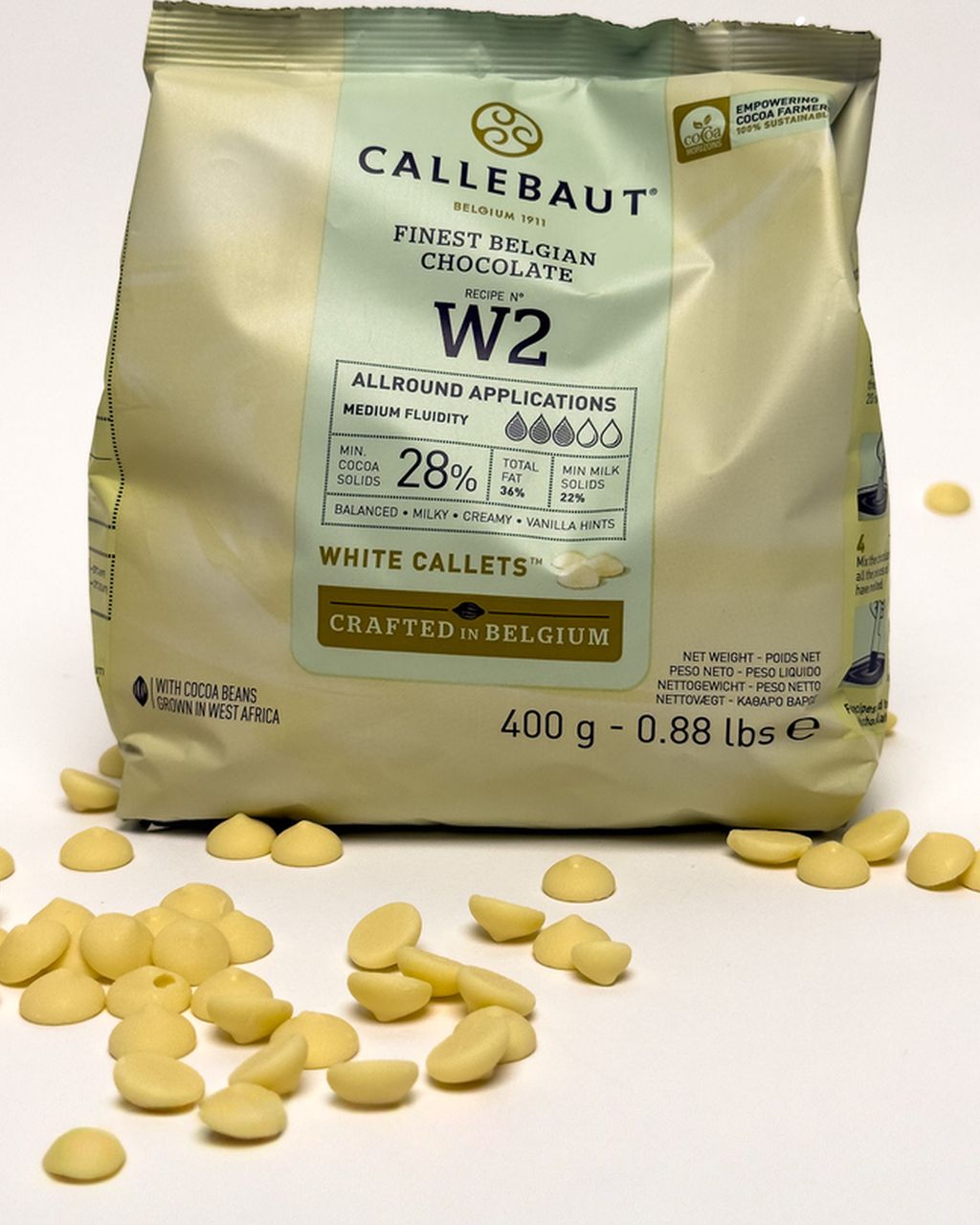
Callebaut White Chocolate Callets (W2) 400g
How to Flavor White Chocolate: Pastes, Powders and What Makes It Seize
Updated Oct 15, 2026
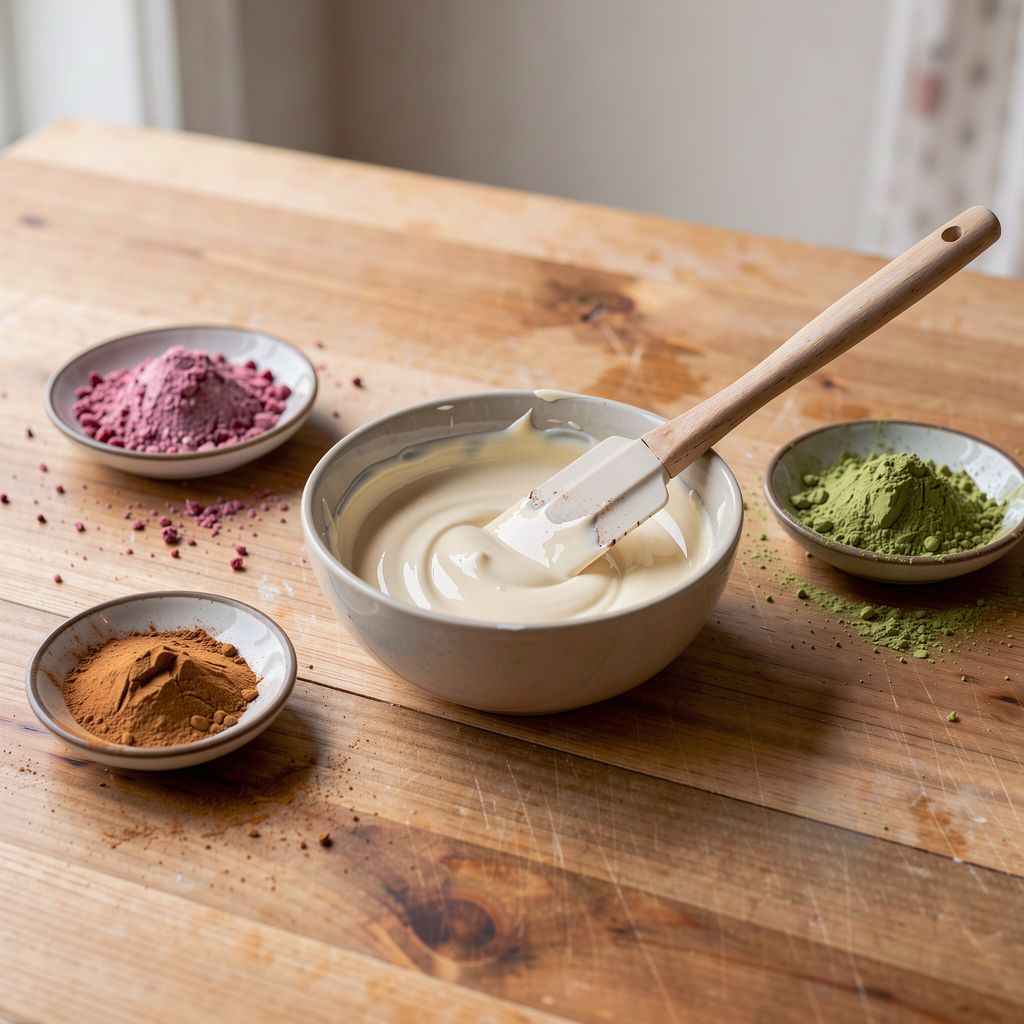
You can flavor white chocolate with dry powders (freeze-dried fruit, matcha, coffee, spices), oil-based flavorings, flavor pastes, liqueurs or infused cream – and one thing decides which to choose: water. White chocolate is fat with sugar and milk solids, so a few drops of water or juice will turn it into a grainy lump. Plain chocolate (bars, pralines, bark) can therefore only take what is dry or fatty. Pastes made with fruit and water, liqueurs and infused cream belong in ganache and fillings, where there is enough liquid. Below you'll find what goes where, how much to use and how to rescue chocolate that has seized.
White chocolate seizes because a small amount of water binds the sugar and milk solids into sticky clumps that separate from the cocoa butter. The result is a dull, grainy, stiff mass that can't be stirred smooth.
What matters is the amount of water. Small doses are the dangerous ones: a few drops of juice, a teaspoon of water-based flavoring, steam from a double boiler, a wet spatula. When there is a lot of liquid instead – according to pastry sources, roughly from 25% of the chocolate's weight – the emulsion flips and you get a smooth ganache. That's why the same fruit paste ruins plain chocolate but works perfectly in a ganache made with cream.
A practical rule:
Plain chocolate (bars, pralines, lollipops, bark, coatings): only dry ingredients and fat- or oil-based flavorings.
Ganache, fillings and mousses: also fruit pastes, purées, liqueurs and infused cream.
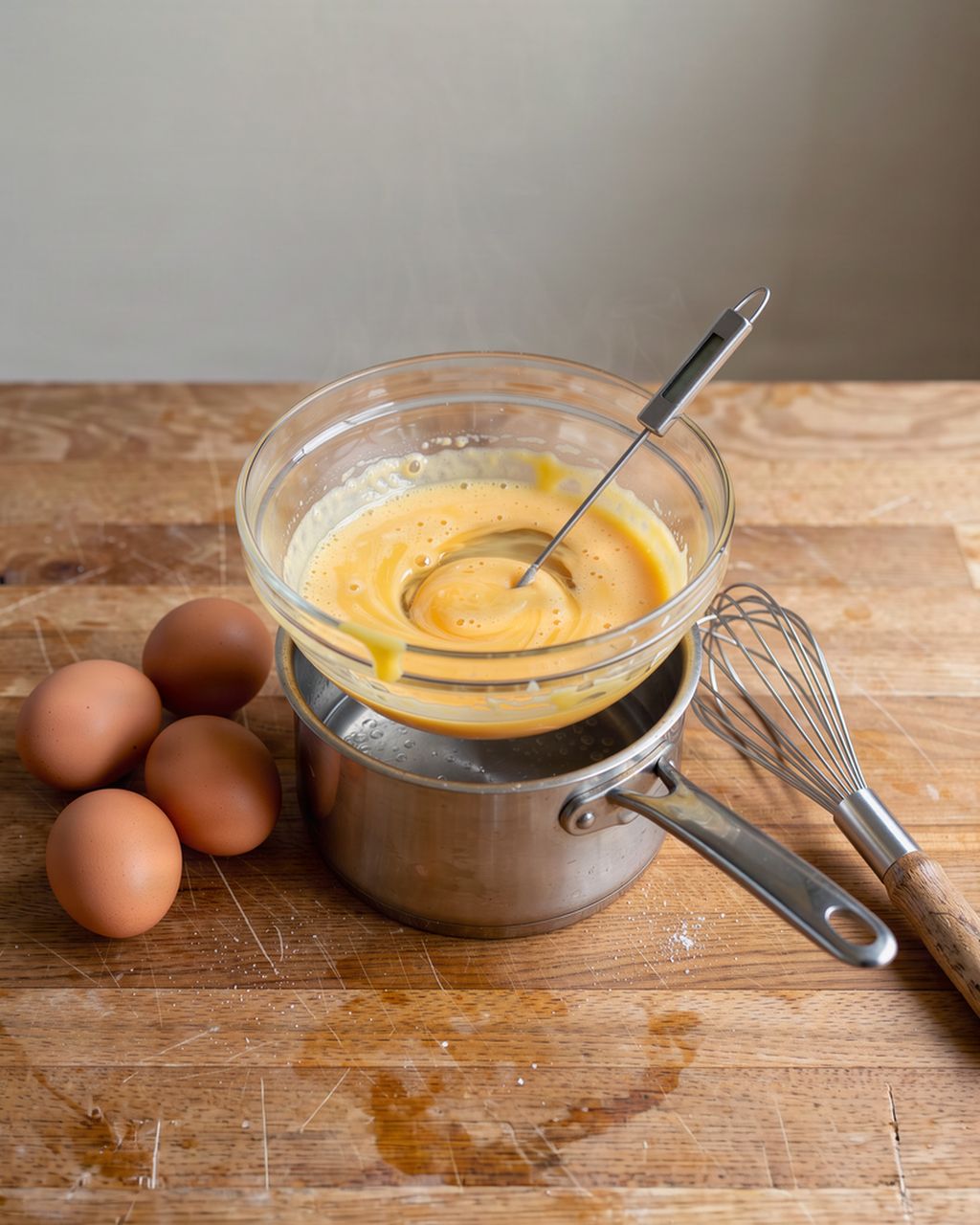
Chocolate can also seize without any flavoring if you overheat it. White chocolate is the most sensitive, so keep it below 45 °C (113 °F). You'll find a step-by-step method in our article on how to melt white chocolate without it seizing.
You can flavor white chocolate with dry powders, oil-based flavorings, fat-based pastes, fruit pastes containing water, or water- or alcohol-based flavorings and liqueurs. Only the first three belong in plain chocolate:
Dry powders (freeze-dried fruit, matcha, instant coffee, spices, vanilla seeds): they work in plain chocolate and in ganache, but they thicken the chocolate.
Oil-based flavorings (fat-soluble flavorings, food-grade essential oils): they work in plain chocolate, and a few drops are enough. They don't change the consistency.
Fat-based flavor pastes (made with a base of chocolate or vegetable fat): they work in plain chocolate in a small dose and in ganache.
Flavor pastes with fruit and water: only for ganache, fillings and batters. They don't belong in plain chocolate.
Water- or alcohol-based flavorings, juices, liqueurs: only for ganache with enough cream. Never in plain chocolate.
Whatever you have at home, read the ingredients first. If sugar, fruit, glucose syrup or water come first, it's a paste for ganache. If white chocolate, cocoa butter or oil is listed, it can handle plain chocolate too.
Dry powders are the safest route to bold flavor in plain white chocolate because they add no water. They do come at a cost: every gram of dry matter soaks up some cocoa butter, so the chocolate thickens and flows less easily.
Approximate amounts per 100 g of white chocolate:
Freeze-dried raspberries, strawberries, mango, passion fruit: 5–10 g, finely ground and sifted. Tart fruit works best with white chocolate because it balances the sweetness.
Matcha: 2–4 g, always sifted. Any more turns bitter and the color shifts toward olive.
Instant coffee or espresso powder: 1–3 g, crushed to a dust. Coarse granules won't dissolve and will stay in the chocolate as dark specks.
Cinnamon, cardamom, gingerbread spice: 0.5–1.5 g.
Vanilla seeds: from ½ a pod. Flaky salt: a pinch, which lifts the flavor without tasting salty.
Lemon or orange zest: freshly grated from 1 fruit. It contains a little moisture, but in a small amount the chocolate can handle it. Zest left to dry overnight is safer.
Stir the powder into chocolate melted to 40–45 °C (104–113 °F), and only then temper it or let it cool. If it thickens so much after adding more than 8–10 g of powder that you can't pour it, mix in 5–10 g of melted cocoa butter.
An oil-based flavoring is the most powerful way to flavor plain white chocolate. It blends with the cocoa butter without any risk of seizing and doesn't change the consistency. Add it by the drop: American sources give ¼–½ teaspoon (about 1.2–2.5 ml) per 450 g of chocolate, which works out to roughly 0.3–0.55 ml, or about 5–11 drops, per 100 g. With strong essential oils (peppermint, orange), start with a single drop and taste.
Watch out for the ordinary supermarket flavorings in small bottles. They are mostly water- or alcohol-based and don't belong in plain chocolate, even though they smell the same. On the label, look for "fat-soluble" or "oil-based flavoring"; on imported bottles it usually says "oil-based".
We don't carry these flavorings yet, but they're worth tracking down for mint bark or lemon pralines.
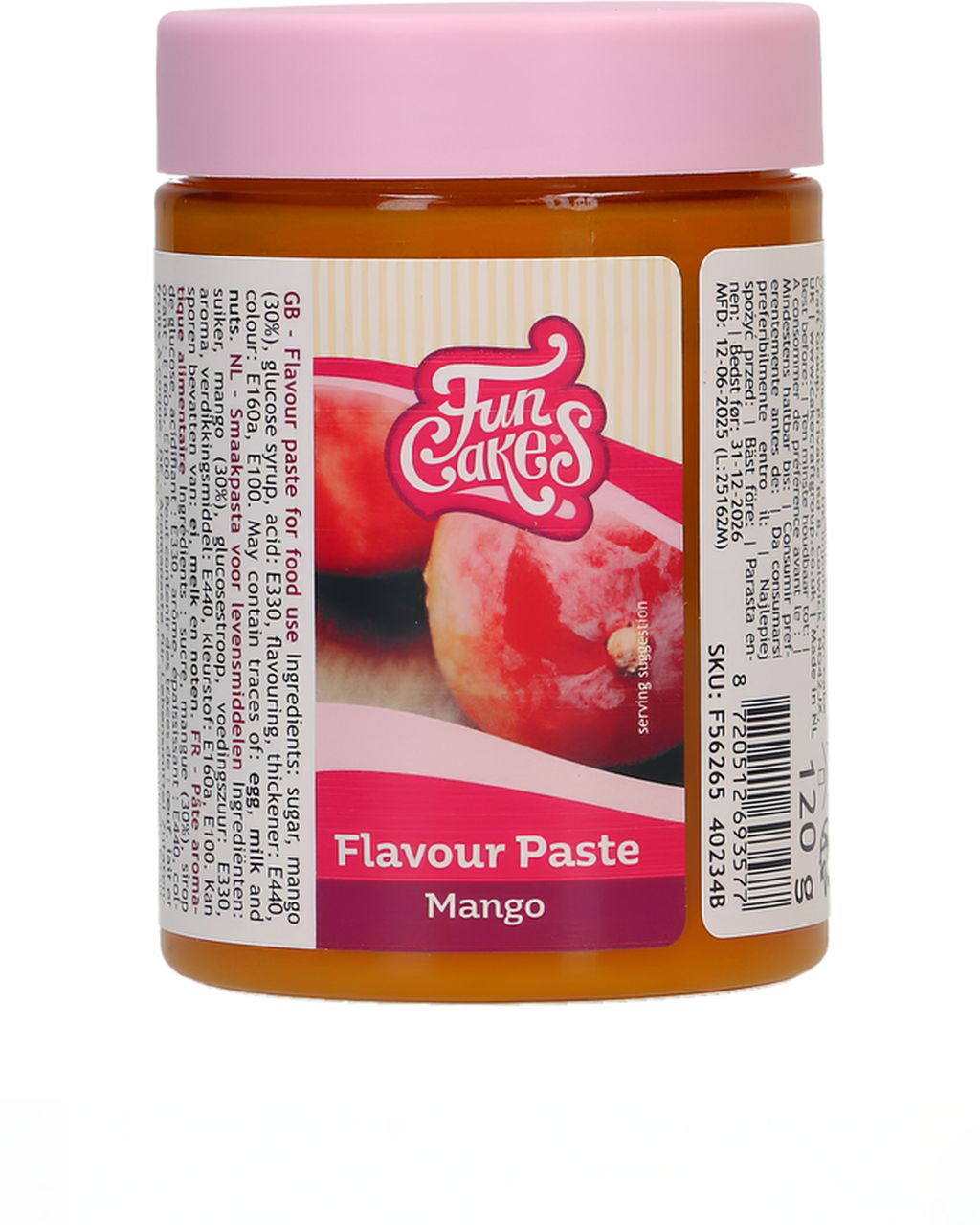
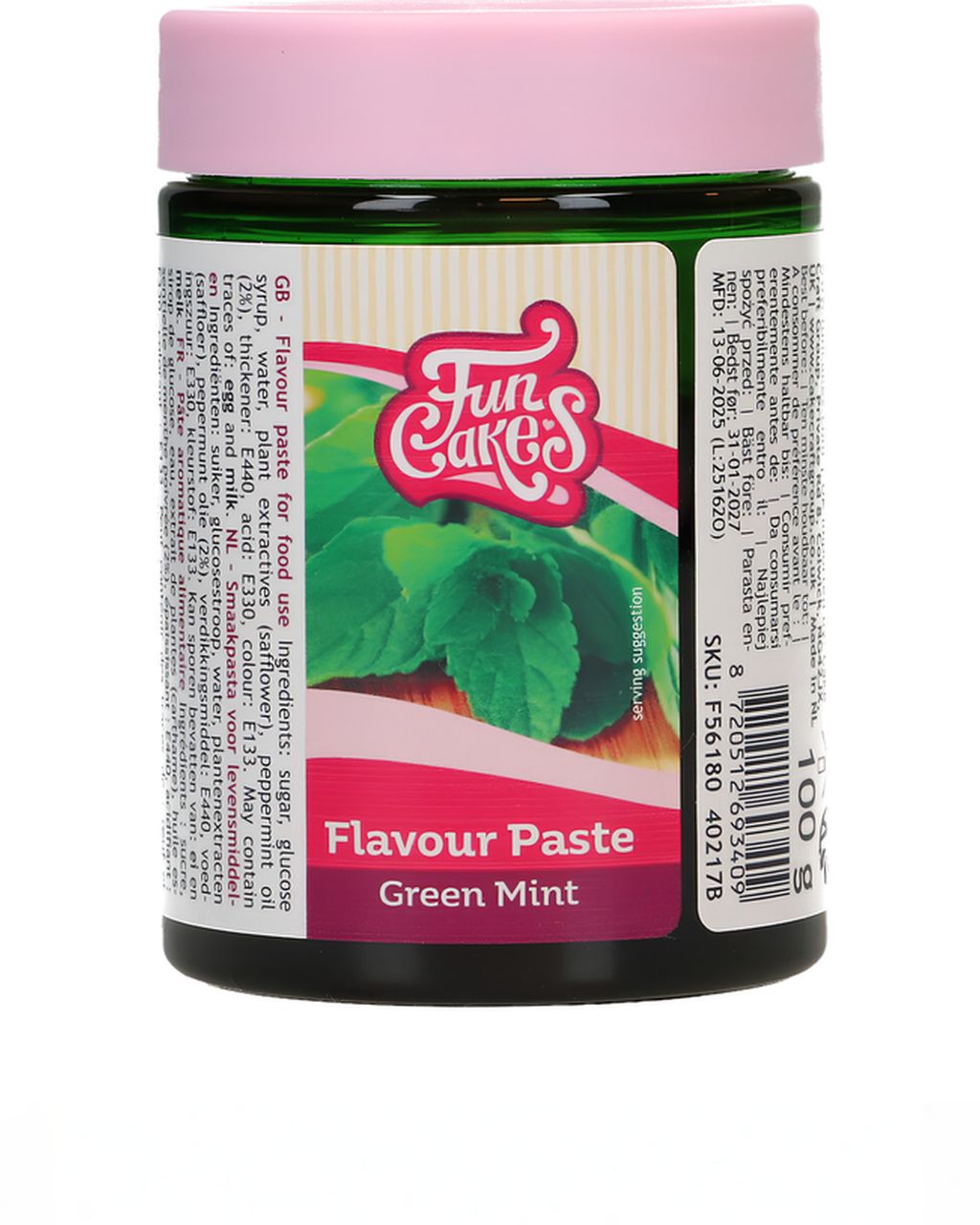
FunCakes flavor pastes give you full fruit flavor without cooking a purée, but pastes made with fruit contain water, so add them to ganache or a filling, not to plain melted chocolate. For example, according to the manufacturer the mango paste contains 30% mango, sugar and glucose syrup, while the melon paste contains concentrate and water. In plain chocolate they would make it seize, but in ganache, where there's cream, they stir in smoothly.
The manufacturer recommends 30 g of paste per 500 g of mixture, which is about 6%. For a fruity white chocolate ganache, start like this:
300 g white chocolate (e.g. Callebaut W2)
100 g heavy cream, 33% fat
20–25 g flavor paste (mango, melon, mint) to begin with
Bring the cream to a boil, pour it over the chocolate, leave it for 1 minute and stir from the center outward. Stir the paste into the finished, lukewarm ganache (around 35 °C / 95 °F), then taste and add more if needed. A 3:1 ratio gives a ganache for filling macarons and pralines. For a whipped filling, use more cream, roughly 1:1.
There are also fat-based FunCakes pastes, for example in white chocolate or lemon meringue flavors. They're made with a base of chocolate and oil, so they can go into plain chocolate too. Before adding any paste to chocolate for pralines, always check the ingredients on the packaging.
You can try mango with white chocolate in the recipe for white chocolate wasp nests with mango and passion fruit.
The most delicate flavor gets into ganache through the cream: infuse herbs, tea or coffee in it, strain it, and only then pour it over the chocolate. There's no risk of seizing here, because there's enough liquid for a ganache – the cream carries the flavor, and you'd be adding it to the ganache anyway.
Earl Grey, jasmine, lavender: 5–8 g per 100 ml of cream, 10–15 minutes under a lid. Lavender turns bitter faster, so stick to the lower end.
Whole coffee beans: 20 g coarsely crushed per 100 ml, 20 minutes, or overnight in the fridge.
Cinnamon stick, star anise, vanilla pod: 1 cinnamon stick, 1–2 star anise or ½ a pod per 100 ml of cream, 15–30 minutes.
After straining, top the cream back up to its original weight, because whatever you infused soaks up some of it and the ratio would be off. You'll find a coffee version with the exact grams in the recipe for white chocolate and coffee filling for macarons.
Alcohol (liqueur, rum) also belongs only in ganache, and only once it's lukewarm. Keep to about 10% of the ganache's weight, as more will thin it out.
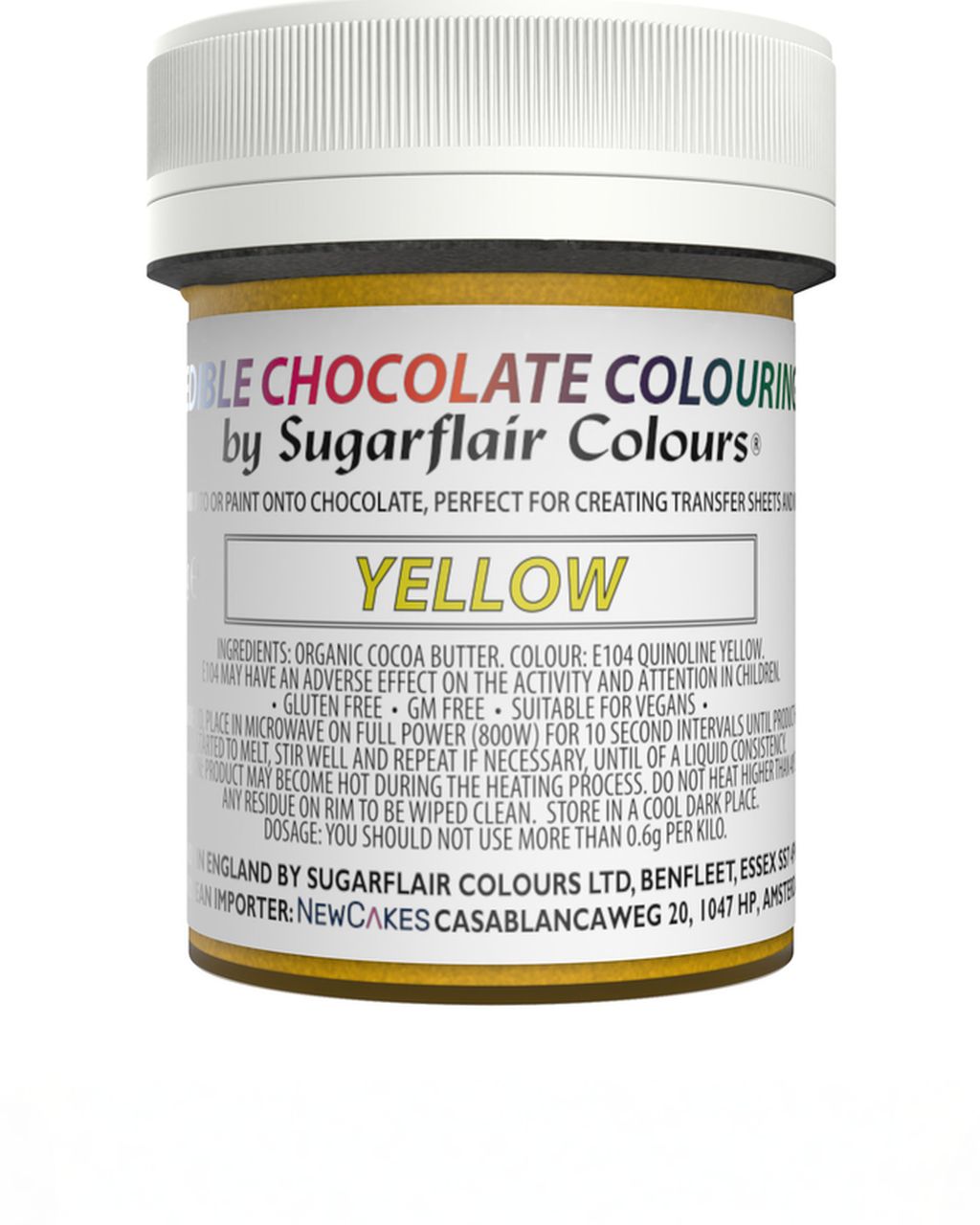
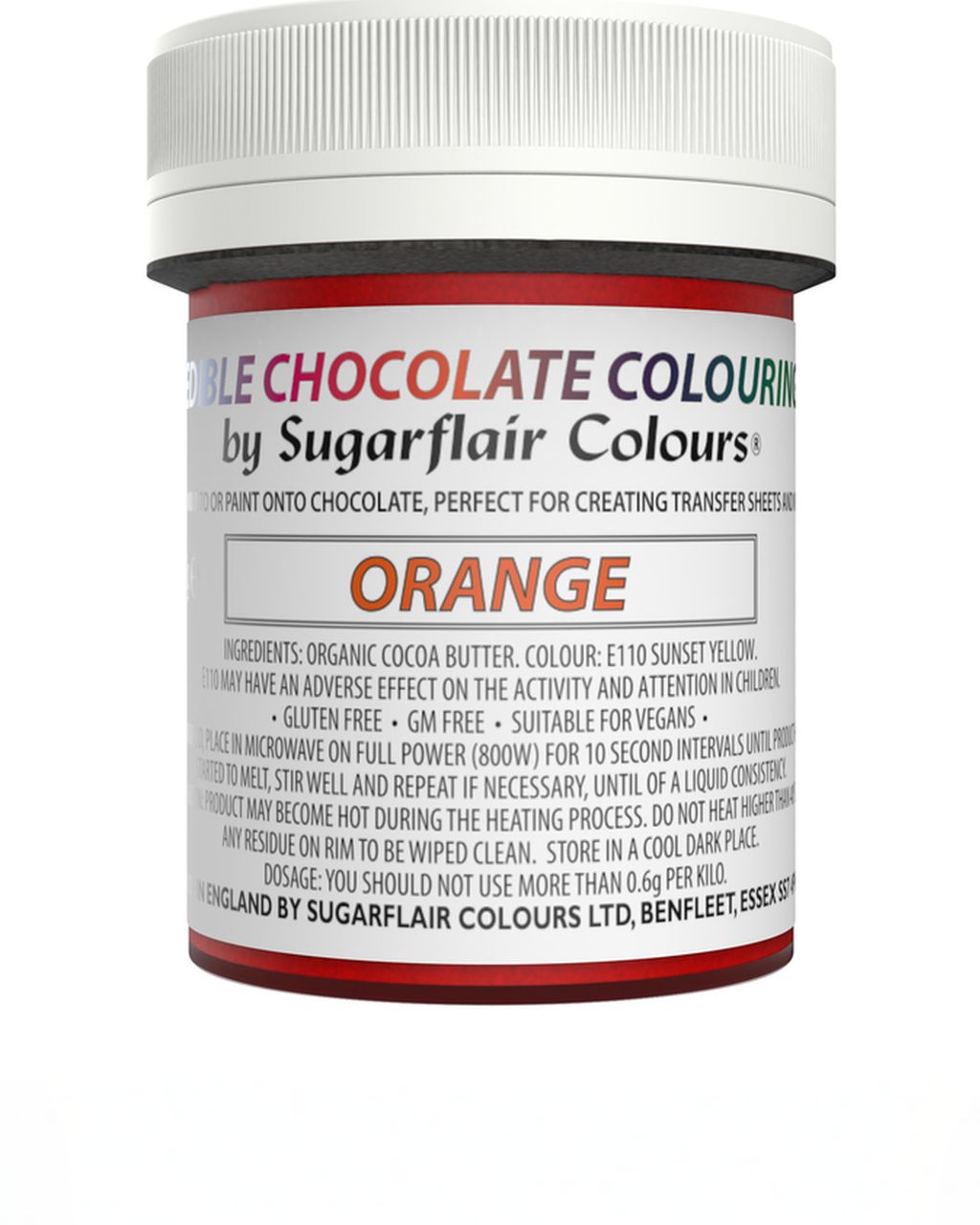
Color plain white chocolate only with oil-based colors; gel colors contain water and will make it seize. It's the same rule as for flavoring. Color won't add any flavor, but the eye reads it first, so it pays to tint a mango ganache yellow and a raspberry one pink.
Sugarflair oil-based chocolate colors have a fat base, so you can add them to plain chocolate for pralines and lollipops. Add them in knife-tip amounts and stir. A small amount of gel color only works in ganache, where there's already plenty of cream. You'll find the full comparison in our article on how to color white chocolate: oil-based or gel color.
For flavoring, a good-quality white chocolate with a high cocoa butter content works best, because it flows more easily and handles powders and pastes without thickening unnecessarily. Ordinary supermarket bar white chocolate is thicker and sweeter. Coatings made with vegetable fat taste flat and seem artificial once flavored.
Callebaut W2 is an all-purpose white chocolate with a high cocoa butter content and a milky, vanilla flavor that few ingredients can overpower, so fruit and matcha stay clearly recognizable in it. It's sold as callets, so it's easy to weigh out and melts evenly. How it differs from 811, 823 and ruby RB2 is covered in the article Callebaut 811, 823, W2 and RB2: which chocolate for what. You'll find our whole selection in the white chocolate for cooking and baking category.
Want flavor without any additions? Try caramelized (blond) white chocolate. Spread it on a baking sheet and bake at 120 °C (250 °F) for 30–60 minutes, stirring every 10 minutes. It takes on notes of dulce de leche and salted caramel. White chocolate with a higher cocoa butter content behaves most predictably for this.
You can't turn seized white chocolate back into pralines, but don't throw it away: add more liquid and it becomes ganache. Here's how:
Warm a little cream (or milk) to 40–50 °C (104–122 °F).
Add it to the seized mass a spoonful at a time, stirring vigorously, ideally with an immersion blender.
Keep adding until the mass comes together into a smooth, glossy ganache – usually at about a quarter of the chocolate's weight.
Then use it in a filling, to fill macarons, or as a glaze. If the chocolate seized from overheating rather than water, you usually can't save it. Scorched milk solids smell burnt and stay grainy.
Not to plain melted white chocolate, because regular vanilla extract is made with alcohol and water and can make the chocolate seize. Use the seeds from a vanilla pod or vanilla powder instead. In ganache you can add extract freely, as the cream can absorb it.
Not plain white chocolate – purée is mostly water and will make the chocolate seize. Purée belongs in ganache, where it can replace part of the cream. For pralines and bars, use freeze-dried powder made from the same fruit instead of purée.
White chocolate ganache flavored with fruit paste keeps in an airtight container in the fridge for about 3–5 days. The freshness of the cream is what counts. Frozen, it keeps for 2–3 months. Thaw it slowly in the fridge and give it a quick stir before using.
Flavored white chocolate most often stays soft after setting because a little liquid (paste, juice, liqueur) got into it, or because it wasn't tempered. Even a small amount of water disrupts the crystallization of the cocoa butter. For bars and bark, use only powders and oil-based flavorings, and temper the chocolate after flavoring it.
Flavor white chocolate for chocolate bombs and lollipops only with dry powders, oil-based flavorings and oil-based colors. The bomb shell and the lollipop are pure chocolate, so fruit pastes containing water don't belong in them.
One recipe worth heating the oven for, one tip, and one deal from the shop. Nothing else.