
Oatmeal porridge with fruit, cashews and chia seeds
Gluten Allergy: Symptoms, Diagnosis and Living Gluten-Free

Updated Aug 30, 2026
"Gluten allergy" is an umbrella term that actually covers three distinct diagnoses: wheat allergy, coeliac disease, and non-coeliac gluten sensitivity. They differ in mechanism, in the tests used to confirm them, and in how strictly you need to police gluten — mix them up and you end up solving the wrong problem. Here's how they differ, what actually confirms a diagnosis, how to read labels under EU rules, and what you can realistically cook.
"Gluten allergy" actually covers three different conditions that get mixed up even by professionals:
Wheat allergy — an immediate IgE antibody reaction to wheat proteins. It sets in within minutes to two hours and can affect both skin and breathing.
Coeliac disease — an autoimmune condition in which gluten triggers damage to the lining of the small intestine. The reaction is slow and can be measured in blood tests and under a microscope.
Non-coeliac gluten sensitivity (NCGS), commonly called "gluten intolerance" — symptoms triggered by gluten with no antibodies and no gut damage involved. It's a diagnosis of exclusion, with no blood marker to confirm it yet.
This isn't just a technicality. An allergy is a fast immune reaction, coeliac disease is lifelong gut damage, and NCGS is a matter of individual tolerance. Each condition is confirmed by different tests — and only a doctor can put the picture together correctly.
Wheat allergy is a classic IgE-mediated food allergy: antibodies bind to wheat proteins and trigger a release of histamine. That's why it strikes fast — typically within minutes to two hours of eating.
It's rarer than coeliac disease and mostly affects children, who according to studies often grow out of it. The main triggers tend to be storage proteins in the grain, especially omega-5 gliadin and so-called lipid transfer protein (LTP).
An important nuance: the reaction is to wheat proteins, not to "gluten" as a chemical substance. That's why testing targets wheat, not gluten. We've covered this in more depth in our article on wheat allergy.
Coeliac disease isn't an allergy — it's an autoimmune condition in which gluten triggers the immune system to attack the lining of the small intestine. The gut's villi flatten out and nutrient absorption suffers, which explains anaemia, fatigue, or weight loss even without obvious digestive symptoms.
Czech medical literature puts the prevalence at roughly 1 in 200 to 1 in 250, meaning around 40,000–50,000 people; across Europe, estimates hover around one percent of the population. A large share of cases go undiagnosed, since the symptoms don't have to be digestive at all.
Current clinical guidance calls for lifelong removal of gluten from the diet in coeliac disease; the regimen is always set and monitored by a gastroenterologist. Unlike with NCGS, this isn't about "how much can I tolerate" — damage can occur even without symptoms.
NCGS means gluten gives you trouble, but tests for coeliac disease and wheat allergy both come back negative and the gut lining looks normal. There's no biomarker for it — it's only diagnosed once the other two conditions have been ruled out.
Some research suggests gluten itself may not always be the culprit — other components of wheat could be responsible, mainly fructans (fermentable FODMAP carbohydrates) and amylase-trypsin inhibitors (ATIs). That would help explain why NCGS overlaps so much with irritable bowel syndrome.
Practical takeaway: tolerance tends to be individual and sometimes temporary — work out your own threshold with a doctor or dietitian.
Wheat allergy causes hives, swelling, and breathing trouble within two hours of eating; coeliac disease brings bloating, anaemia, and fatigue over weeks to years; NCGS causes bloating and brain fog within hours to days. Doctors tell them apart largely by timing and the type of reaction.
Wheat allergy shows up within minutes to two hours of eating, affecting the skin, mouth, digestion, and breathing:
hives, itching, swelling of the lips, tongue, or eyelids
itching and burning in the mouth and throat
stomach cramps, vomiting, diarrhoea
runny nose, coughing, wheezing, chest tightness
in rare cases, anaphylaxis — a drop in blood pressure, dizziness, breathlessness
Coeliac disease develops slowly, over weeks to years, and often shows up in ways that have nothing to do with digestion:
bloating, diarrhoea or, alternatively, constipation, abdominal pain
iron-deficiency anaemia that doesn't respond to supplements
fatigue that doesn't match your sleep or activity levels
weight loss, or slowed growth in children
an itchy, blistering rash on the elbows, knees, and buttocks (dermatitis herpetiformis)
thinning bones, recurring mouth ulcers, joint pain
NCGS shows up within hours to days and produces no lab findings — typically bloating, brain fog, fatigue, and headaches.
None of these symptoms is specific to gluten — plenty of other conditions look the same. You can't diagnose yourself, and definitely not from a photo online. What you can do: keep a food-and-symptom diary with timestamps for a week or two. That gives your doctor far more to work with than "bread makes me feel off."
WDEIA is wheat-dependent, exercise-induced anaphylaxis — wheat alone doesn't cause symptoms; the reaction only happens in combination with another trigger, most often physical exertion within a few hours of eating.
The mechanism is well documented: wheat alone passes without issue, but if intense exercise, alcohol, or certain painkillers follow within a few hours of eating, allergen absorption increases and the reaction can be severe. Studies show that around 80% of WDEIA patients have IgE antibodies against omega-5 gliadin, with the rest reacting to high-molecular-weight glutenin.
Why we're flagging this: this pattern is easy to miss. If someone links their symptoms only to running and not to food, wheat never gets suspected. If your reactions come irregularly and always around exercise, tell your allergist — there's a specific test for IgE against omega-5 gliadin for exactly this situation.
Each of the three conditions is diagnosed differently: wheat allergy is confirmed with specific IgE and skin-prick tests, coeliac disease with blood serology and, in adults, biopsy, and NCGS only by ruling out the other two. A doctor needs to lead this process — self-diagnosis simply doesn't work here.
Coeliac disease. The core test measures tissue transglutaminase IgA antibodies (tTG-IgA). Reviews put its sensitivity at roughly 91–98% and specificity at 95–98%. Total IgA must always be measured alongside it — selective IgA deficiency is fairly common among coeliacs and can cause a false negative on its own. Endomysial antibodies and deamidated gliadin peptide (DGP) antibodies are used as supplementary tests.
Biopsy. In adults with a positive serology result, a small-intestine sample is taken via gastroscopy; findings under the microscope confirm the diagnosis. In children, according to 2020 ESPGHAN guidelines, biopsy can be skipped if tTG-IgA is at least ten times the upper normal limit and a second sample also tests positive for endomysial antibodies (EMA). The previous requirement that clinical symptoms must also be present was dropped in the 2020 update — the approach now applies even to children without symptoms. A doctor always makes this call.
Wheat allergy. Confirmed via specific IgE blood tests and skin-prick tests. Watch out for a common mix-up: a skin-prick test has no diagnostic value for coeliac disease — they're two entirely different parts of the immune system.
Elimination and reintroduction. Mainly used when NCGS is suspected, and only as a last step, under supervision from a doctor or dietitian — otherwise you risk an unnecessarily restricted diet and a wrong conclusion.
With wheat allergy, lab tests often turn up antibodies against other grains too — but a positive test doesn't automatically mean you'll react to them on your plate. This is the most common reason people end up on diets that are stricter than they need to be.
What the published data shows:
Patients with wheat allergy show extensive cross-reactivity in vitro against barley, rye, and oats, but only minor cross-reactivity against related grass pollens.
Conversely, people allergic to grass pollen are often cross-sensitised to grain and to grasses — which can produce a false positive result for wheat.
In patients with augmentation-factor-dependent wheat allergy (WALDA, a variant closely related to WDEIA), a study in the Annals of Allergy, Asthma & Immunology (2024) found a positive skin-prick test to spelt in 90% of them, while barley was tolerated even alongside cofactors. This finding cannot be extended to wheat allergy in general.
Cross-reactions are mainly driven by two protein groups: lipid transfer protein (LTP) and omega-5 gliadin.
Practical takeaway: spelt, kamut, and emmer wheat are all botanical varieties of wheat, so they're not automatically safe if you have a wheat allergy. For barley, rye, and oats, whether to avoid them comes down to your actual clinical reaction, not just a positive test result — that's a question for your allergist.
Across the EU, a food can only be labelled "gluten-free" if it contains no more than 20 mg/kg (20 ppm) of gluten; the limit is set by Commission Implementing Regulation (EU) No 828/2014. So it's not a marketing claim — it's a legally defined threshold.
"Gluten-free" — no more than 20 mg/kg gluten (20 ppm) in the food as sold.
"Very low gluten" — no more than 100 mg/kg. This label is reserved for products made from processed wheat, rye, barley, or oats where the gluten content has been reduced. For coeliacs, this is not the same as gluten-free.
Oats in a product labelled gluten-free must be specially grown, harvested, and processed to avoid contamination with wheat, rye, and barley, and must not themselves exceed 20 mg/kg.
The crossed-grain symbol is an additional licensed certification, usually backed by production checks. It's a handy shortcut, but the legal requirement is the wording, not the symbol.
What to watch out for in loose and processed foods: soy sauce (traditionally brewed with wheat), seitan (which is pure gluten), instant stock cubes and broths, spice blends, thickened sauces, cold cuts and sausages, mustard, and fillers in cheaper meat products.
You don't need to worry about maltodextrin or glucose syrup on a gluten-free diet, even though they're made from wheat. This is one of the most widespread pieces of misinformation in gluten-free guides, and it's led plenty of people to cut out foods they didn't need to.
The reason is written directly into the law: Regulation (EU) No 1169/2011 lists wheat-based glucose syrups (including dextrose) and wheat maltodextrins in Annex II as ingredients exempt from mandatory allergen labelling, because the hydrolysis used to produce them breaks the protein down completely. The starch industry has also committed to keeping these products under 20 ppm gluten in dry matter.
Where caution is still warranted: modified starch is a different matter — if it comes from wheat and isn't one of the exempt derivatives mentioned above, its wheat origin must be stated on the label. And if you have a wheat allergy (not coeliac disease), discuss these ingredients with your allergist — labelling rules are written primarily with coeliac disease in mind.
Controlled studies show that shared crockery and utensils are a much smaller risk than commonly claimed — but shared frying oil is a genuine one. It's worth knowing where strictness actually matters and where it just makes life harder for the whole household for no reason.
Testing hasn't shown a shared toaster to be a significant gluten source (transfer was minimal even with visibly accumulated crumbs), nor has a shared bread knife, wooden spoon, ladle, or colander, when used and washed normally (Weisbrod et al., 2020).
These situations, on the other hand, carry a measurable risk:
shared deep fryer — when breaded foods are fried in the same oil, a study of shared fryers (Thompson et al., Frontiers in Nutrition, 2021) found detectable gluten in 45% of chip portions tested (9 of 20, ≥5 mg/kg), and 25% of portions (5 of 20) exceeded 20 mg/kg. This was a small pilot study of just twenty portions, so treat the numbers as a warning sign rather than a precise estimate.
flour dust in the air — fine wheat flour settles on work surfaces and can linger in a kitchen for tens of minutes after kneading
shared butter, spreads, and jam, where a knife with crumbs on it goes back in
crumbs in graters, mills, and ovens from a shared baking tray
The practical minimum: for gluten-free cooking, cut on a clean surface before anyone works with flour, keep your own tub of butter, and don't fry in oil that's previously had breaded meat in it. You don't need to overhaul the rest of the kitchen. With wheat allergy, the reaction threshold is individual — set your own rules with your allergist.
Naturally gluten-free options include rice, corn, buckwheat, quinoa, millet, amaranth, teff, sorghum, pulses, potatoes, sweet potatoes, cassava, nuts, and seeds, plus of course meat, fish, eggs, dairy, and unprocessed fruit and vegetables.
Two tips that make the difference between just "getting by" and actually cooking well:
Don't swap wheat flour for a single other flour. Gluten-free baking relies on blends — rice or corn flour gives structure, starch (tapioca, potato) gives softness, almond or buckwheat flour gives flavour. No single flour will make bread on its own.
Top up your fibre. Gluten-free products made from refined starches tend to have far less fibre than wholegrain wheat. Pulses, buckwheat, quinoa, and seeds help make up the difference.
With every recipe, check the ingredients carefully — grains themselves are rarely the trap; stocks, soy sauce, mustard, and spice blends usually are.
The easiest route is porridge and flatbreads made from naturally gluten-free flours — chickpea and lentil flour hold their shape without gluten because the pulse protein binds them.
Oatmeal porridge with fruit, cashews and chia seeds
Porridge with fruit, cashews, and chia — if you have coeliac disease, use only certified gluten-free oats

Cocoa chickpea flour drop pancakes
Cocoa pancakes made with chickpea flour: a gluten-free breakfast with no substitute blends needed
The least effort goes into dishes that never contained gluten in the first place — pulses, polenta made from cornmeal, and fish with roasted vegetables. No substitutes, no label-reading required.
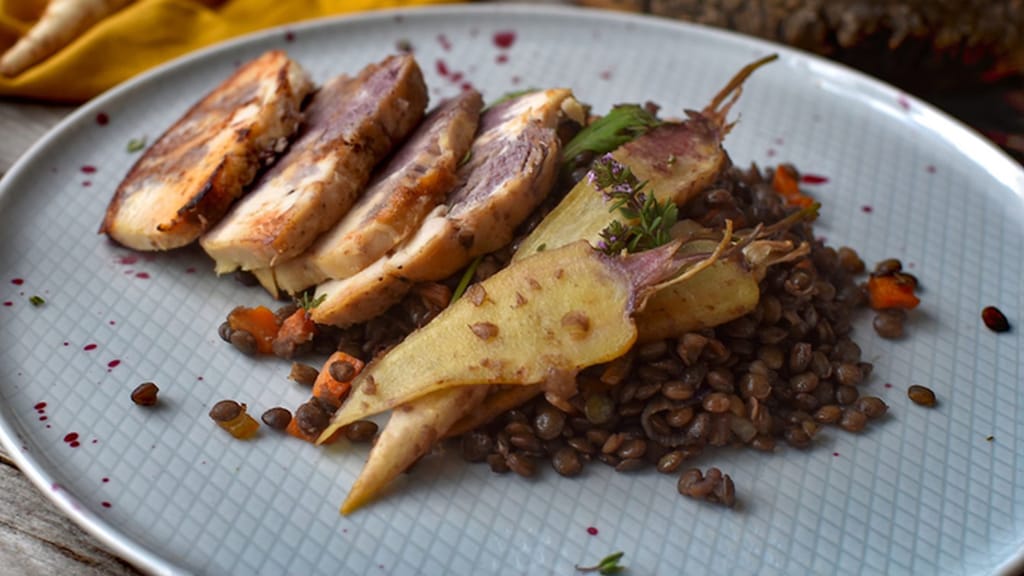
Lentil salad with wine reduction (and chicken)
Lentil salad with wine reduction and chicken — a filling gluten-free lunch

Creamy polenta with roasted tomatoes and onion chutney
Polenta with roasted tomatoes: cornmeal is naturally gluten-free
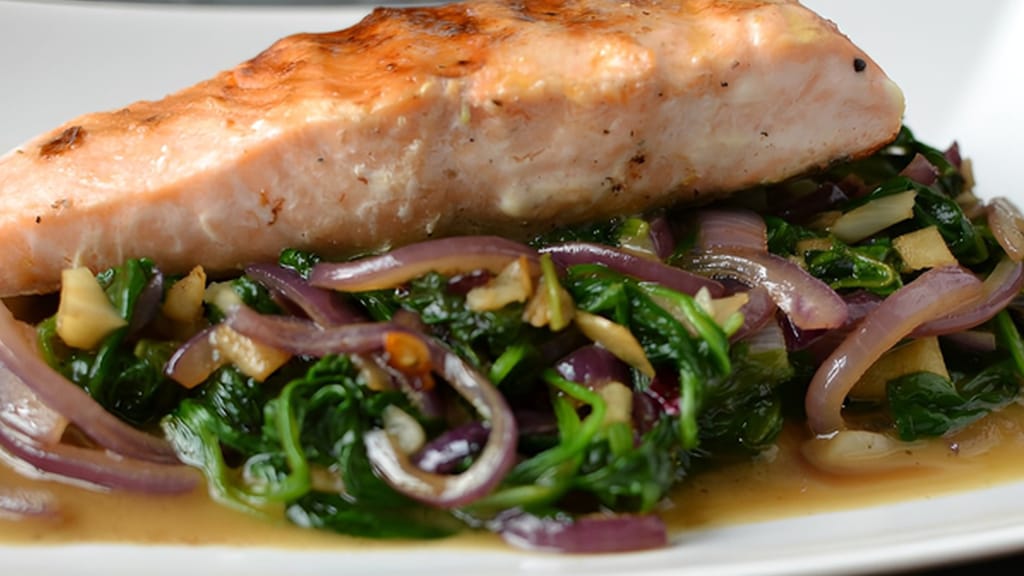
Smoky salmon with quick wilted spinach
Smoked salmon with quick-cooked spinach — a flour- and breadcrumb-free dinner
You can replace wheat bread, pizza, and sweet treats with a blend of gluten-free flours and starches — homemade versions turn out cheaper and softer than store-bought gluten-free products, and you get to decide your own ratio of flours, starches, and seeds. This is where baking your own really pays off.

Healthy quinoa pizza
Quinoa pizza: a gluten-free base that actually holds together

Lentil flour flatbread crackers
Lentil-flour flatbreads as a gluten-free bread substitute for soup

Gluten-free beetroot and walnut brownies
Gluten-free beetroot and walnut brownies — soft and fudgy even without wheat flour
Oats don't naturally contain gluten, but standard oats are often contaminated with wheat during shared harvesting, transport, and milling — so if you have coeliac disease, stick to oats specifically labelled gluten-free.
There's a second layer to the issue: the oat protein avenin. Reviews find that the vast majority of coeliacs tolerate pure, uncontaminated oats just fine, but a minority — estimated at under 10% — react to them too. Health Canada has recommended capping uncontaminated oat intake at 50–70 g a day for adults and 20–25 g for children.
So talk to your doctor before reintroducing oats after a coeliac diagnosis, so any reaction can be properly distinguished from other causes.
Most children outgrow wheat allergy, usually by school age. In the Keet et al. (2009) cohort, around 29% of children developed tolerance by age four, 56% by age eight, and 65% by age twelve, with a median around 6.5 years. Children who had anaphylaxis before age three, or high IgE levels against wheat or omega-5 gliadin, tend to have a worse outlook. Whether and how to reintroduce wheat is always decided by an allergist — never try this on your own at home.
In most people, tTG-IgA antibodies normalise within roughly 9 to 12 months of starting a strict gluten-free diet, though for some it can take two years or longer — the higher the levels at diagnosis, the slower they tend to fall. Symptoms usually improve much sooner, often within a few weeks — so the antibody decline tracks gut healing, not how you feel. Follow-up bloodwork is scheduled by a gastroenterologist, typically after six months and then roughly once a year. If levels aren't dropping, it's usually down to a hidden source of gluten in the diet, not a failure of the diet itself.
For beer brewed from barley malt and then "de-glutenised," current testing can't reliably confirm safety. The standard R5 ELISA method detects a specific protein fragment that breaks down during hydrolysis — so the beer can test below 20 ppm even though more sensitive analysis would still find residual barley peptides. The safe bet is beer brewed from naturally gluten-free ingredients, such as sorghum, rice, or buckwheat.
For people without coeliac disease, wheat allergy, or NCGS, there's no proven benefit to going gluten-free. In fact, commercial gluten-free substitutes are often based on refined starches, so they tend to have less fibre and sometimes more fat and sugar than regular wholegrain bread. If wheat gives you trouble, it makes far more sense to get tested before cutting it out — once you've already removed gluten, the tests may no longer be reliable.
Follow the plan your doctor gave you — for wheat allergy that typically means an emergency plan including a prescribed adrenaline auto-injector; for coeliac disease there's no emergency intervention as such. With coeliac disease, one slip won't undo your diet; symptoms usually settle within a few days and you simply carry on as normal. But keep a note of repeated slip-ups and discuss them with your doctor, since they often point to a hidden source of gluten in your diet. Any breathing difficulty, throat swelling, or collapse means calling emergency services immediately.
One recipe worth heating the oven for, one tip, and one deal from the shop. Nothing else.