Homemade gingerbread spice mix
Gingerbread Cupcakes with Frosting: Spices, Sponge & Christmas Decorating
Updated Oct 15, 2026
Gingerbread cupcakes come down to three things: plenty of spice (2–3 teaspoons, so roughly 4–7 g for 12 cupcakes), a dark liquid sweetener that keeps the sponge moist, and a frosting that tastes right with gingerbread while still holding its shape. We'll go through all three, plus Christmas decorating ideas - from a piped frosting swirl to red glitter on the peaks.
Three things make a gingerbread cupcake taste like gingerbread: gingerbread spice, a dark liquid sweetener (honey or molasses), and dark sugar. Without the spice, you've just got a plain cupcake with honey; without the sweetener, you've got a spiced muffin missing that deep, slightly caramel gingerbread flavour.
Spice gives it the aroma: mainly cinnamon and ginger, rounded out with cloves, nutmeg and allspice.
Honey or molasses adds colour and depth, and because it holds onto water, it keeps the sponge moist for longer.
Dark sugar (muscovado or cane sugar) brings a caramel note and extra moisture.
Optionally, add 1 teaspoon of cocoa: it darkens the gingerbread and rounds out the flavour, without making it taste like chocolate.
Seasonal baking plans, tested recipes and kitchen tricks that save you time. Unsubscribe in one click.
For 12 cupcakes (roughly 180–200 g / 6.5–7 oz flour), use 2–3 teaspoons of gingerbread spice, around 4–7 g. With 2 teaspoons the flavour is mild and kid-friendly; with 3 it's bold, the way you'd expect gingerbread to taste. Any more and the spice starts turning bitter, cloves especially.
If you're mixing your own blend, this ratio works well:
cinnamon 2 parts
ginger 1 part
cloves, nutmeg, allspice ½ part each
a pinch of star anise or cardamom, if you like it
You can mix up a batch following our homemade gingerbread spice recipe. For what each spice does and where it belongs, see our guide to Christmas spices, and if you're missing something at home, check out what to use instead of gingerbread spice.
Trick for a stronger aroma: stir the spice into warm melted butter and let it sit for 5 minutes. The aromatic compounds in spices are fat-soluble, so they develop much better in the batter this way than if you just stir them in with the flour.
Cinnamon: Ceylon or cassia? Cheap everyday cinnamon is usually cassia, which contains a lot of coumarin. According to Germany's BfR institute, it averages around 3 g of coumarin per kilogram, while Ceylon cinnamon contains only a trace amount. Per the BfR, a 60 kg (132 lb) adult reaches the tolerable daily intake with around 2 g of cassia, while a small child (15 kg / 33 lb) hits it with just 0.5 g. For a single batch of cupcakes that's a distant limit, but if you're baking every weekend in December, reach for Ceylon instead.
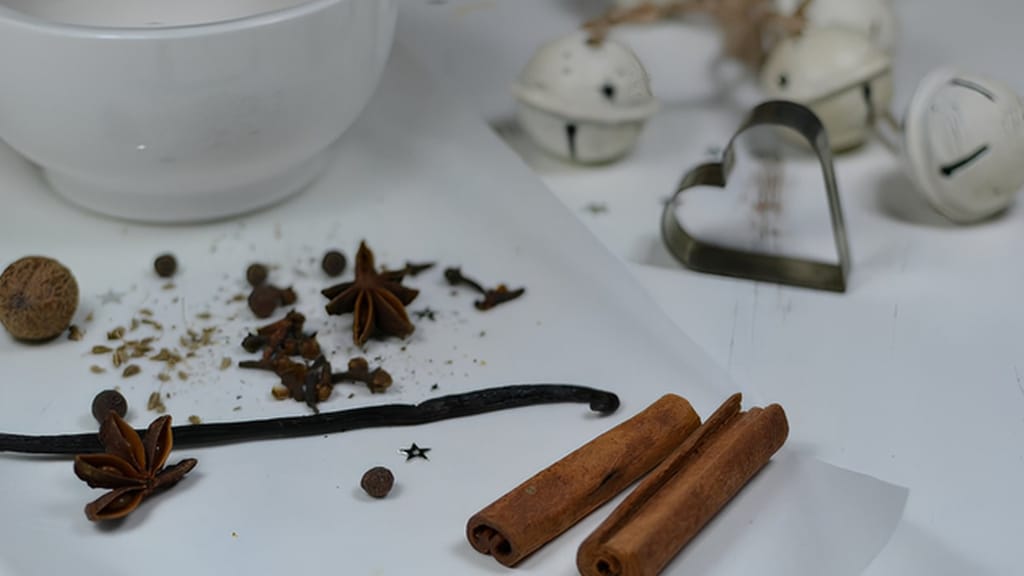
Homemade gingerbread spice mix
Homemade gingerbread spice for gingerbread cupcakes
Moistness comes down to enough liquid sweetener, oil or butter, and short baking time: fill the cases two-thirds full, bake at 170–175°C (340–350°F) for about 18–22 minutes, and take them out as soon as a skewer inserted into the centre comes out without raw batter on it (a few moist crumbs are fine).
Honey vs. molasses: honey is milder and sweeter, molasses darker, bittersweet and more "gingerbread." Feel free to mix them half and half.
Oil vs. butter: with oil the sponge stays soft even straight from the fridge; butter gives better flavour, but the cold sponge firms up. A good compromise is half butter, half oil.
Don't overmix: stir in the flour just until the dry patches disappear. Mixing too long develops gluten and turns the gingerbread into a rubbery lump.
Honey browns faster: batter with honey and molasses colours before it's fully baked through. Don't bake above 175°C (350°F), or the tops will get a dark crust while the centre stays raw.
A flat top is best for frosting. For how to get one, see our guide to flat-topped cupcakes.
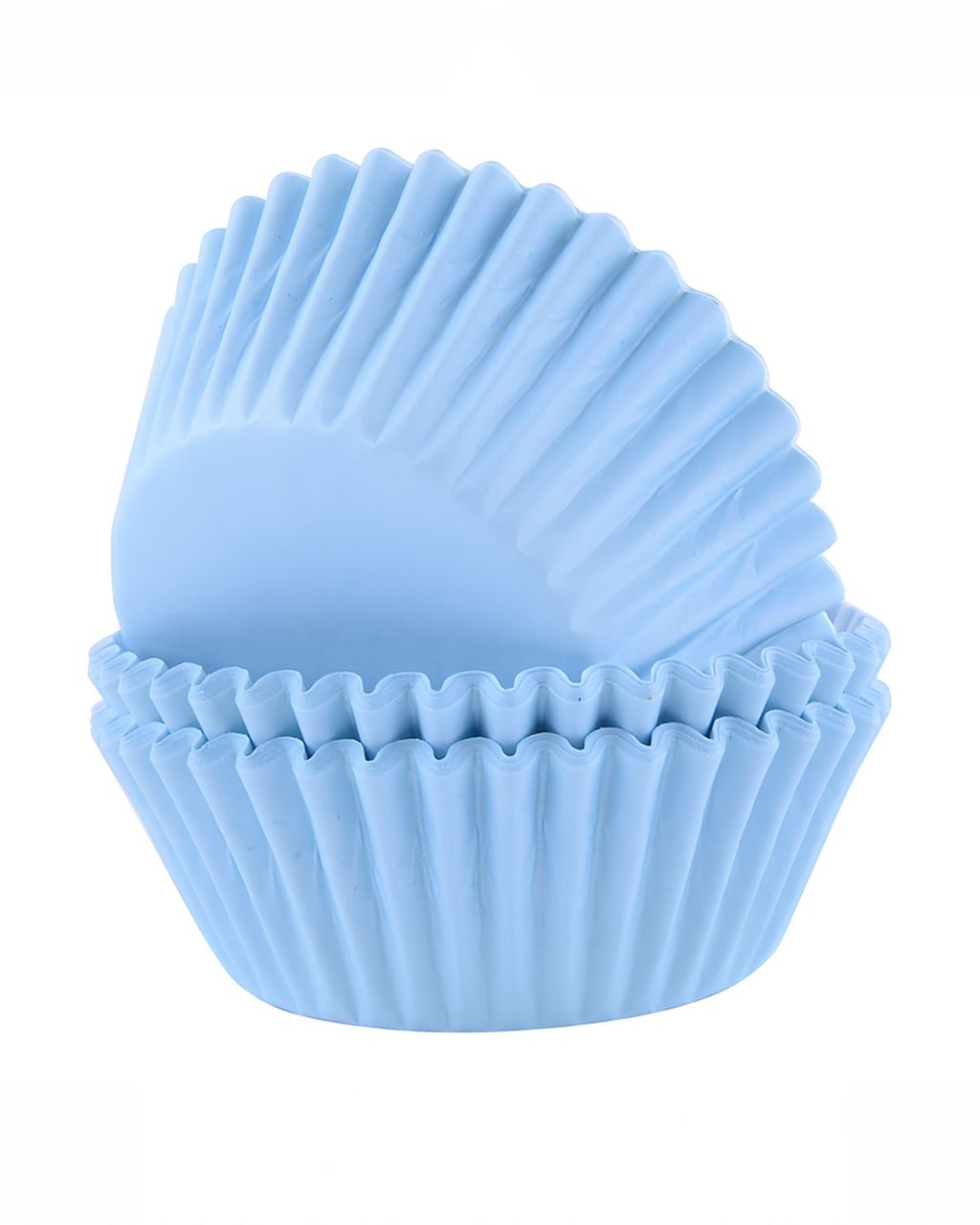
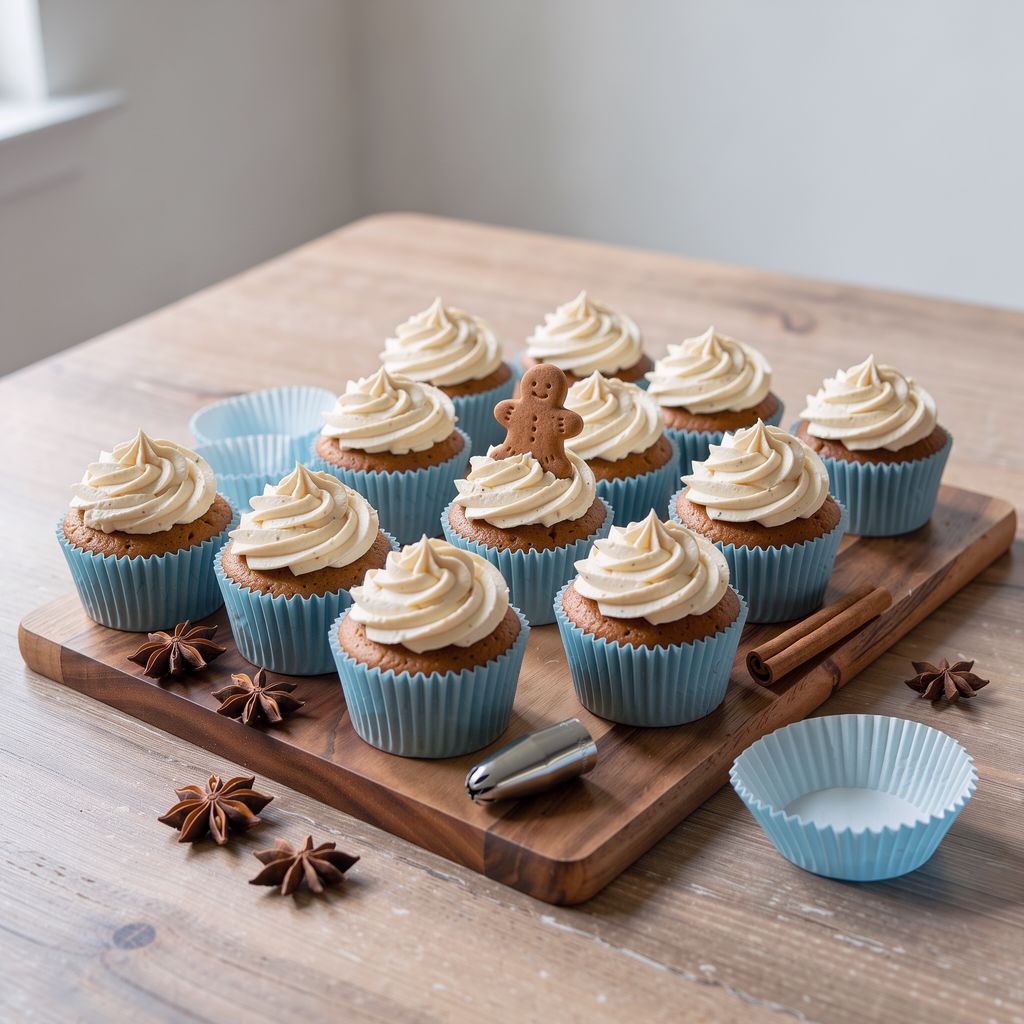
Cases: gingerbread batter is dark and greasy, so it can show through thin, light-coloured paper cases and cause the paper to peel away. Sturdier paper cases hold up better, and foil-lined ones stop any show-through completely. Browse our range of cupcake cases. Right now we stock PME paper cases in pale blue. They're sturdy and hold their shape well - just know they'll darken slightly under the gingerbread batter. We've covered the differences between case types in paper, foil, or tulip cases.
The classic choice is cream cheese frosting: its tang balances the sweet, spiced gingerbread. But if you want a tall, sharp swirl, buttercream holds its shape better. Here's the comparison:
Cream cheese frosting: the best flavour match for gingerbread, but it's softer and softens further in the warmth. Use full-fat block cream cheese, cold, and whip it briefly into softened butter. Whipping too long thins it out. A ratio of roughly 1 part butter to 2 parts cream cheese, plus icing sugar to taste, holds up well. It needs to stay in the fridge (see below).
Swiss meringue buttercream (egg whites whisked with sugar over steam, then butter): silky, less sweet, and holds sharp swirl edges the best. Ideal if you're piping with a 1F tip.
American buttercream (butter + icing sugar): the simplest and most stable, but very sweet. A pinch of salt and a tablespoon of molasses or caramel, about 20 g per 250 g butter, helps it taste more like gingerbread.
Mascarpone and whipped cream frosting: light and delicate, but it won't hold a sharp swirl and needs the fridge. Better for low dollops piped with a spoon.
Flavour tip: stir ½ teaspoon of gingerbread spice or cinnamon into any of these frostings, or season it with browned butter. The frosting will then blend seamlessly with the sponge.
How much frosting: for a tall swirl, allow roughly 35–45 g of frosting per cupcake, so 450–550 g for 12 cupcakes. For a low dollop, half that is enough. For how to prepare each type of frosting so it holds its shape on a cupcake, see frosting for cupcakes that holds its shape.
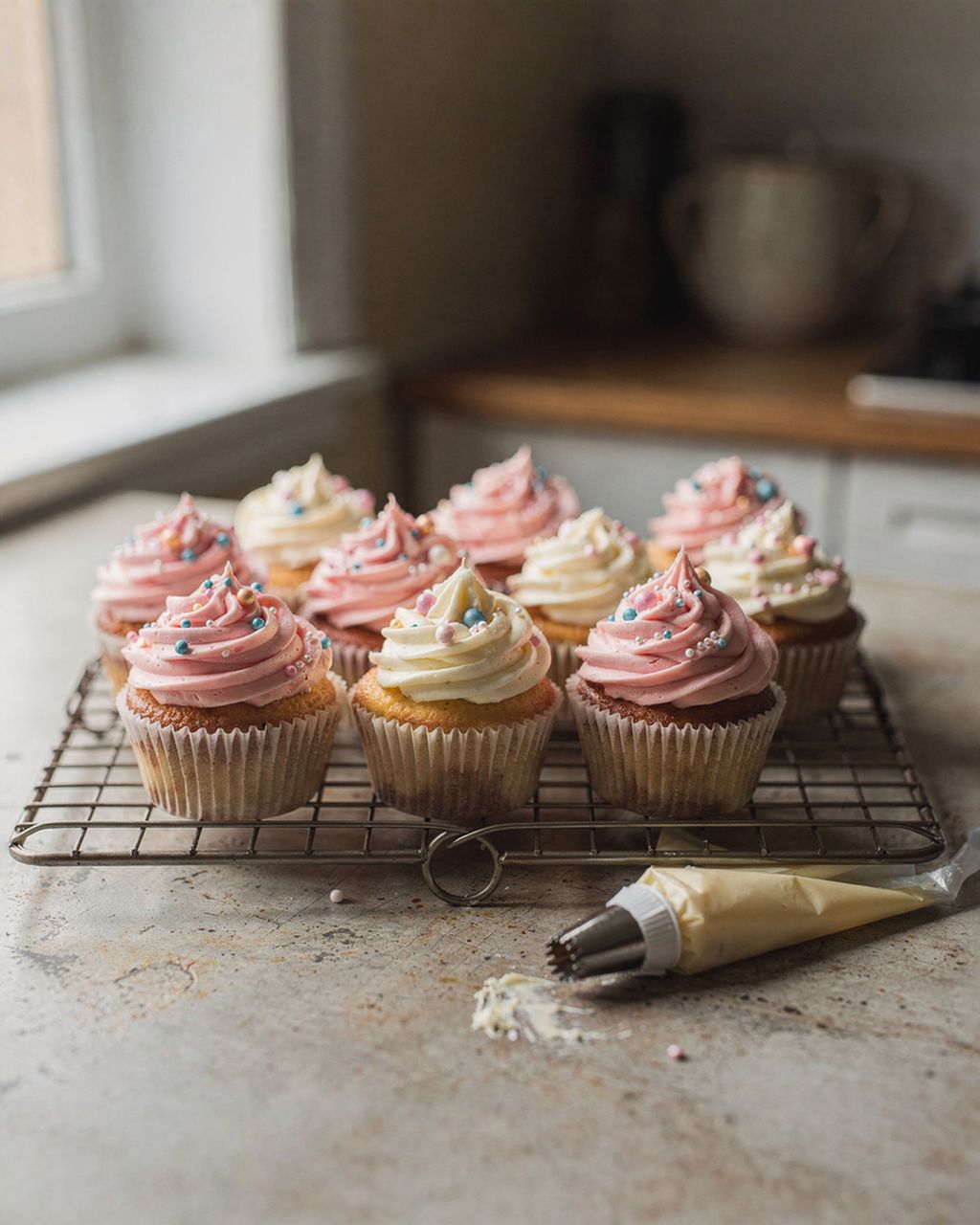
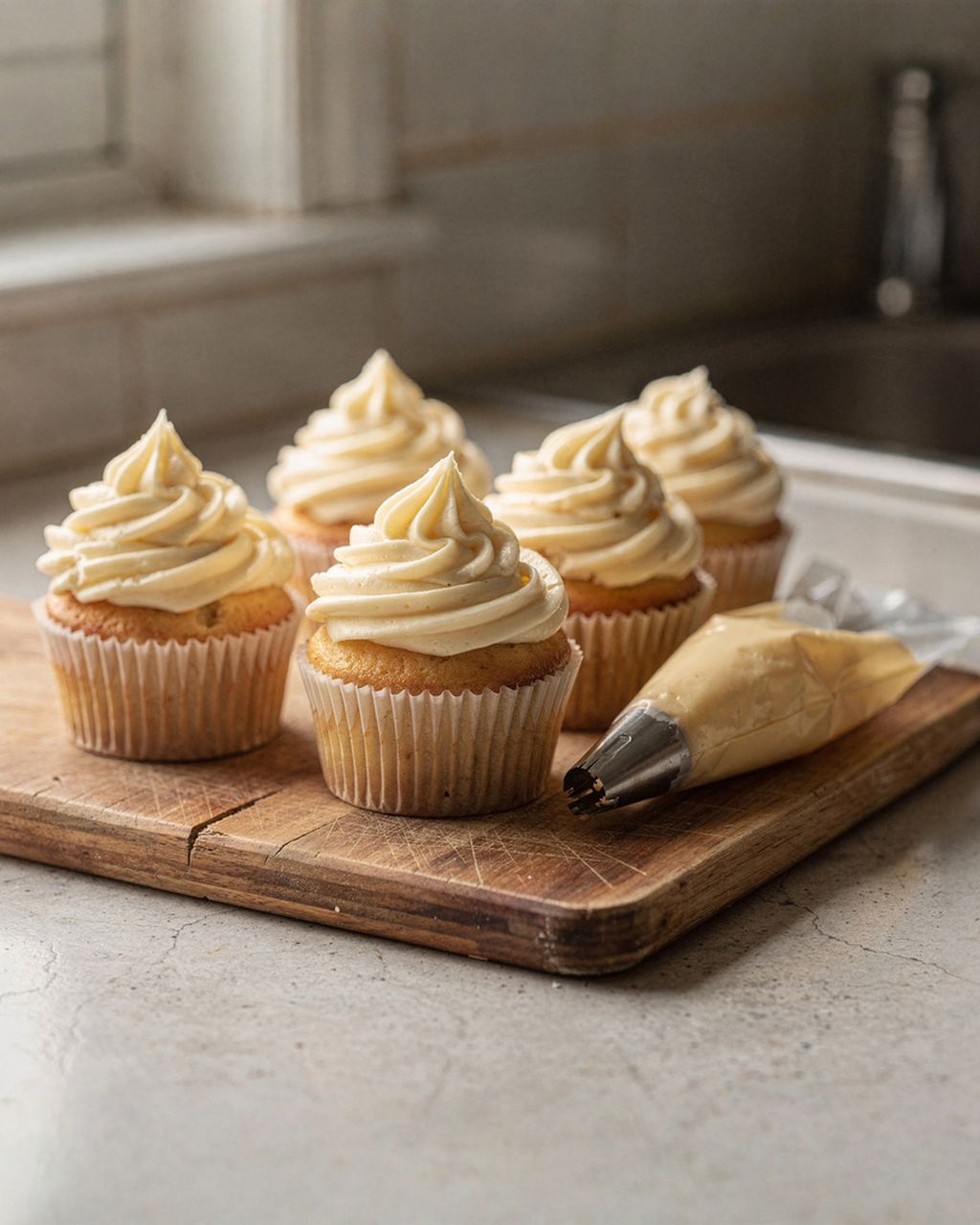
To pipe a Christmas swirl with a 1F tip, hold the piping bag upright about 1 cm (⅜ in) above the centre of the cupcake and move the frosting in a single spiral from the centre out to the edge and back up into a peak. This creates a deep, densely ridged swirl that looks like a chrysanthemum or small flower, letting you decorate 12 cupcakes in just a few minutes. Here's how:
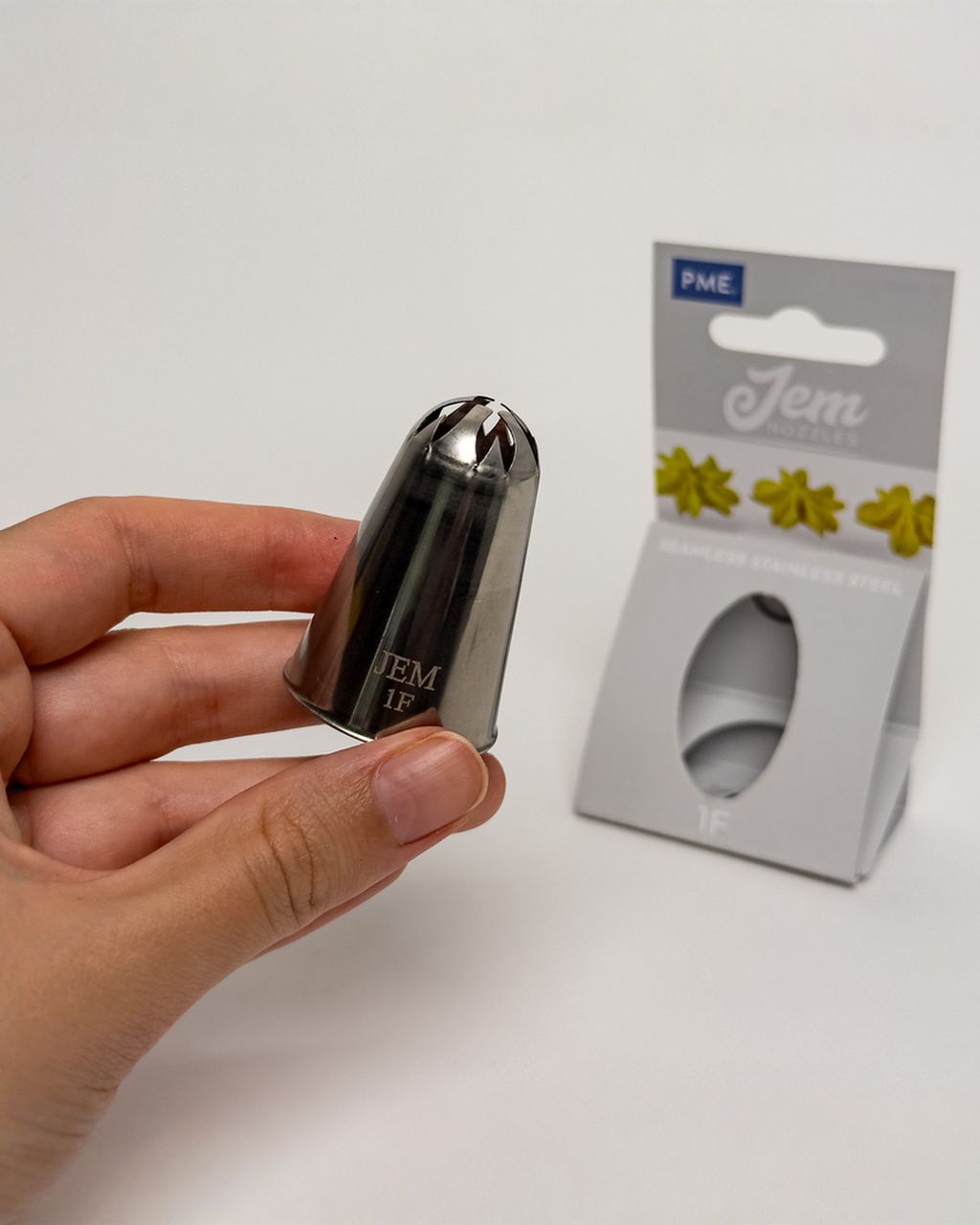
Fit the JEM Drop Flower 1F tip onto a piping bag at least 30 cm (12 in) long, and fill it only two-thirds full with frosting so it's easy to hold.
Hold the bag upright, with the tip about 1 cm (⅜ in) above the centre of the cupcake.
Squeeze, and once the frosting has spread almost to the edge, move the tip in a single spiral from the centre outward and back up into a peak. That's the classic "swirl."
For a smaller flower, just squeeze in place, release the pressure, and pull the bag straight up.
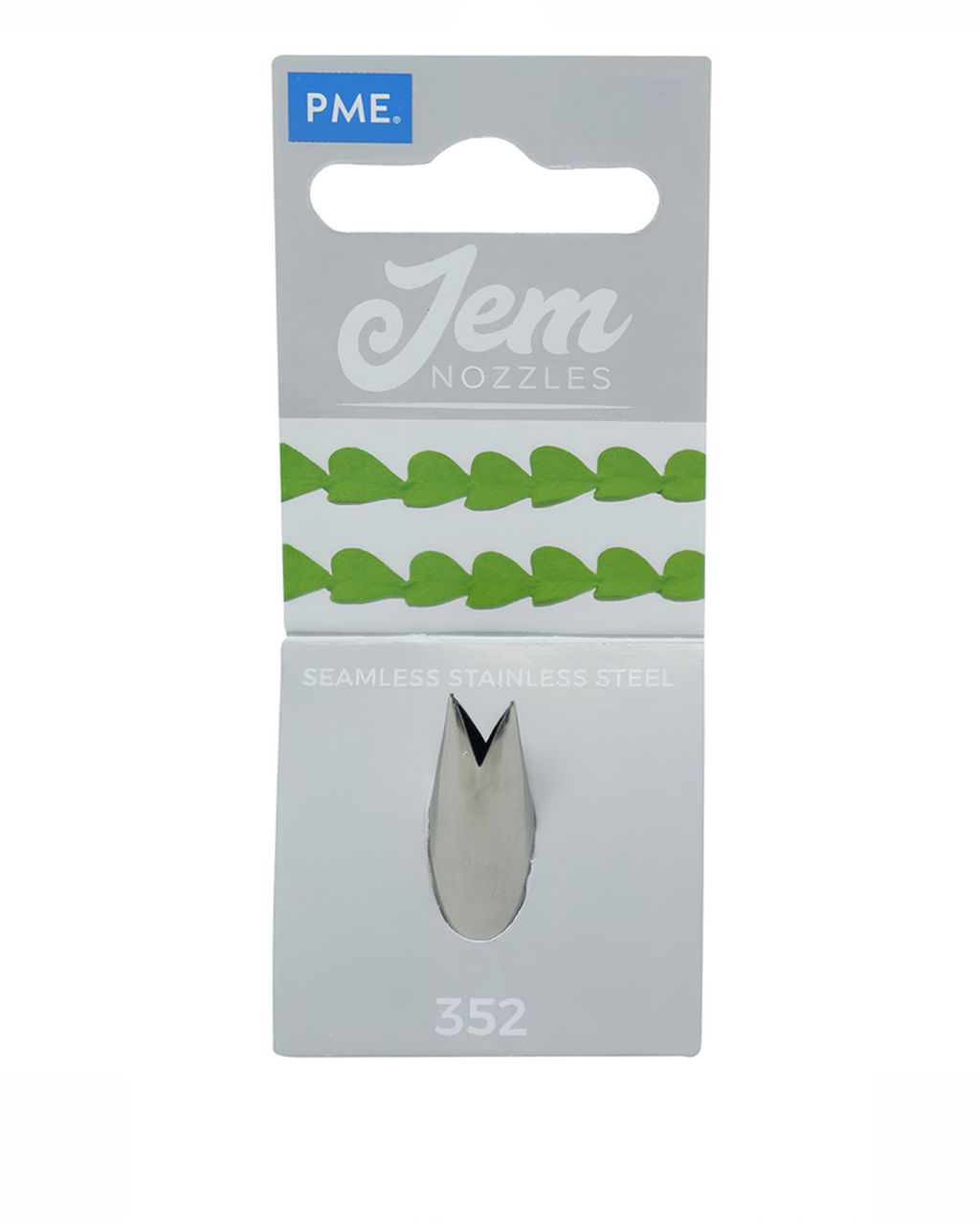
1F or 1M? Both are large open star tips. The 1M (sold mainly by Wilton, which we don't carry) has fewer, wider teeth and gives a classic, smoother rose shape. The 1F has more, finer teeth, so the swirl comes out denser with deeper ridges. This really shows when you dust it with glitter, which catches in the grooves. If you also want a Christmas star or leaves on your cupcakes, there's the JEM Leaf / Poinsettia 352 tip. You'll find more swirl shapes and tips in our guide to piping a frosting rose onto a cupcake.
If the frosting doesn't flow smoothly but tears instead, it's too cold or stiff: knead the bag in your hands, or give the frosting a quick whip. If it's spreading too much, it's too warm: pop it in the fridge for 10–15 minutes.
The biggest impact comes from one contrasting accent on a white swirl: red glitter, a tiny gingerbread cookie, or a star anise pod. Pile on more than one decoration at a time and the cupcake quickly starts to look like a market stall.
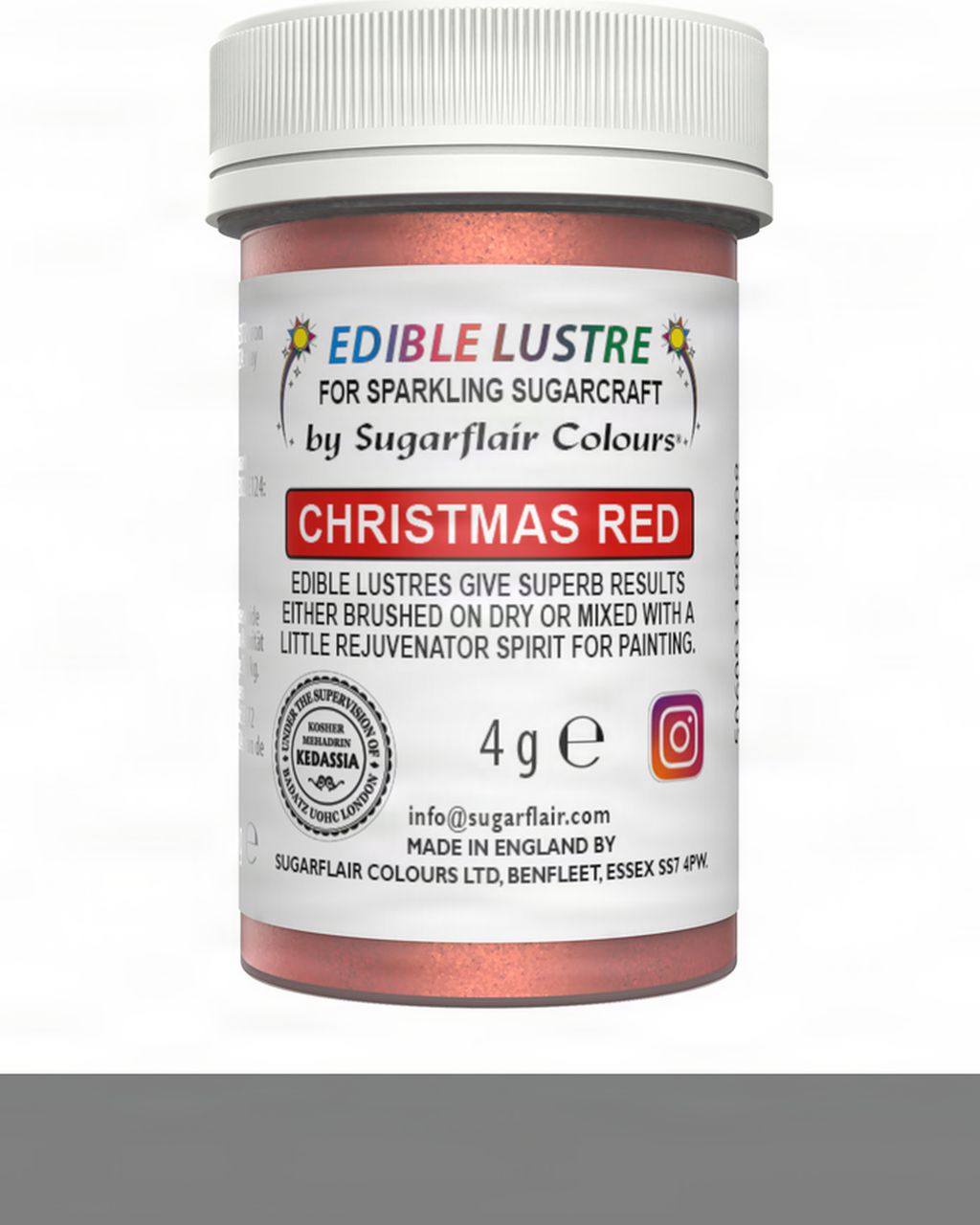
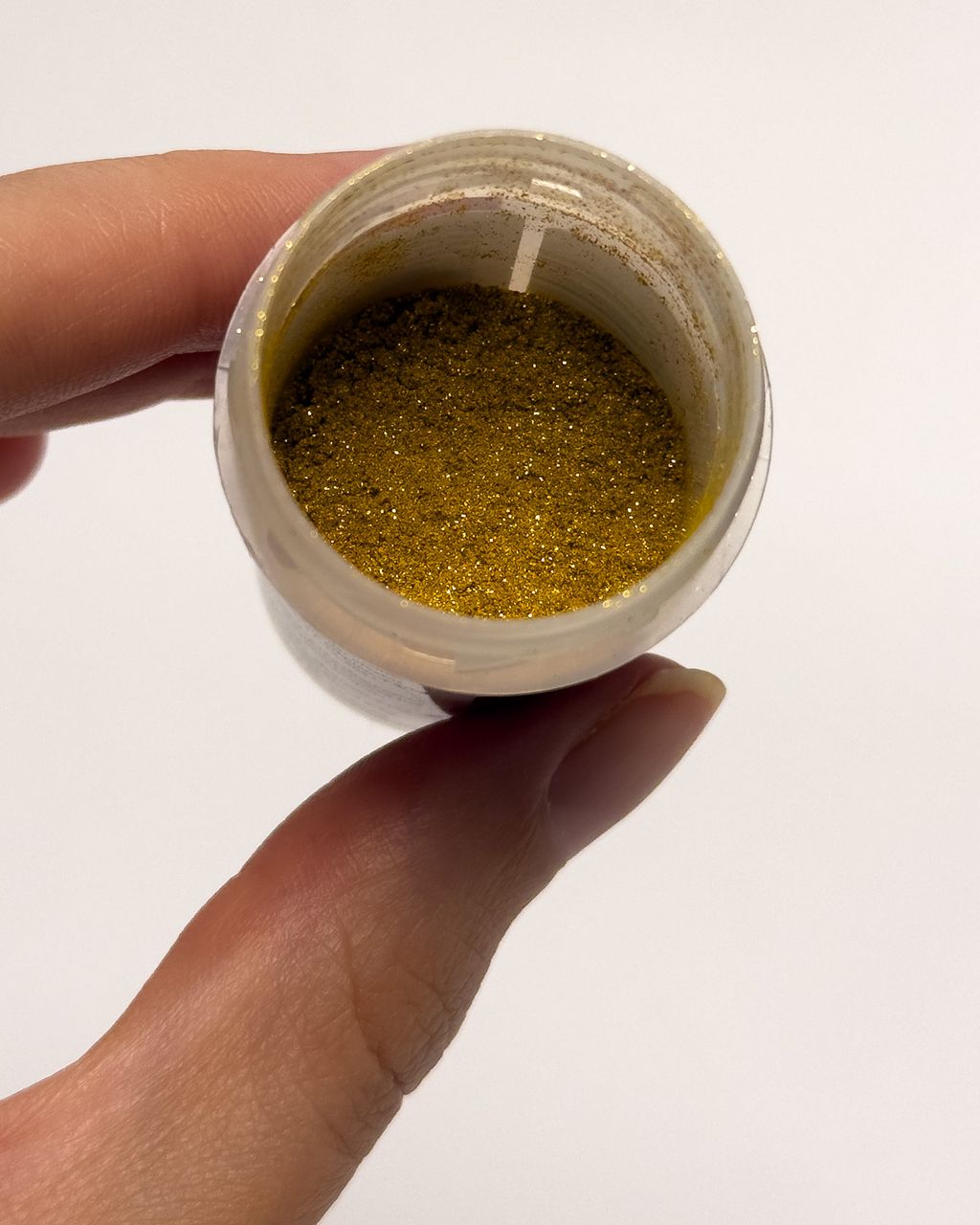
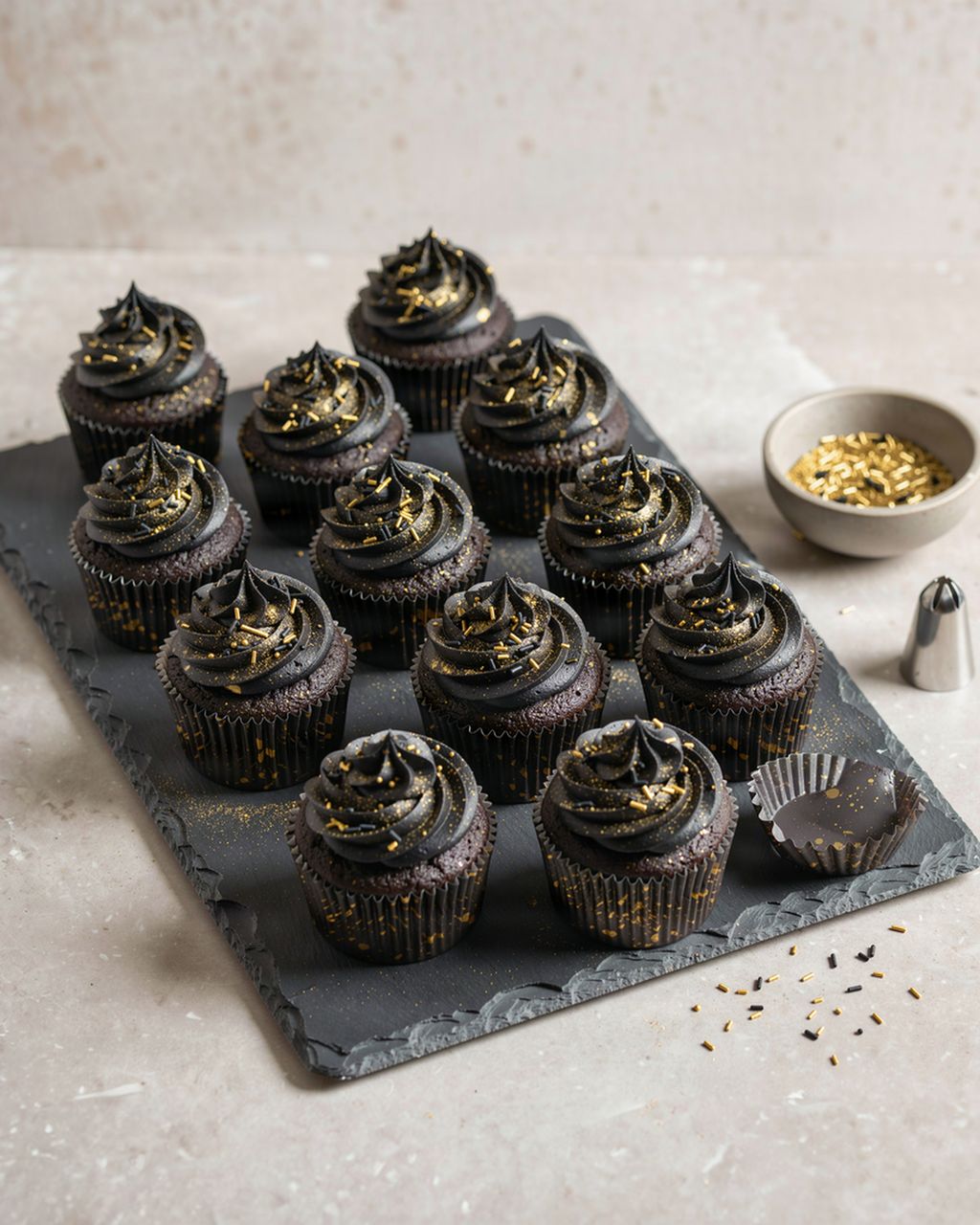
Red glitter: using a dry, soft brush, lightly dust just the peaks of the frosting with Sugarflair edible glitter dust in Christmas red. Just a pinch is enough. On cream cheese frosting, apply it right before serving, since the glitter loses its shine in a damp frosting. There's also a gold Sugarflair edible glitter dust.
Mini gingerbread cookie on top: stick a small heart or star into the swirl. Our soft gingerbread cookies recipe works well here: they'll last a few hours on the frosting without turning to mush or falling apart. Overnight, though, they'll draw moisture from the frosting and go soft, so add them only on the day you're serving. If you'd rather have the cookies ready ahead of time, bake a batch of soft honey gingerbread cookies that stay soft a few days in advance: they'll stay soft in a tin, and you just stick them into the frosting on serving day.
Gingerbread crumbs: sprinkle crushed gingerbread cookies or caramelised speculoos biscuits (like Lotus Biscoff) around the edge of the frosting.
Whole spices: a star anise pod or a piece of cinnamon stick looks beautiful but isn't meant to be eaten. Let your guests know before serving, especially kids.
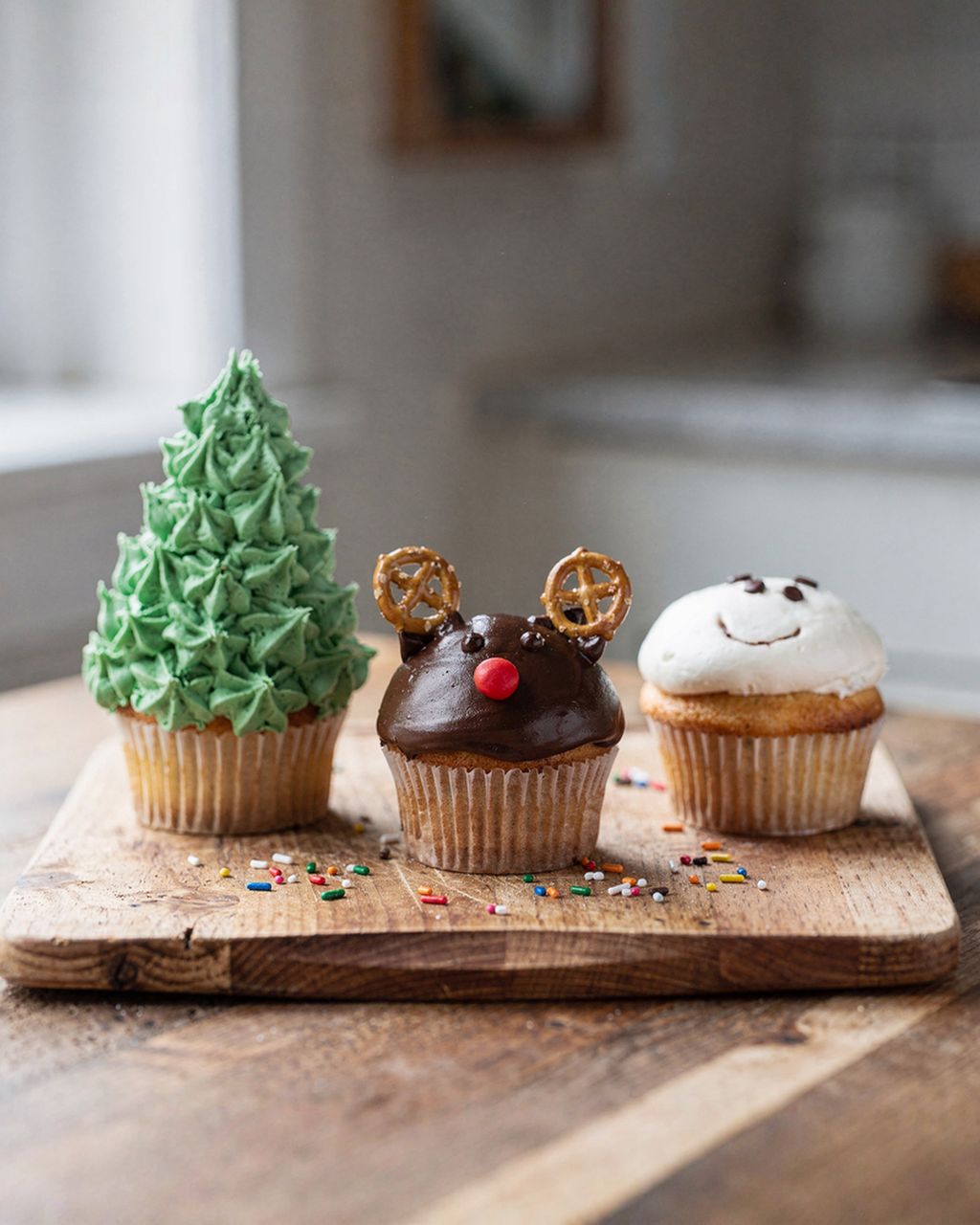
Figures like a Christmas tree, reindeer or snowman have their own step-by-step guide: Christmas cupcakes, step by step. And if you've got leftover glitter, it's perfect for sparkly New Year's Eve desserts.
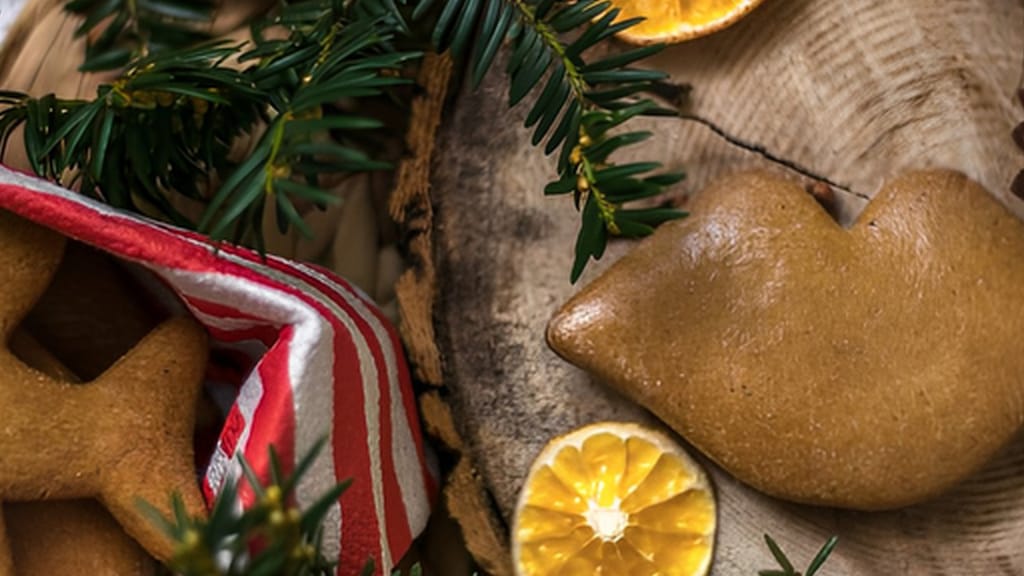
Soft gingerbread cookies
Soft gingerbread cookies for decorating gingerbread cupcakes
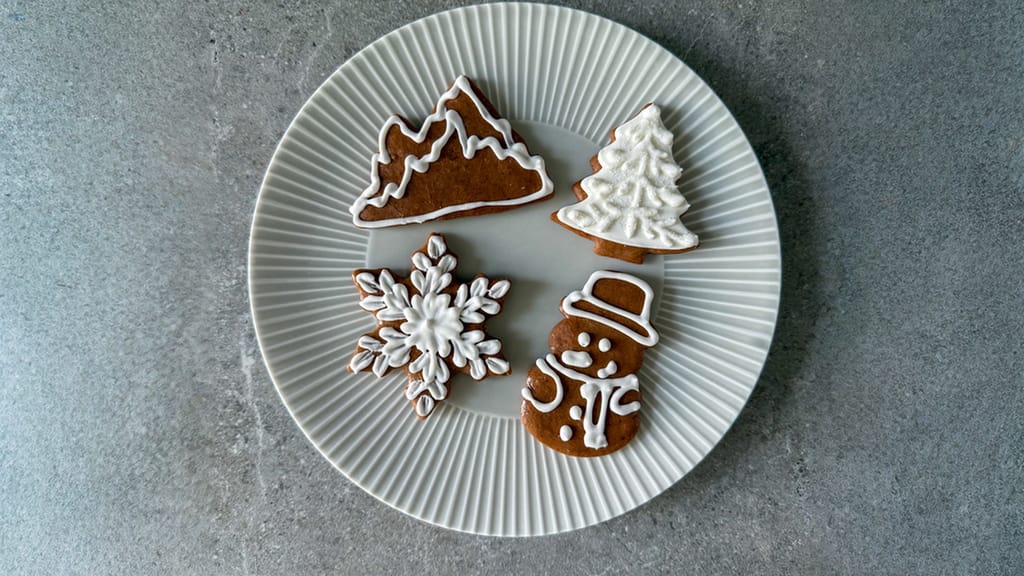
Soft honey gingerbread cookies that never go hard
Soft honey gingerbread cookies for cupcakes, baked a few days ahead
Gingerbread cupcakes with cream cheese frosting keep in the fridge (below 4°C/40°F) for 3–4 days. The USDA's Food Safety and Inspection Service (FSIS) classes cream cheese frosting and cream fillings as perishable foods, and generally gives 3–4 days as the fridge life for prepared food like this. The same applies to mascarpone or whipped cream frosting.
Undecorated sponges without frosting aren't classed as perishable by the FSIS. Here it's a question of freshness rather than safety: store them in a sealed container at room temperature so they don't dry out.
Freezer: at −18°C (0°F), food stays safe indefinitely according to the FSIS, though quality drops over time. Freeze sponges without frosting, well wrapped. Cream cheese frosting often weeps water once thawed.
Before serving, take them out of the fridge about 20–30 minutes ahead. The frosting softens and the spices come through more, and you're still well within the 2-hour limit outside the fridge.
For how to spread baking and decorating across several days, see cupcakes made ahead: when to bake, decorate, and how to store them.
Yes, you can replace molasses with the same amount of honey, or with dark maple syrup. With honey the cupcakes will be lighter and milder. To bring back that gingerbread depth, use dark muscovado sugar instead of white sugar and add a teaspoon of cocoa.
Most often it's down to steam: as the cupcakes cool in the tin, moisture condenses underneath them and the paper peels away. Take them out of the tin after 5 minutes and let them finish cooling on a wire rack. Sturdier or foil-lined cases also help, since they let less moisture and grease through from the dark batter.
Only glitter dust labelled as edible on the packaging, made from food-grade ingredients, is safe to eat. Decorative glitter labelled only as non-toxic or "for decoration only" isn't meant to be eaten - it belongs only on decorations you remove from the cake before serving. Always check the label before buying.
Most often because the centre wasn't fully baked through: either you took them out too soon, or you opened the oven door during the first half of baking and the underbaked centre collapsed. So don't open the door before 15 minutes. Other culprits are too much baking powder or bicarbonate of soda, which makes the batter rise fast and then collapse, and overfilled cases.
One recipe worth heating the oven for, one tip, and one deal from the shop. Nothing else.