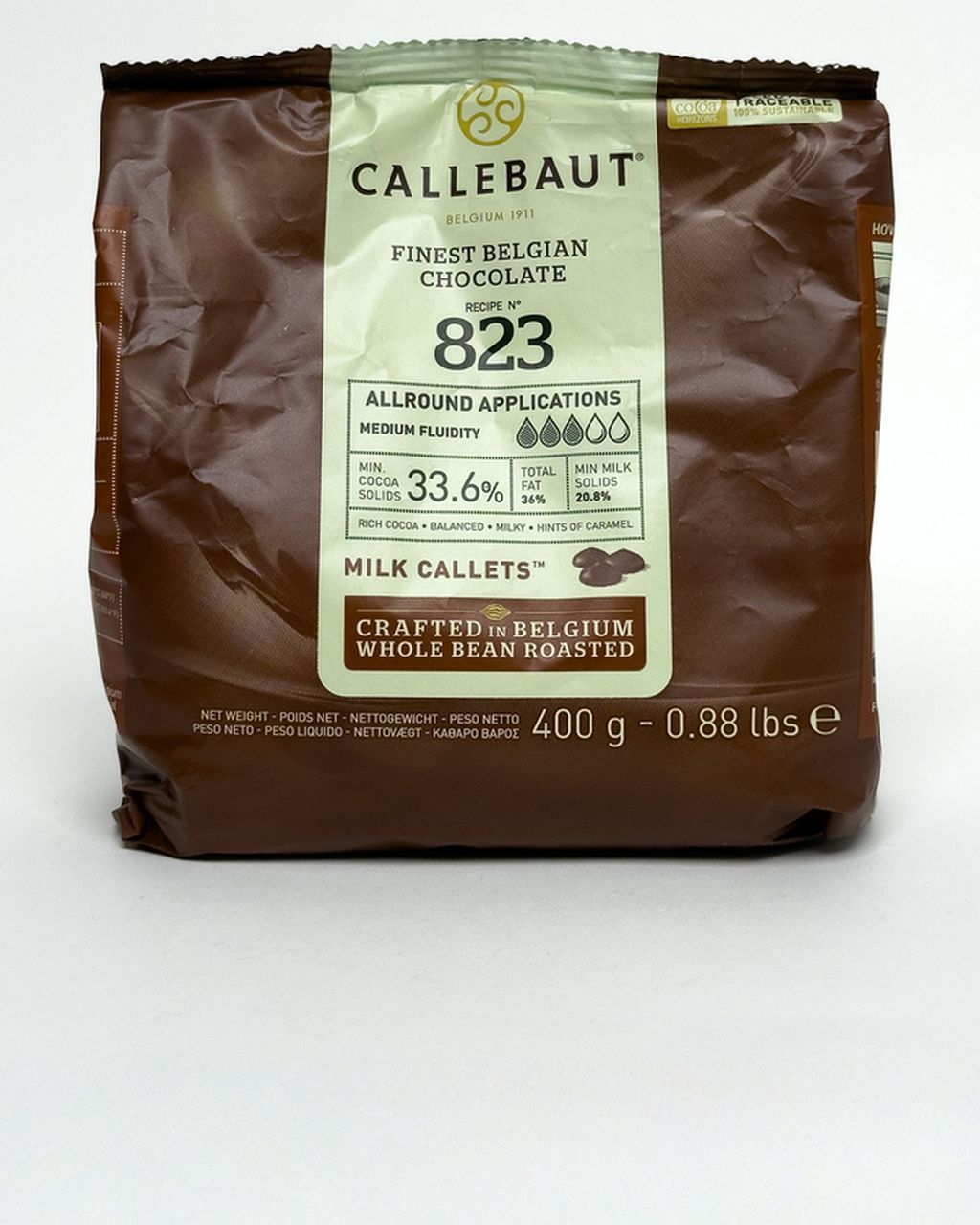
Callebaut Milk Chocolate Callets (823) 400g
Gianduja and Homemade Hazelnut Spread from Real Chocolate: Ratios and Method
Updated Oct 15, 2026
Gianduja is chocolate blended with finely ground hazelnuts. At home you only need two ingredients: roasted hazelnuts ground into a runny paste, and real chocolate. Use more chocolate and it sets into a block you can slice. Use more hazelnuts plus a little oil and you get a hazelnut spread that tastes of nuts rather than mostly of sugar. Here you'll find both ratios, the method, and the mistakes that make a spread turn thick, grainy or seize.
Gianduja is chocolate in which part of the mass is replaced by finely ground hazelnuts. The European cocoa and chocolate directive (2000/36/EC) and the Czech decree 490/2025 Sb. both specify 20–40 g of hazelnuts per 100 g of product for “gianduja hazelnut chocolate”. For “gianduja hazelnut milk chocolate” it's 15–40 g.
It comes from Piedmont in Italy. According to tradition, Turin chocolate makers began making it during Napoleon's Continental Blockade, when cocoa was expensive and scarce, and they stretched it with what grew all around them: hazelnuts. Gianduja is still used today to make Turin's gianduiotti, small pralines shaped like an upturned boat. The flavor is purely nutty and buttery.
Gianduja and hazelnut spread differ in the ratio of hazelnuts to chocolate: more chocolate gives you firm gianduja, while more hazelnuts and a little oil give you a spread.
Firm gianduja: about 60% chocolate and 40% hazelnut paste. It sets at room temperature, and you can slice it, use it as a praline filling or grate it.
Hazelnut spread: roughly half hazelnut paste (about 45–55% in the recipe below), with the rest chocolate, a spoonful of oil and sugar if needed. It stays spreadable at room temperature.
Store-bought hazelnut spread: according to the label, the best-selling brand is mostly sugar and palm oil, with just 13% hazelnuts. At home you turn that ratio around.
Use real chocolate made with cocoa butter, ideally couverture (the label may read “chocolate coating” in Czech). Milk chocolate gives gianduja its classic flavor, and dark chocolate gives you a spread for grown-ups. Choose based on how sweet you want it:
Callebaut 823 milk chocolate (min. 33.6% cocoa solids and 20.8% milk solids according to the maker): a caramelly, milky flavor. This is the gianduja you know from Italy. With it you hardly need to add any sugar.
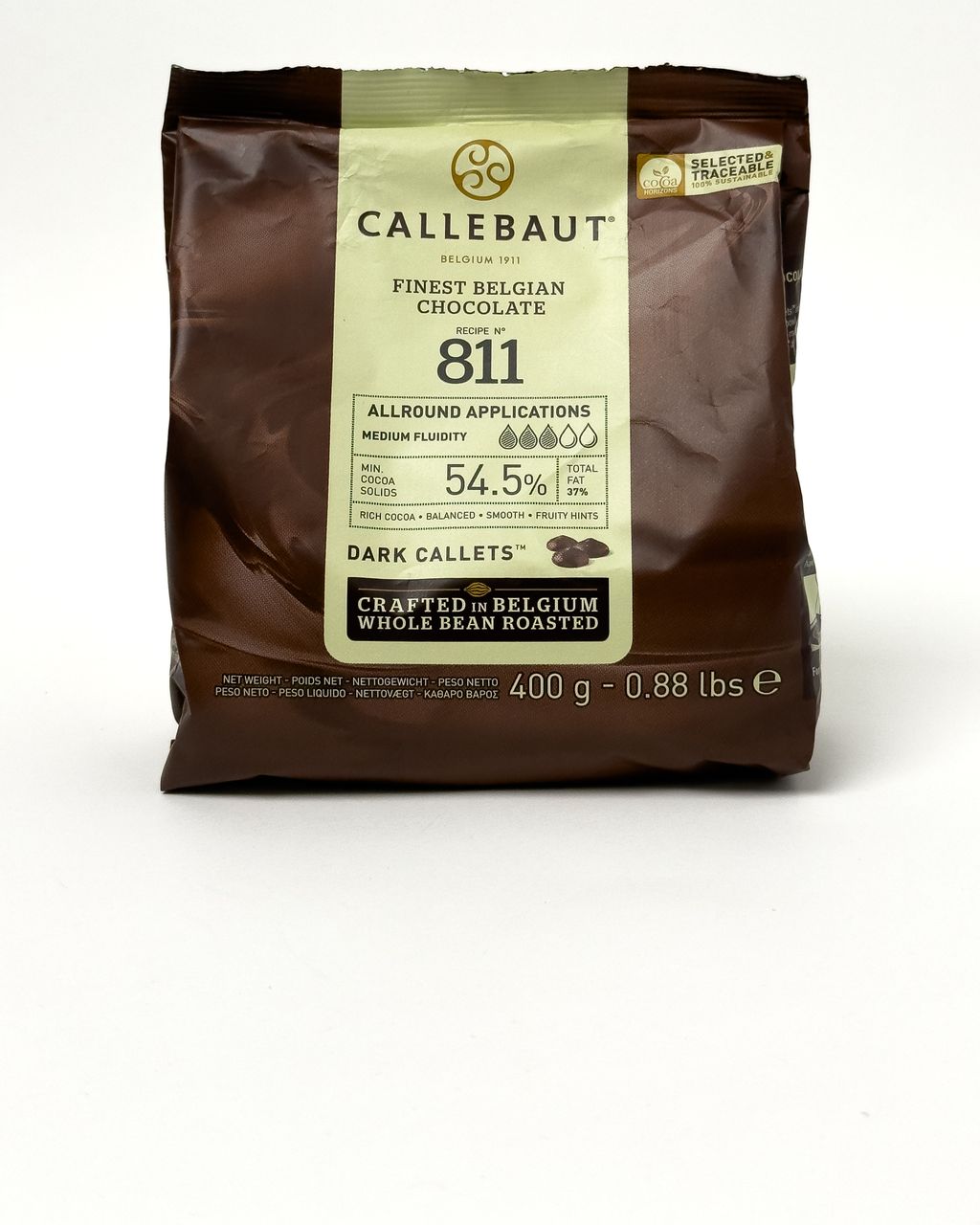
Callebaut 811 dark chocolate (min. 54.5% cocoa solids): the hazelnuts come through more strongly and it's less sweet. For a spread, add 40–60 g of powdered sugar, otherwise it will be a little bitter.
Half 823, half 811: in our view the best compromise for a spread. It's sweet enough for kids and cocoa-rich enough for adults.
What also works: any milk couverture with 30–40% cocoa, and ordinary good-quality bar chocolate from the shop. Bar chocolate tends to have less cocoa butter, so the spread turns out thicker. An extra spoonful of oil helps. Ready-made 100% hazelnut paste (sold by specialist shops, not by us) saves you the blending. But it's more expensive, and you can't control how dark the roast is.
What to avoid: cocoa and fat-based coatings (chocolate substitutes). In them, the cocoa butter is replaced by another vegetable fat, so gianduja made from them tastes waxy and doesn't set properly. You'll find real chocolate in our range of baking and cooking chocolate.
Roast hazelnuts at 160 °C (320 °F) for about 10–12 minutes, until golden and the skins crack. Peel them while still warm and blend for 8–15 minutes, until they turn into a runny paste.
Roast. Spread the hazelnuts in a single layer on a baking tray and roast at 160 °C (320 °F) for 10–12 minutes. Shake the tray halfway through. They're done when they smell nutty, are golden inside (bite one to check) and the skins are cracking. Dark brown ones are already bitter.
Peel. Wrap the warm hazelnuts in a kitchen towel and rub them. Not every skin has to come off. Leftover bits only add bitterness and a darker color.
Let them cool only to lukewarm. Warm hazelnuts release their oil faster, so they'll blend more easily.
Blend in a food processor with an S-blade or in a chopper. The mixture goes through several stages: crumbs, wet sand, a thick ball and finally a glossy, runny paste. Every 2–3 minutes, scrape down the sides with a spatula and let the motor rest for a moment. Don't add water or milk. The oil releases on its own; it just takes time.
An immersion blender isn't up to this, as the blades get stuck in the mass. You'll end up with slightly less paste than the weight of the hazelnuts, because some is lost with the skins and stays on the sides. If you want to keep a stock of hazelnuts, read how to store nuts so they don't go rancid. One rancid nut spoils the whole jar.
For one jar (about 400 g) you need 200 g roasted hazelnuts, 150 g chocolate, 1 tablespoon of oil and a pinch of salt. Blend melted chocolate into the finished hazelnut paste.
200 g hazelnuts (roasted and peeled)
150 g chocolate (Callebaut 823, 811 or half and half)
15 ml (1 tablespoon) neutral or hazelnut oil
0–60 g powdered sugar (hardly any with milk 823, 40–60 g with dark 811)
optional: 15–20 g milk powder for a creamier taste, like the store-bought spread
a pinch of salt
Grind the hazelnuts into a runny paste (see above).
Melt the chocolate in a bain-marie or in the microwave in 20-second bursts. Make sure it doesn't go above 45 °C (113 °F), or milk chocolate will scorch and turn lumpy.
Add the chocolate, oil, salt and, if using, the sugar and milk powder to the paste in the blender. Blend for 1–2 minutes, until the mixture is completely smooth.
Pour into a clean, dry jar. Right after blending it's as thin as a sauce. It becomes spreadable after a few hours at room temperature.
Use only powdered sugar. Granulated sugar won't dissolve in a mixture with no water, and you'll feel it on your tongue as grit.
For firm gianduja, mix 300 g chocolate with 200 g hazelnut paste (a 60:40 ratio) and temper the mixture. Otherwise the gianduja won't be firm, smooth and glossy.
Melt milk chocolate to 40–45 °C (104–113 °F) or dark chocolate to 45–50 °C (113–122 °F), and stir in the hazelnut paste.
Keep stirring while the mixture cools, until it begins to thicken and set at the edge of the bowl. Use a thermometer to make sure it drops below the working temperature given in the next step. Nut oil slows the crystallization of cocoa butter, which is why gianduja sets at a lower temperature than plain chocolate.
Then briefly rewarm the mixture to the working temperature. For plain chocolate, Callebaut gives 29–30 °C (84–86 °F) for milk 823 and 31–32 °C (88–90 °F) for dark 811; gianduja needs roughly a few degrees less. The test settles it: a drop on a spatula should turn matte and set within a few minutes at room temperature.
Pour the mixture into a frame or mold lined with baking paper, ideally 1–1.5 cm deep.
Leave it to set overnight in a cool room at 12–18 °C (54–64 °F), not in the fridge. Then slice it with a knife warmed in hot water and dried.
Gianduja is softer and stickier than chocolate, and that's how it should be. Cut into cubes, it's a praline all by itself. Melted, you can pipe it into chocolate shells or use it to fill colorful pralines.
Hazelnut spread usually turns lumpy or hard because of moisture, granulated sugar, too little blending or cold.
The paste won't turn liquid: the hazelnuts are cold or the blender is underpowered. Wait, scrape down the sides and keep blending. The “thick ball” stage can drag on for several minutes, but then the mixture suddenly flows.
It's grainy: you used granulated sugar, or you didn't blend the paste enough. Put it back in the blender for 2–3 minutes.
It suddenly thickened, seized and looks like clay: water or steam from the bain-marie got into it. An extra spoonful of oil can rescue it, but it won't be glossy again.
It went hard in the fridge: cocoa butter sets in the cold. Leave it at room temperature for 30–60 minutes, or add a spoonful more oil next time.
There's oil on top: for a spread without emulsifiers and hydrogenated fat, this is normal. Stir it before using.
Store chocolate in a dry place at 12–20 °C (54–68 °F), hazelnut spread in a closed jar in the fridge, and firm gianduja in a dry place at 12–18 °C (54–64 °F), outside the fridge.
Callebaut chocolate (unopened, room temperature): the maker recommends storing it in a dry place at 12–20 °C (54–68 °F) and relative humidity up to 70%. Shelf life is 18 months from production for milk 823 and 24 months for dark 811. The date on the packaging applies.
Homemade hazelnut spread: it has no preservatives, so keep it in the fridge in a clean, closed jar. It mainly spoils because the fat in roasted hazelnuts goes rancid. Scoop with a dry spoon and make only as much as you'll eat within a reasonable time. If it smells sour, sharp or like old oil, throw it out.
Firm gianduja: wrap it in foil so it doesn't absorb odors, and store it in a dry place at 12–18 °C (54–64 °F), such as a pantry or cool larder, outside the fridge. In the fridge, moisture would form a gray bloom on it.
Hazelnuts are one of the main allergens. If you're giving gianduja as a gift, write that on the jar.
Put the spread on bread, pancakes and waffles, and in cookies. Use firm gianduja in pralines, in hot chocolate and as a filling.
In cookies: as a filling between two cookies, much like in the recipe for cookies with quark “Nutella”.
In macarons: gianduja is a ready-made filling that holds its shape. You'll find ratios and maturing times in the article on macaron fillings.
In truffles: replace part of the chocolate in the ganache with gianduja. How to coat truffles and how long they keep is covered in the article on chocolate truffles.
In hot chocolate: a spoonful of gianduja stirred into a mug. The basic ratio is in the article on hot chocolate made from real chocolate.
On pancakes and waffles: slightly warmed spread spreads best. Try it on a fluffy oven-baked Dutch baby pancake or on spelt flour waffles.
Almond or pistachio “gianduja” is made exactly the same way, but by definition it isn't called gianduja, because true gianduja is made with hazelnuts. Almonds give a milder, sweeter paste. Pistachios give a green paste with a strong flavor that pairs better with white or milk chocolate.
You can sweeten homemade hazelnut spread with honey or syrup only a little, because they contain water, and water makes chocolate thick and lumpy. A teaspoon of honey won't ruin the spread. For the main sweetening, though, use powdered sugar.
Made to this ratio, homemade hazelnut spread has roughly half the sugar (about 20–30 g per 100 g) of the best-selling store-bought spread (over 56 g per 100 g according to the label), because about half of it is hazelnut paste with no added sugar. At home, the sugar comes mainly from the chocolate, so a milk couverture with no extra sweetening will have the least. The calories are similar, though, because hazelnuts are rich in fat themselves.
Gianduja isn't praline paste. Gianduja is chocolate with ground hazelnuts, while praline paste is nuts ground with caramelized sugar, with no chocolate. That's why praline paste is sweeter and tastes of caramel, while gianduja is more chocolatey.
You can freeze homemade hazelnut spread, but it sets into a hard mass in the freezer, and oil may separate out after thawing. Freeze it in small jars for a few weeks, thaw it in the fridge and stir it thoroughly before using. It's more convenient to make smaller batches and keep them in the fridge.
One recipe worth heating the oven for, one tip, and one deal from the shop. Nothing else.