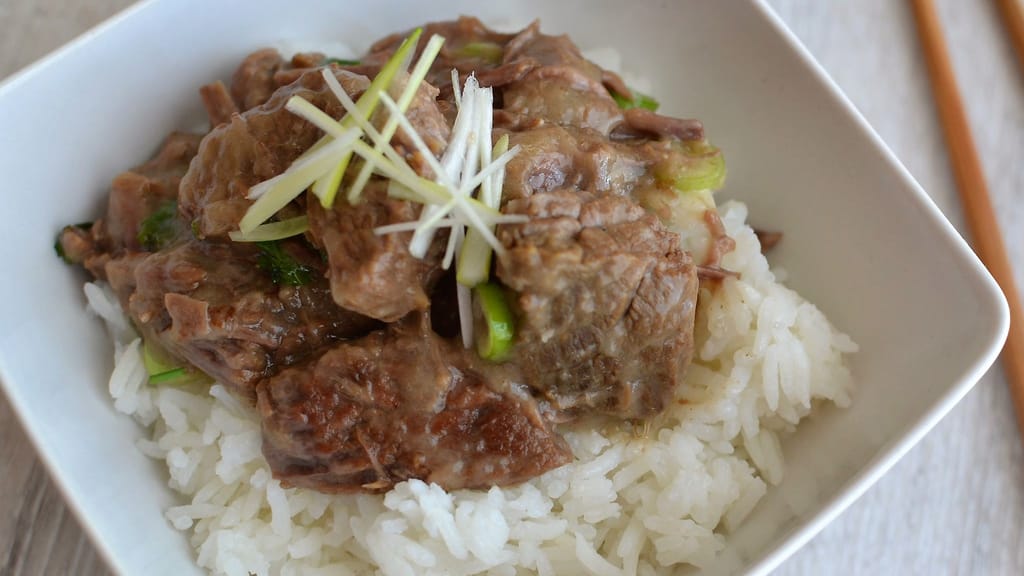
Beef chunks braised in coconut milk

Updated Jul 19, 2026
Beef chuck is an inexpensive, flavour-packed cut from the front quarter of the animal – it covers the neck, shoulder and brisket – and it's the undisputed king of slow cooking. It has more connective tissue and collagen than pricier hindquarter cuts, so when braised or slow-roasted it turns fork-tender and falls apart, while giving the sauce body and shine. In this guide you'll find out which cuts belong where, how to cook them so they never turn out tough, and what to make with them.
Beef chuck comes from the front quarter of the animal – it includes the neck, shoulder, brisket, short ribs and shin. These are the muscles that do the most work during the animal's life, so they're rich in connective tissue and collagen and have a bolder flavour than pricier hindquarter cuts like fillet or sirloin.
It's exactly that collagen that makes chuck ideal for slow cooking. Over long cooking times it breaks down into gelatine, which coats the meat, locks in moisture, and gives the sauce body and shine. So don't waste chuck on quick grilling – it belongs in goulash, braises, stock and slow roasts, where it has time to soften.
Chuck includes:
Neck – lots of connective tissue and bold flavour, great for goulash and ragù
Shoulder – versatile, good for braising, roasting or mincing
Brisket – fattier and more sinewy, ideal for slow roasting, smoking and stock
Short ribs and shin – the most collagen-rich cuts, perfect for stock and fall-apart braises
The main reason to reach for chuck: it's significantly cheaper than premium cuts, yet it brings even more flavour to the table.

Beef chuck is made up of five main cuts: neck for goulash and ragù, shoulder for braising, roasting or mincing, brisket for slow roasting, smoking and stock, and shin and short ribs for stock and fall-apart braises. They mainly differ in how much connective tissue they contain and how much time they need – the more collagen, the slower the cook. A quick rundown by cut:
Neck – the cheapest and most flavourful, great for goulash, ragù and hearty soup
Shoulder – the most versatile, good for braising, whole roasting or mincing
Brisket – a fatty, sinewy slab, perfect for slow roasting, smoking and stock
Shin and short ribs – the most collagen-rich cuts, ideal for stock and fall-apart braises
Neck is both the tastiest and the cheapest part of the chuck. It's full of connective tissue and flavour, and after a few hours of braising it falls apart at the touch of a fork – which makes it perfect for goulash, ragù and hearty soup. Never rush it: while the connective tissue is still tough, the meat will be chewy; it's only done once the collagen has fully melted.
Shoulder is the most versatile cut of the chuck. It has a finer texture than neck, so it works well both braised and roasted whole, and minced it's the base for homemade burgers, meatballs and patties. Roasted whole, keep it pink in the centre (56–60°C internal), but for braises and minced dishes, cook it through until soft.
Brisket is a fatty, sinewy slab that needs the most time of all – but it rewards you with tender, juicy meat that falls apart. Slow-roast it at 120–140°C for several hours if needed, smoke it, or turn it into a rich, proper stock. Always slice against the grain, or it'll turn chewy.
Shin (the muscle from the knee) and short ribs are the most collagen-rich cuts of all. They're no good for a quick meal, but in stock, a hearty braise, or under a classic sauce like svíčková, they give the liquid body and a silky, gelatinous richness you simply can't replicate any other way.
Beef chuck needs to be cooked slowly at a low temperature – that's the only way the connective tissue turns into gelatine and the meat becomes tender. Quick cooking methods will leave it tough. Here's how to go about it:
Pick a good piece. At the butcher's, look for meat with fine marbling (evenly distributed fat), a fresh colour and no sharp smell. Fat means juiciness and flavour.
Sear it hot and fast. Pat the meat dry and brown it on all sides in hot fat until deep golden. This creates a caramelised crust (the Maillard reaction), which adds depth to the whole dish.
Braise or roast it slowly. Add stock or wine, throw in some root vegetables, and let it simmer gently under a lid or in the oven. Collagen only starts converting into gelatine at around 80–90°C, so plan for hours, not minutes.
Watch the temperature. For slow roasting, keep the oven at 120–140°C. If you're roasting shoulder whole and want it pink, check the internal temperature with a thermometer: 56–60°C is medium.
Slice against the grain. Once the meat is done, let it rest for a few minutes, then slice it across the grain – the slices will hold together on the plate but fall apart easily in the mouth.
A marinade of oil, garlic, rosemary and lemon left overnight is a great helper too – it adds flavour, but time and low heat will always do the real work.
Beef chuck works beautifully in most classic Czech dishes built around slow cooking. The most typical is goulash made from neck – an onion base, sweet paprika, caraway, garlic and marjoram, then a good two hours under the lid until the meat falls apart. A few tried-and-tested directions to build on:
Beef chunks braised in coconut milk
Braised beef chunks from neck or shoulder in coconut milk
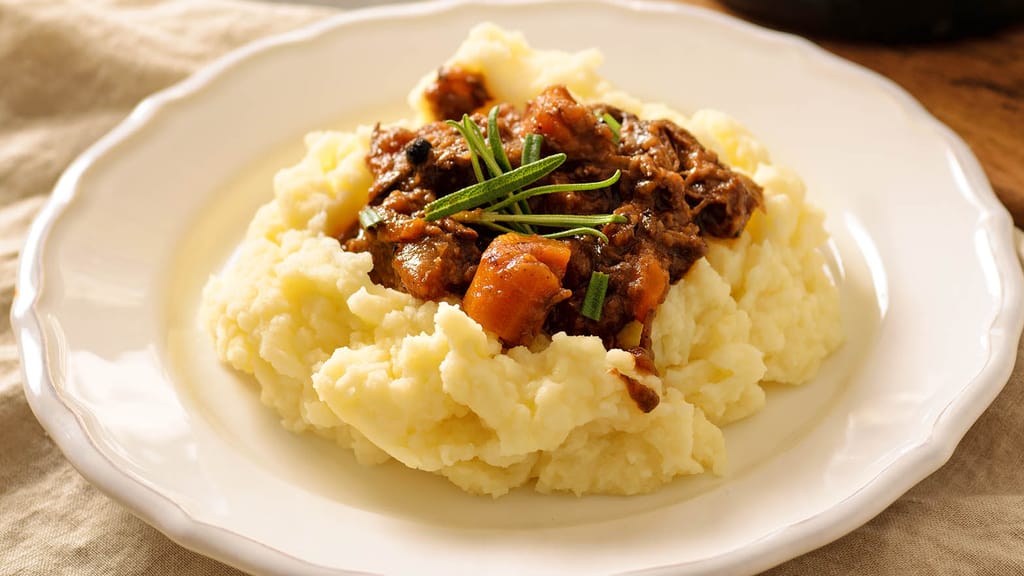
Oven-braised beef in red wine with vegetables
Beef chuck slow-roasted with wine and root vegetables
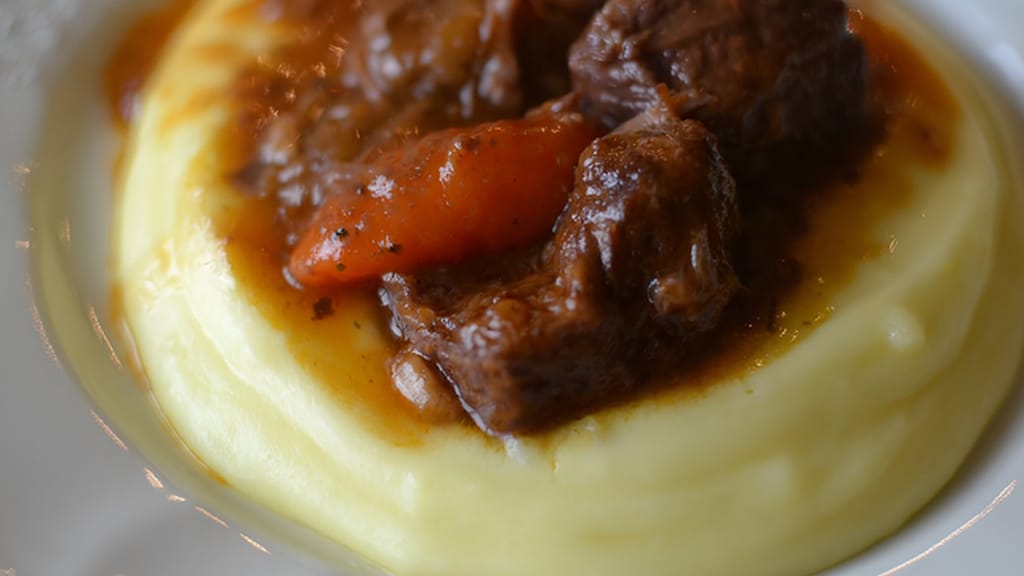
Beef cheeks in red wine with vegetables
Fall-apart ragù: beef cheeks braised in red wine
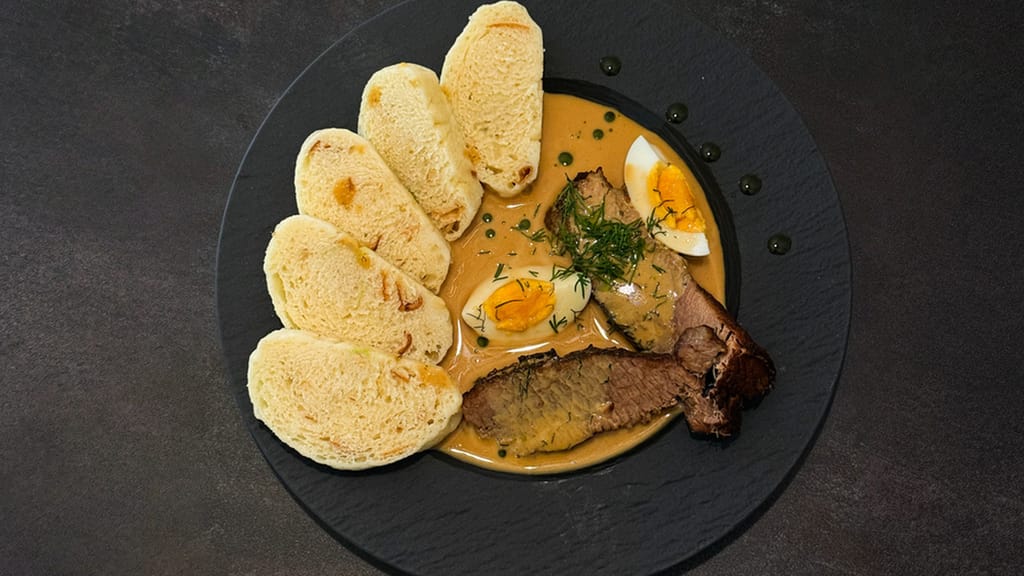
Dill sauce with slow-roasted beef
Dill sauce with slow-roasted beef chuck
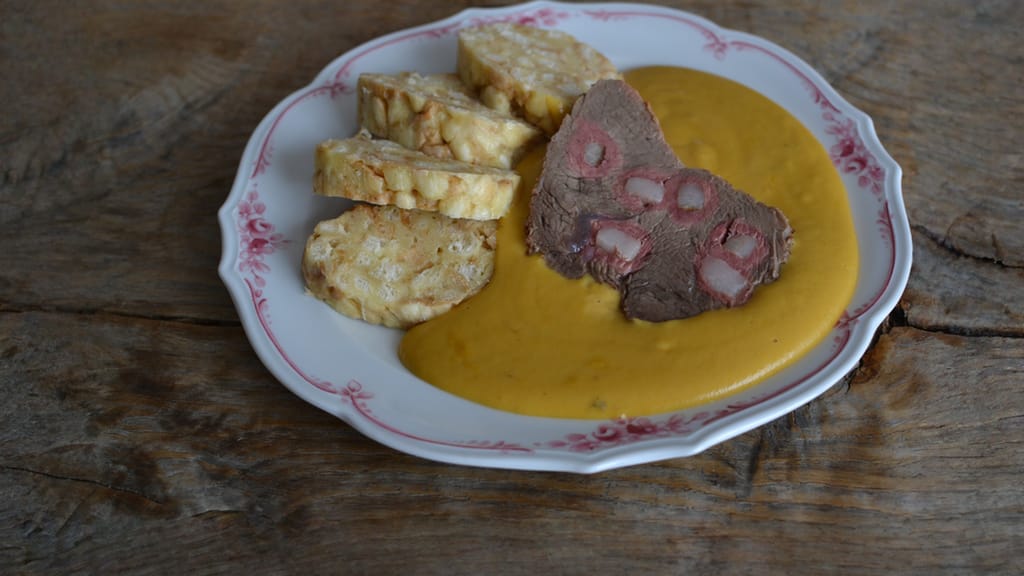
Sunday lunch: perfect homemade svíčková (czech beef sirloin in creamy vegetable sauce)
Sunday-style svíčková – sinewy brisket and shin work perfectly under the sauce
Beef chuck is a hearty source of protein and easily absorbed minerals, so in a sensible portion it can definitely earn a place in your diet.
According to nutrition tables, lean beef contains around 21g of protein per 100g and is one of the best meat sources of iron – roughly 2.5mg per 100g, more than pork or poultry. What's more, iron from meat is haem iron, which the body absorbs far more easily than the iron found in plants.
On top of that, beef provides zinc, which experts say supports immunity and healing, and vitamin B12 (about 2.6µg per 100g) – found only in animal foods and essential for nerve function and blood cell production.
That said, it is red meat: treat it as part of a varied diet rather than an everyday staple, and with fattier cuts like brisket, expect a higher fat content.
Chuck (neck, shoulder, brisket) has more connective tissue and collagen and is best suited to slow cooking like goulash and braises; hindquarter cuts (fillet, sirloin, rump) are leaner and more tender, and can handle quick roasting or grilling. Chuck is also cheaper and has a bolder flavour.
The best substitute is beef shin or cheek – they have a similar amount of connective tissue and break down beautifully after braising. If you reach for a leaner hindquarter cut instead, your goulash will end up drier with tougher meat.
Most often it simply hasn't cooked long enough. Collagen only converts into soft gelatine at around 80–90°C, and that takes time – so tough meat usually needs more hours, not less; it's not a case of overcooking. Keep braising it until it's easy to pull apart with a fork.
In a sealed container it keeps in the fridge for 3–4 days, and goulash or braises often taste even better the next day once the flavours have had time to mingle. For longer storage, freeze it – it'll keep for 2–3 months.
Yes, a pressure cooker cuts the braising time for chuck to roughly a third – a goulash made from neck meat can turn tender in 40–50 minutes instead of two hours. Sear the meat first, then add liquid and cook under pressure.
One recipe worth heating the oven for, one tip, and one deal from the shop. Nothing else.