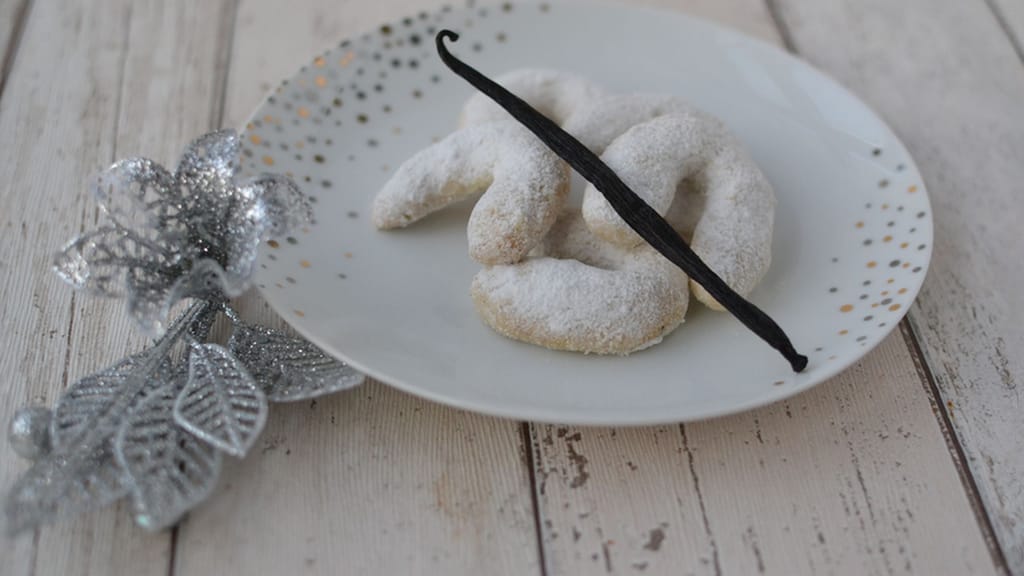
The best christmas cookies? vanilla crescents, of course!
Ground Vanilla: What It Is, How Much to Use Instead of a Bean, and How to Grind Your Own
Updated Nov 17, 2026
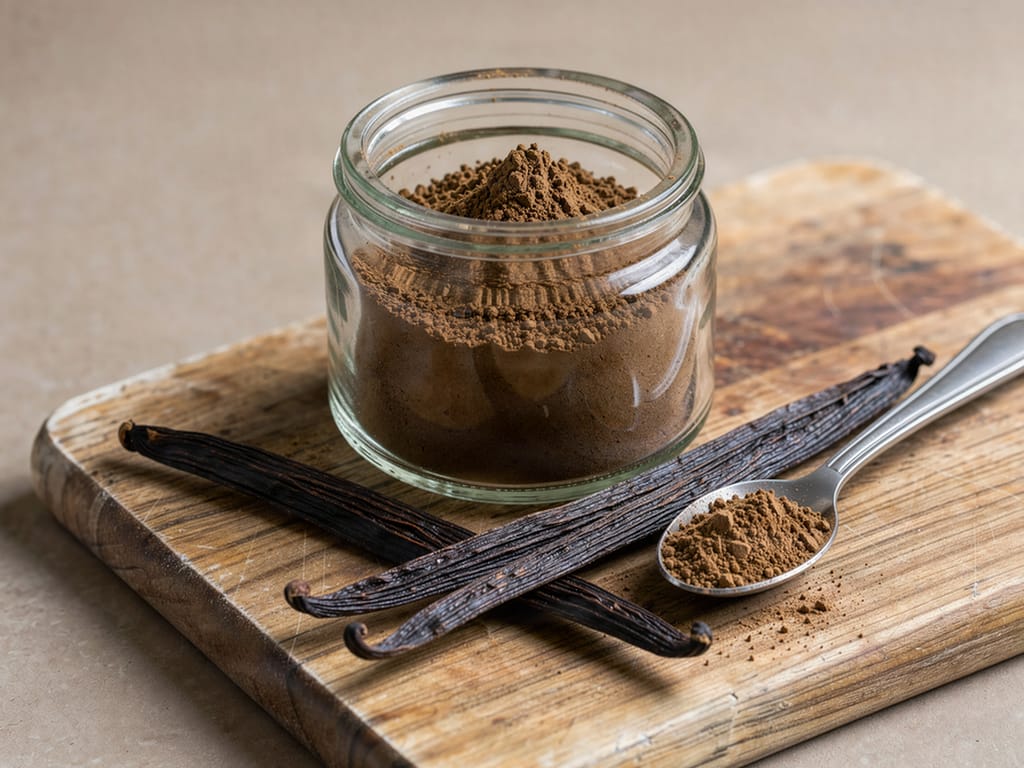
Ground vanilla is a whole dried vanilla bean, pod and seeds together, milled into a fine dark powder. Use roughly ½–1 teaspoon in place of one bean, and about ½ teaspoon in place of a teaspoon of extract. It pays off most where there's no liquid for the vanilla to infuse into: dry mixes, cookies and sugar. Best of all, you can grind it yourself from any beans that have dried out in your kitchen.
Ground vanilla is a whole vanilla bean, dried until crisp and milled, and nothing more. The ingredient list should say only "vanilla" or "ground vanilla bean." That's why it's dark brown to black and smells full, a little woody and sweet: it includes the aromatic pod, not just the seeds.
What ground vanilla is not:
Vanillin powder. Vanillin is a single aroma compound, mostly made synthetically, and it turns sugar into vanillin sugar. You'll notice the difference especially in Christmas cookies, which we cover in vanilla sugar vs. vanillin sugar.
Dried extract on a carrier. Some products sold as "vanilla powder" are vanilla extract sprayed onto sugar, dextrose or maltodextrin. It's pale, dissolves and behaves more like a sweet extract. It isn't bad, it just isn't ground bean, and the ratios below don't apply to it.
You can tell by the color and the ingredients: real ground vanilla is dark, doesn't dissolve and lists a single ingredient on the label.
Seasonal baking plans, tested recipes and kitchen tricks that save you time. Unsubscribe in one click.
In place of one vanilla bean, use ½–1 teaspoon of ground vanilla; in place of a teaspoon of extract or paste, use ½ teaspoon. Vanilla suppliers' recommendations fall within this range:
1 vanilla bean = ½–1 teaspoon ground vanilla
1 teaspoon vanilla extract = ½ teaspoon ground vanilla
1 teaspoon vanilla paste = ½ teaspoon ground vanilla
Why so little? Ground vanilla contains no water or alcohol, so its aroma is more concentrated per teaspoon than extract. The range for a bean is wide because beans differ in size and moisture: a thick, plump Bourbon bean gives more powder than a thin, dried-out one.
In practice, start with ½ teaspoon per bean, taste the batter or cream and add more if needed. You can always add but never take away, and too much ground vanilla turns bitter and woody.
You'll find the ratios for extract, paste and vanilla sugar in detail in what to substitute for a vanilla bean; how much vanilla to use in specific Christmas cookies, creams or vánočka (Czech braided Christmas bread) is covered in how much vanilla bean to use.
Ground vanilla pays off in four situations: dry mixes, cookies and short doughs, sugar, and baking at higher temperatures. In all of them there's either no liquid for a bean to infuse into, or an extract's aroma would bake off. Specifically:
Dry mixes – a homemade pancake mix, cocoa or granola. Seeds would clump together, while the powder blends evenly with the flour.
Cookies and short doughs – add it straight to the flour in crumbly linecké (Czech Linzer-style jam cookies), butter cookies, soft gingerbread or vanilla crescents. There's nowhere to infuse a bean, and scraped seeds spread poorly through a stiff dough.
Sugar – mix it with powdered sugar to coat crescents or to dust over buchty (Czech filled sweet yeast buns). The aroma is instant; you don't have to wait weeks for sugar to absorb it from a bean.
Higher temperatures – according to some vanilla sellers, the powder stands up to baking better than extract, whose aroma partly evaporates along with the alcohol.
Where to stick with seeds or a whole bean instead: milk, cream and custards, where you can infuse the bean, and pale desserts (panna cotta, whipped cream, white cream filling), where ground pod would leave gray specks and a slight graininess.
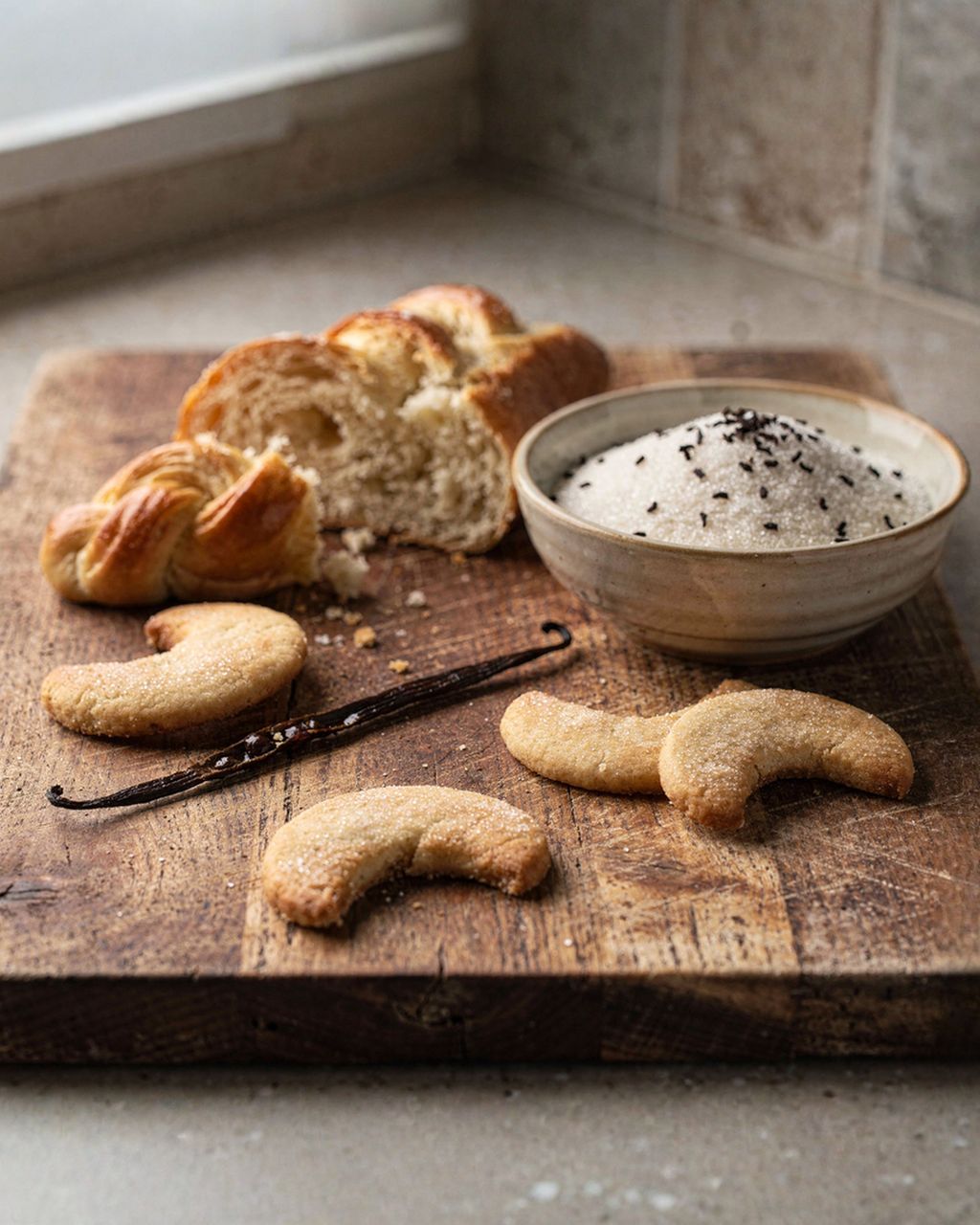
The best christmas cookies? vanilla crescents, of course!
Vanilla crescents – put ground vanilla right into the dough and into the coating sugar
You can grind a vanilla bean at home in four steps: dry it until crisp, snip it up, grind it in a spice grinder and sift. It works with beans that have dried out hard, because a fresh, supple bean doesn't grind, it smears. For what else to do with such a bean, see how to store vanilla beans.
Dry the beans until crisp. Leave them out in the open air for a few days, until they snap with a click when bent. If you're in a hurry, put them in the oven at 50–60°C (120–140°F) with the door slightly ajar for about 15–30 minutes and check often. They mustn't brown or start to smell burnt.
Snip them with scissors into pieces about 1 cm (½ inch) long.
Grind them in a coffee or spice grinder in short pulses so they don't heat up. A spoonful of sugar helps: it works as an abrasive and stops the powder from sticking (but then you've made vanilla sugar).
Sift through a fine sieve. Grind the fibers that remain again, or infuse them in milk or sugar.
Ground vanilla made from beans you've already scraped into a cream is weaker, since the seeds are missing, but it's still worth using in cookies and sugar. For full aroma, grind whole beans, for example Madagascar Bourbon vanilla beans, 2 pcs. You'll find more vanilla in the vanilla and vanilla beans category.
And while you're grinding with sugar, take it one step further: homemade vanilla sugar from vanilla beans.
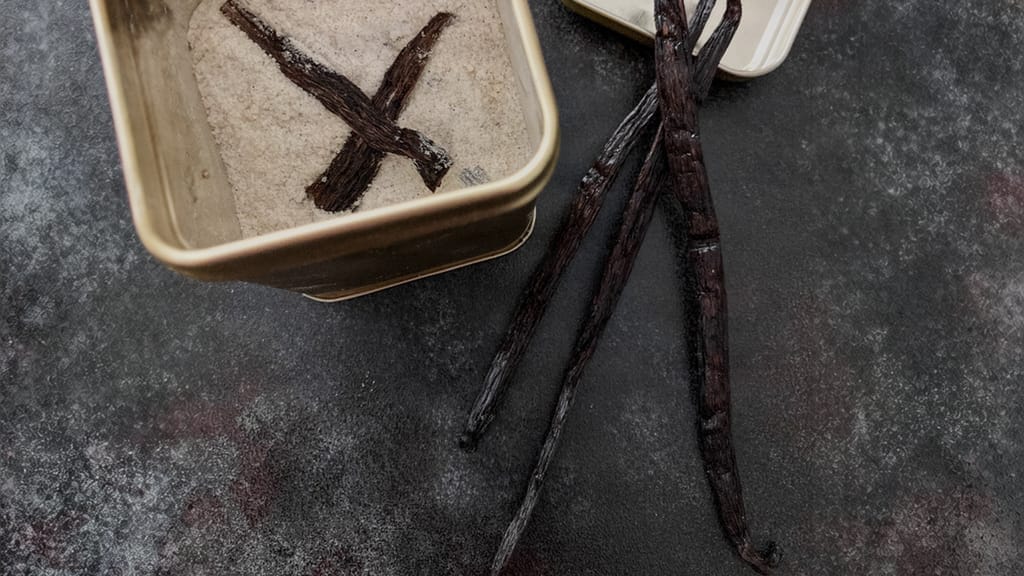
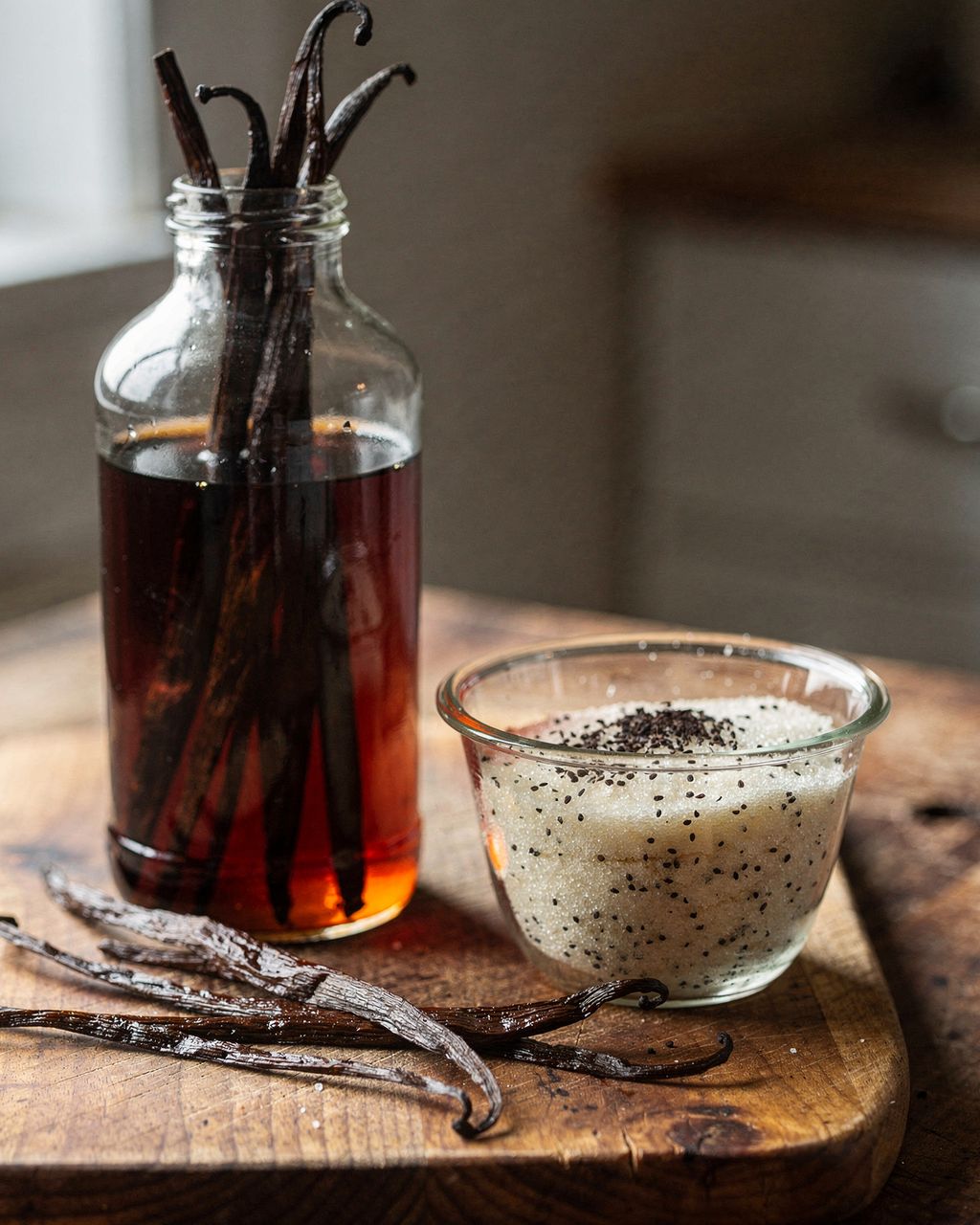
Homemade vanilla sugar from vanilla pods
Homemade vanilla sugar from vanilla beans
Store ground vanilla in a dry, tightly sealed jar at room temperature, in the dark and away from the stove. Don't put it in the fridge or freezer: moisture condenses on it when you take it out, and the powder cakes.
Always scoop it with a dry teaspoon, because even a drop of water makes lumps.
Grind smaller batches and sniff it regularly: when it barely smells, it won't add anything to your food.
Kept dry, ground vanilla won't spoil, but it gradually loses its aroma, and vanilla that barely smells won't add anything to your food. Toss it only if it has gotten damp, caked into hard lumps or started to smell musty.
Yes, a pinch of ground vanilla works in savory dishes too, such as pumpkin soup or a dressing. Start with a true pinch per serving: in savory food, vanilla should underline the sweetness of the vegetables, not overpower it.
You can, but ground vanilla doesn't dissolve and settles at the bottom of the cup as a fine sediment. It's better to mix it into ground coffee before brewing, or to blend it with sugar first and sweeten your drink with that vanilla sugar.
Yes: mix ½ teaspoon of ground vanilla with 1–2 tablespoons of sugar and you have an instant stand-in for a packet of vanilla sugar. Unlike sugar stored with a bean, you don't have to wait for the sugar to absorb the aroma.
Yes, ground vanilla doesn't need cooking or infusing, so you can stir it straight into yogurt, quark (tvaroh, a Czech fresh curd cheese) or oatmeal. Just expect tiny dark flecks and a slight graininess, because the pod doesn't dissolve.
One recipe worth heating the oven for, one tip, and one deal from the shop. Nothing else.