Soft gingerbread cookies
Christmas Stollen: Why You Bake It a Month Ahead, Why So Much Butter, and How to Let It Mature
Updated Nov 2, 2026
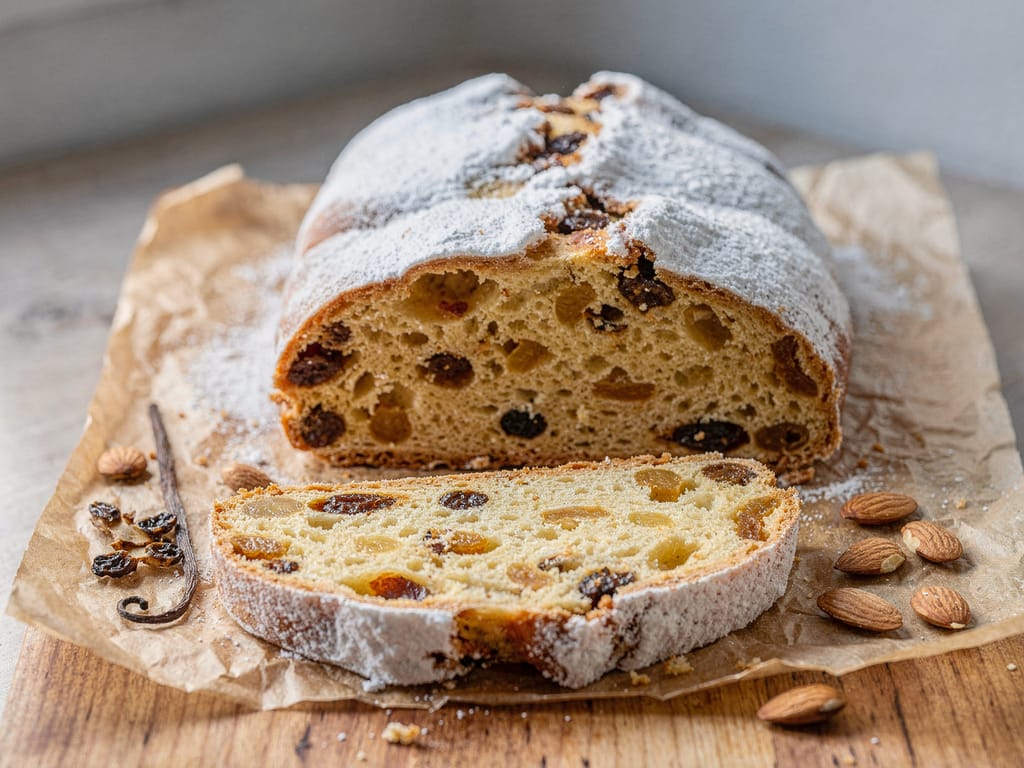
Christmas stollen is baked 2–4 weeks before the holiday because it needs time to mature. The moisture from the fruit spreads into the crumb, the rum, vanilla and candied peel meld together, and the butter-and-sugar crust protects the loaf from drying out in the meantime. A freshly baked stollen is crumbly, the alcohol bites, and every flavor pulls in a different direction. After a month in a cool pantry, it becomes a moist, spiced, harmonious loaf. Below you'll find what happens during maturing, why stollen has so much butter and sugar, exactly when to bake, how to store it, and how Dresden stollen differs from quark stollen.
Because Christmas stollen isn't finished when it comes out of the oven but only after it has matured. It's a dense yeasted dough with a high proportion of butter and soaked fruit. In a fresh loaf, the moisture and aroma are unevenly distributed: the raisins are plump, the crumb around them is drier, and the rum tastes sharp.
According to established baking practice, homemade stollen needs at least 2 weeks, ideally 3–4. The dough is built for it: lots of fat and sugar, little free water, and a protective coating of butter and sugar. That's why, unlike a Christmas braid (vánočka), stollen doesn't dry out within a week but actually gets better.
How to soften gingerbread that’s gone hard, when to fill Linzer cookies and how to tell the carp is done. One recipe and one tip a week. Unsubscribe in one click.
Three things happen at once during maturing: moisture evens out, flavors meld, and the crust protects the loaf.
Moisture spreads. Raisins and candied peel soaked in rum slowly release their juices into the surrounding crumb. Crumbly spots become moist, and the stollen can be sliced thin without breaking.
Flavors meld. Vanilla, lemon zest, mace, cardamom and rum mostly dissolve in fat. The butter carries them through the dough, so separate flavors become one. The harsh alcohol taste softens in the meantime, and the aroma of the rum comes forward.
The crust works as a wrapper. Melted butter brushed onto the hot loaf and a layer of sugar form a firm shell. It keeps moisture in and slows the access of air, so the butter doesn't turn rancid as quickly.
The high proportion of fat and sugar also slows staling: the starch in stollen hardens much more slowly than in ordinary baked goods. That's why stollen can mature for weeks, while a vánočka would be breadcrumbs by then.
Butter and sugar in stollen aren't only there for flavor: butter slows the hardening of the crumb and carries aroma, while sugar binds water and, together with the butter crust, prevents drying out. That's why stollen matures for weeks, while ordinary yeasted bakes go stale in a few days.
Butter in the dough coats the starch and slows its hardening, so the crumb stays moist. It also dissolves vanilla, lemon zest and spices and carries them through the loaf.
Sugar in the dough binds water. Less free water means slower drying and worse conditions for mold.
Melted butter on the surface soaks into the hot crust and seals it.
The sugar coating on the butter layer forms a crust that keeps moisture in and slows the access of air to the butter.
Margarine or a blended fat instead of butter gives a different flavor and a different fat content, so stick with butter at 82% fat. For how much butter to use per amount of flour, see the Dresden ratios below.
The best time is 3–4 weeks before Christmas Eve, which means roughly around the first Sunday of Advent. Some guidance:
4 weeks (end of November): ideal. By Christmas the stollen is at its peak and will last you until Epiphany.
2–3 weeks (early December): still a good result, just with slightly less harmonized flavors.
Less than a week: the stollen is edible, but it will be more crumbly and taste more of "raisins" than of stollen.
More than 6 weeks: a homemade stollen without preservatives can manage this if stored properly, but the butter starts to lose freshness. Longer maturing isn't worth it.
If you're baking several loaves, set one aside and don't touch it. Later you can compare a fresh stollen with a matured one and taste the difference from the first bite.
Wrap the cooled, sugar-coated stollen in baking parchment, then in foil, and store it somewhere cool and dark, ideally at 10–15 °C (50–59 °F). Step by step:
Right after baking, brush the hot stollen with melted butter, in two layers if you like, so it soaks in.
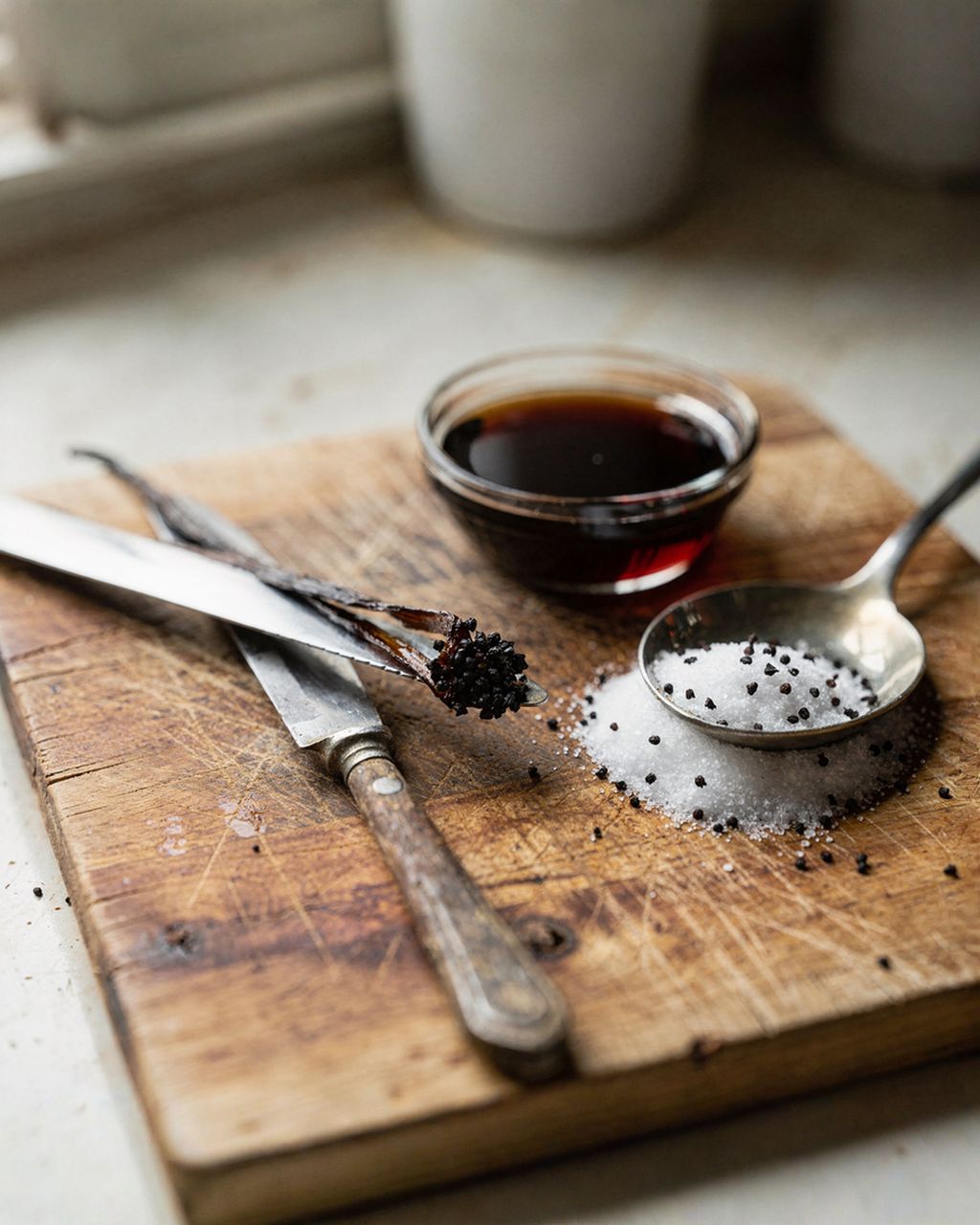
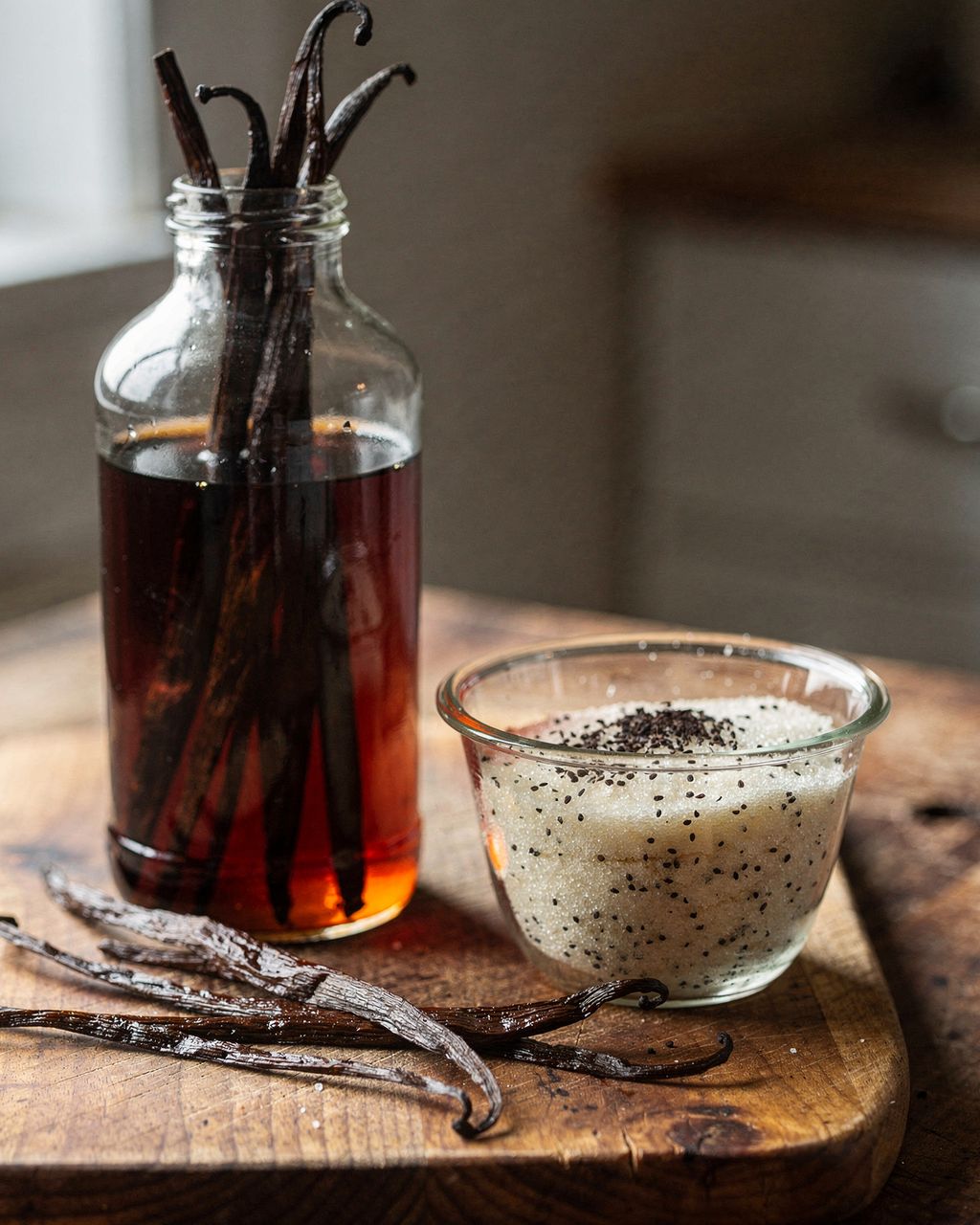
Coat it in sugar while it's still warm. Traditionally, granulated or fine sugar with vanilla is used. Real vanilla suits stollen well: bury a scraped-out pod in sugar for a week and you have vanilla sugar that smells far better than the store-bought packet.
Let it cool completely, even overnight. A warm stollen in its coating would steam.
Wrap it in baking parchment and then tightly in foil, and if you like, in a bag or a tin. The wrapping is mainly there to prevent drying out and absorbing odors.
Store it somewhere cool: a pantry, cellar, unheated storeroom or cool hallway. The ideal is 10–15 °C (50–59 °F), dark, and not too dry.
Before serving, brush off the old sugar and dust it with fresh powdered sugar. It will be snow-white again.
Slice a cut stollen from the middle, then push the two halves together with the cut sides touching. The cut surface won't dry out, and the rest will keep for another week or two.
Dresden stollen differs from others by its protected origin and by a prescribed minimum of butter (50 parts) and fruit (85 parts) per 100 parts of flour. Dresdner Stollen is an EU protected geographical indication, so only stollen baked in Dresden and the surrounding area to a fixed recipe may carry the name. According to the specification of the Dresden Stollen Protection Association, the recipe requires, per 100 parts of flour, at least:
50 parts butter (no margarine),
65 parts sultanas,
20 parts candied orange and lemon peel,
15 parts almonds (sweet ones and a few bitter).
Artificial flavorings and preservatives are forbidden. This very ratio explains why Dresden stollen matures so well: it has half as much butter as flour and nearly as much fruit as flour. It's essentially fruit and butter held together by dough.
The tradition is an old one. The first documented mention of Dresden stollen ("Christbrot") dates from 1474, from the accounts of the Dresden hospital of St. Bartholomew. The word stollen itself, however, appears as early as 1329 in Naumburg.
For home baking, take one thing from this: don't skimp on butter and fruit. A stollen with half the butter will bake, but it won't mature well, because it dries out before the flavors come together.
Dresden stollen is yeasted, buttery and full of fruit, and it must mature for 2–4 weeks; quark stollen is leavened with baking powder, carries more water from the quark, and is eaten within a week. The main differences:
Leavening: Dresden stollen (and every yeasted stollen) uses yeast, while quark stollen usually uses baking powder. That makes quark stollen quick, with no rising time.
Fat and water: Dresden stollen has at least 50 parts butter per 100 parts flour and little free water. Quark brings water into the dough, so quark stollen is moist right away but dries out and spoils faster.
Maturing: Dresden stollen matures for 2–4 weeks in the cool. Eat quark stollen within 1–3 days, finish it within a week at the latest, or freeze it.
Flavor: Dresden stollen is buttery, spiced and fruity. Quark stollen is milder, with a slight tang from the quark.
All yeasted stollen with lots of butter and fruit need to mature: Dresden, butter, almond, poppy seed and marzipan. The marzipan roll in the middle holds moisture, so the crumb around it tends to be the most moist. Quark stollen is a good last-minute choice if you've missed your deadline.
Put the seeds of 1 vanilla pod per 500 g (about 4 cups) of flour into Christmas stollen, just as you would for vánočka, and bury the scraped pod in sugar for coating. Vanilla dissolves in butter, so in stollen it comes through more during maturing than in dry bakes.
In the dough: rub the seeds with a little sugar and mix them into softened butter so they spread evenly.
In the coating sugar: leave the scraped pod in a jar of sugar for a week. You get vanilla sugar that smells better than the store-bought packet.
Which pod: Madagascar Bourbon gives a classic creamy vanilla that goes best with butter and rum. Tahitian is more floral and delicate, and stands out more in the coating sugar.
For amounts for other Christmas baking, see the article how much vanilla for cookies, custard and vánočka.
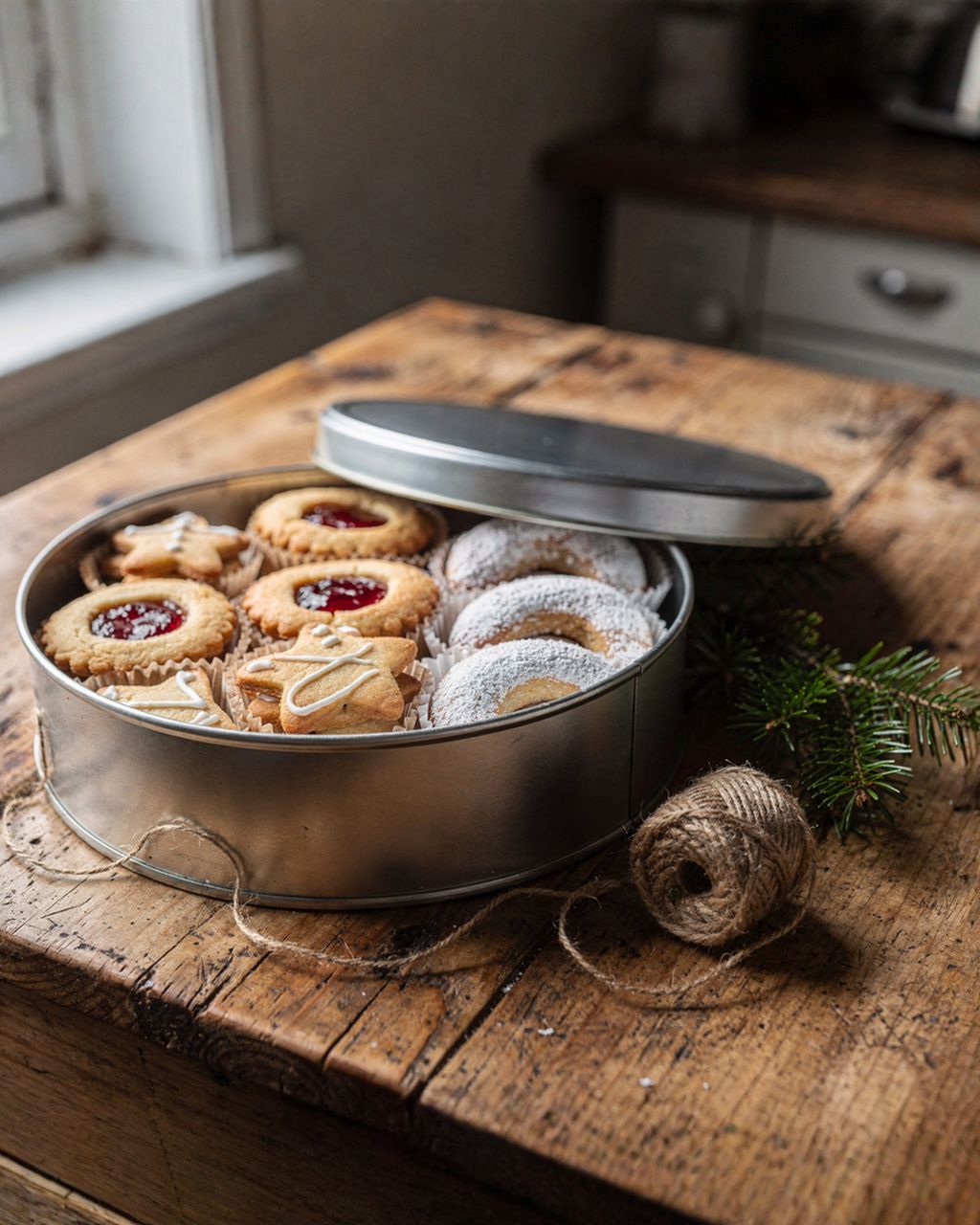
Alongside stollen, it pays to bake gingerbread cookies and Linzer rounds ahead; vanilla crescents only need 2–3 weeks before Christmas. Why:
Gingerbread cookies: the honey in the dough draws moisture from the air, so hard gingerbread cookies in a closed tin soften within a few days and then stay soft for weeks. You'll find the recipe in soft gingerbread cookies.
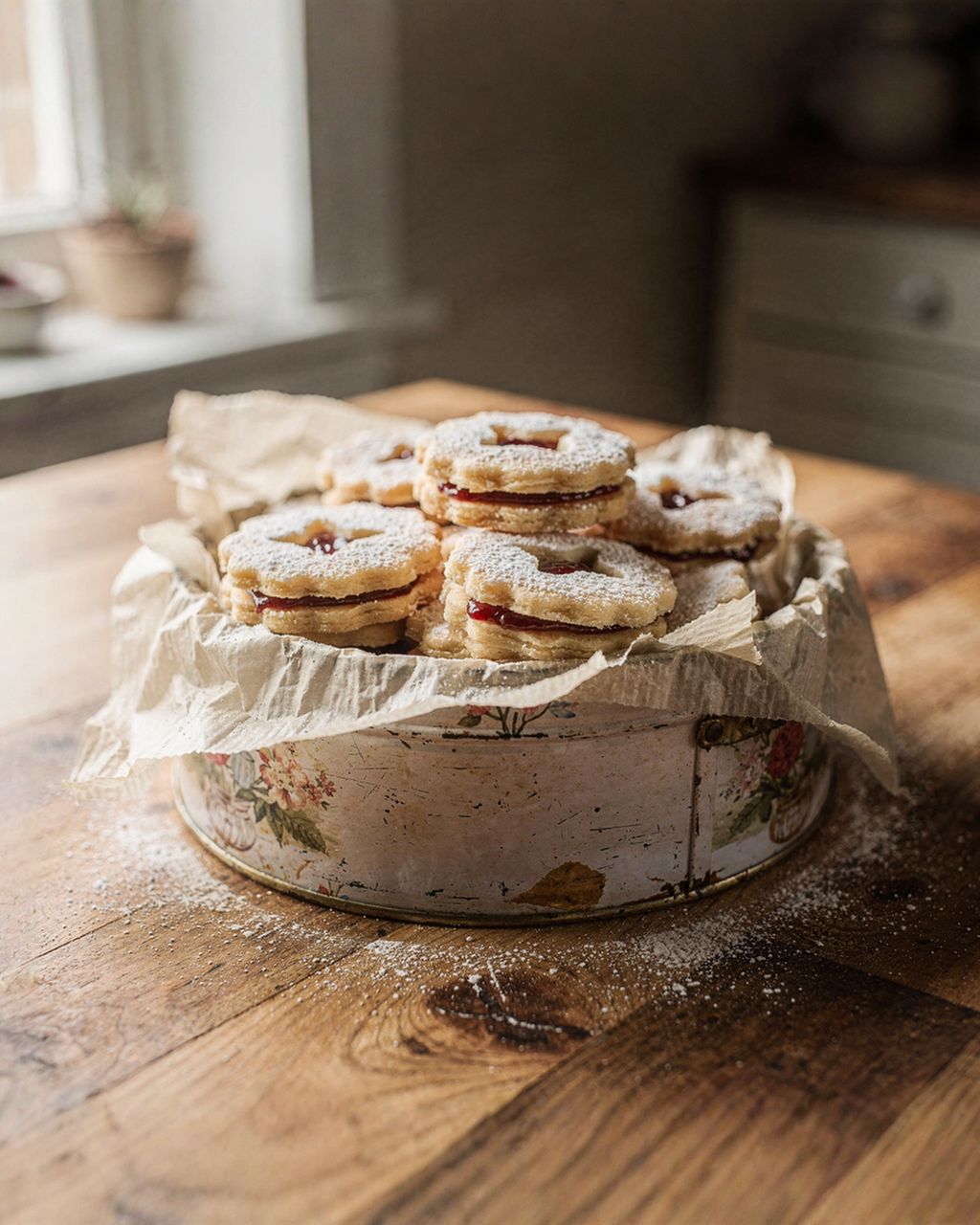
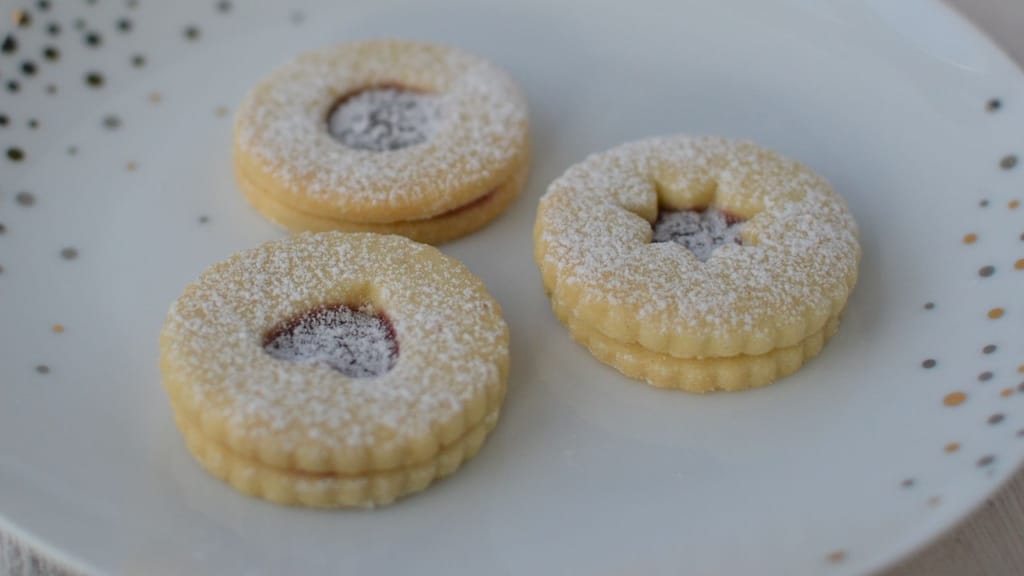
Linzer cookies: the plain rounds keep for weeks. Sandwich them with jam only a few days before Christmas, so they soften but don't turn soggy. Try the classic crisp Linzer cookies.
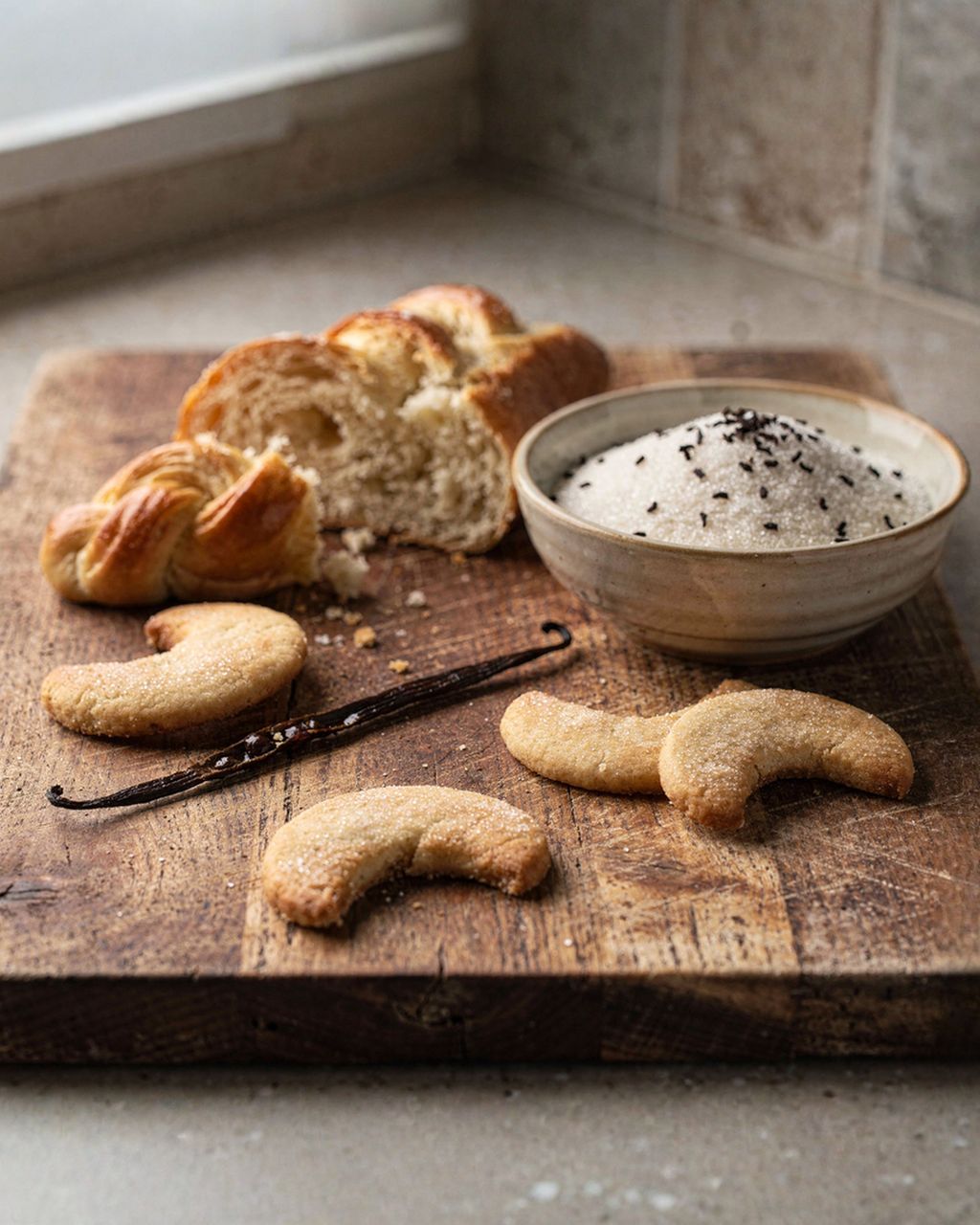
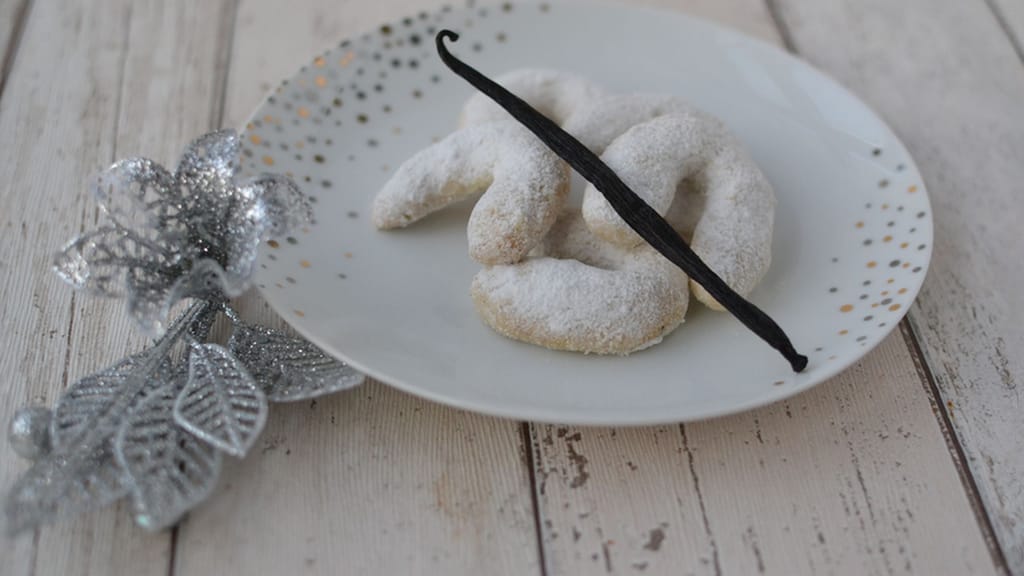
Vanilla crescents: they're best in the first weeks after baking, so leave them until early December. Reach for the recipe for the best vanilla crescents.
You'll find the full schedule in the calendar of when to bake Christmas cookies.
Soft gingerbread cookies
Soft gingerbread cookies you can bake ahead along with your stollen
Classic christmas cookies: delicate linzer cookies
Classic crisp Linzer Christmas cookies
The best christmas cookies? vanilla crescents, of course!
Vanilla crescents for the last weeks before Christmas

Patisdécor
Tahiti Vanilla Beans, 2 pcsA yeasted butter stollen, wrapped properly and kept in a cool place (10–15 °C / 50–59 °F), keeps for about 6 weeks from baking, including the maturing time. Eat a cut loaf within 1–2 weeks. Eat quark stollen within a week. Only a frozen stollen will keep longer than that.
Yes, stollen freezes very well, ideally after 2–3 weeks of maturing. Wrap it tightly in plastic wrap and then a freezer bag, and it will keep in the freezer for 2–3 months. Thaw it slowly at room temperature, still wrapped, and dust it with fresh powdered sugar before serving.
Yes, you can replace the rum with orange or apple juice or strong black tea. Soak the fruit in it overnight, just as you would with rum. The stollen will taste milder and keep for a shorter time, so let it mature for about 2 weeks rather than 4.
You can rescue a dry stollen by brushing it again with melted butter, coating it in sugar, wrapping it tightly and letting it mature for at least a week. During that time the moisture from the fruit spreads into the crumb, and most of the dryness evens out. Next time, check whether the dough had too little butter and whether the stollen spent too long in the oven.
You can tell mainly by smell and taste: rancid butter smells and tastes bitter and sharp, like old fat. If you see mold on the stollen, throw out the whole loaf rather than just cutting away the affected spot.
According to tradition, the folded shape of stollen recalls the baby Jesus wrapped in swaddling clothes. Practically, it also helps the dense loaf hold its shape instead of spreading into a flat disc. Roll the dough out into an oval and fold it lengthwise so the top half slightly overlaps the bottom one.
One recipe worth heating the oven for, one tip, and one deal from the shop. Nothing else.