- Season
- Year-round
- Price
- Medium
Calories and nutrition
per 100 g
358 kcal
Calories
14 g
Protein
73 g
Carbs
1.3 g
Fat
Squid Ink Spaghetti
Squid ink spaghetti is black pasta made from durum wheat semolina with cuttlefish or squid ink worked into the dough. It cooks like regular spaghetti and contains two allergens: gluten and molluscs.
per 100 g
358 kcal
Calories
14 g
Protein
73 g
Carbs
1.3 g
Fat
Keep dry squid ink spaghetti somewhere dry and cool in its closed pack or a container and use it by the best-before date. Do not leave cooked pasta at room temperature for more than 2 hours.
Dry spaghetti does not belong in the fridge. Cool cooked pasta quickly and refrigerate it within 2 hours: plain it keeps 3–5 days at up to 4 °C, with sauce 3–4 days.
Dry spaghetti does not need freezing. Cooked pasta keeps 1–2 months in the freezer, with sauce or baked 2–3 months. Reheat thawed pasta until it is piping hot all the way through, to at least 70 °C.
Check the ingredients for the type of ink and anything else in the dough: Dalla Costa spaghetti, for example, also contains fish powder, which matters if you have a fish allergy. Buy an undamaged pack and check the best-before date.
Regular spaghetti with cuttlefish ink in the sauce; ready-made al nero di seppia sauce is also sold and contains molluscs.
Plain spaghetti or linguine. The dish will not be black and loses its sea-like note.
Use 1 litre of water and 10 g of salt per 100 g of spaghetti. Cook as the pack says and taste 1–2 minutes early; with black pasta you cannot judge doneness by colour, only by tasting. Before draining, save a cup of the cooking water to bind the sauce.
Fry leftover cooked spaghetti the next day in a pan with olive oil and garlic. Reheat it until it is hot all the way through.
Roughly what a spoon or cup weighs, filled the way you usually would.
96 g
1 cup
Cook it like regular spaghetti and finish it briefly in the sauce with a little cooking water. It suits simple sauces of olive oil, garlic and chilli, seafood and tomatoes.
In Italian it is called spaghetti al nero di seppia. The ink is only a small part of the dough, for example 3 % (Gustobello, cuttlefish ink with salt) or 4.3 % (Dalla Costa) according to their labels. It turns the dough black. The ingredient list tells you which ink was used: both labels mentioned list cuttlefish ink. Products made with squid ink are sold too.
It tastes much like regular spaghetti, with a gently salty, sea-like note. It stays black after cooking.
2 min read
Dry squid ink spaghetti has around 358 kcal, 14 g protein, 1.3 g fat and 73 g carbohydrate per 100 g, much like regular semolina pasta. The Dalla Costa label gives 358 kcal, 12 g protein, 1.2 g fat and 73 g carbohydrate, Gustobello 361 kcal, 13 g protein, 1.9 g fat and 75 g carbohydrate per 100 g. Cooked spaghetti absorbs water, so 100 g of cooked pasta has far fewer calories.
Dry pasta keeps in its closed pack somewhere dry until the best-before date. Refrigerate cooked pasta within 2 hours: plain it keeps 3–5 days, with sauce 3–4 days, and 1–2 months in the freezer. More in cooked pasta: how long it keeps and how to freeze it.
The closest match is regular spaghetti with a sauce made with cuttlefish ink, which is also sold as ready-made al nero di seppia sauce. Without ink, plain spaghetti or linguine will do, but the dish will not be black and loses its sea-like note.
Allow 80–100 g of dry squid ink spaghetti per person, the same as regular spaghetti.
It is durum wheat semolina spaghetti coloured with cephalopod ink. The Gustobello and Dalla Costa labels list ink from cuttlefish; some products use ink from squid. The ingredient list says which.
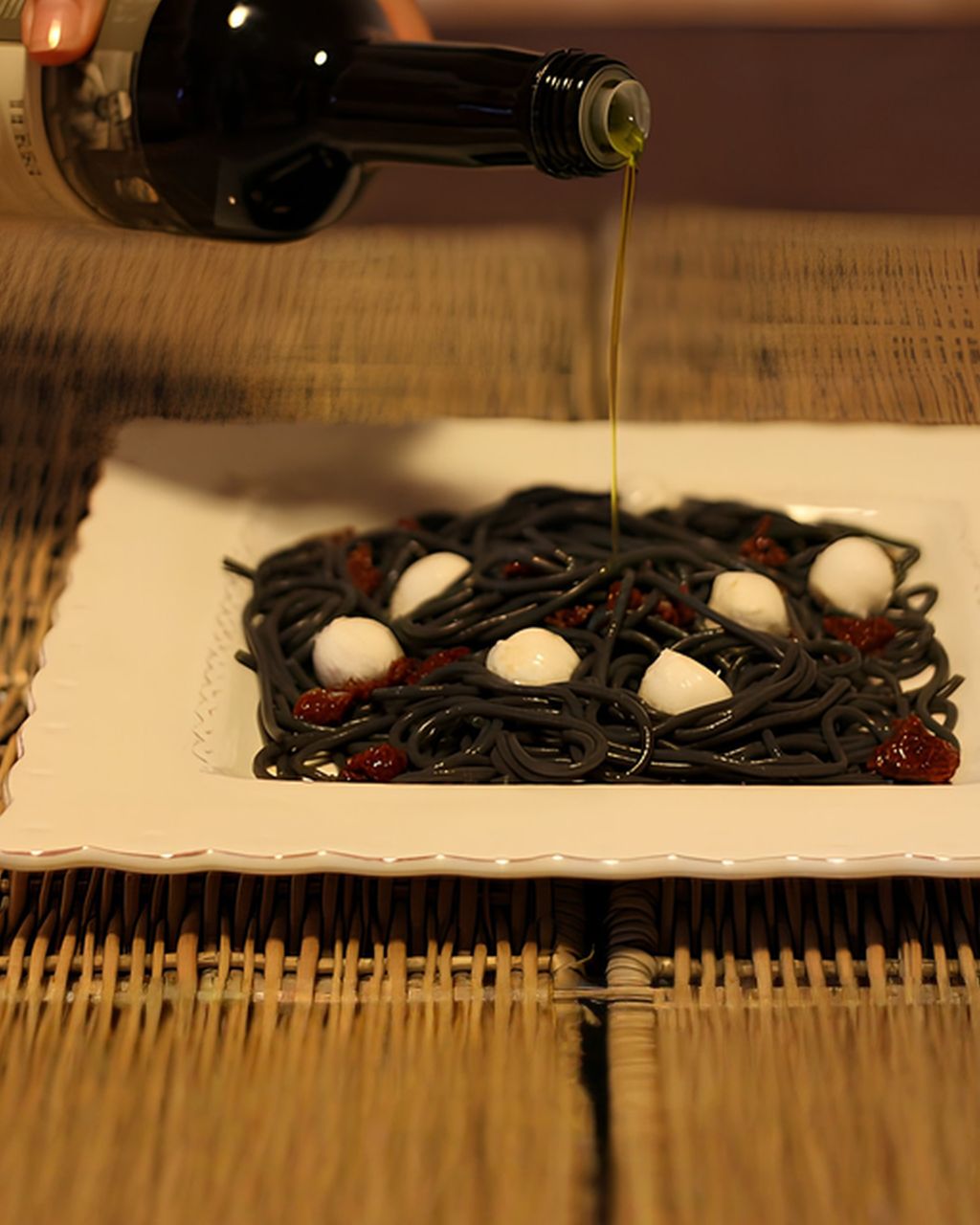
Cook it in a large pot, 1 litre of water and 10 g of salt per 100 g of spaghetti, and taste 1–2 minutes before the time on the pack; you cannot judge doneness by colour. More in how to cook pasta. Try squid ink spaghetti with sun-dried tomatoes and mozzarella.
Cuttlefish and squid are molluscs, which EU Regulation 1169/2011 lists, together with cereals containing gluten, among the allergens that must be emphasised on the pack. Do not eat squid ink spaghetti if you are allergic to molluscs or have coeliac disease. Some products also contain fish powder, so read the ingredients if you have a fish allergy.