- Season
- Year-round
- Price
- Low
- Nutrition per 100 g
- 371 kcal
- 13 g protein
- 1.5 g fat
- 74.7 g carbs
Linguine
Pasta
Linguine
Linguine (meaning "little tongues" in Italian) is a long, flat pasta with an elliptical cross-section, originating from the Liguria region of northwestern Italy. Wider than spaghetti but narrower than fettuccine, it measures approximately 4 millimeters in width and is traditionally made from durum wheat semolina, though egg-enriched versions exist.
In practice
How to store
- On the counter
Dried linguine: Store in a cool, dry place away from heat sources and direct sunlight; keeps 1-2 years unopened, 1 year once opened if transferred to an airtight container.
- In the fridge
Fresh linguine: shop-bought, keep in the fridge and use by its use-by date; homemade, 1-2 days in an airtight container. Cooked linguine: up to 2-3 days in an airtight container, tossed lightly with olive oil to prevent sticking.
- In the freezer
Fresh uncooked linguine: up to 2-3 months; cooked linguine (plain or with sauce): up to 1 month. Freeze in single-layer portions on a tray before transferring to freezer bags to prevent clumping.
How to choose
For the finest quality, seek out linguine made from 100% durum wheat semolina with a rough, slightly matte surface—this texture helps sauces adhere. Bronze-die extruded pasta ("trafilata al bronzo") offers superior sauce-gripping capability compared to Teflon-die versions. The pasta should appear uniformly golden-amber without white spots (which indicate poor hydration) or cracks. For fresh linguine, look for supple strands with a clean flour aroma and no signs of drying or discoloration.
What to swap in
Best swap
Fettuccine—slightly wider but shares the flat profile and works with the same sauce families; trenette is nearly identical and traditional to Liguria.
In a pinch
Spaghetti—though cylindrical rather than flat, it handles similar light sauces; tagliatelle works for creamier preparations.
Preparation
Bring a large pot of generously salted water (about 10 g salt per litre) to a rolling boil. Add linguine, stirring immediately to prevent sticking. Cook dried linguine 9-11 minutes, fresh linguine 2-4 minutes, until al dente—tender but with a slight resistance at the center. Reserve about 250 ml pasta water before draining; the starchy liquid is invaluable for emulsifying and loosening sauces. Finish cooking in the sauce for 1-2 minutes to marry flavors.
Don't toss it
Save pasta cooking water for more than just sauce—add it to bread doughs and pizza crusts for enhanced flavor and texture. Broken linguine pieces work beautifully in soups like minestrone or can be toasted and used as a crunchy salad topping.
In the kitchen
Cooking
Linguine excels when boiled to al dente and finished directly in the sauce—a technique called "mantecatura" that allows the pasta to absorb flavors while releasing starch for silky cohesion. It is traditionally paired with light, oil-based sauces, brothy preparations, and seafood. Classic preparations include linguine alle vongole (clams), linguine al pesto with green beans and potatoes, and linguine allo scoglio (mixed seafood). The flat surface makes it ideal for emulsified butter sauces and aglio e olio. Avoid pairing with heavy, chunky meat ragùs—the delicate strands cannot support substantial pieces.
Goes well with
- Pesto alla Genovese
- Clams (vongole)
- White wine
- Garlic
- Olive oil
- Shrimp and shellfish
- Cherry tomatoes
- Fresh basil
- Parsley
- Lemon zest
- Capers
- Anchovies
- Pine nuts
- Parmesan and Pecorino
- Green beans
- Potatoes
Recipes with this ingredient
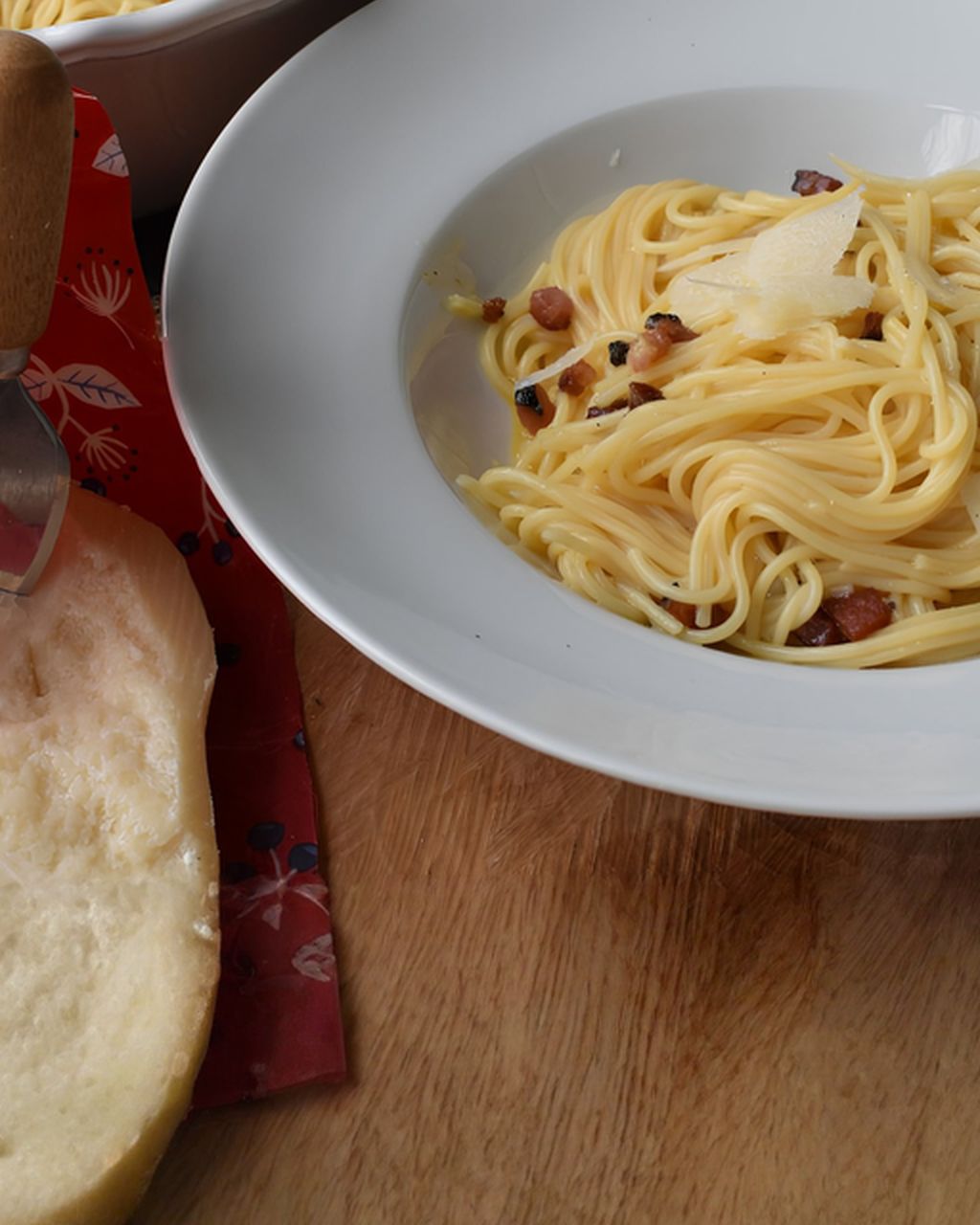
What it is
Linguine (meaning "little tongues" in Italian) is a long, flat pasta with an elliptical cross-section, originating from the Liguria region of northwestern Italy. Wider than spaghetti but narrower than fettuccine, it measures approximately 4 millimeters in width and is traditionally made from durum wheat semolina, though egg-enriched versions exist.
How it tastes
Linguine delivers a clean, subtly nutty flavor with delicate wheaty undertones. Its smooth yet slightly porous surface provides a gentle chew (al dente when properly cooked) and a neutral canvas that amplifies rather than competes with accompanying sauces. The flat shape creates a pleasant mouthfeel—silky against the palate with just enough bite to satisfy.
Did that help? We’ll send you more tips by email.
Seasonal baking plans, tested recipes and kitchen tricks that save you time. Unsubscribe in one click.
Common questions
What is the difference between linguine and spaghetti?
What sauces pair best with linguine?
How long do you cook linguine?
Is linguine healthier than other pasta shapes?
Can you freeze cooked linguine?
Deep dive
4 min read
Varieties
The linguine family includes several variations: Linguettine is a thinner, more delicate version ideal for the lightest broths and oil-based sauces. Trenette is the Ligurian cousin, virtually identical and the traditional partner for pesto Genovese. Bavette falls between linguine and spaghetti in width. Linguine rigate features ridged surfaces for extra sauce adhesion. Whole wheat linguine offers a nuttier flavor and higher fiber content, while gluten-free versions made from rice, corn, or legume flours cater to dietary restrictions. Artisanal producers craft egg-enriched linguine for richer flavor and silkier texture.
History
Linguine's story begins in the sun-drenched coastal region of Liguria in northwestern Italy, with the first documented reference appearing in the 1700s. Giulio Giacchero, an economist chronicling Genoa's 18th-century economy, described trenette (linguine's local name) served with basil pesto, green beans, and potatoes as the quintessential festive dish of Ligurian families. The name derives from the Latin "lingua" (tongue), a poetic nod to the pasta's flat, slightly curved shape resembling little tongues. Liguria's identity as a maritime republic made seafood central to its cuisine, and linguine's flat surface proved ideal for capturing briny, oil-based sauces. While legend credits Marco Polo with introducing pasta to Italy from China in the 13th century, historians now believe pasta-making traditions existed independently in Italy long before. Linguine spread from its Genovese birthplace throughout Italy and eventually the world, becoming synonymous with elegant simplicity—a pasta that lets quality ingredients shine.
Science
Linguine's culinary magic lies in the interplay of geometry, starch chemistry, and surface texture. The elliptical cross-section—approximately 4mm wide and 1mm thick—creates a favorable surface-area-to-volume ratio that allows sauces to cling without overwhelming the pasta's delicate structure. During cooking, the starch granules in durum wheat semolina undergo gelatinization: water penetrates the pasta, causing starch molecules to swell and create the characteristic al dente texture—firm at the center where starch remains partially ungelatinized, tender at the exterior. The starch released into cooking water thickens and stabilises sauces, helping bind oil and water into silky, cohesive coatings. Bronze-die extrusion creates microscopic surface roughness that dramatically improves sauce adhesion compared to smooth Teflon-die pasta. The protein network formed by gluten provides structural integrity, allowing linguine to maintain its shape through vigorous tossing while remaining pleasantly chewy.
Sourcing and ethics
Durum wheat cultivation for pasta production carries notable environmental considerations. Italy is the world's largest pasta producer, and durum wheat cultivation is the largest single source of pasta's environmental footprint, although Italian durum wheat is grown mostly without irrigation. Life cycle assessments reveal that agricultural phases—including fertilizer use, irrigation, and harvesting—contribute significantly to pasta's carbon footprint, though consumer-phase impacts (cooking energy, water heating) are also substantial. Sustainable sourcing initiatives are gaining momentum: look for pasta made from Italian-grown durum wheat supporting local agriculture, organic certifications indicating reduced pesticide use, and brands committed to renewable energy in manufacturing. Cooking pasta with lids on pots and using minimal water reduces household energy consumption. Some forward-thinking producers are implementing regenerative farming practices and transparent supply chain traceability to address environmental concerns while preserving the artisanal traditions that make Italian pasta exceptional.