- Season
- Year-round in the freezer. Czech raspberries are harvested mainly in July and August.
- Price
- Medium
Calories and nutrition
per 100 g
56 kcal
Calories
1.2 g
Protein
12.6 g
Carbs
0.8 g
Fat
Raspberries (frozen)
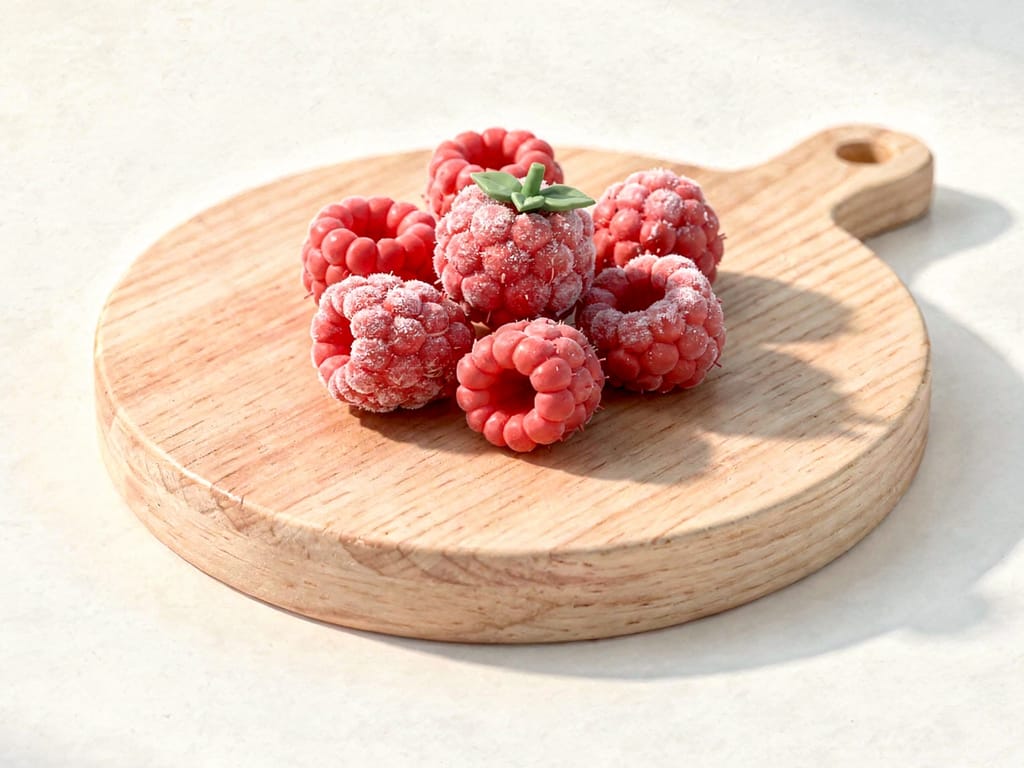
Frozen raspberries are whole raspberries deep-frozen soon after harvest, usually without sugar. Put them into cakes and sauces straight from frozen; for smoothies, yogurt and other cold uses, boil them for at least a minute first, as frozen berries have caused outbreaks of hepatitis A and norovirus.
per 100 g
56 kcal
Calories
1.2 g
Protein
12.6 g
Carbs
0.8 g
Fat
Do not thaw them on the counter. Thawed raspberries that sat warm for more than 2 hours should be cooked the same day or thrown away.
Thaw them in the fridge in a sieve over a bowl, ideally overnight. Do not refreeze thawed raspberries; cook them into a sauce, compote or jam the same day.
At a steady −18 °C they keep full quality for 8–12 months; follow the date on the pack too. Close an opened bag well and press out the air, or the berries get freezer burn.
Choose a pack in which the berries are loose and whole. Large ice lumps, crushed berries and ice at the bottom mean they thawed and refroze on the way. The ingredient list should say just raspberries, with no sugar or syrup. Check the country of origin too: if the pack does not state it, the FSAI says to assume the berries are imported.
Fresh raspberries in season, in the same amount. They are better for decorating and cold desserts because they hold their shape.
Frozen forest fruit mix, frozen blackberries or canned raspberries. Canned fruit is sweeter, so reduce the sugar in the recipe.
For baking and cooking, use them frozen. For smoothies, yogurt, quark, no-bake cakes and other cold uses, bring them to the boil first and boil for at least 1 minute, then let them cool. In a sauce, compote or jam there is no need to boil them separately, as long as the whole pot bubbles for at least a minute.
Boil the juice the raspberries release as they thaw and use it in a syrup, glaze or cream. Cook broken or freezer-burnt raspberries into coulis, a sauce for pancakes or jam.
Roughly what a spoon or cup weighs, filled the way you usually would.
3 g
1 teaspoon
8.9 g
1 tablespoon
148 g
1 cup (250 ml)
Frozen raspberries are most often baked in bundt cakes, tarts, sponge traybakes and muffins, cooked into coulis, sauce, compote and jam, and blended, boiled and added to creams. They break up quickly, so fold them into batter at the last moment and do not stir for long.
Shops sell them in the freezer next to frozen vegetables and forest fruit mix, for example in a 200 g bag from Agro Jesenice or 300 g from Alnatura. The ingredient list is normally just raspberries. Once thawed they are much softer than fresh ones and release a lot of juice, so they suit baking, sauces, coulis, creams and jam best. For decorating a cake, buy fresh.
Sweet and distinctly tart, with the typical raspberry aroma. After thawing the juice tastes intense, but the berries lose their firmness and fall apart. Cooked, they thicken and the tartness stands out even more, which is why a little sugar is often added.
Seasonal baking plans, tested recipes and kitchen tricks that save you time. Unsubscribe in one click.
3 min read
Frozen raspberries are whole raspberries, deep-frozen after harvest, usually without sugar. Agro Jesenice sells them in a 200 g bag and lists only raspberries as the ingredient. They taste the same as fresh raspberries, but after thawing they are soft and release more water, because ice crystals tear the cell walls during freezing.
For desserts that means one thing: buy fresh ones for decorating and use frozen ones where the raspberries are baked, cooked down or blended. Raspberries mixed with other berries are sold as frozen forest fruit mix.
Frozen berries have repeatedly been linked to outbreaks of hepatitis A and norovirus in Europe. Freezing does not destroy the viruses. The Food Safety Authority of Ireland (FSAI) counts 12 European alerts for hepatitis A virus and 58 for norovirus in imported frozen berries from 2014 to October 2026.
That is why the FSAI recommends (opens in a new tab) boiling imported frozen berries for at least 1 minute before eating them. According to the FSAI boiling destroys the viruses, and it matters most when cooking for vulnerable people, such as nursing home residents. This applies to anything you eat without further cooking: smoothies, raspberries for yogurt and porridge, and fillings for no-bake cakes and cheesecakes.
According to the FSAI the advice does not apply to raspberries from your own garden that you freeze yourself, or to canned raspberries. If the pack does not state the country of origin, assume the berries are imported. The FSAI gives no time or temperature for baking. When you bake for small children, older people or anyone with a weakened immune system, boiling the raspberries first is the safest choice.
For baking and cooking, do not thaw them at all. If you need them thawed, put them in a sieve over a bowl and leave them in the fridge overnight. The juice drips off and the berries stay cold. Do not thaw them on the counter at room temperature, even if some packs say so.
Do not refreeze thawed raspberries; producers print this on the pack. More on freezing fruit is in the article How to freeze fruit so it stays loose.
Frozen raspberries are ideal for raspberry coulis or sauce. Tip them frozen into a pan with a little sugar, bring to the boil, cook until they break down and press through a sieve so no seeds are left in the sauce. Boiling is also the step the FSAI recommends.
For creams and cheesecakes, blend frozen raspberries, sieve them and reduce the purée in a pan, as they release more water than fresh ones. Quantities for a raspberry cake filling are in the article Fruit cake filling that won't weep.
Add the raspberries to the batter frozen, tossed in 1–2 tablespoons of plain flour or starch, and allow 5–10 minutes longer baking. Thawed berries would release their juice into the batter before it sets, and the cake would turn wet and streaked. Fold them in at the very last moment.
Try the easy and quick raspberry cheesecake tart, where frozen raspberries are simply pressed into the filling, or the raspberry bundt cake with white chocolate and sour cream, using frozen raspberries instead of fresh.