- Season
- Late spring through early summer (peak bloom May–June); dried available year-round
- Price
- Medium
- Nutrition per 100 g
- 256 kcal
- 9.5 g protein
- 0.3 g fat
- 43.7 g carbs
Rose Petals
Rose Petals
Rose petals are the delicate, fragrant portions of the rose flower (genus Rosa), used in culinary applications for their intoxicating perfume, subtle sweetness, and romantic visual appeal. Primarily harvested from Rosa damascena (Damask rose), Rosa centifolia (Cabbage rose), and Rosa gallica, edible rose petals have been a cornerstone of Middle Eastern, Indian, and North African cuisines for millennia.
In practice
How to store
- On the counter
Fresh petals: Use within 1–2 days, stored loosely in a single layer on damp paper towels away from direct sunlight.
- In the fridge
Fresh petals: Up to 5 days in a sealed container lined with slightly damp paper towels. Dried petals: Not recommended (humidity compromises texture).
- In the freezer
Fresh petals can be frozen in a single layer, then transferred to airtight bags for up to 6 months—ideal for infusions. Dried petals: Not recommended.
How to choose
For culinary use, always seek roses explicitly labeled "culinary grade," "food grade," or "edible"—never use florist roses or garden varieties treated with pesticides. Fresh petals should be vibrant, fragrant, and free of browning or wilting; harvest in the morning when essential oil content peaks. Dried petals should retain their color (deep pink to crimson) and emit a pronounced, sweet-musky aroma. Avoid petals that appear dull, dusty, or lack fragrance, as these indicate age or improper storage.
What to swap in
Best swap
Rose water (use sparingly—start with ½ teaspoon per tablespoon of dried petals called for, adjusting to taste)
In a pinch
Lavender buds (similar floral intensity with a more herbaceous, camphor-like note) or hibiscus (dried calyces; provides colour and tartness but lacks the musky sweetness)
Preparation
For fresh petals, gently rinse under cool water to remove any debris, then pat dry with paper towels. Remove the bitter white base (the "heel") of each petal before use. Dried petals can be used whole for garnishing, crumbled for spice blends, or ground into powder for baking. To rehydrate dried petals, steep briefly in warm water or rose water until pliable. For infusions, bruise petals gently to release their aromatic oils.
Don't toss it
Transform wilted or less-than-perfect petals into homemade rose water by simmering in distilled water, then straining. Use spent petals from infusions to create rose sugar, rose salt, or add to compost. Dried petals past their visual prime still carry flavor—grind into rose powder for baking or blend into spice mixes like ras el hanout.
Buy it from us
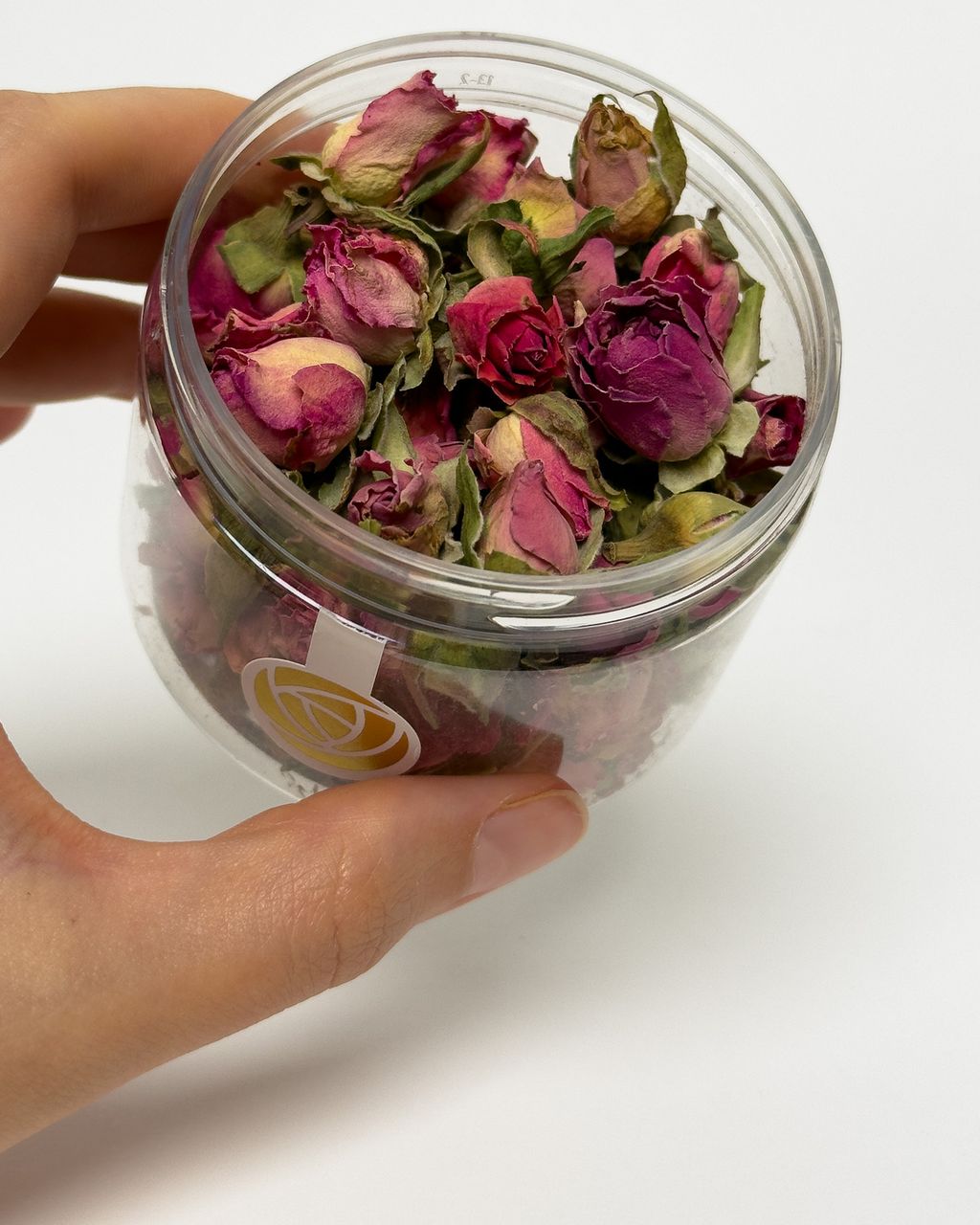
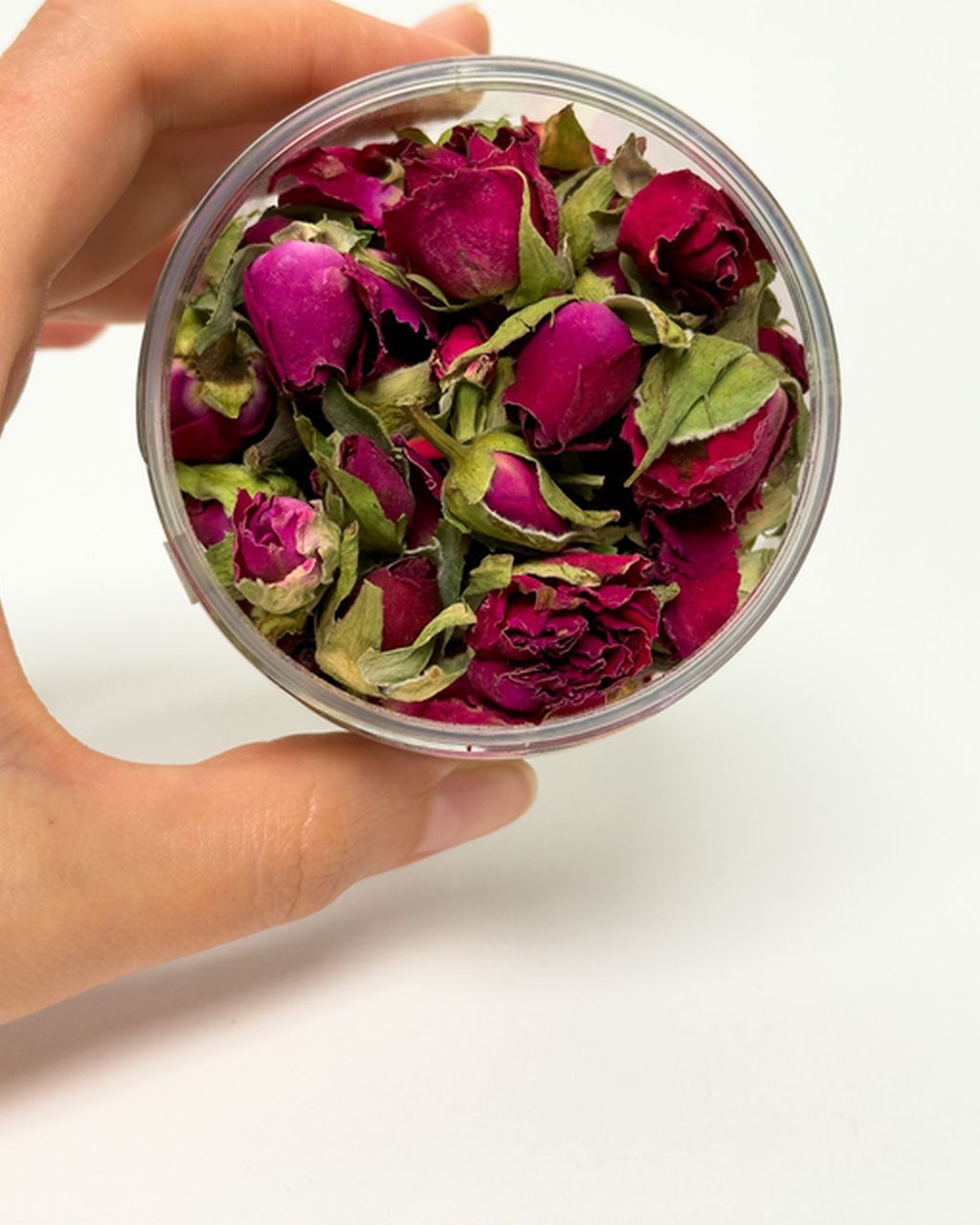
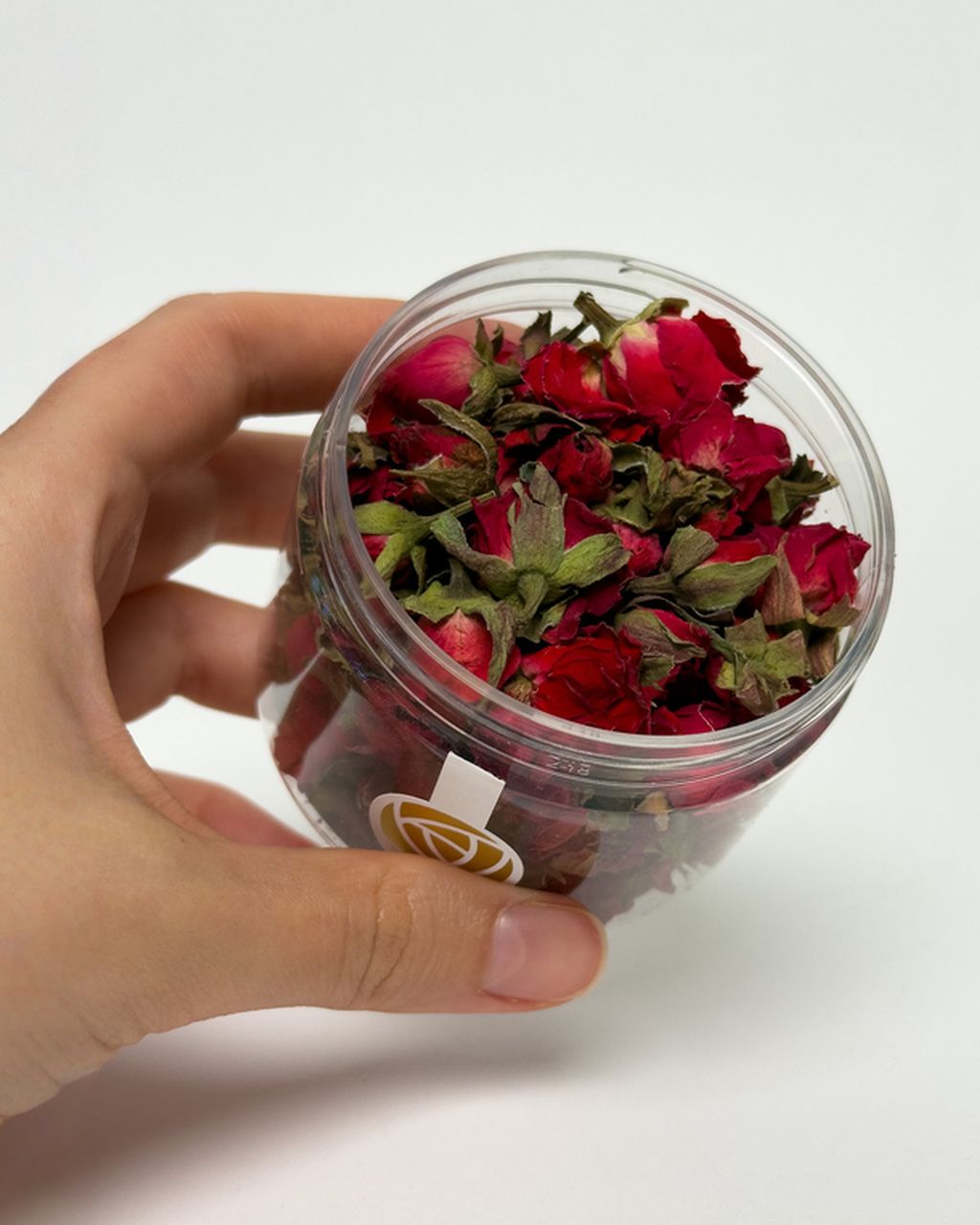
In the kitchen
Cooking
Rose petals shine in applications that preserve their delicate aromatics: fold into whipped cream, custards, or ice cream bases; steep into syrups, honeys, and jams; scatter over desserts as a finishing garnish; candy with pasteurised egg white and sugar for elegant cake decorations; infuse into teas, cocktails, and mocktails; blend into Middle Eastern spice mixes; incorporate into rice dishes like biryani; or muddle into vinaigrettes and dressings. Avoid prolonged high-heat cooking, which dissipates their volatile fragrance—add near the end of cooking or as a final flourish.
Goes well with
- Pistachio
- Cardamom
- Saffron
- Honey
- Almond
- Vanilla
- Raspberry
- Strawberry
- Lychee
- White chocolate
- Cream and dairy
- Lemon
- Orange blossom water
- Pomegranate
- Lamb
What it is
Rose petals are the delicate, fragrant portions of the rose flower (genus Rosa), used in culinary applications for their intoxicating perfume, subtle sweetness, and romantic visual appeal. Primarily harvested from Rosa damascena (Damask rose), Rosa centifolia (Cabbage rose), and Rosa gallica, edible rose petals have been a cornerstone of Middle Eastern, Indian, and North African cuisines for millennia. Available fresh, dried, or processed into rose water and rose oil, they transform both sweet and savory dishes with their ethereal, unmistakably floral character.
How it tastes
Rose petals deliver a complex sensory experience that begins with an intoxicating, heady perfume—honeyed and musky with subtle green undertones. On the palate, they offer a gentle sweetness reminiscent of lychee and honey, balanced by a faint astringency and a whisper of bitterness from their tannins. The finish is clean and lingering, leaving behind a romantic, almost nostalgic floral echo. Dried petals concentrate these qualities, becoming more intense and tea-like, while fresh petals offer a brighter, more ephemeral delicacy.
Common questions
Are all rose petals edible?
What do rose petals taste like?
Can I substitute rose water for rose petals?
How long do dried rose petals last?
What dishes traditionally use rose petals?
Deep dive
4 min read
Varieties
Three rose species dominate the culinary world: Rosa damascena (Damask rose), the gold standard, prized for its intensely sweet, complex perfume with honeyed depth—this is the rose of Persian cuisine and Bulgarian rose oil production. Rosa centifolia (Cabbage rose or Rose de Mai), cultivated primarily in Grasse, France, offers a softer, more rounded floral character with powdery, almost cosmetic notes beloved by pastry chefs. Rosa gallica (French rose or Apothecary's rose), one of the oldest cultivated roses in Europe, provides a deeper, more intense traditional rose character with subtle spicy undertones, historically used in medicinal preparations and confections. Each variety yields petals with distinct aromatic profiles, though all share the quintessential rose character that has captivated cooks for millennia.
History
The culinary romance with rose petals goes back thousands of years in the region that became Persia, where roses were cultivated not merely for beauty but as essential pantry staples. Mesopotamian texts record aromatic plants in medicinal and culinary preparations, though which of them were roses is uncertain. Persian growers cultivated roses on a large scale. The Persian physician Avicenna (980–1037) is traditionally credited with refining the distillation of rose water, which al-Kindi had already described in the 9th century, making the fragrance far easier to capture and transport. Through the Achaemenid Empire (550–330 BCE) and Sasanian Empire (224–651 CE), rose cultivation and rose water spread throughout the Middle East and on to India and Europe, while China had its own ancient tradition of rose cultivation. Medieval European courts embraced rose flavoring for poultry, game, and pastries, while the Victorians elevated candied rose petals to an art form. Today, Iran is one of the world's leading producers of rose water, centred on Kashan and Qamsar, continuing a tradition that has perfumed kitchens across cultures for well over two millennia.
Science
The intoxicating aroma of rose petals arises from a complex symphony of over 300 volatile organic compounds, with four key players dominating the sensory experience: β-citronellol (the major component, present almost entirely as the S-enantiomer), geraniol, nerol, and β-phenylethyl alcohol. The first three are monoterpene alcohols and β-phenylethyl alcohol is an aromatic alcohol; together they create the characteristic "rosy" scent we recognize. The biosynthesis of the monoterpene alcohols involves a fascinating enzymatic pathway where the cytosolic enzyme RhNUDX1 converts geranyl diphosphate to geranyl monophosphate, which is then dephosphorylated to geraniol within the petal cells. Eugenol contributes subtle spicy-clove notes, while nonadecane and other odourless waxy alkanes (the stearoptene) make up much of rose oil and cause it to solidify when cool. The compounds with an odor activity value (OAV) greater than 1 contribute individually to the aroma profile—this explains why different rose varieties smell distinct despite sharing the same base molecules in different proportions. Polyphenols such as tannins and flavonoids contribute mild astringency, while anthocyanins provide the characteristic pink-to-red coloration. Heat rapidly volatilizes these aromatic compounds, which is why rose petals are best added at the end of cooking or used in cold preparations.
Sourcing and ethics
The distinction between edible and ornamental roses is critical: conventional florist roses and most garden varieties are treated with pesticides, fungicides, and preservatives unsafe for consumption. Always source roses explicitly labeled "culinary grade," "food grade," or "edible," preferably certified organic. Reputable suppliers include specialty spice merchants, Middle Eastern grocers, and dedicated edible flower producers who maintain pesticide-free growing practices. For the most sustainable option, grow your own organic roses—heritage varieties like Rosa damascena thrive in temperate climates and reward gardeners with abundant, fragrant blooms. When purchasing dried petals, look for sun-dried or carefully dehydrated products that preserve color and aroma without artificial treatments. Support suppliers who practice ethical labor standards, particularly important given that major production centers are in Iran, Turkey, Bulgaria, and Morocco. Handpicked, ethically sourced petals may cost more but ensure both safety and superior flavor.