Why Won't My Fudge Set? Soft-Ball Stage, Beating and How to Fix It
Why Is My Fudge Crumbly or Hard? Overcooking, Overbeating and the Fix
Updated Nov 20, 2026
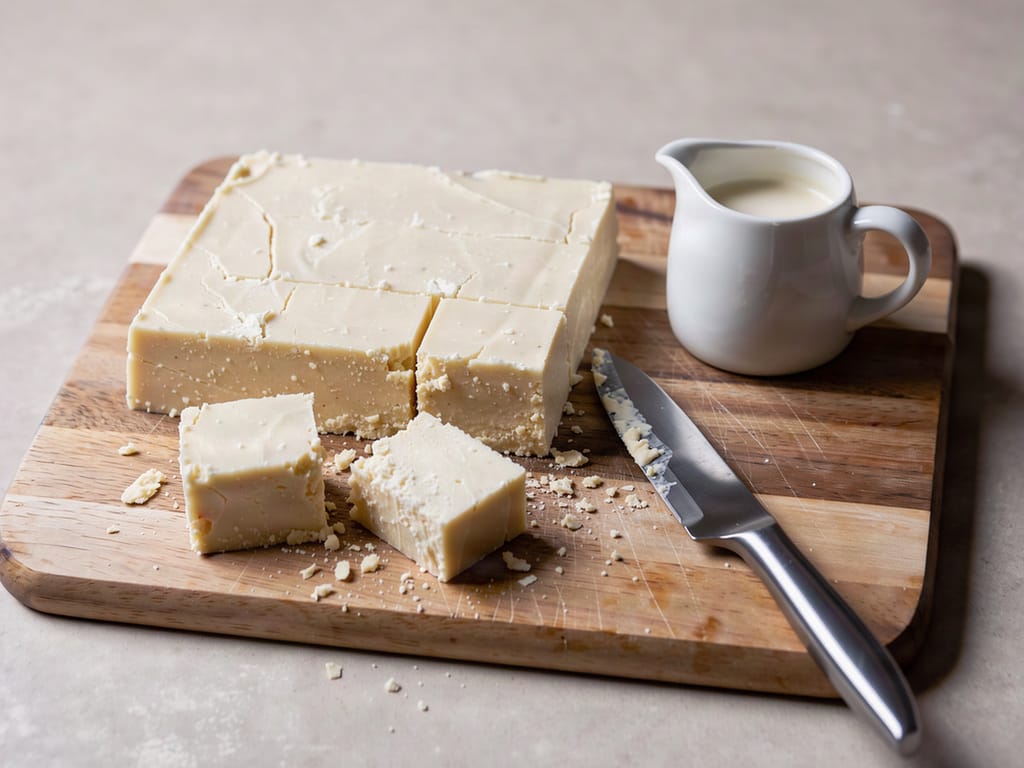
Fudge turns crumbly or hard when it is cooked past the soft-ball stage, 113–116°C (235–240°F), or beaten too long after it loses its shine. You can usually rescue it by remelting it with a few spoonfuls of cream and cooking it back to soft ball. Here is how to tell which mistake you made and how to fix it.
Hard, dry or crumbly fudge has too little water left in it, too many crystals, or both. The two usual causes:
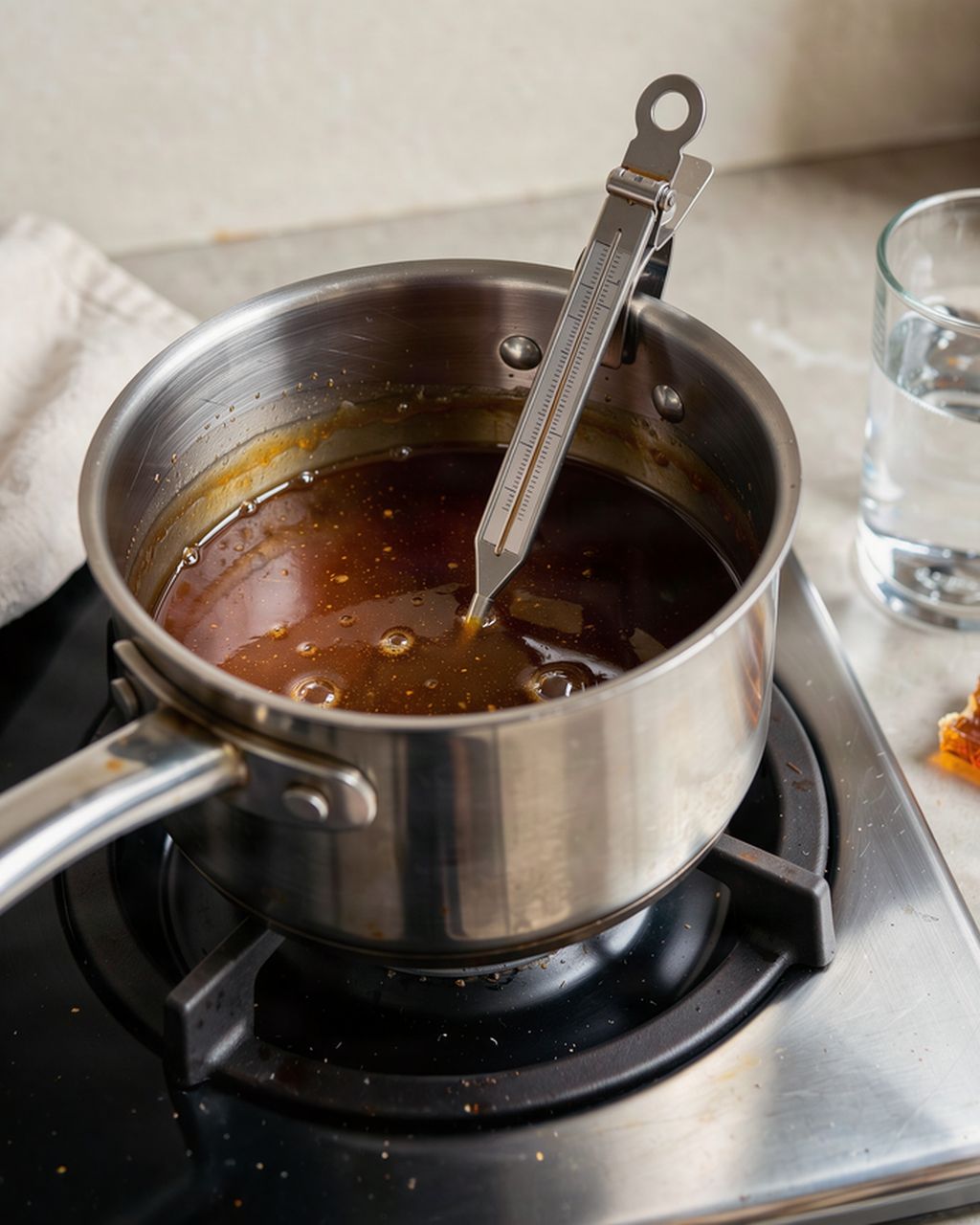
It was overcooked. Cooked past the soft-ball stage, 113–116°C (235–240°F) on the Exploratorium's sugar-stage chart, the syrup loses more water and sets firmer with every degree. At the firm-ball stage, 118–121°C (245–250°F), you are into caramel territory, and fudge cooked there turns out hard and short.
It was overbeaten. Beating makes the sugar crystallize. Keep going after the fudge loses its gloss and it seizes in the pan, then sets into a dry, crumbly block.
Other things that push fudge toward hard and crumbly:
A thermometer that reads low, so the syrup was hotter than it showed and you stopped later than you thought.
Too long in the pan after cooking, so it kept cooking from the pan's heat.
Storing it uncovered or in the fridge unwrapped, where it dries out.
Too little fat or liquid, for example cutting the butter or cream to reduce the fat.
If your fudge is gritty or sandy rather than dry, that is a crystal-size problem. Our guide to fudge that isn't grainy explains how to keep the crystals small.
Seasonal baking plans, tested recipes and kitchen tricks that save you time. Unsubscribe in one click.
Sugar stages are really a measure of how much water is left. The Exploratorium puts the soft-ball stage at about 85% sugar and the firm-ball stage at about 87%. That small difference is the gap between creamy fudge and a fudge that snaps.
Test your thermometer in boiling water. At sea level it should read 100°C (212°F). If it reads 102°C, it reads 2 degrees high, so add 2 degrees to every target: cook to 115–118°C on that thermometer for a true soft ball. If it reads low, subtract the difference.
Take the pan off the heat the moment you hit the target. A heavy pan holds heat, so set it on a cool surface.
Altitude lowers the target. The Exploratorium advises about 1°F less for every 500 feet above sea level (roughly 1°C per 275 m, or 900 ft). Cooking a sea-level temperature at altitude overcooks the fudge.
Use the cold-water test as a cross-check. At soft ball, a drop in very cold water forms a soft ball that flattens when you take it out. If it holds a firm ball, you have gone too far.
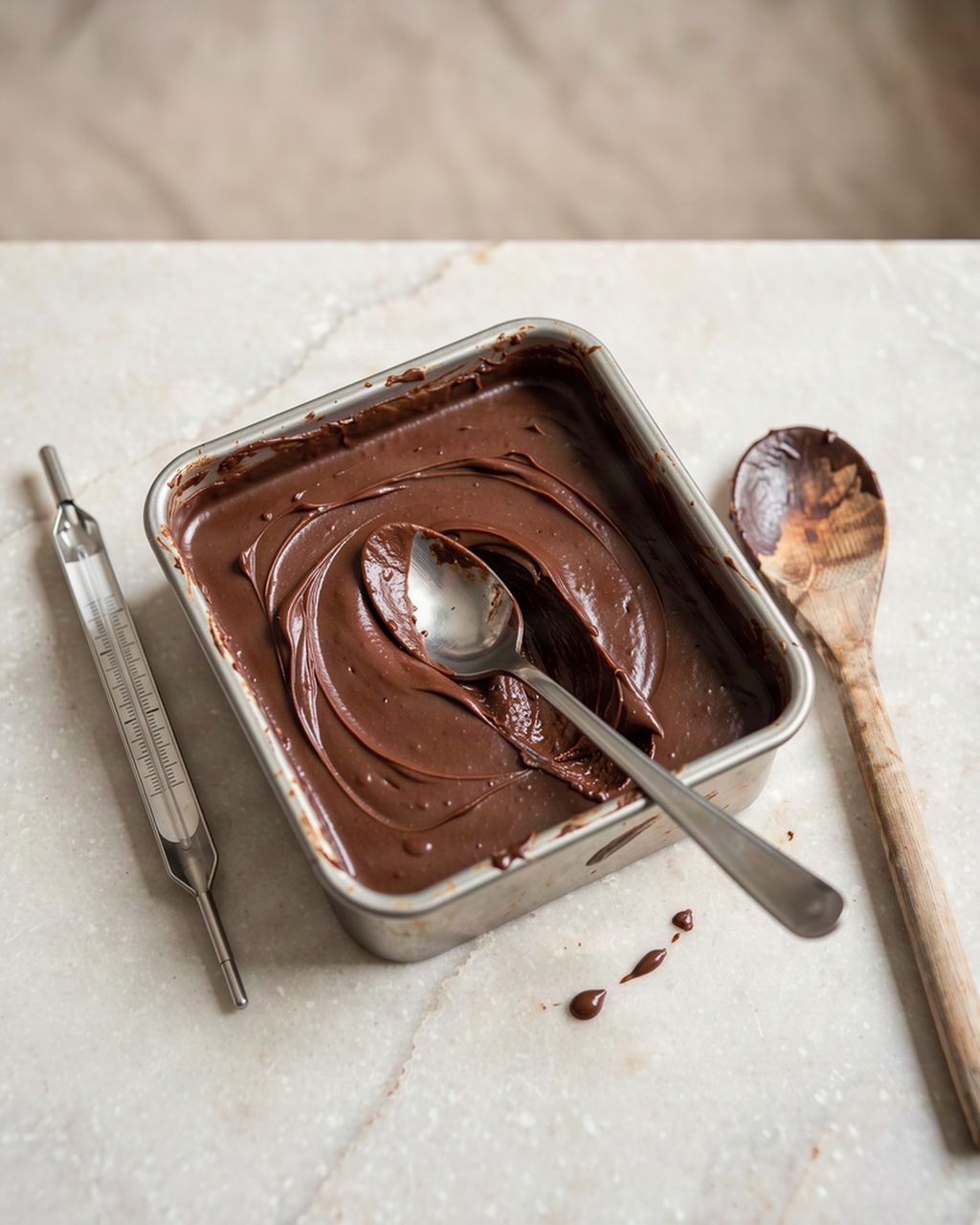
Cooked fudge is cooled undisturbed to about 43°C (110°F), the temperature the Exploratorium and Utah State University Extension use, and then beaten. Watch it closely:
At first it is dark, glossy and runny.
After a few minutes it starts to thicken and the shine dulls.
When it has lost most of its gloss and just begins to hold its shape, stop and pour at once.
Beat past that point and it stiffens in the pan, sets with a rough surface and breaks into crumbs when you cut it. A stand mixer makes it especially easy to overshoot, so stay next to it and stop the machine to check.
Beating while the fudge is still too hot causes the opposite problem: big crystals and a gritty texture. Both mistakes are about timing, not effort.
You can usually rescue overcooked or overbeaten fudge, as long as it doesn't taste burnt.
Break it into pieces and put it in a heavy pan.
Add liquid: a splash of cream or milk, just enough to loosen the fudge as it melts. This puts back some of the water that was lost.
Melt it slowly over low heat, stirring gently, until completely smooth and no grains remain.
Bring it back to the soft-ball stage, 113–116°C (235–240°F), with a tested thermometer. Because it is already concentrated, this takes much less time than the first cook. Watch it closely.
Cool undisturbed to about 43°C (110°F), then beat only until it loses its gloss, and pour.
The re-cooked fudge may be slightly darker and less glossy than a perfect first batch, but the texture should be creamy again.
If the fudge tastes scorched, remelting won't remove that flavor. Use your judgment: slightly over-caramelized fudge can still be fine chopped into brownies or cookies.
If you'd rather not re-cook it, crumbly fudge is still good to eat:
Crumble it over ice cream or yogurt.
Fold it into cookie dough or brownie batter.
Melt it with cream into a sauce: warm it gently with a few tablespoons of cream, stirring until smooth, for a quick fudge sauce.
Press it into a cheesecake base with crushed biscuits and butter.
Roll it into truffles. Knead the crumbs with a spoonful of cream or melted chocolate until they hold together, shape into balls and roll them in cocoa. Keep them covered in the fridge if you use cream.
For more ideas, see our article on what to do with leftover chocolate, or what to do with leftover Christmas cookies, where the same crumb tricks apply. If you actually like a firmer, chewier candy, homemade caramels are cooked one stage higher on purpose.
Even well-made fudge dries out and turns crumbly if it is left open to the air.
Wrap it well. Store pieces in an airtight tin or box, with parchment between the layers.
Keep it cool and dry, away from the stove and radiators.
Don't cut the whole slab at once if you won't eat it soon. A whole block dries out more slowly than cut squares.
How long homemade fudge keeps depends a lot on the ingredients, since a fudge rich in cream and butter is not a hard candy. Follow the guidance in your recipe.
A note on hot sugar: fudge is cooked well above boiling point and sticks to skin. Use oven gloves and keep children away from the stove. The NHS advises cooling a burn under cool running water for 20 minutes, as soon as possible (within 3 hours), with no creams, oils or butter; get urgent medical help for a large or deep burn, or one on the face, genitals or bottom, and call NHS 111 (or your doctor) for advice about any burn on a child under 5.
Dry, crumbly fudge was usually overcooked past the soft-ball stage or beaten too long after it lost its shine. Both leave it with too little moisture and too many crystals.
Fudge turns hard when it is cooked too hot, into the firm-ball stage of 118–121°C (245–250°F) or beyond, or when it is overbeaten and seizes in the pan.
Melt it slowly with a splash of cream or milk, bring it back to the soft-ball stage, 113–116°C (235–240°F), cool it to about 43°C (110°F), then beat it briefly and pour.
Yes. Once fudge loses its gloss and starts to thicken, pour it at once; beating longer makes it seize and set dry and crumbly.
Fudge that sets like toffee was cooked far too hot. Toffee is cooked to the hard-crack stage, 149–154°C (300–310°F), while fudge stops at soft ball, 113–116°C (235–240°F).
One recipe worth heating the oven for, one tip, and one deal from the shop. Nothing else.